

Table of Contents
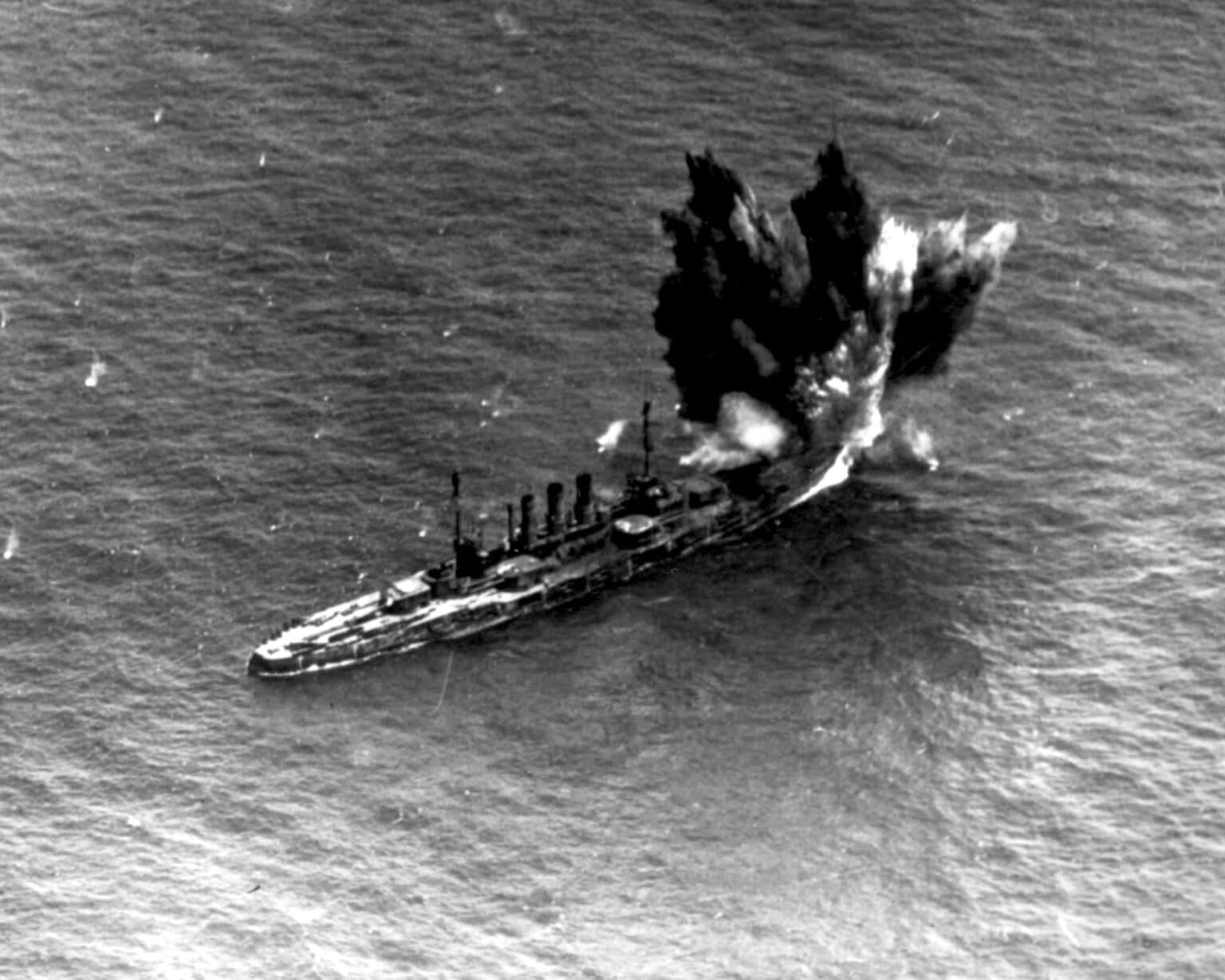
On July 21, 1921, a captured German battleship sat off the Virginia Capes while Army bombers circled overhead. The Navy’s rules said the aircraft should drop their bombs slowly, pausing so inspectors could board and measure the damage.
The bombers did not pause. Within about 20 minutes of the first 2,000-pound bomb, the Ostfriesland rolled over and sank, and the man who had ordered the attack became the most famous and most resented officer in the U.S. Army.
That man was Billy Mitchell. Four years later he was court-martialed, and today he is remembered as the prophet who foresaw Pearl Harbor and won a Medal of Honor. Both of those last two claims need a closer look.
Who Was Billy Mitchell?
William Lendrum “Billy” Mitchell (1879 to 1936) was a U.S. Army officer who commanded American air combat units in France in World War I and then spent the 1920s campaigning for an independent air force. He is often called the father of the U.S. Air Force, which was created 11 years after his death.
He is not the Billy Mitchell of The King of Kong and the Donkey Kong high-score disputes. That is a different man, a video game player born in 1965.
Billy Mitchell at a glance
Born December 29, 1879, in Nice, France, son of a U.S. senator from Wisconsin. Learned to fly privately in 1916. Commanded 1,481 Allied aircraft at Saint-Mihiel in September 1918. Sank the battleship Ostfriesland from the air on July 21, 1921. Convicted by court-martial on December 17, 1925, and resigned on February 1, 1926. Died February 19, 1936, in New York, aged 56.
A Senator’s Son Who Paid for His Own Flying Lessons
Mitchell was born in Nice while his parents were traveling, and grew up in Milwaukee. His father, John L. Mitchell, was a wealthy Wisconsin politician who served as a U.S. senator from 1893 to 1899.
He left college in 1898 to enlist as a private for the Spanish-American War, and his father’s standing quickly earned him a commission in the Signal Corps. In Alaska, from 1900 to 1904, he helped build the telegraph network that tied the territory’s Army posts together.
Army aviation belonged to the Signal Corps, so Mitchell met the service’s first pilots as a staff officer. In June 1916 he took private flying lessons at the Curtiss school in Newport News, Virginia, and paid the $1,470 bill himself.
The 1,481 Airplanes Over Saint-Mihiel
Mitchell reached France just after the United States declared war in April 1917. He spent time with Hugh Trenchard, the British air commander who believed aircraft should be used offensively and in mass, and he took the lesson home.
In September 1918 he put it into practice at the Battle of Saint-Mihiel, directing 1,481 American and Allied airplanes in one coordinated operation. The National Museum of the U.S. Air Force credits him with winning complete air superiority over the battlefield.
He was promoted to temporary brigadier general on October 14, 1918, and finished the war in command of every American air combat unit in France. The aircraft he led were the fragile biplanes covered in our guide to the airplanes of World War I.
How Billy Mitchell Sank the Ostfriesland
Back in Washington as deputy chief of the Air Service, Mitchell told Congress in February 1921 that 1,000 bombers could be built and operated for the cost of one battleship, and that his aircraft could sink one. The Navy reluctantly agreed to let him try against surplus and captured ships.
He formed the 1st Provisional Air Brigade at Langley Field, Virginia, with about 150 aircraft and 1,000 men. The strike force was built around Martin MB-2 twin-engine bombers, which the Army also designated NBS-1.
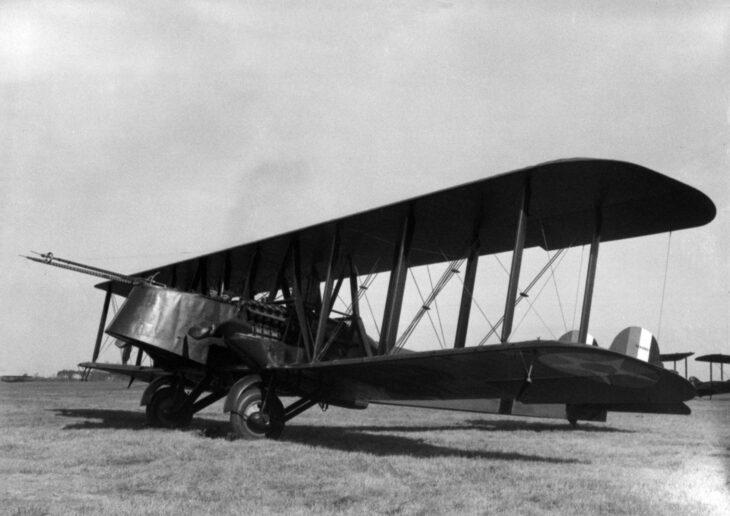

Between June and July 1921 the bombers sank an ex-German destroyer and the light cruiser Frankfurt. The Ostfriesland, a dreadnought built to survive torpedoes and shellfire, was the real test.
Mitchell had been told to use smaller bombs and personally pushed through the design of 2,000-pound weapons instead. His pilots were trained to aim for the water close alongside, where the blast would open the hull below the armor.
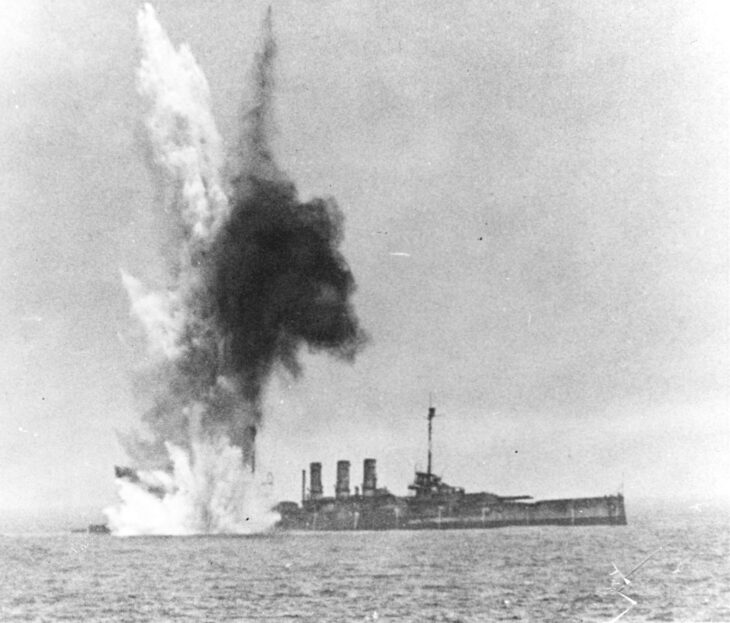
On July 21 the Army went first, against a plan that had the Navy’s bombers dropping before his. Two of the heavy bombs exploded close alongside, the hull plates gave way, and the battleship rolled over and went down.

Bareheaded on the deck
Before the tests, Navy Secretary Josephus Daniels offered to stand bareheaded on the deck of any ship Mitchell tried to bomb. In 1923, Mitchell’s bombers sank two more old U.S. battleships, the Virginia and the New Jersey, off Cape Hatteras.
Did the Ostfriesland Test Prove What Mitchell Said?
Only partly, and the Navy said so at the time. The ship was unmanned and could not maneuver, and nobody was shooting back at the bombers.
Navy studies later found that the Ostfriesland had suffered little damage above the waterline. She sank from flooding that spread through doors and seams no crew was there to close, and the Navy argued that damage control could have saved her.
Mitchell had also broken the rules the Navy set for the test, which called for slow bombing with pauses for inspection. The Navy declared the results void for that reason.
Yet the point stuck. The Navy’s new Bureau of Aeronautics, set up in 1921 under William Moffett, pressed ahead with aircraft carriers, and two decades later Japanese carrier aircraft sank American battleships at their moorings, as told in our account of every aircraft that fought at Pearl Harbor.
Why Was Billy Mitchell Court-Martialed?
Not for sinking the battleship, and not for predicting Pearl Harbor. He was court-martialed for insubordination, over what he said to the press in September 1925.
In March 1925 his temporary rank lapsed and he reverted to colonel, his permanent rank, with a posting to San Antonio, Texas. It was routine at the time, but many saw it as exile.
On September 3, 1925, the Navy airship Shenandoah broke apart in a storm, killing 14 men. Two days later Mitchell accused the Army and Navy leadership of incompetence and an “almost treasonable administration of the national defense.”
President Calvin Coolidge ordered charges under the 96th Article of War, the catch-all for conduct that discredits the service. The trial ran for about seven weeks before a panel of senior officers, none of whom had aviation experience.
One of the judges was Douglas MacArthur, the youngest on the panel, who later said he had voted to acquit. On December 17, 1925, the court found Mitchell guilty on every specification.
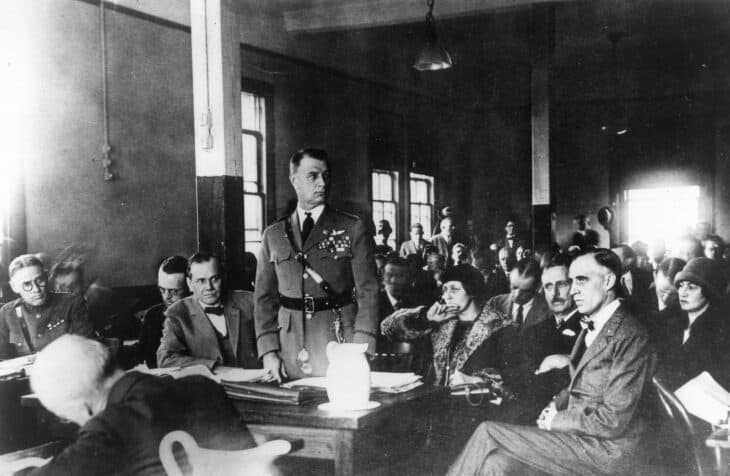

The sentence was five years’ suspension from duty without pay, which Coolidge reduced to half pay. Mitchell resigned instead, on February 1, 1926, and spent the next decade writing and speaking for air power as a civilian.
1916
Learns to fly. Pays $1,470 for private lessons at the Curtiss school in Newport News, Virginia.
Sept. 1918
Saint-Mihiel. Directs 1,481 American and Allied aircraft in one coordinated air operation.
July 21, 1921
Ostfriesland sunk. Army bombers sink the captured German battleship off the Virginia Capes.
Sept. 1923
Two more battleships. The old USS Virginia and USS New Jersey are sunk off Cape Hatteras.
Sept. 5, 1925
The statement. Two days after the Shenandoah crash, he accuses the War and Navy Departments of almost treasonable administration.
Dec. 17, 1925
Convicted. A court-martial finds him guilty under the 96th Article of War.
Feb. 1, 1926
Resigns. Leaves the Army rather than serve a five-year suspension.
Feb. 19, 1936
Dies. Dies in New York, aged 56, and is buried in Milwaukee.
Aug. 8, 1946
Gold medal. Congress awards a one-of-a-kind posthumous gold medal.
What Billy Mitchell’s Pearl Harbor Prophecy Actually Said
After a tour of the Pacific in 1923 and 1924, Mitchell wrote a long report warning that Japan would one day go to war with the United States. He described how a Japanese air attack on Hawaii could be carried out, and the timing he gave is what made him famous.
The report scheduled the strike on Ford Island in Pearl Harbor for 7:30 a.m., followed by an attack on Clark Field in the Philippines. On December 7, 1941, the Japanese attack on Pearl Harbor began just before 8 a.m.
The part of the legend that is not in the report
Mitchell is often quoted as predicting an attack ‘on a Sunday morning’. The 1924 report, as published by American Heritage in 1962, gives the 7:30 a.m. time but does not say Sunday. And it imagined the attack coming from land-based aircraft, not from aircraft carriers.
The weapon is where the prophecy misses. Mitchell proposed staging the attack from the islands of Niihau and Midway, with bombers brought in by transport and fighters delivered by submarine.
American Heritage, which printed the report’s key passages, noted that he “failed to reckon on the development of the aircraft carrier.” Japan struck from six carriers, the one tool Mitchell discounted.
That does not make the warning worthless. He saw that Oahu was an “easy, compact and convenient object for air attack” nearly two decades before it became one. He just did not see how.
Did Billy Mitchell Get the Medal of Honor?
No, although many sources say he did. In 1942 President Franklin Roosevelt asked Congress to honor Mitchell, and on August 8, 1946, Congress awarded him a special gold medal “in recognition of his outstanding pioneer service and foresight in the field of American military aviation.”
It is a Congressional Gold Medal, a one-off struck by the Philadelphia Mint, not the Medal of Honor given for valor in combat. Even the National Museum of the U.S. Air Force once listed it as a “special Congressional Medal of Honor”; its fact sheet now calls it the Congressional Gold Medal.
The rank is muddled too. Mitchell is usually called General, but his last permanent rank was colonel, and bills to promote him after his death failed repeatedly. A 2003 House bill to let the president commission him as a major general never passed the Senate.
The conviction still stands. In 1958 his son asked the Air Force to set it aside, and the Air Force secretary refused: Mitchell’s views had been vindicated, he ruled, but his insubordination had not been justified.
How Billy Mitchell Is Remembered
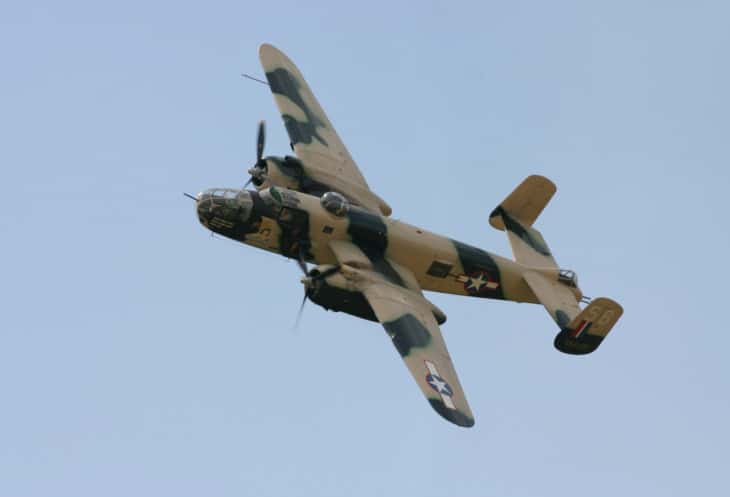
His name went onto the North American B-25 Mitchell, a twin-engine bomber introduced in 1941. Nearly 10,000 were built, including the 16 that flew the Doolittle Raid on Japan in April 1942.

Milwaukee’s airport became General Mitchell Field in 1941 and is now Milwaukee Mitchell International. He is buried in the city’s Forest Home Cemetery.
His real monument is the U.S. Air Force, which became a separate service in 1947, the independence he was court-martialed for demanding too loudly. It is why he still draws more readers than most of the aviators in our ranking of the most famous pilots in history.
So the next time someone says Billy Mitchell predicted Pearl Harbor, they are half right. He saw the target and the hour. He missed the aircraft carrier, the weapon that proved his point better than any battleship he ever sank.
Sources and references used for research and fact-checking.
- Wikipedia, Billy Mitchell
- National Museum of the U.S. Air Force, Brig. Gen. William "Billy" Mitchell
- National Museum of the U.S. Air Force, Gen. Billy Mitchell's Congressional Gold Medal
- U.S. Centennial of Flight Commission, Billy Mitchell and the Bombing Tests
- Naval Gazing, Billy Mitchell and the Ostfriesland, Part 3
- American Heritage, Billy Mitchell's Prophecy
- Wikipedia, John L. Mitchell
- Wikipedia, Attack on Pearl Harbor
- Wikipedia, United States Air Force
- North Carolina Department of Natural and Cultural Resources, Billy Mitchell 1879-1936 (B-32)
Get the Newsletter
The latest aviation news and stories sent to your inbox.
About the Author

Tim is the owner and lead editor of AeroCorner since 2019, overseeing aviation content covering aircraft, airlines, airports, and the broader aviation industry. Through years of researching, writing, editing, and publishing aviation-focused content, he has developed extensive practical knowledge of commercial aviation and air travel. Based in Asia and a frequent traveler himself, Tim also brings firsthand passenger experience to AeroCorner’s coverage. Outside of publishing, he has also explored aviation firsthand through hands-on flight training in New Zealand.