

Table of Contents
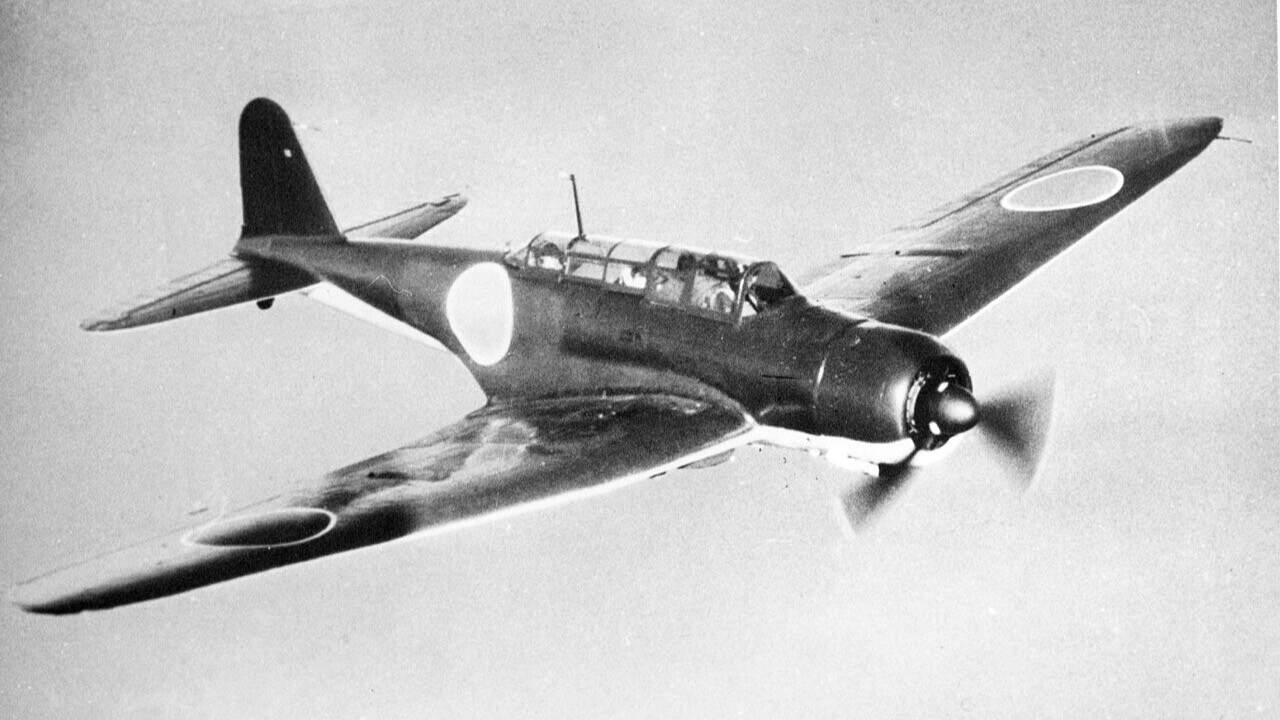
Three Japanese aircraft types did almost all the damage at Pearl Harbor. The Nakajima B5N “Kate” sank the battleships, the Aichi D3A “Val” burned the airfields, and the Mitsubishi A6M2 Zero made sure nothing rose to stop them.
On the American side the story is shorter, because almost nothing got off the ground. Of 402 US aircraft in Hawaii, 188 were destroyed and 159 damaged, and just eight Army pilots managed to take off during the attack.
This is every aircraft type that flew that morning, on both sides, ordered by how much it actually changed the outcome. Specs are for the exact variant present in December 1941, which is where most accounts go wrong.
| Aircraft | Side | Number that flew | What it did |
|---|---|---|---|
| Nakajima B5N2 “Kate” | Japan | 143 | Torpedoed and bombed the battleships |
| Aichi D3A1 “Val” | Japan | 129 | Dive-bombed airfields and ships |
| Mitsubishi A6M2 Zero | Japan | 78 | Air superiority and strafing |
| Aichi E13A “Jake” | Japan | About 6 | Scouted the harbor before the strike |
| Curtiss P-40B Warhawk | US Army | A handful airborne | Most US aerial victories of the day |
| Curtiss P-36A Hawk | US Army | 5 of 39 | Shot down two Zeros |
| Douglas SBD Dauntless | US Navy | 18 | Flew in from Enterprise, lost seven |
| Boeing B-17 Flying Fortress | US Army | 12 | Arrived unarmed in the middle of it |
| Consolidated PBY Catalina | US Navy | 3 of 33 | On patrol; 30 destroyed on the water |
| Grumman F4F Wildcat | US Marines / Navy | Few | Burned at Ewa, four lost to friendly fire |
How this list works
This ranks by effect on the day, not by performance. Every aircraft type that flew a mission over or from Oahu on December 7, 1941 is included, on both sides. Aircraft that sat on the ground and were destroyed without flying are grouped at the end, because they were targets rather than participants. Midget submarines are not aircraft and are excluded. Specs are given for the variant actually present in December 1941, which matters: the Val that bombed Pearl Harbor was the D3A1, roughly 27 mph slower than the D3A2 that most spec tables quote.
1. Nakajima B5N2 “Kate”
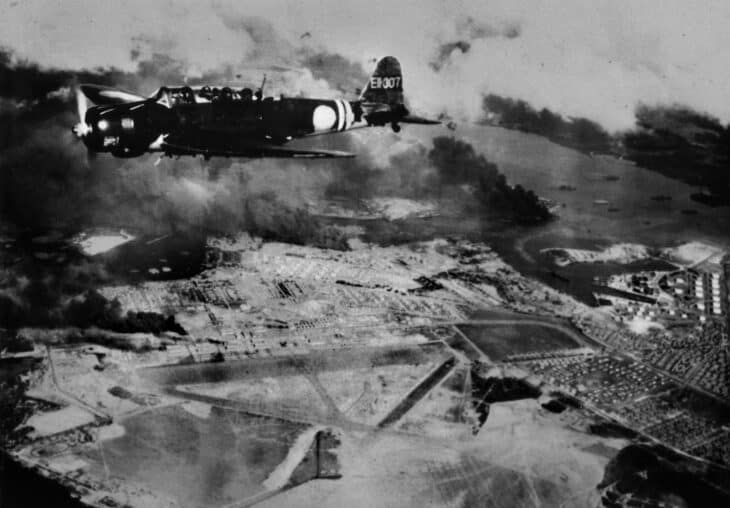

The Kate was the most destructive aircraft at Pearl Harbor, and 143 of them flew. It was a three-seat carrier attack bomber with a top speed of 235 mph (378 km/h), slower than most fighters of its day and utterly dependent on surprise.
Forty Kates in the first wave carried Type 91 torpedoes. Another 49 carried 800 kg (1,760 lb) armor-piercing bombs, and 54 more came in the second wave with general-purpose bombs.
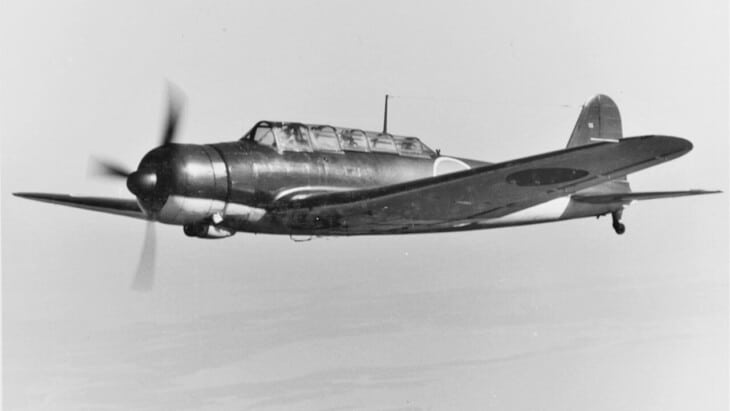
The torpedo Kates sank the battle line. The bomb-carrying Kates ended USS Arizona, when a converted 16-inch shell reached her forward magazine and caused nearly half of all American deaths that morning in a single explosion.
It cost the Japanese more than any other type in the first wave: five of the nine aircraft lost in that wave were torpedo bombers, because a torpedo run demands a long, low, straight approach. The type is covered alongside its contemporaries in our guide to Japanese bombers of WW2.
The wooden fins that made it possible
Pearl Harbor averages about 42 feet deep, and a conventional air-dropped torpedo plunged nearly 100 feet before leveling off. It would have buried itself in the mud. Japanese armorers fitted auxiliary wooden tail fins to hold the torpedoes horizontal so they dove to only about 35 feet, and added a breakaway soft-wood nosecone to cushion the hit on the water. Without that piece of carpentry, the battleships would have survived the morning.
2. Aichi D3A1 “Val”
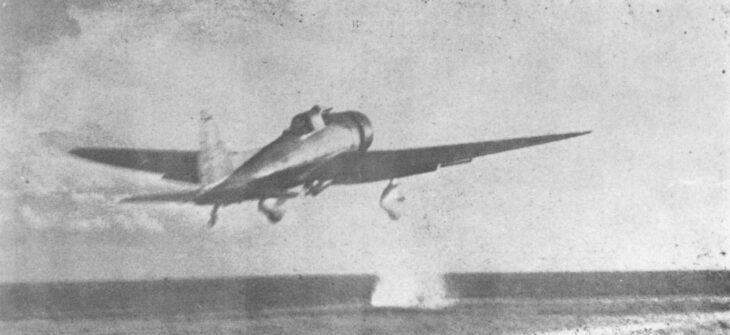

The Val was the second most numerous type in the attack, with 129 flying, and it was the one that burned Oahu’s airfields. It is instantly recognizable for its fixed, spatted landing gear, which looked obsolete in 1941 and was not.
The Pearl Harbor variant was the D3A1 Model 11, powered by a Mitsubishi Kinsei radial of about 1,000 hp, with a top speed of 240 mph (387 km/h) and a range of roughly 915 miles (1,472 km). Only 479 D3A1s were built before the faster D3A2 replaced it in 1942.
Fifty-one Vals came in the first wave and 78 in the second, each carrying a 550 lb (250 kg) bomb. Their targets were hangars, parked aircraft and, in the second wave, whatever ships were still worth hitting.
They paid for the second wave. Of the 20 Japanese aircraft lost in that wave, 14 were Vals, caught by American anti-aircraft fire that had woken up in the 15-minute gap between the two strikes.
3. Mitsubishi A6M2 Zero

Seventy-eight Zeros flew at Pearl Harbor, 43 in the first wave and 35 in the second. Their job was not to dogfight but to own the sky and strafe anything with a propeller.
The Mitsubishi A6M2 Model 21 had a top speed of 331 mph (533 km/h) at about 15,000 feet and a range no Allied fighter could match. That range is why the strike could be launched from carriers far enough north to stay undetected.
Against parked aircraft it was devastating. Against the few American fighters that got up, it was less dominant than legend suggests: Zeros were among the aircraft shot down that morning, including two credited to obsolete Curtiss P-36s.
The Zero’s reputation was largely built at Pearl Harbor and in the months after, and it deserves its place among the best Japanese fighter planes of WW2. Its weaknesses, no armor and no self-sealing tanks, only became decisive once Allied pilots learned not to turn with it.
4. Aichi E13A “Jake”
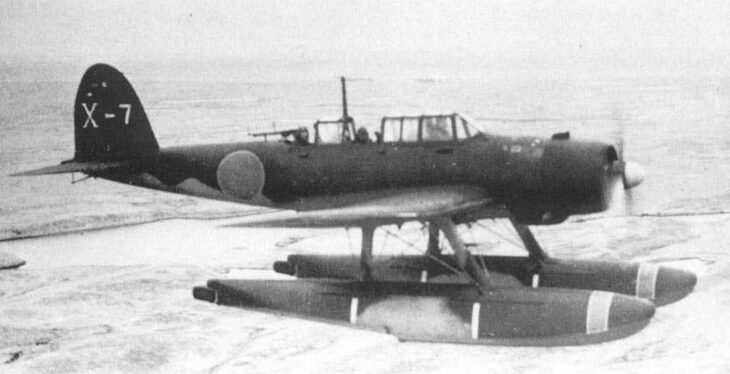

The aircraft almost nobody counts. Before the strike aircraft arrived, cruiser-launched E13A floatplanes flew ahead to confirm where the American fleet actually was.
One reported on Pearl Harbor itself. Another, from the cruiser Tone, checked the anchorage at Lahaina Roads and confirmed the fleet was not there, while four more patrolled the water between the carrier force and Niihau to watch for a counterattack.
The E13A was a three-seat floatplane with a top speed of 234 mph (376 km/h). It carried no part of the attack, yet the strike leaders flew in knowing exactly what was in the harbor because of it.
5. Curtiss P-40B Warhawk
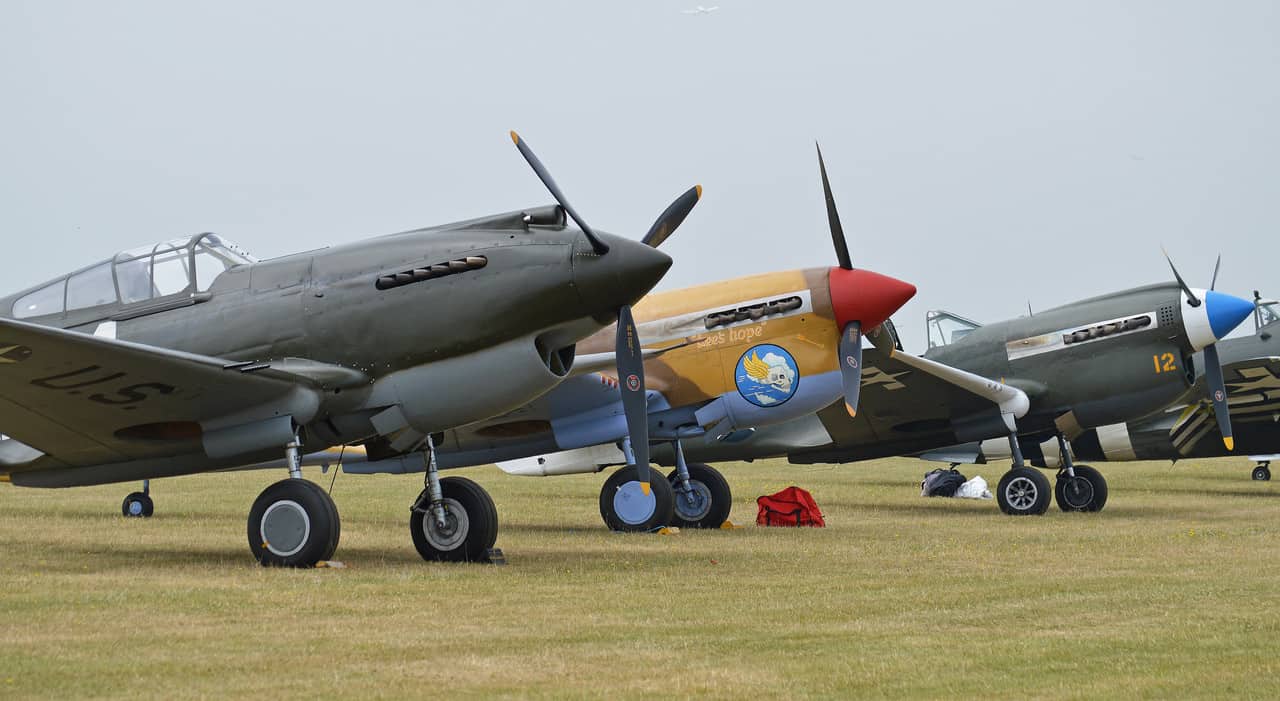
Most USAAF fighters on Oahu were P-40Bs, and most of them burned where they were parked. A few did not, and they produced the majority of American aerial victories that day.
The P-40B had a top speed of 352 mph (567 km/h) and a service ceiling of 32,400 feet. It could not turn with a Zero, but it was tough, well-armed and faster in a dive, which is how it was flown successfully for the rest of the war and why it holds its place among American fighter planes of WW2.
Second Lieutenants George Welch and Kenneth Taylor had been up all night at a party and were still in mess dress when the bombs fell. Welch phoned the auxiliary strip at Haleiwa, where 18 P-40Bs were parked, and Taylor drove the 10 miles (16 km) there at up to 100 mph while being strafed.
They took off with only .30-caliber ammunition loaded, because there was no time to wait for the rest. Both were nominated for the Medal of Honor by General Henry Arnold and both received the Distinguished Service Cross.
One of them is still flying
P-40B serial 41-13297 was delivered to the Army in March 1941 and sent to Wheeler Field in Hawaii the following month. It survived December 7, was recovered decades later and restored, and as of 2026 it is the only airworthy P-40B in the world and the only flyable American fighter that was present at Pearl Harbor.
6. Curtiss P-36A Hawk

The P-36 was already considered obsolete in 1941, which is exactly why it was in Hawaii. Thirty-nine of them sat at Wheeler Field, and five got airborne.
Those five were credited with shooting down two A6M2 Zeros for the loss of one P-36. Those were among the first American aerial victories of the Second World War, scored by a fighter the Air Corps had already written off.
The P-36A managed 313 mph (504 km/h) on a 1,050 hp Pratt & Whitney R-1830 radial, with a range of 830 miles (1,336 km) and as little as two machine guns. It was slower and far less heavily armed than the Zero it beat.
Eight Army pilots got airborne during the attack in total, and six were credited with at least one kill: Lewis Sanders, Philip Rasmussen, Kenneth Taylor, George Welch, Harry Brown and Gordon Sterling Jr. The P-36A on display at the National Museum of the US Air Force wears Rasmussen’s markings.
7. Douglas SBD Dauntless
.jpg)
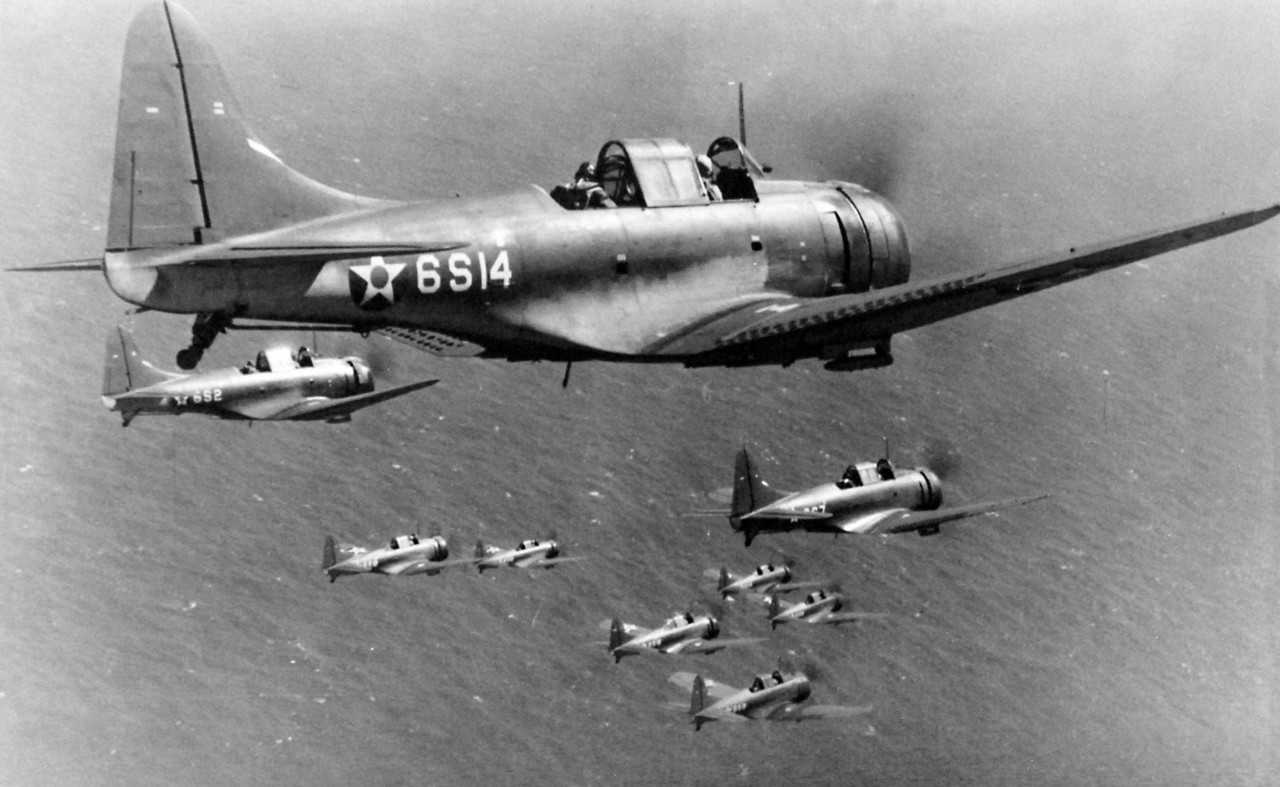
The Navy’s best aircraft that morning arrived from the sea and flew straight into the attack without knowing it was happening.
Eighteen SBD Dauntlesses of Scouting Squadron Six and Bombing Squadron Six had launched from USS Enterprise, which was returning from delivering fighters to Wake Island. They reached Oahu in the middle of the first wave.
Scouting Six lost six aircraft and Bombing Six lost one, killing eight airmen. At least one was brought down by American anti-aircraft fire from the ground.
Six months later the same aircraft type sank four Japanese carriers at Midway, including Akagi, Kaga, Soryu and Hiryu, four of the six carriers that had launched the Pearl Harbor strike.
8. Boeing B-17 Flying Fortress
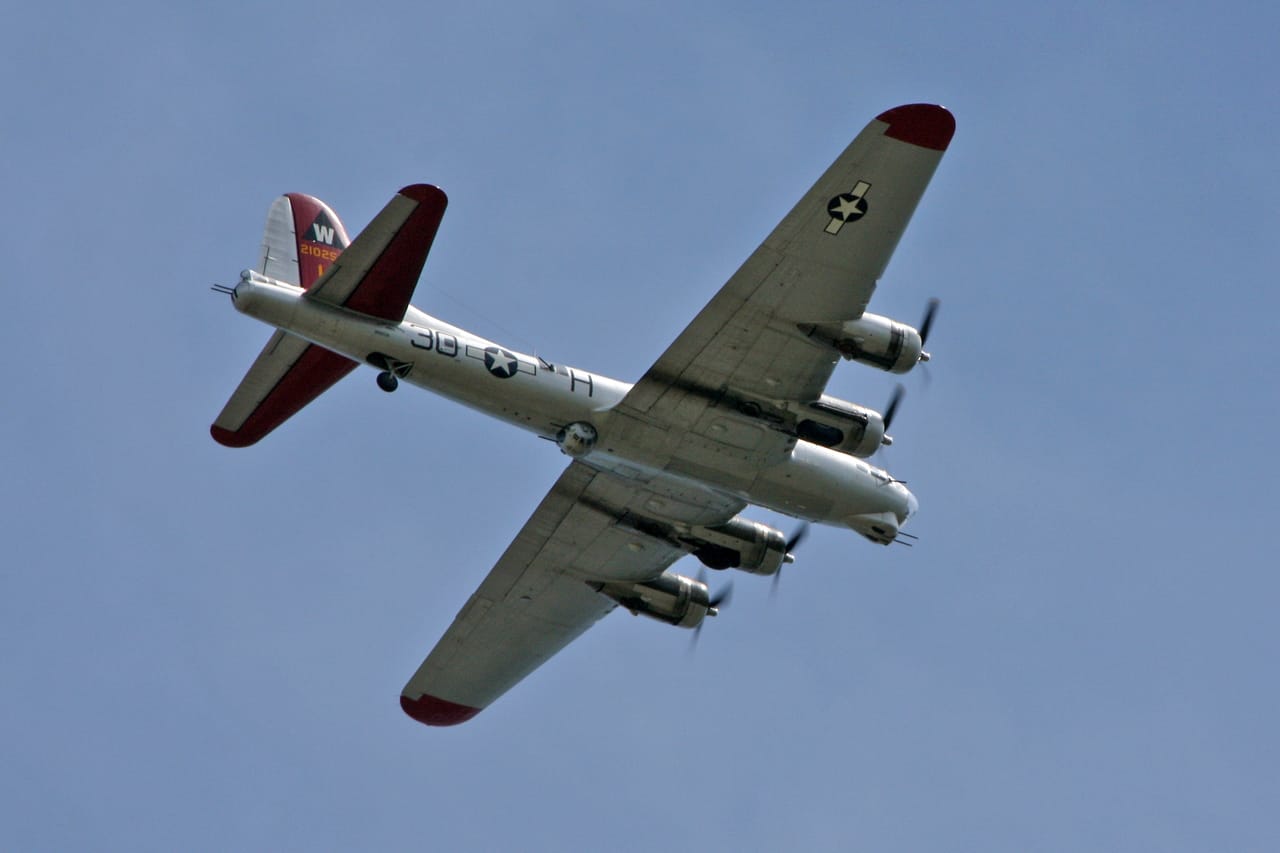
Twelve B-17s flew into Pearl Harbor during the attack, completely unarmed, and they are the reason the radar warning was ignored.
They had left Hamilton Field north of San Francisco on December 6, bound for the Philippines via Hickam Field. Loaded with fuel for a 13-hour flight, they carried no guns and no ammunition.
Six were B-17Cs of the 38th Reconnaissance Squadron under Major Truman Landon, and six were B-17Es of the 88th Reconnaissance Squadron under Captain Richard Carmichael. They arrived to find the field cratered and the sky full of Japanese aircraft.
Eight landed at Hickam, two at Haleiwa, one at Bellows and one on the Kahuku golf course. One aircraft was destroyed and three damaged, with one man killed and six wounded.
The warning that these bombers erased
At 7:02 a.m., privates George Elliott and Joseph Lockard picked up the incoming first wave on an SCR-270 radar at Opana Point, 136 nautical miles out. They phoned it in. Lieutenant Kermit Tyler, a newly assigned officer at a thinly manned intercept center, assumed it was the flight of B-17s due in from California. The bearing was only a few degrees off, and the operators never mentioned that the formation was larger than anything they had seen. Tyler could not explain his reasoning because the B-17 flight was classified. He told them not to worry about it.
9. Consolidated PBY Catalina

The Navy had 33 PBY Catalinas in Hawaii on December 7. Thirty were destroyed.
The three that survived were the three already in the air on patrol, and all returned undamaged. It is the cleanest illustration of the day’s real lesson: on the ground was the dangerous place to be.
The Catalina was a long-range patrol flying boat, slow and enormous, built to loiter for hours looking for ships. Parked in rows on the ramps at Kaneohe and Ford Island, they were the easiest targets on the island.
10. Grumman F4F Wildcat
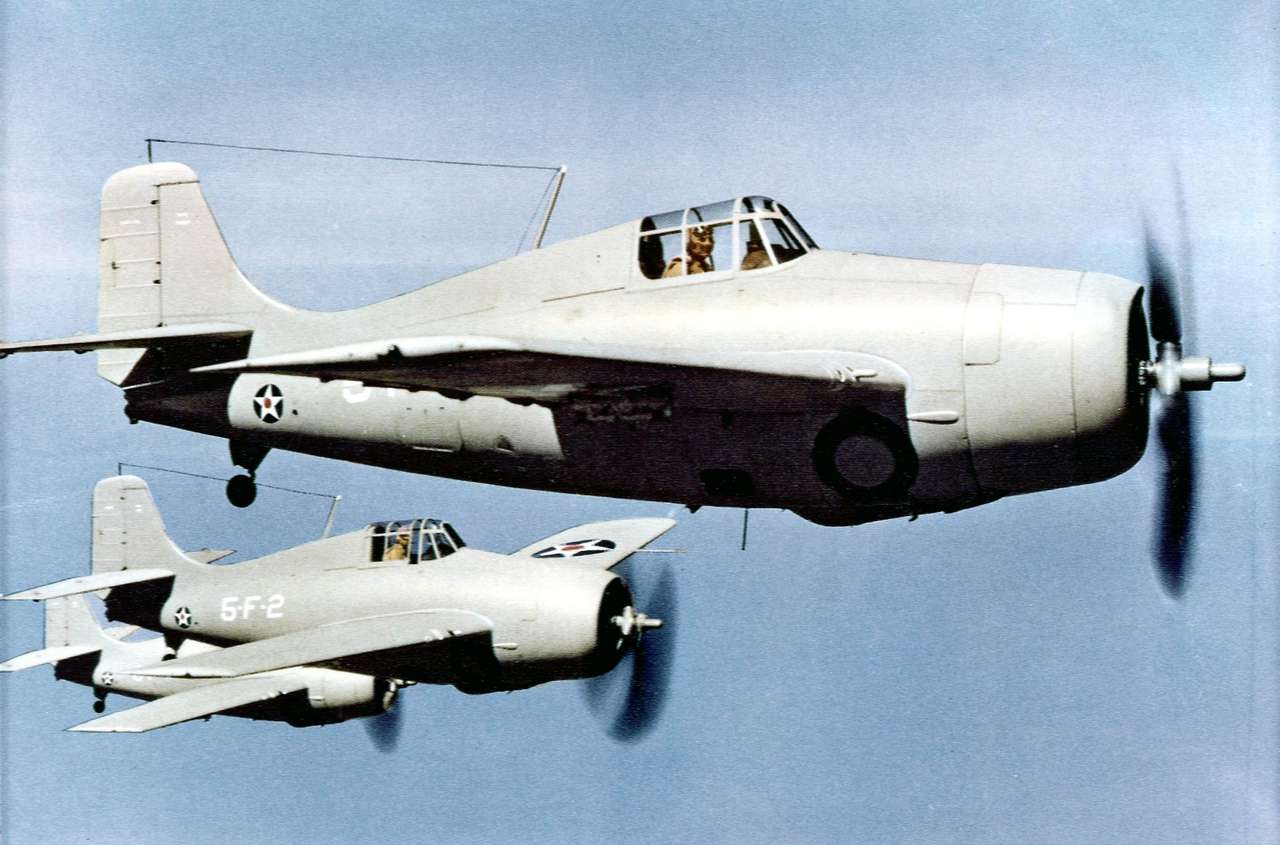

The Marine fighter squadron at Ewa Mooring Mast Field, VMF-211, lost nine F4F Wildcats on the ground. Half the squadron was not there, having been shipped to Wake Island aboard Enterprise weeks earlier.
Ewa lost 33 of its 49 aircraft destroyed outright, with 16 more seriously damaged. Four Marines were killed there.
The Wildcat’s worst moment came after dark. A flight from Enterprise tried to land at Ford Island that night, and American gunners, still braced for a third wave, shot down four of them.
11. The aircraft that never got off the ground
Most of the 402 American aircraft in Hawaii never flew that day. They are worth naming because their presence explains how 188 aircraft were lost without a real air battle.


Wheeler Field still held Boeing P-26 Peashooters, open-cockpit monoplane fighters of early 1930s design. Ford Island held Douglas TBD Devastator torpedo bombers and Vought SB2U Vindicators, both already outclassed.
The battleships and cruisers carried their own floatplanes, including Vought OS2U Kingfishers and Curtiss SOC Seagulls, catapult-launched spotters that mostly burned with their ships.
Many aircraft had been parked wingtip to wingtip in the open, a deliberate anti-sabotage measure ordered to make them easier to guard. It made them easier to strafe instead, which is how a raid of under two hours destroyed 188 of them.
Why the aircraft numbers never quite match
You will see the Japanese force given as 353 aircraft, 350, or 183 plus 170. All three are defensible, and the difference is not sloppiness.
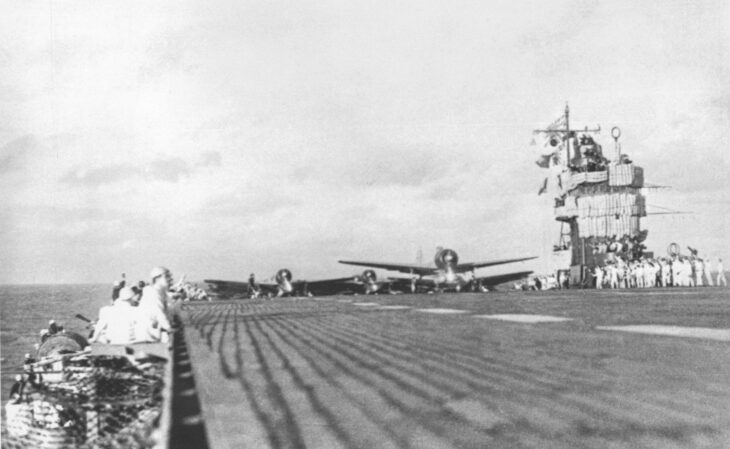

Japan planned 189 aircraft for the first wave and 171 for the second. Six failed to launch from the first and four from the second, so the counts drop depending on whether you measure planned, launched or actually over the target.
Adding the types gives 143 Kates, 129 Vals and 78 Zeros, or 350 aircraft. The Naval History and Heritage Command gives 353 for the force as a whole. The National Museum of the US Air Force gives 183 and 170.
Losses split the same way. The Navy records 29 Japanese aircraft lost, nine in the first wave and 20 in the second, while the Air Force museum gives 28 shot down. American losses are recorded as 188 destroyed by the Navy and 151 destroyed on the ground by the Air Force museum, which counts only aircraft caught on the field.
What about the third wave?
There was no third wave. Vice Admiral Chuichi Nagumo chose not to launch one, and the fuel tanks, submarine base and repair yards at Pearl Harbor survived untouched. Those facilities let the Pacific Fleet keep operating out of Hawaii through 1942. The attack also missed its most important targets entirely: all three American carriers, Enterprise, Lexington and Saratoga, were at sea. Six months later, aircraft from those carriers sank four of the six Japanese carriers that launched the Pearl Harbor strike.
FAQ
Sources and references used for research and fact-checking.
- Naval History and Heritage Command, Pearl Harbor: December 7, 1941
- National Museum of the United States Air Force, Day of Infamy: The Pearl Harbor Attack
- National Museum of the U.S. Navy, Pearl Harbor: Japanese Aircraft
- HyperWar / ibiblio, Aircraft Attack Organization, United States Strategic Bombing Survey
- National Museum of the United States Air Force, Curtiss P-36A Hawk
- National Naval Aviation Museum, P-40B Tomahawk
- Wikipedia, Attack on Pearl Harbor
- Wikipedia, Aichi D3A
- Wikipedia, Aichi E13A
- Warfare History Network, B-17s at Pearl Harbor
- Warfare History Network, Scout Squadron 6 During the Pearl Harbor Attack
- HyperWar / U.S. Marine Corps historical monograph, Infamous Day: Marines at Pearl Harbor
Get the Newsletter
The latest aviation news and stories sent to your inbox.
About the Author

Tim is the owner and lead editor of AeroCorner since 2019, overseeing aviation content covering aircraft, airlines, airports, and the broader aviation industry. Through years of researching, writing, editing, and publishing aviation-focused content, he has developed extensive practical knowledge of commercial aviation and air travel. Based in Asia and a frequent traveler himself, Tim also brings firsthand passenger experience to AeroCorner’s coverage. Outside of publishing, he has also explored aviation firsthand through hands-on flight training in New Zealand.