

Military Propellor Planes
Hawker Hurricane
ICAO: HURI
Japan's long-range carrier fighter, in service 1940 to 1945
Updated: by Tim de Vries

The latest aviation news and stories sent to your inbox.
The Mitsubishi A6M Zero was the Imperial Japanese Navy’s lightweight carrier fighter, designed by Jiro Horikoshi and first flown on April 1, 1939. It entered service in July 1940 as the Type 0, and roughly 10,900 to 11,300 were built through 1945, depending on whose count you trust. It out-turned and out-ranged every Allied fighter it met in 1941 and 1942, then lost ground to heavier American types.
Live Fleet Activity (A6M)
Fetching live data…

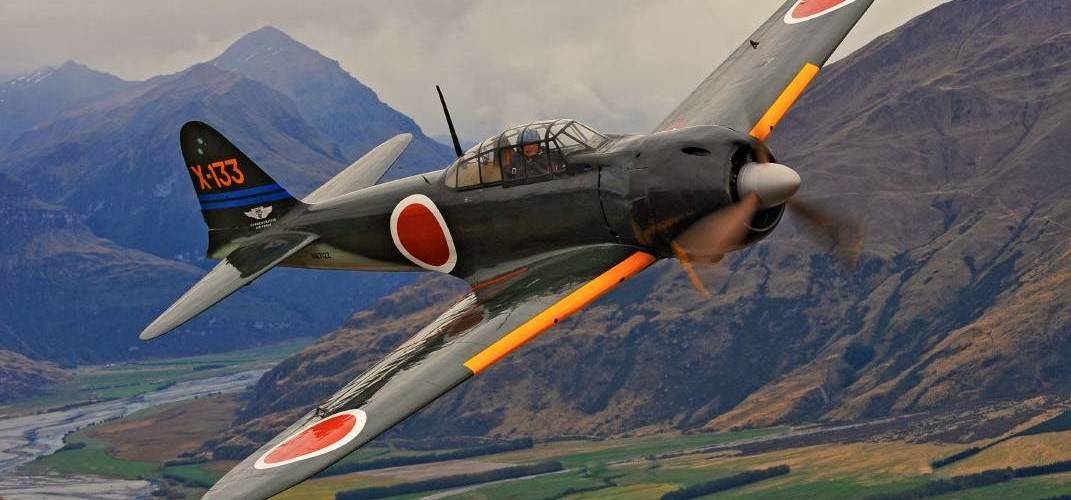
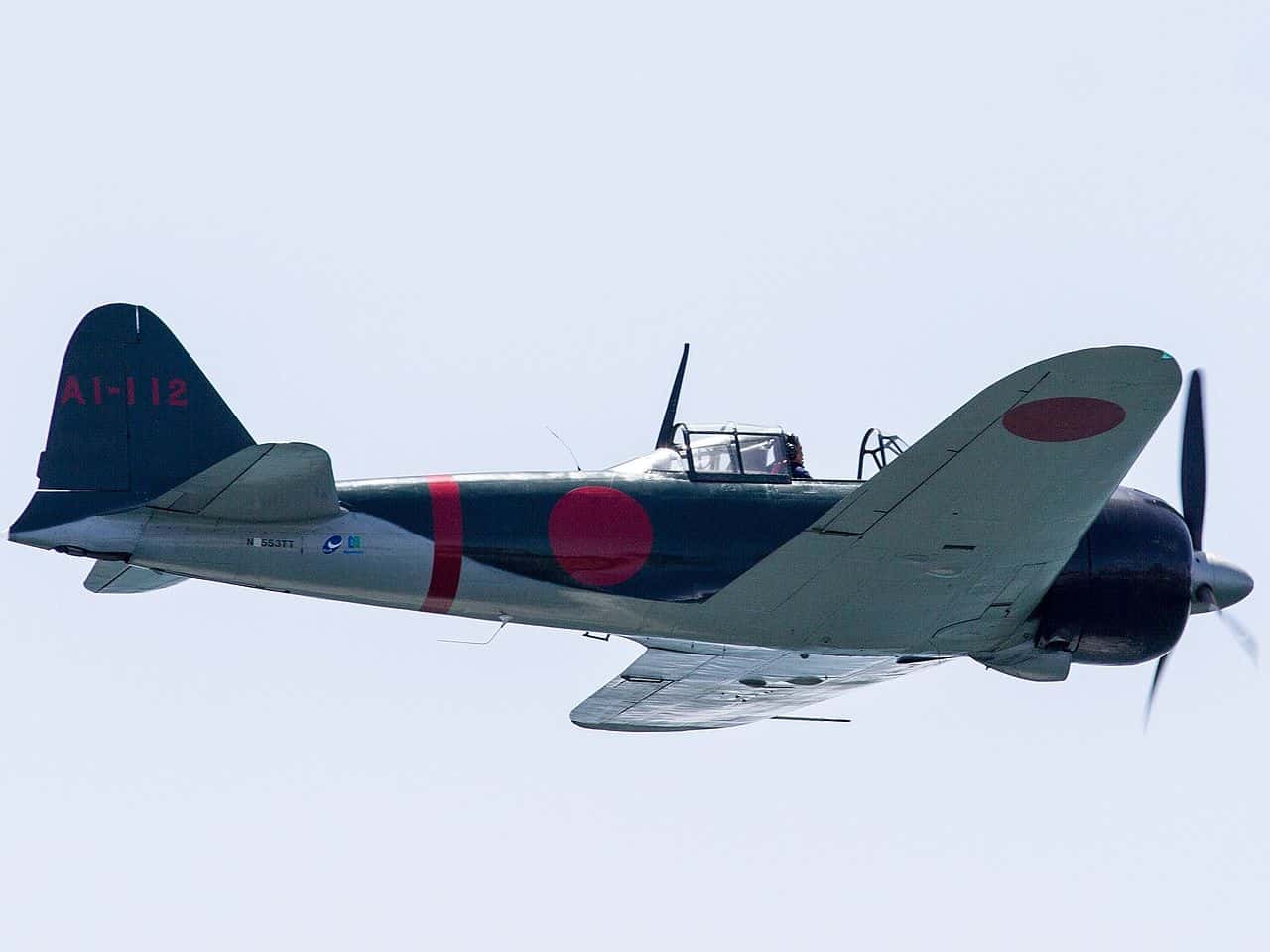

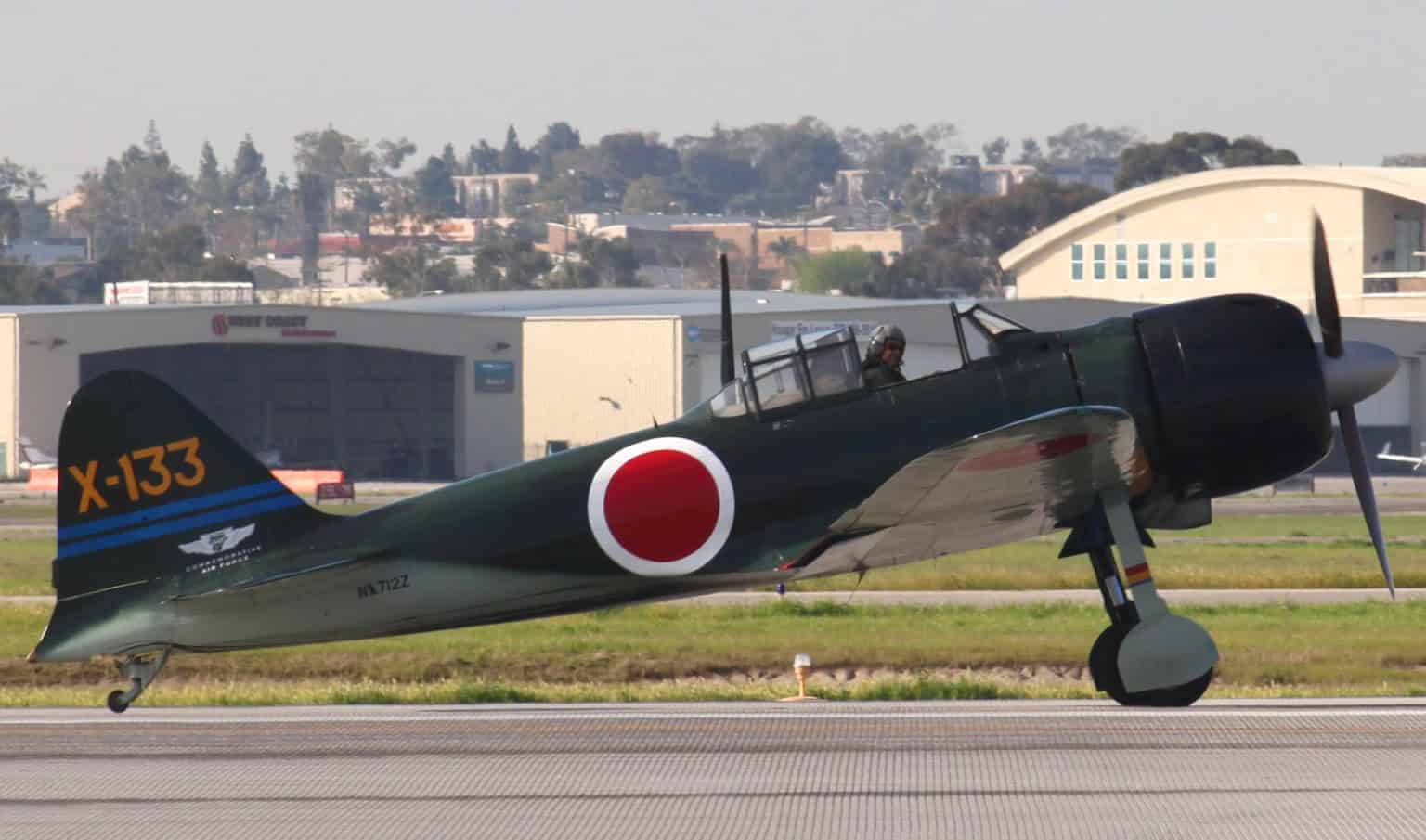
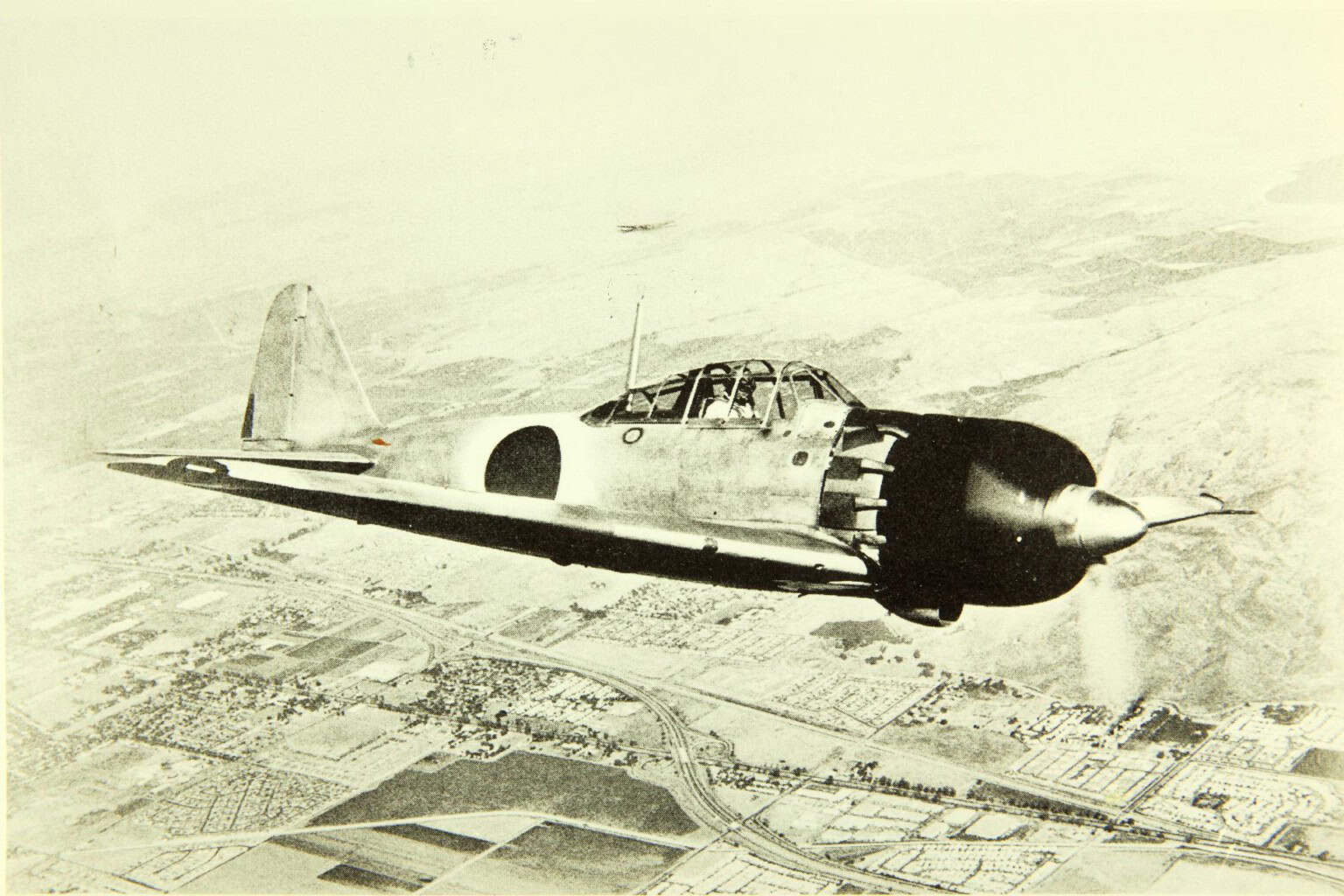
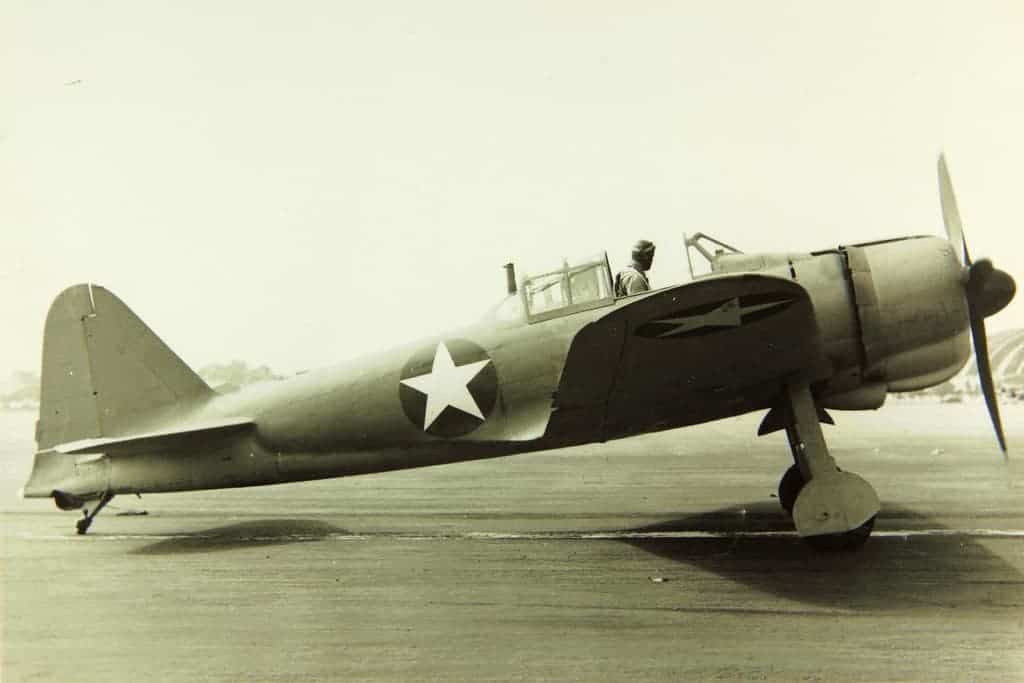

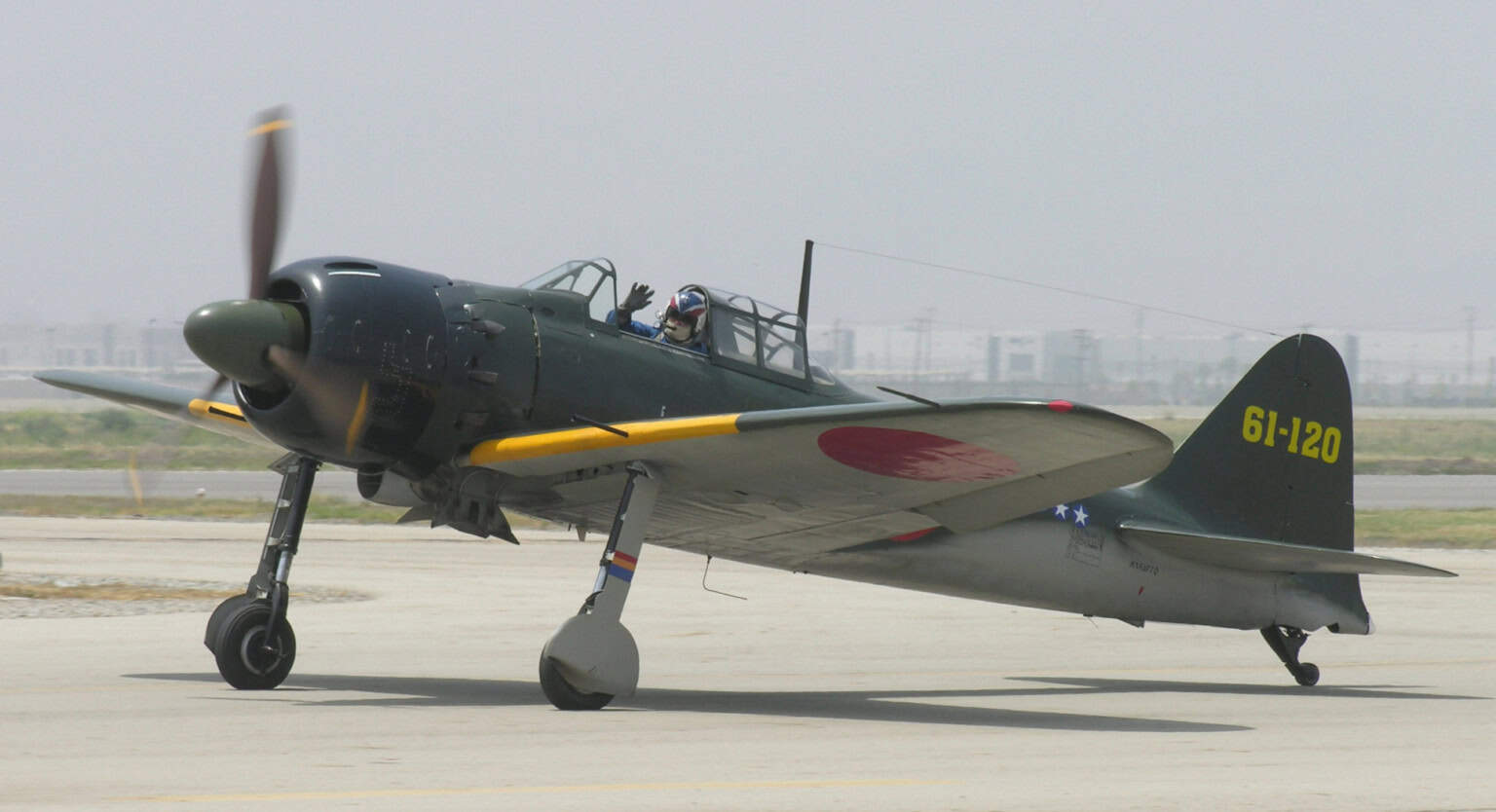
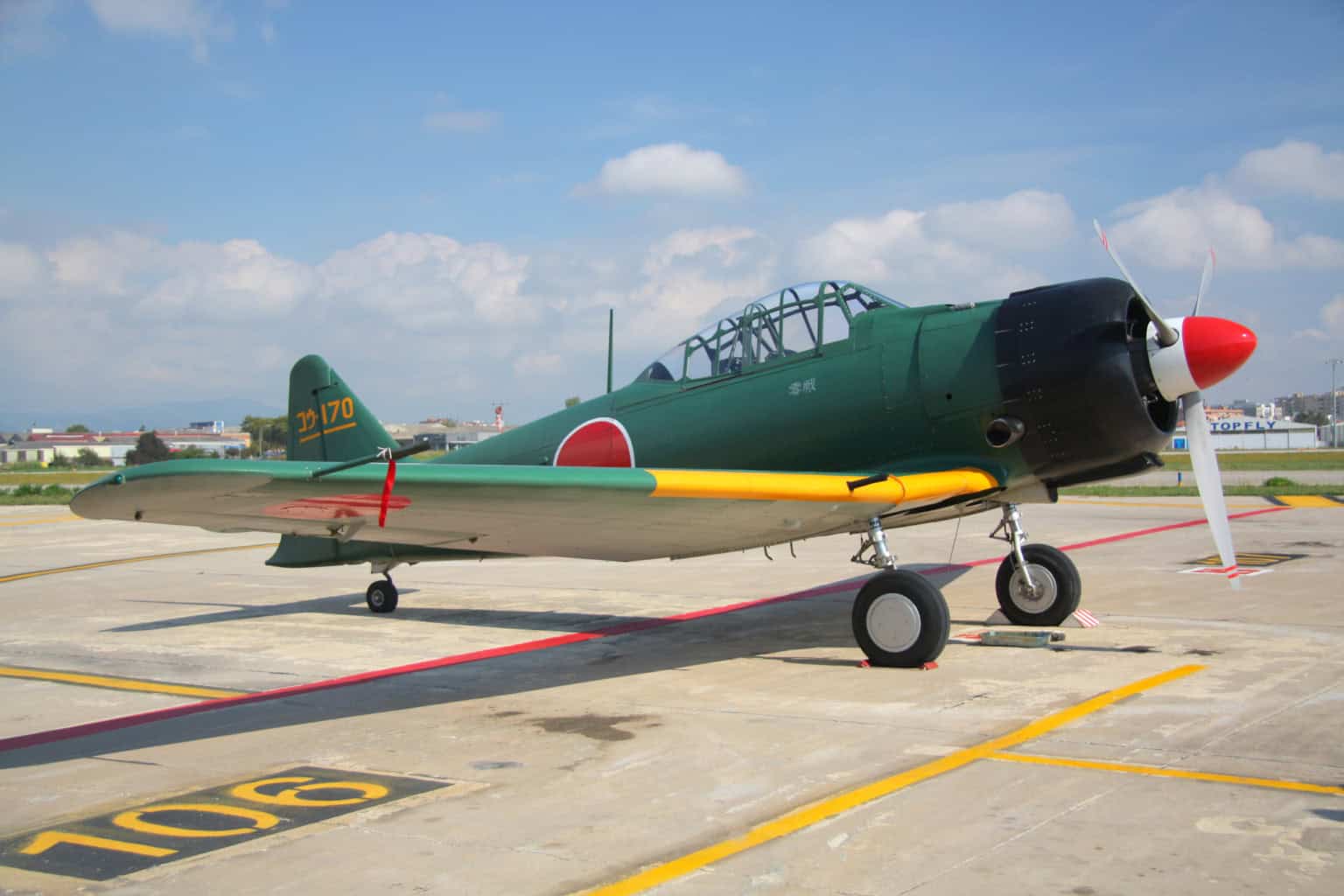
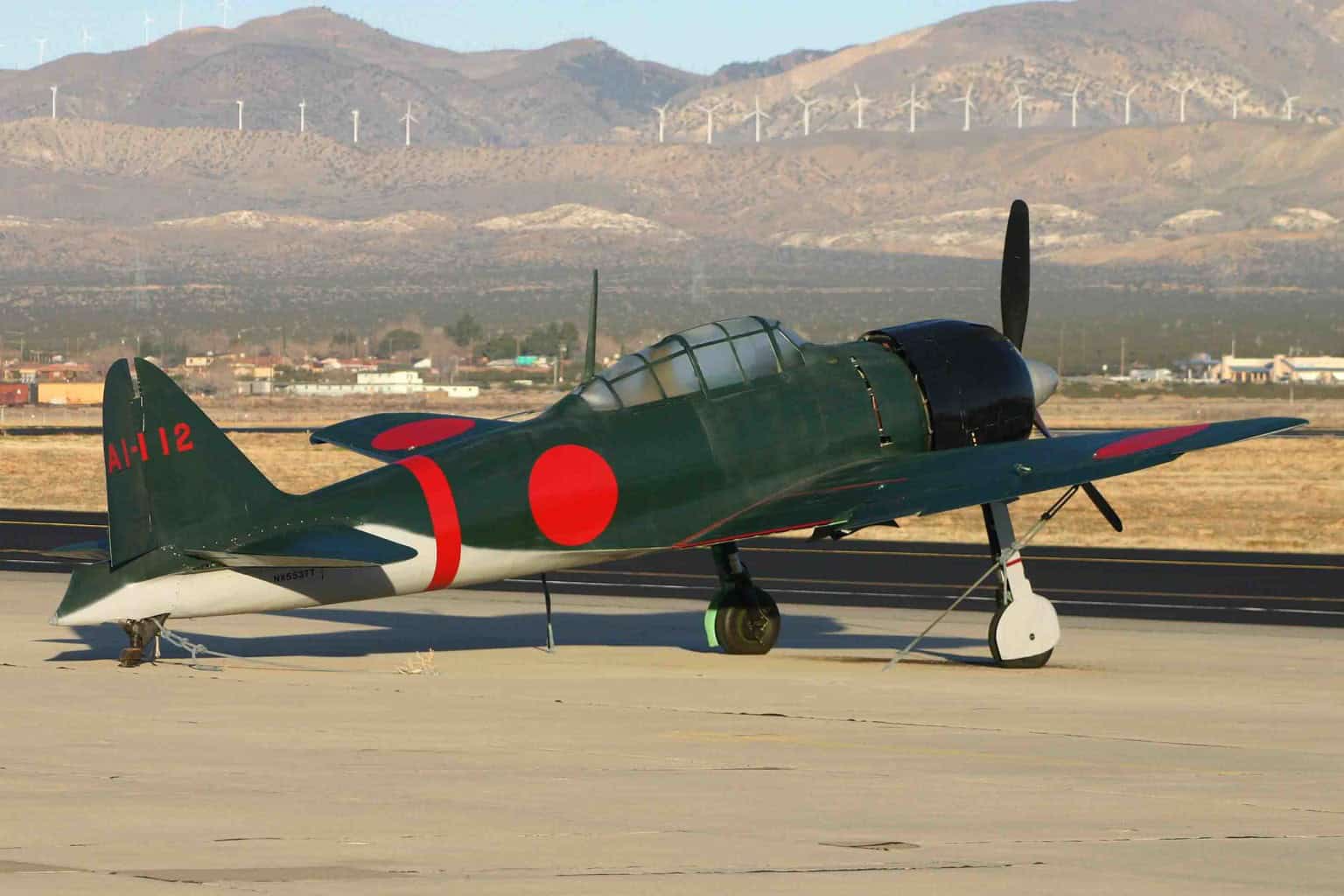
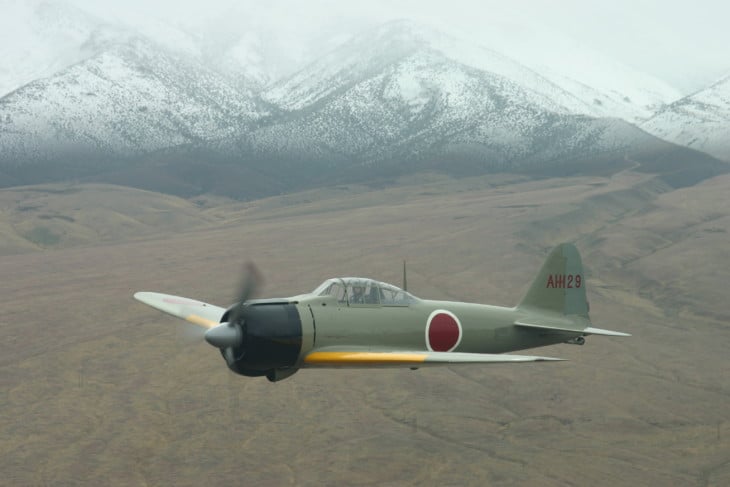
The Mitsubishi A6M Zero was a single-seat carrier fighter built for the Imperial Japanese Navy. Mitsubishi’s chief designer, Jiro Horikoshi, led the design, and the prototype first flew on April 1, 1939.
It entered service on July 1, 1940. In the early Pacific war its turning ability and range caught Allied pilots off guard.
The Navy’s October 1937 requirement asked for two 20 mm cannons, two 7.7 mm machine guns and two 60 kg bombs. Horikoshi met it by building mostly from a light Sumitomo alloy and leaving out armor and self-sealing fuel tanks.
“Zero” comes from its official name, the Type 0. The zero refers to the last digits of the year it entered service: 2600 on the Japanese imperial calendar, which was 1940.
Japanese crews often called it the Reisen, short for Rei (zero) and sentoki (fighter). The Allied code name was “Zeke,” part of a system created by U.S. Army Captain Frank T. McCoy Jr. in which single-engine fighters got male-sounding names.
The full specification table for the aircraft is on this page. A few figures need context, because they describe the A6M2 Model 21, the version Allied pilots met first.
Its top speed was 331 mph (533 km/h) at 14,930 feet. That was modest even in 1941, so the Zero’s edge came from weight and wing area, not raw speed.
The published range of 1,010 nm assumes a clean airframe. With a drop tank under the fuselage, the Zero flew much farther, which is how Zeros reached targets Allied planners thought were out of reach.
The cost of that light build was fragility. With no armor and no self-sealing tanks, a few hits could bring one down.
The A6M2 Model 21 was the carrier version at Pearl Harbor. Folding wingtips were added after the 65th aircraft so it fit on carrier elevators. Mitsubishi built 740 and Nakajima built 800.
The A6M3 Model 32 got the more powerful Sakae 21 engine. Only 343 were built and its range was shorter, so the Model 22 brought the folding tips back and improved the range.
The A6M5 Model 52 had shorter wings without folding tips. It could reach 351 mph (565 km/h) at 20,000 feet and is sometimes considered the most effective variant.
The A6M6 was a single prototype with water-methanol boost and self-sealing tanks. The A6M7 was a dive bomber that entered production in May 1945, and it was also used for kamikaze attacks.
The A6M8 used a Mitsubishi Kinsei 62 engine. Two prototypes were finished in April 1945, and the 6,300 planned for production were never built.
Other versions include the Nakajima A6M2-N “Rufe” floatplane and the two-seat A6M2-K trainer, with 508 trainers built by Hitachi and Sasebo.
The Model 21 used a single Nakajima NK1C Sakae 12, a 14-cylinder air-cooled radial. It produced 940 hp at takeoff.
Later versions took the more powerful Sakae 21 and 31, while the late A6M8 moved to the larger Kinsei. Mitsubishi designed the airframe, but Nakajima built the Sakae, and Nakajima also built more Zeros than Mitsubishi did.
The standard fit was two 7.7 mm machine guns in the cowling and two 20 mm Type 99 cannons in the wings. Later models carried more rounds per cannon, and the A6M5c added two 13.2 mm guns in the wings.
The Zero could also carry two 60 kg bombs. Those light guns are one reason it struggled against the six .50 caliber guns of the F6F Hellcat.
The Zero’s first combat came over China. On September 13, 1940, 13 A6M2s led by Lt. Saburo Shindo attacked 34 Chinese fighters over Chongqing. The Japanese claimed all of them with no losses, though historians dispute the figures.
At the time of the Pearl Harbor attack, 521 Zeros were active in the Pacific, 328 of them in first-line units.
On June 4, 1942, an A6M2 flown by Flight Petty Officer Tadayoshi Koga crash-landed on Akutan Island in the Aleutians after taking anti-aircraft hits. Koga died in the crash. The wreck was shipped to NAS North Island in San Diego and tested.
That study let American engineers learn the Zero’s weaknesses. Allied pilots shifted to boom-and-zoom tactics and the Thach Weave, then the F6F Hellcat and F4U Corsair took over.
By 1945 the A6M5 and A6M7 were being flown in kamikaze attacks.
For comparison with its rivals, see our guide to Japanese fighter planes of WWII. For production numbers across the war, see the most produced aircraft of WWII.

Sources disagree. The U.S. Strategic Bombing Survey counted 10,934 including floatplanes and trainers, while historian Francillon counted 11,291. A commonly quoted total is 10,939.
Nakajima built 6,538 Zeros and Mitsubishi built 3,879, with another 517 trainers from Hitachi and Sasebo.
Yes, but very few. The Planes of Fame museum in Chino, California, flies an A6M5 (serial 5357). It was captured on Saipan in June 1944 and restored to flight in 1978 and again in 2016.
The museum calls it the only authentic A6M flying, because it still has its original Nakajima Sakae engine.
The Commemorative Air Force’s SoCal Wing flies an A6M3 Model 22 recovered from Babo, New Guinea, in 1991. It says the aircraft is one of only five flyable Zeros in the world, though it runs a Pratt & Whitney R-1830 instead of a Sakae.

Yes. Planes of Fame flies an A6M5 with its original Sakae engine, and the Commemorative Air Force flies an A6M3 with a U.S. engine. The CAF describes its aircraft as one of five flyable Zeros, but no single authoritative count exists.
Mitsubishi developed it under chief designer Jiro Horikoshi. Nakajima, which built the engine, also produced more airframes than Mitsubishi.
Its official name was the Type 0, after the last digit of 2600, the imperial year equal to 1940. The Allies called it “Zeke.”
There is no agreed answer, and the Zero is not usually given that title. It was light and forgiving to turn, and its weaknesses were armor and firepower.
Sources and references used for research and fact-checking.


