


Table of Contents
The F-35 program owns about 26 million spare parts worth roughly $31 billion, and federal auditors say nobody has a complete list of them.
On Nov. 9, 2026, the Government Accountability Office released report GAO-27-108713. It found that as of March 2026, the F-35 Joint Program Office (JPO) “did not know the status” of more than 1 million lost F-35 spare parts, valued at over $85 million, that GAO first flagged in 2023.
Those are parts for the Lockheed Martin F-35 Lightning II, the stealth fighter flown by the US Air Force, Navy and Marine Corps and a long list of allies. The new report says the records behind them are incomplete, often wrong, and sometimes more than three months old.
Why the Pentagon Can’t Count F-35 Parts It Owns
The parts belong to the Department of Defense, but they sit at more than 700 contractor- and government-managed facilities around the world. GAO’s summary is blunt: “Although these are DOD-owned parts, DOD does not maintain complete records of the parts.”
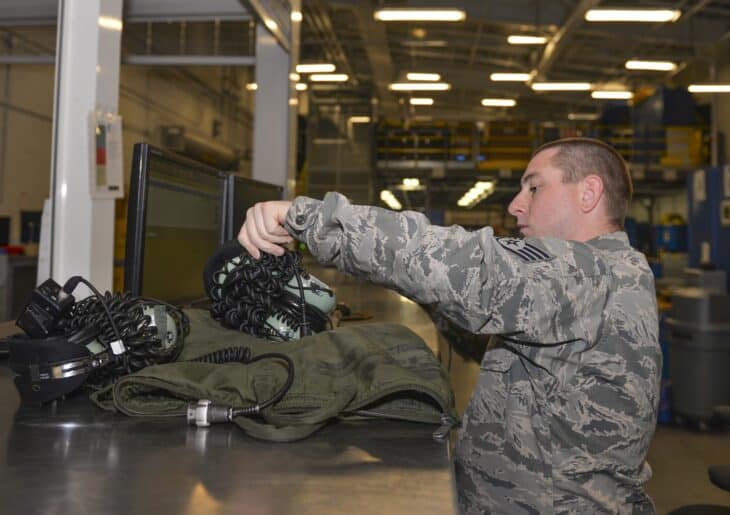

The program’s official property system is called ELMS. GAO found it does not connect to the property management systems of the two prime contractors, Lockheed Martin and Pratt & Whitney, a gap GAO first reported in 2022.
Instead, the JPO relies on data reports the contractors file quarterly. That means some of the program’s spares data can be more than three months old before anyone in government sees it.
The JPO also has no full procedure to check that contractor data before entering it. And when parts go missing at government-run sites, GAO found the office approved inventory adjustments without follow-up, even when the loss forms were incomplete or late.
That is how the 2023 losses fell through the cracks. The May 2023 report, GAO-23-106098, found one prime contractor had lost over 1 million parts worth over $85 million since May 2018, and that the JPO had reviewed less than 2% of those losses.
Since then, the contractor has reported about $28 million in parts losses covering 2012 through 2025. The JPO told GAO it “is unable to determine whether this $28 million in losses included any of the $85 million,” because it had not kept records of the outstanding cases.
26 Million Parts, $31 Billion and One-Cent Records
The headline figures, all from the November 2026 report, show how large the bookkeeping problem has become.
- About 26 million parts worth about $31 billion in the program’s inventory, a value GAO says is “likely higher due to excluded or missing F-35 parts.”
- About 17,000 parts in maintenance or repair status had not been entered into ELMS as of March 2026. They are valued at about $1.3 billion, and DOD officials said the real figure may be as high as $2.5 billion.
- Only 29% of the parts records in a December 2025 contractor data delivery contained serial numbers, and 43% contained National Stock Numbers.
- Almost 6% of records listed an acquisition cost of one cent or less.
- At least $17 million spent on physical inventories since fiscal 2020.
That last line is the uncomfortable one. GAO found those inventories “did not fully verify the existence or validate the completeness of the parts,” because the contractor data they started from was unreliable.
No wall-to-wall count was done, either. The JPO told GAO a full count of every part was not feasible.
The loss reports from government facilities are no cleaner. Of 57 cases on the JPO’s tracking spreadsheet as of April 2026, seven had no unit cost and 24 were reported more than a year after the loss was discovered.
Why Lost Parts Mean Grounded F-35s
This is not just an accounting story. Spare parts are one of the main reasons F-35s sit on the ground.
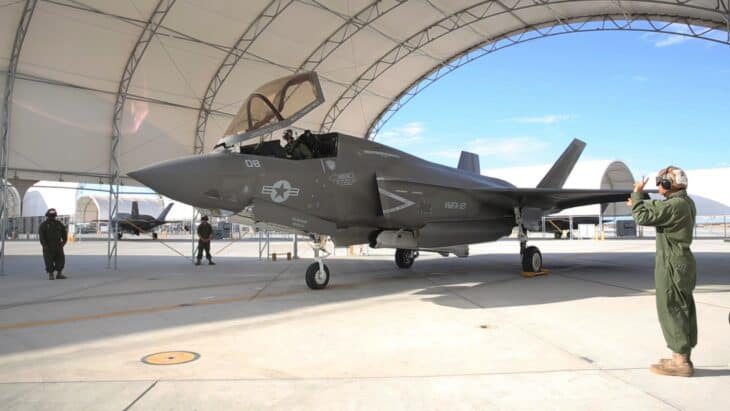

In a separate report released June 11, 2026, GAO found the fleetwide mission capable rate fell from 67% in fiscal 2021 to 44% in fiscal 2025. The full mission capable rate, meaning a jet can fly every mission it was built for, fell from 38% to 25% over the same years.
GAO named the lack of spare parts as a key challenge in that report. The Pentagon’s fix, a sustainment overhaul called the Global Support Solution Reset, is estimated to cost $13.7 billion more than previously planned through fiscal 2031, and part of it is buying more spares.
Buying more parts does not help much if the program cannot say where its current ones are. A part that exists but is not in the system is, for a maintainer waiting on it, the same as a part that does not exist.
There is a money problem too. The program already faces the per-jet price climb covered in our look at how the F-35A’s cost rose from $77.9 million to $92 million, so the fleet’s spares bill is not getting cheaper either.
The parts also sit at the heart of the Pentagon’s failed audits. DOD has received a disclaimer of opinion on every full audit from 2018 through 2025, and its auditors told GAO that leaving out these parts causes a material misstatement that cannot be quantified. Congress has set Dec. 31, 2028, as the deadline for a clean audit opinion.
What the F-35 Program Office Says It Will Fix
GAO made four recommendations: set up procedures to monitor loss reports and spot trends, and give the program’s accountable property officers F-35-specific procedures, training and a defined structure. DOD concurred with all four.
A JPO spokesperson told Air & Space Forces Magazine the office “is actively developing program-specific procedures and tailored training for Accountable Property Officers.” It is also building direct, real-time data links between government and contractor systems.
Those officers are thin on the ground. Six were appointed in 2024 and 2025, and the JPO estimates it needs about 12, while some DOD officials have proposed a central team of about 40.
The timelines are still ahead, not behind. GAO reported that a live ELMS link with one prime contractor was expected in September 2026, and the Defense Contract Audit Agency was targeting March 2027 for its first full inventory of F-35 parts.
The track record is the open question. GAO’s four recommendations from the 2023 report, also agreed to by DOD, were all still listed as open on GAO’s site as of September 2026.
Meanwhile the pool keeps growing. Lockheed says it can hold F-35 production at 156 jets a year, adding to the more than 1,300 F-35s already delivered to the US and its allies.
The F-35 still ranks among the best fighter jets in the world on paper. Its least glamorous weak point is the warehouse behind it, where $31 billion in parts and more than 1 million lost ones still cannot be fully accounted for.
Sources and references used for research and fact-checking.
- U.S. Government Accountability Office, F-35 Program: DOD Needs to Strengthen Oversight of Tens of Billions of Dollars in Parts (GAO-27-108713)
- U.S. Government Accountability Office, F-35 Program: DOD Needs Better Accountability for Global Spare Parts and Reporting of Losses Worth Millions (GAO-23-106098)
- U.S. Government Accountability Office, F-35 Sustainment: Actions Needed to Ensure Updated Strategy Improves Persistent Readiness Challenges (GAO-26-108113)
- Air & Space Forces Magazine, New Report: 1 Million F-35 Spare Parts Remain Missing
- Breaking Defense, Pentagon can't track thousands of F-35 parts: GAO
Get the Newsletter
The latest aviation news and stories sent to your inbox.
About the Author

Tim is the owner and lead editor of AeroCorner since 2019, overseeing aviation content covering aircraft, airlines, airports, and the broader aviation industry. Through years of researching, writing, editing, and publishing aviation-focused content, he has developed extensive practical knowledge of commercial aviation and air travel. Based in Asia and a frequent traveler himself, Tim also brings firsthand passenger experience to AeroCorner’s coverage. Outside of publishing, he has also explored aviation firsthand through hands-on flight training in New Zealand.