

Table of Contents
China has the largest navy in the world by number of ships. The Pentagon credits the People’s Liberation Army Navy (PLAN) with a battle force of more than 370 ships and submarines, against 293 battle force ships in the US Navy on October 1, 2025.
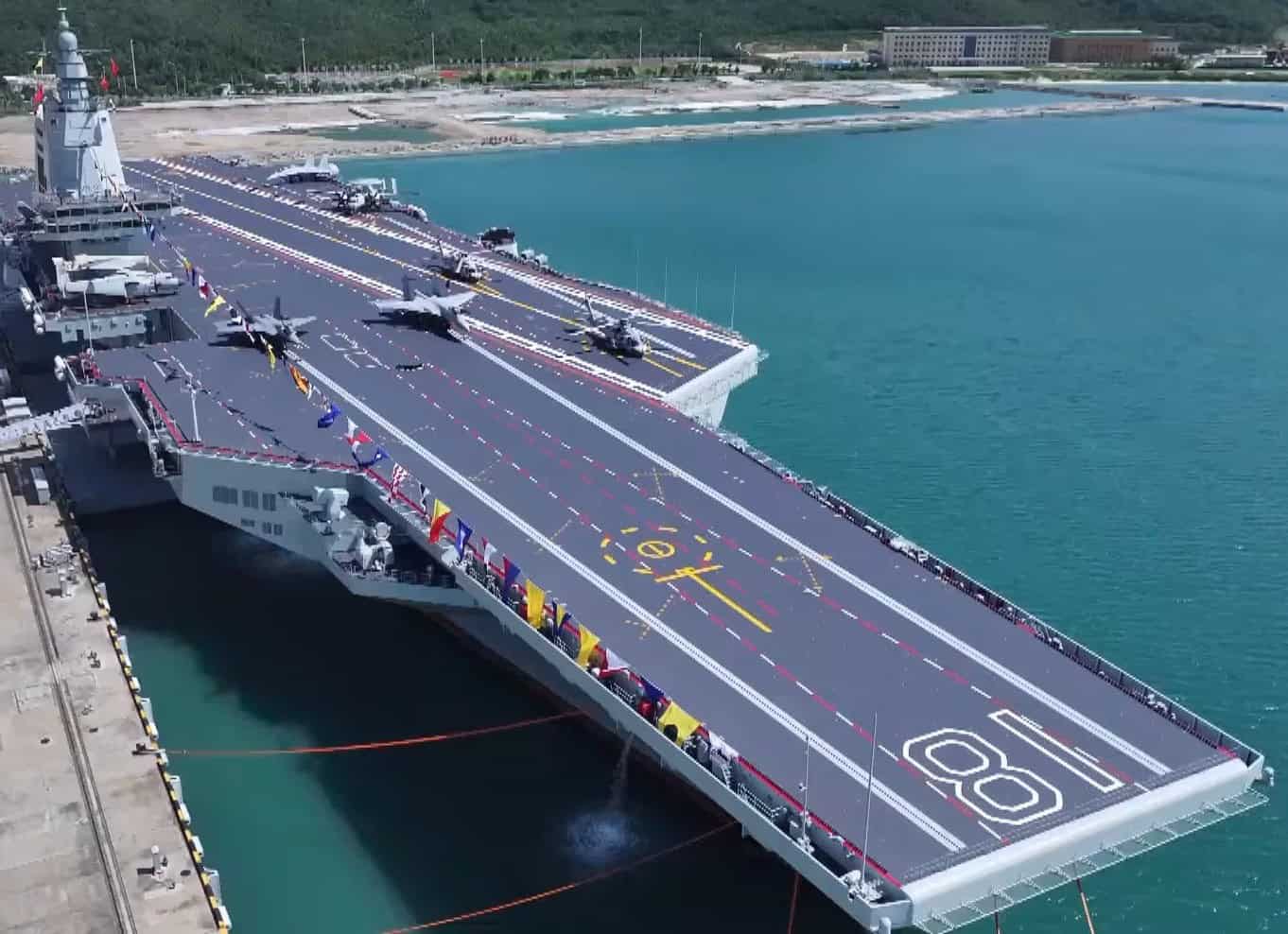
Its most powerful ship is the Fujian, an 80,000-ton aircraft carrier with electromagnetic catapults that joined the fleet on November 5, 2025. Behind it sit ten Type 055 cruiser-sized destroyers, six nuclear missile submarines and 35 Type 052D destroyers.
Count is not the same as strength, though. This guide ranks every major class China sails by fighting value as of October 2026, with the hull counts, the newest ships and the one measure on which China still trails by a wide margin.
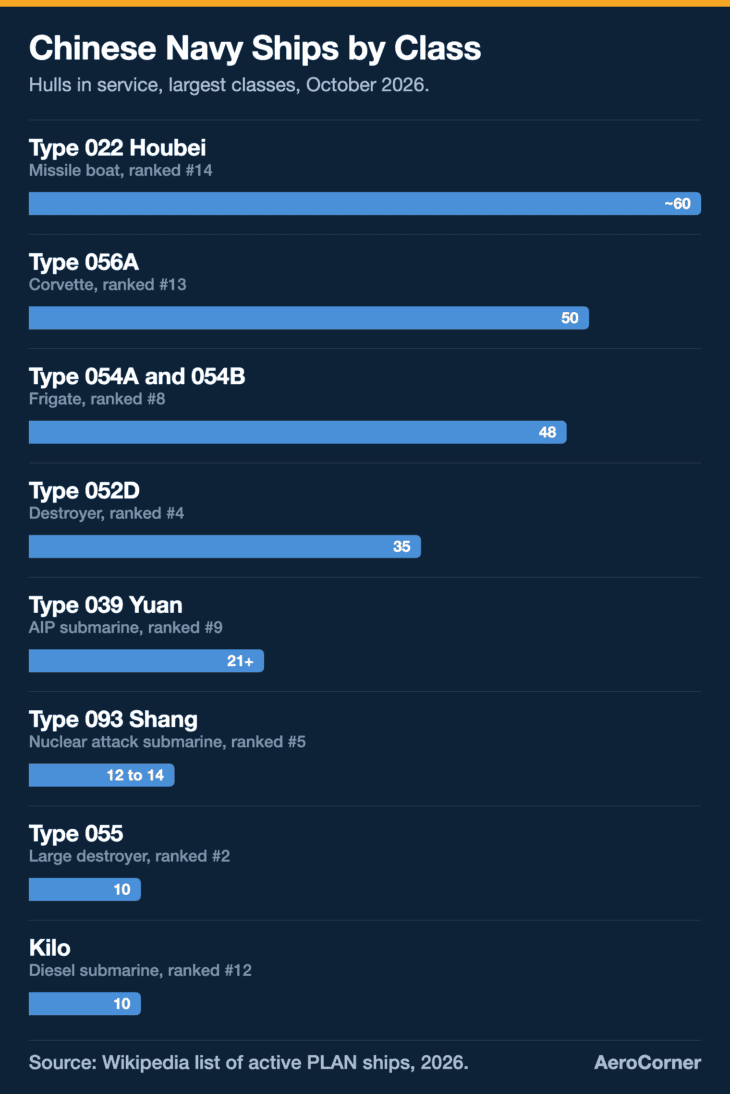
| Rank | Class | Type | Hulls in service | Status, October 2026 |
|---|---|---|---|---|
| 1 | Fujian (Type 003) | Aircraft carrier | 1 | Commissioned November 2025 |
| 2 | Type 055 Renhai | Large destroyer (cruiser) | 10 | Two joined in March 2026 |
| 3 | Type 094 Jin | Ballistic missile submarine | 6 | On patrol; Type 096 building |
| 4 | Type 052D Luyang III | Destroyer | 35 | 35th commissioned June 2026 |
| 5 | Type 093 Shang | Nuclear attack submarine | 12 to 14 | Type 093B joining; Type 095 launched |
| 6 | Liaoning and Shandong | Aircraft carrier | 2 | Active, ski-jump decks |
| 7 | Type 075 Yushen | Amphibious assault ship | 4 | Active; Type 076 on trials |
| 8 | Type 054A and 054B | Frigate | 48 | Two 054Bs in service, two building |
| 9 | Type 039A, 039B and 039C Yuan | Diesel-electric submarine (AIP) | 21 or more | Active |
| 10 | Type 071 Yuzhao | Amphibious transport dock | 8 | Active |
| 11 | Type 052C Luyang II | Destroyer | 6 | Active |
| 12 | Kilo (Project 636 and 636M) | Diesel-electric submarine | 10 | Active, bought from Russia |
| 13 | Type 056A Jiangdao | Corvette | 50 | Active |
| 14 | Type 022 Houbei | Missile boat | About 60 | Active |
| 15 | Older destroyers (Sovremenny, 051C, 052B, 051B, 052) | Destroyer | 10 | Being retired; Harbin decommissioned August 2026 |
How this ranking works
Classes are ranked by fighting value in October 2026: how modern each one is, what it carries, and how many China can send to sea. A single carrier ranks above 60 missile boats because it changes what the whole fleet can do. Hull counts come from open-source trackers, because Beijing publishes no official order of battle and the Pentagon’s own figures lag by a year or more. Coast guard and maritime militia ships are left out of the ranking and covered at the end.
1. Fujian (Type 003): The Catapult Carrier
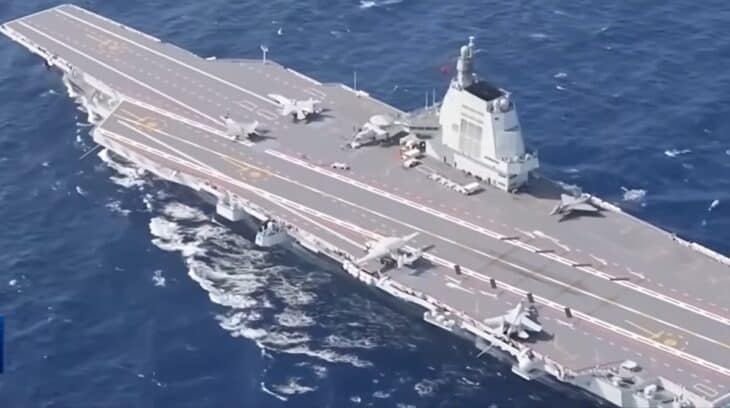

Fujian is the ship that turned China’s carrier force from a training program into a real one. It is about 1,037 feet (316 m) long, displaces an estimated 80,000 to 85,000 tons at full load, and was commissioned at Sanya on Hainan Island on November 5, 2025, with Xi Jinping in attendance.
Its three electromagnetic catapults are the difference. In September 2025, Chinese state television showed catapult launches and recoveries of the J-15T fighter, the stealthy Shenyang J-35 and the KJ-600 radar plane.
The only other carrier in service with electromagnetic catapults is the USS Gerald R. Ford. Fujian’s air wing is estimated at 40 or more fixed-wing aircraft plus about 12 helicopters, and our comparison of US vs China aircraft carriers sets it against the American fleet.
The fourth carrier may be nuclear
A fourth Chinese carrier, known in the West as the Type 004, is under construction at Dalian. CSIS reported in May 2026 that its unfinished hull already measured about 286 meters, and that imagery from May 4, 2026 showed two compartments with the hallmarks of shielded reactor containment. China has not confirmed nuclear power, and the ship has not been launched.
2. Type 055 Renhai: The Cruiser China Calls a Destroyer
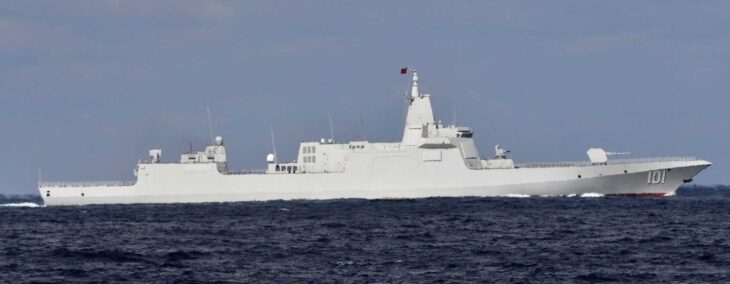

China calls the Type 055 a destroyer, and the Pentagon and NATO call it a cruiser. At 12,000 to 13,000 tonnes full load and 591 feet (180 m) long, it is far bigger than an American Arleigh Burke destroyer, and it carries 112 vertical launch cells for HHQ-9 air defense missiles, YJ-18 anti-ship missiles and land-attack cruise missiles.
China has ten. The ninth and tenth, Dongguan and Anqing, were announced by the defense ministry on March 9, 2026, and became the first of the class assigned to the Eastern Theater Command, which faces Taiwan.
The Type 055 is the standard escort for China’s carriers. In December 2025, Chinese state media reported a test launch of the YJ-20 anti-ship ballistic missile from the class, and at least 16 are expected in all.
3. Type 094 Jin: The Nuclear Deterrent
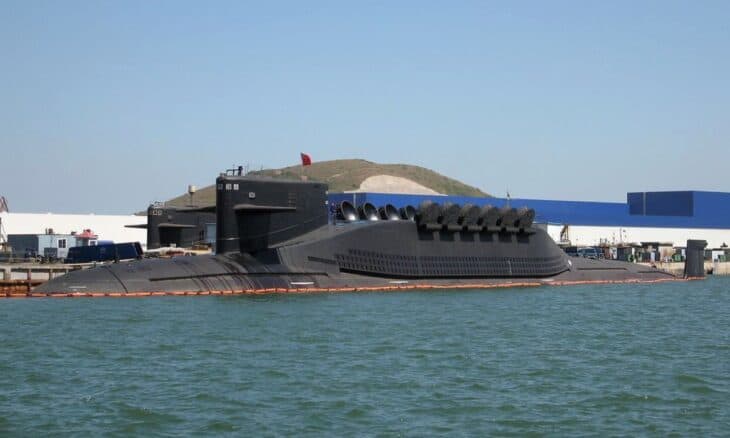

The six Type 094 submarines are why China’s navy matters to Washington in a way no surface ship does. The Pentagon calls them China’s “first credible sea-based nuclear deterrent,” and each can carry 12 submarine-launched ballistic missiles.
The newer JL-3 missile changed their reach. Chinese sources claim a range of more than 5,400 nautical miles, which the Pentagon says would let a Jin target parts of the continental United States from Chinese coastal waters.
The class has run deterrence patrols since December 2015, but the boats are noisy, which is their real weakness. Their successor, the larger Type 096, was spotted in early construction at Huludao in November 2023 satellite imagery and is expected before the end of the decade.
4. Type 052D Luyang III: The Chinese Aegis
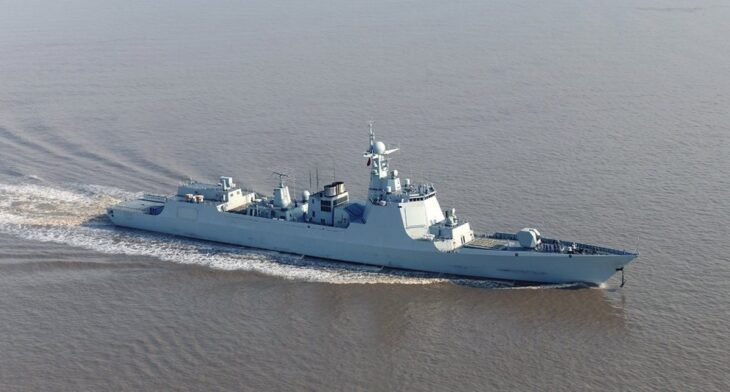
If one ship explains how China built the world’s largest navy, it is the Type 052D. Chinese media calls it the “Chinese Aegis” for its four flat AESA radar panels, and each 7,500-ton ship carries 64 vertical launch cells.
The 35th, Tongchuan, was reported in June 2026, assigned to the South Sea Fleet. Later ships are a stretched Type 052DL with a longer flight deck for the Z-20 helicopter, and production has run at three or four ships a year.
That pace is the headline. In the years China commissioned about 35 Type 052Ds, the US Navy added roughly 18 to 20 Arleigh Burke destroyers, according to Army Recognition’s count.
5. Type 093 Shang: The Attack Submarines
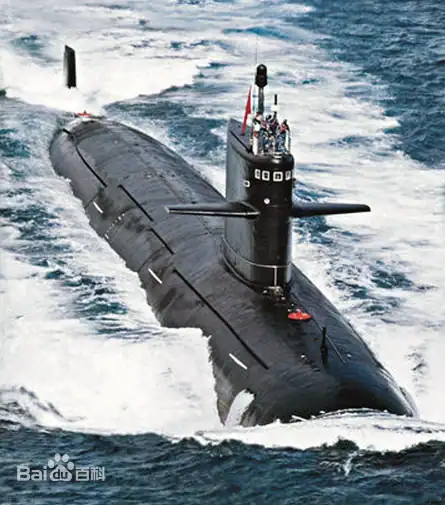
China’s nuclear attack submarines are the part of the fleet where the counts disagree most. The Pentagon’s 2024 report counted six, while Wikipedia’s list of active ships counts 12 to 14: two original Type 093s, four Type 093As and six to eight of the new Type 093B.
The Type 093B is the important one. It has a pump-jet propulsor and a 24-cell vertical launch system, which is why the US classifies it as a cruise missile submarine.
The next step is already in the water. Satellite imagery from February 2026 suggested that a Type 095, the next-generation attack boat being built at Bohai Shipyard in Huludao, had been launched.
6. Liaoning and Shandong: The Ski-Jump Carriers
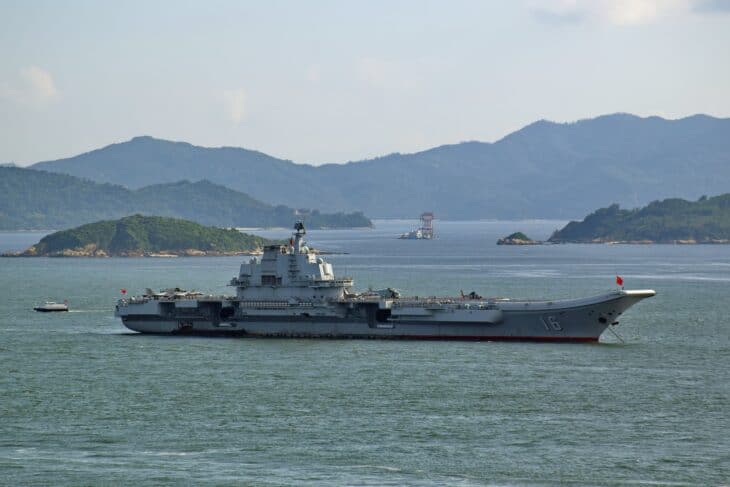

China’s first carrier began as a Soviet one. The hull was laid down in 1984 as a Soviet Kuznetsov-class carrier, left unfinished when the Soviet Union collapsed, and sold at auction in 1998 for $20 million to a Macau company that said it would become a floating hotel and casino.
It was commissioned as Liaoning on September 25, 2012, at about 60,900 tons full load. Shandong, launched in 2017 and commissioned on December 17, 2019, was China’s first home-built carrier, a refined copy of the same design.
Both launch Shenyang J-15 fighters off a ski-jump ramp, which limits how heavily loaded a jet can take off. They still do real work: in June 2025, both sailed past the Second Island Chain for the first time. Our explainer on how many aircraft carriers China has covers the whole program.
7. Type 075 Yushen: The Amphibious Assault Ships
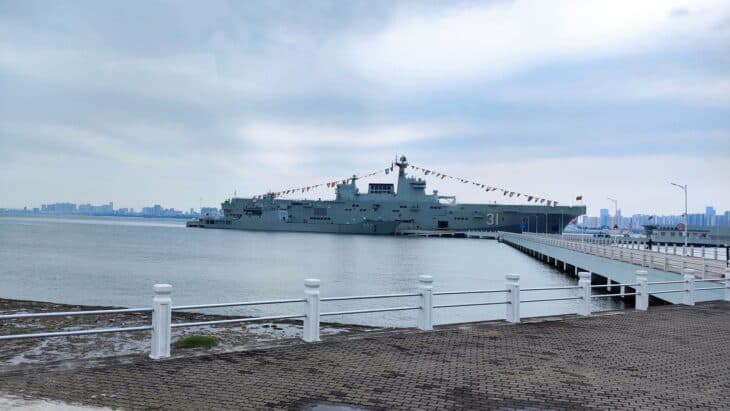

The Type 075 looks like a small carrier, but it is built to put troops ashore. Each displaces an estimated 35,000 to 40,000 tons or more, has a 741-foot (226 m) flight deck for 20 to 35 helicopters, and floods a well deck at the stern for hovercraft and amphibious vehicles.
China has four. The first, Hainan, was commissioned in April 2021, and in late December 2025 PLA media described the class as part of the “deterrence and blockade force” in the Justice Mission 2025 exercise around Taiwan.
The next class goes further. Sichuan, the first Type 076, was launched in December 2024 with an electromagnetic catapult for drones, displaces more than 40,000 tonnes by Chinese state media’s figure, and had not been commissioned as of October 2026, with Janes expecting delivery in 2027.
8. Type 054A and 054B: The Frigate Fleet
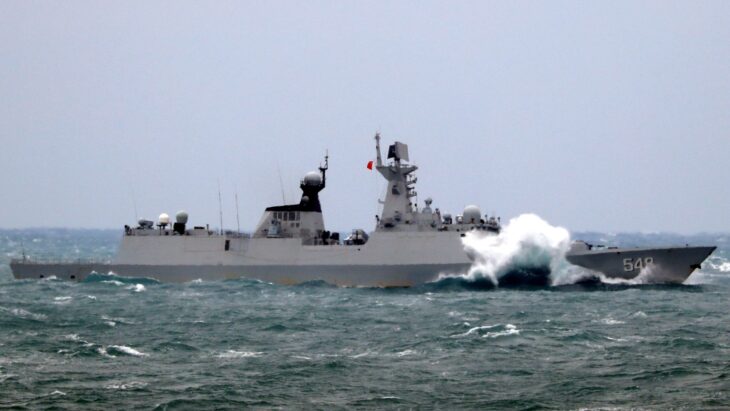
The Type 054A is the most numerous major warship in the fleet, with 46 in service. Each carries a 32-cell vertical launch system for HHQ-16 air defense missiles and anti-submarine rockets, and later ships added towed array sonar for submarine hunting.
Its successor is about 49 feet (15 m) longer. The first Type 054B, Luohe, was commissioned at Qingdao on January 22, 2025, and the second, Qinzhou, was confirmed in service on April 12, 2025.
Japan confirmed the class’s first known deployment on May 27, 2026, sailing with the Liaoning carrier group in the Western Pacific. Two more are being built, and imagery from August 2026 suggests they will carry 48 launch cells instead of 32.
9. Type 039 Yuan: The Quiet Diesel Boats
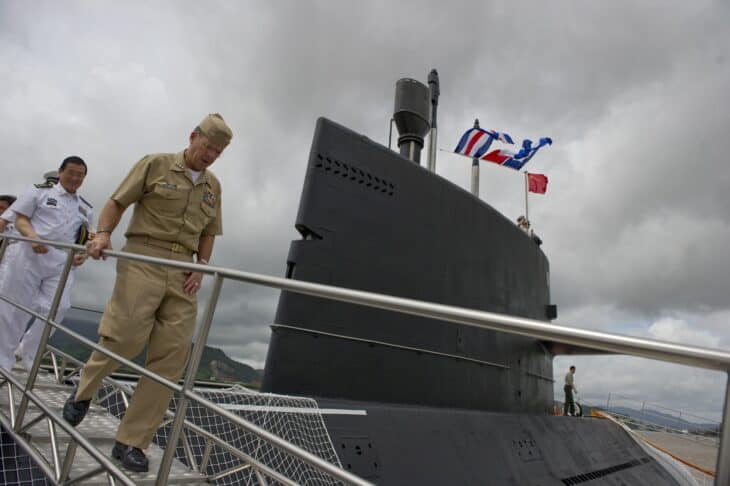

Most Chinese submarines are not nuclear. The Pentagon counted 48 diesel and air-independent attack submarines in 2024, and the Yuan family is the modern core of that force: 16 Type 039Bs, four Type 039As and at least one new Type 039C.
Their air-independent propulsion, believed to use Stirling engines, lets them stay submerged far longer than a conventional diesel boat. The Type 039C, commissioned from 2022, has a redesigned sail that resembles Sweden’s A26.
10. Type 071 Yuzhao: The Landing Docks
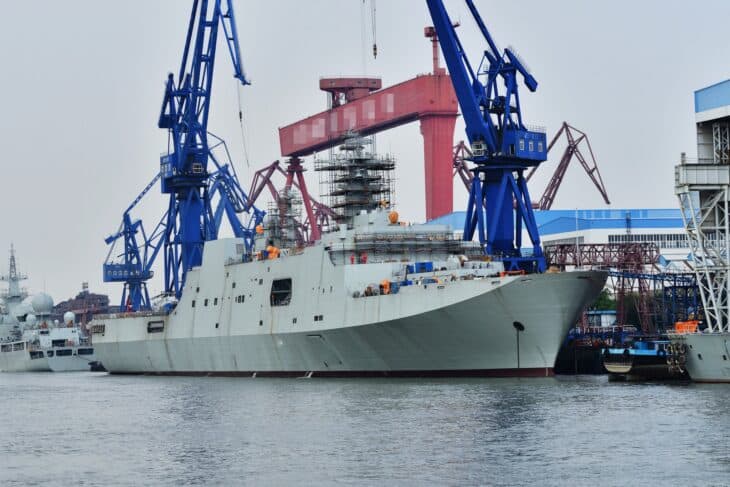

China’s eight Type 071 amphibious transport docks are the ships that would carry an invasion force. Each can embark 600 to 800 troops, four Type 726 hovercraft in its well deck and up to four Z-8 transport helicopters in its hangar.
One hull, 986, was fitted in 2024 with a laser weapon on its forward superstructure, a layout that mirrors the laser installed on the American amphibious ship USS Portland.
11. Type 052C Luyang II: The First Area Air Defense Ships
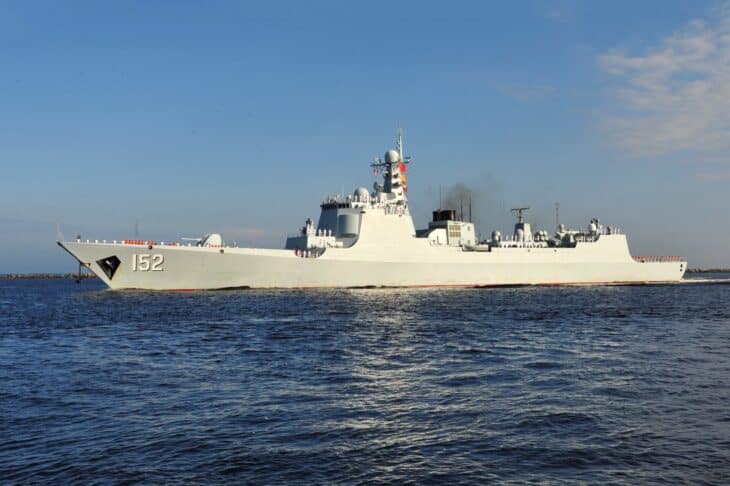

The Type 052C was the first Chinese warship that could defend a whole task group from the air. Each of the six carries 48 HHQ-9 missiles in eight revolver-style launchers, guided by the first Type 346 AESA radar in Chinese service.
The first two entered service in 2004 and 2005, and all six were operational by 2019. They rank below the Type 052D because their launchers fire air defense missiles only, while the newer ship’s cells also take anti-ship and land-attack missiles.
12. Kilo: The Russian Submarines
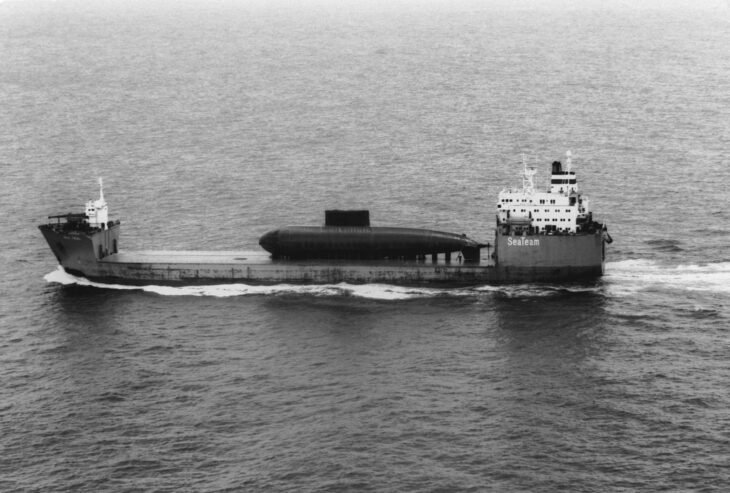

China still sails ten Russian-built Kilo-class submarines: eight Project 636M boats and two Project 636. In 2002, China paid an estimated $1.5 to $2 billion for eight Project 636 boats.
They taught China more than they added to its fleet. The Yuan class is thought to be heavily influenced by the Kilo, and older Song and Ming boats of Chinese design remain in service alongside them.
13. Type 056A Jiangdao: The Coastal Corvettes
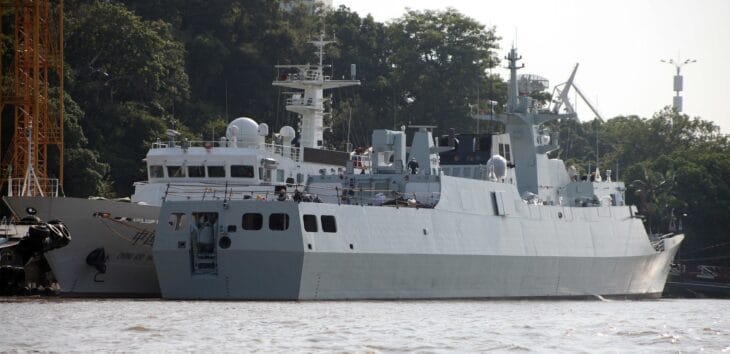
China built 72 of these 1,500-ton corvettes between 2013 and 2021, and the navy keeps the 50 Type 056As with towed array sonar. The 22 original Type 056s went to the China Coast Guard between mid 2021 and January 2023, with their missiles and torpedoes removed.
Each carries a 76 mm gun, four YJ-83 anti-ship missiles and an eight-cell HHQ-10 launcher, but no hangar. They are coastal ships, not ocean escorts, which is why they rank low despite their numbers.
14. Type 022 Houbei: The Missile Boats
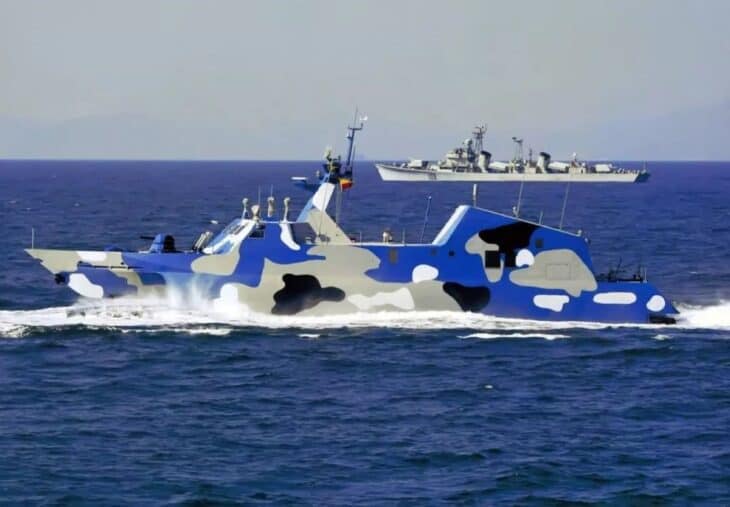

The Type 022 is a small, fast aluminum catamaran with a wave-piercing hull and anti-ship missiles. China has about 60, built from 2004 until production ended in 2009, and they typically deploy in squadrons of eight.
They are also the boats the Pentagon leaves out. Its 370-ship battle force figure excludes the roughly 60 Houbei patrol combatants, even though each carries anti-ship cruise missiles.
15. The Older Destroyers
Ten older destroyers complete the 61 in service: four Russian-built Sovremennys, two Type 051C, two Type 052B, one Type 051B and the last Type 052, Qingdao. Several were refitted with vertical launch systems to stay useful.
They are on their way out. Qingdao’s sister ship, Harbin, was decommissioned on August 28, 2026.
Doesn't the biggest navy mean the strongest?
Not yet. By tonnage, the US fleet displaces about 8.27 million tonnes against China’s 3.19 million, roughly two and a half times as much, according to GlobalFirepower’s 2026 figures. The World Directory of Modern Military Warships counts 405 Chinese warships and submarines against 232 American ones, yet still ranks the US Navy first and China second, because the US has 11 carriers and a far broader mix of large warships and submarines. China’s lead is in hulls, and most of the extra hulls are frigates, corvettes and missile boats.
How Big Is the Chinese Navy, Really?
The answer depends on what you count, and the gaps are large. The Pentagon’s battle force standard gives more than 370, the same rule that produces the US Navy’s 293, and it is the fairest head-to-head comparison.
Count everything that floats and the number more than doubles. GlobalFirepower lists 841 Chinese naval vessels for 2026, the most of any country, including patrol craft and auxiliaries, and Wikipedia’s tracker puts the fleet at more than 400 vessels plus about 230 auxiliaries.
The Pentagon’s 2024 report projected a battle force of 395 ships by 2025 and 435 by 2030. Its December 2025 report gave little new fleet data, but assessed that China aims to build six more carriers by 2035 for a total of nine. Our ranking of the largest navies in the world lines up every count side by side.
The Fleets Behind the Fleet: Coast Guard and Militia
Most of China’s day-to-day pressure at sea does not come from the navy at all. The Pentagon calls the China Coast Guard “the largest maritime law enforcement fleet in the world,” with more than 150 patrol vessels over 1,000 tons, including the 20-plus corvettes handed over by the navy.
Behind that sits a maritime militia built largely from fishing vessels. China relies mainly on these two forces to press its claims in nearby seas, with the navy working over the horizon as backup.
The navy itself was founded on April 23, 1949, and is organized into North Sea, East Sea and South Sea fleets. Its air arm flies from land as well as from carriers, and our guide to China’s air force covers the jets that would fight alongside it.
FAQ
Sources and references used for research and fact-checking.
- Congressional Research Service, China Naval Modernization: Implications for U.S. Navy Capabilities, Background and Issues for Congress (RL33153, updated April 24, 2025)
- Congressional Research Service, Navy Force Structure and Shipbuilding Plans: Background and Issues for Congress (RL32665, January 20, 2026)
- Andrew S. Erickson, U.S. Department of Defense Annual Reports to Congress on China's Military Power, 2000 to 2025
- Wikipedia, List of ships of the People's Liberation Army Navy
- Naval Technology, China commissions two new Type 055 guided missile destroyers
- Wikipedia, Type 055 destroyer
- Army Recognition, China Commissions 35th Type 052D Destroyer as PLAN Warship Production Outpaces U.S. Navy
- Wikipedia, Type 052D destroyer
- Wikipedia, Type 052C destroyer
- Wikipedia, Type 094 submarine
- Wikipedia, Type 096 submarine
- Wikipedia, Type 093 submarine
- Wikipedia, Type 095 submarine
- Wikipedia, Chinese aircraft carrier Fujian
- CSIS, Tracking China's Fourth Aircraft Carrier
- Wikipedia, Chinese aircraft carrier Liaoning
- Wikipedia, Chinese aircraft carrier Shandong
- Wikipedia, Type 075 landing helicopter dock
- Wikipedia, Type 076 landing helicopter dock
- Wikipedia, Type 071 amphibious transport dock
- Wikipedia, Type 054A frigate
- Wikipedia, Type 054B frigate
- Wikipedia, Type 039A submarine
- Wikipedia, Kilo-class submarine
- Wikipedia, People's Liberation Army Navy Submarine Force
- Wikipedia, Type 056 corvette
- Wikipedia, Type 022 missile boat
- Wikipedia, People's Liberation Army Navy
- GlobalFirepower, Navy Fleet Strength by Country (2026)
- GlobalFirepower, Navy Fleet by Tonnage by Country (2026)
- Stars and Stripes, Where are the 11 US Navy aircraft carriers?
- World Directory of Modern Military Warships, Global Naval Powers Ranking (2026)
Get the Newsletter
The latest aviation news and stories sent to your inbox.
About the Author

Tim is the owner and lead editor of AeroCorner since 2019, overseeing aviation content covering aircraft, airlines, airports, and the broader aviation industry. Through years of researching, writing, editing, and publishing aviation-focused content, he has developed extensive practical knowledge of commercial aviation and air travel. Based in Asia and a frequent traveler himself, Tim also brings firsthand passenger experience to AeroCorner’s coverage. Outside of publishing, he has also explored aviation firsthand through hands-on flight training in New Zealand.