

Table of Contents
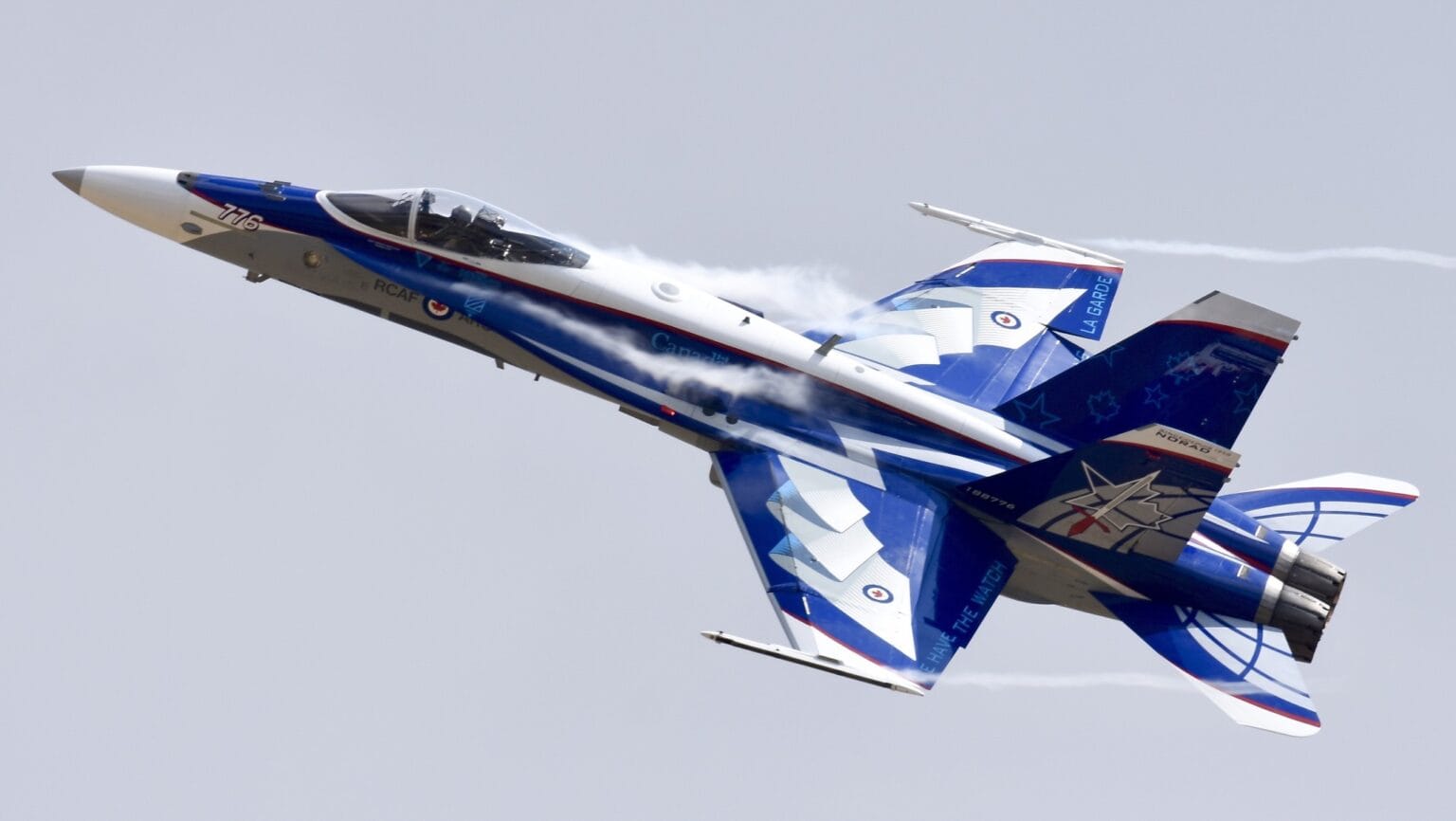
The Royal Canadian Air Force (RCAF) still defends Canada with 94 CF-188 Hornets, its only operational fighters, and they remain the most valuable aircraft it has. Its first two F-35As were handed over at Luke Air Force Base in Arizona on October 22, 2026, but they will not reach Canada until 2028.
Almost everything else in the fleet is being replaced at the same time. New tankers, sub hunters, drones, search-and-rescue planes, trainers and a radar plane are all either arriving or being bought, which makes 2026 the RCAF’s biggest rebuild in decades.
This list ranks every type the RCAF flies by one measure: the fighting value it adds as of October 2026, weighing what the aircraft does against how many Canada has. The aircraft on order, the F-35 review, the bases and a short history follow the ranking.
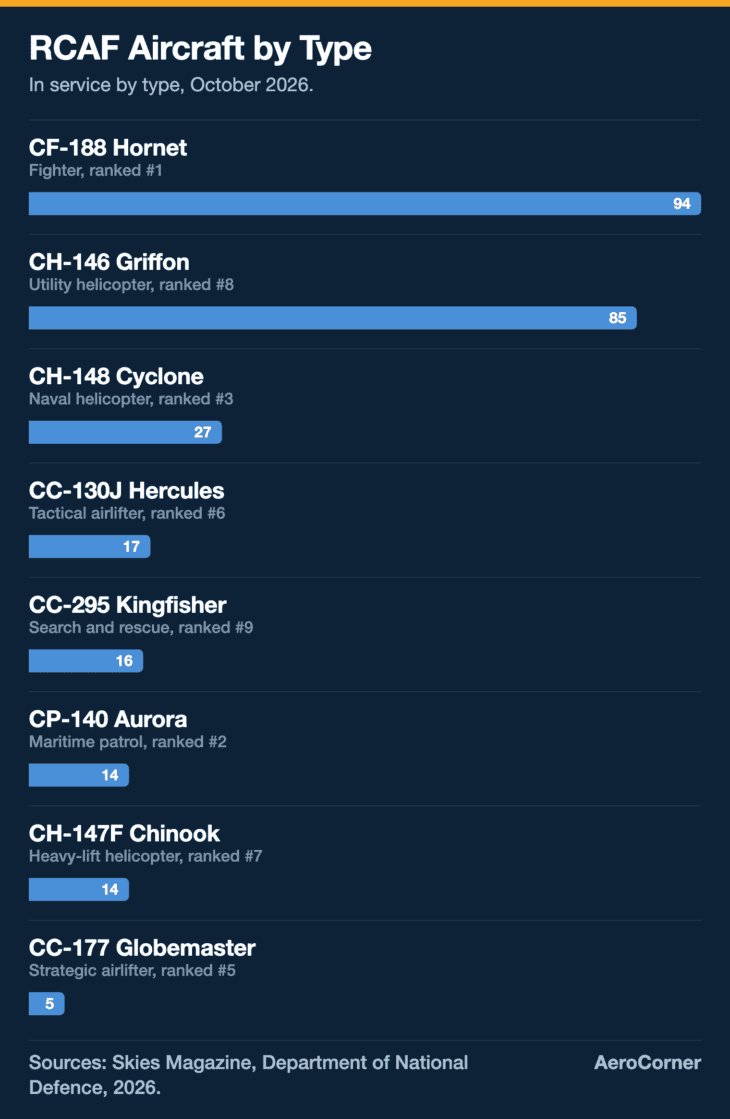
| Rank | Aircraft | Role | In service |
|---|---|---|---|
| 1 | CF-188 Hornet | Multirole fighter | 94 |
| 2 | CP-140 Aurora | Maritime patrol and sub hunting | 14 |
| 3 | CH-148 Cyclone | Shipborne naval helicopter | 27 |
| 4 | CC-330 Husky and CC-150 Polaris | Tanker and strategic transport | 3 and 3, with 9 Huskies ordered |
| 5 | CC-177 Globemaster III | Strategic airlifter | 5 |
| 6 | CC-130J Super Hercules | Tactical airlifter | 17 |
| 7 | CH-147F Chinook | Heavy-lift helicopter | 14 |
| 8 | CH-146 Griffon | Utility and special operations helicopter | 85 |
| 9 | CC-295 Kingfisher | Fixed-wing search and rescue | 16 |
| 10 | CH-149 Cormorant | Search-and-rescue helicopter | 13, upgrading to 16 |
| 11 | CC-144 Challenger and CC-138 Twin Otter | VIP transport and Arctic utility | 4 and 4 |
| 12 | Training fleet and CT-114 Tutor | Pilot training and the Snowbirds | 71 new trainers ordered; Tutor retiring |
How this ranking works
Each type is ranked by the fighting value it adds in October 2026: what it can do in a war or a national emergency, how hard it would be to replace, and how many the RCAF flies. Canada’s official aircraft pages give no fleet counts, so counts come from Skies Magazine’s January 2026 fleet review and Department of National Defence documents. Aircraft that are ordered but not yet in Canadian service, including the F-35A, are covered separately after the ranking.
1. CF-188 Hornet: 94 Jets Holding the Line
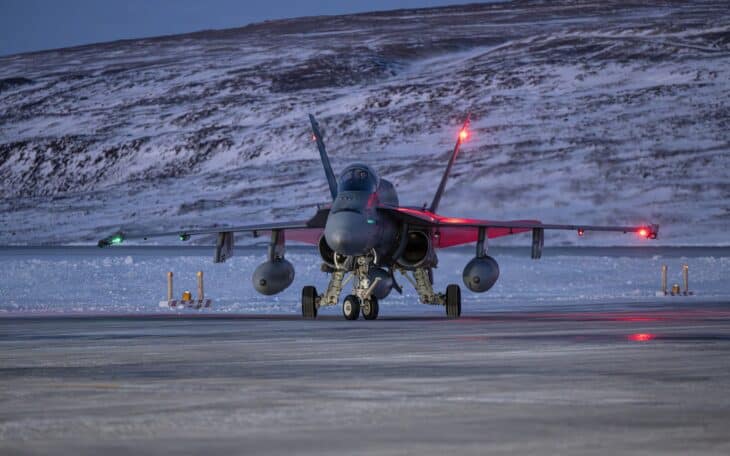

The CF-188 Hornet, the Canadian version of the F/A-18 Hornet, is Canada’s only operational fighter, used for air defense, air superiority and ground attack. Skies Magazine counted 94 on strength in January 2026.
They fly from Cold Lake in Alberta and Bagotville in Quebec. The RCAF gives a top speed of Mach 1.8 and a range of about 2,300 miles (3,700 km).
Every jet has finished the first phase of the Hornet Extension Project, and 36 are getting the second phase, which adds an APG-79 AESA radar. Retirement estimates run from 2032 to the mid-2030s, depending on the source.
It ranks first because nothing else can intercept a bomber or a fighter. That is the whole reason the F-35 debate matters: until the new jets arrive, an aging fighter is the core of Canada’s air defense.
Canada bought Australia's old Hornets
To keep enough fighters flying, Canada bought 18 used F/A-18s from the Royal Australian Air Force for 339.3 million Canadian dollars, with up to seven of them set aside for spare parts, a 2020 defence briefing note shows. Some of the Hornets guarding Canada today spent their first careers in Australia.
2. CP-140 Aurora: The Sub Hunter on Borrowed Time
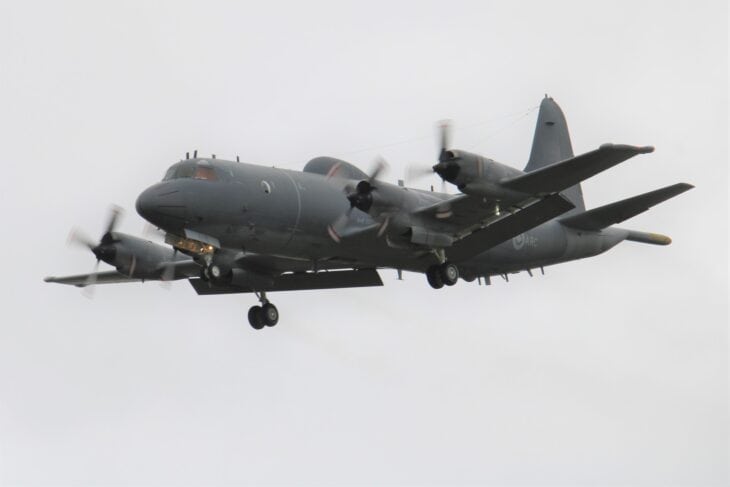

The CP-140 Aurora is a long-range patrol aircraft that hunts submarines and ships, gathers intelligence and joins search-and-rescue missions. Canada flies 14, from 14 Wing Greenwood in Nova Scotia and 19 Wing Comox in British Columbia.
The RCAF gives it a range of about 4,600 miles (7,400 km). It ranks second because, until the P-8A arrives, it is the RCAF’s only long-range patrol aircraft, and the only way to track a submarine far off Canada’s coasts.
Its replacement is the P-8A Poseidon, but the first one is now expected at the end of 2027, a year later than the 2023 plan. The Auroras have to keep flying until then.
3. CH-148 Cyclone: The Navy’s Eyes at Sea
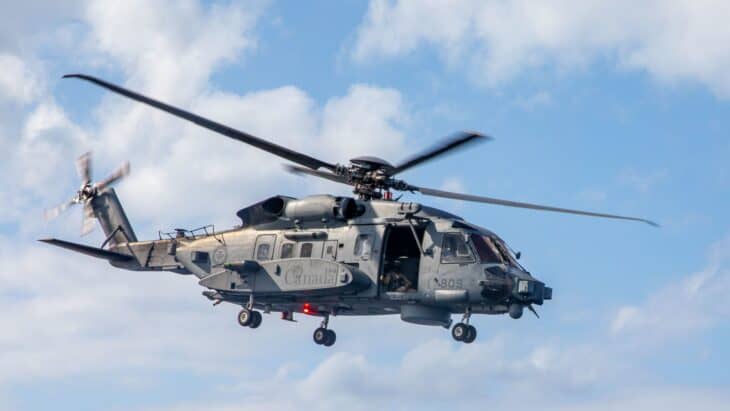

The CH-148 Cyclone is Canada’s main ship-borne maritime helicopter, flown from Royal Canadian Navy ships for surface and underwater surveillance. Canada contracted for 28 in 2004, deliveries began in June 2015, and the last arrived in 2025.
One was lost on April 29, 2020, when the helicopter call-signed Stalker 22 crashed in the Ionian Sea near HMCS Fredericton, killing all six aboard. Investigators found that manual control inputs had overridden the engaged flight director, a flaw in the flight software’s design.
The fleet flies from Shearwater in Nova Scotia and Patricia Bay in British Columbia. Full operational capability has still not been declared, and Skies reports ongoing parts and serviceability problems.
4. CC-330 Husky and CC-150 Polaris: The Tanker Handover
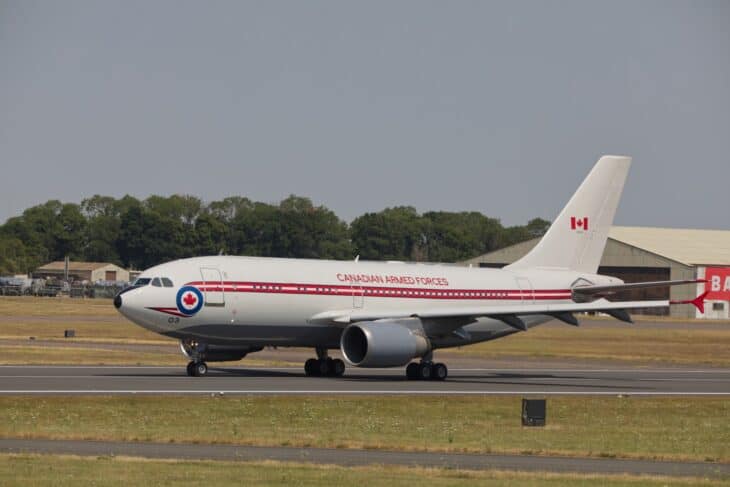

The CC-330 Husky is Canada’s version of the Airbus A330 MRTT tanker and transport. Canada signed for nine in 2023, a mix of new aircraft and converted used A330s, to replace the five CC-150 Polaris.
Three used Huskies are flying from Ottawa in transport configuration, and the first new-build Husky made its first flight on July 1, 2026, with delivery due in 2027. Meanwhile, three Polaris remain in service, two of them tankers.
It ranks fourth because tankers move fighters overseas: one Polaris carries enough fuel to ferry four Hornets across the Atlantic, the RCAF says. The Polaris tankers cannot refuel the F-35, so the Husky has to be ready by the time the new fighters arrive.
5. CC-177 Globemaster III: Five Jets That Reach Anywhere
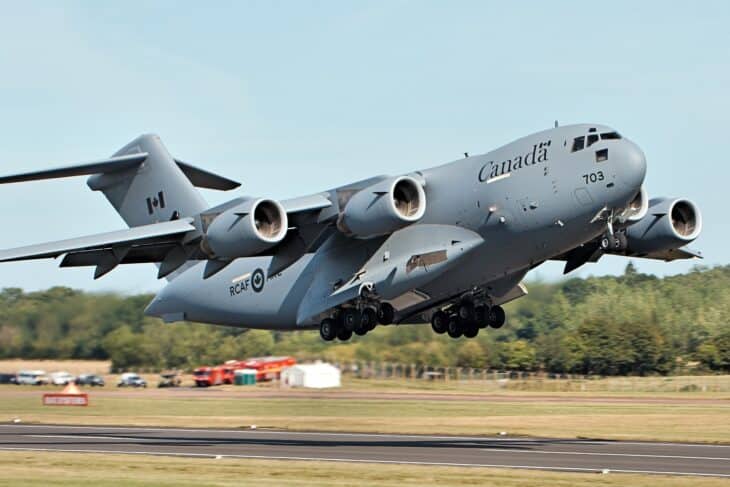

The CC-177 Globemaster III is Canada’s name for the Boeing C-17, the heaviest lifter it owns. All five fly from 8 Wing Trenton in Ontario, with a range of about 6,390 miles (10,279 km).
One can haul three Griffon helicopters or up to 102 paratroopers, and they fly into remote strips as far north as Canadian Forces Station Alert. Five is a small fleet, which is why each one ranks above the larger tactical fleet below.
6. CC-130J Super Hercules: 17 Tactical Workhorses
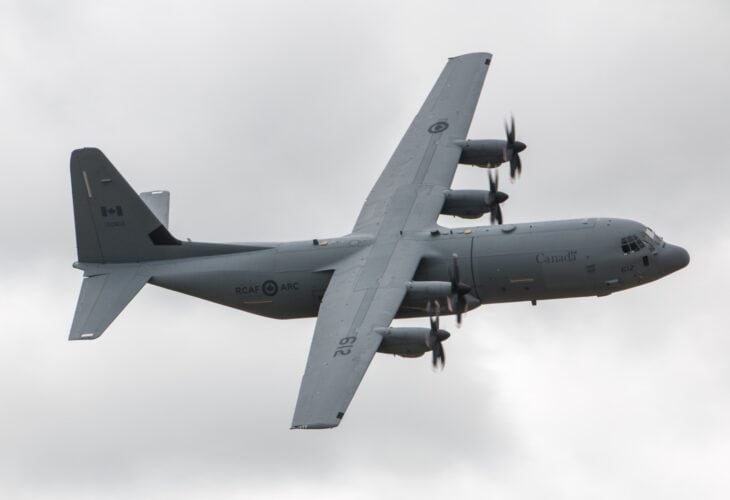
The CC-130J Super Hercules moves troops and cargo into short and rough airstrips. Canada flies 17, and a software block upgrade is under way.
The older CC-130H models are leaving. Public Services and Procurement Canada said the remaining 12 were retired in January 2026, and 10 were conditionally sold to Coulson Aviation, as AeroCorner reported in its story on the RCAF Hercules headed for firefighting.
7. CH-147F Chinook: Canada’s Heavy-Lift Helicopter
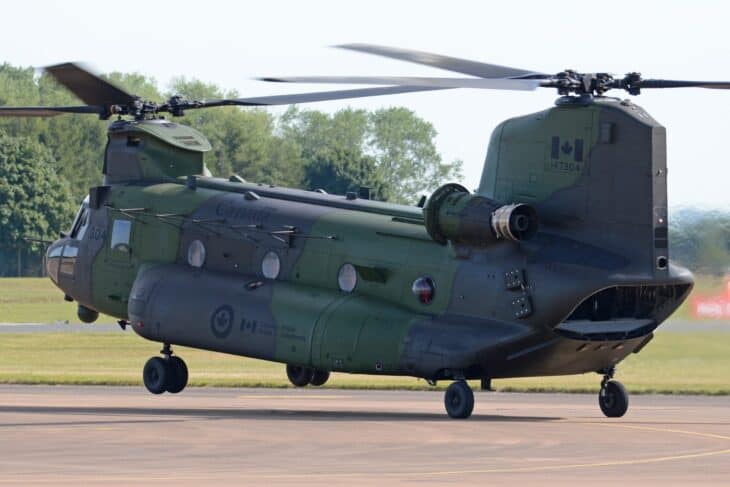

The CH-147F Chinook is the RCAF’s heavy-lift helicopter, flown from Petawawa, Ontario, for the Canadian Army and special operations forces. Canada acquired 15 in 2012 and lost one in a crash in June 2023, leaving 14.
A mid-life block upgrade is under way. The RCAF commander told Skies that Canada will “probably need to invest in more Chinooks at some point.”
8. CH-146 Griffon: The Biggest Fleet, the Lightest Punch
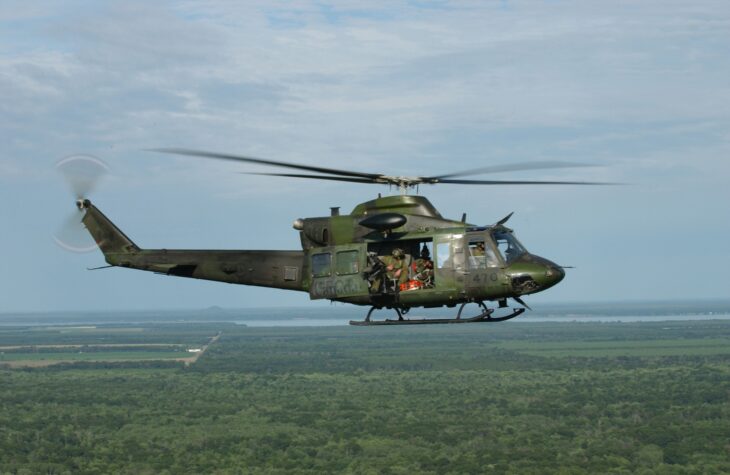

The CH-146 Griffon is a utility tactical transport helicopter, and with 85 it is the RCAF’s most numerous type after the Hornet. It carries troops, supports special forces with 427 Special Operations Aviation Squadron and has filled in on search and rescue.
Its life-extension program was paused in June 2026 to rethink the upgrade. A replacement project would start with about 18 new helicopters for 427 Squadron, and Defence says the Griffon will serve until the mid-2030s.
9. CC-295 Kingfisher: Search and Rescue, Finally on Duty
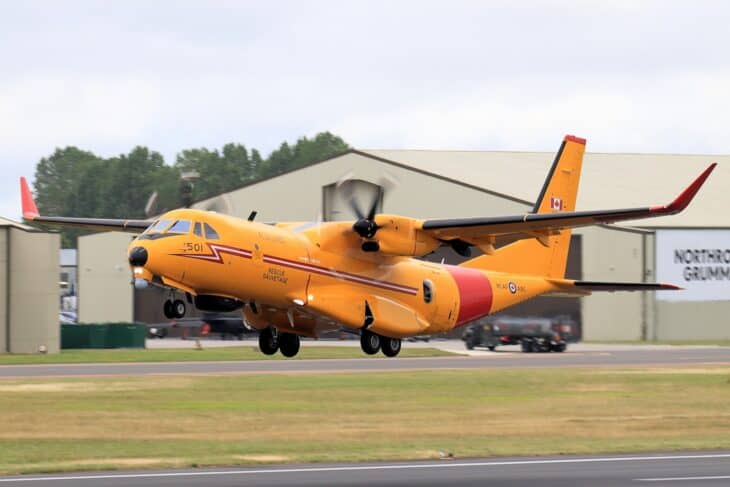

The CC-295 Kingfisher is Canada’s newest fixed-wing search-and-rescue aircraft, with sensors that can spot a person more than 25 miles (40 km) away. Canada bought 16 under a 2.9-billion-Canadian-dollar contract, with a top speed of about 291 mph (468 km/h) and a range of about 2,800 miles (4,500 km).
It was meant to start work in 2022 but was held up by certification. It now flies from Comox and Greenwood, and 435 Squadron in Winnipeg began converting to it in April 2026.
10. CH-149 Cormorant: The Rescue Helicopter Being Rebuilt
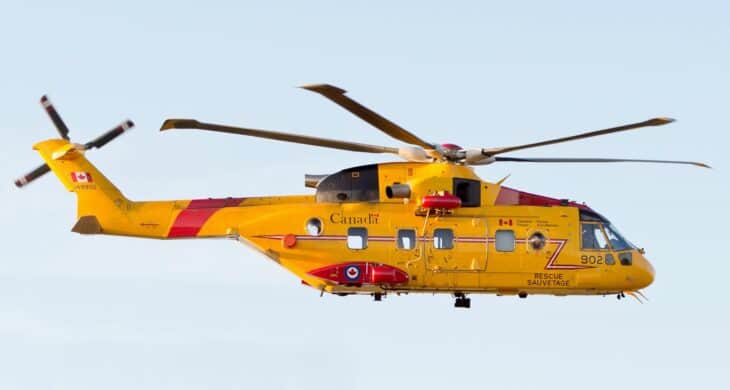

The CH-149 Cormorant is a long-range search-and-rescue helicopter based at Comox, Gander and Greenwood, with a range of more than 620 miles (1,000 km). Canada bought 15, and two have been lost in crashes.
Parts obsolescence has cut how many are ready to fly, which is why Griffons have covered some rescue duty. A mid-life upgrade will bring the fleet back to 16 helicopters.
11. CC-144 Challenger and CC-138 Twin Otter: VIPs and the Far North
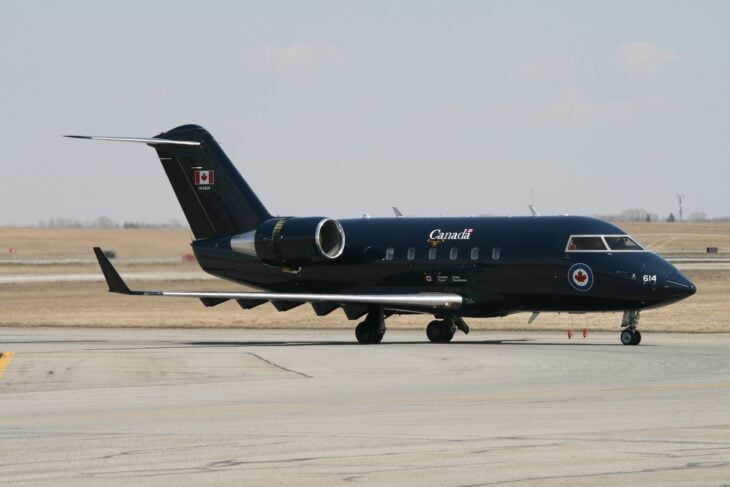

Four Bombardier Challengers, two 604s and two 650s, carry government officials and foreign dignitaries. In December 2025 Canada ordered six Bombardier Global 6500s for about 753 million Canadian dollars to replace them, with the first due by summer 2027.
Four CC-138 Twin Otters are the RCAF’s only fixed-wing aircraft that can land on skis. The airframes are about 50 years old, and the RCAF is studying a replacement.
12. The Training Fleet and the Last Tutors

Canada’s pilot training is moving to a new fleet run by SkyAlyne, a CAE and KF Aerospace venture. It comprises 23 Grob 120TP, 19 Pilatus PC-21 (the CT-157 Siskin II), 19 Airbus H135, seven King Air 260 and three Dash 8-400 aircraft.
The jet trainers are based at 15 Wing Moose Jaw in Saskatchewan, and the first two Siskin IIs arrived in Canada on September 17, 2026. The program is meant to graduate 120 pilots a year.
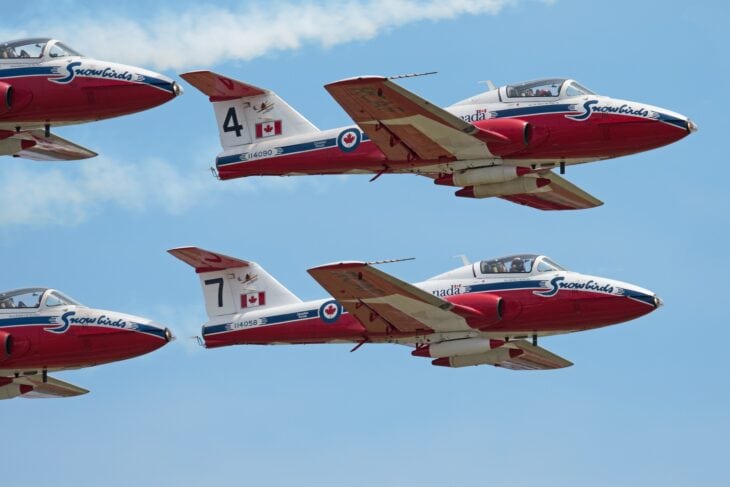
The CT-114 Tutor, in RCAF service since 1963, flew its last Snowbirds air show at Moose Jaw on October 16, 2026. In May 2026 Canada chose the Siskin II as the team’s next jet, operational in the early 2030s, as covered in the Snowbirds’ final Tutor show.
On Order: The F-35A, P-8A, GlobalEye and SkyGuardian
F-35A (CF-35A). Canada signed for 88 F-35A Lightning IIs in January 2023, a project valued at 27.7 billion Canadian dollars. The first Canadian jet flew on September 23, 2026, and the first two were delivered at Luke on October 22.
Eight jets will train pilots at Luke, the first arrive at Cold Lake in 2028, and full capability is planned for 2032 to 2034. Prime Minister Mark Carney ordered a review of the purchase in March 2025, and Canada is legally committed to only the first 16.
P-8A Poseidon. Canada ordered 14 P-8A Poseidons in November 2023, with options for two more, for 10.4 billion Canadian dollars. The first is now due in 2027.
Saab GlobalEye. In May 2026 Canada named the GlobalEye its preferred airborne early warning aircraft over Boeing’s E-7. No contract had been signed as of October 2026.
CQ-9B SkyGuardian. Canada approved 11 MQ-9B drones in December 2023. They are due to enter service in 2028 from Greenwood and Comox, unarmed at first.
Is Canada canceling the F-35?
Not as of October 2026, but it has not confirmed all 88 either. The review Carney ordered in March 2025 has no end date, and Defence Minister David McGuinty said in October 2026 that where Canada goes after the first 16 is still under review. La Presse reported in May 2026 that a mixed fleet of about 30 F-35s and about 60 Saab Gripen E was being considered. That is a report, not a decision. Canada’s 2021 evaluation scored the F-35 at 95 percent and the Gripen at 33 percent.
Where the RCAF Is Based
Fighters fly from Cold Lake and Bagotville, and the big transports from Trenton. Maritime patrol and search and rescue are concentrated at Greenwood on the Atlantic and Comox on the Pacific.
Naval helicopters fly from Shearwater and Patricia Bay, training is at Moose Jaw and Southport, the Chinooks are at Petawawa and the Twin Otters at Yellowknife. Canada is spending 4 billion Canadian dollars on F-35 facilities at Cold Lake alone, McGuinty announced in October 2026.
A Short History of the RCAF
The Royal Canadian Air Force name was first granted on April 1, 1924, the date the RCAF still celebrates as its anniversary. In 1968 Canada unified its army, navy and air force into one Canadian Forces, and the “Royal” title disappeared.
The government restored the name on August 16, 2011, without undoing unification. Today the RCAF has 15,553 Regular Force and 2,160 Primary Reserve members, Defence’s most recent published count (September 2023).
NATO estimates Canada reached its 2 percent of GDP defense target for the first time in 2025, and Carney has pledged 5 percent by 2035. That money is what is paying for the rebuild, and how the RCAF compares with its allies is covered in our ranking of the best air forces in the world.
FAQ
Sources and references used for research and fact-checking.
- Skies Magazine, RCAF accelerates aircraft recapitalization to meet growing missile and Arctic threats
- Royal Canadian Air Force, Government of Canada, RCAF aircraft
- Royal Canadian Air Force, CF-188 Hornet
- Royal Canadian Air Force, CP-140 Aurora
- Royal Canadian Air Force, CC-177 Globemaster III
- Royal Canadian Air Force, CC-295 Kingfisher
- Royal Canadian Air Force, CH-148 Cyclone
- Royal Canadian Air Force, CH-149 Cormorant
- Royal Canadian Air Force, CC-144 Challenger
- Royal Canadian Air Force, CH-147F Chinook
- Royal Canadian Air Force, CH-146 Griffon
- Royal Canadian Air Force, CC-150 Polaris
- Department of National Defence, Flight Safety Investigation Report for Stalker 22 accident
- Department of National Defence, Interim Fighter Capability Project question period note
- Department of National Defence, Future Fighter Capability Project
- Royal Canadian Air Force on X, RCAF post on the first two CF-35As
- defence-industry.eu, Canada receives first two F-35 fighters as planned 88-aircraft fleet begins taking shape
- 19FortyFive, Canada signed an agreement to buy 88 F-35As in January 2023
- AeroTime, Canada's first F-35 maiden flight and purchase review
- AeroTime, Canada F-35 review has no end date
- AeroTime, F-35 clear winner in Canada's fighter evaluation
- The Maple, David McGuinty announces 4 billion dollars for F-35 transition project
- Army Recognition, Canada F-35 and Saab Gripen fighter jet order
- Department of National Defence, Canada purchasing up to 16 P-8A Poseidon multi-mission aircraft
- Government of Canada, Canadian Multi-Mission Aircraft project
- Warsight, Canada selects GlobalEye as AEW&C solution
- The Defense Post, Canada MQ-9B limited capability
- CP24, Canada's first new military tanker takes flight
- Defence Investment Agency, Government of Canada announces contract to deliver new multi-role aircraft
- Department of National Defence, Procurement note, November 2023
- Skies Magazine, 413 Squadron retires the CC-130H
- Vertical Magazine, Complex RCAF CH-146 life extension paused to refine upgrade targets
- Armada International, The Royal Canadian Air Force's new pilot training fleet
- Global News, First Snowbirds replacements arrive
- Department of National Defence, Government of Canada to procure new aircraft for the Snowbirds
- The War Zone, Canada's Snowbirds say farewell to the CT-114 Tutor jet
- Department of National Defence, Royal Canadian Air Force restored
- Department of National Defence, Personnel background note, Supplementary Estimates (B) 2023-24
- CFJC Today / The Canadian Press, Here's how Canada hit its NATO defence spending target
Get the Newsletter
The latest aviation news and stories sent to your inbox.
About the Author

Tim is the owner and lead editor of AeroCorner since 2019, overseeing aviation content covering aircraft, airlines, airports, and the broader aviation industry. Through years of researching, writing, editing, and publishing aviation-focused content, he has developed extensive practical knowledge of commercial aviation and air travel. Based in Asia and a frequent traveler himself, Tim also brings firsthand passenger experience to AeroCorner’s coverage. Outside of publishing, he has also explored aviation firsthand through hands-on flight training in New Zealand.