

Table of Contents
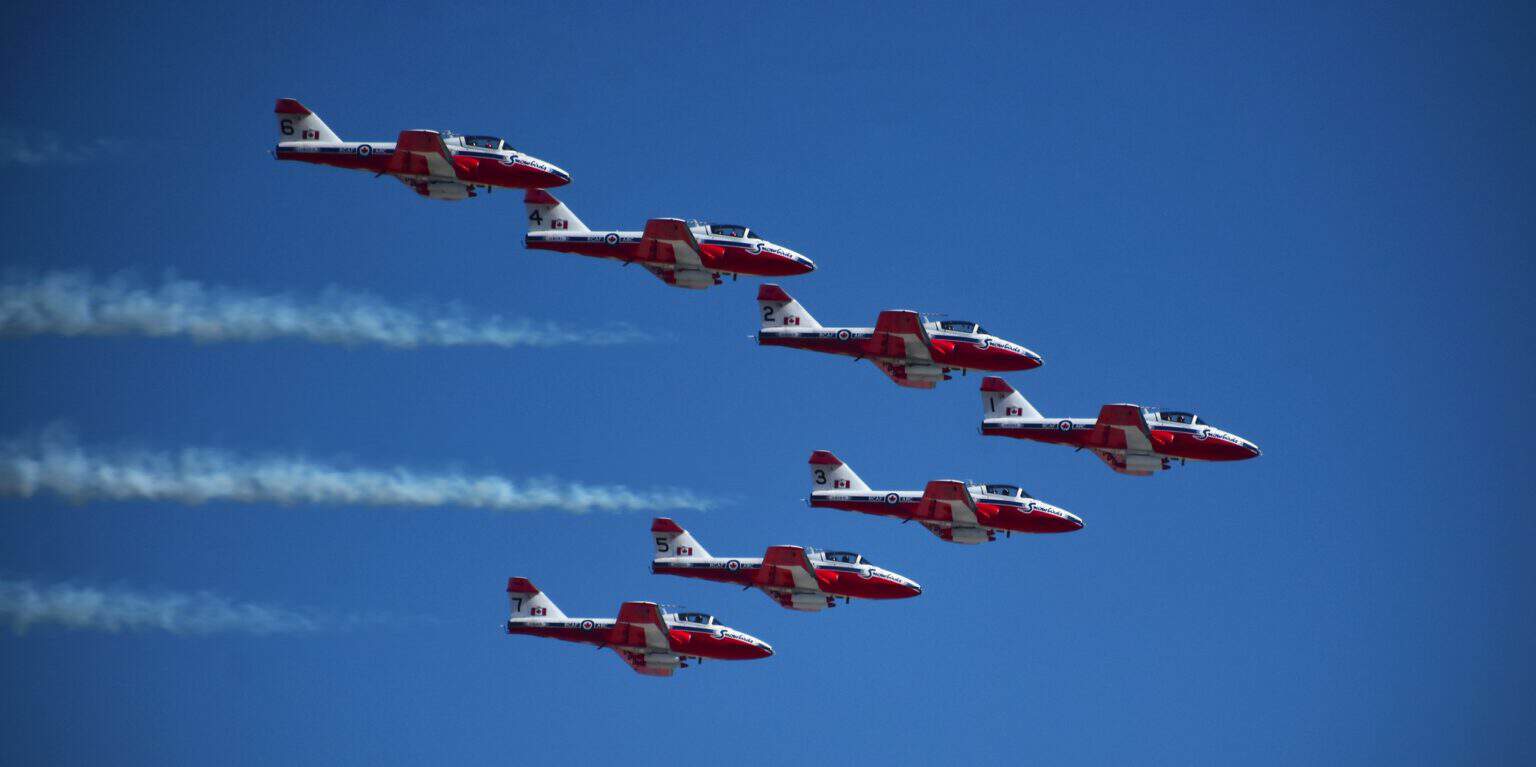
A jet trainer that first flew in 1960 carried Canada’s national aerobatic team for 55 years. It has now flown its final show, and its replacement is a turboprop that will not be ready to perform for years.
The Canadian Forces Snowbirds flew their last air demonstration in the Canadair CT-114 Tutor on Oct. 16, 2026, at 15 Wing Moose Jaw, Saskatchewan. The traditional “home closer” was private, flown for the team’s families and friends, and livestreamed by the Royal Canadian Air Force.
After it, the team goes dark. The Tutors retire after one last flypast in November, and the new CT-157 Siskin II demonstration capability, based on the Pilatus PC-21, is expected to be operational only in the early 2030s, with no set date.
Canada now faces years of air show seasons without the red-and-white jets that are, for most of the country, simply the Snowbirds.
The Tutor Was Meant to Last Until 2030. Its Engine and Escape System Said Otherwise
National Defence Minister David McGuinty announced on May 19, 2026, at 15 Wing that this season would be the Tutor’s last on the air show circuit. The plan until then had been to keep the jets flying to 2030.
That plan rested on a life extension program. In 2021 the government awarded contracts worth about 30 million Canadian dollars to L3Harris and IMP Aerospace & Defence for a new avionics suite, adding ADS-B, an engine indicating and crew alerting system, and cockpit voice and flight data recorders.
The cockpit upgrade reached 11 aircraft. RCAF commander Lt.-Gen. Jamie Speiser-Blanchet told reporters in Moose Jaw, as reported by Skies, that feasibility studies found problems with the engine and the escape system.
“There are some engineering challenges because of the age of the aircraft that have changed that situation,” she said. “And this is why it will be retiring in 2027 instead of 2030.”
The escape system has history. After crashes in October 2019 and May 2020, the team flew under new altitude, speed and runway-length restrictions, and maintenance and inspections on the Tutors were increased.
The May 2020 crash in Kamloops, British Columbia, killed the team’s public affairs officer, Capt. Jennifer Casey, and seriously injured the pilot, Capt. Richard MacDougall. The Directorate of Flight Safety concluded that both ejection sequences were outside the ejection envelope.
None of this was a surprise inside the air force. A 2003 Department of National Defence study had already recommended starting a replacement immediately so the Tutor could retire by 2010, warning that the technical, safety and financial risk would escalate with every year it flew.
63 Years in Service, 11 Jets and 2,930 Shows
The Tutor began as a Canadair private venture. The prototype made its first flight on Jan. 13, 1960, and in September 1961 the government ordered 190 production aircraft for the RCAF, which put the type into service as a jet trainer in 1963.
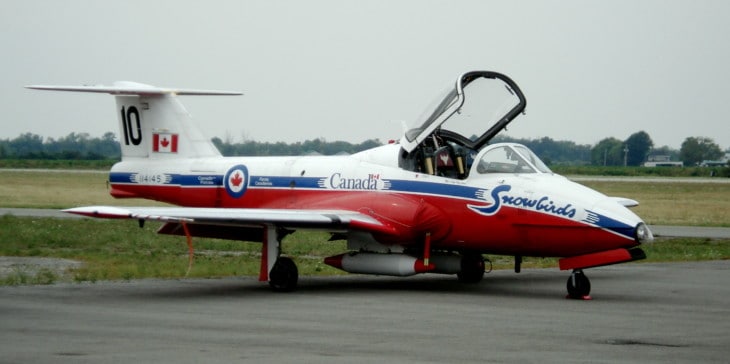

It was never designed to perform. It is a small, single-engine jet with two seats side by side, and it served as the air force’s standard jet trainer until 2000, when most of the fleet was retired.
The display team grew out of that training fleet. In 1969, Col. O.B. Philp, the base commander at Moose Jaw, began informal formation practice with instructors in leftover, white-painted Tutors, and by 1970 they were flying flypasts. The name “Snowbirds” was formally adopted on June 25, 1971.
By 2026 the show team flew 11 Tutors, nine in the formation and two spares, with about a dozen more held in storage. Those nine jets fly at speeds between 100 and 320 knots, and in many formations sit about 6 feet (1.8 m) apart.
The farewell season was scheduled to open in Montreal in May and close at the California Capital Airshow in Sacramento on Oct. 10 and 11, which Moose Jaw Today counted as the team’s 2,930th show. A sold-out July 11 show at Moose Jaw Municipal Airport was its last public hometown performance in the Tutor.
“The Tutor aircraft is 63 years old,” Speiser-Blanchet said in September, “and it is time to move into the future and make sure that we’re doing things for the right reasons.”
Canada’s Next Snowbirds Will Fly a Propeller
The replacement is the Swiss-built Pilatus PC-21, designated the CT-157 Siskin II in Canada. It is a tandem-seat trainer powered by a single 1,600-shaft-horsepower Pratt & Whitney Canada PT6A-68B turboprop driving a five-blade propeller.
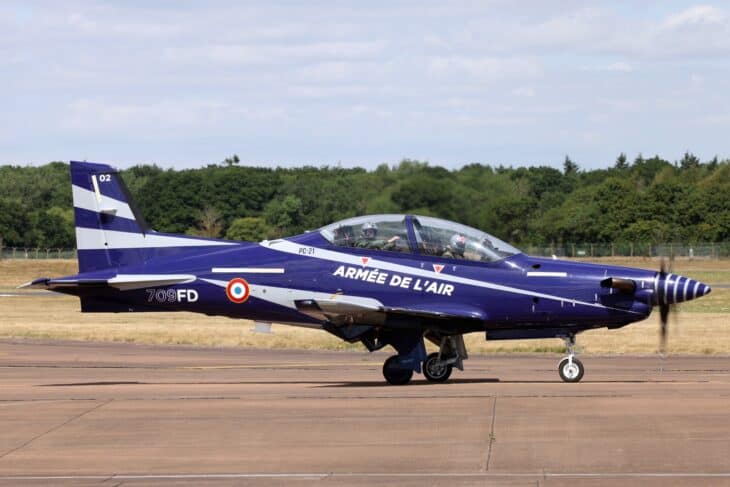
That sets the Snowbirds apart from their best-known neighbors. The U.S. Navy’s Blue Angels fly the Boeing F/A-18E/F Super Hornet, a front-line jet that still makes our ranking of the best fighter jets in the world.
A turboprop team is not a new idea, though. The Royal Australian Air Force’s Roulettes have flown the PC-21 since 2019.
National Defence says the new fleet “will ultimately rebuild to the team’s distinctive nine-plane formation.” How many Siskin IIs the Snowbirds will get has not been announced, and McGuinty said only that negotiations with the manufacturer were underway.
The gap is what worries the team’s own alumni. Former commanding officer Dan Dempsey, speaking for the Snowbirds Alumni Association in May, warned of the loss of operational expertise during a prolonged interruption, and said the association would have preferred to keep the Tutors flying “a little longer.”
The name and the home stay. “This is where the Snowbirds are, this is where the Snowbirds belong, and this is where the Snowbirds will stay,” McGuinty said at 15 Wing.
One Flypast Left, Then the Tutors Go to Trenton
The Moose Jaw show was the last air show, not quite the last flight. The Snowbirds are scheduled to fly over the Grey Cup in Calgary on Nov. 15, after which the Tutors retire and are sent to the base at Trenton, Ontario, for disposal.
“It’s like saying goodbye to a good friend,” Snowbirds public affairs officer Capt. Philip Rochon told The Canadian Press before the home closer.
Keeping the pilots sharp through the pause is still being planned. Speiser-Blanchet said the options include sending pilots on exchange to allied teams or putting them to work instructing on the PC-21 at Moose Jaw.
That second option exists because the Siskin II is arriving anyway. The RCAF is already acquiring 19 PC-21s for its Future Aircrew Training program, so the type that will carry the Snowbirds will also train the air force’s next pilots.
The Tutor ends its Snowbirds career 55 years after the team’s first show, and more than 60 years after it joined the air force. Its successor’s first public show does not yet have a date.
Sources and references used for research and fact-checking.
- Aviation24.be, Snowbirds bid farewell to CT-114 Tutor with final Moose Jaw performance
- MooseJawToday.com, SPECIAL FEATURE: Watch the Snowbirds' final Tutor demonstration from 15 Wing Moose Jaw
- Castanet / Moose Jaw Today, Snowbirds to livestream final Tutor air show from Moose Jaw Oct. 16
- CTV News / The Canadian Press, 'Goodbye to a good friend': Snowbirds hold final show over Moose Jaw
- CTV News, Canada's Snowbirds jets grounded until 2030s as replacement aircraft identified
- Skies Magazine, Snowbirds set for final season flying Tutor jet before turboprop era begins
- MiGFlug, Snowbirds Fly Their Last Tutor Home Show at Moose Jaw Today
- Wikipedia, Canadair CT-114 Tutor
- Wikipedia, Snowbirds (aerobatic team)
- Wikipedia, Blue Angels
- Wikipedia, Pilatus PC-21
Get the Newsletter
The latest aviation news and stories sent to your inbox.
About the Author

Tim is the owner and lead editor of AeroCorner since 2019, overseeing aviation content covering aircraft, airlines, airports, and the broader aviation industry. Through years of researching, writing, editing, and publishing aviation-focused content, he has developed extensive practical knowledge of commercial aviation and air travel. Based in Asia and a frequent traveler himself, Tim also brings firsthand passenger experience to AeroCorner’s coverage. Outside of publishing, he has also explored aviation firsthand through hands-on flight training in New Zealand.