


Table of Contents
One shoulder-fired missile put two American airmen on the ground in Iran. Getting the second one out took two days, two rescue waves and, by the President’s count, 155 aircraft.
An Iranian shoulder-fired, heat-seeking missile struck the engine of an F-15E Strike Eagle over Iran early on April 3, 2026, local time. Both crew members ejected. The jet flew with the 494th Fighter Squadron out of RAF Lakenheath in England, and its call sign was DUDE 44.
The pilot, DUDE 44 Alpha, spent about seven hours on the ground. A daylight mission of 21 aircraft brought him home the same day.
The weapons systems officer, DUDE 44 Bravo, was not so lucky. He spent roughly 50 hours alone in the Zagros Mountains with a broken back, and the wave that finally reached him was an order of magnitude larger.
Why a Missile One Man Can Carry Reached a Strike Eagle
The F-15E Strike Eagle is a two-seat, all-weather strike fighter built to go deep and come back. It is not the aircraft anyone expects a man-portable weapon to kill.
But a heat-seeking missile does not care what an airframe cost. It cares about an exhaust plume, and it only has to arrive once.

Reporting on the shootdown describes the weapon as a shoulder-fired, heat-seeking missile that hit one of the jet’s engines.
One American military assessment holds that Iranian forces probably located the fighter using several drones, then engaged it with a man-portable missile, probably of Chinese origin. That is an assessment rather than a confirmed finding, and the Air Force has not published a public engagement analysis.
The asymmetry is the whole point. A weapon a single soldier carries on one shoulder can force a response involving a meaningful slice of everything the United States has in a theater.
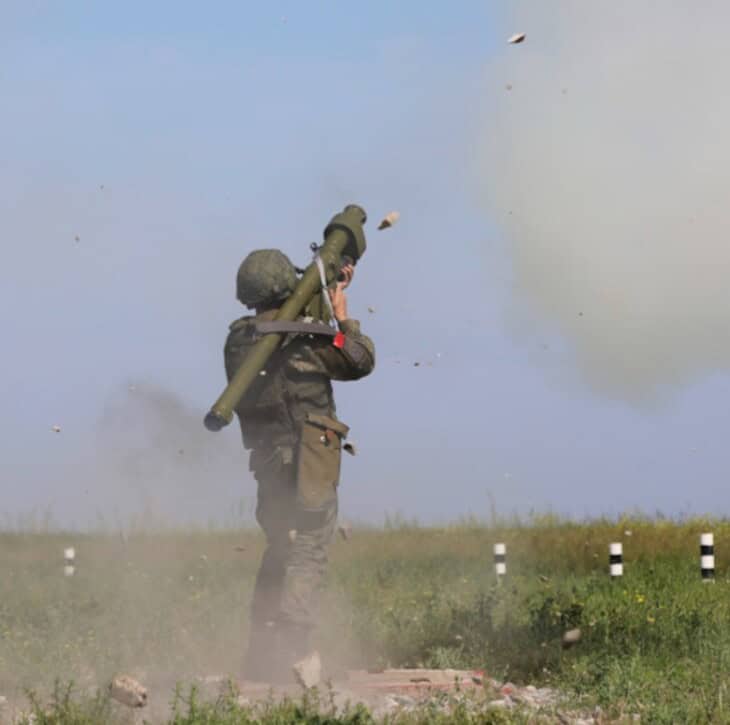
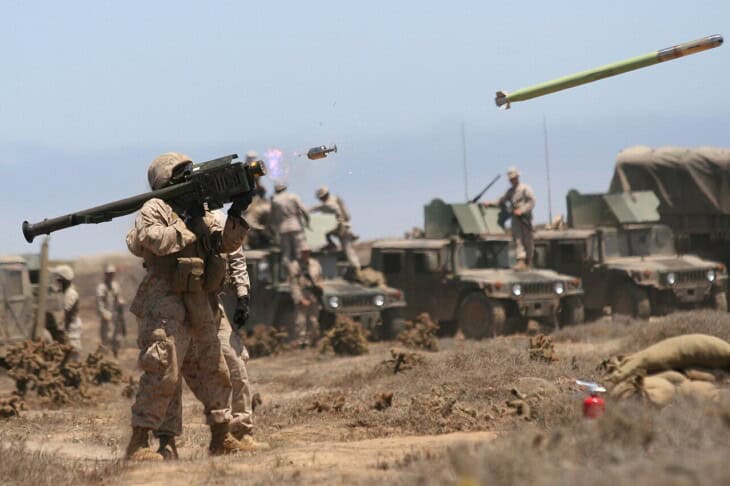
It is also a reminder that the threat to a modern fighter is rarely the thing it was designed to fight. The Strike Eagle belongs on any list of the best fighter jets in the world, and Iran’s own air force flies nothing that could have touched it in a fair contest.
Twenty-One Aircraft for the Pilot, 155 for the Man Behind Him
The first wave went in during daylight, hours after the ejections, and stayed over Iran for about seven hours.
It was built around 10 A-10C Thunderbolt IIs flying the Sandy role, the on-scene escort and suppression job the A-10 has held for decades, plus HC-130J Combat King II tankers and HH-60W Jolly Green II helicopters. Twenty-one aircraft flew that mission.

An HH-60W picked up Alpha under close-range gunfire. It was the Jolly Green II’s first combat retrieval of a downed crew member behind enemy lines, and a second helicopter trailing it took multiple small-arms hits that slightly wounded a crew member aboard.
Bravo was still out there, injured and moving. He hiked a 7,000-foot ridgeline and hid in a mountain crevice while Iranian forces searched for him.
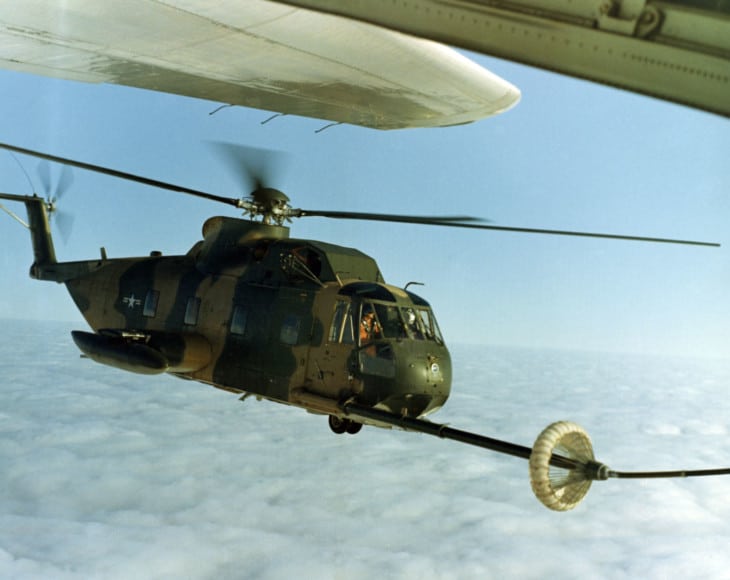
The second wave went overnight on April 4 and 5. Air & Space Forces Magazine reported the President’s accounting of it: 155 aircraft, including four bombers, 64 fighters, 48 refueling tankers and 13 rescue aircraft, among others, flying for another seven hours in darkness.
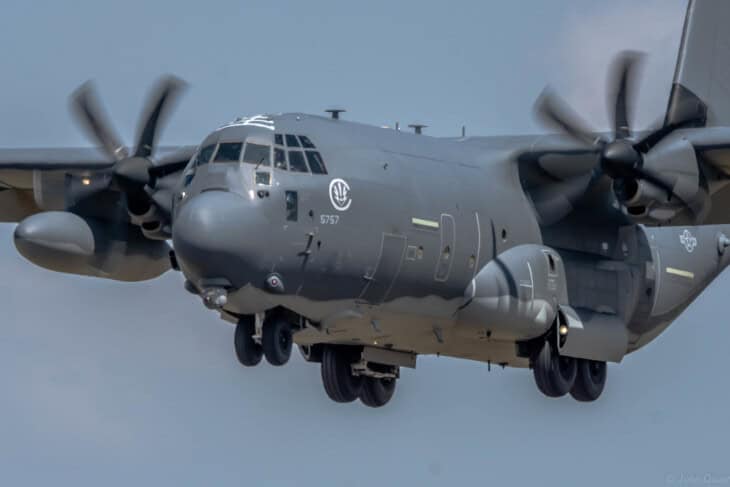
That figure is Trump’s, not an Air Force audit, and it counts the second wave alone rather than the whole operation. The aircraft that actually pulled Bravo out were MH-6 Little Birds, flown in aboard MC-130J Commando IIs that landed on an improvised strip inside Iran. More than 90 Americans stood on Iranian ground to make it work.
The Rescue Destroyed More Aircraft Than the Shootdown Did
Iran shot down one American aircraft on April 3. Recovering its two crew members cost three more.
A Congressional Research Service report on US aircraft losses in Operation Epic Fury, the campaign this happened inside, tallies the individual airframes. One A-10 was hit by enemy fire and crashed on April 3, with its pilot ejecting and being recovered. Two MC-130Js were intentionally destroyed on the ground in Iran on April 5.
The MC-130Js were destroyed because they could not fly back out of the improvised landing site. Rather than leave sensitive aircraft in Iranian hands, the force blew them up and evacuated its people on a lighter aircraft. An HH-60W was logged as damaged by small-arms fire the same day.
Across the whole campaign, from February 28 to the report’s May 13 update, that CRS product counts 42 fixed-wing or rotary-wing aircraft, including drones, reportedly lost or damaged.
Set against the alternative, the Air Force considers that a bargain. Nobody died.
The last time US troops went into Iran
CBS News reported that the 90-plus Americans on the ground for the second rescue were the first US troops inside Iran in 46 years. The previous attempt, Operation Eagle Claw on April 24 and 25, 1980, never reached Tehran. Eight RH-53D helicopters launched for the Desert One staging strip about 200 miles (320 km) southeast of the capital and only five arrived serviceable, one short of the six the plan required. During the withdrawal a helicopter struck a parked EC-130, and eight servicemen were killed. In April 2026, every American came home.
The Aircraft That Pulled Them Out Are on Their Way Out
The two types that carried this rescue are both shrinking, and neither is shrinking because of anything that happened over Iran.
The Air Force’s fiscal 2027 force-structure proposal retires 49 A-10s in fiscal 2027, leaving 54, then none in fiscal 2028, 18 in fiscal 2029 and the final 36 during fiscal 2030.
The last Warthog would leave service by September 30, 2030, if Congress approves the schedule, and Congress has blocked versions of this plan repeatedly. The fiscal 2026 defense law bars the fleet from dropping below 103 aircraft before October 1, 2026.
Some of those A-10s are being replaced by the very jet this story is about. Whiteman Air Force Base is the service’s only candidate to base 24 F-15Es and retire its A-10s.

The HH-60W is in a stranger position. The program of record started at 113 aircraft, was capped at 75 in the fiscal 2023 request, and has since been pushed back up to at least 89, helped by a $100 million congressional addition in fiscal 2026.
The Air Force requested no money for additional Jolly Green IIs in fiscal 2027, the fourth straight year it has tried to end the line. Service leaders argue other assets can do combat search and rescue, and that the fleet is useful in the Middle East but not for a China scenario.
Iranian missiles have kept finding both types anyway. In September 2026 a strike on a base in Jordan wrecked an A-10’s wing and damaged about eight F-15Es on the ground.
The rescue itself stayed classified until this month. CBS News and 60 Minutes aired newly declassified Pentagon footage of both recoveries on September 13, 2026, with the Little Bird deliberately blurred to protect what Gen. Dan Caine called the most bespoke capabilities.
A day later, Air Force Chief of Staff Gen. Ken Wilsbach used his AFA keynote to announce that 10 airmen had received battlefield promotions for the DUDE 44 rescue, six of them promoted on stage, ranging from staff sergeant to chief master sergeant. Battlefield promotions are rare in the Air Force. So is sending 155 aircraft after one man.
Sources and references used for research and fact-checking.
- Air & Space Forces Magazine, Wilsbach Shares Airmen's Stories of Epic Fury, Says 10 Got Battlefield Promotions for DUDE 44 Rescue
- Air & Space Forces Magazine, Inside the Massive Operation to Save Two Downed Airmen In Iran
- Military Times, The rescue mission that brought 2 F-15E Strike Eagle crew members home
- Congressional Research Service, U.S. Aircraft Combat Losses in Operation Epic Fury: Considerations for Congress (IN12692)
- Wikipedia, 2026 United States F-15E rescue operation in Iran
- The Aviationist, New DUDE 44 Rescue Footage Reveals More About Aircraft Used in Iran Operation
- Army Recognition, New Declassified Videos Show U.S. Rescue of F-15E Crew in Iran With 21 Aircraft and 90 Ground Troops
- Breaking Defense, The HH-60W helped rescue a pilot in Iran. Here's why the Air Force might not buy more.
- CBS News, U.S. Air Force officer shot down in Iran says it's a modern-day miracle he survived
- Military.com, Airman Shot Down Over Iran Endured 50-Hour Fight to Evade Capture
- 19FortyFive, The US Air Force Extended the A-10 to 2030 After It Closed the Depot, the Pilot School and the Engine Line
- Wikipedia, Operation Eagle Claw
Get the Newsletter
The latest aviation news and stories sent to your inbox.
About the Author

Tim is the owner and lead editor of AeroCorner since 2019, overseeing aviation content covering aircraft, airlines, airports, and the broader aviation industry. Through years of researching, writing, editing, and publishing aviation-focused content, he has developed extensive practical knowledge of commercial aviation and air travel. Based in Asia and a frequent traveler himself, Tim also brings firsthand passenger experience to AeroCorner’s coverage. Outside of publishing, he has also explored aviation firsthand through hands-on flight training in New Zealand.