

Table of Contents
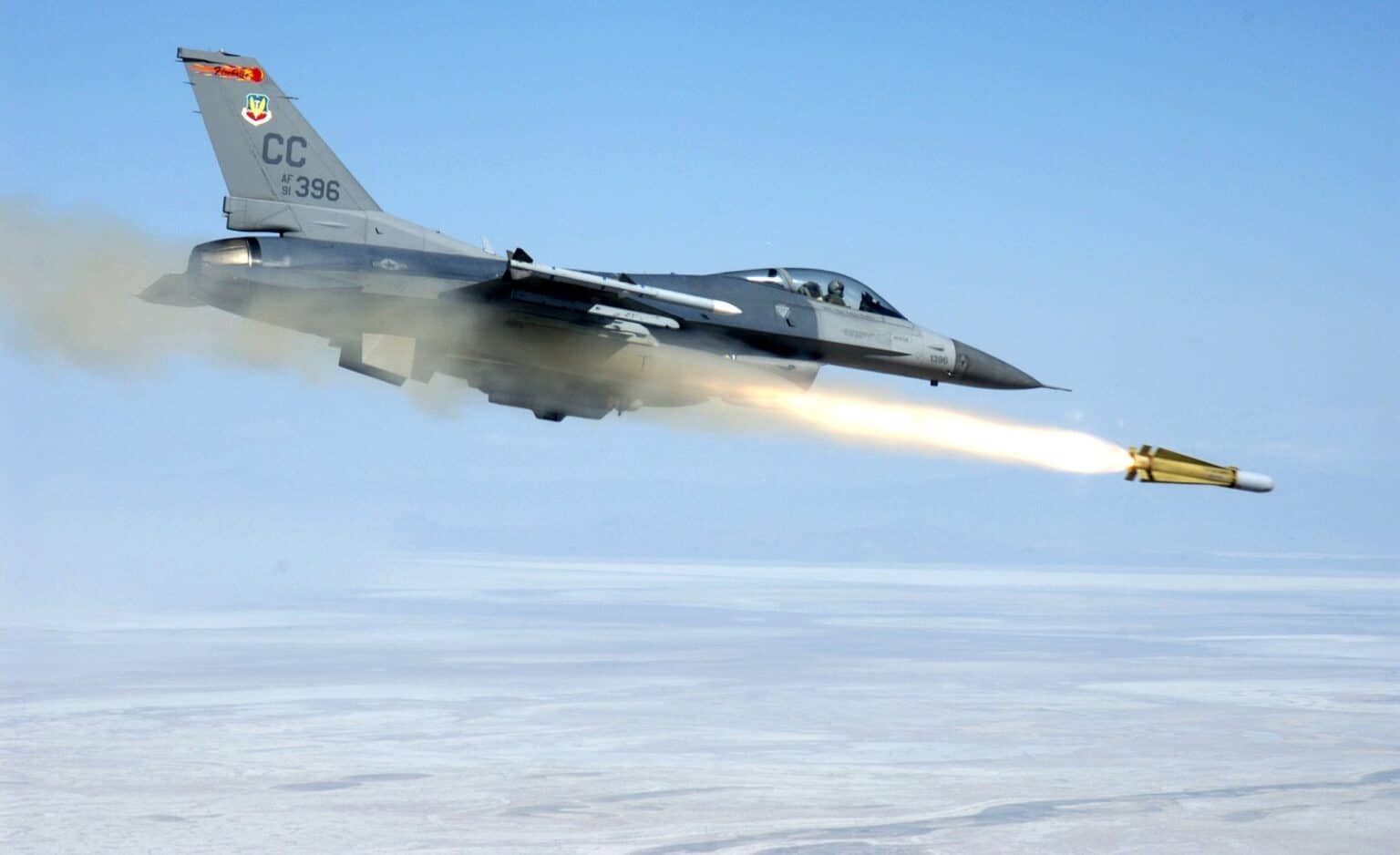
The AGM-114 Hellfire is the most combat-proven air-to-ground missile in service. It fired the opening shots of Desert Storm in 1991, became the standard weapon of the armed drone, and was still being fired in combat in 2026, four decades after it entered US Army service.
An air-to-ground missile (AGM, also called an air-to-surface missile) is a guided, powered weapon an aircraft fires at a target on land or at sea. This list ranks the 11 that matter most as of November 2026 by what they have actually done in combat, then by how widely they are fielded, not by the ranges their makers advertise.
| Rank | Missile | Country | Guidance | Published range | Combat record |
|---|---|---|---|---|---|
| 1 | AGM-114 Hellfire | United States | Laser or radar | 4.4 to 6.8 miles (7 to 11 km) | Desert Storm’s first shots, 1991; drone strikes since |
| 2 | AGM-65 Maverick | United States | TV, infrared or laser | More than 14 miles (22 km) | Vietnam 1972; 5,000+ fired in Desert Storm |
| 3 | AGM-88 HARM / AARGM | United States | Anti-radiation | Up to 92 miles (148 km) | Libya 1986, Gulf War, Kosovo, Ukraine |
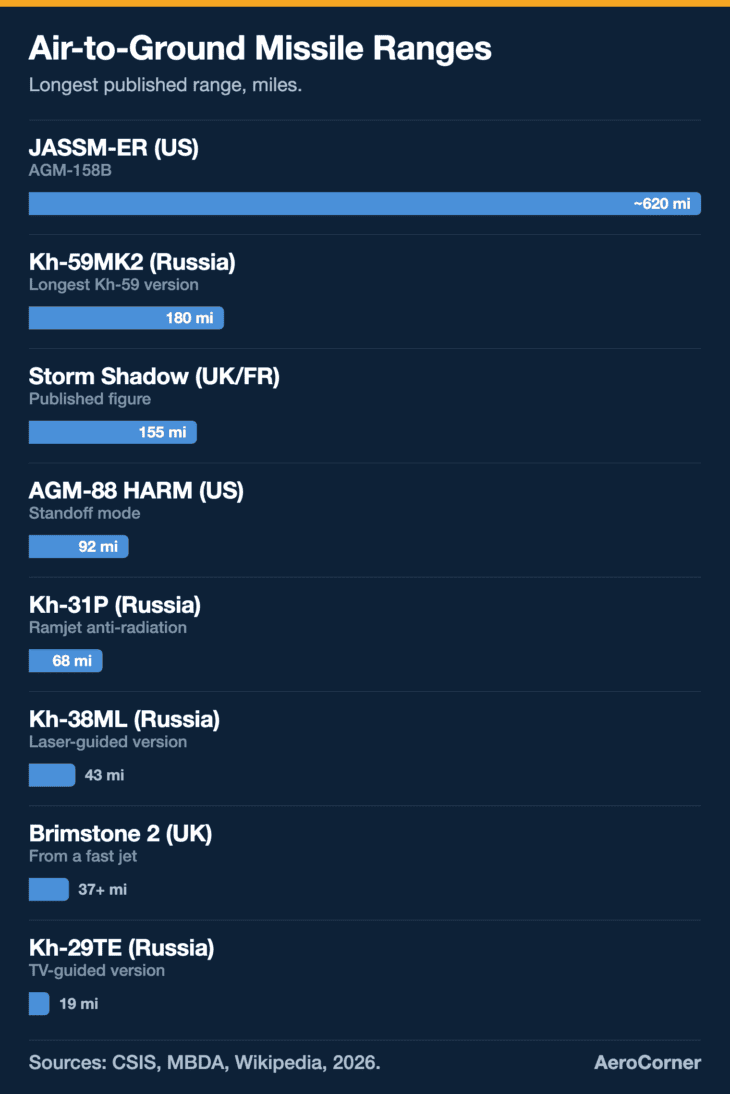
| 4 | AGM-158 JASSM / JASSM-ER | United States | GPS, inertial, infrared | 230 miles (370 km); ER about 620 miles (1,000 km) | Syria 2018; 1,000+ ERs in the 2026 Iran war |
| 5 | Storm Shadow / SCALP-EG | UK and France | GPS, inertial, terrain matching, infrared | About 155 miles (250 km) | Iraq 2003, Libya, Syria, Ukraine |
| 6 | Brimstone | United Kingdom | Radar and laser | 37+ miles (60+ km), Brimstone 2 | Afghanistan, Libya, Iraq, Syria, Ukraine |
| 7 | Kh-59 | Russia | TV or radar, inertial | 180 miles (290 km), Kh-59MK2 | Chechnya, Ukraine |
| 8 | Kh-31P | Russia | Anti-radiation, ramjet | 68 miles (110 km) | Georgia 2008 (reported), Ukraine |
| 9 | Kh-29 | Russia | Laser or TV | 6 to 19 miles (10 to 30 km) | Syria 2015; possibly Ukraine |
| 10 | Kh-38 | Russia | Laser, radar, infrared or satellite | Up to 43 miles (70 km), Kh-38ML | Syria |
| 11 | AGM-179 JAGM | United States | Laser and radar, dual mode | 5 miles (8 km) | No combat launch made public |
How this ranking works
We rank by proof. A missile fired across several wars beats one with a single campaign, and a missile used in combat beats one that has only been tested. Range comes second, because the longest-range weapons are usually the least used. Only powered, guided missiles in service in November 2026 are ranked: guided bombs such as JDAM and Paveway are not missiles, and long-range bomber cruise missiles get their own list.
What counts as an air-to-ground missile
The family splits by job. Short-range tactical missiles such as the Hellfire and Maverick kill tanks, vehicles and small buildings, anti-radiation missiles such as HARM ride an enemy radar’s own signal back to it, and standoff missiles such as JASSM and Storm Shadow hit bunkers and headquarters from far outside air defense range.
The “AGM” in a US designation follows the military naming system: A for air-launched, G for surface attack, M for guided missile. Our guide to the types of missiles shows where air-to-ground weapons sit next to cruise, ballistic and air-to-air missiles.
1. AGM-114 Hellfire (United States)
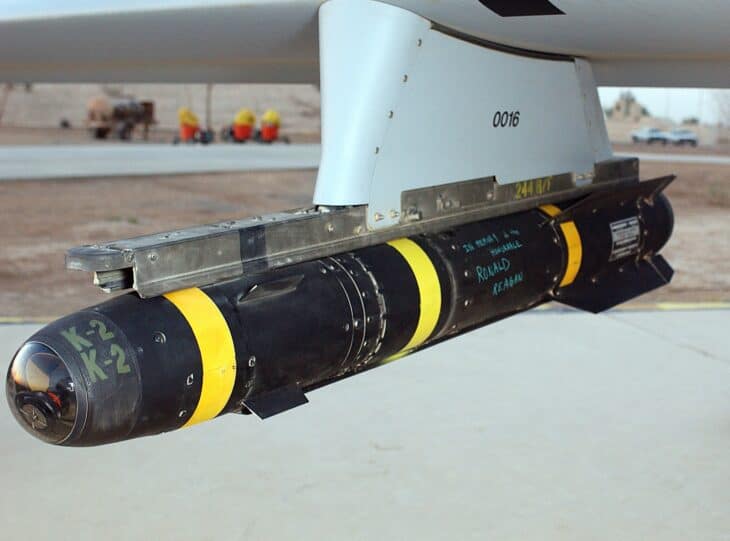

The Hellfire was built as a helicopter tank-killer and became the most-used precision missile of the drone age. The original AGM-114A entered US Army service in 1986, and the missile weighs about 104 pounds (47 kg), with a range of 4.4 to 6.8 miles (7.1 to 11 km) depending on trajectory.
Its combat record starts in the early hours of January 17, 1991, when Army Apaches of Task Force Normandy fired Hellfires at Iraqi early-warning radars and opened Desert Storm. The AH-64 Apache can carry up to 16 of them, and the MQ-1 Predator and MQ-9 Reaper made it the standard weapon of the armed drone.
Hellfires killed al-Qaeda leader Ayman al-Zawahiri in Kabul in July 2022, and the US Navy fired them to disable an oil tanker near Iran’s Kharg Island during the 2026 Iran war.
The Hellfire with no explosive
The R9X variant swaps the warhead for six pop-out blades and about 100 pounds of dense metal, so it can kill one person in a car or on a balcony without blasting the building around them. It was deployed in secret in 2017 and made public in 2019.
2. AGM-65 Maverick (United States)
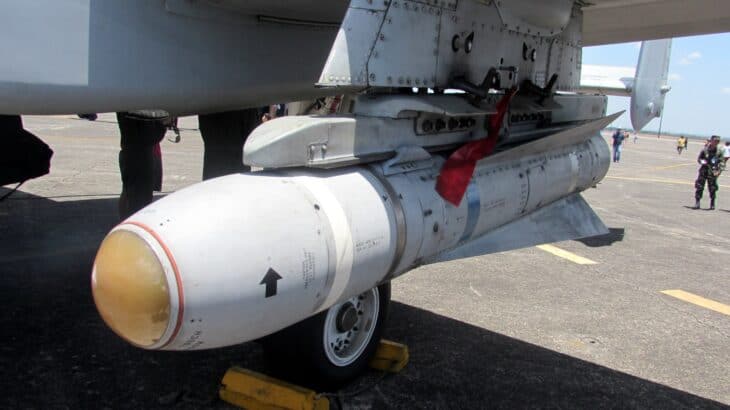

The Maverick is the most widely produced precision-guided missile in the Western world, with more than 70,000 built. It entered US Air Force service in August 1972 and made its combat debut four months later in Operation Linebacker II over Vietnam.
In Desert Storm, coalition jets fired more than 5,000 Mavericks, mostly from A-10 Warthogs and F-16s, with a reported US Air Force hit rate of 80 to 90 percent. Another 918 were fired in the 2003 Iraq War.
It ranks below the Hellfire because the Hellfire is still the weapon of choice in today’s wars, while the Maverick is one of the missiles the new JAGM was designed to retire. The published range is more than 12 nautical miles, about 14 miles (22 km), and much more when launched high and fast.
3. AGM-88 HARM and AARGM (United States)
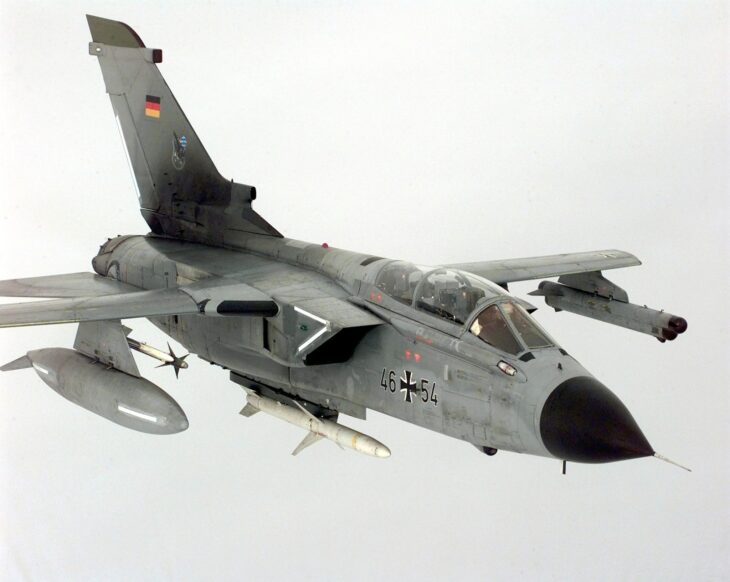

The High-speed Anti-Radiation Missile homes on the signal of an enemy radar and flies at Mach 2.9 to reach it before the operator can react. Its first combat shots came in March 1986, against a Libyan surface-to-air missile site in the Gulf of Sidra.
It was used heavily in the 1991 Gulf War and over Yugoslavia in 1999, where pilots learned that a radio call of “Magnum,” the HARM launch call, was often enough to make enemy radar crews switch off. The published range runs from 16 miles (25 km) at low level to 92 miles (148 km) in standoff mode.
Ukraine’s air force has fired HARMs from Soviet-built MiG-29s and Su-27s since 2022, something no Soviet-built jet had been able to do before. The newer AGM-88E AARGM adds a millimeter-wave radar, and a US Navy EA-18G Growler used one to destroy a Houthi Mi-24 helicopter on the ground in February 2024.
4. AGM-158 JASSM and JASSM-ER (United States)
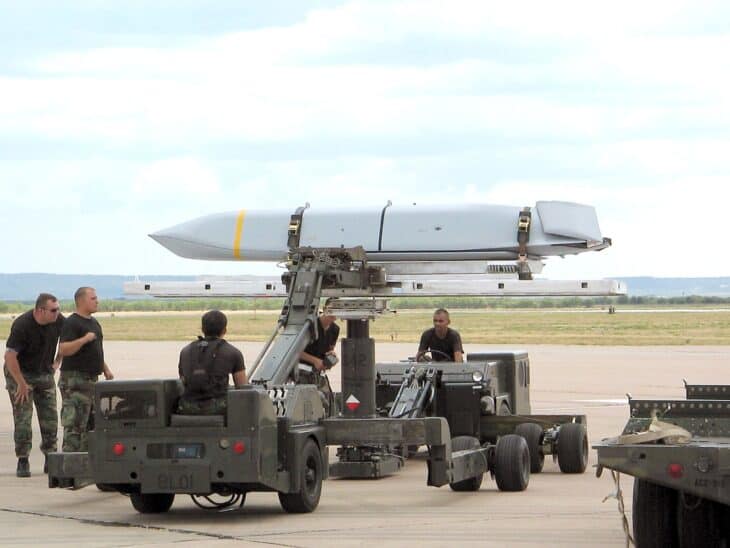

The Joint Air-to-Surface Standoff Missile is a stealthy, jet-powered missile with a 1,000-pound (450 kg) penetrating warhead. The original version flies about 230 miles (370 km), and the JASSM-ER, in US Air Force service since 2014, reaches about 620 miles (1,000 km).
Its combat debut came on April 14, 2018, when two B-1B Lancers fired 19 JASSMs at the Barzah research center in Syria.
Bloomberg reported in April 2026 that the United States had used more than 1,000 JASSM-ERs in the first four weeks of the Iran war, out of a prewar stock of about 2,300. That climb from 19 rounds to over 1,000 in one campaign is why it ranks this high, and why US stocks of it are now a concern.
The longer list of cruise missiles covers JASSM alongside the Tomahawk and Russia’s Kh-101.
5. Storm Shadow / SCALP-EG (United Kingdom and France)
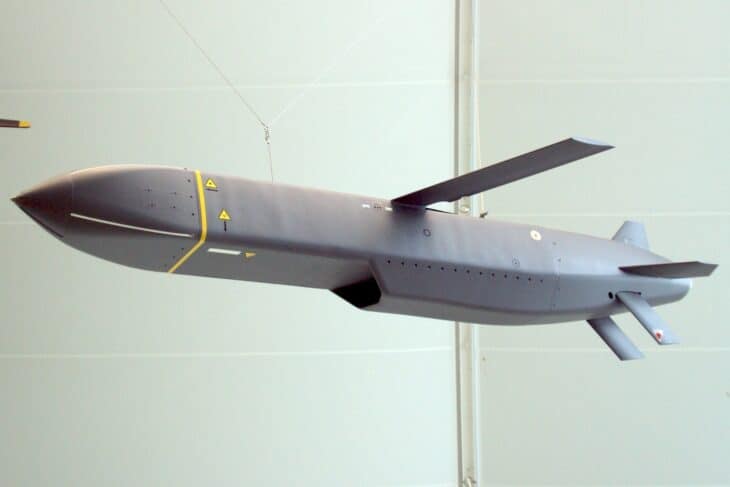

Storm Shadow is the British name and SCALP-EG the French one for the same MBDA stealth cruise missile, which weighs about 2,900 pounds (1,300 kg) and has a published range of about 155 miles (250 km). RAF Tornados first fired it in the 2003 invasion of Iraq, before it had formally entered service.
Italian Tornados fired 20 to 30 during the 2011 Libya campaign with a reported 97 percent success rate, and British Tornados fired eight at a chemical weapons site near Homs, Syria, in April 2018. MBDA says it has seen operational service in Iraq, Libya and Syria.
Ukraine made it famous. Fired from modified Su-24s since May 2023, it damaged the submarine Rostov-on-Don and the landing ship Minsk at Sevastopol that September, hit the Black Sea Fleet headquarters on September 22, 2023, and was first fired into Russia itself on November 20, 2024.
6. Brimstone (United Kingdom)
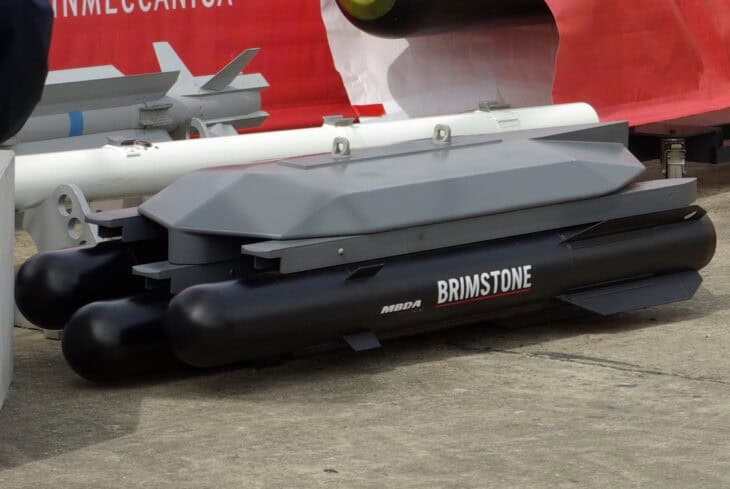

Brimstone is a 110-pound (50 kg) radar- and laser-guided anti-armor missile inspired by the Hellfire, and its trick is the salvo: one launcher carries three, and a Typhoon can carry up to 18. It entered RAF service in 2005 and was first fired in combat in Afghanistan in June 2009.
The RAF fired 60 in the first four weeks over Libya in 2011, and by March 2017 had used 97 in Iraq and 73 in Syria, mostly against moving vehicles. The UK Ministry of Defence says its combat accuracy and reliability are both “well above 90 percent.”
Ukraine fires it from trucks and boats rather than aircraft, because it had no jet that could carry it. Brimstone 2 roughly doubled the range to 37 miles (60 km) or more from a fast jet.
7. Kh-59 (Russia)
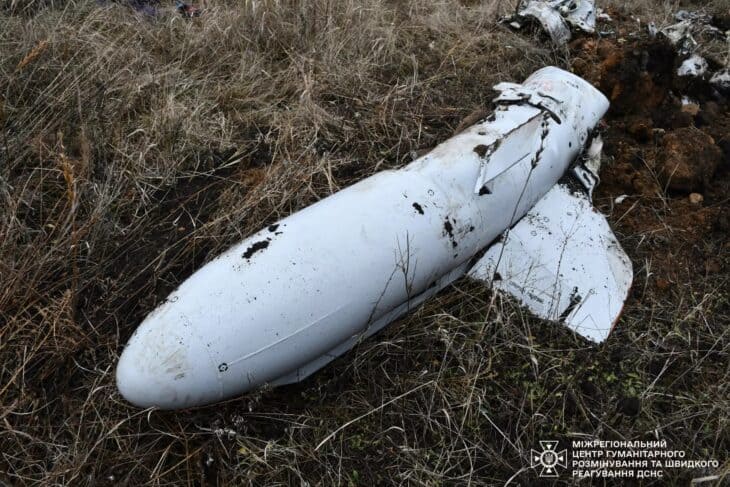

The Kh-59 is Russia’s main tactical standoff missile, a 2,050-pound (930 kg) weapon in service since 1980 that cruises at Mach 0.72 to 0.88. The Kh-59MK2 reaches about 180 miles (290 km) and has been test-fired from the Su-57.
Russia used it in both Chechen wars and has fired it throughout the war in Ukraine, from a grain silo near Mykolaiv in April 2022 to an airbase in Zhytomyr Oblast that August. It ranks below Storm Shadow because the record is long but thinly documented, with most strikes known from Ukrainian reports rather than Russian ones.
8. Kh-31P (Russia)
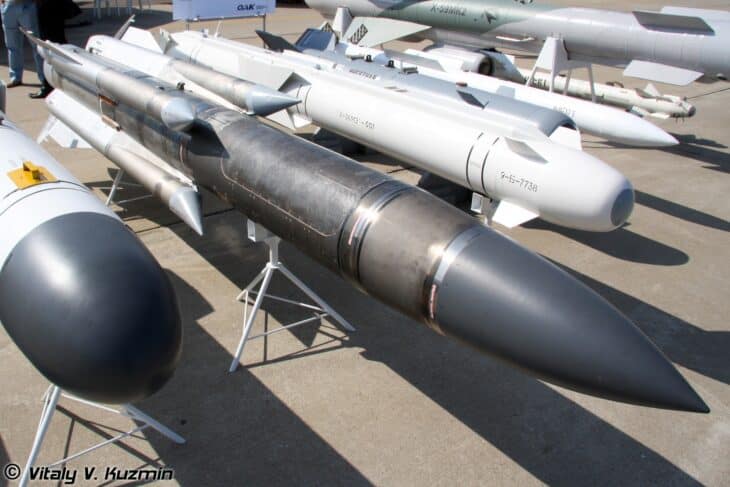

The Kh-31P is Russia’s answer to HARM, with one big difference: a ramjet, which pushes it to 1,340 to 1,570 mph (2,160 to 2,520 km/h). It entered service in 1988 and reaches about 68 miles (110 km).
Russia reportedly used it against a Georgian air defense radar near Gori in August 2008. In Ukraine, Ukrainian Air Force sources say Kh-31Ps and Kh-58s destroyed several Osa and Buk air defense systems, and a Kh-31 sank the patrol boat Sloviansk on March 3, 2022.
9. Kh-29 (Russia)
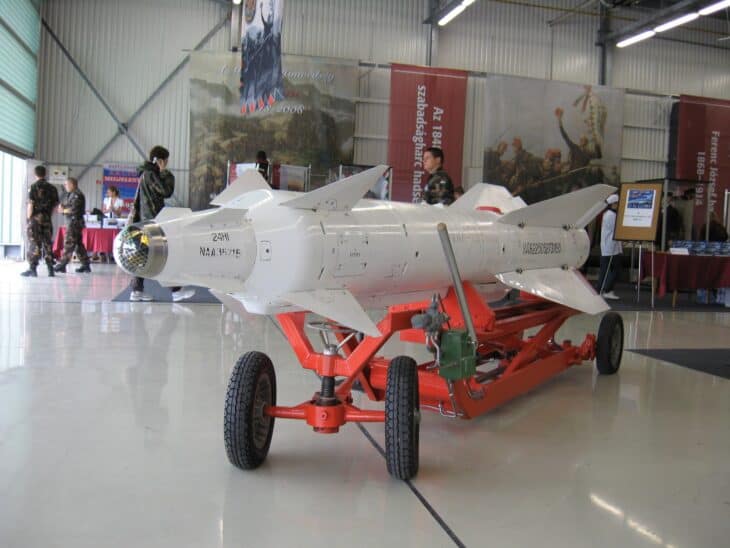

The Kh-29 is a heavy, short-range Soviet missile of about 1,460 pounds (660 kg), built to destroy bridges, depots, aircraft shelters and ships. It entered service in 1980 and flies at about 1,370 mph (2,200 km/h), with a range of 6 to 19 miles (10 to 30 km) depending on the version.
Su-34s and Su-24s fired laser-guided Kh-29Ls in Syria from 2015, and it has possibly seen limited use in Ukraine. It sits below the Kh-31P because its use is less clearly recorded.
10. Kh-38 (Russia)
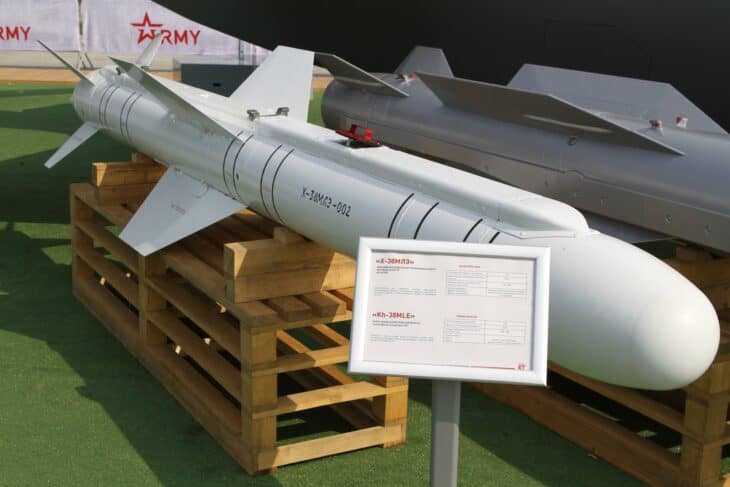

The Kh-38 is Russia’s newest modular tactical missile: one 1,150-pound (520 kg) body that takes laser, radar, infrared or satellite guidance. It flies at Mach 2.2, and the Kh-38ML reaches up to 43 miles (70 km).
Its combat use is recorded in Syria, and it is carried by the Su-34, Su-57 and Ka-52 attack helicopter. It ranks low because its record is short, not because the design is weak.
11. AGM-179 JAGM (United States)
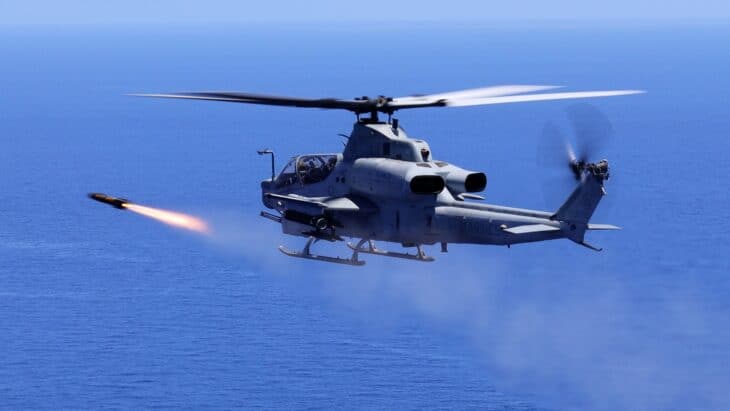

The Joint Air-to-Ground Missile is the Hellfire’s successor and is built on the same production line in the same shape. Its gain is a dual-mode seeker that combines laser and millimeter-wave radar, which the Hellfire split across separate versions.
It reached initial operational capability on Marine Corps AH-1Z helicopters in early 2022, was cleared for full-rate production that August, and the Pentagon plans to buy 26,319. The base range is about 5 miles (8 km), and a medium-range version doubles it to 10 miles (16 km).
It is last only because no combat launch has been made public. On numbers alone, it is the missile most likely to top this list in a decade.
The ones that just missed
Israel’s Spike NLOS, in Israeli service since 1981 but kept secret until 2011, now reaches 31 miles (50 km) in its sixth-generation form, and a US Army AH-64E hit a target 20 miles (32 km) away with one in a 2021 test. Its air-launched combat record is not public enough to rank.
Anti-ship missiles such as Exocet and Harpoon are air-to-surface missiles too, but they have their own ranking in our list of anti-ship missiles. The weapons that hunt aircraft instead of ground targets are ranked in air-to-air missiles.
What about Taurus?
The German-Swedish Taurus KEPD 350 is one of the most capable missiles in its class, with an official range of more than 310 miles (500 km) and a bunker-busting warhead. It is not ranked because it has no public combat record. Ukraine has asked for it since May 2023, but Chancellor Olaf Scholz refused, the Bundestag voted against supplying it in January 2024, and as of August 2026 Chancellor Friedrich Merz was still holding it back, even as Germany helped fund Storm Shadow production for Kyiv.
FAQ
Sources and references used for research and fact-checking.
- CSIS Missile Defense Project, AGM-114 Hellfire
- Wikipedia, AGM-114 Hellfire
- Defense Media Network, Task Force Normandy fired the opening shots of Desert Storm
- Wikipedia, AGM-65 Maverick
- Wikipedia, AGM-88 HARM
- CSIS Missile Defense Project, JASSM
- Wikipedia, AGM-158 JASSM
- Fortune (Bloomberg), US Deploys Bulk of Stealthy Long-Range Missiles for Iran War
- Wikipedia, Storm Shadow
- MBDA, Storm Shadow / SCALP
- CSIS Missile Defense Project, Brimstone
- Wikipedia, Brimstone (missile)
- Wikipedia, Kh-59
- Wikipedia, Kh-31
- Wikipedia, Kh-29
- Wikipedia, Kh-38
- Wikipedia, Joint Air-to-Ground Missile
- Wikipedia, Spike (missile)
- Wikipedia, Taurus KEPD 350
- Il Foglio, Merz puts the brakes on Taurus deliveries to Ukraine
- Designation-Systems.net, Current Designations of U.S. Unmanned Military Aerospace Vehicles
Get the Newsletter
The latest aviation news and stories sent to your inbox.
About the Author

Tim is the owner and lead editor of AeroCorner since 2019, overseeing aviation content covering aircraft, airlines, airports, and the broader aviation industry. Through years of researching, writing, editing, and publishing aviation-focused content, he has developed extensive practical knowledge of commercial aviation and air travel. Based in Asia and a frequent traveler himself, Tim also brings firsthand passenger experience to AeroCorner’s coverage. Outside of publishing, he has also explored aviation firsthand through hands-on flight training in New Zealand.