

Table of Contents
The most proven anti-ship missile in the world is France’s Exocet. It is subsonic and short-ranged by modern standards, but it has seen more war than any other missile here: CSIS counts more than 700 fired in combat, from HMS Sheffield in 1982 to USS Stark in 1987.
That is the measure used here: ships actually hit in combat first, then how much the missile can reach and survive today. The order surprises people, because the missiles at the top are old and slow, and the fastest ones near the bottom have never hit a ship in war.
Rankings are as of November 2026, after Ukraine’s Long Neptune strikes on Russia’s Black Sea Fleet in September and a new Houthi campaign against Saudi tankers.
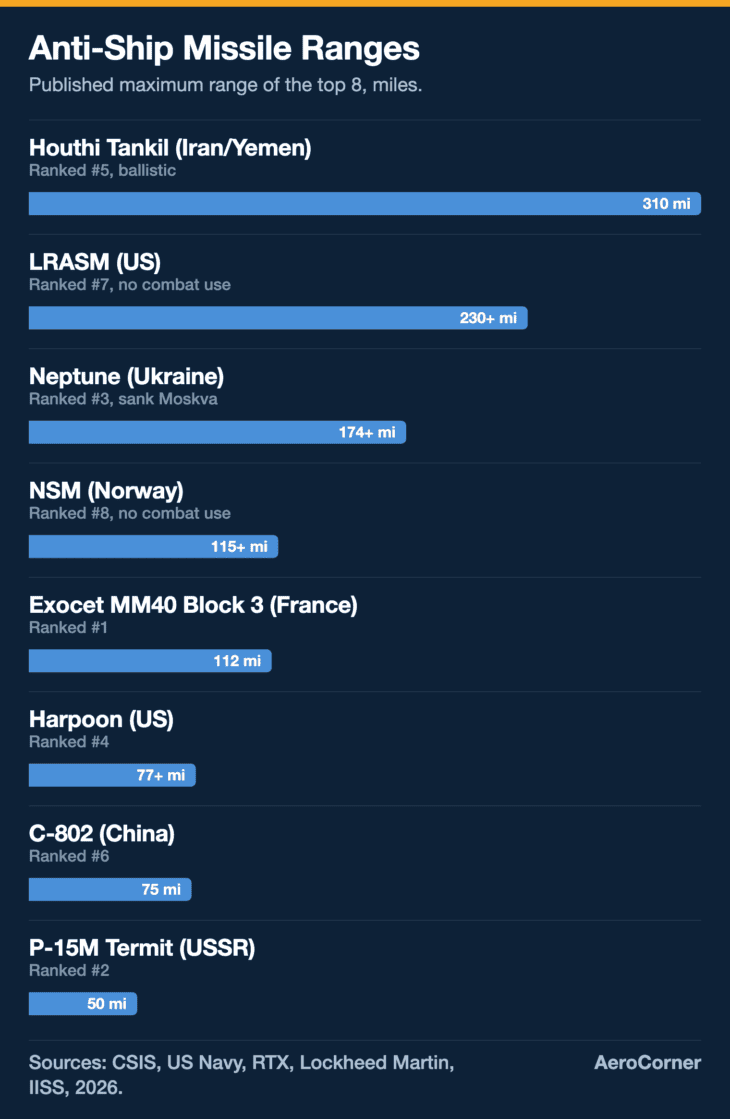
| Rank | Missile | Country | Speed | Max published range | Ships hit in combat |
|---|---|---|---|---|---|
| 1 | Exocet | France | Subsonic | 112 miles (180 km), MM40 Block 3 | Sheffield, Atlantic Conveyor, Glamorgan, Stark |
| 2 | P-15 Termit (Styx) | Soviet Union | Mach 0.95 | 50 miles (80 km), P-15M | Eilat, Khaibar, Muhafiz |
| 3 | R-360 Neptune | Ukraine | Subsonic | 174+ miles (280+ km) | Moskva; frigates in 2026 |
| 4 | Harpoon | US | Mach 0.85 | 77+ miles (124 km) | Libyan boats, Sahand, Vasily Bekh |
| 5 | Houthi anti-ship ballistic missiles | Iran / Yemen | Ballistic | About 310 miles (500 km), Tankil | Rubymar, True Confidence |
| 6 | C-802 / Noor | China / Iran | Subsonic | 75 miles (120 km) | INS Hanit |
| 7 | LRASM | US | Subsonic | 230+ miles (370+ km) | None disclosed |
| 8 | Naval Strike Missile | Norway | Subsonic | 115+ miles (185+ km) | None |
| 9 | BrahMos | India / Russia | Mach 2.0 to 2.8 | 180 to 310 miles (290 to 500 km) | None (land targets only) |
| 10 | P-800 Oniks | Russia | Mach 2.2 | 186 miles (300 km) | None (land targets only) |
| 11 | 3M22 Zircon | Russia | Mach 9 (Russian claim) | About 620 miles (1,000 km) | None (land targets only) |
| 12 | DF-21D and DF-26 | China | Ballistic | 900 to 2,490 miles (1,450 to 4,000 km) | None (tests only) |
How this ranking works
An anti-ship missile is a guided missile built to find and hit ships. We rank them first by what they have actually hit in war: how many ships, how large, and how often. Missiles with no combat record follow, ordered by how likely they are to get through a modern defense, judged on reach, speed and how many navies field them. Brochure speed comes last, because so far it has predicted almost nothing.
Anti-ship missiles are one family in our guide to the main types of missiles. Most fly just above the waves, which hides them below a ship’s radar horizon until late in the attack.
1. Exocet (France)
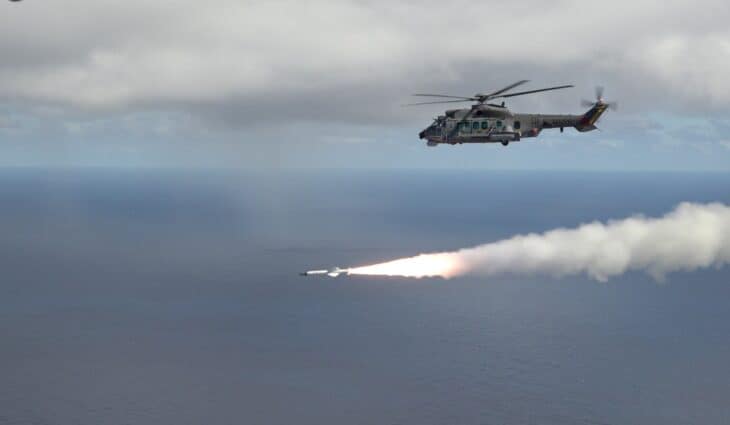

The Exocet is built today by MBDA. The ship-launched MM38 entered service in 1975 and the air-launched AM39 in 1979, according to CSIS Missile Threat, which counts about 38 countries that have bought it.
It made its name in the Falklands. On May 4, 1982, two Argentine Super Étendards each fired one AM39 at HMS Sheffield; one hit, killing 20 men, and the destroyer sank on May 10.
On May 25, two more AM39s hit the container ship Atlantic Conveyor, which was carrying helicopters and supplies for the landings, killing 12. On June 12, Argentine technicians fired a ship’s MM38 from an improvised shore launcher and hit the destroyer HMS Glamorgan, killing 14.
Five years later, on May 17, 1987, an Iraqi jet fired two Exocets into the US frigate USS Stark in the Persian Gulf. Thirty-seven American sailors were killed or later died of their wounds.
The current MM40 Block 3 swaps the rocket motor for a small turbojet and reaches 112 miles (180 km), per CSIS. MBDA fits the AM39 to the Dassault Rafale, maritime patrol aircraft and helicopters.
CSIS gets the Stark toll wrong
CSIS Missile Threat’s Exocet page says the attack on USS Stark killed 28 Americans. The Navy’s toll is 37: 29 died in the blast and fire, and eight more died later. It is a good reminder that even standard reference pages need checking.
2. P-15 Termit, or Styx (Soviet Union)
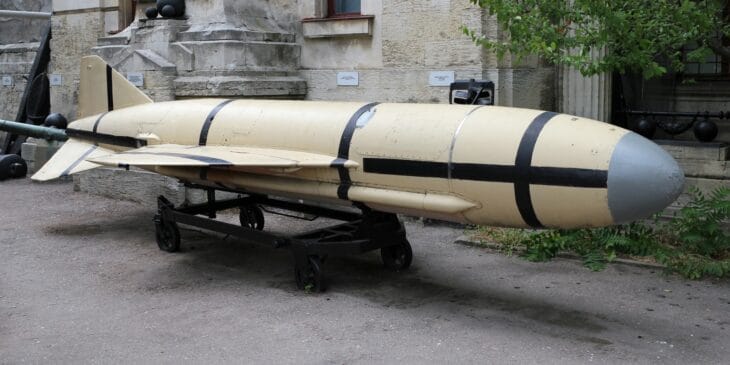

The P-15 Termit, called Styx by NATO, is the missile that started the anti-ship era. It entered Soviet service in 1960, flies at about Mach 0.95, and later P-15M versions reach about 50 miles (80 km), carrying a warhead of about 1,000 pounds (454 kg).
On October 21, 1967, Egyptian missile boats fired four from inside Port Said harbor at the Israeli destroyer Eilat. Three hit, the ship sank, and 47 of her 199 crew were killed or missing.
It was the first time a warship was sunk by missiles fired from another warship. Four years later, on the night of December 4 to 5, 1971, Indian Navy Osa-class boats fired Styx missiles into Karachi, sinking the destroyer PNS Khaibar with 222 sailors, the minesweeper PNS Muhafiz and the ammunition ship Venus Challenger.
It ranks below Exocet because of what happened next. In the 1973 Arab-Israeli war, several dozen Styx missiles were fired at Israeli boats at Latakia and Baltim, and every one missed.
3. R-360 Neptune (Ukraine)
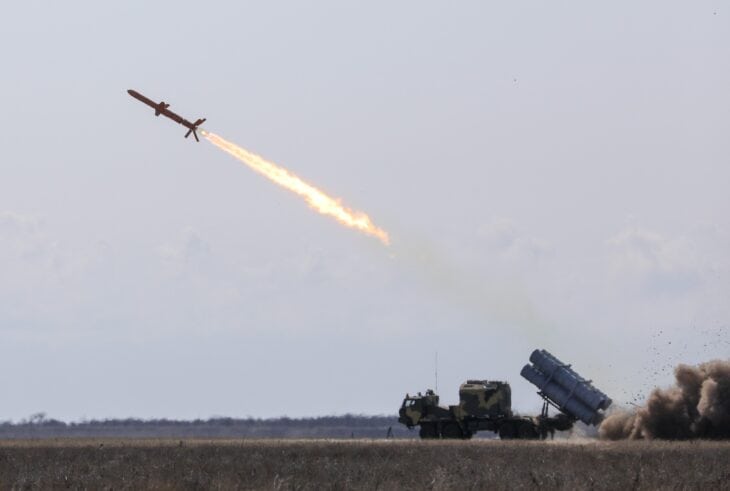

Neptune has the largest warship kill on this list. Built by Kyiv’s Luch Design Bureau and fired from trucks, it entered Ukrainian Navy service in March 2021 with a range of more than 174 miles (280 km) and a 330-pound (150 kg) warhead.
On the evening of April 13, 2022, two Neptunes hit the cruiser Moskva, flagship of Russia’s Black Sea Fleet, a senior US defense official confirmed two days later. She sank on April 14.
At 11,490 tons full load, Moskva was the largest warship sunk in combat since Argentina’s General Belgrano in 1982. The death toll is still disputed: a Russian court in 2026 put it at 20 killed and 8 missing, while Ukraine has claimed about 452.
The missile is still adding to its record. On September 9, 2026, Long Neptunes, with a range Naval News puts beyond 310 miles (500 km), hit the frigates Admiral Essen and Admiral Makarov and a Buyan-M corvette at Novorossiysk, according to Ukraine and satellite imagery. Naval News called them the first known Long Neptune hits on ships.
Those losses explain much of the state of Russia’s navy in 2026.
4. Harpoon (United States)
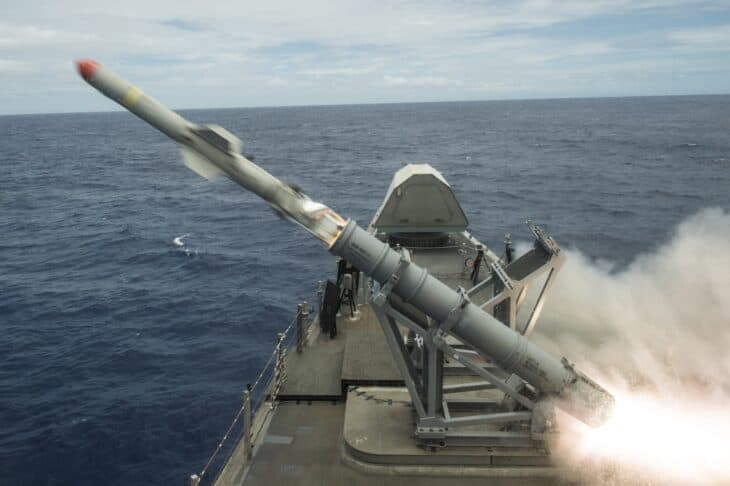

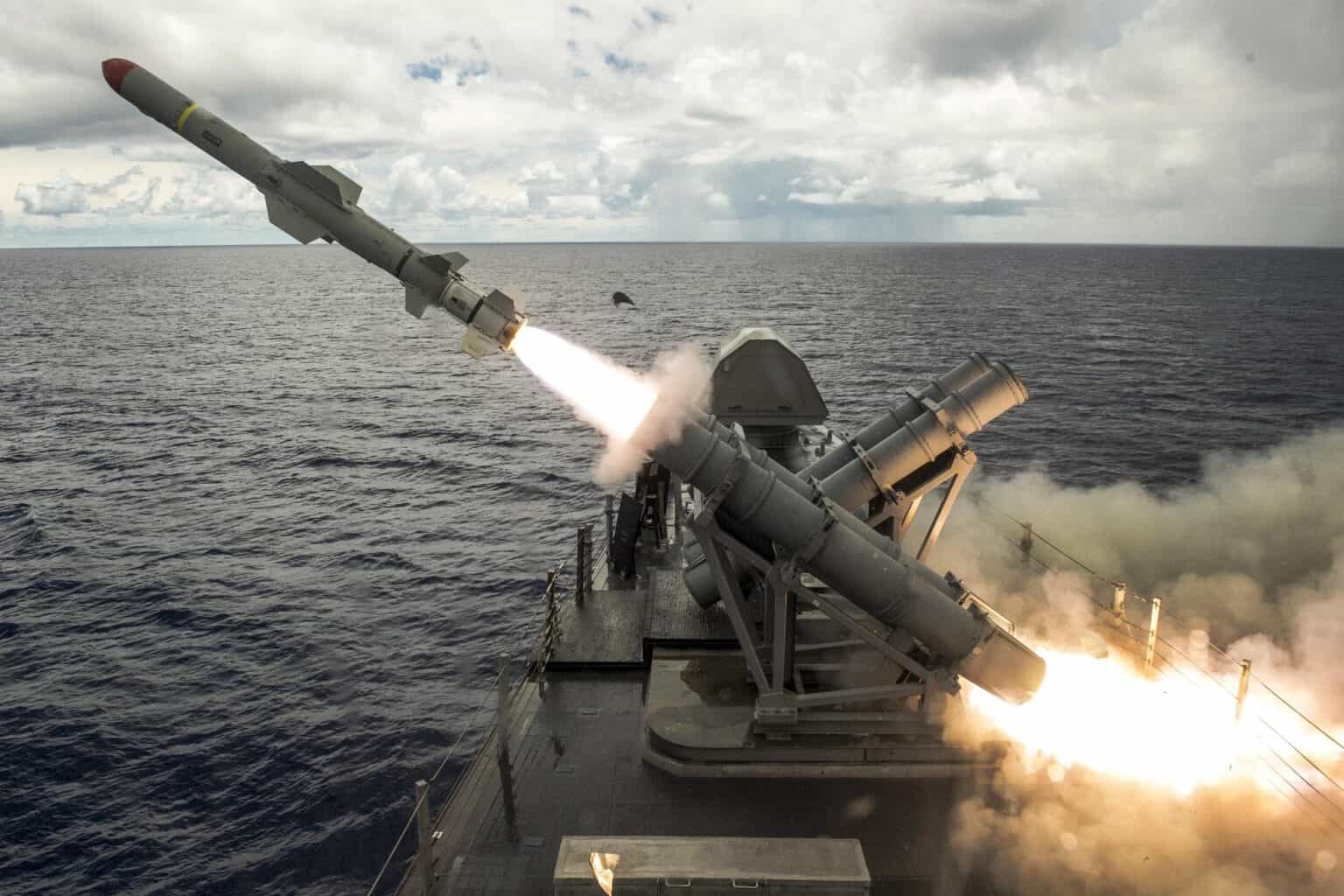
Harpoon is the West’s standard anti-ship missile. The US Navy deployed it in 1977, and it flies at Mach 0.85 on a turbojet with a 488-pound (221 kg) warhead to a range the Navy gives as “in excess of 67 nautical miles,” about 77 miles (124 km).
Boeing had delivered more than 7,200 by 2011, to over 30 international customers. It launches from ships, submarines, coastal trucks, B-52s and patrol aircraft like the P-3 Orion.
It went to war off Libya on March 24, 1986, when Navy A-6 Intruders and the cruiser USS Yorktown fired Harpoons at Libyan patrol boats. In Operation Praying Mantis on April 18, 1988, Harpoons from A-6s and the destroyer USS Joseph Strauss, with laser-guided bombs, sank the Iranian frigate Sahand.
Ukraine added a third chapter. On June 17, 2022, it said two Danish-donated coastal Harpoons hit the Russian Navy tug Vasily Bekh on a supply run to Snake Island, a sinking UK intelligence confirmed was “almost certainly” that ship.
5. Houthi Anti-Ship Ballistic Missiles (Iran and Yemen)
Anti-ship ballistic missiles had never been used in war until Yemen’s Houthis started firing Iranian-designed ones into the Red Sea in late 2023. They are not one missile but a family, including the Asef, based on Iran’s Fateh-313, and the Tankil, which IISS credits with about 310 miles (500 km).
On February 18, 2024, one hit the cargo ship Rubymar, which sank on March 2, the first ship lost in the campaign; all 24 crew were rescued. On March 6, an anti-ship ballistic missile hit the bulk carrier True Confidence in the Gulf of Aden, killing three crew, the campaign’s first deaths.
They rank below the cruise missiles above because their victims are merchant ships, not warships. By February 2024 the Chief of Naval Operations said US destroyers had already shot down 14, and the arsenal behind them is covered in our guide to Iran’s missiles.
The 2025 Red Sea sinkings were not missile kills
When the Houthis sank Magic Seas and Eternity C in July 2025, they claimed cruise and ballistic missiles. Maritime security reporting describes something cruder: armed skiffs firing RPGs, explosive drone boats and, on Magic Seas, a boarding party with scuttling charges. The missile claims remain unconfirmed.
The campaign is not over. On August 24, 2026, the Saudi supertanker Amzan was hit about 63 nautical miles off Yanbu by what EOS Risk Group identified as an anti-ship ballistic missile, part of a Houthi blockade of Saudi Arabia declared in July.
6. C-802 and Noor (China and Iran)
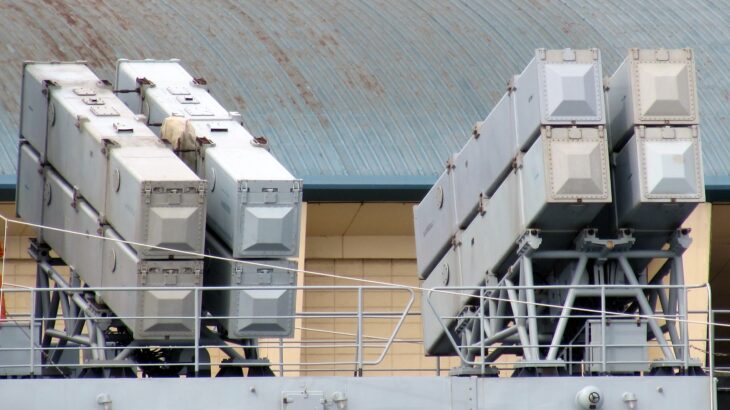

China’s C-802 was shown in 1988 as an export-only missile: a high-subsonic, turbojet design with a range of about 75 miles (120 km). Iran began receiving it in the mid-1990s and now builds its own copy, the Noor, which it has passed to Hezbollah and the Houthis.
On July 14, 2006, Hezbollah fired two at Israeli ships off Lebanon. One hit the corvette INS Hanit 8.5 nautical miles off Beirut, killing four sailors, and an Israeli inquiry later found some of the ship’s defenses had been switched off about an hour earlier.
In October 2016, the Congressional Research Service reported that Houthi forces were believed to have used C-802s against the UAE vessel HSV-2 Swift, later declared beyond repair. Missiles fired at USS Mason days later missed or were shot down.
7. LRASM (United States)
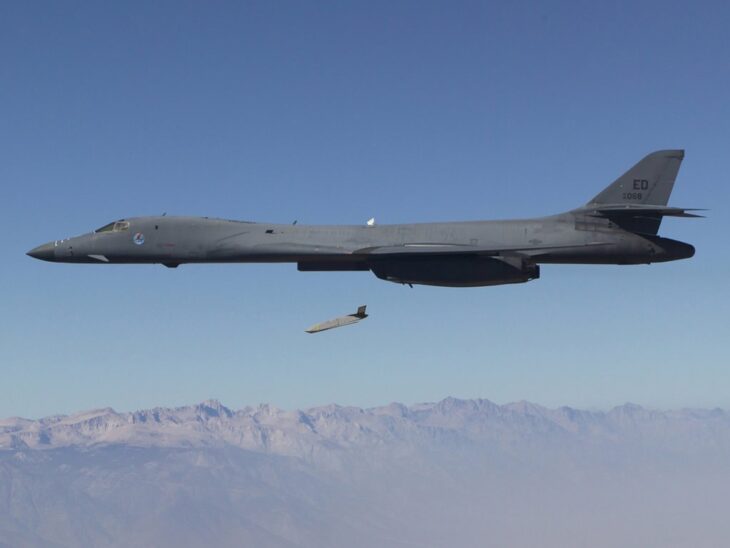

Lockheed Martin’s AGM-158C LRASM is the best anti-ship missile with no combat record, because it was built for the fight that matters most to the US Navy. It is a subsonic cruise missile with a 1,000-pound (454 kg) penetrating warhead, and its range is officially “greater than 200 nautical miles,” more than 230 miles (370 km).
It reached early operational capability on the B-1B Lancer in 2018 and the F/A-18E/F Super Hornet in 2019. Australia declared it operational on its F/A-18Fs and P-8A Poseidons in September 2026, after an RAAF P-8A hit the target ship ex-USS Mobile Bay with one at RIMPAC in July.
Whether it has been fired in anger is an open question. A May 2025 Pentagon budget document listed LRASMs as expended in support of the response to the situation in Israel, but as of July 2026 the Pentagon had not disclosed any operational use.
8. Naval Strike Missile (Norway)
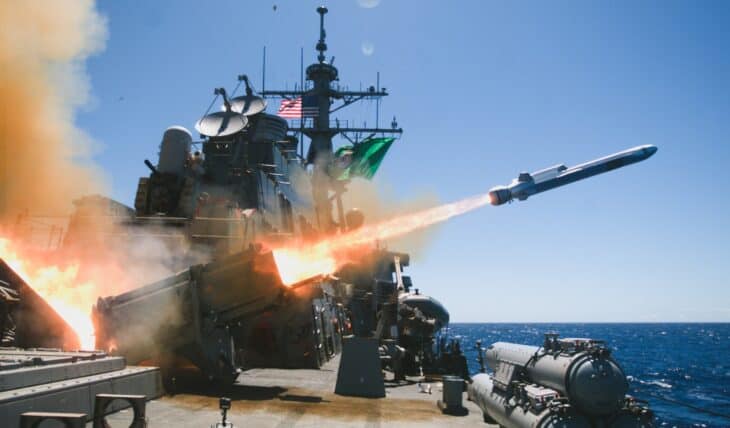

Kongsberg’s Naval Strike Missile is the anti-ship missile NATO navies are lining up for. RTX gives it a range of more than 100 nautical miles, over 115 miles (185 km), and a 500-pound-class warhead, and it entered service in 2012.
The US Navy picked it in 2018 for its littoral combat ships and new frigates, and the Marine Corps fires it from NMESIS, a truck launcher carrying two missiles, fielded from 2023. Australia, the Netherlands, Norway, Poland and the UK also operate it, and eight more countries, including Germany, Canada and Spain, have it on order.
Ukraine joined them in 2026: Naval News reported NSM coastal launchers in Ukrainian service in July, with no confirmed combat use yet. If it scores a hit in the Black Sea, it will climb this list quickly.
9. BrahMos (India and Russia)
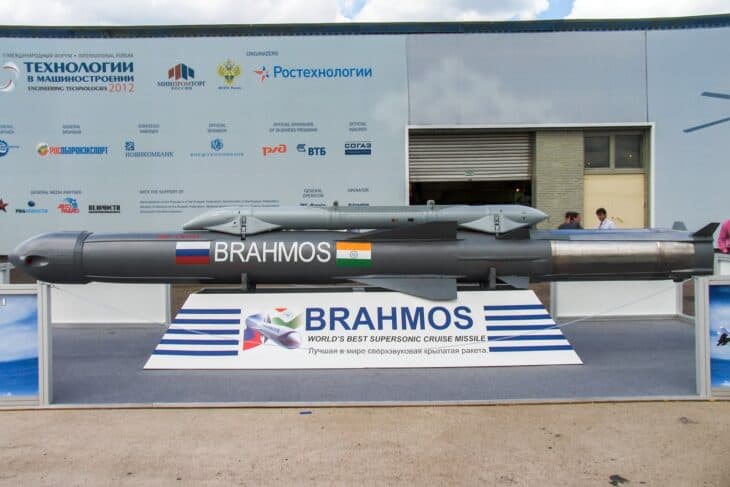

BrahMos is the supersonic anti-ship missile other countries actually buy. Built by an Indian-Russian joint venture, it flies at Mach 2.0 to 2.8 on a ramjet and reaches 180 to 310 miles (290 to 500 km), according to CSIS, launching from ships, submarines, trucks and aircraft.
The Philippines signed a $375 million deal for shore-based batteries in January 2022, India’s first BrahMos export, and the first system landed at Clark Air Base on April 19, 2024. Indonesia signed in July 2026.
India fired BrahMos at Pakistani air bases in May 2025 during Operation Sindoor. That was land attack, though: it has never hit a ship in war.
10. P-800 Oniks (Russia)
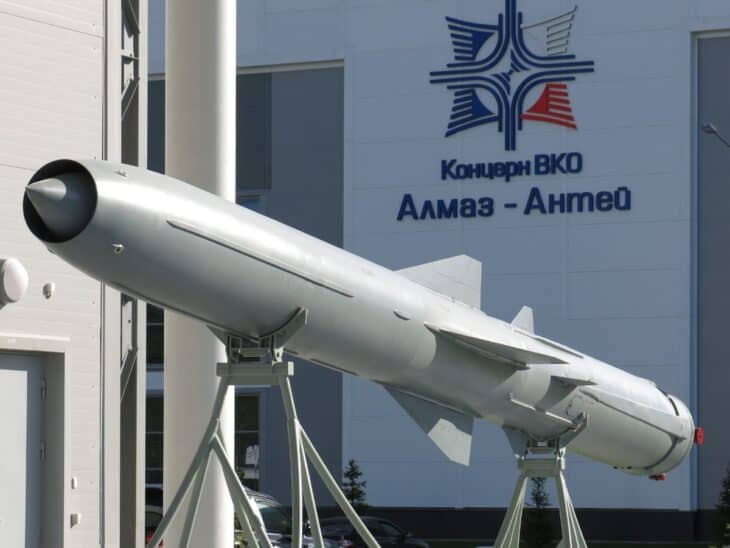

Oniks, exported as Yakhont, is the Russian design BrahMos was derived from. CSIS dates it to 2002, with a cruise speed of about Mach 2.2 and a range of 186 miles (300 km) on a high flight path, but only 75 miles (120 km) if it flies low the whole way.
It is fired from ships, submarines, aircraft and the truck-mounted Bastion coastal system. Russia first fired it in combat at land targets in Syria on November 15, 2016, and has used it against Odesa and other Ukrainian cities since May 2022, never against a ship.
11. 3M22 Zircon (Russia)
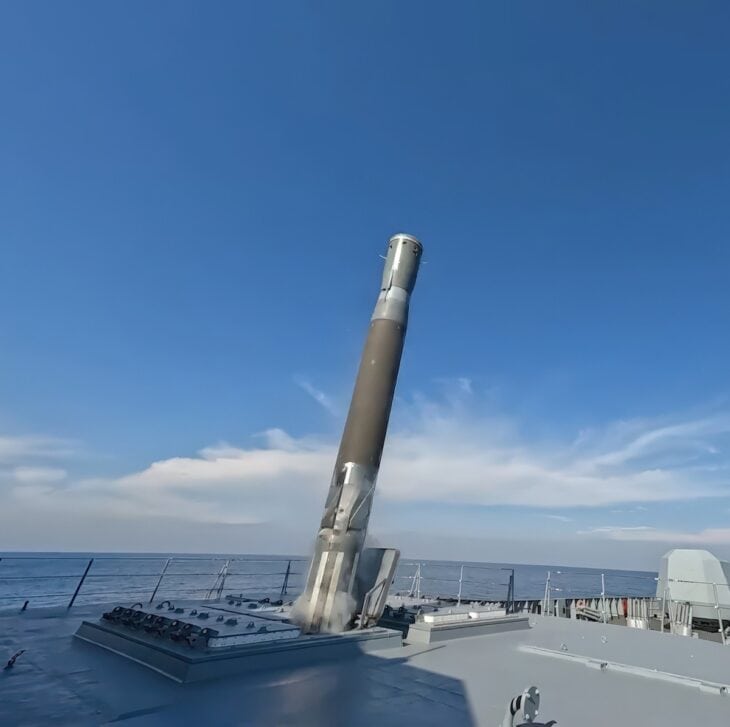

Zircon is Russia’s scramjet-powered hypersonic anti-ship missile, in service on frigates since January 2023. Vladimir Putin has said it can reach Mach 9, a figure outside analysts dispute, and its range is estimated at about 620 miles (1,000 km).
Its first combat use came on February 7, 2024, against Kyiv, identified from debris by Kyiv’s forensic institute. In March 2024 Ukraine said it shot down two more fired from Crimea, so the speed has not made it unstoppable, and its full story is in our ranking of hypersonic missiles.
12. DF-21D and DF-26 (China)
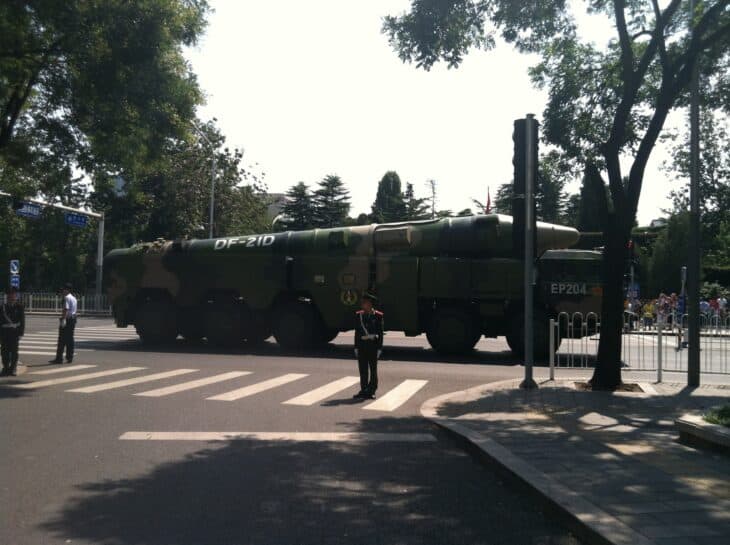

China’s so-called carrier killers are anti-ship ballistic missiles. The DF-21D, which carries a maneuvering warhead, entered service in 2006 with a range of 900 to 960 miles (1,450 to 1,550 km), and the DF-26, fielded in 2016, reaches 1,860 to 2,490 miles (3,000 to 4,000 km), per the Pentagon.
Neither has been used in war. China tested a DF-21D in 2013 against a fixed target about the size of a US carrier, and the Pentagon says China fired anti-ship ballistic missiles at a moving target in the South China Sea in 2020.
They rank last because the whole concept rests on a kill chain of satellites and radars finding a moving carrier at sea, which no one has proven in combat. They are still the reason the Chinese navy worries US planners as much as its ships do.
Near Misses
Kh-22 (Russia). A Soviet heavy anti-ship missile from 1968, launched from Tu-22M3 bombers. Ukraine’s air force said in January 2023 that more than 210 had been fired at Ukraine, all at land targets, including the Kremenchuk shopping mall in June 2022 and a Dnipro apartment block in January 2023.
YJ-12 and YJ-18 (China). The Pentagon credits the supersonic YJ-12A with 270 nautical miles and the YJ-18A with 290; the YJ-18 cruises subsonic and reportedly sprints to Mach 3 near its target. They arm Chinese destroyers, submarines and H-6 bombers, and neither has been used in war.
Type 25 (Japan). Japan’s upgraded Type 12 coastal missile, renamed Type 25, was deployed at Camp Kengun in Kumamoto on March 31, 2026, with a reported range of about 620 miles (1,000 km), roughly five times the original’s.
Tomahawk and SM-6 (US). The Navy is turning both into ship killers. The Maritime Strike Tomahawk reached early operational capability in 2025, and an SM-6 sank the decommissioned frigate USS Reuben James in a January 2016 test, a role covered in our guide to US Navy ship types.
Anti-Ship Missiles in Combat: The Key Dates
Oct. 21, 1967
Styx sinks the Eilat. Egyptian missile boats sink an Israeli destroyer with ship-launched missiles for the first time.
Dec. 4-5, 1971
Operation Trident. Indian missile boats sink the destroyer PNS Khaibar and two other ships off Karachi.
May 4, 1982
Exocet hits HMS Sheffield. An air-launched AM39 kills 20; the destroyer sinks six days later.
May 17, 1987
USS Stark. Two Iraqi Exocets kill 37 American sailors in the Persian Gulf.
July 14, 2006
INS Hanit. A Hezbollah C-802 kills four Israeli sailors off Beirut.
April 13-14, 2022
Moskva sinks. Two Ukrainian Neptunes sink the flagship of Russia’s Black Sea Fleet.
March 2, 2024
Rubymar sinks. Hit by a Houthi anti-ship ballistic missile, she is the first ship lost in the Red Sea campaign.
Sept. 9, 2026
Long Neptune. Ukraine hits two Russian frigates and a corvette at Novorossiysk.
What about hypersonic missiles?
Speed is the headline every hypersonic missile sells, and none of the supersonic or hypersonic cruise missiles on this list has a confirmed hit on a ship in war, as of November 2026. Zircon, Oniks, BrahMos and the Kh-22 have only been fired at land targets. Every warship sunk in war by a missile on this list was hit by a subsonic one.
That does not mean speed is useless. It means the record so far has been decided by surprise, sensor failures and switched-off defenses, which is why the ships that survive are usually the ones with layered air and missile defenses that are switched on.
FAQ
Sources and references used for research and fact-checking.
- CSIS Missile Threat, Exocet
- MBDA, Exocet AM39
- MBDA, Exocet MM40 Block 3
- Naval-History.net, Falklands War: HMS Sheffield sunk
- Wikipedia, SS Atlantic Conveyor
- Wikipedia, HMS Glamorgan
- Wikipedia, USS Stark incident
- Wikipedia, P-15 Termit
- Wikipedia, HMS Zealous (R39)
- Steeljawscribe, The Sinking of the INS Eilat: 50th Anniversary
- Wikipedia, Operation Trident (1971)
- Wikipedia, R-360 Neptune
- Wikipedia, Sinking of the Moskva
- Wikipedia, Russian cruiser Moskva
- Militarnyi, How the cruiser Moskva sank
- Naval News, Ukraine strikes Russian Black Sea Fleet with Long Neptune missiles
- CSIS Missile Threat, Harpoon
- US Navy (archived), Harpoon fact file
- Boeing, Boeing, US Navy mark Harpoon missile system's 40th anniversary
- Wikipedia, Action in the Gulf of Sidra (1986)
- Wikipedia, Operation Praying Mantis
- The War Zone, Ukraine claims Harpoon missile attack on Russian Navy ship
- Wikipedia, Russian tug Spasatel Vasily Bekh
- The War Zone, The anti-ship missile arsenal the Houthis are firing into the Red Sea
- Wilson Center, The Houthi Arsenal
- GlobalSecurity.org (CENTCOM release), CENTCOM: sinking of Rubymar
- Wikipedia, MV Rubymar
- gCaptain, Three dead after Houthi missile attack on bulk carrier
- Naval News, Houthis sunk two merchant ships in a week
- gCaptain, Two crew dead in continuous attack on M/V Eternity C
- gCaptain, Houthis escalate Saudi shipping campaign with VLCC strike
- FDD's Long War Journal, Houthis escalate attacks in Red Sea and on Saudi Arabia
- Defense Media Network, China's Eagle Strike-Eight anti-ship cruise missiles, Part 2
- Wikipedia, Noor (missile)
- Wikipedia, YJ-83 (C-802)
- Ynetnews, Report: ship crew didn't realize missile threat
- Congressional Research Service, Yemen: Recent attacks against U.S. naval vessels in the Red Sea (IN10599)
- Lockheed Martin, Long Range Anti-Ship Missile
- The Defense Post, Pentagon JASSM and LRASM expansion
- Air & Space Forces Magazine, LRASM clears integration milestone for use on the B-1B
- The Aviationist, Australia reaches IOC with LRASM and JASSM-ER
- The War Zone, Has the U.S. been firing AGM-158C long range anti-ship missiles in the Middle East?
- Wikipedia, AGM-158C LRASM
- RTX, Naval Strike Missile
- Kongsberg, US Navy selects NSM
- Wikipedia, Naval Strike Missile
- The Defense Post, Kongsberg wins US missile launcher contract
- Naval News, NSM appears in Ukrainian service
- CSIS Missile Threat, BrahMos
- BrahMos Aerospace, BrahMos signs contract with Philippines
- The Tribune, India signs $374-mn BrahMos missile deal with Philippines
- GBP, First BrahMos missile system arrives in the Philippines
- Naval News, Indonesia signs BrahMos missile deal
- Business Today, Rajnath Singh on how BrahMos missiles thundered in Pakistan
- CSIS Missile Threat, P-800 Oniks/Yakhont/Bastion (SS-N-26)
- Wikipedia, P-800 Oniks
- Wikipedia, 3M22 Zircon
- Kyiv Independent, Russia used Zircon hypersonic missile for first time, experts say
- CSIS Missile Threat, DF-21 (CSS-5)
- CSIS Missile Threat, DF-26
- US Department of Defense, Military and Security Developments Involving the People's Republic of China 2023
- US-China Economic and Security Review Commission, China's New YJ-18 Antiship Cruise Missile
- Wikipedia, Kh-22
- Ukrinform, Air Force commander: Ukraine has no weapons against missile Russians fired at house in Dnipro
- Adnkronos (Jiji), Japan deploys long-range missiles as counterstrike capability
- Naval News, U.S. Navy authorizes buy of 837 anti-ship Tomahawk missile seekers
- Raytheon, Raytheon Standard Missile-6 successfully hits surface target
- Wikipedia, USS Reuben James (FFG-57)
- Military Times, Why the Navy says its Red Sea and Gulf of Aden battles are historic
- Wikipedia, RIM-174 Standard ERAM
Get the Newsletter
The latest aviation news and stories sent to your inbox.
About the Author

Tim is the owner and lead editor of AeroCorner since 2019, overseeing aviation content covering aircraft, airlines, airports, and the broader aviation industry. Through years of researching, writing, editing, and publishing aviation-focused content, he has developed extensive practical knowledge of commercial aviation and air travel. Based in Asia and a frequent traveler himself, Tim also brings firsthand passenger experience to AeroCorner’s coverage. Outside of publishing, he has also explored aviation firsthand through hands-on flight training in New Zealand.