

Table of Contents
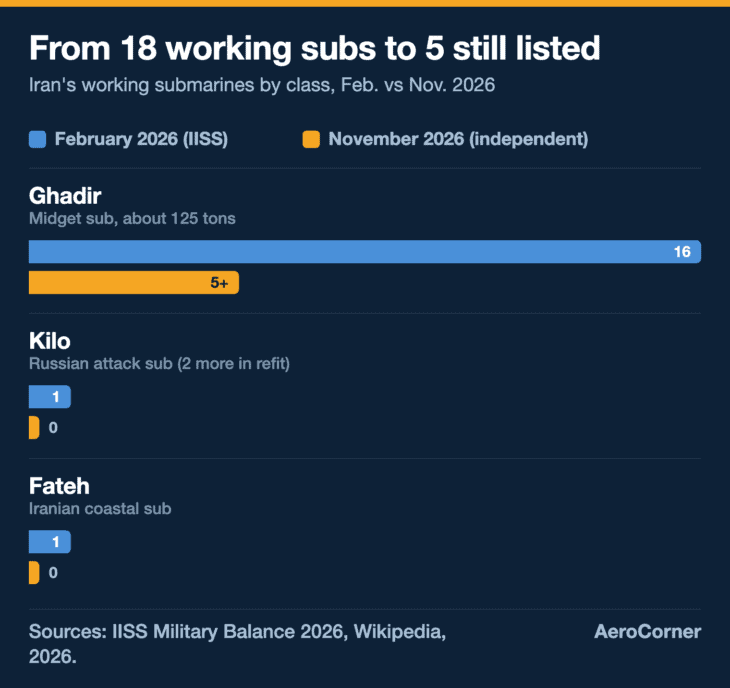
Iran had 18 working submarines when the war began on Feb. 28, 2026, according to the IISS Military Balance 2026: one Russian Kilo, one Iranian-built Fateh and 16 Ghadir midget submarines. Two more Kilos sat in dry dock.
On April 8, the White House said Iran “now has zero submarine vessels.” In November 2026, that is still the official US answer. The independent count, built from the same IISS list, still shows at least five Ghadirs, and the Pentagon has never published a list of the boats it says it sank.
How Many Submarines Does Iran Have?
Officially, by the US count, none. Independently, somewhere between zero and about five, all of them Ghadir midget submarines of about 125 tons with a crew of seven.
Every larger Iranian submarine is out of action. The one working Kilo was hit at its pier in March, the other two have been in refit since 2021, and the Fateh is listed as sunk. What is left in doubt is only the smallest boats, which are also the hardest to find.
The count at a glance
Before the war (IISS, February 2026): 18 working submarines, made up of 16 Ghadir midget subs, 1 Kilo and 1 Fateh, plus 2 Kilos in long refits. US claim (April 8, 2026): zero. Independent count (November 2026): at least 5 Ghadirs. No Iranian submarine is nuclear-powered.
The Breakdown: Three Classes, One Survivor
Iran’s regular navy, not the Revolutionary Guard, ran the submarines. Most of the force by number was the smallest class, built for the shallow Persian Gulf, where the Strait of Hormuz is only about 330 feet (100 m) deep at most.
| Class | Type | Working, Feb. 2026 | Status, Nov. 2026 |
|---|---|---|---|
| Ghadir | Midget, about 125 tons, built in Iran | 16 | US says all gone; at least 5 still listed |
| Kilo (Tareq) | Attack, about 3,075 tons, built in Russia | 1 (plus 2 in refit) | Tareq hit at its pier in March; other 2 still in dry dock |
| Fateh | Coastal, Iranian design | 1 | Listed as sunk |
| Total | 18 | 0 (US) to 5+ (independent) |
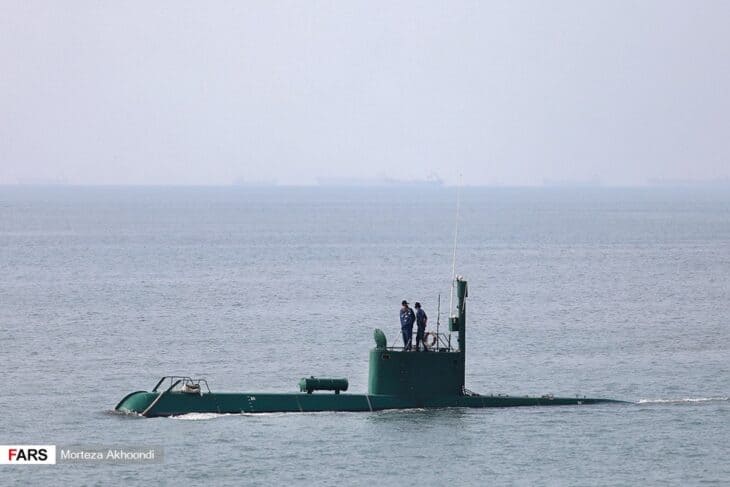
The Ghadirs are about 95 feet (29 m) long and carry two torpedoes, or two Chinese-designed C-704 anti-ship cruise missiles. Iran bought at least one Yono-class midget sub from North Korea in 2004, and the Ghadir is widely described as its local descendant.

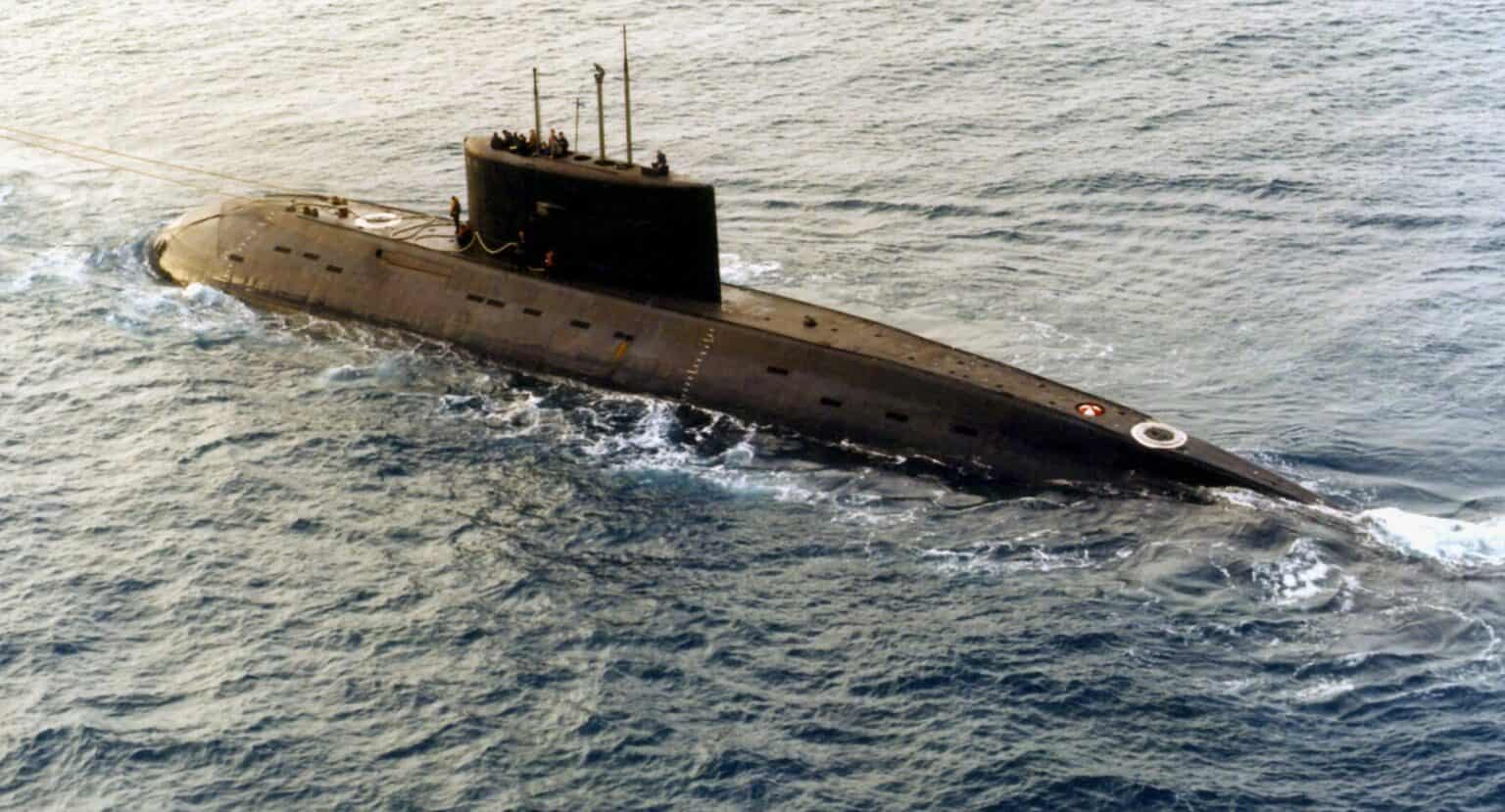
The Kilos were Iran’s only full-size submarines: Tareq, Nooh and Yunes, each 238 feet (72.6 m) long, commissioned between 1991 and 1996. Two had been in deep refit at Bandar Abbas since 2021, so Iran went to war with one.
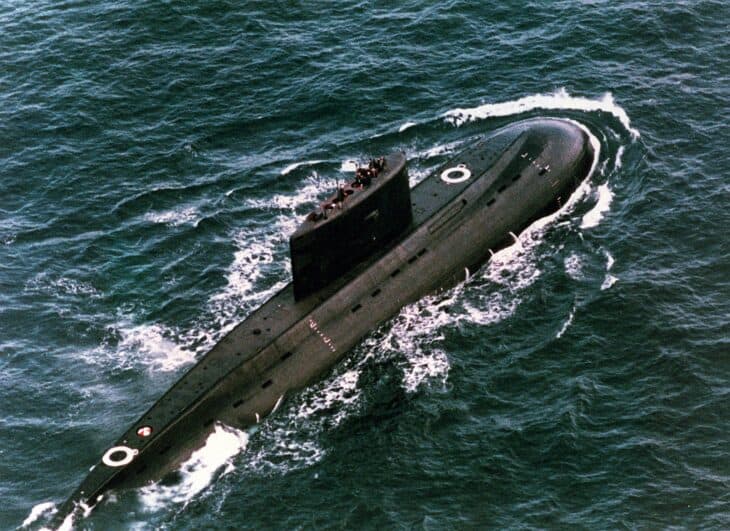

Gen. Dan Caine, chairman of the Joint Chiefs, said on March 4 that a submarine had been hit. Janes judged it was most likely Tareq, docked at Bandar Abbas, and Maritime Executive later reported it sunk at its home pier. For the rest of the fleet, see our guide to Iran’s navy and every ship class.
Why Other Sites Say 30, 18, 11 or Zero
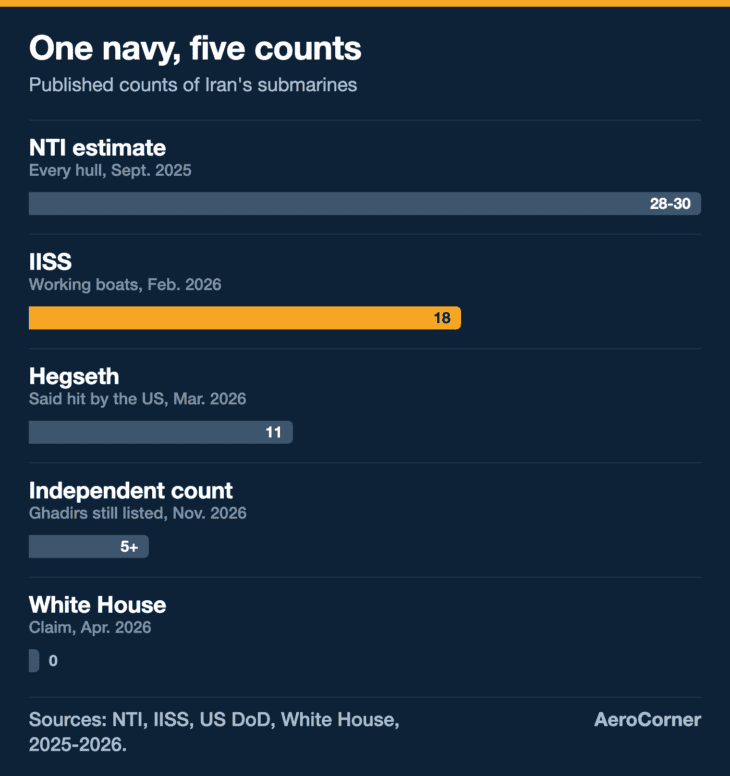
Search this question and you will find at least five answers. Most are not wrong. They count different boats, on different dates, by different rules.
28 to 30 is the Nuclear Threat Initiative’s September 2025 estimate, as quoted by 19FortyFive. It counts every hull, including 23 Ghadirs, the Nahang and the Kilos in dry dock, whether they could sail or not.
18 is the IISS count of working boats, the best pre-war number. Even the IISS figure for the Ghadirs is a floor: it said Iran had “at least 16,” and older estimates run from 14 to about 20.
The US number does not add up
On March 19, Defense Secretary Pete Hegseth said US forces had damaged or sunk “all 11 of the regime’s submarines.” The IISS had counted 18 working boats a month earlier. As of August 11, 2026, the Pentagon still had not released a list of which 11 it meant, so the gap of seven has never been explained.
Zero is the White House claim of April 8, made by press secretary Karoline Leavitt alongside a claim of more than 150 Iranian naval vessels destroyed. She gave no evidence on the ground.
Five or more is the independent composite on Wikipedia, which takes the IISS list and removes reported war losses. It reaches five by subtracting the 11 Ghadirs the US says it destroyed from 16, so it is only as solid as the US claim it rests on.
How the Fleet Went From 18 to (Maybe) Zero
The Kilos went first, in the opening week. The Ghadirs are the reason the story did not end there: a month after the White House said every submarine was gone, Iran said it had sent them to sea.
Feb. 28, 2026
The war begins. US and Israeli strikes open the conflict. Two of Iran’s three Kilos are in dry dock at Bandar Abbas.
March 4
A submarine is hit. Gen. Dan Caine says a submarine has been struck. Janes judges it was most likely the Kilo Tareq, at its pier.
March 19
”All 11″ claimed. Pete Hegseth says US forces have damaged or sunk more than 120 Iranian naval vessels, including all 11 submarines.
April 8
”Zero submarine vessels.” The White House says Iran, once the largest undersea force in the Middle East, has no submarines left.
May 2026
Iran says the Ghadirs are at sea. The Tasnim news agency says midget subs are deployed in the Strait of Hormuz as an “invisible guardian.” The IISS still counts at least 16.
July 12
Drone boats hit Bandar Abbas. Three Saronic Corsair sea drones strike the submarine maintenance facility. The video appears to show a Ghadir on the dock; the damage has not been independently confirmed.
The July strike was the first time US forces sent armed sea drones into combat. Maritime Executive reported that it destroyed the hoist used to lift submarines out of the water, and the Ghadir sitting in it, which would make it hard to repair any boat that did survive.
That is also why the number may now stay where it is. Maritime Executive concluded that rebuilding a real submarine force would mean buying boats abroad. The count changes when a Ghadir is confirmed at sea, or when the Pentagon publishes its list.
How Iran Compares
Even at full strength, Iran’s 18 boats were small. All 16 Ghadirs together displaced about 2,000 tons, less than a single Kilo, while the US Navy runs 65 active submarines, every one of them nuclear-powered.
A single US Los Angeles-class attack submarine displaces more than 6,000 tons, the weight of about 48 Ghadirs. For where the biggest boats sit, see the largest submarines in the world, ranked.
FAQ
Sources and references used for research and fact-checking.
- Wikipedia, Islamic Republic of Iran Navy
- Naval Today, US says Iran's submarine fleet eliminated; 16 warship classes destroyed in strikes
- Seapower, Hegseth Draws Distinction Between Epic Fury, Previous Conflicts
- Janes, Iran conflict 2026: The demise of the Iranian navies
- Maritime Executive, Iranian Submarine Force Consigned to History
- 19FortyFive, Iran Had As Many As 23 Mini-Submarines That North Korea Helped Build. No One Knows If the US Military Destroyed Them All
- Insurance Journal (Bloomberg), Iran Says It's Deployed Mini Subs in Contest to Control Hormuz
- The War Zone, Kamikaze drone boats used by U.S. in combat for the first time
- Wikipedia, Kilo-class submarine
- Wikipedia, Ghadir-class submarine
Get the Newsletter
The latest aviation news and stories sent to your inbox.
About the Author

Tim is the owner and lead editor of AeroCorner since 2019, overseeing aviation content covering aircraft, airlines, airports, and the broader aviation industry. Through years of researching, writing, editing, and publishing aviation-focused content, he has developed extensive practical knowledge of commercial aviation and air travel. Based in Asia and a frequent traveler himself, Tim also brings firsthand passenger experience to AeroCorner’s coverage. Outside of publishing, he has also explored aviation firsthand through hands-on flight training in New Zealand.