

Table of Contents
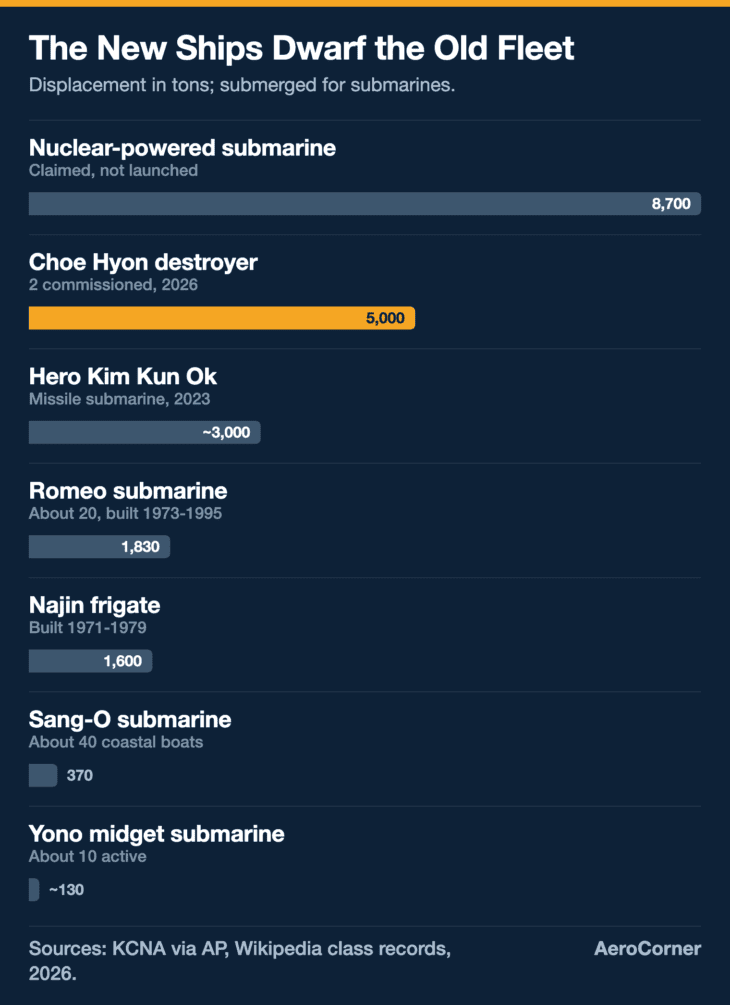
North Korea’s most powerful warships are two 5,000-ton destroyers commissioned in 2026: the Choe Hyon in June and the Kang Kon in September. They are the largest warships North Korea has ever built, and they carry far more missiles than any ship of the Korean People’s Army Naval Force before them.
The rest of the navy is old and small. It counts roughly 70 submarines, most of them coastal or midget boats, and several hundred patrol boats, missile boats, hovercraft and landing craft built for raids close to home rather than for the open ocean.
This guide ranks every major ship class by what it adds to North Korea’s fighting power as of November 2026, with the hull counts, sizes and status of each. The counts are estimates, because Pyongyang publishes none, and the text says whose estimate each one is.
| Rank | Class | Type | Hulls (estimate) | Status, November 2026 |
|---|---|---|---|---|
| 1 | Choe Hyon | Destroyer, 5,000 tons | 2 | Commissioned June and September 2026, a third delayed |
| 2 | Hero Kim Kun Ok | Missile submarine, about 3,000 tons | 1 | Fired two cruise missiles submerged in October 2026 |
| 3 | Sang-O | Coastal submarine, 370 tons | About 40 | In service, the main infiltration boat |
| 4 | Romeo | Diesel attack submarine, 1,830 tons | About 20 | In service, built 1973 to 1995 |
| 5 | Yono | Midget submarine, about 130 tons | About 10 active | In service, blamed for sinking the Cheonan |
| 6 | Osa, Soju and other missile boats | Fast attack craft | About 43 | In service, Soviet-era missiles |
| 7 | Sinpo (8.24 Yongung) | Ballistic missile test submarine | 1 | Test boat since 2016 |
| 8 | Najin and Amnok | Frigates and corvettes | 2+ frigates, a few corvettes | In service, frigates built 1971 to 1979 |
| 9 | Kongbang and Nampo | Hovercraft and landing craft | Hundreds | In service |
| 10 | Torpedo and patrol boats | Small combatants | Hundreds | In service, mostly old |
How this ranking works
Classes are ranked by what they add to North Korea’s fighting power in November 2026: firepower, survivability and whether the ship can actually go to sea. A single modern destroyer outranks hundreds of old patrol boats. Ships still under construction, including the nuclear-powered submarine and the planned cruisers, are covered separately because they add nothing yet. Hull counts come from US Defense Department and South Korean Defense Ministry estimates, which disagree, and are given as ranges where they do.
How Big Is the North Korean Navy?
By hull count, it is large. The US Defense Department’s report released in early 2014 credited it with about 70 submarines, 420 gun boats, 260 amphibious landing craft, 30 mine warfare vessels and 30 support ships, crewed by about 60,000 sailors.
South Korea’s Defense Ministry gave a similar picture in 2018: 430 combat ships, 250 landing craft and 70 submarines. That is more hulls than most navies in our ranking of the largest navies in the world, but almost all of them are small.
The navy is split into an East Sea Fleet, headquartered at Toejo-dong with major bases at Najin and Wonsan, and a West Sea Fleet headquartered at Nampho. The two fleets do not exchange ships, because the Korean Peninsula sits between them and the only sea route runs past South Korea and Japan.
Two navies that cannot meet
A North Korean warship on the east coast cannot reach the Yellow Sea without sailing around the whole southern tip of the peninsula, past South Korea and Japan. In practice, each fleet fights alone, North Korea is now building warships on both coasts, at Nampho in the west and Chongjin in the east.
1. Choe Hyon-Class Destroyers
The Choe Hyon class is the first large, modern surface warship North Korea has built. Each ship displaces about 5,000 tons and runs roughly 475 feet (145 m) long, with a beam of about 52 feet (16 m).
Its armament is heavy for its size. Naval News counted 88 vertical launch cells after the March 2026 trials, alongside a 127 mm or 130 mm gun, short-range air defense missiles resembling Russia’s Pantsir, anti-ship missile launchers and torpedo tubes.
North Korea says the class can fire strategic cruise missiles, which analysts say could carry nuclear warheads. Kim Jong Un watched the lead ship fire sea-to-surface strategic cruise missiles on March 4, 2026, in what state media called final testing before service.
The lead ship, Choe Hyon (hull 51), was launched at Nampho on April 25, 2025, and commissioned there on June 23, 2026. Her sister Kang Kon (hull 52) followed on September 6, 2026, at Wonsan on the east coast.
Kang Kon got there the hard way. Her first launch at Chongjin on May 21, 2025, went wrong and left the ship partially capsized; she was repaired and relaunched on June 12, 2025, and finished weapons testing in July 2026.
Commissioned is not the same as operational. Satellite imagery reviewed by NK Pro in October 2026 showed Choe Hyon still at her cargo port and Kang Kon docked at Mayang Island, with neither apparently conducting regular operations.
The third destroyer missed its deadline
Nampho Shipyard pledged a third Choe Hyon-class destroyer by October 10, 2026, the anniversary of the Workers’ Party founding. NK Pro’s imagery on October 20 showed no sign of a launch. Instead, wider hull sections, about 62 to 69 feet (19 to 21 m) across against 52 feet (16 m) for the destroyers, had appeared at Nampho and Chongjin, which points to the larger cruisers Kim Jong Un has ordered.
2. Hero Kim Kun Ok: The Missile Submarine
North Korea calls the Hero Kim Kun Ok “Tactical Nuclear Attack Submarine No. 841.” It is a heavily rebuilt Romeo, stretched to 282 feet (86 m) and estimated at about 3,000 tons, and it was launched at Sinpo on September 6, 2023.
Analysis of state media photos showed four large and six small missile hatches, enough for a mix of ballistic and cruise missiles. That makes it North Korea’s most heavily armed submarine, at least on paper.
Its readiness has been doubted from the start. South Korean officials questioned whether it could operate normally, and imagery through July 2025 showed it had not deployed. In October 2026 it fired two submarine-launched cruise missiles while submerged, the first public sign it can fight.
3. Sang-O-Class Coastal Submarines
The Sang-O is the workhorse of North Korea’s submarine force. About 40 were reported in service as of February 2021, each about 112 feet (34 m) long and displacing 370 tons submerged, with a stretched Sang-O II version deployed from about 2011.
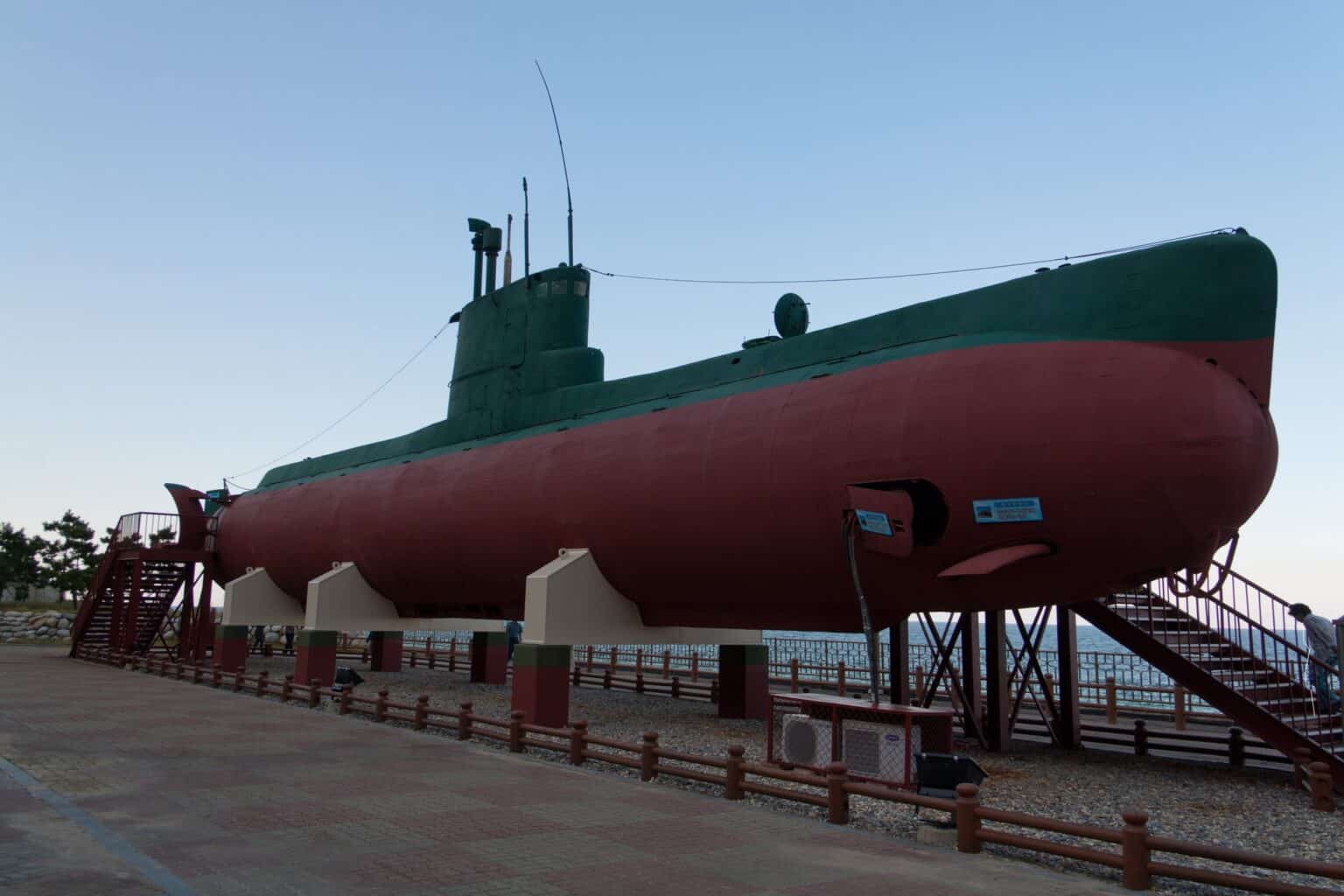
Its job is infiltration. Some Sang-O boats carry commandos rather than torpedoes, built to slip special forces onto South Korea’s coast at night.
The world saw one up close on September 18, 1996, when a Sang-O ran aground near Gangneung on South Korea’s east coast and was captured. It is still on display at Unification Park there.
4. Romeo-Class Submarines
The Romeos are North Korea’s only ocean-going attack submarines in numbers. Seven came from China between 1973 and 1975, and the rest were assembled locally from Chinese parts until 1995, for a fleet of about 20.
The Romeo is a Cold War Soviet design. It runs about 251 feet (76.6 m) and displaces 1,830 tons submerged, small and old next to the submarines South Korea and Japan operate.
One North Korean Romeo apparently sank in an accident in 1985. The hull also became the starting point for the Hero Kim Kun Ok, so the oldest submarine design in the fleet is the parent of the newest armed one.
5. Yono-Class Midget Submarines
The Yono is tiny: about 130 tons and 66 to 72 feet (20 to 22 m) long, with two 533 mm torpedo tubes. North Korea was reported to operate about ten in 2010, with more in reserve.
It earns its place because of one night. On March 26, 2010, the South Korean corvette Cheonan broke in two near Baengnyeong Island in the Yellow Sea, and 46 of the 104 sailors aboard were killed.
An investigation led by South Korea, with experts from the United States, Britain, Australia and Sweden, concluded in May 2010 that a North Korean torpedo fired by a midget submarine sank the ship. North Korea denied any involvement, and China dismissed the findings.
6. Missile Boats
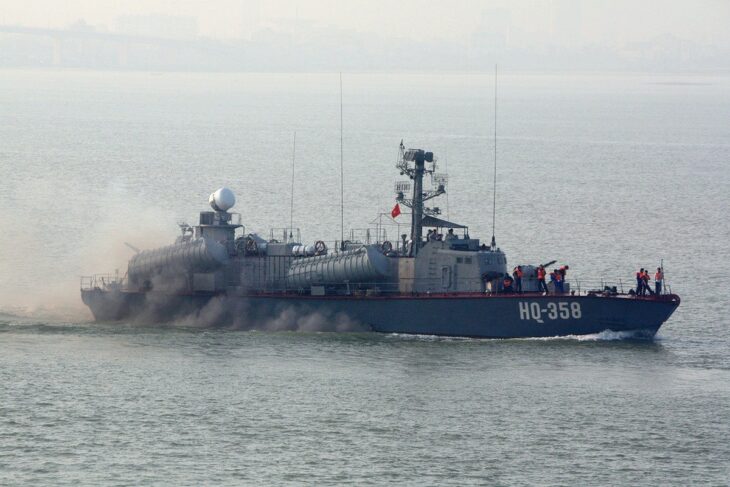

North Korea fields about 43 guided-missile patrol boats armed with the Soviet P-15 Termit or its Chinese copy. They include about 12 Soviet Osa boats and 10 Soju, a North Korean version of the Osa.
Close to shore, a salvo from several of these boats is still dangerous to a surface ship. Their missiles are an old Soviet design, though, and the boats have little defense against aircraft.
7. Sinpo Class: The 8.24 Yongung
The Sinpo class, also called the Gorae (“whale”), is North Korea’s ballistic missile test submarine. Only one is known to be active, the 8.24 Yongung, named for the date of its first successful launch.
On August 24, 2016, it fired a Pukguksong-1 missile into the Sea of Japan. It launched a newer missile on October 19, 2021, and two cruise missiles in March 2023.
It ranks low because it is a trials platform rather than a combat patrol boat. With an estimated length of about 230 feet (70 m), it carries only one or two launch tubes in its sail.
8. Najin-Class Frigates and Amnok Corvettes
Before 2026, the Najin frigates were North Korea’s largest surface warships. Built between 1971 and 1979, they displace 1,600 tons and run 328 feet (100 m), and at least two remain active.
At least one Najin was refitted at Nampho in 2014 with launchers for Russian-designed Kh-35 anti-ship missiles. The Amnok-class corvettes add a cruise missile: one fired a Hwasal-2 on August 21, 2023.
9. Hovercraft and Landing Craft
North Korea’s amphibious force is large but built for short trips. US intelligence estimated about 125 Kongbang hovercraft, alongside more than 200 domestically built landing craft, including about 100 of the Nampo class.
Hovercraft can cross mud flats and beaches that stop conventional landing ships, which suits the shallow Yellow Sea coast.
10. Torpedo and Patrol Boats
The largest group by numbers is also the least capable. Roughly 200 torpedo boats, nearly half built in North Korea, and more than 180 patrol boats make up the bulk of the fleet.
At least 62 are Chaho-class fire-support boats. Most are decades old and would be easy targets for South Korean aircraft, which our guide to South Korea’s air force covers fleet by fleet.
What North Korea Is Building Next
The biggest project is a nuclear-powered submarine. State media showed Kim Jong Un inspecting a largely complete hull of an “8,700-ton-class” boat inside an assembly hall in December 2025, describing it as a strategic guided missile submarine to be armed with nuclear weapons.
Whether it works is unknown. A South Korean submarine expert told the AP that showing the whole vessel suggested most equipment was already installed, and some analysts suspect Russian help with the reactor. No launch had been reported as of November 2026.
Above the water, Kim has called for at least two destroyers or larger warships a year, at least ten over the next five years, and a 10,000-ton cruiser. Against that plan, the third destroyer is already late.
Does North Korea really have 70 submarines?
The count is real, but it flatters the fleet. Roughly 50 of the 70 are Sang-O coastal boats and Yono midgets that weigh 370 tons or less and are built for raids near the peninsula. The larger force is about 20 Cold War Romeos, plus the Hero Kim Kun Ok and the Sinpo test boat. No nuclear-powered submarine has gone to sea.
How It Compares to the Air Force
The navy and the air force share the same problem: big numbers, old equipment. Our look at North Korea’s air force finds the same pattern of Cold War aircraft and a handful of newer types.
The difference is pace. The navy commissioned two modern destroyers in less than three months in 2026 and has larger warships under construction on both coasts. For how these ship types compare with Western equivalents, see our guide to the types of navy ships.
FAQ
Sources and references used for research and fact-checking.
- Wikipedia, Korean People's Army Naval Force
- Wikipedia, Choe Hyon-class destroyer
- Naval News, North Korea's New Destroyer Sets Sail for the First Time, Tests Missile Systems
- Al Jazeera, North Korea deploys warship capable of annihilating retaliatory strikes
- NK News, North Korea misses deadline to launch third naval destroyer
- Military.com (Associated Press), North Korea displays apparent progress in construction of nuclear-powered submarine
- Wikipedia, North Korean submarine Hero Kim Kun Ok
- Wikipedia, Sinpo-class submarine
- Wikipedia, Sang-O-class submarine
- Wikipedia, Romeo-class submarine
- Wikipedia, Yono-class submarine
- Wikipedia, Sinking of ROKS Cheonan
- Wikipedia, Najin-class frigate
Get the Newsletter
The latest aviation news and stories sent to your inbox.
About the Author

Tim is the owner and lead editor of AeroCorner since 2019, overseeing aviation content covering aircraft, airlines, airports, and the broader aviation industry. Through years of researching, writing, editing, and publishing aviation-focused content, he has developed extensive practical knowledge of commercial aviation and air travel. Based in Asia and a frequent traveler himself, Tim also brings firsthand passenger experience to AeroCorner’s coverage. Outside of publishing, he has also explored aviation firsthand through hands-on flight training in New Zealand.