

Table of Contents
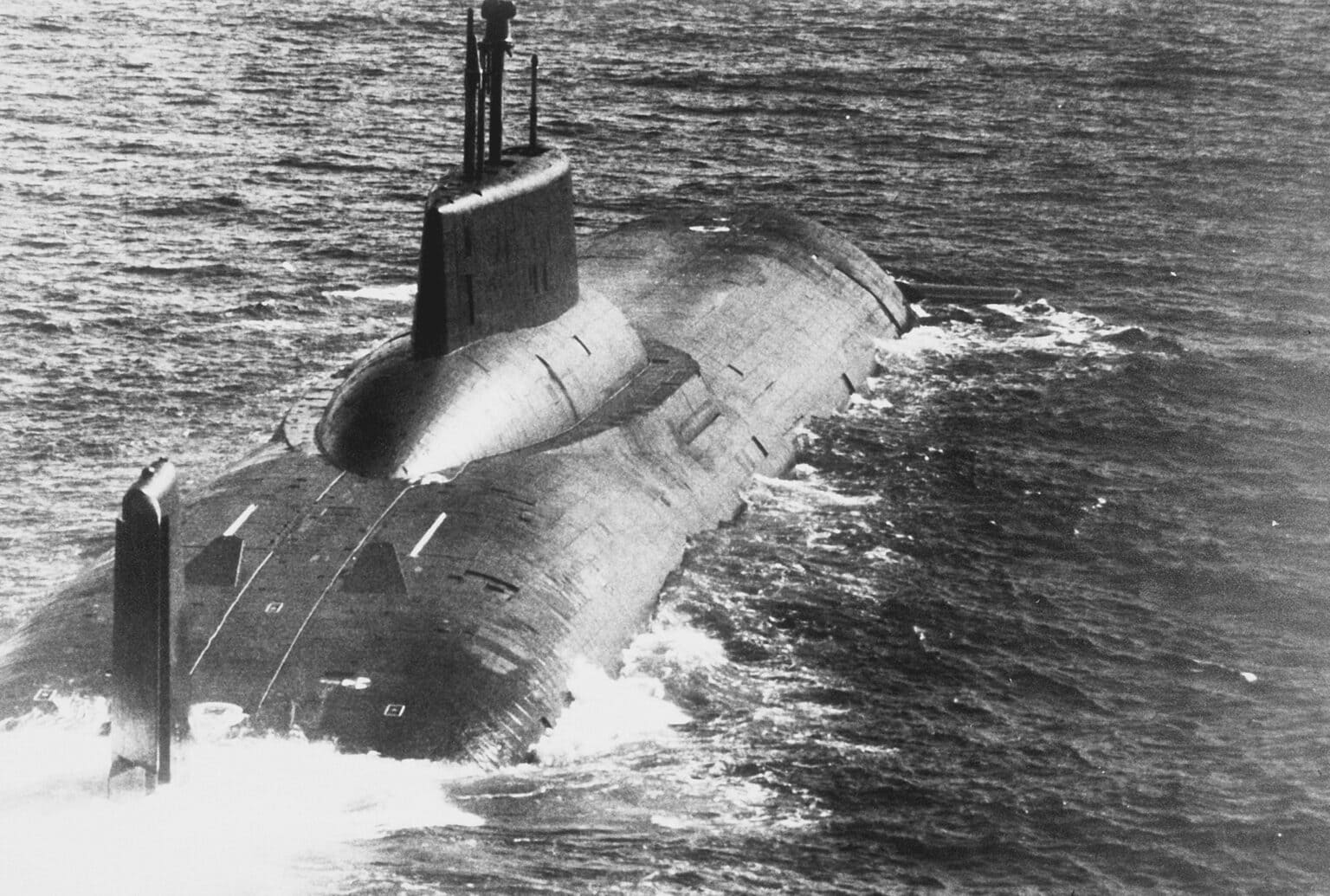
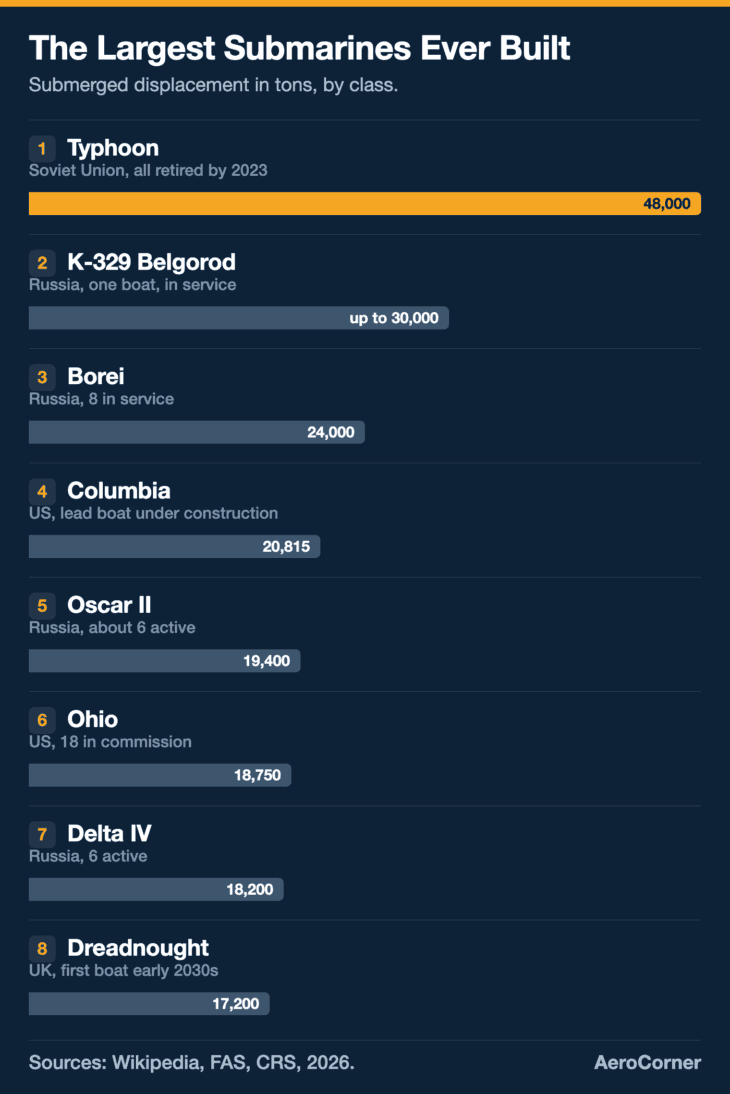
The largest submarine ever built is the Soviet Typhoon class, which displaced 48,000 tons submerged. That is more than double any American submarine, and no navy has built anything heavier since.
The catch is that every Typhoon is now out of service, the last one in February 2023. The largest submarine still in commission is Russia’s K-329 Belgorod, at up to 30,000 tons and 604 feet (184 m), the longest submarine ever launched.
This list ranks the 12 largest submarine classes by submerged displacement, the standard measure of a submarine’s size, as of October 2026. It covers boats in service, boats retired, and the two giants still on the building slip.
| Rank | Class | Navy | Submerged displacement | Length | Status (Oct. 2026) |
|---|---|---|---|---|---|
| 1 | Typhoon (Project 941) | Soviet / Russian | 48,000 tons | 574 ft (175 m) | All 6 retired |
| 2 | K-329 Belgorod | Russian | 24,000 to 30,000 tons | 604 ft (184 m) | 1 in service |
| 3 | Borei / Borei-A | Russian | 24,000 tons | 558 ft (170 m) | 8 in service, 2 building |
| 4 | Columbia | US | 20,815 tons | 560 ft (171 m) | Lead boat building |
| 5 | Oscar II (Project 949A) | Russian | 19,400 tons | 509 ft (155 m) | About 6 active |
| 6 | Ohio | US | 18,750 tons | 560 ft (171 m) | 18 in commission |
| 7 | Delta IV (Project 667BDRM) | Russian | 18,200 tons | 548 ft (167 m) | 6 of 7 active |
| 8 | Dreadnought | British | 17,200 tons | 504 ft (153.6 m) | 4 building |
| 9 | Vanguard | British | 15,900 tons | 492 ft (149.9 m) | 4 in service |
| 10 | Triomphant | French | 14,335 tons | 453 ft (138 m) | 4 in service |
| 11 | Yasen / Yasen-M | Russian | 13,800 tons | 427 to 457 ft (130 to 139 m) | 5 active |
| 12 | Seawolf (USS Jimmy Carter) | US | 12,139 tons | 453 ft (138 m) | 3 in service |
How this ranking works
Submarines are ranked by submerged displacement, the weight of water the boat pushes aside when fully under. It is the measure navies themselves use, and it captures width and hull volume that length alone misses. Each class is ranked once, by its largest version. Russian, British and French navies publish metric tonnes and the US Navy long tons; the gap is under 2 percent and changes no position. Classes still under construction are included because their designs are fixed. Length is shown for every entry, because the longest submarine is not the heaviest one.
1. Typhoon (Project 941): 48,000 Tons
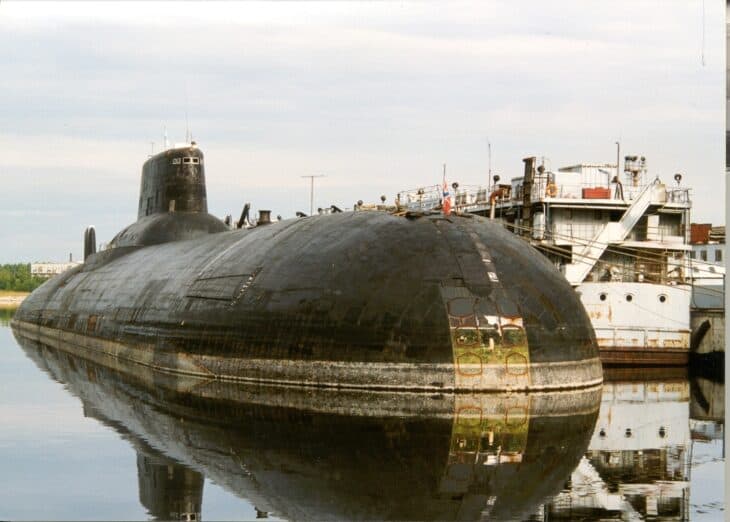

The Typhoon displaced 23,200 tons on the surface and 48,000 tons submerged. It was 574 feet (175 m) long and an extraordinary 75 feet (23 m) wide, and carried 20 R-39 ballistic missiles and a crew of 160.
The width is the secret. Instead of one pressure hull, the Typhoon laid two long pressure hulls side by side with a third, smaller one above them, plus two more for the torpedo room and steering gear, all wrapped in one outer hull.
Six were completed and a seventh was cancelled. The Russian Navy dropped plans to modernize them in 2012, saying one upgrade would cost as much as two new Borei boats. The last one, Dmitry Donskoy, was decommissioned in February 2023, and in March 2025 Russia announced it would become a museum ship in Saint Petersburg.
A submarine the Soviets called a heavy cruiser
The Typhoon was so big that the Soviet Navy classified it as a heavy cruiser, the TK prefix on its hull numbers. In the early 1990s there were even proposals to convert Typhoons into under-ice cargo submarines carrying up to 10,000 tons of oil, gas and freight to Russia’s Arctic territories.
2. K-329 Belgorod: Up to 30,000 Tons
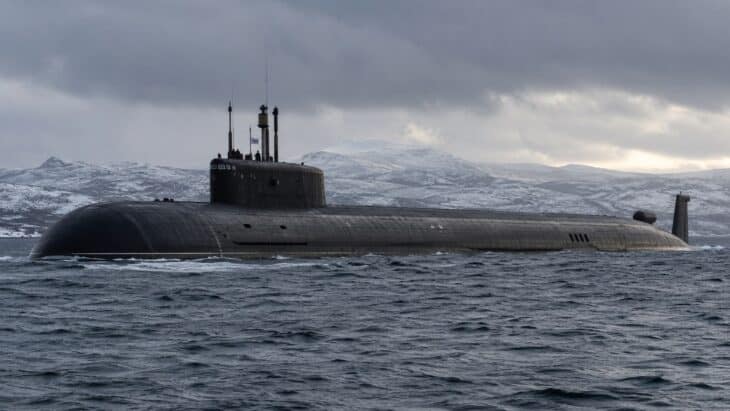
Belgorod began life as an Oscar II cruise missile submarine. During construction its original 505-foot (154 m) hull was stretched to 604 feet (184 m), roughly 30 feet longer than a Typhoon, which makes it the longest submarine ever built.
Published estimates put its submerged displacement between 24,000 and 30,000 tons, so it ranks second on the upper figure and ties the Borei on the lower one. It was commissioned on July 8, 2022, with a crew of about 110.
Belgorod is a special-mission boat, not a missile submarine. It was unveiled alongside Russia’s Poseidon nuclear-armed underwater drone in March 2018, the weapon it was built to carry. With the Typhoons gone, it is the largest submarine in service anywhere.
3. Borei / Borei-A: 24,000 Tons
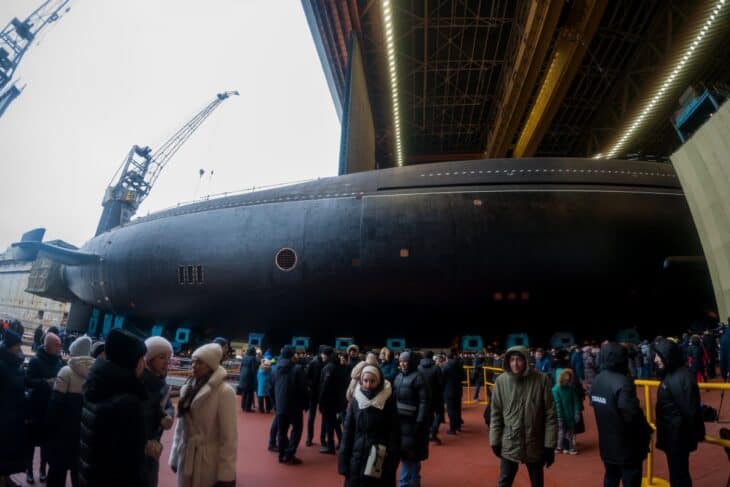

The Borei class is the largest submarine Russia is still building in numbers. Each boat displaces 24,000 tons submerged, measures 558 feet (170 m), and carries 16 Bulava ballistic missiles with a crew of 107.
Eight are in service as of October 2026, the newest being Knyaz Pozharsky, commissioned in July 2025, and two more are under construction. They replace several older missile submarine types at half the Typhoon’s displacement and with 107 crew against 160. Our guide to the Russian Navy in 2026 covers the rest of that fleet ship by ship.
4. Columbia: 20,815 Tons
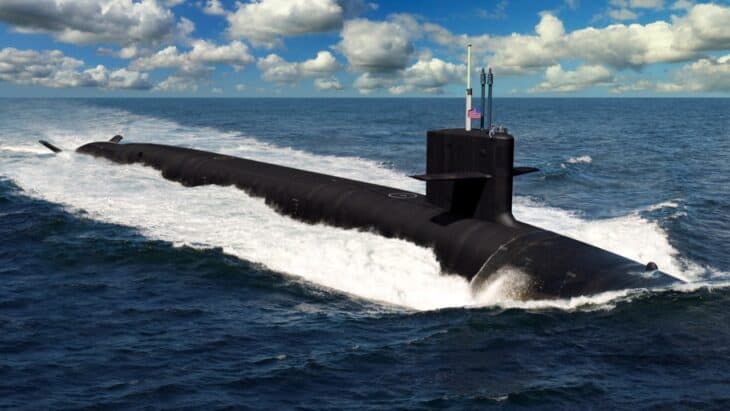
The Columbia class will be the largest submarine the United States has ever built. The Congressional Research Service gives a reported submerged displacement of 20,815 tons, about 2,000 tons more than the Ohio class it replaces.
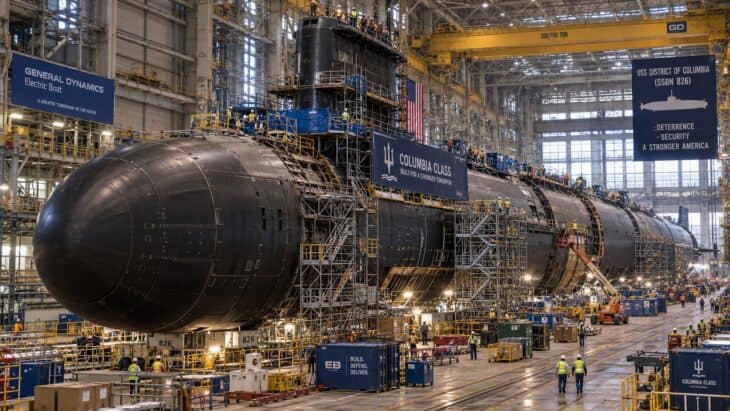
It is the same 560 feet (171 m) long as an Ohio but slightly fatter, at 43 feet against 42, and carries 16 Trident II D5 missile tubes instead of the Ohio’s original 24. The Navy plans 12 boats to replace its 14 Ohio-class missile submarines.
The lead boat, USS District of Columbia, was named in June 2022 and is still under construction in October 2026. As of April 2023 the 12-boat program was estimated at $132 billion to build.
5. Oscar II (Project 949A): 19,400 Tons
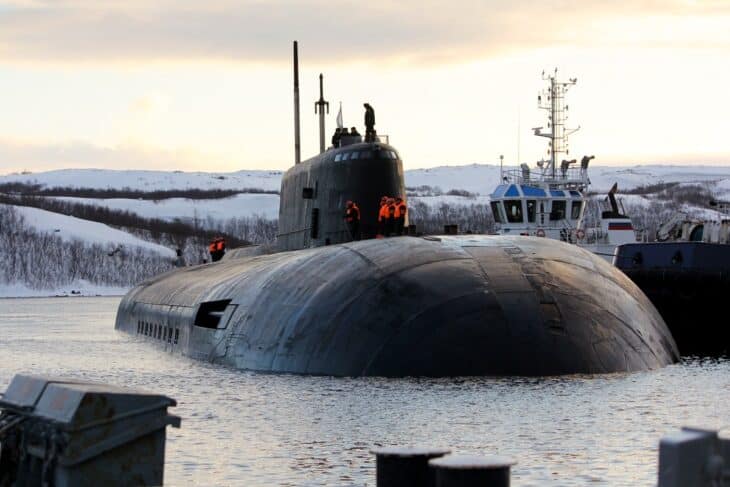

The Oscar II is a cruise missile submarine designed to attack NATO carrier battle groups. It displaces 19,400 tons submerged, is 509 feet (155 m) long and 60 feet (18.2 m) wide, and carries 24 P-700 Granit anti-ship missiles at up to 32 knots underwater.
Fourteen Oscar-family hulls were completed, counting the two original Oscar Is and the boat that became Belgorod. About six remain active, some being modernized. The best known is Kursk, lost in the Barents Sea on August 12, 2000.
6. Ohio: 18,750 Tons
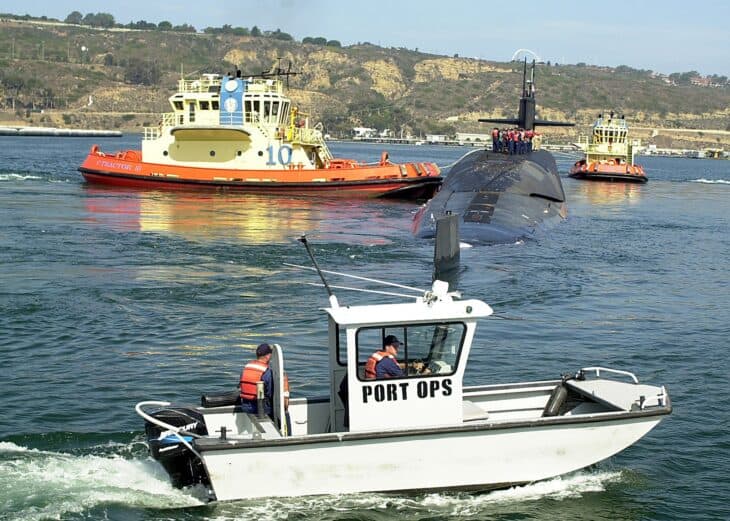

The Ohio class is the largest submarine the US Navy has in service. Each boat displaces 18,750 tons submerged, is 560 feet (171 m) long, and carries a crew of 15 officers and 140 enlisted sailors.
Eighteen were built between 1976 and 1997. Fourteen are ballistic missile submarines, each cut from 24 to 20 Trident tubes in 2017 under the New START treaty. The other four were converted to guided missile boats carrying up to 154 Tomahawk cruise missiles each.
Those four are leaving. USS Georgia returned from its final operations in July 2026 and is due to be inactivated at Norfolk in July 2027, with Ohio, Florida and Michigan following in fiscal years 2027, 2028 and 2029. Finding boats like these is the job of maritime patrol aircraft such as the P-8 Poseidon.
7. Delta IV (Project 667BDRM): 18,200 Tons
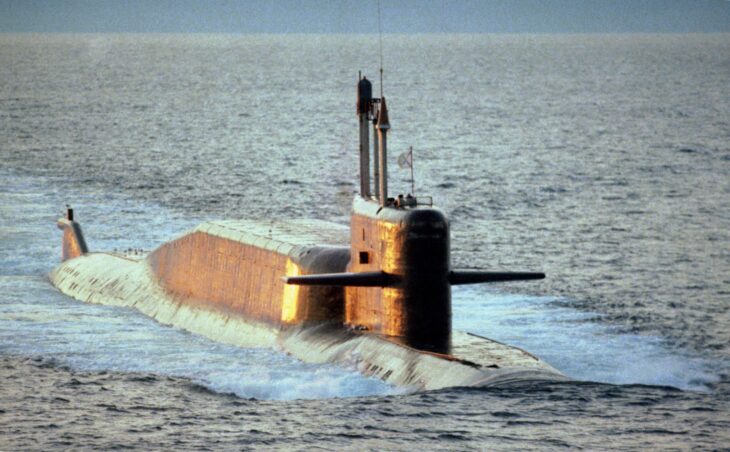

The Delta IV is the last of the Cold War Delta family, built at Severodvinsk between 1981 and 1992. It displaces 18,200 tons submerged, is 548 feet (167 m) long, and carries 16 liquid-fueled Sineva missiles.
Six of the seven are listed as active, one of them, Podmoskovye, converted into a special-purpose boat with its missile silos removed. In the last years of the Soviet Union the class carried out Operation Behemoth, and it remains the only class of SSBN to successfully fire its entire payload of ballistic missiles.
8. Dreadnought: 17,200 Tons
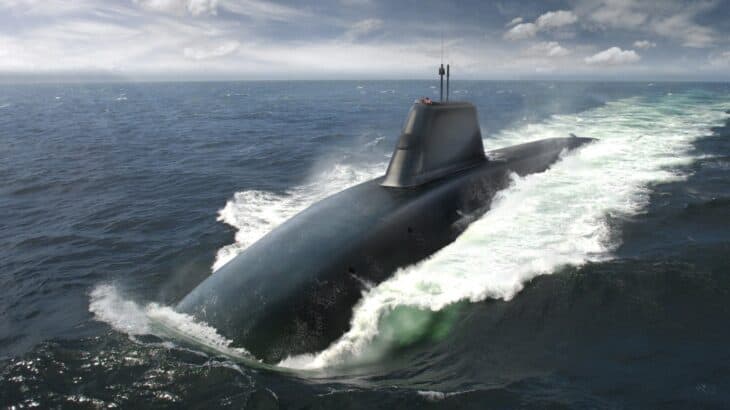
Britain’s Dreadnought class will be the largest submarine the Royal Navy has ever operated. It displaces 17,200 tons, is 504 feet (153.6 m) long, and carries 12 Trident II D5 tubes with a crew of 130.
All four boats are under construction, and the first is expected by the early 2030s. They will replace the Vanguard class below.
9. Vanguard: 15,900 Tons
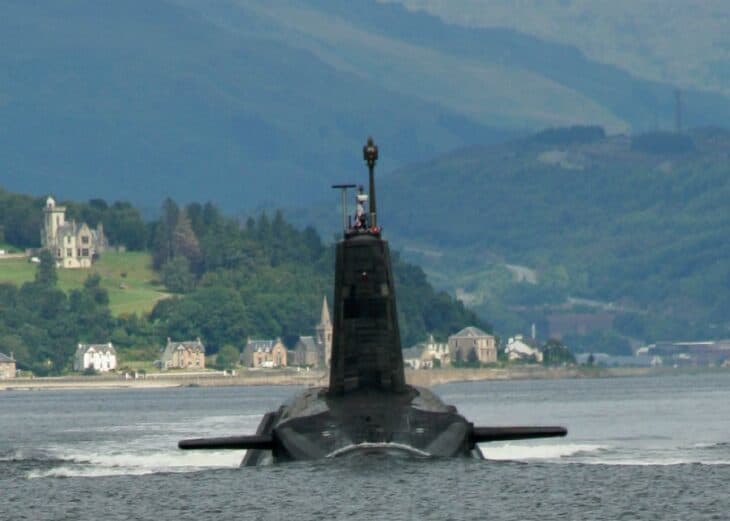

The four Vanguard boats have carried Britain’s nuclear deterrent since 1993. Each displaces 15,900 tons submerged, is 492 feet (149.9 m) long, and has 16 Trident II D5 tubes and a crew of 135.
They were built between 1986 and 1999 and will keep the deterrent going until Dreadnought arrives.
10. Triomphant: 14,335 Tons
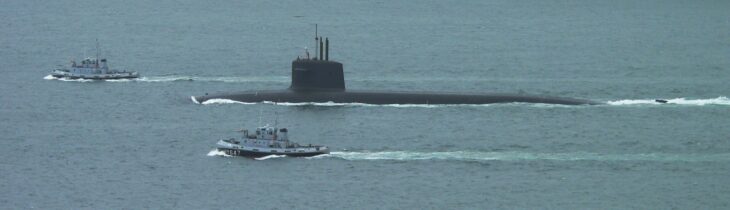

France’s four Triomphant boats displace 14,335 tons submerged and measure 453 feet (138 m). Each carries 16 M45 or M51 ballistic missiles and a crew of 111.
They entered service from 1997 and can also fire Exocet anti-ship missiles while submerged.
11. Yasen / Yasen-M: 13,800 Tons
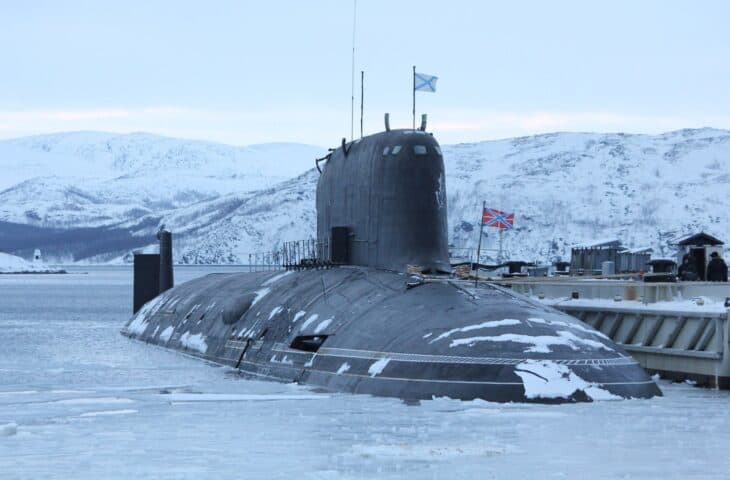

The Yasen is a nuclear attack submarine that displaces 13,800 tons submerged, more than any Western attack boat, and carries eight vertical launch silos holding four missiles each, 32 in all.
The lead boat Severodvinsk is 457 feet (139.2 m) long; the improved Yasen-M boats are shorter at 427 feet (130 m) and need a crew of just 64. Five are active as of 2026, with more on trials and fitting out.
12. Seawolf (USS Jimmy Carter): 12,139 Tons
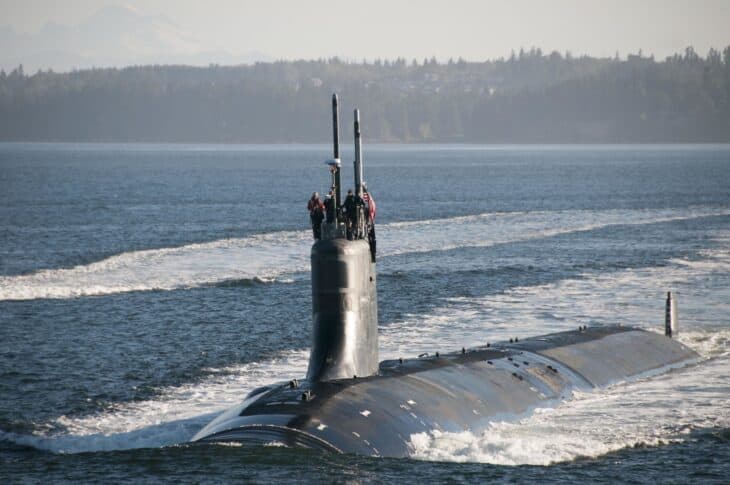

A standard Seawolf displaces 9,138 tons submerged and is 353 feet long. The third and last boat, USS Jimmy Carter, was lengthened to 453 feet (138 m) and 12,139 tons as a Multi-Mission Platform, which puts the class on this list.
Jimmy Carter was commissioned on February 19, 2005. Only three Seawolfs were built out of 29 planned.
Near Misses: China, Virginia Block V and the I-400
China’s largest submarine, the Type 094 Jin class, displaces about 11,000 tons submerged and is 449 feet (137 m) long, with six in service according to the IISS. That is smaller than every class above, even though China has the world’s biggest navy by hull count, as our ranking of the largest navies in the world shows.
The US Navy’s Virginia Block V attack boats grow to 10,200 tons and 460 feet (140 m), which still falls short of the list.
Japan’s I-400 class, at 400 feet (122 m) and 6,560 tons submerged, was the largest submarine of World War II. Each carried three Seiran floatplanes in a deck hangar, and they stayed the largest submarines ever built until nuclear missile submarines arrived in the 1960s.
Is the Ohio the third-largest submarine ever built?
Often repeated, and not quite right. The Ohio is usually listed third behind the Typhoon and the Borei, but that leaves out Belgorod, at 24,000 to 30,000 tons, and the Oscar II, published at 19,400 tons submerged. On those figures the Ohio is the fifth-largest class ever completed and the largest in the West, and the Columbia will push it down another place.
Which Is Bigger: Longest or Heaviest?
Belgorod wins on length and the Typhoon wins on displacement, and both claims are true. The Typhoon’s side-by-side pressure hulls made it about 75 feet (23 m) wide, against 43 feet for a Columbia, so it weighs far more despite being shorter.
Displacement is the better measure of size, which is why the Typhoon keeps the title. Even so, the biggest submarine is small next to the largest warships in the world: USS Gerald R. Ford displaces 101,600 tons, about twice a Typhoon.
FAQ
Sources and references used for research and fact-checking.
- Wikipedia, Typhoon-class submarine
- Wikipedia, Russian submarine Belgorod
- Wikipedia, Borei-class submarine
- Overt Defense, Knyaz Pozharsky nuclear submarine commissioned
- Congressional Research Service, Navy Columbia (SSBN-826) Class Ballistic Missile Submarine Program: Background and Issues for Congress (R41129)
- Wikipedia, Columbia-class submarine
- Wikipedia, Oscar-class submarine
- Wikipedia, Ohio-class submarine
- The War Zone, Prized Ohio Class Guided Missile Submarine USS Georgia Heading Into Retirement
- Federation of American Scientists, Project 667BDRM Delfin (Delta IV)
- Wikipedia, Delta-class submarine
- Wikipedia, Dreadnought-class submarine
- Wikipedia, Vanguard-class submarine
- Wikipedia, Triomphant-class submarine
- Wikipedia, Yasen-class submarine
- Wikipedia, Seawolf-class submarine
- Wikipedia, USS Jimmy Carter
- Wikipedia, Type 094 submarine
- Wikipedia, Virginia-class submarine
- Wikipedia, I-400-class submarine
Get the Newsletter
The latest aviation news and stories sent to your inbox.
About the Author

Tim is the owner and lead editor of AeroCorner since 2019, overseeing aviation content covering aircraft, airlines, airports, and the broader aviation industry. Through years of researching, writing, editing, and publishing aviation-focused content, he has developed extensive practical knowledge of commercial aviation and air travel. Based in Asia and a frequent traveler himself, Tim also brings firsthand passenger experience to AeroCorner’s coverage. Outside of publishing, he has also explored aviation firsthand through hands-on flight training in New Zealand.