

Table of Contents
Iran has two navies. The regular Islamic Republic of Iran Navy (IRIN) sailed the frigates, corvettes and submarines, while the Navy of the Islamic Revolutionary Guard Corps (IRGCN) ran the fast boats, the mines and the missile launchers around the Strait of Hormuz.
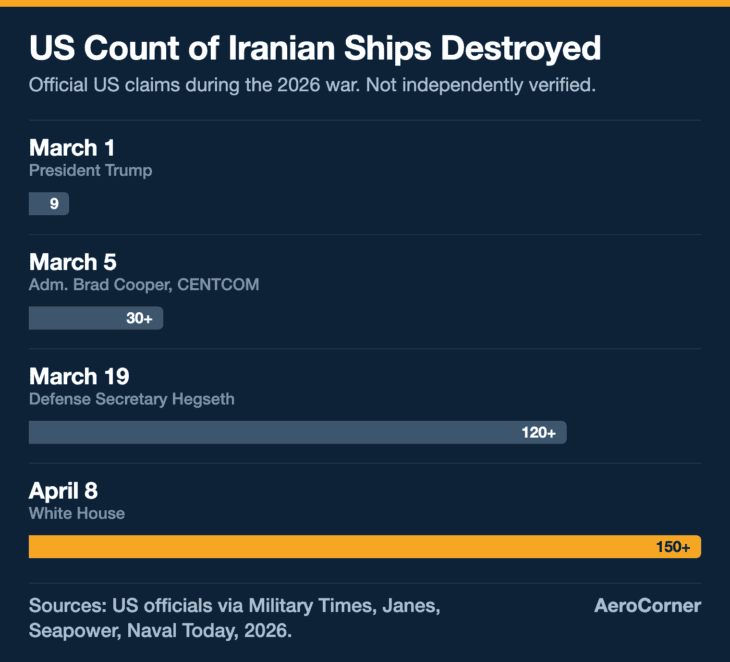
The 2026 war, which began with US and Israeli strikes on February 28, treated them very differently. By April 8, the chairman of the US Joint Chiefs said more than 90% of the regular navy had been sunk. The Revolutionary Guard’s small boats were still attacking tankers in the strait in November.
This guide ranks every class the two navies sailed when the war began, by what each one still adds to Iran’s fighting power as of November 2026, and records what happened to every one of them.
| Rank | Class | Navy | Hulls before the war | Status, November 2026 |
|---|---|---|---|---|
| 1 | Fast attack and missile boats | IRGCN | Hundreds | More than 60% intact in April, still attacking ships |
| 2 | Ghadir | IRIN | More than a dozen | US says all sunk, some counts list survivors |
| 3 | Kilo (Tareq) | IRIN | 3 | One hit in port, all likely out of action |
| 4 | Moudge (Jamaran) | IRIN | 5 | All sunk, destroyed or suspected sunk |
| 5 | Shahid Soleimani | IRGCN | 4 | All destroyed |
| 6 | Shahid Bagheri | IRGCN | 1 | Struck March 2, sinking unconfirmed |
| 7 | Alvand | IRIN | 3 | All sunk or destroyed |
| 8 | Makran and Shahid Mahdavi | Both | 2 | Both destroyed |
| 9 | Bayandor | IRIN | 2 | Both sunk on February 28 |
| 10 | Fateh | IRIN | 1 | Listed as sunk |
| 11 | Kaman and Sina missile boats | IRIN | At least 14 | Mostly sunk |
How this ranking works
Classes are ranked by what they add to Iran’s fighting power in November 2026. Classes that still have working hulls come first; destroyed classes follow in order of how much they mattered before the war. Iran publishes nothing about its losses, so every status here rests on US statements, satellite imagery or defense analysts, and the text says which. Coastal missiles, drones and mines are covered separately, because they are weapons rather than ship classes.
Why Iran Has Two Navies
The regular navy is the older service, the heir to the Shah’s fleet. The Revolutionary Guard formed its own navy on September 17, 1985, during the war with Iraq, when Ayatollah Khomeini ordered the Guard to create naval, air and ground branches.
In 2007, Iran split the sea between them. The Revolutionary Guard took sole responsibility for the Persian Gulf, and the regular navy took the Gulf of Oman, the Caspian Sea and the open ocean beyond.
That split explains almost everything about 2026. The regular navy built frigates for long voyages, while the Guard built a swarm of small, fast, cheap boats for the narrow strait. The IISS put the regular navy at 18,000 personnel in 2026, and the Guard’s navy at more than 20,000 in 2020.
Who seizes the tankers
When a tanker is seized in the Gulf, it is almost always the Revolutionary Guard, not the regular navy. The IRGCN seized the Maersk Tigris in 2015, the British-flagged Stena Impero in 2019 and the MSC Aries in 2024, and the wave of attacks on merchant ships in the strait in the fall of 2026 has been blamed on it too.
1. Fast Attack and Missile Boats: The Mosquito Fleet
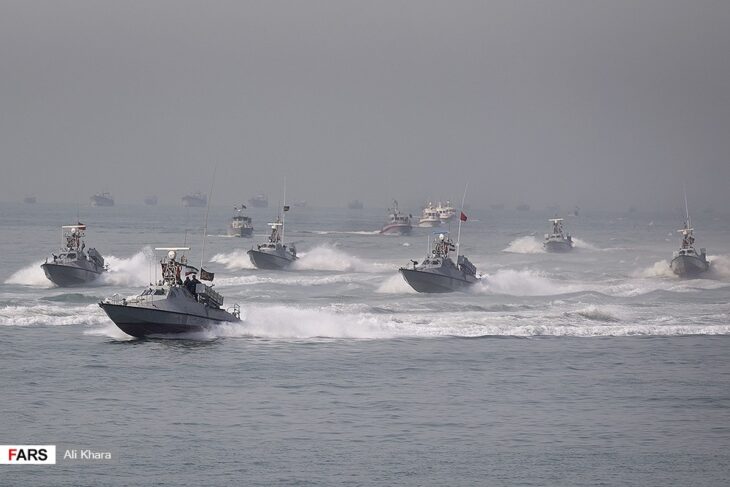

The Revolutionary Guard’s small boats are the one part of Iran’s sea power the war did not break. Military analysts call them the mosquito fleet: Zolfaghar, Seraj, Tarlan and Ashura speedboats and Peykaap missile boats, armed with missiles, guns and rockets.
The IISS counted about 126 Guard surface combatants in 2020, plus thousands of speedboats. Nobody outside Iran knows the number today, because the boats are small enough to slip past satellites and the Guard keeps many of them in underground pens.
After six weeks of war, the Wall Street Journal reported that more than 60% of the Guard’s fleet assigned to the strait was still intact. The war has also cost it its commander. Israel said it killed Alireza Tangsiri, in charge since 2018, on March 26, 2026, Iran confirmed his death days later, and Brig. Gen. Ali Azmaei replaced him on July 4.
The surviving boats have kept fighting. The UK Maritime Trade Operations center logged 15 attacks on shipping between October 6 and 14, and on November 10 the Guard’s navy said two more tankers were burning in the strait, one of them after hitting a mine.
"No navy" is only half true
In October, US Central Command posted that the Revolutionary Guard’s navy commander “has no navy.” For big ships, that is close to right. But the war never had a good answer for hundreds of small boats hidden in caves and fishing harbors, and US officials say the Guard now uses unarmed spotters in dhows to find targets after losing most of its radars.
2. Ghadir Class: The Midget Submarines
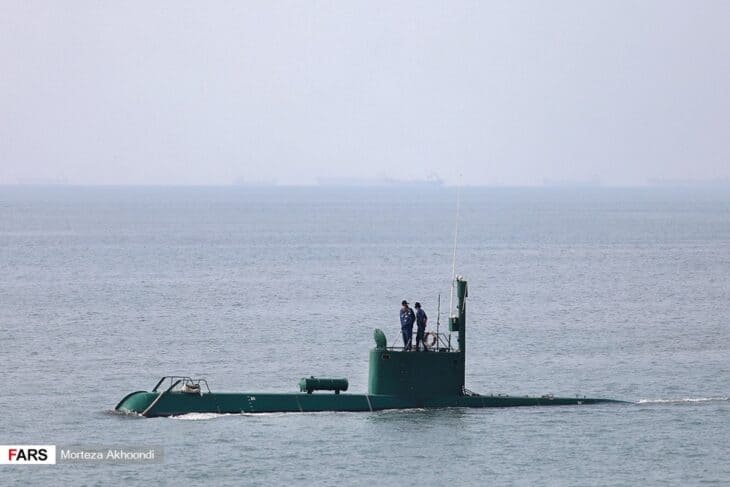

The Ghadir boats are small submarines built in Iran for the shallow waters of the Gulf, where a full-size submarine struggles to hide. The regular navy had more than a dozen of them, far more than any other submarine type.
Their status is the biggest open question in Iran’s fleet. Defense Secretary Pete Hegseth said on March 19 that US forces had hit all 11 of Iran’s submarines, and the White House said on April 8 that Iran “now has zero submarine vessels.”
One US official said a Ghadir was struck with a Hellfire missile, the kind usually fired from a helicopter or drone. Yet the IISS-based count on Wikipedia still lists at least five Ghadirs, and the US count of 11 is smaller than the number Iran was believed to own.
3. Kilo Class: The Russian Submarines
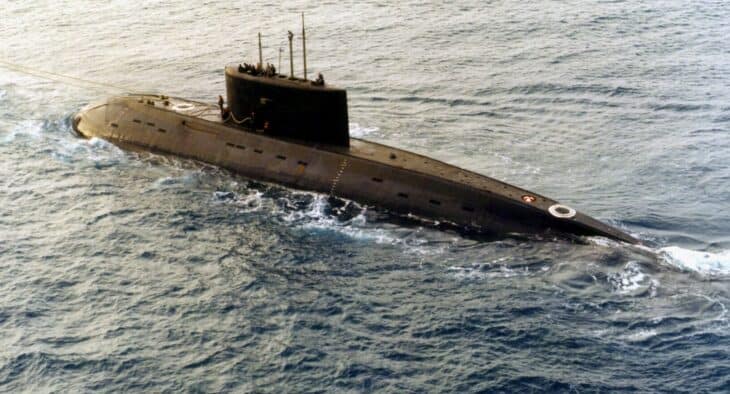

Iran’s three Kilo-class submarines, Tareq, Nooh and Yunes, were bought from Russia and commissioned between 1991 and 1996. Each is about 238 feet (72.6 m) long and displaces about 3,000 tons submerged, and with the smaller boats they gave Iran what the White House called the largest undersea force in the Middle East.
Joint Chiefs chairman Gen. Dan Caine said on March 4 that a submarine had been hit. Janes judged it was most likely Tareq, docked at Bandar Abbas, and US Central Command said the boat was “holed and disabled.”
The other two were in long refits when the war began. The IISS judged in March that all three were most likely out of commission, which is why they rank below the midget submarines that may still sail.
4. Moudge Class: The Frigates Iran Built Itself
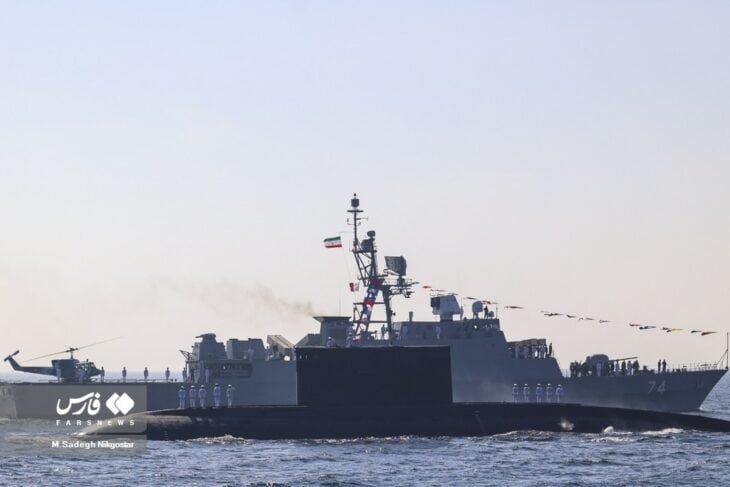

The Moudge class, also called the Jamaran class, was the pride of the regular navy: the first frigates Iran designed and built for itself. Each is about 312 feet (95 m) long, displaces 1,500 tons, reaches 30 knots and carries four Noor or Qader anti-ship missiles and a helicopter.
Five were in service when the war began, and the war took all of them. Jamaran was sunk at its pier in Chabahar on the first day, Sahand was destroyed, Deylaman was sunk in the Caspian Sea by Israeli strikes on March 18, and Zagros, converted into a spy ship, is suspected sunk.
Sahand had already sunk once. It capsized in port at Bandar Abbas on July 7, 2024, was raised and repaired, and returned to service on November 29, 2025, three months before the war.
The sinking of IRIS Dena
The fifth frigate, Dena, was far from home. It had joined India’s MILAN 2026 exercise in February and was heading back when, on March 4, the US submarine USS Charlotte hit it with two Mark 48 torpedoes about 19 nautical miles off Galle, Sri Lanka. It was the first time a nuclear-powered submarine had sunk an enemy warship since HMS Conqueror sank the General Belgrano in the Falklands War. Of about 136 aboard, 104 were killed and 32 were rescued by the Sri Lanka Navy.
5. Shahid Soleimani Class: The Guard’s Catamaran Corvettes
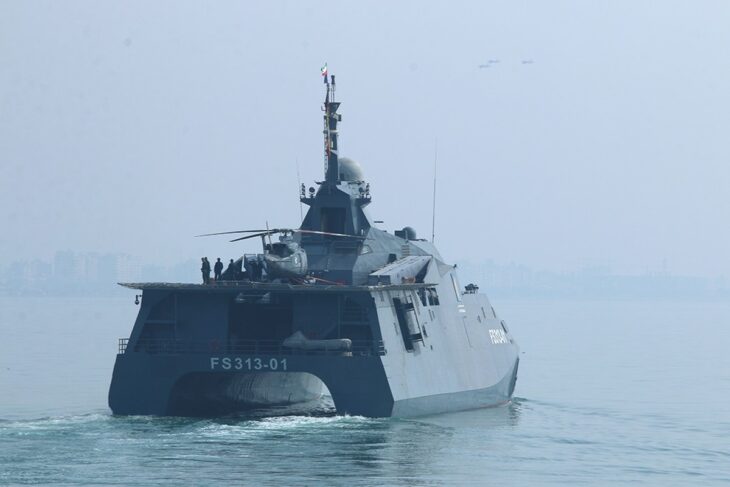

The Shahid Soleimani class was the Revolutionary Guard’s attempt at a real warship: a 213-foot (65 m) catamaran of about 600 tons, said to have an aluminum hull. They were the first Iranian warships with vertical missile launchers, with six cells for anti-ship cruise missiles and 16 for air defense missiles.
Four were commissioned between 2022 and 2025. US Central Command released images of Shahid Sayyad Shirazi burning on March 4, and on March 11 it said all of the Guard’s Soleimani-class ships had been destroyed.
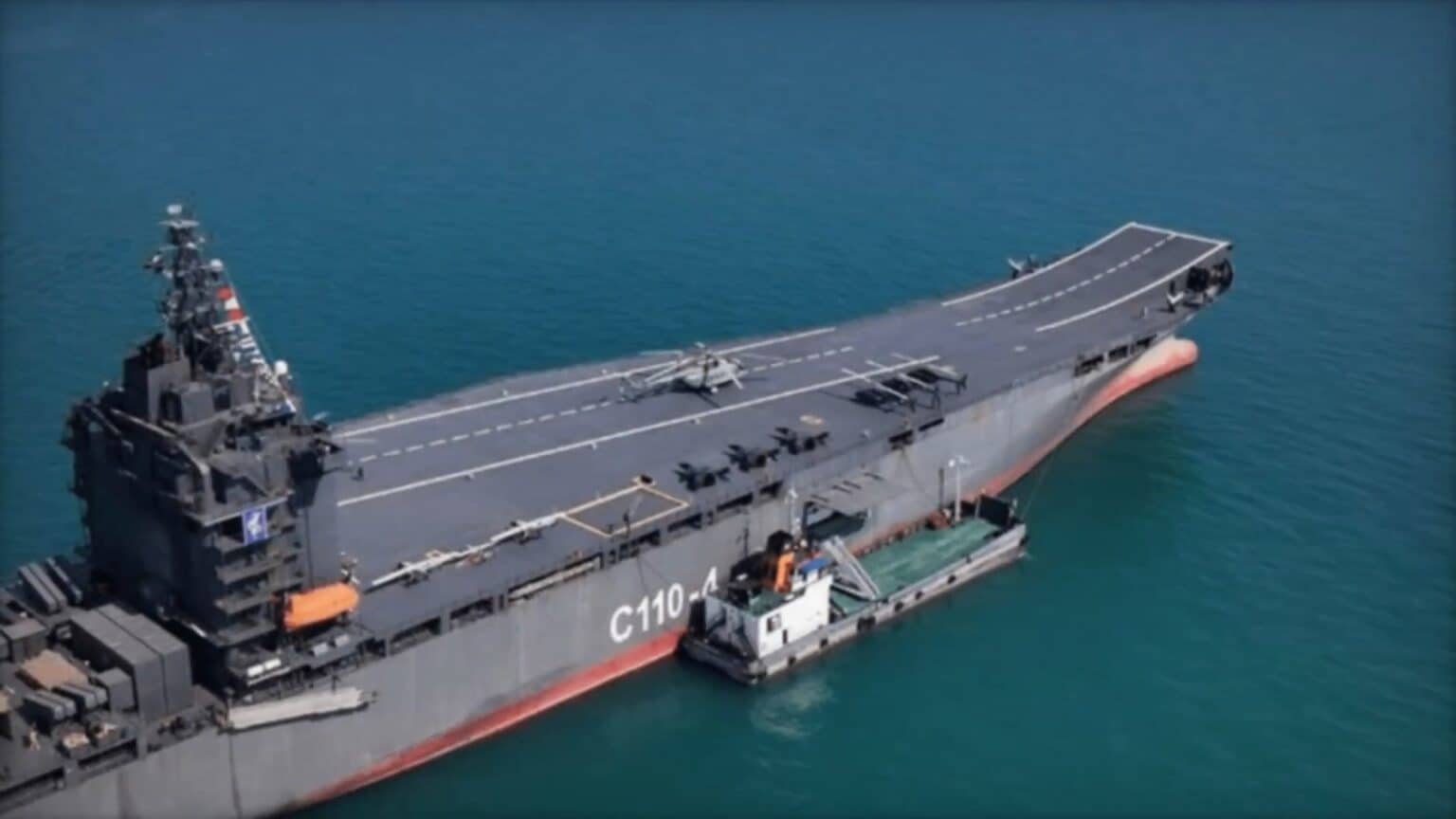
6. Shahid Bagheri: The Drone Carrier
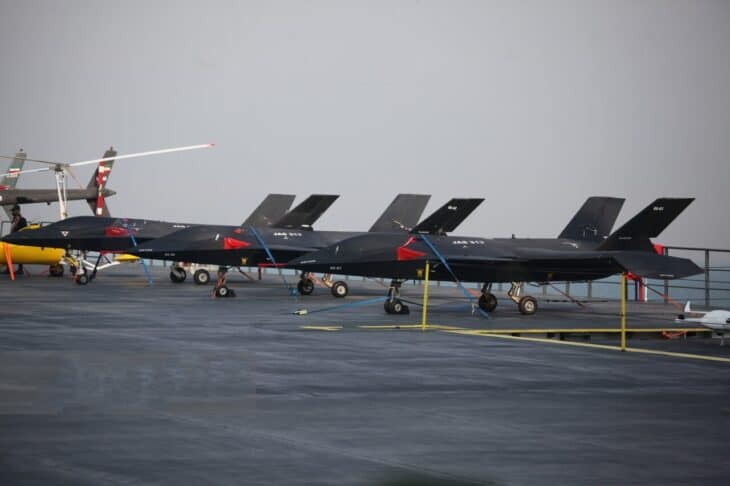

Shahid Bagheri was a container ship that the Revolutionary Guard rebuilt between 2022 and 2024 with an angled flight deck, a ski jump and a 590-foot (180 m) runway for drones. It is 790 feet (240.79 m) long, and Iran showed it off on February 6, 2025, with Mohajer-6 drones and helicopters on deck.
US Central Command said on March 2, 2026, that it had struck the ship, and CENTCOM commander Adm. Brad Cooper said on March 5 that it was on fire. Satellite images from the same day appeared to show it moving near Bandar Abbas, and BBC Verify could not confirm that it sank.
Whether or not it is afloat, it is no longer a working carrier. For what a real one looks like, see our ranking of the best aircraft carriers in the world.
7. Alvand Class: The Shah’s British Frigates
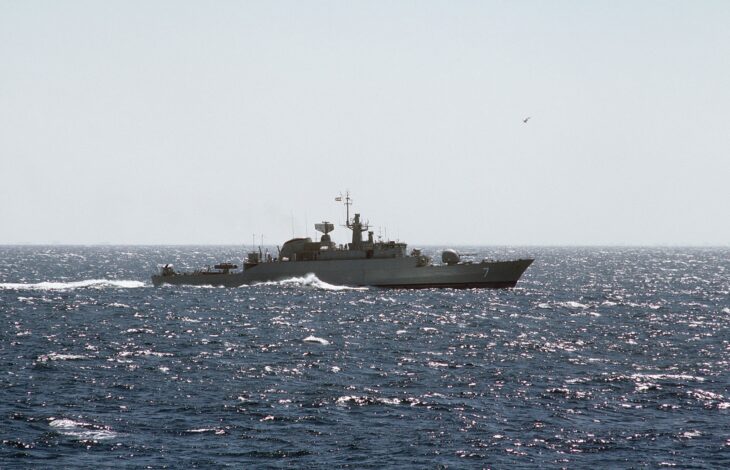

The Alvand class were built in Britain to Vosper Thornycroft’s Mark 5 design and commissioned in 1971 and 1972, for the Shah’s navy. Each is about 310 feet (94.5 m) long and displaces 1,540 tons fully loaded.
Their history with the US Navy is long. A fourth ship, the original Sahand, was sunk by US forces on April 18, 1988, in Operation Praying Mantis.
All three survivors were lost in 2026. Alvand and Sabalan were sunk in the attack on Bandar Abbas, and satellite imagery from May 12 showed Alborz destroyed in its dry dock.
8. Makran and Shahid Mahdavi: The Converted Base Ships
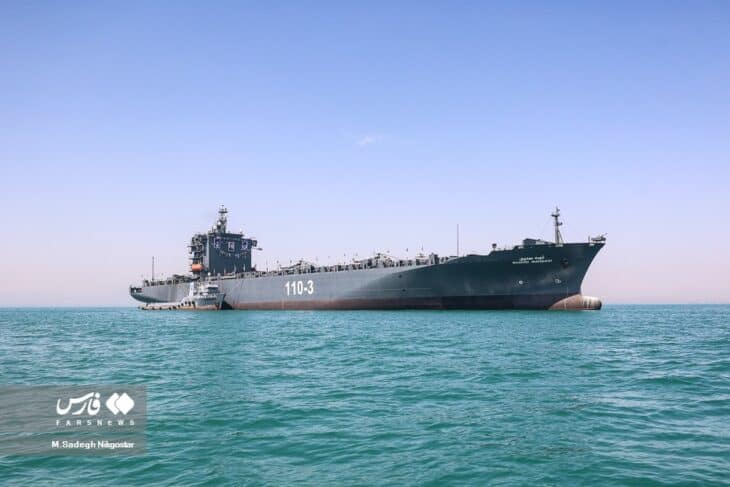

Both navies turned merchant ships into floating bases for long voyages. Makran, a former tanker about 755 feet (230 m) long, was commissioned by the regular navy in January 2021, and that June it and the frigate Sahand sailed into the Atlantic, which Iran said no warship of its own had done without stopping at a foreign port.
The Guard’s Shahid Mahdavi, a converted Korean-built container ship about 787 feet (240 m) long, joined in March 2023. US forces destroyed Makran at Bandar Abbas on March 1, 2026, and Shahid Mahdavi was sunk in the Gulf of Oman in the first week of the war.
9. Bayandor Class: The Oldest Warships
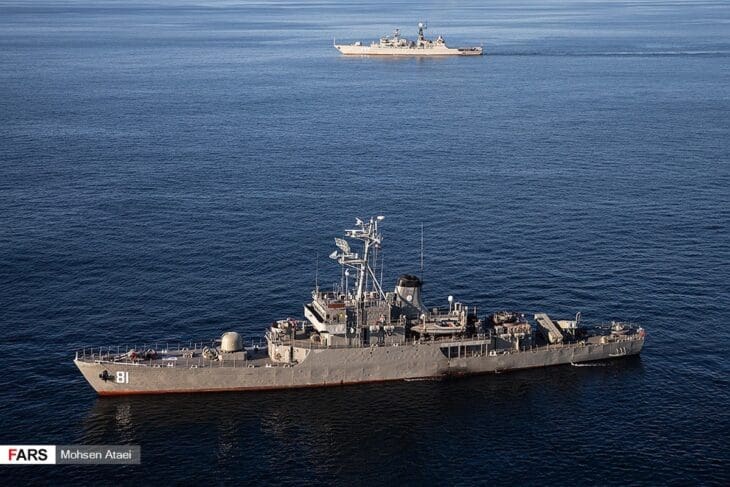

The regular navy’s two Bayandor-class corvettes, Bayandor and Naghdi, were sunk together at Konarak on February 28, the first day of the war.
10. Fateh: The Homegrown Submarine
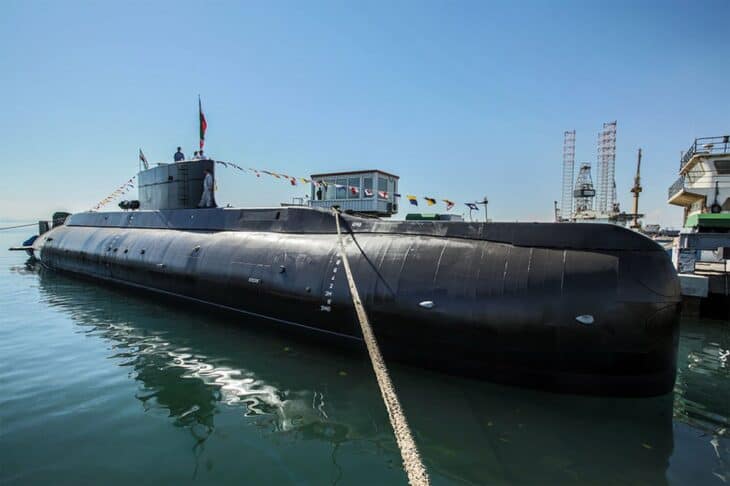

Fateh was a submarine Iran designed itself, and the only one of its class. The IISS listed it in service before the war, and the adjusted count now lists it as sunk.
11. Kaman and Sina: The Regular Navy’s Missile Boats
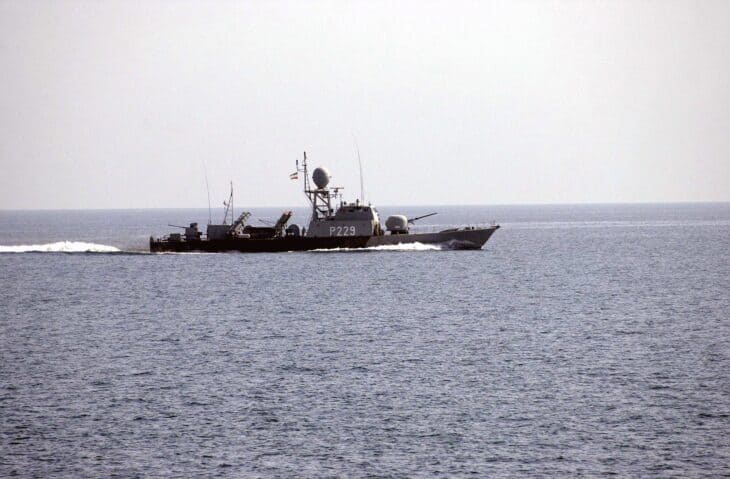

The regular navy kept its own small missile boats for the Gulf of Oman. The IISS listed 10 Kaman-class boats before the war, alongside at least four of the similar Sina class.
Four Sina boats are listed as sunk, and only one Kaman remains in the adjusted count. They rank last because they were the regular navy’s version of what the Guard does better.
Mines, Missiles and Drones: What the Ship Count Misses
Iran’s threat to the strait never rested on big ships. It rests on mines, mobile anti-ship missile launchers hidden along the southern coast, one-way attack drones and unmanned surface boats, most of them run by the Revolutionary Guard.
The White House said on April 8 that 97% of Iran’s more than 5,000 naval mines had been targeted and destroyed, and US forces sank 16 minelayers in March. Yet the Guard said on November 10 that a supertanker had struck a mine in the strait, and fishing dhows can lay mines as easily as warships can.
The air war followed the same pattern as the sea war. Our guide to Iran’s air force in 2026 covers what is left of its fighters, dozens of them destroyed, most while parked.
The Aircraft of Iran’s Navies
The regular navy flew about 85 helicopters and 13 fixed-wing aircraft before the war. Its anti-submarine helicopter was the SH-3 Sea King, alongside CH-53s for mine countermeasures, Bell 212s and Mi-17 transports.
Iran’s long-range maritime patrol aircraft, the P-3F Orion, belongs to the air force, not the navy. The Guard’s navy flies Bell 206 and Mi-171 helicopters and launches drones from shore and, before the war, from Shahid Bagheri.
Where Iran’s Navy Stands in November 2026
The fighting did not end with the ceasefire. The US has blockaded Iran’s ports since April 13, lifted the blockade after a June agreement, then reimposed it on July 14, and CENTCOM said on October 16 that it had stopped about $25 billion in Iranian crude exports.
Iran has answered with the only navy it has left. Before the war, about 125 large merchant ships crossed the strait each day, and on October 11 only 2.9 million barrels of oil got through, against a pre-war average of 17.1 million a day.
The fleets in our ranking of the largest navies in the world are measured in hulls and tonnage, and by that measure Iran’s blue-water navy is almost gone. What the 2026 war proved is that the navy that matters at Hormuz was never the one with the frigates.
FAQ
Sources and references used for research and fact-checking.
- Wikipedia, Islamic Republic of Iran Navy
- Wikipedia, Islamic Revolutionary Guard Corps Navy
- GlobalSecurity.org, Naval Reorganization
- Janes, Iran conflict 2026: The demise of the Iranian navies
- Military Times, 9 Iranian naval ships have been destroyed and sunk, Trump says
- Seapower, Hegseth Draws Distinction Between Epic Fury, Previous Conflicts
- Naval Today, US says Iran's submarine fleet eliminated; 16 warship classes destroyed in strikes
- DefenseScoop, Hegseth and Caine on Iran's drone arsenal and Operation Epic Fury damage
- The Times of Israel, Report: Majority of small vessels used by IRGC to man Strait of Hormuz still operational
- CNN via ABC 17 News, Iran's 'mosquito fleet' means its battered navy still has bite
- Wikipedia, Moudge-class frigate
- Wikipedia, Sinking of IRIS Dena
- Wikipedia, Kilo-class submarine
- Wikipedia, List of ships attacked during the 2026 Iran war
- Wikipedia, Shahid Soleimani-class corvette
- Wikipedia, IRIS Shahid Bagheri
- Wikipedia, Alvand-class frigate
- Wikipedia, IRIS Makran
- Wikipedia, IRIS Shahid Mahdavi
- Wikipedia, Operation Project Freedom
- Wikipedia, 2026 United States naval blockade of Iran
- Al Jazeera, Iran steps up Hormuz surveillance: Attacks soar, oil flows crash again
- Anadolu Agency, Iran says 2 oil tankers explode, catch fire in Strait of Hormuz
Get the Newsletter
The latest aviation news and stories sent to your inbox.
About the Author

Tim is the owner and lead editor of AeroCorner since 2019, overseeing aviation content covering aircraft, airlines, airports, and the broader aviation industry. Through years of researching, writing, editing, and publishing aviation-focused content, he has developed extensive practical knowledge of commercial aviation and air travel. Based in Asia and a frequent traveler himself, Tim also brings firsthand passenger experience to AeroCorner’s coverage. Outside of publishing, he has also explored aviation firsthand through hands-on flight training in New Zealand.