

Table of Contents
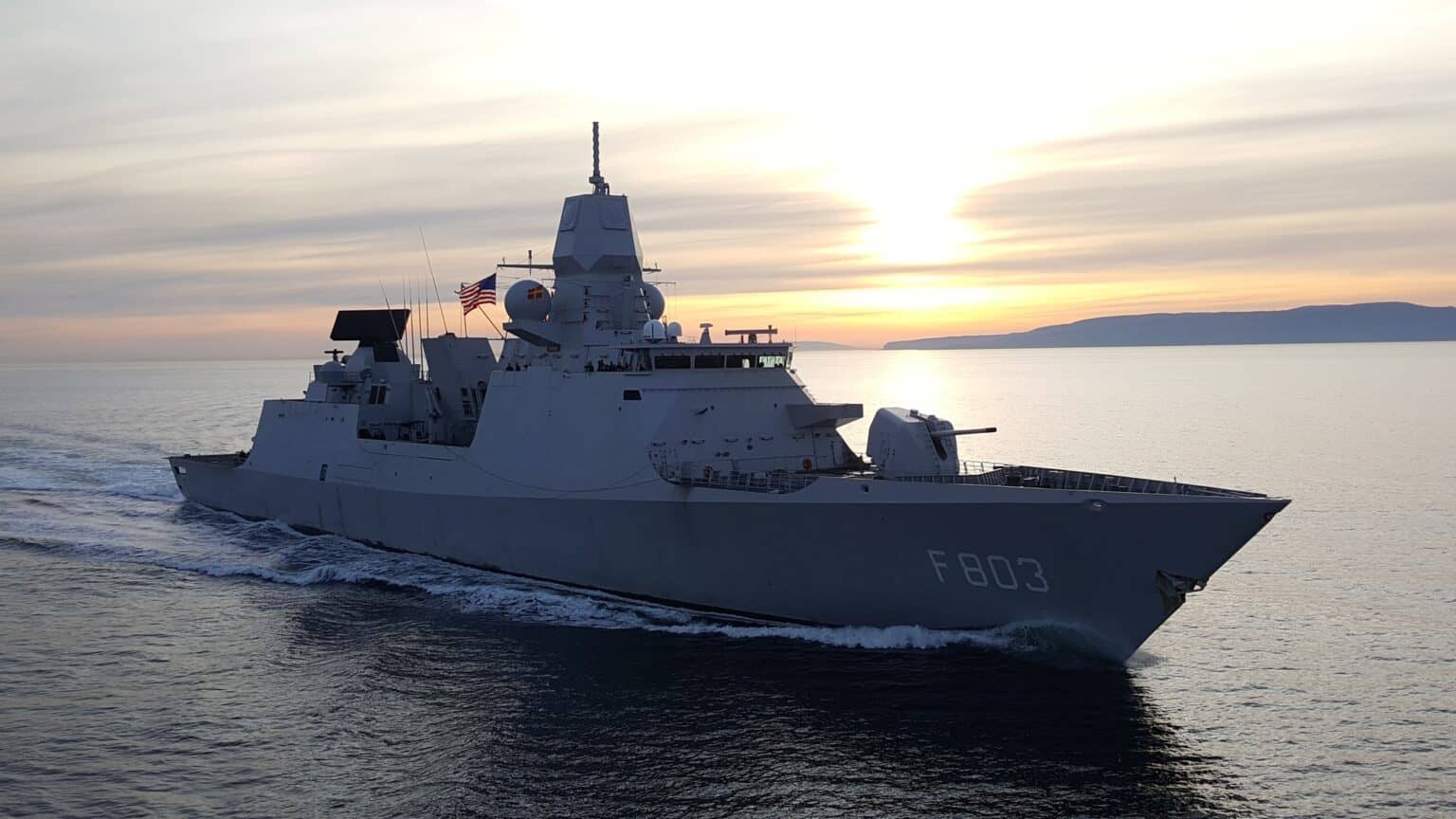
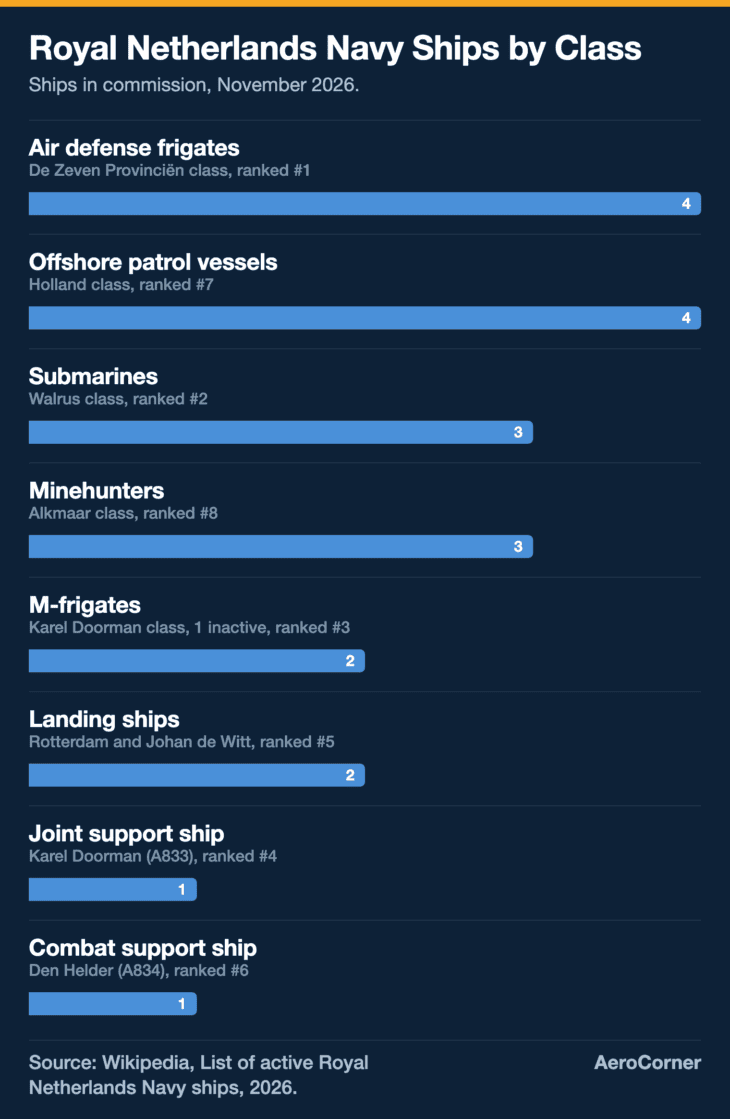
The most powerful ships in the Royal Netherlands Navy are its four De Zeven Provinciën-class frigates, air defense ships so large and heavily armed that most navies would call them destroyers. Behind them come three Walrus-class submarines, the oldest of which entered service in 1990.
The Koninklijke Marine, which traces its history to January 8, 1488, had 12,411 personnel in 2025. Its main fleet is about 20 ships: 6 frigates, 3 submarines, 4 offshore patrol vessels, 3 minehunters and 4 large amphibious and supply ships, plus roughly 40 smaller vessels.
This list ranks every major class by fighting value as of November 2026, then covers the helicopters, the marines, and why almost every Dutch warship is due to be replaced within about ten years.
| Rank | Class | Type | Ships | In service since |
|---|---|---|---|---|
| 1 | De Zeven Provinciën | Air defense frigate | 4 | 2002 |
| 2 | Walrus | Attack submarine | 3 | 1990 |
| 3 | Karel Doorman (M-class) | Anti-submarine frigate | 2 (1 inactive) | 1993 |
| 4 | Karel Doorman (A833) | Joint support ship | 1 | 2015 |
| 5 | Rotterdam and Johan de Witt | Landing platform dock | 2 | 1998 |
| 6 | Den Helder (A834) | Combat support ship | 1 | 2025 |
| 7 | Holland | Offshore patrol vessel | 4 | 2012 |
| 8 | Alkmaar and Vlissingen | Mine countermeasures | 3, plus 1 new ship | 1986 |
How this ranking works
Each class is ranked by the fighting value it adds in November 2026: what it can do in a war, how hard it would be to replace, and how many the Netherlands has. Counts are ships in commission. Tugs, diving boats, survey ships, landing craft and the Caribbean Coast Guard sit outside the ranking. The Netherlands operates no aircraft carrier and no ship it officially calls a destroyer.
1. De Zeven Provinciën Class: The Air Defense Frigates
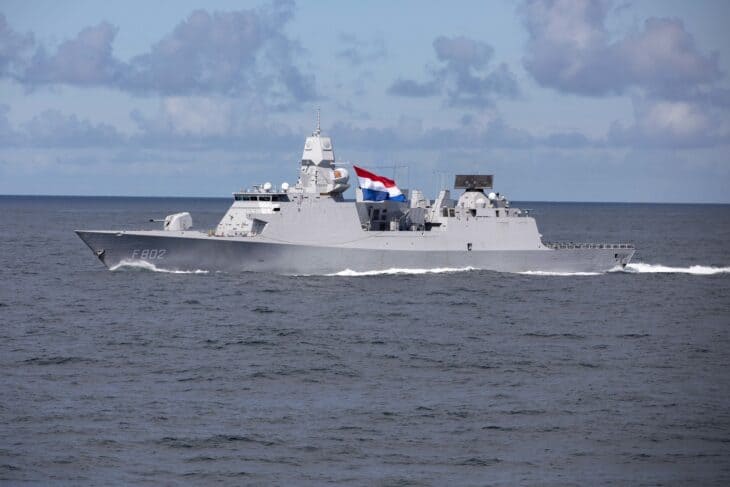

De Zeven Provinciën, Tromp, De Ruyter and Evertsen were commissioned between 2002 and 2005. Each is 473 feet (144.24 m) long, displaces 6,050 metric tons fully loaded and can make 30 knots.
Their 40-cell Mk 41 vertical launcher typically carries 32 SM-2 Block IIIA missiles and 32 quad-packed Evolved Sea Sparrows. They are guided by the Thales APAR fire-control radar and the long-range SMART-L search radar, and each ship carries an NH90 NFH helicopter.
They are now becoming strike ships too. De Ruyter fired the Dutch navy’s first Tomahawk cruise missile, a test launch off Norfolk, Virginia, in March 2025, and the first frigate is reportedly due to carry the missile operationally in 2027.
The class is also the ship the government sends when allies ask. Evertsen sailed for the eastern Mediterranean in March 2026, at France’s request, to help protect countries there from Iranian missiles and drones, and was due home in early May.
Does the Dutch Navy have destroyers?
Not by name. The Netherlands calls the De Zeven Provinciën class frigates, but at 6,050 metric tons, with a 40-cell missile launcher and a command role, they are internationally regarded as destroyers. The navy has no separate destroyer type: in Dutch service, the two words cover the same job.
2. Walrus Class: Three Submarines Kept Alive by a Fourth
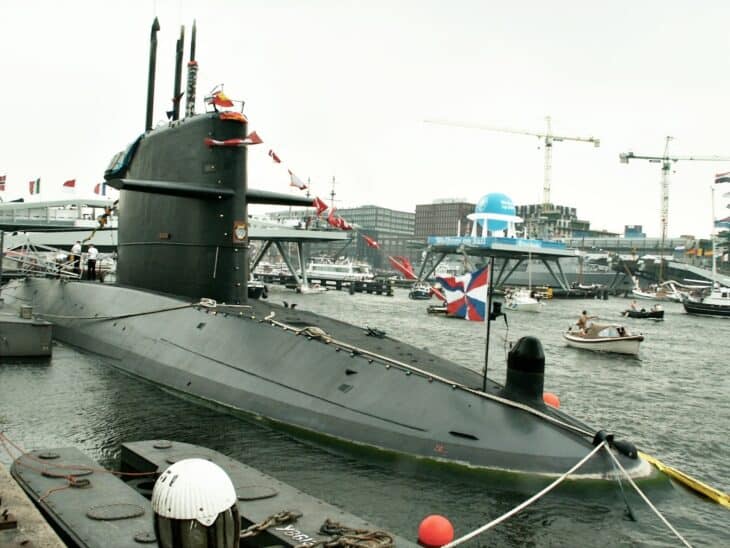

Zeeleeuw, Dolfijn and Bruinvis were commissioned in 1990, 1993 and 1994. Each is 222 feet (67.7 m) long, displaces about 2,800 metric tons submerged, and fires Mk 48 torpedoes and Harpoon missiles from four tubes, with a crew of 49 to 52.
Diesel-electric boats this old would be a weakness in most navies, but the Walrus class still ranks second. Submarines are the hardest ships to find and the hardest to replace, and the Netherlands has no other way to put a hidden threat under the North Sea or the Atlantic.
The submarine that went to the scrapyard in pieces
The lead boat, Walrus, was formally withdrawn in October 2023 after 31 years. Before it was towed from Den Helder to Amsterdam for recycling on October 12, 2026, every usable installation and component had been removed to keep its three sisters at sea.
Their replacements are four Orka-class boats from France’s Naval Group, a contract finalized in 2024. Orka, Zwaardvis, Barracuda and Tijgerhaai are due between 2033 and 2037, about 269 feet (82 m) long, with six torpedo tubes for the French F21 Mk2 torpedo. How they compare with nuclear boats is in our ranking of the largest submarines in the world.
3. Karel Doorman Class: The Last Two M-Frigates
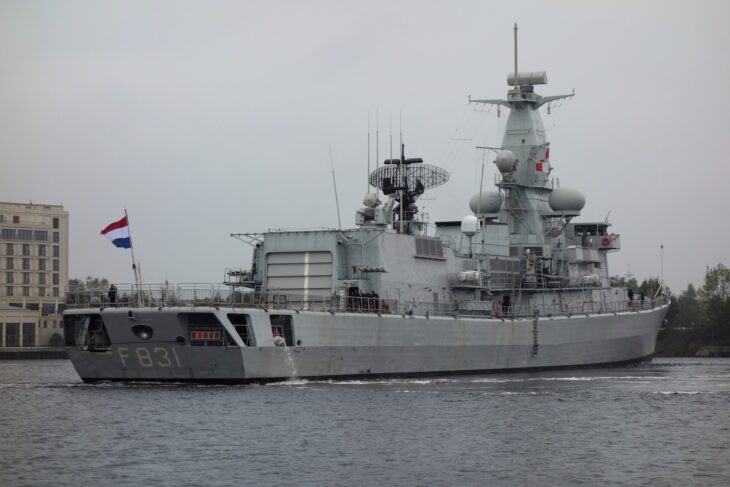

The Netherlands built eight of these multi-purpose frigates and kept two: Van Amstel, commissioned in 1993, and Van Speijk, in 1995. Each is 401 feet (122 m) long, displaces about 3,300 metric tons and specializes in hunting submarines.
They carry eight Harpoon anti-ship missiles, Sea Sparrow air defense missiles, a 76 mm gun, a Goalkeeper close-in gun and Mk 46 torpedoes. Van Speijk is listed as inactive because the navy does not have the people to crew it.
Belgium bought two of the class second-hand in 2005, Leopold I and Louise-Marie, and both navies planned to replace them together with Damen-built Anti-Submarine Warfare Frigates. In the 2026 materiel project plan, the first delivery slipped from 2030 to no earlier than 2033, after the design grew to about 6,400 metric tons and had to be corrected for structural stability problems.
The Netherlands doubled its own order to four ships in 2024. Belgium raised its order to three in 2025, but by October 2026 it was openly weighing other builders, and the two governments said only that talks were continuing.
4. Karel Doorman (A833): The Largest Ship in the Fleet
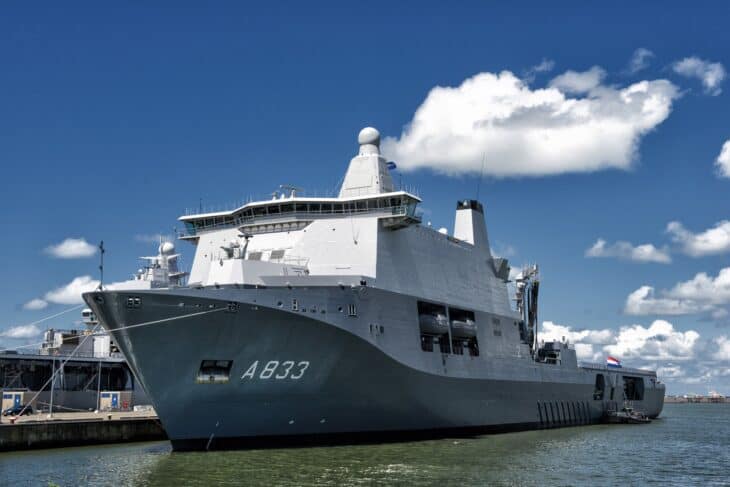

The joint support ship Karel Doorman, commissioned on April 24, 2015, is the largest ship in Royal Netherlands Navy service. It is 672 feet (204.7 m) long and displaces 27,800 metric tons fully loaded.
It refuels and resupplies the fleet, carries vehicles and marines, and can operate up to six NH90 or Cougar helicopters, or two CH-47F Chinooks with their blades spread. Its hull was built by Damen in Galați, Romania, before being fitted out in the Netherlands.
It ranks fourth because it does two jobs at once. With no aircraft carrier, this flat-decked ship is the closest the Dutch navy comes to one, and the comparison with the real thing is in our list of the largest navies in the world.
5. Rotterdam and Johan de Witt: The Landing Ships
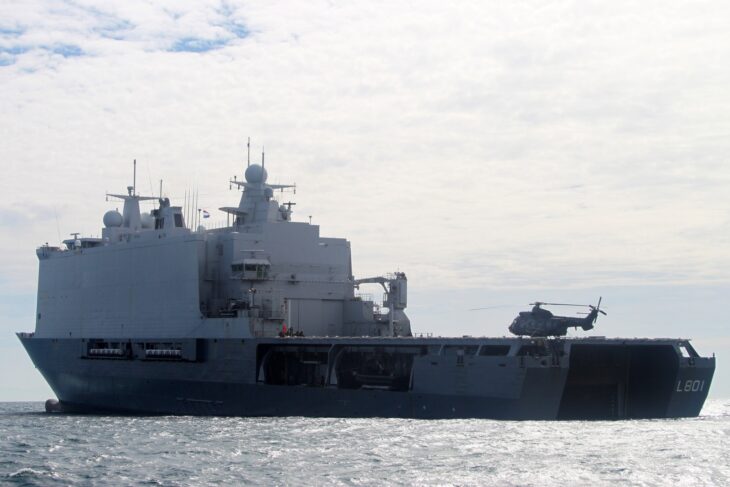

Rotterdam, commissioned in 1998, is 545 feet (166 m) long, displaces 12,750 metric tons and carries 595 marines. Its larger half-sister Johan de Witt, commissioned on November 30, 2007, is 579 feet (176.35 m) long, displaces 16,800 metric tons and carries 555 marines.
Both are landing platform docks: a flooded well deck at the stern launches landing craft, and a flight deck takes up to six NH90 or four CH-47F helicopters. They are how the Netherlands Marine Corps goes to war.
The program to replace them, along with the Holland-class patrol ships, is now underway. On July 7, 2026, the UK and the Netherlands agreed a £2.4 billion program for eight amphibious transport ships of about 15,000 tons and 525 feet (160 m), built in British yards to a Dutch design, four for each navy.
6. Den Helder (A834): The Newest Warship
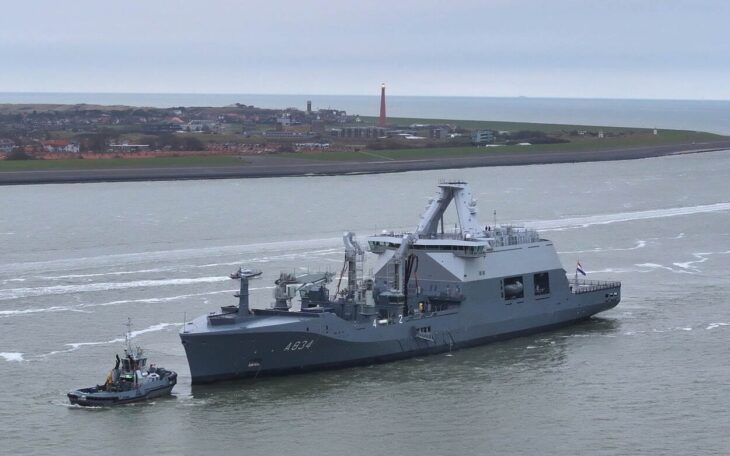

Den Helder was commissioned on October 1, 2025, as a combat support ship: a floating fuel station and warehouse that keeps frigates at sea longer. It is 589 feet (179.5 m) long, displaces about 20,000 metric tons and has surgical facilities aboard.
Unlike most supply ships, it can defend itself, with a 76 mm gun and a RAM missile launcher. It carries two NH90 helicopters and was due to become fully operational during 2026.
7. Holland Class: The Caribbean Patrol Ships
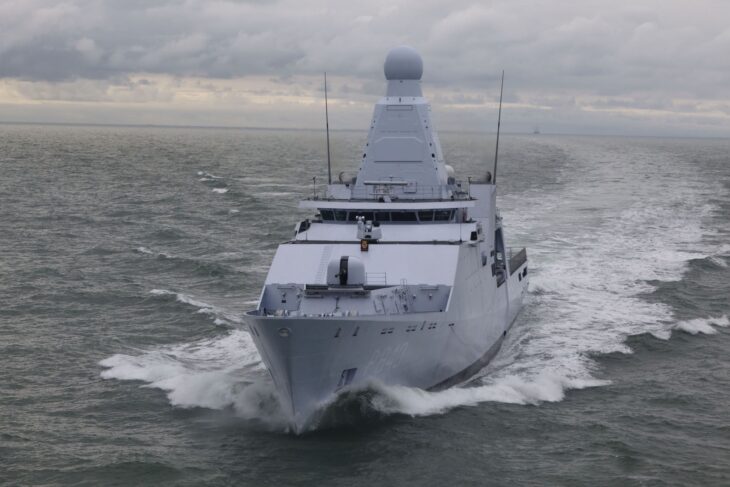

Holland, Zeeland, Friesland and Groningen entered service in 2012 and 2013. Each is 356 feet (108.4 m) long, displaces about 3,750 metric tons and makes 21.5 knots with a core crew of 54.
They are built for policing, not high-end war: a 76 mm gun, a 30 mm gun, two fast interceptor boats and a hangar for an NH90. One is assigned to the Dutch Caribbean Coast Guard, where their guns are suited to stopping fast drug-smuggling boats.
8. Alkmaar and Vlissingen Classes: The Mine Hunters
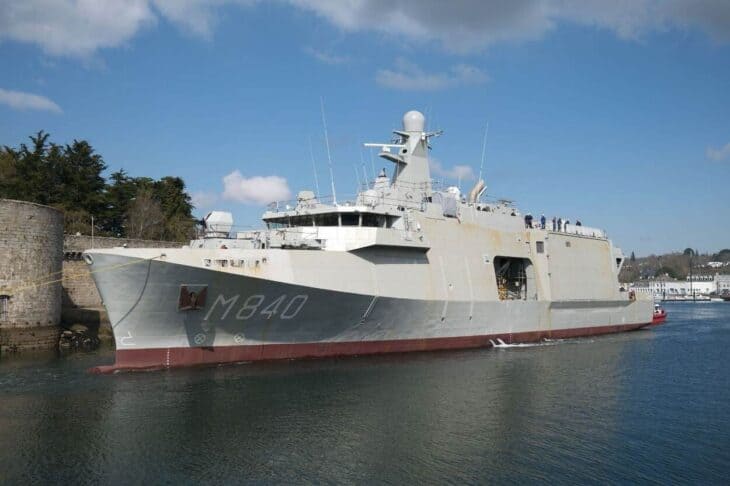

Three Alkmaar-class minehunters remain: Schiedam, Zierikzee and Willemstad, commissioned between 1986 and 1989. Each is 161 feet (49.1 m) long and displaces 510 metric tons.
Their replacement has arrived. Vlissingen, the first of six Dutch ships in a 12-ship program shared with Belgium, reached Den Helder on February 27, 2026. At 271 feet (82.6 m) and 2,800 metric tons, it is more than five times as heavy as the ships it replaces.
The difference is the drones. Instead of sailing into a minefield, Vlissingen launches two Inspector 125 uncrewed boats, three A-18 underwater vehicles and two Skeldar V-200 aerial drones. A fire in an electrical cabinet shortly before it berthed in Den Helder kept it alongside into the spring, and all 12 ships are due to be operational by 2030.
The Rest of the Fleet
Outside the ranking sit about 40 smaller vessels. The survey ships Snellius and Luymes chart the seabed, the logistic support ship Pelikaan doubles for emergency relief, Mercuur serves the submarines, and Van Kinsbergen and the schooner Urania train cadets.
Two Damen-built Multifunctional Support Ships are also on order, meant to sail alongside the air defense frigates with containerized missiles, loitering munitions and electronic warfare kit. The variety of hull types here is explained in our guide to types of navy ships.
Dutch Navy Helicopters
The navy’s aircraft are NH90s flown from De Kooy airfield near Den Helder: 19 in service, 11 of them NATO Frigate Helicopters for submarine hunting and 8 transport versions for the marines. One NFH crashed in the Caribbean near Aruba on July 19, 2020, killing two of its four crew.
Three more anti-submarine NH90s were ordered in 2025, with an option for two more. Air force Cougar helicopters fly the marines from the landing ships, and how these types compare is in our guide to types of navy helicopters.
The Netherlands Marine Corps
The Korps Mariniers, about 2,500 strong, was founded on December 10, 1665, during the Second Anglo-Dutch War, by Johan de Witt and Admiral Michiel de Ruyter. It is the second-oldest marine corps still active in the world.
It fields two Marine Combat Groups, a raiding squadron permanently stationed on Aruba, and the Maritime Special Operations Force, NLMARSOF. Germany’s naval infantry battalion, the Seebataillon, is being integrated into the corps.
A Navy Older Than the Dutch Republic
The navy dates its founding to a statute of admiralty issued on January 8, 1488, by Maximilian, King of the Romans, and his son Philip the Fair. In the 17th century the Dutch States Navy was one of the most powerful fleets in the world, led by admirals like Michiel de Ruyter and Maarten Tromp.
Its worst day came in World War II. At the Battle of the Java Sea on February 27, 1942, Rear Admiral Karel Doorman went down with his fleet and about 1,000 sailors, and the navy lost 20 ships in the Dutch East Indies campaign.
That history lives on in the ship names: Tromp, De Ruyter and Karel Doorman have each been carried by several Dutch warships. The prefix changes with the monarch, Zr.Ms. under a king, as now, and Hr.Ms. under a queen.
Where the Dutch Navy Is Based
Almost everything sails from Nieuwe Haven Naval Base in Den Helder, at the northern tip of North Holland, which is also home to the Royal Naval Institute where officers train. Amsterdam hosts a secondary base.
Overseas, the navy has a base at Willemstad on Curaçao and a support point at Pointe Blanche on Sint Maarten. The marines have barracks in Rotterdam, Doorn, Texel and Den Helder, plus Suffisant on Curaçao and Savaneta on Aruba.
For how this compares with Europe’s other big fleet, see our ranking of the Royal Navy, the British service the Dutch marines and amphibious ships work most closely with.
FAQ
Sources and references used for research and fact-checking.
- Wikipedia, Royal Netherlands Navy
- Wikipedia, List of active Royal Netherlands Navy ships
- Wikipedia, De Zeven Provinciën-class frigate
- The Defense Post, Dutch Warship Test-Fires Tomahawk Missile
- NL Times, Netherlands pulls Dutch warship Zr. Ms. Evertsen from Mediterranean
- Wikipedia, Walrus-class submarine
- Baird Maritime, Former Dutch Navy submarine Walrus towed to Amsterdam for recycling
- Wikipedia, Orka-class submarine
- Wikipedia, Karel Doorman-class frigate
- Defense News, Dutch say ASW frigate talks ongoing amid reports Belgium may quit project
- Wikipedia, HNLMS Karel Doorman (A833)
- Wikipedia, Rotterdam-class landing platform dock
- Wikipedia, HNLMS Johan de Witt
- gCaptain, UK, Netherlands launch $2.4 billion amphibious ship partnership
- Wikipedia, HNLMS Den Helder
- Curaçao Chronicle, Royal Netherlands Navy commissions new combat support ship Zr.Ms. Den Helder
- Wikipedia, Holland-class patrol vessel
- Wikipedia, Alkmaar-class minehunter
- Wikipedia, HNLMS Vlissingen
- The Defense Post, Netherlands Receives First rMCM Mine Countermeasure Vessel
- Wikipedia, Netherlands Marine Corps
Get the Newsletter
The latest aviation news and stories sent to your inbox.
About the Author

Tim is the owner and lead editor of AeroCorner since 2019, overseeing aviation content covering aircraft, airlines, airports, and the broader aviation industry. Through years of researching, writing, editing, and publishing aviation-focused content, he has developed extensive practical knowledge of commercial aviation and air travel. Based in Asia and a frequent traveler himself, Tim also brings firsthand passenger experience to AeroCorner’s coverage. Outside of publishing, he has also explored aviation firsthand through hands-on flight training in New Zealand.