

Table of Contents
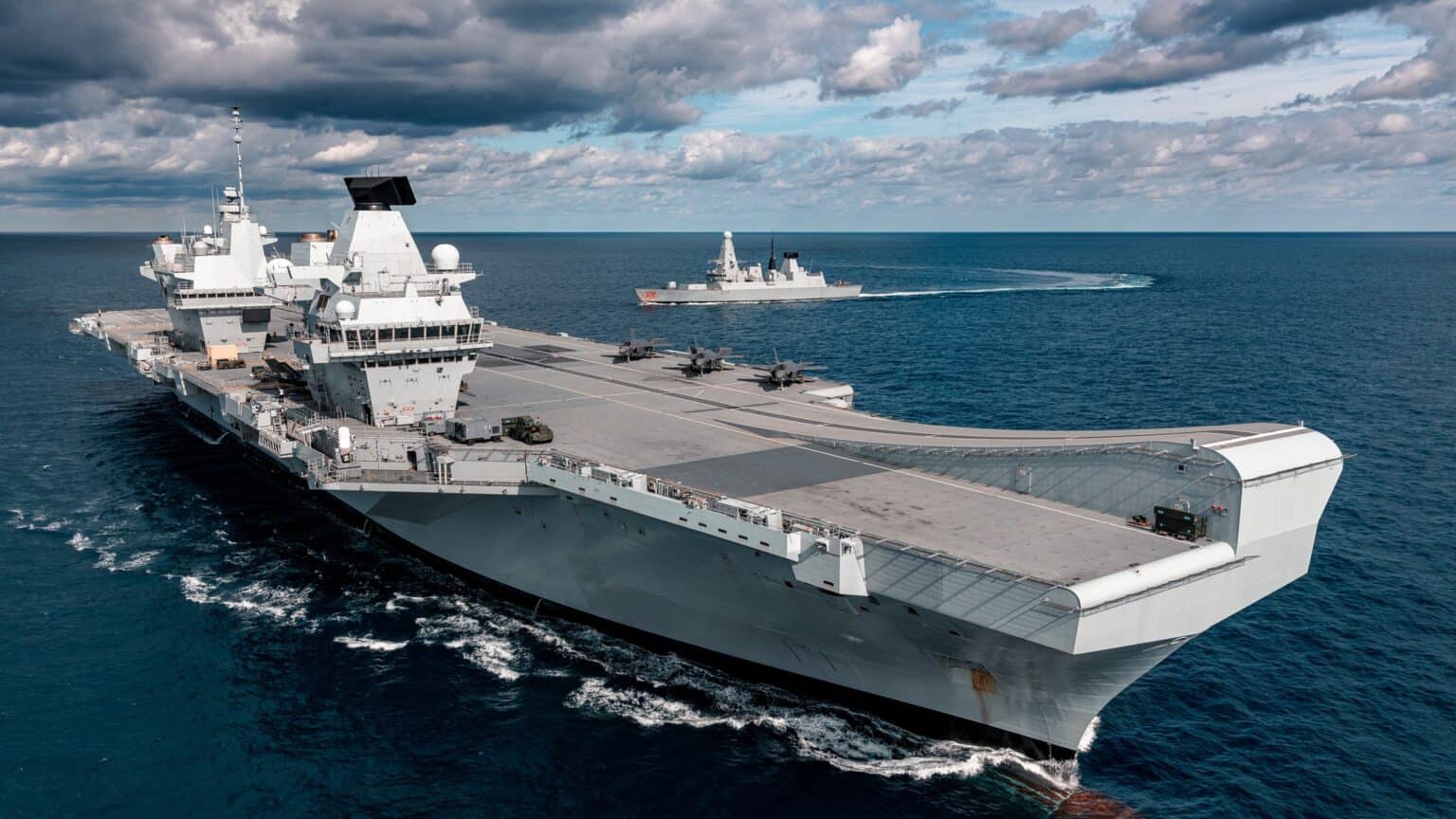
The most important ships in the Royal Navy are not its two aircraft carriers. They are the four Vanguard-class submarines that carry Britain’s nuclear deterrent, the only UK weapon that has been on patrol without a break since 1969.
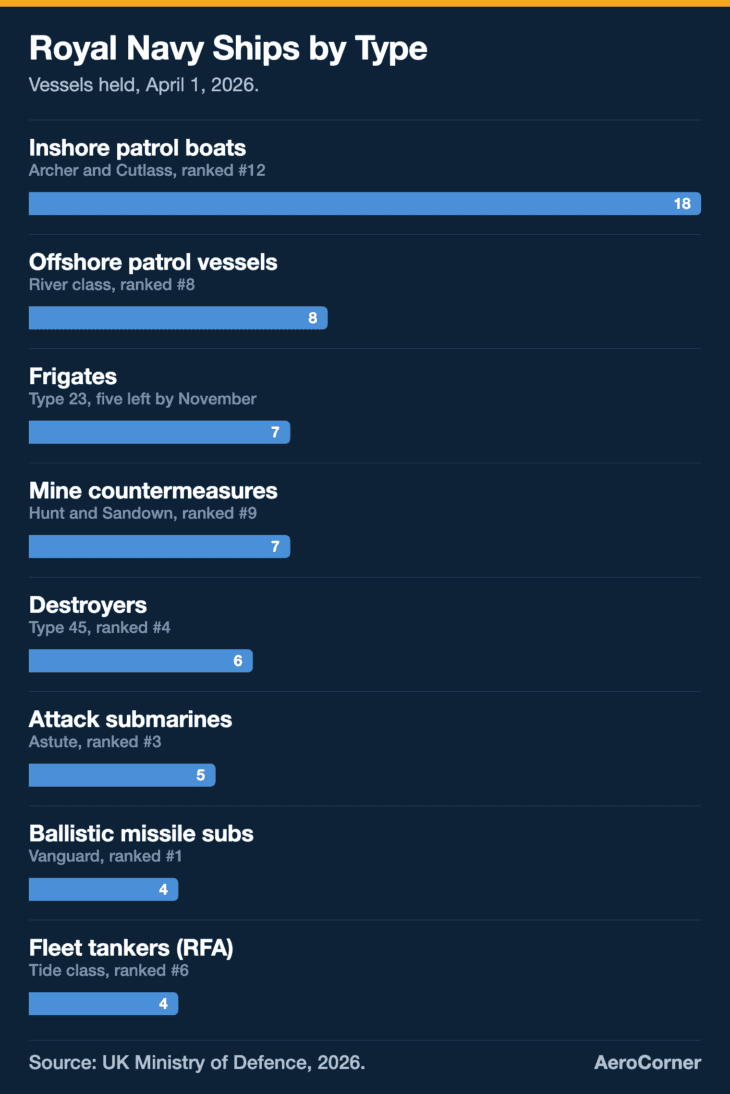
The Ministry of Defence counted 61 Royal Navy vessels on April 1, 2026, in its official statistics, UK Armed Forces Equipment and Formations 2026: 9 submarines and 52 surface ships. The Royal Fleet Auxiliary, the civilian-crewed supply fleet, added 12 more.
Three ships have gone since, and the frigate force now stands at five. This list ranks every class the Royal Navy and its auxiliary fleet sail by fighting value as of November 2026, then covers the aircraft, the ships on order and what has been retired.
| Rank | Class | Type | Ships, April 1, 2026 | November 2026 |
|---|---|---|---|---|
| 1 | Vanguard | Nuclear ballistic missile submarine | 4 | 4 |
| 2 | Queen Elizabeth | Aircraft carrier | 2 | 2 |
| 3 | Astute | Nuclear attack submarine | 5 | 5, a sixth on sea trials |
| 4 | Type 45 (Daring) | Air defense destroyer | 6 | 6 |
| 5 | Type 23 (Duke) | Anti-submarine frigate | 7 | 5 |
| 6 | Tide and Fort Victoria (RFA) | Tanker and supply ship | 5 | 5 |
| 7 | Bay (RFA) | Landing ship dock | 3 | 3 |
| 8 | River | Offshore patrol vessel | 8 | 8 |
| 9 | Hunt, Sandown and Stirling Castle | Mine countermeasures | 8 | 7 |
| 10 | Proteus (RFA) | Seabed surveillance ship | 1 | 1 |
| 11 | Scott, Protector and Magpie | Survey and ice patrol | 3 | 3 |
| 12 | Archer and Cutlass | Inshore patrol boat | 18 | 18 |
How this ranking works
Each class is ranked by the fighting value it adds in November 2026: what it can do in a war, how hard it would be to replace, and how many Britain has. Counts are the Ministry of Defence’s figures for April 1, 2026, the latest official snapshot, updated for ships retired since. Royal Fleet Auxiliary ships are included because the fleet cannot deploy without them. HMS Victory, a commissioned ceremonial ship, and the navy’s uncrewed and experimental boats are covered outside the ranking.
1. Vanguard Class: Four Submarines That Carry the Deterrent
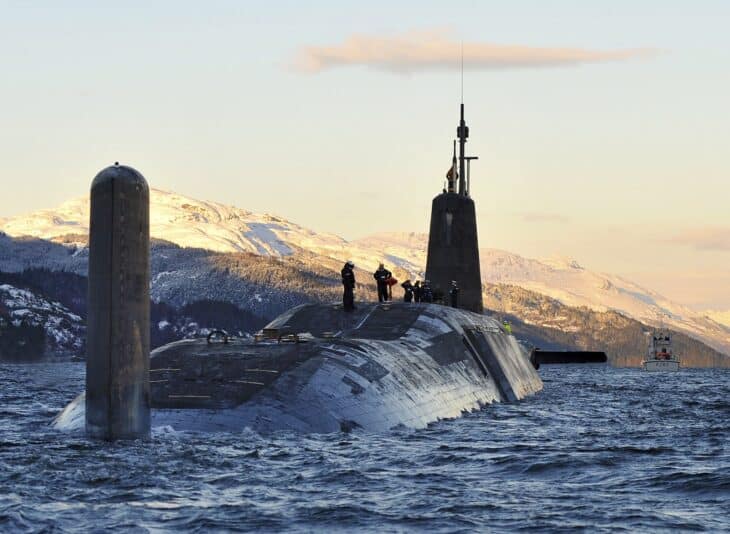

The four Vanguard-class boats, HMS Vanguard, Victorious, Vigilant and Vengeance, carry Britain’s Trident II D5 nuclear missiles. Each is 492 feet (150 m) long and displaces 15,900 metric tons submerged, and all four are based at HM Naval Base Clyde in Scotland.
At least one has been on patrol at all times since 1969, a mission called Operation Relentless that began with the older Resolution class and passed to the Vanguards in the 1990s. Each boat has 16 missile tubes, but only 8 have been loaded since the 2010 defense review.
They rank first because no other ship guarantees Britain’s survival as a nuclear power. The age shows: the boats were commissioned between 1993 and 1999, and after one refit overran, others sailed patrols of up to 205 days against a planned 99. The new Dreadnought class is due to start replacing them in the early 2030s.
2. Queen Elizabeth Class: Britain’s Two Aircraft Carriers
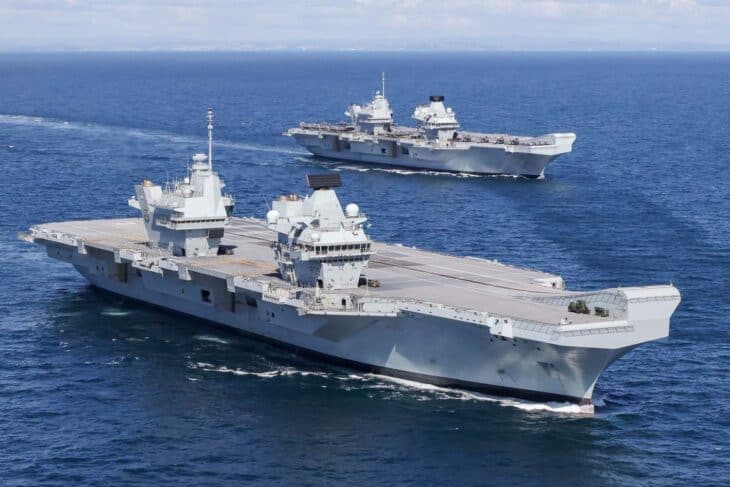

HMS Queen Elizabeth and HMS Prince of Wales are the largest warships Britain has ever built. Each is 932 feet (284 m) long and displaces 65,000 metric tons, according to the Royal Navy, and both are based in Portsmouth.
They fly the F-35B Lightning, a jump jet the Royal Navy shares with the Royal Air Force, from a ski-jump ramp rather than catapults. Prince of Wales took a carrier strike group to the Indo-Pacific in 2025 on Operation Highmast, an eight-month deployment.
They rank second, behind the submarines, because a carrier needs destroyers, frigates, a submarine and tankers to go to war, and Britain now struggles to supply all of them at once. Why the ships have no catapults, and what it would cost to add them, is in our guide to the Queen Elizabeth-class aircraft carrier.
3. Astute Class: The Hunter-Killer Submarines
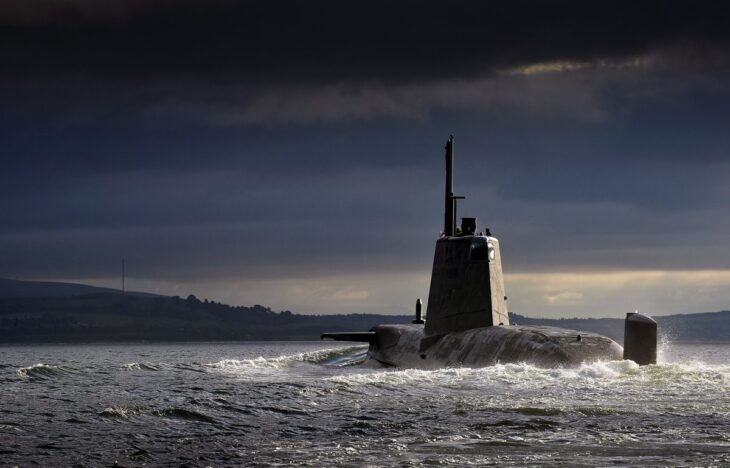
The Astute class are nuclear-powered attack submarines, built to hunt other submarines and ships and to fire Tomahawk cruise missiles at targets on land. Each is 318 feet (97 m) long, displaces 7,400 metric tons, and carries up to 38 Spearfish torpedoes and Tomahawks for its six torpedo tubes.
The Ministry of Defence counted five on April 1, 2026: Astute, Ambush, Artful, Audacious and Anson. The sixth, HMS Agamemnon, was commissioned by the King on September 22, 2025, and left the Barrow shipyard for her first sea trials in September 2026.
Their reactors are built to run for 25 years without refueling. The seventh and last boat, Achilles, is still under construction, and its expected service date has slipped to 2028 or early 2029. How the Astute compares in size with the world’s other boats is in our ranking of the largest submarines in the world.
4. Type 45 Destroyers: Six Air Defense Ships
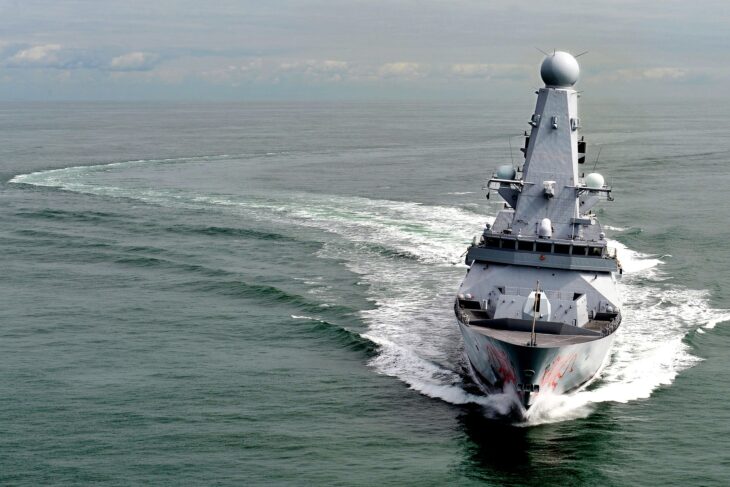

The six Type 45, or Daring-class, destroyers protect the fleet from aircraft and missiles: HMS Daring, Dauntless, Diamond, Dragon, Defender and Duncan. Each is 500 feet (152 m) long, can exceed 30 knots, and carries 48 Aster missiles in its Sea Viper system, guided by the SAMPSON radar.
They have now fired in combat. In the Red Sea, HMS Diamond shot down a suspected attack drone on December 15, 2023, and on April 24, 2024, it used one Aster missile to intercept a ballistic missile fired from Houthi-held Yemen, the first combat ballistic-missile kill for Sea Viper.
Their weak point was propulsion: a £160 million Power Improvement Project, awarded in 2018, replaces their diesel generators after repeated power failures. All six were in service on April 1, 2026, and the Ministry of Defence began studying in 2026 whether to keep them beyond their planned retirement in the mid-2030s.
5. Type 23 Frigates: Down to Five
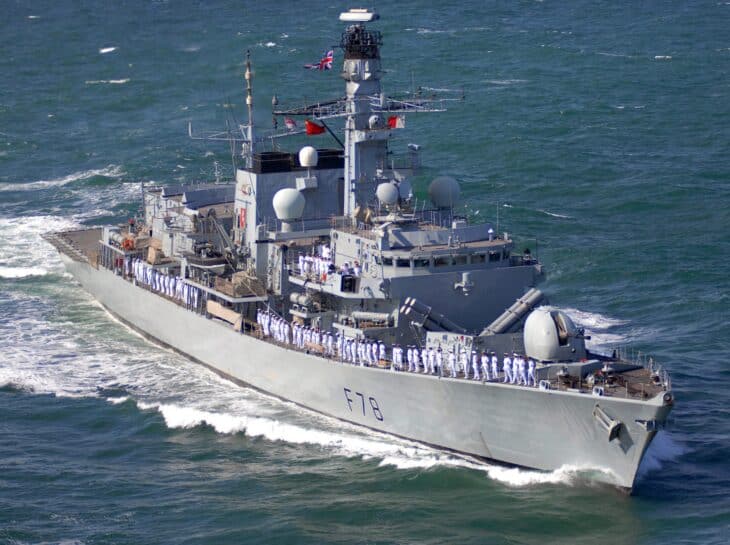

The Type 23, or Duke-class, frigates are the navy’s submarine hunters, towing long sonar arrays to listen for enemy submarines. Each is 436 feet (133 m) long and displaces 4,900 metric tons, and 16 were built.
The Ministry of Defence counted seven on April 1, 2026, after four frigates left service in the previous 12 months. HMS Iron Duke and HMS Richmond followed in July 2026, even though their life-extension refits had cost £103 million and £56 million, leaving HMS Kent, Portland, St Albans, Sutherland and Somerset.
Five frigates for an island nation
Britain built 16 Type 23 frigates. With Iron Duke and Richmond retired in July 2026, five remain, all based at Devonport, and HMS Kent was in refit. The navy’s own replacements, the Type 26 and Type 31 classes, are not expected to start entering service before 2028.
They rank below the destroyers only because there are so few left. Their anti-submarine role passes to the Type 26 and their general duties to the Type 31.
6. Tide Class and RFA Fort Victoria: The Tankers and Supply Ship
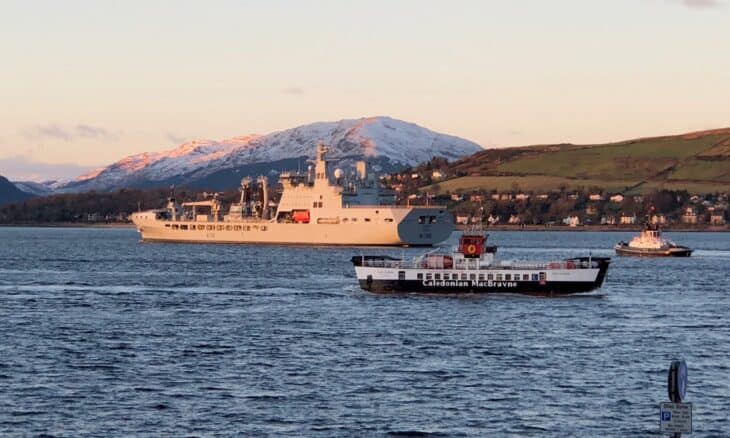

A carrier group burns through fuel and stores, and the Royal Fleet Auxiliary brings them out to sea. Its four Tide-class tankers, RFA Tidespring, Tiderace, Tidesurge and Tideforce, entered service from 2017 and displace 39,000 metric tons each.
RFA Fort Victoria is the only ship that can resupply the fleet with ammunition and food as well as fuel. Placed in uncrewed reserve in 2024, it entered a refit in September 2026 to bridge the gap until three new Fleet Solid Support ships arrive from 2031.
These ships rank sixth because without them the carriers cannot go far. Their limit is crews: the Ministry of Defence counted 9 of the 12 auxiliary ships as in service on April 1, 2026.
7. Bay Class: Britain’s Last Landing Ships
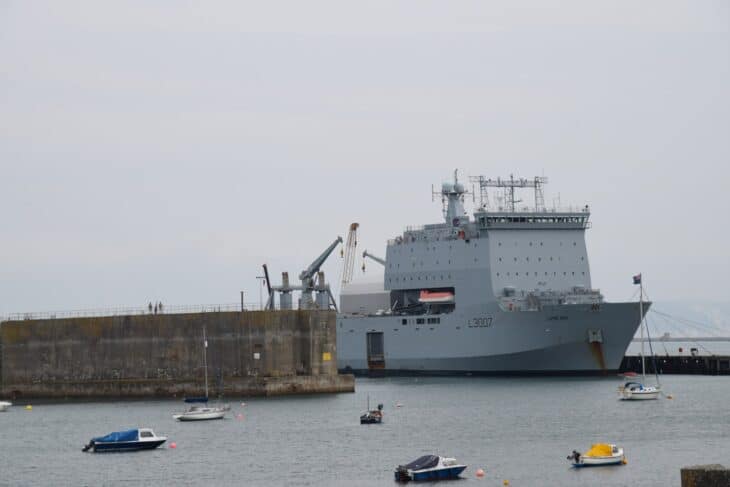

RFA Lyme Bay, Mounts Bay and Cardigan Bay are dock landing ships that carry Royal Marines, vehicles and landing craft. Each displaces 16,160 metric tons.
Since the Royal Navy’s own amphibious assault ships, HMS Albion and HMS Bulwark, were retired in 2025, the three Bays have led Britain’s amphibious lift. Lyme Bay was due in 2026 to take on a second job, commanding the navy’s uncrewed minehunting boats.
The replacement plan has also changed. The 2026 Defence Investment Plan cancelled the planned Multi-Role Strike Ships and returned to a joint British-Dutch amphibious ship, likely in the 2030s.
8. River Class: Eight Offshore Patrol Vessels
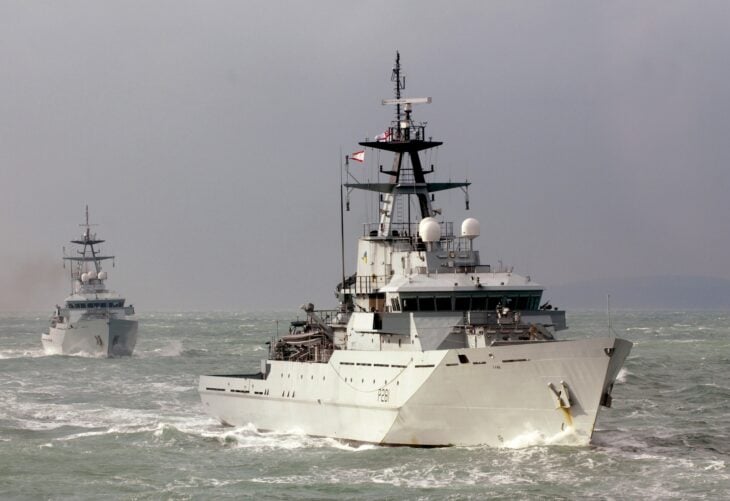

The River class patrols fisheries, borders and Britain’s overseas territories. The three Batch 1 ships, HMS Tyne, Severn and Mersey, work in home waters, while the five larger Batch 2 ships are 297 feet (90.5 m) long, displace about 2,000 metric tons and have a flight deck that can take a Merlin helicopter.
Two of them are as far from home as the navy gets. HMS Tamar and HMS Spey have been deployed to the Indo-Pacific since September 2021, while HMS Medway is the Falkland Islands patrol ship.
They are the navy’s most deployed ships, but lightly armed. That is why eight of them rank below the three Bay-class ships.
9. Hunt and Sandown Minehunters, and HMS Stirling Castle
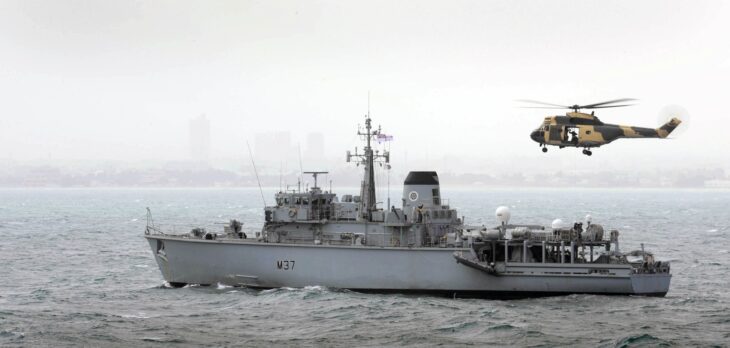

The Ministry of Defence counted seven mine countermeasures vessels on April 1, 2026. HMS Chiddingfold, a Hunt-class ship that spent much of the past two decades in Bahrain, retired in July 2026, leaving five Hunts and one Sandown-class ship, HMS Bangor.
Their replacement is already in the water. HMS Stirling Castle, a 6,000-ton ship built in Romania and moved from the Royal Fleet Auxiliary to the Royal Navy in the year to April 2026, is a mothership for uncrewed boats that find and destroy mines with no sailors in the minefield.
The government has committed £1.1 billion to mine-hunting capability, and Chiddingfold’s role is expected to pass to the uncrewed systems.
10. RFA Proteus: The Ship That Guards the Seabed
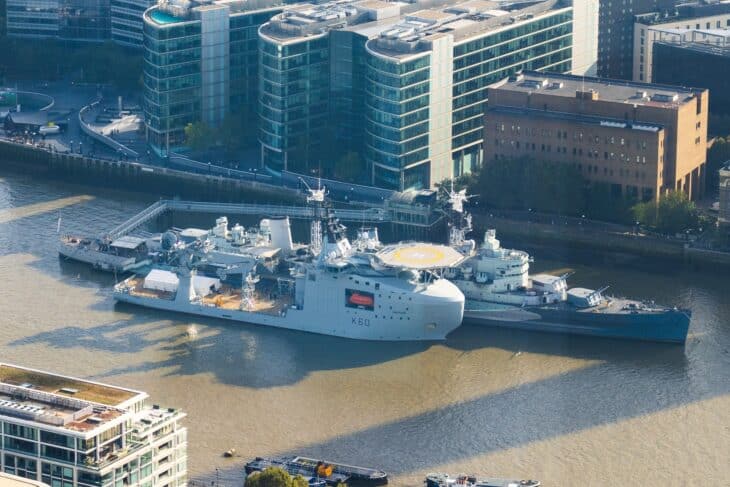

RFA Proteus is a 6,000-ton former commercial vessel bought for about £70 million and in service since October 2023. It protects undersea pipelines and internet cables, carrying uncrewed underwater vehicles to watch the seabed.
The 2026 Defence Investment Plan sets aside £330 million over four years for undersea infrastructure protection, including better equipment for Proteus. Plans for a second ship of the type were not mentioned.
11. HMS Scott, HMS Protector and HMS Magpie: Survey and Ice Patrol


HMS Scott is a 13,500-ton ocean survey ship. HMS Protector is the navy’s icebreaker, built in Norway, which spends the southern summer in Antarctica, and HMS Magpie is a small survey launch.
The Ministry of Defence counted two survey ships and one ice patrol ship on April 1, 2026. Protector was reported inactive in 2026 because of technical problems.
12. Archer and Cutlass Classes: 18 Inshore Patrol Boats
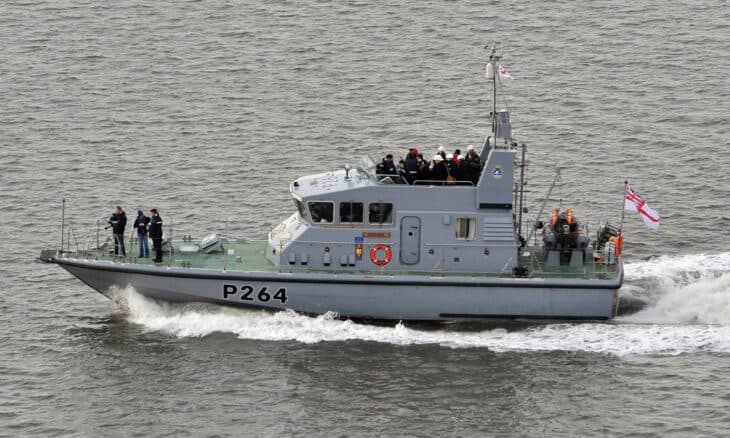

The largest group in the fleet is also the smallest ships. Sixteen 54-ton Archer-class boats, most dating from the 1980s, train university students and guard the nuclear submarines at Faslane, and two 35-ton Cutlass-class boats form the Gibraltar Squadron.
All 18 were in service on April 1, 2026. They rank last because none could fight a warship, but they make the Royal Navy’s ship count look much larger than its fighting fleet.
Does the Royal Navy really have about 70 ships?
Only on paper. The Ministry of Defence counted 61 Royal Navy vessels and 12 Royal Fleet Auxiliary ships on April 1, 2026, but 18 of those are inshore patrol boats, and three ships have retired since. The fighting core is far smaller: 2 aircraft carriers, 6 destroyers and 5 frigates, the 13 major surface warships left in November 2026, plus 9 nuclear submarines.
The Aircraft of the Royal Navy
The Fleet Air Arm, the navy’s air branch, had 19 squadrons on April 1, 2026. Its jets are the 47 F-35Bs shared with the Royal Air Force, which fly from the carriers.
Its helicopters do most of the work. The Ministry of Defence counted 30 Merlin HM2 submarine hunters, 23 in the forward fleet; 29 Merlin Mk3 and Mk4 transport helicopters, flown by the Commando Helicopter Force for the Royal Marines; and 28 Wildcat HMA2s, which fly from destroyers and frigates. More on what each does is in our guide to types of navy helicopters.
On Order: Type 26 and Type 31 Frigates, Dreadnought and More
Britain is building 13 new frigates. Eight Type 26 anti-submarine frigates, led by HMS Glasgow, are due to enter service between 2028 and 2035, and five Type 31 general-purpose frigates are planned for the early 2030s. The first Type 31, HMS Venturer, entered the water for the first time in June 2025.
Below the surface, the Dreadnought class is due to replace the Vanguards in the early 2030s, the last Astute is expected in 2028 or early 2029, and the joint British, Australian and American SSN-AUKUS submarine is meant to replace the Astutes from the late 2030s.
Three Fleet Solid Support ships, ordered in a £1.6 billion contract in January 2023, are due from 2031 to replace Fort Victoria.
What the Royal Navy Has Retired Since 2025
HMS Albion and HMS Bulwark, the navy’s two amphibious assault ships, were retired in 2025, about a decade earlier than planned, under cuts announced by Defence Secretary John Healey in November 2024. Neither had been expected to sail again. In the 12 months to April 2026, four frigates also decommissioned, including HMS Lancaster in December 2025.
RFA Argus, the casualty receiving ship and the last ship in service to have sailed in the 1982 Falklands War, was retired in February 2026 after being judged unsafe to sail. Iron Duke, Richmond and Chiddingfold followed in July.
The result is a smaller navy than Britain has had in modern times. Where it now sits against other fleets is in our ranking of the largest navies in the world.
HMS Victory: The Oldest Ship Still in Commission
One more ship sits outside the ranking. HMS Victory was commissioned in 1778 and is still a commissioned Royal Navy ship, serving as the flagship of the First Sea Lord at Portsmouth.
FAQ
Sources and references used for research and fact-checking.
- Ministry of Defence, UK armed forces equipment and formations 2026
- Ministry of Defence, UK armed forces equipment and formations 2026: supplementary tables
- The Maritime Executive, Royal Navy retires aging ships due to high maintenance costs
- Wikipedia, List of active Royal Navy ships
- Wikipedia, Royal Fleet Auxiliary
- Naval News, Royal Navy's 6th Astute-class SSN HMS Agamemnon begins sea trials
- Wikipedia, Astute-class submarine
- Wikipedia, Vanguard-class submarine
- Forces News, Royal Navy's Submarine Service marks 50 years of nuclear deterrence
- Wikipedia, Type 45 destroyer
- Wikipedia, Type 23 frigate
- Navy Lookout, HMS Richmond to be decommissioned this year
- Wikipedia, River-class patrol vessel
- MercoPress, Falklands: end of active service for RFA Argus
- Forces News, HMS Albion and Bulwark to be axed in Healey's cost-cutting drive
- Naval News, First Type 31 frigate HMS Venturer takes to the water
- AeroCorner, Queen Elizabeth-class aircraft carrier
Get the Newsletter
The latest aviation news and stories sent to your inbox.
About the Author

Tim is the owner and lead editor of AeroCorner since 2019, overseeing aviation content covering aircraft, airlines, airports, and the broader aviation industry. Through years of researching, writing, editing, and publishing aviation-focused content, he has developed extensive practical knowledge of commercial aviation and air travel. Based in Asia and a frequent traveler himself, Tim also brings firsthand passenger experience to AeroCorner’s coverage. Outside of publishing, he has also explored aviation firsthand through hands-on flight training in New Zealand.