

Table of Contents
Pick the Space Force if you want a technical job in satellites, intelligence or cyber, you would rather work from a home base than deploy overseas, and you can wait for one of very few slots.
Pick the Air Force if you want to fly, want a far wider choice of jobs, or want the Guard and Reserve as options. The pay is identical: both use the same table.
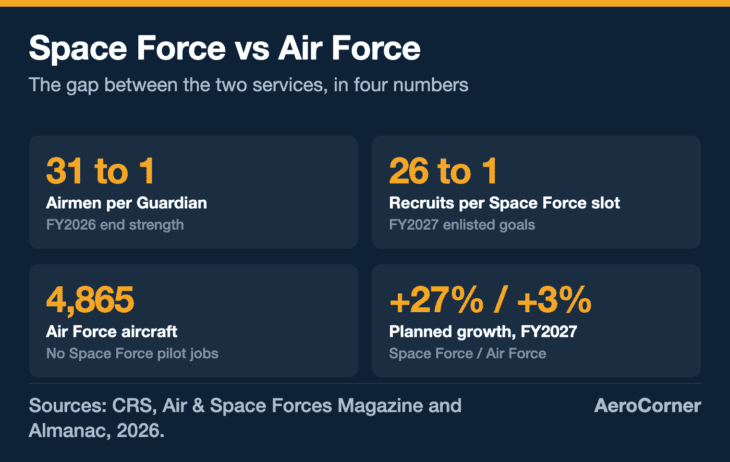
The decisive number is size. The Air Force was authorized about 31 Airmen for every Guardian in fiscal 2026, and its 2027 recruiting goal is roughly 26 times the Space Force’s.
This comparison covers size, getting in, jobs, pay, training, fitness, deployments, part-time service and flying, as of November 2026. Every number comes from the services’ own sites, the Congressional Research Service and Air and Space Forces Magazine. If you are also weighing other branches, our Air Force vs Army comparison uses the same method.
| Criterion | Space Force | Air Force | Edge |
|---|---|---|---|
| Active-duty end strength, FY2026 | 10,400 Guardians | 321,500 Airmen | Air Force |
| Enlisted recruiting goal, FY2027 | 1,402 | 36,300 | Air Force |
| Enlisted jobs | 7 listed on spaceforce.com | 8 career categories, from healthcare to aviation | Air Force |
| Basic pay, 2026 | Same DoD table: E-1 $2,407.20 a month | Same DoD table: E-1 $2,407.20 a month | Even |
| Basic training | The same 7.5-week BMT, plus 21 hours of Space Force material | 7.5-week BMT | Even |
| Fitness test | Twice a year; the 2-mile run is required at least once | Twice a year; shuttle run allowed on both tests | Air Force |
| Deployments | Most Guardians “deployed in place” at home bases | 24-month cycle; most Airmen deploy downrange | Space Force |
| Part-time service | Pilot program: first 250 part-time Guardians, Oct. 2026 | Air National Guard and Air Force Reserve | Air Force |
| Flying | No pilot or aircrew career listed | 4,865 aircraft (Sept. 30, 2025) | Air Force |
| Planned growth, FY2026 to FY2027 | +27% (10,400 to 13,200) | +3% (321,500 to 330,400) | Space Force |
How we compared
End strengths are the fiscal 2026 authorized figures (Space Force 10,400 in the FY2026 NDAA; Air Force 321,500 as reported by Air and Space Forces Magazine) and the fiscal 2027 budget plan (13,200 and 330,400). Airmen per Guardian is 321,500 divided by 10,400, which is 30.9. Recruits per slot is the FY2027 enlisted goals, 36,300 divided by 1,402, which is 25.9; the Space Force share of the two services’ combined goal is 1,402 of 37,702, or 3.7%. Pay is 2026 basic pay only, before housing and food allowances. All figures are as of November 2026, and every job, bonus and assignment is subject to the needs of the service.
How they are related
The Space Force is the sixth branch of the armed forces, created by the fiscal 2020 National Defense Authorization Act on Dec. 20, 2019. It is a separate uniformed service, but it sits inside the Department of the Air Force.
That means both services answer to the same civilian boss, the Secretary of the Air Force. The Chief of Space Operations, the Space Force’s top officer, reports to that secretary, and the service’s headquarters is at the Pentagon.
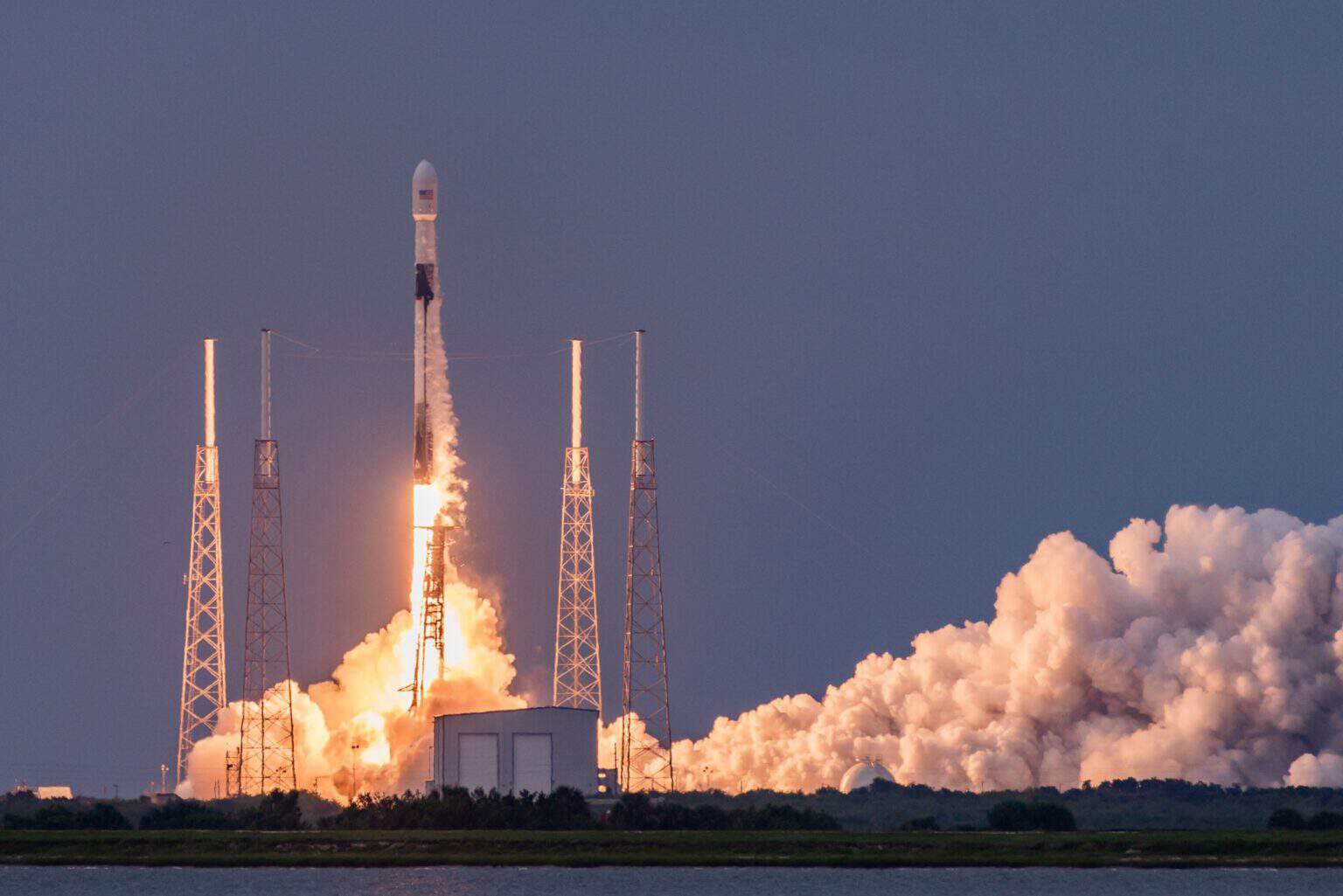
The split in missions is simple. By law the Space Force exists to “provide freedom of operation for the United States in, from, and to space”: satellite communications, navigation and timing, missile warning, launch ranges and tracking what is in orbit. The Air Force keeps the air, from fighters to tankers and airlifters like the C-17 Globemaster III.
The takeaway: one department, two services, two different domains.
Size and how hard it is to get in
The fiscal 2026 defense bill authorized 10,400 active-duty Guardians. The Air Force’s active-duty end strength was 321,500 Airmen, so it is about 31 times larger.
Recruiting goals show the same gap. For fiscal 2027 the Air Force wants 36,300 new enlisted Airmen, its largest goal in nearly 25 years. The Space Force wants 1,402 enlisted Guardians, the largest target in its history but still fewer than 4 in every 100 recruits the two services take in.
Demand for those few slots is high. The Space Force set a goal of 730 recruits for fiscal 2026 and had reached 125% of it after five months, and it has met or beaten its goal every year since 2019.
“We have more individuals who want to commission and/or enlist into the Space Force than we can take in right now.”
John Bentivegna, Chief Master Sergeant of the Space Force, Senate Armed Services personnel subcommittee, Feb. 11, 2026 (Air and Space Forces Magazine)
Edge: Air Force. With about 26 Air Force enlisted slots for every Space Force one in 2027, getting in and getting the job you want is far easier.
31 to 1
For every Guardian the Space Force was authorized in fiscal 2026, the Air Force had about 31 Airmen: 321,500 against 10,400. Even after the planned 2027 growth (13,200 against 330,400), the ratio is still 25 to 1.
Jobs
Spaceforce.com lists seven enlisted careers: Space Systems Operator, Cyber Operations, and five intelligence jobs (Signals Intelligence, All Source, Cryptologic, Targeting and Geospatial Intelligence Analyst).
It lists ten officer careers, including space operations, intelligence, cyberspace effects, acquisition and five kinds of engineer. There is no medical, maintenance or aircrew career on the list.
The Air Force’s career finder spans eight categories: healthcare, maintenance and repair, science and technology, aviation and flight, logistics and administration, cyber and intelligence, special warfare and combat support, and law and order. If you are not sure what you want to do, that breadth matters.
Edge: Air Force. The Space Force is the better fit only if your target job is already one of its seven.
Pay and benefits
There is no pay difference. The 2026 basic pay tables, raised 3.8% on Jan. 1, 2026, apply equally to the Army, Navy, Air Force, Marine Corps, Space Force and Coast Guard. An E-1 with more than four months of service earns $2,407.20 a month in either uniform.
Benefits match too. Spaceforce.com lists 30 days of paid leave a year, up to 100% tuition assistance through the Air Force Tuition Assistance Program, the Montgomery or Post-9/11 GI Bill, medical and dental care, and the Blended Retirement System with Thrift Savings Plan matching.
Edge: Even. Same pay table, same core benefits.
Basic training
Every enlisted Airman starts with 7.5 weeks of Basic Military Training. Enlisted Guardians go through the same BMT as Airmen, plus Space Force material that includes 21 hours of instruction on emotional intelligence, Space Force structure and senior-leader briefings on doctrine.
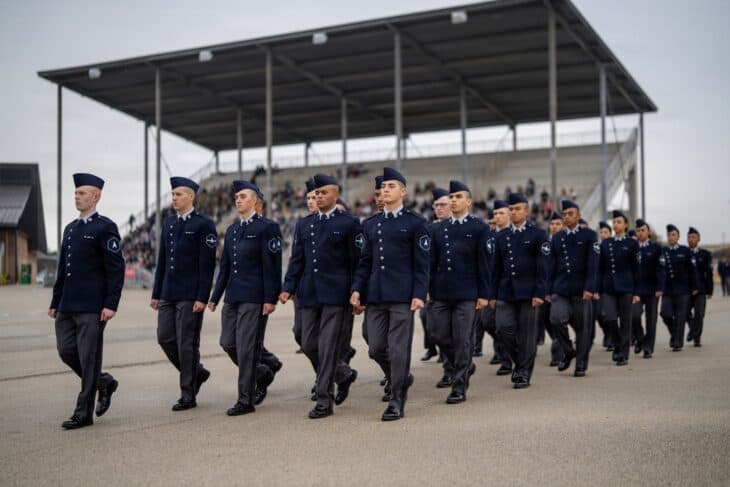

College graduates can commission through Officer Training School in either service; airforce.com lists it as an 8.5-week program. As of November 2026, spaceforce.com still sends enlisted Guardians through the shared BMT.
Edge: Even. You will march next to the other service’s recruits either way.
Fitness test
Both services announced revised tests on Jan. 6, 2026, and both now test twice a year with the same exercises: a cardio event, pushups or hand-release pushups, and sit-ups, reverse crunches or a plank.


The difference is the run. Guardians must do the 2-mile run on at least one of their two tests. Airmen can swap in the High Aerobic Multi-Shuttle Run, back-and-forth sprints between two points about 66 feet (20 m) apart, on both.
The Space Force measures waist-to-height ratio but does not score it. Its test totals 80 points, and 72 or more counts as “Fit to Fight.”
Edge: Air Force. If distance running is your weak spot, the Air Force lets you avoid the 2-mile run entirely.
Deployments and daily life
The Air Force runs its units through a 24-month cycle of four six-month phases: reset, prepare, ready and available to commit. Most Airmen in that cycle deploy downrange.
In 2025 the Space Force set out an eight-month cycle: one month of preparation, two of readiness and five committed to operations. Most Guardians do their mission “deployed in place” at home bases in the United States rather than shipping out.
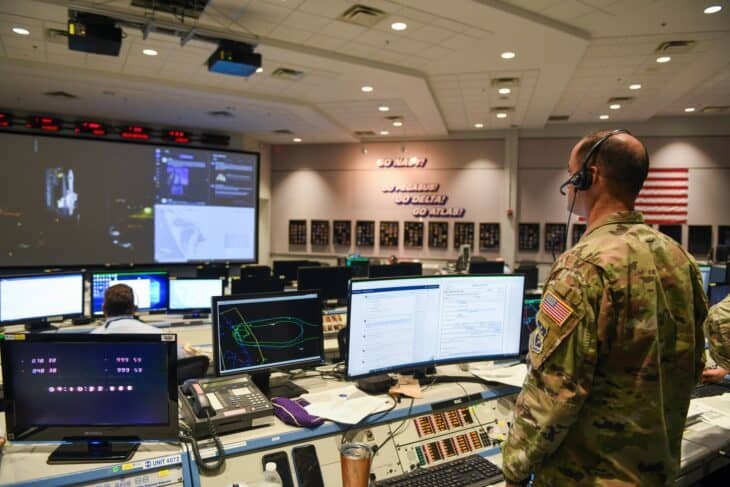

The Space Force’s training command sits at Patrick Space Force Base in Florida, its combat forces command at Peterson Space Force Base in Colorado, and its acquisition command at Los Angeles Air Force Base in California. The Air Force’s bases are far more spread out; see our list of the largest Air Force bases in the US.
Edge: Space Force. If you want to serve without long overseas deployments, its “deployed in place” model is the clearest difference between the two.
Part-time service
The Air Force has a full Air National Guard and Air Force Reserve. The Space Force has neither; it is building a single pool where Guardians can switch between full-time and part-time.
The first 250 part-time Guardians, all former Air National Guard and Air Force Reserve members already in space jobs, finished transferring on Oct. 1, 2026. Part-timers serve at least 36 days a year and must recompete for the status every 36 months.
The service says current active-duty Guardians will be able to apply for part-time status, but it has not said when. A civilian walking into a recruiting office today cannot sign up as a part-time Guardian.
Edge: Air Force. If you want to serve part-time while keeping a civilian career, the Guard and Reserve are open now.
Flying
This is the one criterion with no contest. The Air Force had 4,865 aircraft on Sept. 30, 2025: 3,634 in the active force, 936 in the Air National Guard and 295 in the Reserve. That is more than a third of the aircraft the US military has.
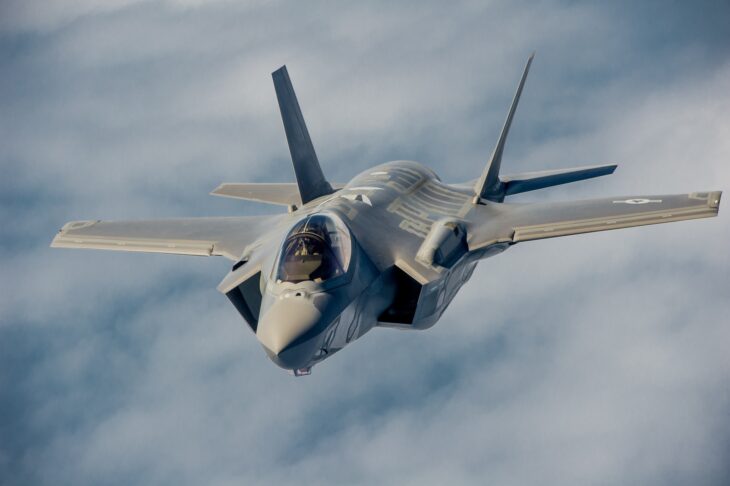

None of the Space Force’s 17 listed enlisted and officer careers is a pilot or aircrew job. If flying is the goal, our guide to which military branch is best for pilots covers the routes in every service.
Edge: Air Force. It is the only one of the two that trains pilots.
Growth and the next few years
The Space Force is growing much faster. Its fiscal 2027 budget plan adds 2,800 Guardians, a 27% jump to 13,200, while the Air Force plans to grow about 3%, to 330,400.
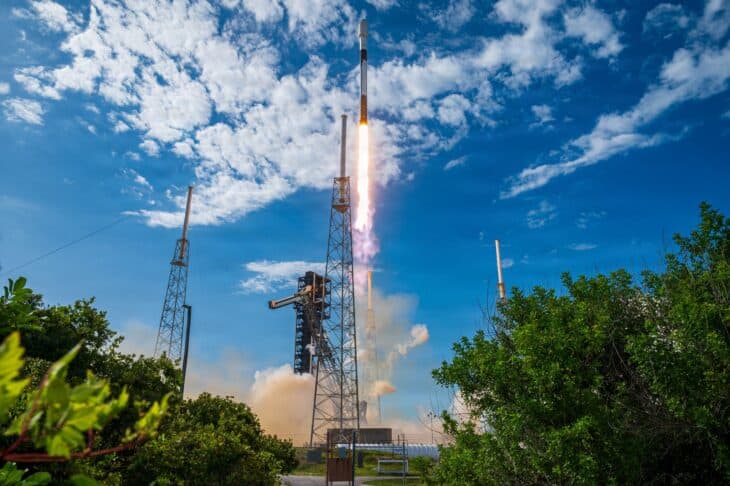

The money is growing faster still. Congress enacted $31.9 billion for the Space Force in fiscal 2026, and the 2027 request is $71.3 billion, 123% more. Leaders say the force could double in size over the next decade.
It also takes people from other services. The fiscal 2027 interservice transfer window, open to active-duty Army, Navy, Air Force and Marine Corps members, ran from Sept. 15, 2026, with selections announced from January 2027 and a four-year commitment.
Edge: Space Force. A service growing 27% in one year needs people to fill new positions; whether that speeds up any one Guardian’s career is subject to the needs of the service.
Who should pick which
| If you… | Pick | Because |
|---|---|---|
| Want to fly | Air Force | It flies 4,865 aircraft; the Space Force lists no pilot job |
| Want a satellite, intelligence or cyber job | Space Force | All seven of its enlisted careers are in those fields |
| Want to avoid long overseas deployments | Space Force | Most Guardians are “deployed in place” at home bases |
| Are unsure what job you want | Air Force | Eight career categories against seven jobs |
| Want to serve part-time | Air Force | The Guard and Reserve are open; part-time Guardian is a pilot program |
| Need to ship soon | Air Force | About 26 enlisted slots for every Space Force slot in 2027 |
| Hate distance running | Air Force | The shuttle run can replace the 2-mile run on both tests |
One practical point: the two are not either-or forever. The Space Force has taken Airmen in through transfers, and the 2027 window was open to active-duty members of the Army, Navy, Air Force and Marine Corps, so starting in the Air Force in a space, cyber or intelligence job keeps the door open.
Compare the Air Force with the sea service in our Navy vs Air Force breakdown.
Myth: join the Space Force and you go to space
Only a handful of Guardians have left the ground. Col. Nick Hague became the first Guardian launched into orbit on Sept. 28, 2024, commanding NASA’s SpaceX Crew-9 mission; Mike Hopkins had transferred from the Air Force while already aboard the space station in December 2020. The vast majority do the mission from Earth, most of them deployed in place at bases in the United States.
FAQ
Sources and references used for research and fact-checking.
- Congressional Research Service, Defense Primer: U.S. Space Force (IF12610)
- Air and Space Forces Magazine, Air Force and Space Force Shooting for Historic Recruiting Goals in 2027
- Air and Space Forces Magazine, Space Force, Aiming to Double in Size, Blows Past Recruiting Goal
- spaceforce.com, Space Force Careers
- spaceforce.com, Guardian Benefits
- airforce.com, Military Training
- airforce.com, Careers
- Military.com, 2026 Military Pay Charts
- Air and Space Forces Magazine, Aircraft Total Active Inventory (TAI), 2026 USAF and USSF Almanac
- Task and Purpose, Air Force and Space Force fitness tests 2026
- Air and Space Forces Magazine, Space Force's New PT Test: What Guardians Need to Know
- Air and Space Forces Magazine, How the Air Force and Space Force generate forces
- Federal News Network, Space Force finishes transferring in first 250 part-time guardians
- Task and Purpose, Space Force wants several hundred troops from other branches to transfer into its ranks
- Task and Purpose, First Space Force guardian launched into space
Get the Newsletter
The latest aviation news and stories sent to your inbox.
About the Author

Tim is the owner and lead editor of AeroCorner since 2019, overseeing aviation content covering aircraft, airlines, airports, and the broader aviation industry. Through years of researching, writing, editing, and publishing aviation-focused content, he has developed extensive practical knowledge of commercial aviation and air travel. Based in Asia and a frequent traveler himself, Tim also brings firsthand passenger experience to AeroCorner’s coverage. Outside of publishing, he has also explored aviation firsthand through hands-on flight training in New Zealand.