

Table of Contents
Pick the Coast Guard if you want to save lives and enforce the law close to home, with shorter deployments and an 8-week boot camp. Pick the Navy if you want the widest choice of jobs and aircraft, a paycheck funded by the Defense Department, and a career built around warships.
Basic pay does not decide it. Both services are paid from the same uniformed services table, so an E-4 with more than two years of service earns $3,303.00 a month in 2026 in either uniform.
This comparison uses official figures as of November 2026: the 2026 pay schedule, federal law, both services’ recruiting pages, the Congressional Research Service and the GAO. If you are weighing a third service, our Navy vs Air Force comparison covers the next most common choice.
| Criterion | Coast Guard | Navy | Edge |
|---|---|---|---|
| Basic pay, E-4 over 2 years (2026) | $3,303.00 a month | $3,303.00 a month | Even |
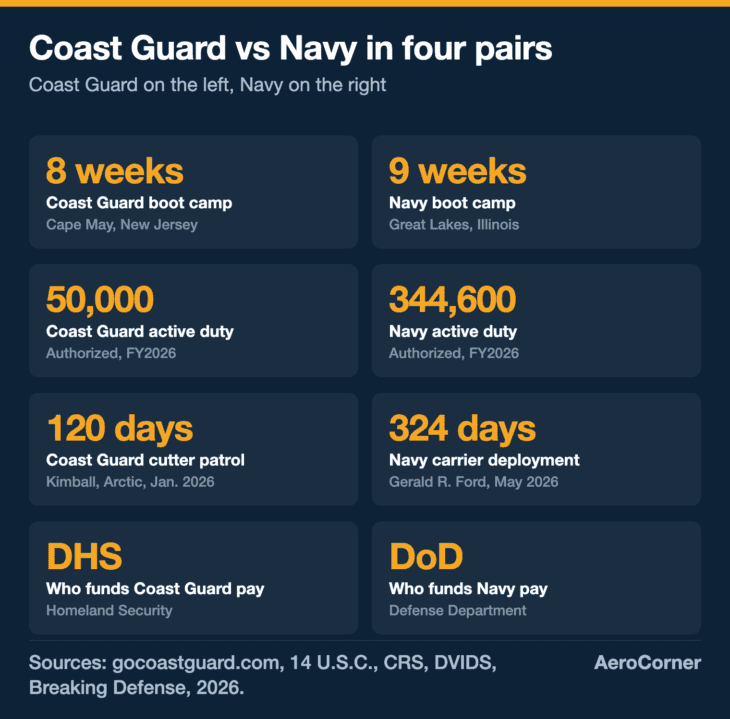
| Who funds your paycheck | Homeland Security; missed a payday on Jan. 15, 2019 | Defense Department | Navy |
| Enlistment age | 17 to 41 | 17 to 41 | Even |
| Minimum AFQT score | 32, with a diploma or equivalent | 31, or 50 with no diploma | Navy |
| Boot camp | 8 weeks, Cape May, New Jersey | About 9 weeks, Great Lakes, Illinois | Coast Guard |
| Authorized active duty, FY2026 | 50,000 | 344,600 (6.9 sailors per Coast Guard member, our math) | Navy |
| A recent long deployment | 120-day cutter patrol (Kimball, ended Jan. 2026) | 324 days at sea (Gerald R. Ford, May 2026) | Coast Guard |
| Law enforcement at sea | Search, seizure and arrest authority (14 U.S.C. 522) | Kept out of direct arrests (10 U.S.C. 275) | Coast Guard |
| Aircraft | About 200, at 25 air stations | About 4,000 across the Navy and Marines | Navy |
| Officer Candidate School | 12 weeks | 13 weeks, Newport, Rhode Island | Even |
How we compared
Pay is monthly basic pay only, before housing, food and special pays, from the uniformed services schedule that covers both services. The size ratio divides the Navy’s FY2026 enacted end strength of 344,600 by the Coast Guard’s FY2026 authorized strength of 50,000, which gives 6.9. Both are authorized levels for September 30, 2026, not head counts. The deployment row compares one recent example from each service, not an average. A missed mid-month paycheck is figured as half of monthly basic pay. Every job, bonus and flight slot is subject to the needs of the service.
Getting in: age, scores and family
The age window is the same. The Coast Guard enlists active-duty applicants from 17 to 41, and the Navy also takes enlisted applicants between 17 and 41.
The Coast Guard sets its minimum AFQT score, the ASVAB result that decides eligibility, at 32 and requires a high school diploma or equivalent. Military.com reports the Navy’s floor at 31 and says the Navy no longer requires a diploma or GED from applicants who score 50 or higher.
The Coast Guard also limits family size at entry. A married applicant can have no more than three dependents, spouse included, and a single parent with primary custody needs a waiver and a care plan.
Rules move, so confirm them on the Coast Guard’s eligibility page or with a Navy recruiter before you plan around them.
Edge: Navy. The door is slightly wider, with a lower score floor and a route in without a diploma.
Boot camp: 8 weeks or 9
Coast Guard boot camp is an eight-week course at Training Center Cape May, New Jersey, the service’s only enlisted basic training site. You take an entrance fitness test in the first week, and training covers firearms, seamanship, firefighting, damage control and first aid.
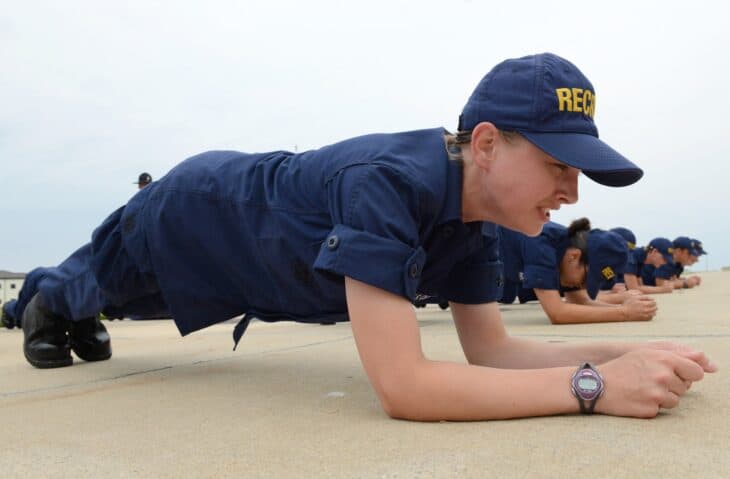

The Coast Guard expects every new member to manage 29 push-ups in a minute, a 1:18 forearm plank and a 1.5-mile run in 12:29 for men. The women’s standard is 15 push-ups, a 1:09 plank and a 15:05 run, and both boot camp and officer school include swim training.
Navy recruit training runs about nine weeks at Recruit Training Command in Great Lakes, Illinois, north of Chicago. It covers Navy culture, teamwork and seamanship.
What happens next differs. Most new Coast Guard members report to their first unit as an unspecialized seaman or fireman and put their name on a list for a specialty school later, unless their ASVAB scores earned a guaranteed school.
Edge: Coast Guard. A week shorter, at one site, with your first assignment chosen about halfway through.
Pay: same table, different paymaster
Military basic pay is set by grade and years of service for all the uniformed services, the Coast Guard included. Under the 2026 schedule, a new E-1 with under four months of service earns $2,225.70 a month, and an E-5 with more than two years earns $3,598.20.
The difference is who pays. Federal law makes the Coast Guard a service in the Department of Homeland Security, so its money comes through DHS appropriations, while the Navy’s comes through the Defense Department.
That has cost Coast Guard families before. On Jan. 15, 2019, day 25 of a partial shutdown, about 42,000 active-duty members missed a paycheck while the Defense Department stayed funded.
The commandant at the time, Adm. Karl Schultz, wrote that to the best of his knowledge it was “the first time in our Nation’s history that service members in a U.S. Armed Force have not been paid” during a funding lapse. For an E-4 with more than two years of service in 2026, a missed mid-month check would be about $1,651.50 of basic pay.
Since then, the government has found workarounds. In the October 2025 shutdown, DHS paid the Coast Guard’s mid-month check from funds tied to that year’s tax and spending law, while the Pentagon was directed to use available funds for troops.
Then a lapse in Homeland Security funding ran 76 days in early 2026, ending on April 30. Navy Times reported that active-duty Coast Guard members kept getting paid through funding shifts, but about 10,000 civilians went without a full paycheck and the service could not pay some bills, including electricity for family housing.
As of early November 2026, the government is funded under a stopgap that runs to December 11, 2026.
Edge: Navy. The rate is identical, but a Homeland Security funding fight can reach a Coast Guard paycheck without touching the Navy’s.
Mission: law enforcement or warfighting
Federal law calls the Coast Guard “a military service and a branch of the armed forces of the United States at all times.” It is also the only military branch in the Department of Homeland Security.
That status gives it powers the Navy does not have. Coast Guard officers may board any vessel subject to US jurisdiction, search it, seize it and make arrests, while federal law requires the Defense Department to keep Navy personnel out of direct participation in a search, seizure or arrest unless another law allows it.
So the daily work differs. Coast Guard ratings include maritime enforcement specialists, marine science technicians who inspect vessels and respond to pollution, and boatswain’s mates who specialize in navigation and seamanship, alongside the engineers and technicians every fleet needs.
3,500 lives a year
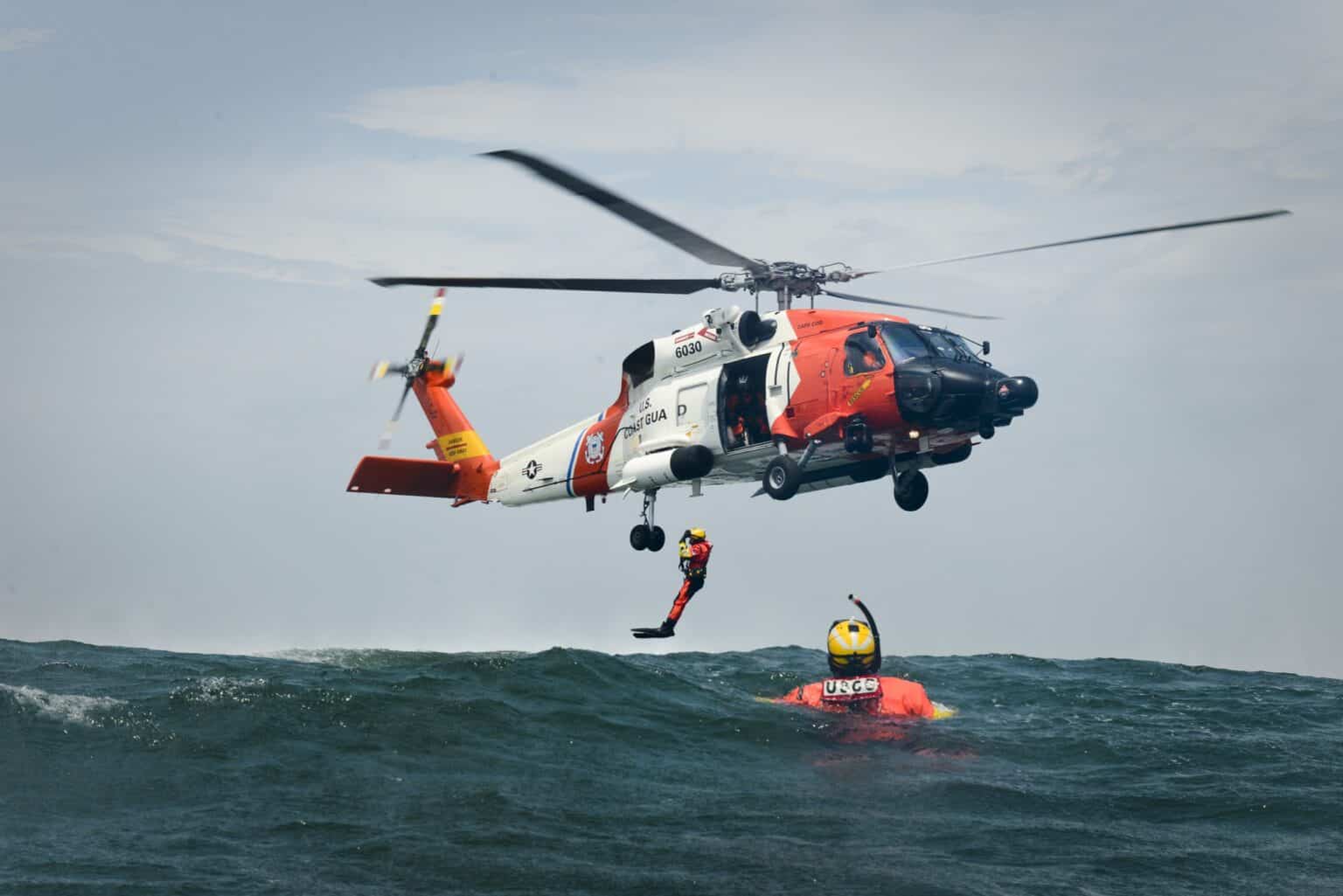
The Coast Guard says its search and rescue missions save more than 3,500 lives and more than $75 million in property every year, using cutters, boats, aircraft and command centers working together. Rescue is a core mission, not a side job.
The Navy is built to fight at sea and project power from it, with aircraft carriers, submarines and carrier air wings. If combat at sea is what you want, the Navy is where that work lives.
Edge: Coast Guard for law enforcement and rescue, Navy for warfighting. Neither mission is better, so pick the one you want to do all day.
Deployments and time away
Navy deployments have run long. The aircraft carrier USS Gerald R. Ford left Norfolk on June 24, 2025, and had spent 324 days at sea by May 14, 2026, the longest deployment since the Vietnam era.
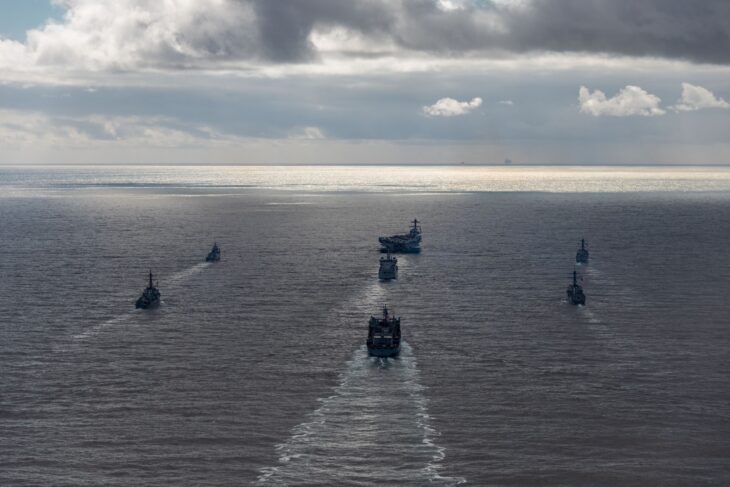

Coast Guard cutters deploy for months, not most of a year. The national security cutter Kimball came home to Honolulu on Jan. 1, 2026, after a 120-day Arctic patrol, then returned on June 20 from a 73-day patrol.
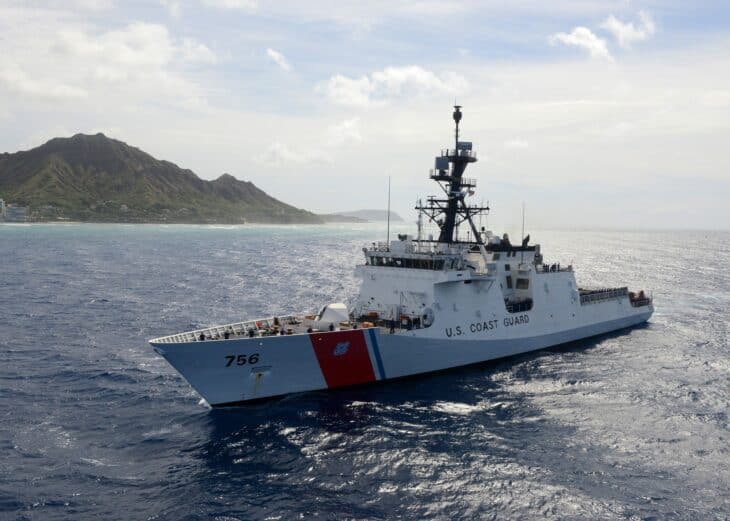

The Coast Guard’s own recruiting pitch leans on this, promising “a steady pace with shorter deployments,” 30 days of paid vacation a year and up to 12 weeks of paid parental leave. Some jobs are based ashore, such as rescue swimmers, who are typically assigned to air stations.
Edge: Coast Guard. A recent long cutter patrol ran 120 days, against 324 days at sea for a recent Navy carrier deployment.
Flying: Navy flight school for both
Coast Guard pilots learn to fly at the Navy’s own flight school. After selection, they attend Naval Flight School at NAS Pensacola, Florida, and earn their wings in about two years, with the secondary phase at Pensacola for helicopters or Corpus Christi, Texas, for fixed-wing aircraft.
The Coast Guard then sends new pilots to its Aviation Training Center in Mobile, Alabama, to qualify on the MH-60 Jayhawk, the MH-65 Dolphin, the HC-130 Hercules or the HC-144 Ocean Sentry. The service says it has the highest percentage of officers who are pilots of any US military service.
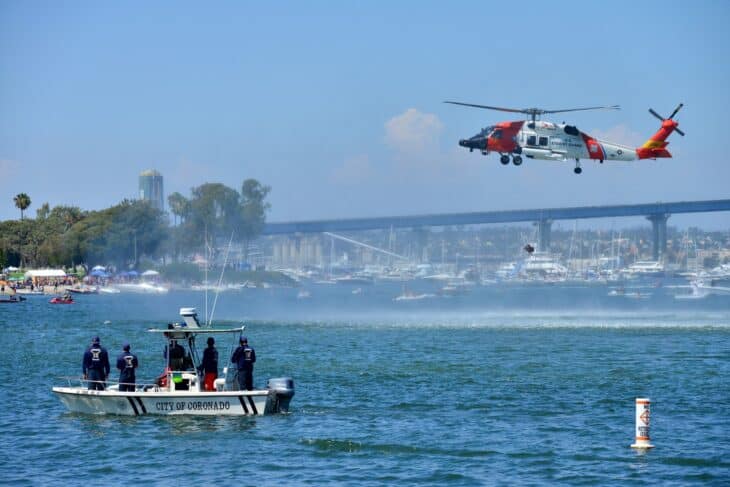

The fleet is small and rescue-shaped. In April 2024, GAO counted about 200 aircraft at 25 air stations, including 98 short-range and 48 medium-range helicopters, and our guide to every Coast Guard aircraft flying today lists each type.
The Department of the Navy, Marines included, operates about 4,000 aircraft. That covers carrier jets like the F/A-18 Super Hornet, helicopters, patrol aircraft and transports, so there are far more cockpits and aircraft types to choose from.
Enlisted members can fly too. Coast Guard rescue swimmers, the aviation survival technicians, complete a 22-week course that includes 10 weeks of rescue swimmer training and 7 weeks of EMT training, and they fly on Coast Guard helicopters.


Already a military pilot? The Coast Guard’s Direct Commission Aviator program takes applicants aged 21 to 36 with at least 500 hours of military flight time. For the wider picture, read which military branch is best for pilots.
Edge: Navy for variety, Coast Guard for rescue flying. The schoolhouse is the same, so choose by the aircraft and the mission you want.
Size, jobs and bonuses
The Navy is far bigger. Its enacted active-duty strength for FY2026 is 344,600, while federal law authorizes the Coast Guard 50,000, about 6.9 sailors for every Coast Guard member.
The Coast Guard is growing fast. It enlisted 5,445 active-duty members in FY2026 and beat its recruiting goal for the third year running, and the same law raises its authorized strength to 55,000 for FY2027.
Its recruiting site lists 21 enlisted careers and current cash bonuses of up to $60,000 for a critical rating, up to $15,000 for college credits and up to $10,000 to ship quickly. Bonuses change often, so check the amount in your own contract.
A small service has a social side too. The Coast Guard pitches itself as a tight community where you keep seeing familiar faces, which some people want and others find confining.
Edge: Navy. About seven times the people means far more job and duty-station choices, even with the Coast Guard’s bonuses in play.
Who should pick which
| If you… | Pick | Because |
|---|---|---|
| Want search and rescue to be the job | Coast Guard | It saves more than 3,500 lives a year and rescue is a core mission |
| Want law enforcement at sea | Coast Guard | It has search, seizure and arrest authority the Navy lacks |
| Want shorter deployments | Coast Guard | A recent long cutter patrol ran 120 days, against 324 for a Navy carrier |
| Want combat at sea | Navy | Carriers, submarines and warships are its core business |
| Want the most job choices | Navy | About 6.9 times the Coast Guard’s authorized strength |
| Want to fly jets | Navy | About 4,000 aircraft, including carrier fighters |
| Want to fly rescue helicopters | Coast Guard | Its fleet is built around rescue helicopters |
| Need a paycheck that a DHS funding fight cannot reach | Navy | Its pay comes through the Defense Department |
| Care only about basic pay | Either | Both use the same table |
If none of that decides it, compare specific jobs, not uniforms. Your rating will shape your days more than the service name, and a recruiter can only promise what your signed contract says.
The Coast Guard is part of the Navy
It is not. Federal law makes the Coast Guard a service in the Department of Homeland Security and a branch of the armed forces at all times. It moves under the Navy only upon a declaration of war if Congress directs it, or when the President directs it, and goes back to Homeland Security by executive order. The two share a pay table and a flight school, but not a department, a boot camp or a mission.
FAQ
Sources and references used for research and fact-checking.
- Federal Register, Executive Order 14368: Adjustments of Certain Rates of Pay, Schedule 8 (Pay of the Uniformed Services)
- U.S. Coast Guard (gocoastguard.com), Eligibility Requirements
- U.S. Coast Guard (gocoastguard.com), Basic Training
- U.S. Coast Guard (gocoastguard.com), Officer Applications
- U.S. Coast Guard (gocoastguard.com), Aviation Officer Careers
- U.S. Coast Guard (gocoastguard.com), Aviation Survival Technician
- U.S. Coast Guard (gocoastguard.com), Enlisted Careers
- U.S. Coast Guard (gocoastguard.com), Hiring Incentives
- U.S. Coast Guard (gocoastguard.com), Coast Guard Missions
- U.S. Coast Guard (gocoastguard.com), The Coast Guard Lifestyle
- U.S. Coast Guard (gocoastguard.com), About the United States Coast Guard
- Military.com, How to Join the U.S. Navy: Eligibility and Requirements Guide
- Wikipedia, Officer Candidate School (United States Navy)
- Legal Information Institute, Cornell Law School, 14 U.S. Code 101: Establishment of Coast Guard
- Legal Information Institute, Cornell Law School, 14 U.S. Code 103: Department in Which the Coast Guard Operates
- Legal Information Institute, Cornell Law School, 14 U.S. Code 522: Law Enforcement
- Legal Information Institute, Cornell Law School, 10 U.S. Code 275: Restriction on Direct Participation by Military Personnel
- Legal Information Institute, Cornell Law School, 14 U.S. Code 4904: Authorized Levels of Military Strength and Training
- Congressional Research Service, FY2026 NDAA: Active Component End-Strength
- Congressional Research Service, Defense Primer: United States Military Aviation
- U.S. Government Accountability Office, Coast Guard: Aircraft Fleet and Aviation Workforce Assessments Needed (GAO-24-106374)
- Breaking Defense, Gerald R. Ford to Return From Historic Deployment on Saturday, CNO
- DVIDS, Coast Guard Cutter Kimball Returns to Honolulu After 120-Day Arctic Patrol
- DVIDS, Coast Guard Cutter Crew Returns to Honolulu After Joint Operations Across Caribbean and Eastern Pacific
- NBC News, 42,000 Coast Guard Members Are Only Military Branch to Work Without Pay
- Fox News, Coast Guard Missed Paycheck Marks First Time in History Members of US Armed Services Are Not Paid During a Shutdown
- Military Times, US Coast Guard Will Still Get Paid Amid Government Shutdown, Noem Says
- Navy Times, Congress Ends Partial Government Shutdown, Funding Coast Guard
- Office of Rep. Nicole Malliotakis, Malliotakis Leads Push to Safeguard Coast Guard Pay During DHS Shutdown
- Nextgov/FCW, Shutdown Threat Possibly Lifted as House Passes Stopgap Spending Bill
- Stars and Stripes, Coast Guard Recruiting Surpasses Goal
Get the Newsletter
The latest aviation news and stories sent to your inbox.
About the Author

Tim is the owner and lead editor of AeroCorner since 2019, overseeing aviation content covering aircraft, airlines, airports, and the broader aviation industry. Through years of researching, writing, editing, and publishing aviation-focused content, he has developed extensive practical knowledge of commercial aviation and air travel. Based in Asia and a frequent traveler himself, Tim also brings firsthand passenger experience to AeroCorner’s coverage. Outside of publishing, he has also explored aviation firsthand through hands-on flight training in New Zealand.