

Table of Contents
Pick the Marines if you are 28 or younger, want the harder entry and want infantry-first culture in a smaller service. Pick the Army if you are older, want to choose a specific job before you sign, or want to fly without a college degree.
Basic pay does not decide it. Both draw from the same Defense Department table, so an E-4 with more than two years of service earns $3,303.00 a month in either uniform in 2026.
This comparison uses official figures as of October 2026: the pay tables, both recruiting commands, federal law and the Congressional Research Service. If a third branch is in the mix, read our Air Force vs Army comparison and our Navy vs Air Force comparison.
| Criterion | Marines | Army | Edge |
|---|---|---|---|
| Basic pay, E-4 over 2 years (2026) | $3,303.00 a month | $3,303.00 a month | Even |
| Oldest age to enlist | 28, with waiver requests at 29 or older | 42 | Army |
| Getting through the door | 13-week boot camp, strength test before you ship | 10-week basic, no strength test listed before you ship | Army |
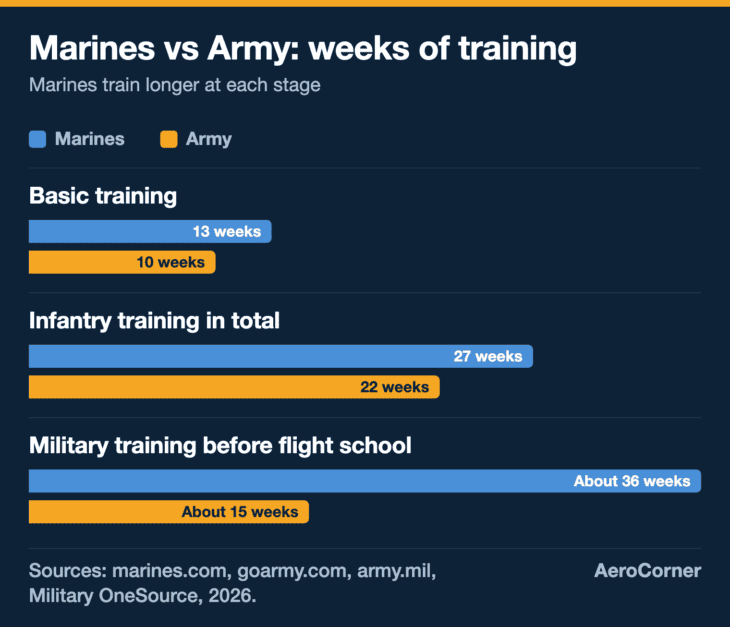
| Infantry training in total (our math) | 27 weeks | 22 weeks | Marines |
| Choosing your job | Job category at enlistment, specialty assigned later | Pick from more than 200 jobs before the contract | Army |
| Flight school with no degree | Not offered: pilots are officers with a four-year degree | Open to high school graduates, about 15 weeks of training first | Army |
| Fast jets | Yes, 347 fixed-wing combat aircraft | None | Marines |
| Service owed after flight school | Federal minimum of 8 years for jets, 6 for other aircraft | 10 years | Marines |
| Recent deployment length | 6 to about 10 months (2026) | 9-month Europe rotations | Even |
| First-term reenlistments per 100 authorized troops, FY2025 (our math) | 4.8 (8,228 Marines) | 6.0 (26,556 soldiers) | Army |
How we compared
Pay is basic pay only, before allowances and bonuses. Marine infantry time adds 13 weeks of recruit training to the 14-week Infantry Marine Course, leaving out up to 10 days of leave between them. Army infantry time is the 22-week One Station Unit Training as the Army described it in 2019, which includes basic. Weeks before flight school are the Army’s 10-week basic plus a 35-day Warrant Officer Candidate School, about 15, against the Marines’ 10-week Officer Candidates School plus a six-month Basic School counted as 26, about 36. Waits for a class date are left out. Reenlistment rates divide FY2025 first-term reenlistments by authorized strength of 172,300 and 442,300, a rough scale measure because the two services define the first term slightly differently. Every job, bonus and flight slot is subject to the needs of the service.
Which is harder: boot camp and fitness
Marine boot camp is longer and it starts with a test. Recruits spend 13 weeks in training, and men must first pass an Initial Strength Test of 3 pull-ups or 34 push-ups, a 1.5-mile run in 13:30 and a 40-second plank.
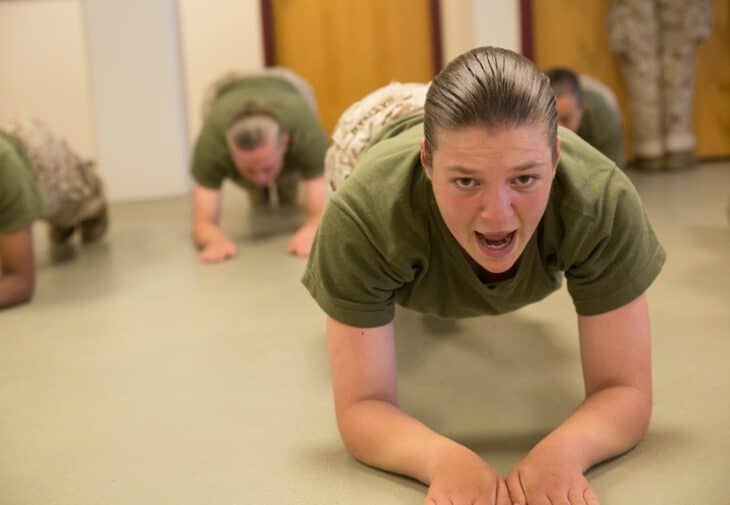

Women need 1 pull-up or 15 push-ups, the same run in 15:00 and the same plank. Graduation is not the end: after up to 10 days of leave, Parris Island graduates report to the School of Infantry or Marine Combat Training.
Army basic runs 10 weeks in four phases, and the Army says about 90% of candidates complete it. Its requirements page lists a waist-to-height check at the processing station, not a strength test, and the Army Fitness Test starts at basic.
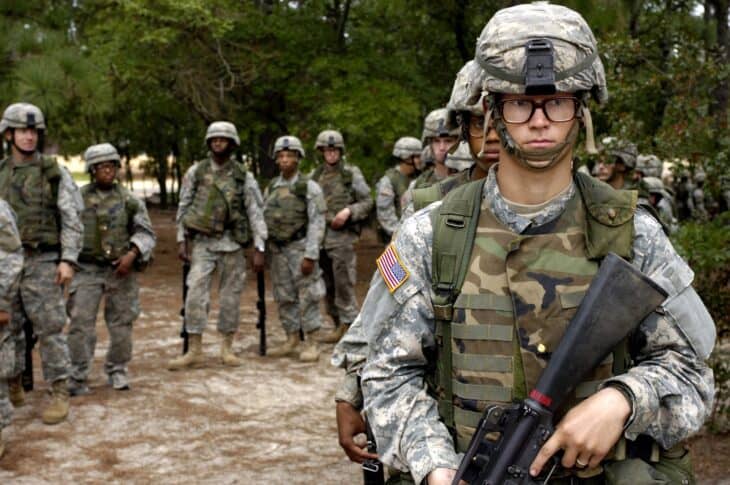

The Army’s test has five events, with a minimum of 60 points on each for a total of 300. Passing it is a real standard, but you meet it after you arrive and not before you ship.
Infantry is where the totals get closer. The Army’s infantry course runs 22 weeks with basic included, while a Marine infantryman does 13 weeks of boot camp and then the 14-week Infantry Marine Course, 27 weeks in all.
Non-infantry Marines do not skip the field. They attend Marine Combat Training, a four-week course of 29 training days built on the idea of making every Marine a rifleman, before they move on to their job school.
Edge: Army for the easier start, Marines for the most infantry training. Three more weeks of boot camp, a test before you ship and five more weeks of infantry time make the Marine route the harder entry.
Getting in: age and test scores
Age is the widest gap between the two doors. The Army raised its limit from 35 to 42 in spring 2026, while the Marine Corps takes applicants from 17 to 28, and anyone 29 or older has to request a waiver.
Test scores start from the same place. Both services want at least 31 on the ASVAB, and the Marines want 50 or higher if you hold a GED or a nontraditional diploma.
The Army also offers a way up from below the line. A score of at least 21 can get you into the academic track of its Future Soldier Preparatory Course, a 90-day program built to raise your score. Confirm the current rules on the Army’s requirements page or the Marines’ requirements page.
Edge: Army. Fourteen more years of eligibility and a prep course for low scorers make it the easier door to open.
Jobs: what you actually sign for
Federal law gives the two services different missions. The Army is organized “primarily for prompt and sustained combat incident to operations on land,” while the Marine Corps must include at least three combat divisions and three air wings and provide fleet marine forces of combined arms.
Size follows from that. The Army’s enacted active strength for fiscal 2026 is 454,000 and the Marine Corps’ is 172,300, so the Army is about 2.6 times as large and has room for far more kinds of work.
The Army advertises more than 200 job specialties, and its steps to join put finding your job ahead of signing the contract. Job school then lasts anywhere from 4 to 52 weeks, depending on the skill.
The Marine route commits you to less detail up front. Enlisted Marines name a preferred job category when they enlist, such as the air, ground or logistics element, and the specific specialty is assigned after they become Marines.
Edge: Army. More jobs, and a clearer view of yours before you sign. Read your contract either way, because a recruiter can only promise what it says.
Pay and benefits: one table, similar perks
Military basic pay is set by rank and years of service, not by branch. A new E-1 with less than four months of service earns $2,225.70 a month in 2026, and an E-5 with more than two years earns $3,598.20.
Bonuses move every year and depend on the job. The Army says $10,000 is the most an enlisted soldier could receive in the first year, though bonuses over a full contract can run higher.
From October 1, 2026, the Marines offer $15,000 for electronics maintenance and for cyber and cryptographic jobs, plus $5,000 or $10,000 for shipping when the Corps chooses. Active-component applicants are limited to one enlistment bonus, so ask which one applies to you.
Education is close as well. Army Tuition Assistance tops out at $4,500 a year, and the Marine Corps caps it at $250 per semester hour and $4,500 a year. The Post-9/11 GI Bill is set by your active service, not your branch.
Edge: even. Choose the job first, then compare the bonus attached to it.
Flying: a diploma or a degree
This is where the branches split hardest. The Army will send a high school graduate to flight school as a warrant officer, while a Marine pilot must first hold a four-year degree and a commission.
The Army’s Warrant Officer Flight Training program asks for a high school diploma, and seniors can apply. Applicants must not have reached their 33rd birthday at the selection board, and they need a General Technical score of 110 and a flight aptitude score of 40.
After 10 weeks of basic and a 35-day Warrant Officer Candidate School, a candidate is ready for flight school. A board chooses who gets in, so qualifying is not the same as being selected.
Marine candidates attend a 10-week Officer Candidates School at Quantico, Virginia, then a six-month Basic School, where they select aviation or another path. That is about 36 weeks of officer training ahead of flight school, more than twice the Army’s 15.
Pay barely punishes the warrant route. In 2026 a new W-1 earns $4,056.60 a month and a new O-1 earns $4,150.20, a gap of $93.60, and the warrant officer got there with no degree.
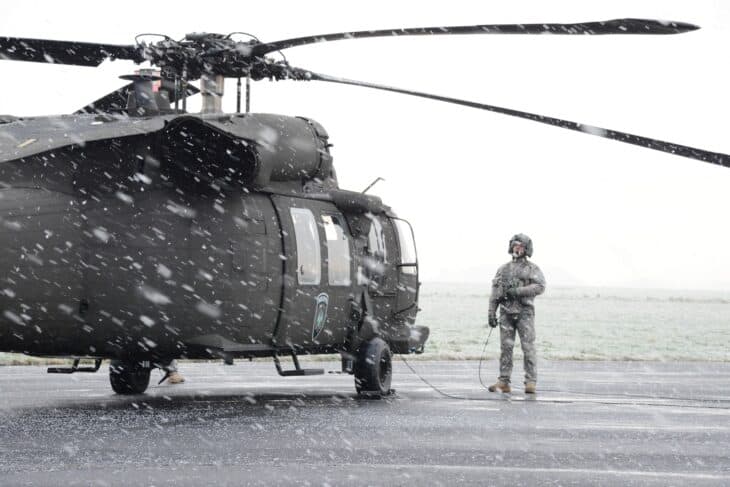
What you fly is the other half of the choice. Army aviation is overwhelmingly rotary: 4,066 of its 4,378 aircraft are helicopters, led by the UH-60 Black Hawk, the AH-64 Apache and the CH-47 Chinook. Our guide to US Army helicopters covers every type.

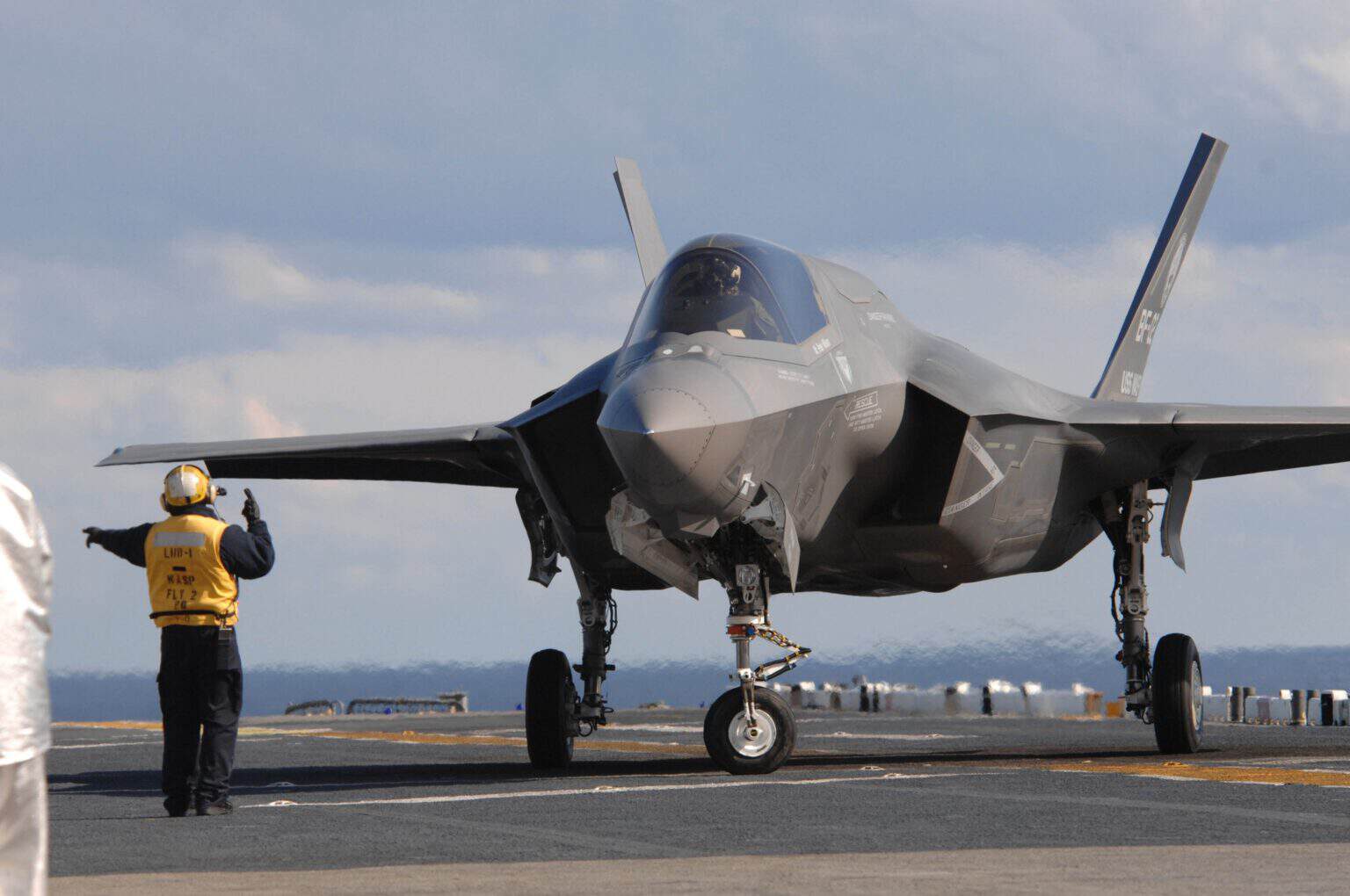
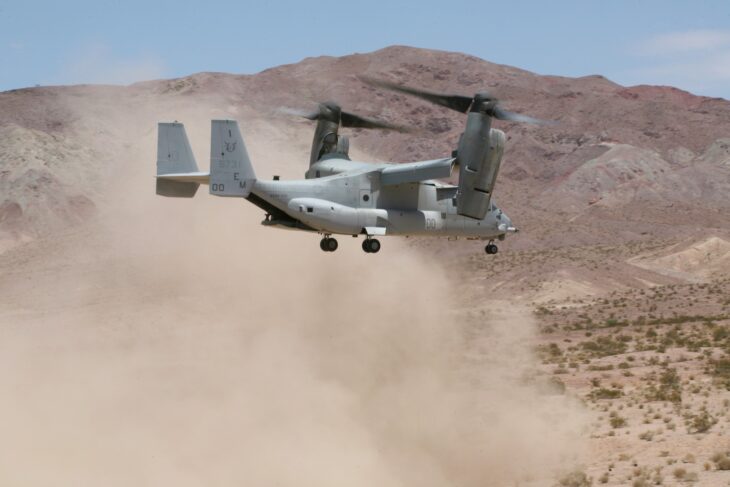
The Marines fly 1,337 aircraft, including 347 fixed-wing combat aircraft, a category where the Army lists none, such as the F-35 Lightning II. They also fly the V-22 Osprey and the CH-53K King Stallion, and every US Marine Corps aircraft is in our guide.

The Army has more aircraft per person
The Marines are known for their air wings, but the Army has more aircraft for its size. Using FlightGlobal’s 2026 fleets and fiscal 2026 active strength, the Army has about 9.6 aircraft per 1,000 troops (4,378 for 454,000), and the Marines have about 7.8 (1,337 for 172,300). The Marines’ fleet is the more varied one, and the Army’s is nearly all helicopters.
Two cautions apply to the Army route. Warrant aviators owe 10 years after flight training, while federal law sets a floor of 8 years for pilots trained on jets and 6 years for other aircraft, so check the figure in any Marine agreement you are offered.
Army aviation is also shrinking. The service said in September 2025 that it would cut 6,500 of about 30,000 active-duty aviation jobs over fiscal 2026 and 2027, and each Combat Aviation Brigade is losing a cavalry squadron.
The picture is still moving. Lawmakers questioned the helicopter funding in the fiscal 2027 request in May 2026, and the defense secretary said the department would take another look. The Marines have just made a change of their own, flying the AV-8B Harrier for the last time at Cherry Point on June 3, 2026.
Edge: Army with no degree, Marines for jets. The Army is the way into a cockpit without college, and the Marines are the one of these two that flies fast jets. For the wider choice, read which military branch is best for pilots.
Deployments and danger: who fights more
Neither service promises a schedule. The Army says deployment lengths vary with its needs and that there is no way to predict how often you will go, though its Europe rotations have run nine months at a time.
Marines often deploy aboard Navy ships, and those stints vary as well. The 31st Marine Expeditionary Unit closed a six-month deployment in July 2026, and the 22nd MEU came home in June 2026 after about 10 months.
On risk, your job matters more than your branch. An infantryman in either service faces more of it than a clerk in either service, so compare the specific job and ask what its units have been doing.
Edge: even. Long deployments and combat exposure are real in both, and neither length is a promise.
The Marines do the fighting and the Army sits back
The record does not support that. In the Congressional Research Service’s casualty tables for Operations Enduring Freedom, Iraqi Freedom and New Dawn, the Army took 3,902 hostile deaths and the Marine Corps took 1,230, about 3.2 times as many, while the Army’s active strength today is about 2.6 times the Corps’. It is a rough comparison, because the tables include the Guard and Reserve and force sizes moved over those years. It is enough to show that both services carried those wars.
Staying in: the career odds
Both services beat their fiscal 2025 retention goals. The Army reenlisted 26,556 soldiers in its initial-term zone, 118% of its goal, and the Marine Corps reenlisted 8,228 first-term Marines, 107% of its goal.
Set against authorized strength, that is about 6.0 first-term reenlistments per 100 soldiers and 4.8 per 100 Marines. It is a rough measure of scale and not a true retention rate, since the Marine figure counts people with more than 17 months of service and the Army’s counts first enlistments under six years.
Edge: Army. More room to stay, relative to its size, if you picture a longer career.
Who should pick which
| If you… | Pick | Because |
|---|---|---|
| Are 29 or older | Army | It enlists up to 42, while the Marines need a waiver request after 28 |
| Want the hardest entry of the two | Marines | A test before you ship, 13 weeks of boot camp and combat training afterward |
| Want to know your exact job before signing | Army | It puts more than 200 jobs in front of you before the contract |
| Want to fly with no degree | Army | Warrant Officer Flight Training takes high school graduates |
| Want to fly fast jets | Marines | The Army has none, though you will need a four-year degree and a commission |
| Want to serve on and from ships | Marines | Marine units deploy aboard Navy amphibious ships |
| Want a longer career path | Army | More first-term reenlistments relative to its size, in a force 2.6 times as large |
| Care only about basic pay | Either | Both use the same table |
If none of that decides it, compare specific jobs and not uniforms. Your specialty will shape your days more than the branch name, and every job, bonus and flight slot depends on the needs of the service.
FAQ
Sources and references used for research and fact-checking.
- Defense Finance and Accounting Service, Basic Pay: Enlisted, Effective January 1, 2026
- Defense Finance and Accounting Service, Basic Pay: Warrant Officers, Effective January 1, 2026
- Defense Finance and Accounting Service, Basic Pay: Officers, Effective January 1, 2026
- U.S. Marine Corps (marines.com), Eligibility Requirements
- Marine Corps Recruit Depot Parris Island, Recruit Training
- U.S. Marine Corps (marines.com), Infantry
- U.S. Marine Corps (marines.com), Roles
- U.S. Marine Corps (marines.com), Become a Marine Officer
- Military OneSource, Marine Corps Officer Candidates School
- Military Times, Corps Looking to Refine Marine Combat Training to Prepare for a Future Battlefield
- U.S. Army (goarmy.com), Eligibility and Requirements to Join
- U.S. Army (goarmy.com), ASVAB Test and Preparation
- U.S. Army (goarmy.com), Basic Training
- U.S. Army (goarmy.com), Fitness Requirements (AFT)
- U.S. Army (goarmy.com), Job Training
- U.S. Army (goarmy.com), Enlisted Soldiers
- U.S. Army (goarmy.com), Army Pay and Money
- U.S. Army (goarmy.com), Deployment
- U.S. Army, 22-Week Infantry OSUT Set to Increase Lethality
- U.S. Army Recruiting Command, Civilian (WOFT) Applicants
- U.S. Army, Making History: Accelerated Warrant Officer Candidate School Graduates Highest Number in U.S. Army Reserve History
- Army Times, Army Raises Maximum Enlistment Age to 42
- Military Times, Army to Cut 6,500 Active-Duty Aviation Jobs Over Next 2 Years
- Breaking Defense, Army Making Significant Headway in ATI Aviation Overhaul, Divesting AH-64D Fleet
- AVweb, Army Aviation Training Pressed at Budget Hearing
- Breaking Defense, Marine Corps' Harrier Completes Final Flight Following SOUTHCOM Deployment
- Stars and Stripes, Marine Corps Lists 2027 Enlistment Bonuses of Up to $15,000
- DVIDS, 31st MEU Returns to Okinawa After Six-Month Deployment
- Task & Purpose, Army Announces Latest Rotations, Troops in Lithuania Coming Home
- U.S. Army (myarmybenefits), Tuition Assistance Program for Service Members
- Military.com, Marine Corps Tuition Assistance
- U.S. Department of Veterans Affairs, Post-9/11 GI Bill
- Legal Information Institute, Cornell Law School, 10 U.S. Code 7062: Policy; Composition; Organized Peace Establishment
- Legal Information Institute, Cornell Law School, 10 U.S. Code 8063: United States Marine Corps, Composition and Functions
- Legal Information Institute, Cornell Law School, 10 U.S. Code 653: Minimum Service Requirement for Certain Flight Crew Positions
- Congressional Research Service, FY2026 NDAA: Active Component End-Strength
- Congressional Research Service, Defense Primer: Active Component Enlisted Retention
- Congressional Research Service, American War and Military Operations Casualties: Lists and Statistics
- AeroCorner, The US Military Has 13,033 Aircraft in 2026
- Wikipedia, United States Navy SEALs
- Wikipedia, Marine Raiders
Get the Newsletter
The latest aviation news and stories sent to your inbox.
About the Author

Tim is the owner and lead editor of AeroCorner since 2019, overseeing aviation content covering aircraft, airlines, airports, and the broader aviation industry. Through years of researching, writing, editing, and publishing aviation-focused content, he has developed extensive practical knowledge of commercial aviation and air travel. Based in Asia and a frequent traveler himself, Tim also brings firsthand passenger experience to AeroCorner’s coverage. Outside of publishing, he has also explored aviation firsthand through hands-on flight training in New Zealand.