

Table of Contents
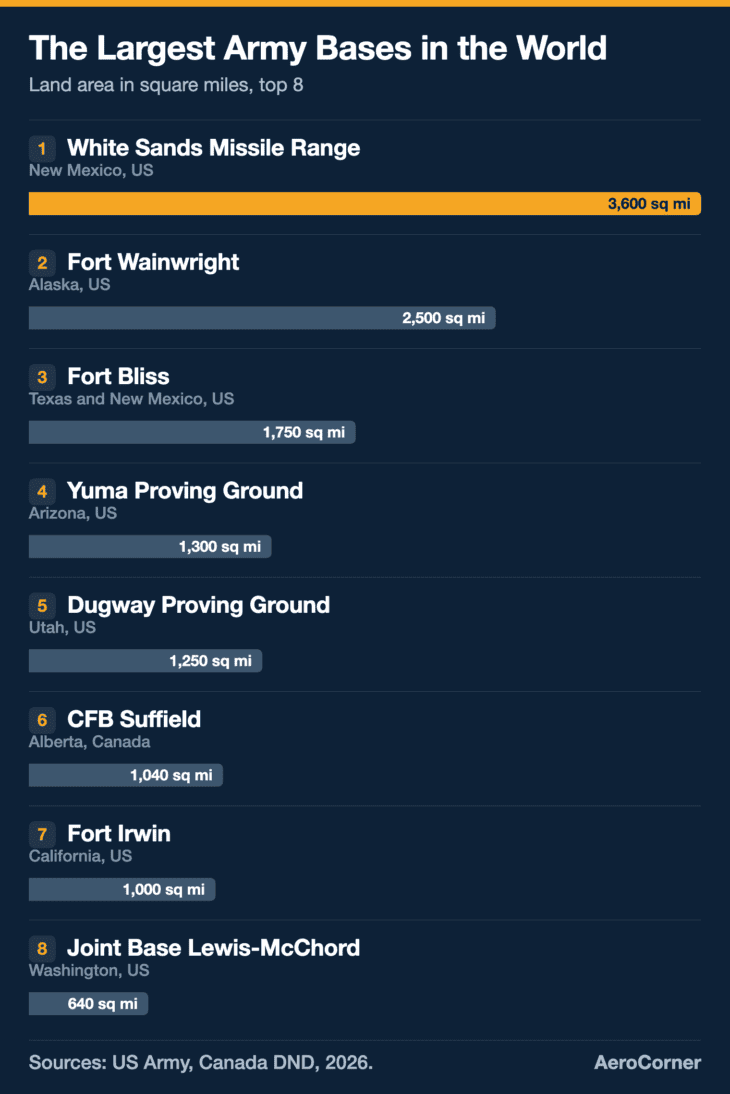
The largest army base in the world is White Sands Missile Range in New Mexico. The US Army puts it at about 2.3 million acres, roughly 3,600 square miles (9,300 sq km), an area 100 miles long and 40 miles wide.
Most lists hand the title to Fort Bragg instead. Fort Bragg is the largest US Army base by population, with 48,775 active-duty soldiers, but at 251 square miles it does not make the top 12 by land.
This list ranks army installations by land area, using published figures, as of October 2026. Ten of the 12 are American, one is Canadian and one is Chinese, and the reason is simple: the US Army holds huge tracts of desert and Alaskan wilderness that no other army has.
| Rank | Army base | Country | Land area | Main role |
|---|---|---|---|---|
| 1 | White Sands Missile Range | United States | about 3,600 sq mi (2.3 million acres) | Missile and weapons testing |
| 2 | Fort Wainwright | United States | about 2,500 sq mi (1.6 million acres) | Arctic training, 11th Airborne Division |
| 3 | Fort Bliss | United States | about 1,750 sq mi (1.12 million acres) | 1st Armored Division |
| 4 | Yuma Proving Ground | United States | over 1,300 sq mi | Weapons and vehicle testing |
| 5 | Dugway Proving Ground | United States | about 1,250 sq mi (798,855 acres) | Chemical and biological defense testing |
| 6 | CFB Suffield | Canada | about 1,040 sq mi (2,700 sq km) | Live-fire training, BATUS |
| 7 | Fort Irwin | United States | about 1,000 sq mi | National Training Center |
| 8 | Joint Base Lewis-McChord | United States | about 640 sq mi (410,000 acres) | Army post with Yakima Training Center |
| 9 | Fort Carson | United States | about 580 sq mi (372,000 acres) | Main post plus Piñon Canyon |
| 10 | Fort Stewart | United States | about 436 sq mi (279,270 acres) | 3rd Infantry Division |
| 11 | Zhurihe Training Base | China | 412 sq mi (1,066 sq km) | PLA combined-arms training |
| 12 | Fort Hood | United States | 335 sq mi (about 214,000 acres) | Central Texas training post |
How this ranking works
Bases are ranked by the land the installation reports as its own, including the outlying training areas it manages, such as Fort Wainwright’s Alaskan ranges and Fort Carson’s Piñon Canyon site. An entry must be run by an army and have a permanent garrison, so field training areas that units only visit are left out. Bases run by an air force or navy are left out too, even when an army trains there. Russia publishes no base sizes and China publishes only a few, so places 6 to 12 are the largest on the record, not a full census.
1. White Sands Missile Range, New Mexico
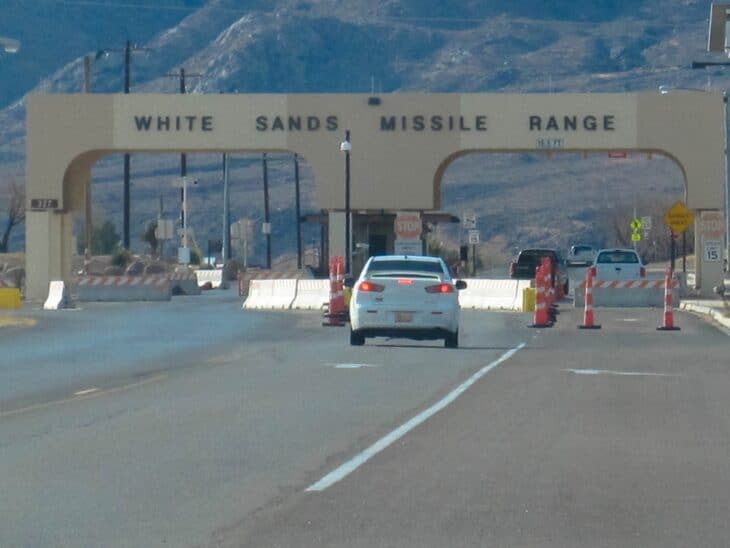

White Sands spans about 2.3 million acres of southern New Mexico, according to the Army. Army test planners call it the largest land-based open-air test range in the US, and it is so big that the range, not the FAA, controls the airspace above it.
It opened in 1941 as the Alamogordo Bombing and Gunnery Range and became White Sands Proving Ground on July 9, 1945. Seven days later, on July 16, 1945, the first atomic bomb was detonated at its Trinity site.
Today it is part of the Army Test and Evaluation Command and tests missiles for all the services. Its own airstrip, Condron Army Airfield, sits near the southern end of the range. White Sands also ranks second in our list of the largest military bases in the US, behind an Air Force range in Nevada.
The biggest army base on Earth was born with the atomic bomb
White Sands became a proving ground on July 9, 1945. A week later the world’s first atomic explosion lit up its northern desert at the Trinity site, now a National Historic Landmark inside the range.
2. Fort Wainwright, Alaska
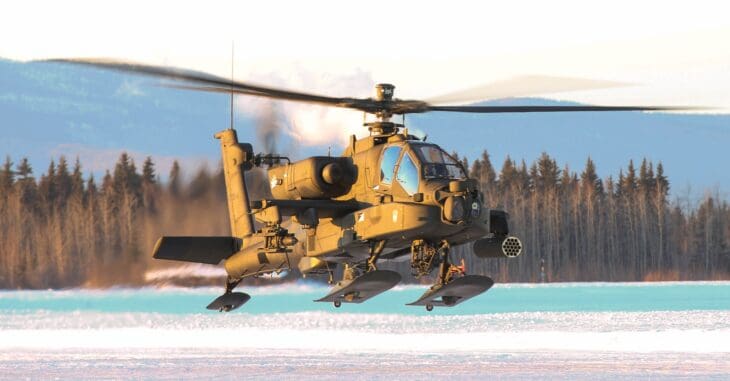

Fort Wainwright manages more than 1.6 million acres of interior Alaska, about 2,500 square miles (6,475 sq km). An Army environmental report put that at roughly 10 percent of all the land the Army holds.
Most of it is not the post at Fairbanks. The installation is a main post plus seven major training areas and several satellite sites, where the 11th Airborne Division trains for Arctic warfare.
The base began as Ladd Field, an Army Air Forces cold-weather test site, and stayed with the Air Force until the Army took it over on January 1, 1961. In World War II, 7,926 aircraft were ferried through Ladd, many of them Lend-Lease planes bound for the Soviet Union by way of Nome and the Bering Strait.
Ladd Army Airfield still anchors the post, with an 8,575-foot runway and two Army aviation battalions among the base’s major tenants.
3. Fort Bliss, Texas and New Mexico
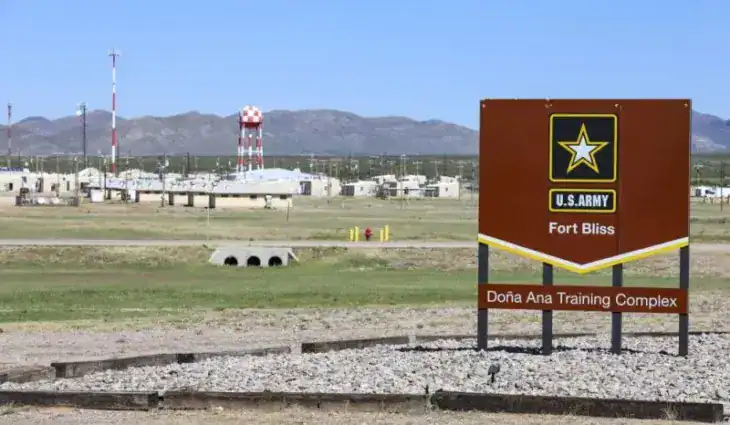
Fort Bliss covers about 1.12 million acres of Texas and New Mexico, roughly 1,750 square miles (4,530 sq km). It is the largest installation in Army Forces Command and the second largest in the Army after its neighbor, White Sands.
It also holds the Army’s largest maneuver area, about 992,000 acres, ahead of the National Training Center at Fort Irwin. It is home to the 1st Armored Division, which returned to US soil in 2011 after about 40 years in Germany.
Its airfield is a former bomber base. Biggs Air Force Base became Biggs Army Airfield in 1973, and its 13,554-foot main runway ranks 12th among the longest runways in the US. NASA used it as a refueling stop for the Shuttle Carrier Aircraft.
4. Yuma Proving Ground, Arizona
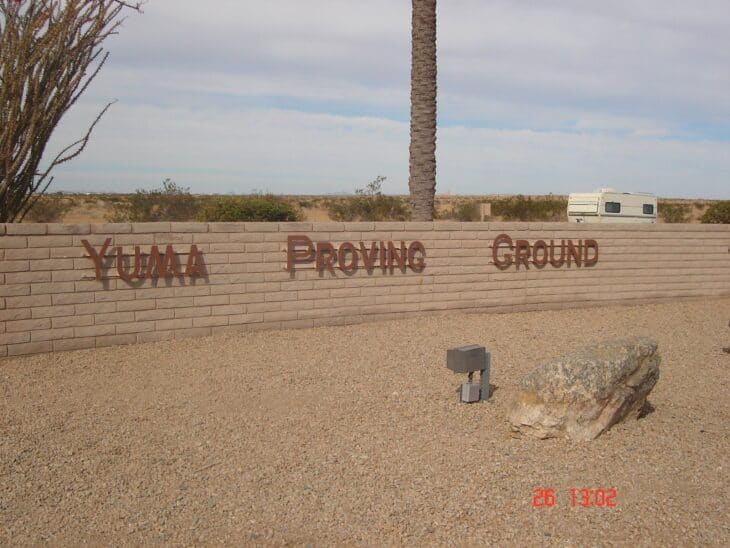
Yuma Proving Ground holds over 1,300 square miles (3,370 sq km) of range space in the Sonoran Desert, larger than Rhode Island, under nearly 2,000 square miles of restricted airspace. It tests nearly everything the Army fires or drives, from artillery and tank rounds to parachutes and drones.
It is also an aviation test site, with six airfields in total. The main one, Laguna Army Airfield, has runways of 6,000 and 5,150 feet, and the range tests helicopter weapons and unmanned aircraft.
A cannon at Yuma fired a shell 111 miles straight up
On November 18, 1966, the 119-foot HARP gun at Yuma’s Kofa Firing Range sent a projectile to 111 miles (179 km), the highest artillery shot on record. The project was meant to fire satellites into orbit.
5. Dugway Proving Ground, Utah
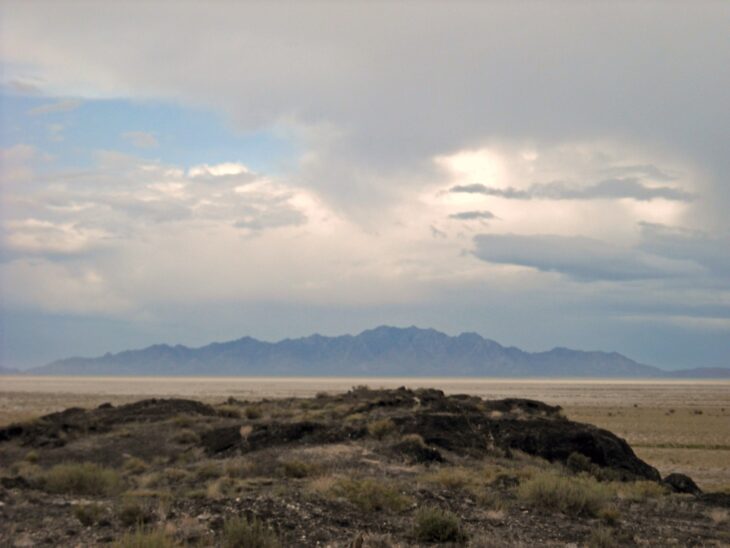

Dugway covers 798,855 acres of Utah’s Great Salt Lake Desert, about 1,250 square miles (3,230 sq km). Founded in 1942, it tests the defenses US and allied forces use against chemical and biological weapons.
Its isolation is the point, and its history shows why. In 1968, about 6,249 sheep died in Skull Valley, nearly 30 miles away, and necropsies found the nerve agent VX, which matched open-air tests at Dugway. The Army never admitted liability but paid the ranchers.
Michael Army Airfield dates from the base’s first construction, and the range now also supports drone and missile development.
6. CFB Suffield, Canada
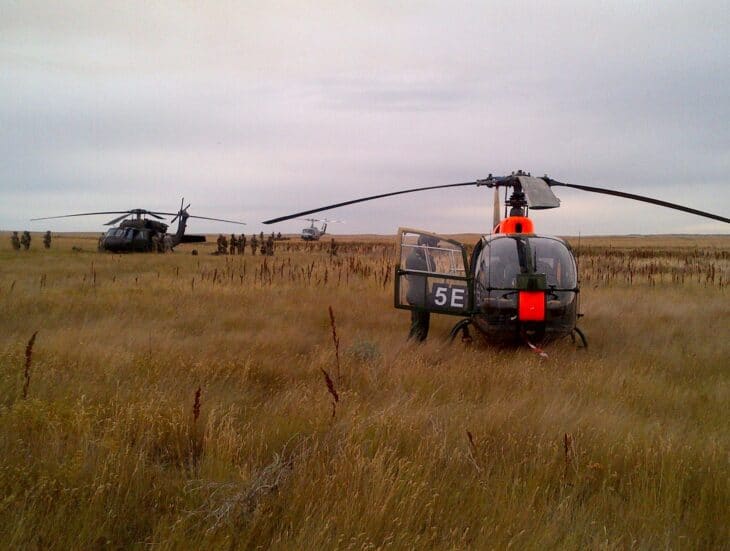

Canadian Forces Base Suffield, in southeast Alberta, covers 2,700 square kilometers, about 1,040 square miles. The Canadian Army calls it the largest military training area in Canada, and it is the largest army base outside the United States on this list.
Its maneuver training area alone covers 1,588 square kilometers (613 sq mi). The British Army has trained there since 1972 through BATUS, the British Army Training Unit Suffield, which runs battle-group exercises Britain has no room for at home.
The base is also home to the Suffield Research Centre, which works on landmine detection, explosives and defense against chemical and biological agents.
7. Fort Irwin, California
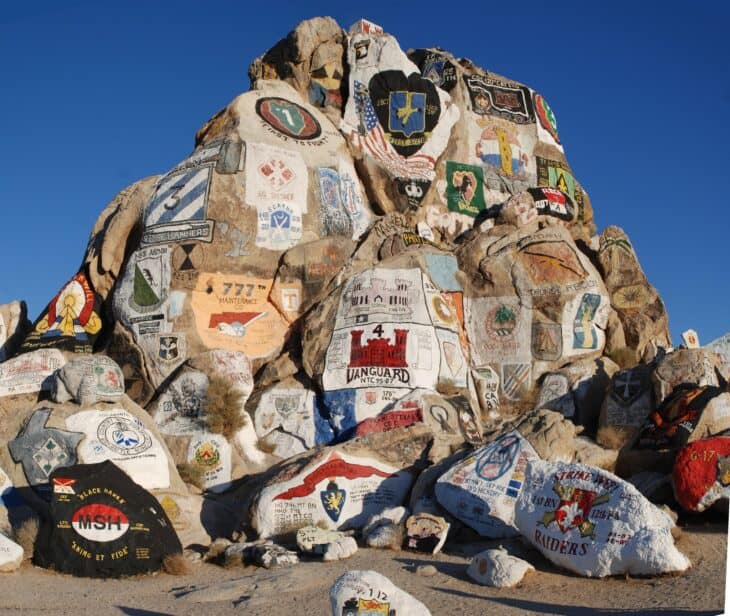

On August 8, 1940, a presidential order withdrew almost 1,000 square miles (2,590 sq km) of California’s High Desert for the Army. That land became Fort Irwin, home of the National Training Center since October 16, 1980.
Brigades rotate through to fight the 11th Armored Cavalry Regiment, the post’s resident opposing force, in the nearest thing the Army has to a real war. Bicycle Lake Army Airfield supports the aviation side of those exercises.
Fort Irwin ranks just below Suffield on land, by about 40 square miles.
8. Joint Base Lewis-McChord, Washington
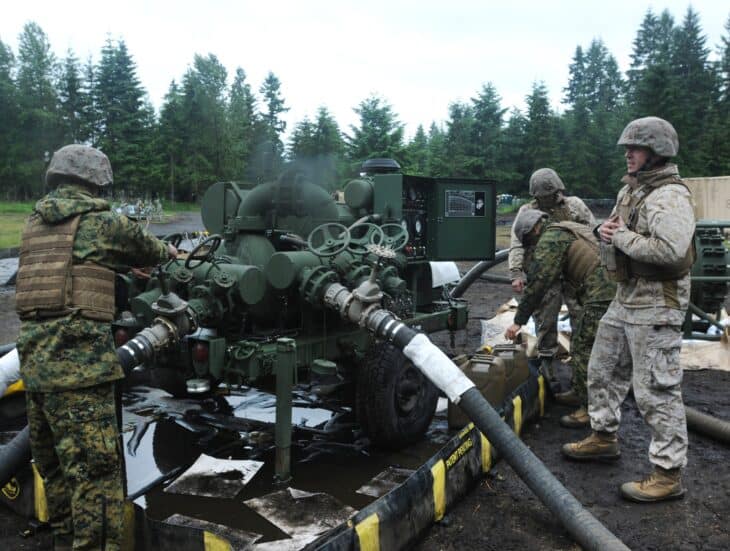

Joint Base Lewis-McChord is an Army-run base shared with the Air Force’s McChord Field. Lewis Main, Lewis North and McChord together cover more than 86,000 acres near Tacoma.
The bulk is somewhere else. The Yakima Training Center, a sub-installation on the dry side of the Cascades, adds 324,000 acres, for a total of about 410,000 acres (640 sq mi).
The base started with a local gift. In 1917, Pierce County voters approved a $2 million bond to buy 70,000 acres and donate them to the federal government for an Army post.
9. Fort Carson, Colorado
Fort Carson’s main post near Colorado Springs covers about 137,000 acres. The Piñon Canyon Maneuver Site, bought in 1983 about 150 road miles to the southeast, adds about 235,000 acres, for a total of about 372,000 acres (580 sq mi).
Butts Army Airfield, built from 1963 to 1966 with a 4,573-foot runway, handles the post’s aviation. It is named for Medal of Honor recipient John E. Butts.
10. Fort Stewart, Georgia
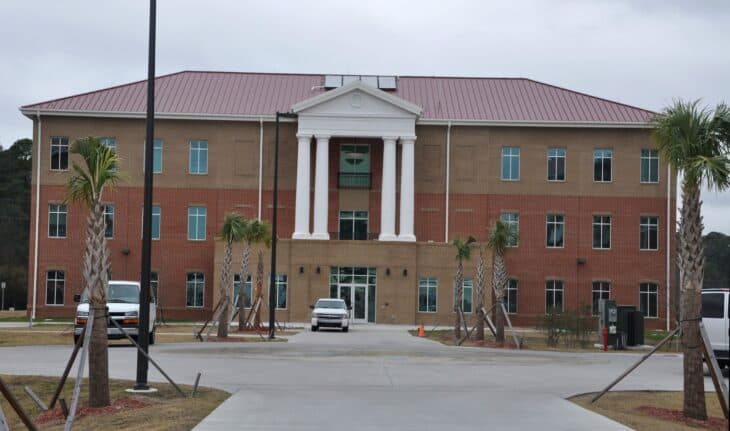
Fort Stewart covers 279,270 acres across parts of six Georgia counties, about 436 square miles (1,130 sq km). It is the largest Army installation east of the Mississippi River, and home of the 3rd Infantry Division.
Its aviation lives 40 miles away in Savannah, at Hunter Army Airfield, a 5,400-acre field that also hosts Coast Guard Station Savannah.
11. Zhurihe Training Base, China
Zhurihe, in Inner Mongolia northwest of Beijing, covers 1,066 square kilometers, or 412 square miles. The People’s Liberation Army calls it the largest training base in Asia and its most modernized.
Founded in 1957, it is built for large exercises, and its mock facilities include an airstrip. Xi Jinping held the PLA’s 90th-anniversary parade there in 2017.
The figure comes from Chinese state media and has no independent check. It is the only Chinese base with a published size, so larger ones may exist.
12. Fort Hood, Texas
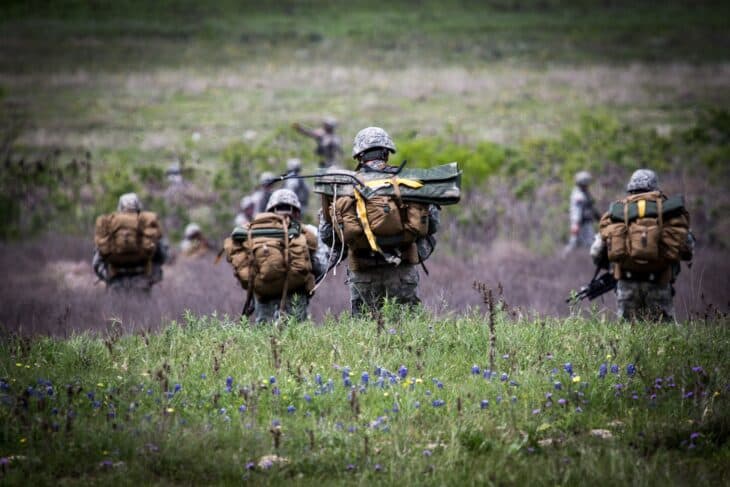
Fort Hood occupies 335 square miles (868 sq km) of central Texas, about 214,000 acres, with 36,200 active-duty military personnel. Before the Soviet Union broke up, it was billed as the largest military base in the free world.
It has carried three names: John Bell Hood, a Confederate general, until 2023, then Fort Cavazos, and since June 2025 Fort Hood again, now for Col. Robert B. Hood, a World War I Distinguished Service Cross recipient.
Robert Gray Army Airfield at West Fort Hood doubles as Killeen Regional Airport, so airline passengers land on an Army runway.
The largest army base by population: Fort Bragg
Rank by people and Fort Bragg, North Carolina, wins. Military OneSource calls it the largest US Army base by population, with 48,775 active-duty soldiers, 17,345 civilian employees and contractors, and 70,109 active-duty family members.
That crowd lives on 251 square miles (650 sq km), less than a third of Fort Irwin. Its aviation runs from two fields: Simmons Army Airfield for Army helicopters and Pope Field for Air Force airlift.
The name changed twice in two years. It became Fort Liberty on June 2, 2023, and returned to Fort Bragg on February 14, 2025, now honoring World War II paratrooper Roland L. Bragg rather than the Confederate general Braxton Bragg.
The largest US Army base overseas: Camp Humphreys
Camp Humphreys in Pyeongtaek, South Korea, is the largest US military base overseas. It nearly tripled in size, to about 3,454 acres (5.4 sq mi), in a $10.7 billion expansion, and South Korea paid roughly 90 percent of the bill.
Its size is measured in buildings, not wilderness: about 500 of them. Desiderio Army Airfield, on the post, has an 8,124-foot runway.
The largest army bases in Europe
Europe is too crowded for bases on this scale. Salisbury Plain, where the British Army has trained since 1898, is the largest military training area in the UK, with about 150 square miles (390 sq km) owned by the Ministry of Defence.
The village of Imber, in the middle of it, was emptied in 1943 so troops could rehearse for D-Day, and it has stayed closed ever since apart from a few open days a year.
Grafenwöhr in Bavaria, a German-owned training area run by the US Army’s 7th Army Joint Multinational Training Command, is the largest US training facility in Europe. It covers 90 square miles (232 sq km) and has been a training area since 1907.
For comparison, CFB Suffield is seven times the size of Salisbury Plain, which is why the British Army crosses the Atlantic to train with tanks. The same squeeze shapes the largest air bases in the world and the largest naval bases in the world, where the US also takes most of the top places.
What about Australia's Bradshaw Field Training Area?
Bradshaw, in Australia’s Northern Territory, covers about 871,000 hectares, roughly 3,360 square miles, more than any base on this list except White Sands. It is left out because it is a field training area that the Australian Army and US Marines deploy to for exercises, not a base with a permanent garrison. Even counted, it would rank second.
Why the biggest army bases are American
The top of this list is a map of the American West and Alaska. The Army took large tracts of empty federal land in the 1940s, as at Fort Irwin in 1940 and Dugway in 1942, and kept them for ranges that need tens of miles of safety space.
Other armies train on whatever land they can find, often abroad: the British Army in Canada, and US Marines in Australia. If you are weighing a career on one of these posts, our Air Force vs Army comparison sets out how the two services’ bases and jobs differ.
FAQ
Sources and references used for research and fact-checking.
- US Army, White Sands Missile Range, New Mexico Land Conservancy and State Land Office unite to safeguard 60,000 acres of land
- US Army, Army contracting professionals gain new perspective at White Sands Missile Range
- Wikipedia, White Sands Missile Range
- US Army, Preserving historic legacies, artifacts ensures win
- Wikipedia, Fort Wainwright
- Wikipedia, Ladd Army Airfield
- Military OneSource, Fort Bliss in-depth overview
- Wikipedia, Fort Bliss
- Wikipedia, Biggs Army Airfield
- US Army, Wide open spaces protect U.S. Army Yuma Proving Ground's mission
- Wikipedia, Yuma Proving Ground
- US Army, Monster cannon celebrates 50th anniversary of world record-setting shot
- Military OneSource, Dugway Proving Ground in-depth overview
- Wikipedia, Dugway Proving Ground
- Government of Canada, Canadian Army, Canadian Forces Base Suffield
- Wikipedia, CFB Suffield
- Military OneSource, Fort Irwin in-depth overview
- Wikipedia, Fort Irwin National Training Center
- Wikipedia, Joint Base Lewis-McChord
- Military OneSource, Joint Base Lewis-McChord in-depth overview
- Wikipedia, Fort Carson
- Military OneSource, Fort Stewart in-depth overview
- Wikipedia, Fort Stewart
- Wikipedia, Zhurihe Training Base
- Military OneSource, Fort Hood in-depth overview
- Wikipedia, Fort Hood
- Military OneSource, Fort Bragg in-depth overview
- Wikipedia, Fort Bragg
- US Army, As largest OCONUS military base, Camp Humphreys becomes major hub in South Korea
- Wikipedia, Camp Humphreys
- Wikipedia, Salisbury Plain Training Area
- Wikipedia, Grafenwöhr Training Area
- Wikipedia, Bradshaw Field Training Area
Get the Newsletter
The latest aviation news and stories sent to your inbox.
About the Author

Tim is the owner and lead editor of AeroCorner since 2019, overseeing aviation content covering aircraft, airlines, airports, and the broader aviation industry. Through years of researching, writing, editing, and publishing aviation-focused content, he has developed extensive practical knowledge of commercial aviation and air travel. Based in Asia and a frequent traveler himself, Tim also brings firsthand passenger experience to AeroCorner’s coverage. Outside of publishing, he has also explored aviation firsthand through hands-on flight training in New Zealand.