

Table of Contents
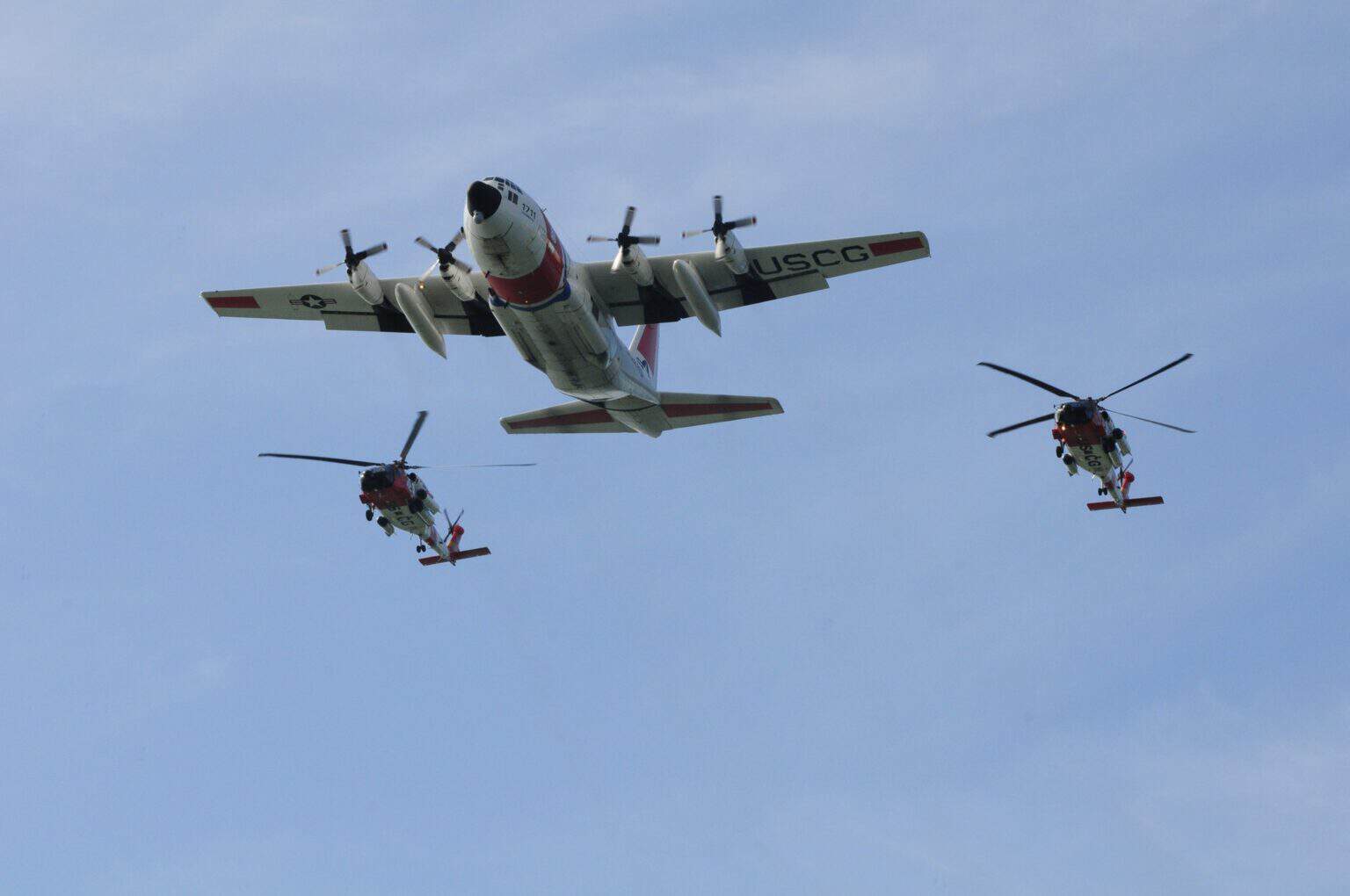
As of October 2026, the US Coast Guard flies two helicopter types, four families of fixed-wing aircraft and a growing fleet of drones. Its biggest fleet is still the MH-65 Dolphin helicopter, with about 94 in service, but the Coast Guard has decided to replace every one of them with the larger MH-60 Jayhawk.
In total the service had about 200 crewed aircraft in 2024, according to the Congressional Budget Office, and roughly three-quarters of them are helicopters. Most lists online are out of date: the HC-130H Hercules they still show flew its last Coast Guard mission in September 2024.
Below is every type in the order of fleet size, with the counts and performance figures the Coast Guard itself publishes. For helicopters across all the services, see our guide to the types of military helicopters.
| # | Aircraft | Role | Coast Guard fleet | Status |
|---|---|---|---|---|
| 1 | MH-65D/E Dolphin | Short-range rescue helicopter | About 94 | Being replaced by the MH-60 |
| 2 | MH-60T Jayhawk | Medium-range rescue helicopter | About 45 | Life extension under way, fleet to grow |
| 3 | HC-130J Super Hercules | Long-range surveillance and transport | 18 operational, 1 in modification | 6 more ordered Sept. 2026 |
| 4 | HC-144B Ocean Sentry | Medium-range surveillance | 18 | In service |
| 5 | C-27J Spartan | Medium-range surveillance | 14 received, 10 planned in use | Sacramento converting to HC-130J |
| 6 | C-37A, C-37B and G700 | Command and VIP transport | C-37A, C-37B and 1 G700 | Second G700 due by end of 2026 |
| 7 | MQ-9 Guardian and MQ-9B | Long-range drone | Flown jointly with CBP; 4 MQ-9B ordered | MQ-9B deliveries from late 2028 |
| 8 | ScanEagle and V-BAT | Cutter-launched drones | Contractor-operated on national security cutters | V-BAT taking over |
How this list works
An aircraft counts if the Coast Guard flies it, or has a crew flying it, in October 2026. Entries run from the largest fleet to the smallest. Speeds, ranges and endurance are the Coast Guard’s own program figures. Helicopter counts move as airframes go through overhaul and retirement, so they are given as approximate and dated.
Why the Coast Guard flies what it flies
The Coast Guard says it cannot afford aircraft built for a single job, so it buys types that can handle many missions. A helicopter that hoists a fisherman off a sinking boat in the morning may chase a drug smuggler in the afternoon.
That gives the fleet a simple shape: helicopters for rescue and interdiction close to shore and from cutters, and long-range turboprops that find people and vessels far out at sea. Jets are reserved for moving senior officials.
The official fleet page dates from 2019
The Coast Guard’s own aircraft fact sheet is dated Feb. 5, 2019. It still counts 201 aircraft, including 18 HC-130H Hercules that have since retired and no HC-144B, G700 or drones. Any fleet list built from it is out of date.
1. MH-65 Dolphin
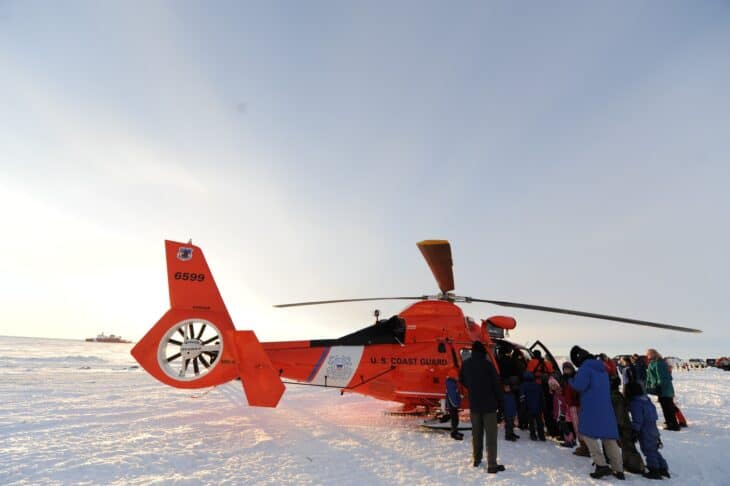

The MH-65 Dolphin is the most common aircraft in the Coast Guard. It is a short-range rescue helicopter based on the French AS365 Dauphin, and it has been in the Coast Guard’s inventory since 1984.
The Coast Guard rates it at a cruise speed of 148 knots, a range of 350 nautical miles and an endurance of three hours. It is small enough to deploy aboard cutters, and it is certified for all-weather and night flying except in icing conditions.


Upgrades since 2007 gave it new engines with 40% more power and the means to carry a 7.62 mm machine gun and a .50-caliber precision rifle, used to disable the engines of boats that refuse to stop. The 90th and final upgraded MH-65E was delivered in August 2024.
The Dolphin also guards the capital. The Coast Guard bought seven extra H-65s specifically to intercept light aircraft that stray into the restricted airspace around Washington, D.C.
Its problem is supply. The AS365 is out of production, with the last one delivered in 2021, and the Coast Guard cites a shrinking supply base as the reason to retire the fleet.
The old plan phased it out between fiscal years 2035 and 2039, but Commandant Adm. Kevin Lunday told senators in January 2026 that it now looks likely to stop flying before 2037.
2. MH-60T Jayhawk
.jpg)
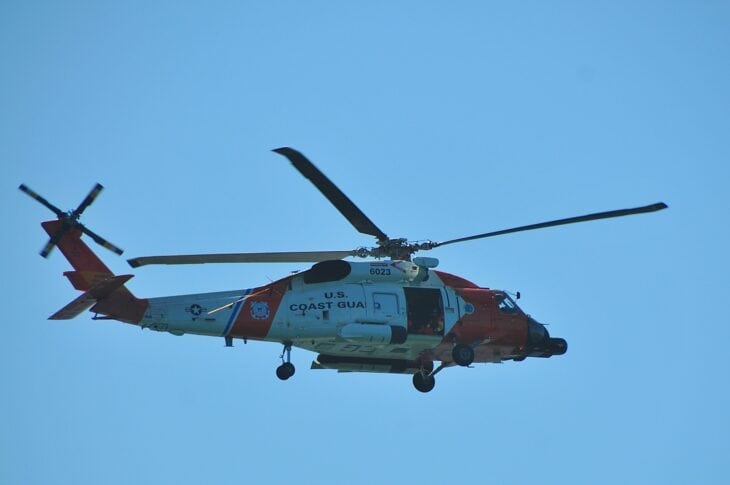
The MH-60T Jayhawk is the Coast Guard’s medium-range rescue helicopter and its future single helicopter type. It is a Sikorsky H-60, the same family as the Army Black Hawk and the Navy Seahawk, and the first Coast Guard examples entered service as HH-60Js in 1990.

It flies roughly twice as far as the Dolphin. The Coast Guard lists a cruise speed of 170 knots, a range of 700 nautical miles, an endurance of 6.5 hours and a crew of four, which suits rescues far offshore.
The fleet of about 45 is being rebuilt around brand-new fuselages. Sikorsky holds a $374 million contract for 45 new hulls, delivered at 12 a year through 2027, and the first rebuilt helicopter returned to Air Station Astoria, Oregon, in August 2024. Without that work, 90% of the fleet would have reached the end of its service life by 2028.
11,900 lives
By Sikorsky’s count in November 2023, Coast Guard Jayhawks had saved more than 11,900 lives on more than 48,300 search and rescue missions since 1990.
3. HC-130J Super Hercules
_HC-130J_Super_Hercules_extended-range_combat_rescue_aircraft_on_display_during_the_Joint_Service_Open_House_Celebration_held_at_Andrews_Air_Force_Base_(AFB),_-_DPLA_-_93659907bfc73f39358b605431c255cc.jpeg)
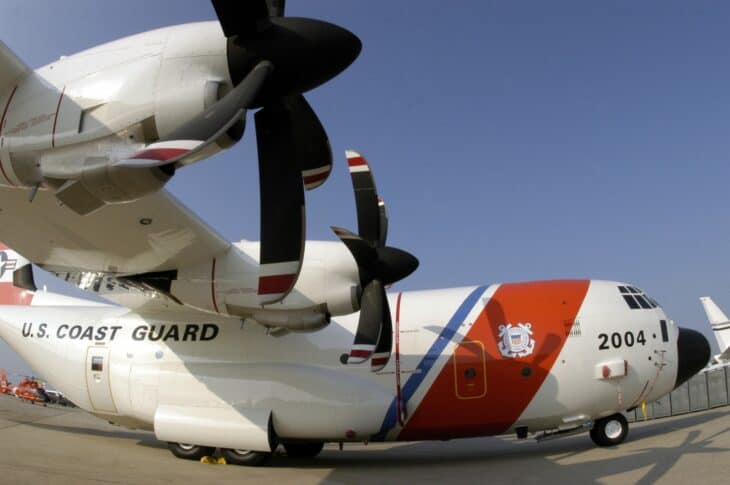
The HC-130J is the largest aircraft the Coast Guard flies and its long-range search plane. It is a Coast Guard version of the Lockheed Martin C-130J Super Hercules, with a 132-foot 7-inch (40.4 m) wingspan, a surface search radar under the belly, a nose-mounted camera turret and a two-operator workstation on the flight deck.
The Coast Guard gives it a cruise speed of 320 knots, a range of 4,900 nautical miles and an endurance of more than 20 hours. The Coast Guard also calls it the Department of Homeland Security’s largest and most capable airlift aircraft.
The Coast Guard has 18 in operational service at four air stations: Elizabeth City, North Carolina; Kodiak, Alaska; Barbers Point, Hawaii; and Sacramento, California, which received its first one in July 2026. A 19th, delivered by Lockheed in April 2026, is being fitted out by L3Harris in Waco, Texas.
The fleet is growing again. On Sept. 24, 2026, the Coast Guard ordered six more through Air Force contracts, worth up to $735 million and paid for by the 2025 budget reconciliation law. Deliveries run from fiscal 2028 to fiscal 2030 and bring the funded total to 25.
4. HC-144B Ocean Sentry
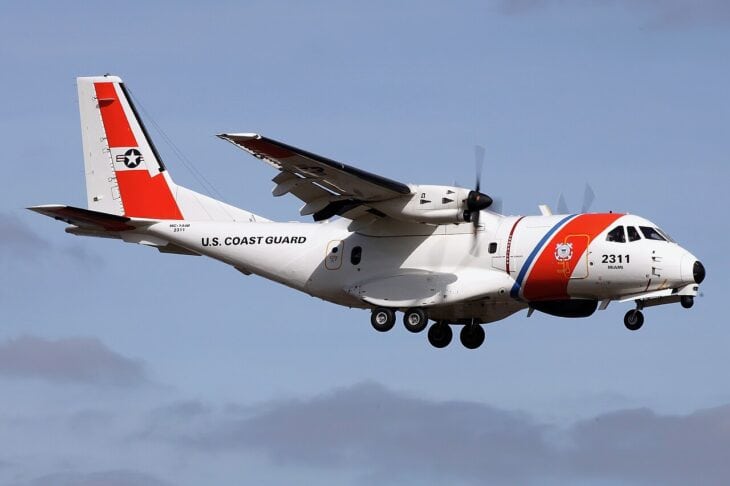
The HC-144 Ocean Sentry is a twin-turboprop patrol aircraft built by EADS, now Airbus, and the larger half of the Coast Guard’s medium-range surveillance fleet. The Coast Guard has 18 of them.
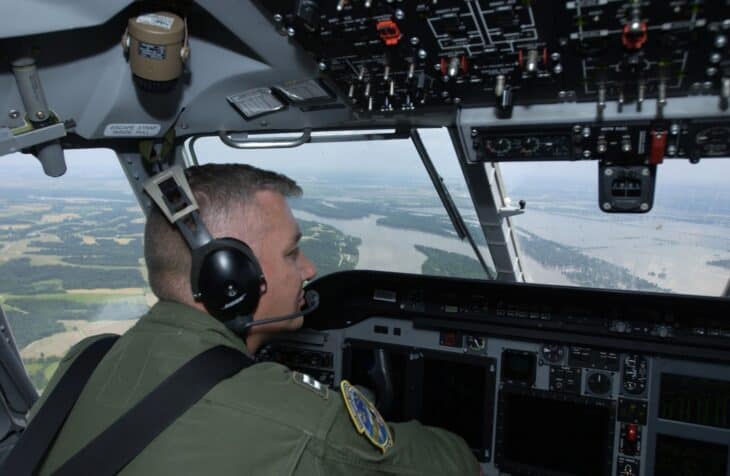

It cruises at 215 knots, has a range of 2,100 nautical miles and stays airborne for more than 10 hours. A rear ramp lets crews reconfigure the cabin quickly for cargo, passengers or a medical evacuation, and it can drop life rafts, pumps and flares to vessels in trouble.
All 18 have been upgraded with a new cockpit computer and the Navy-derived Minotaur mission system, which fuses radar and camera data and shares it with ships and command centers.
The last upgraded aircraft was finished in June 2024 and the fleet is now designated HC-144B. The 2026 budget funds initial work to extend each airframe’s life by an estimated 22,000 flight hours.
5. C-27J Spartan
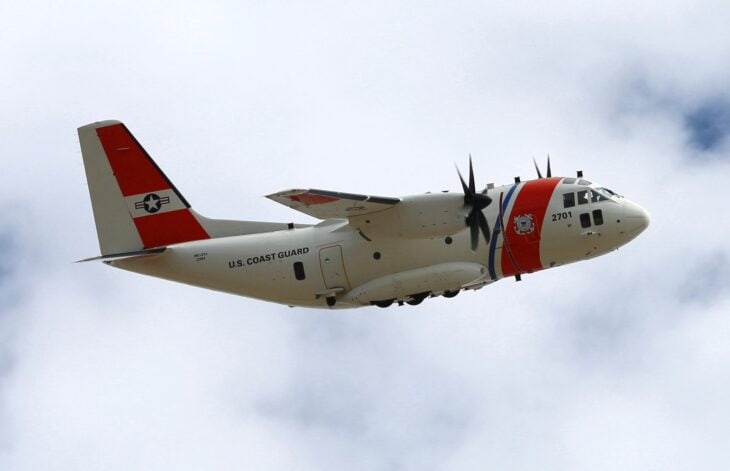

The C-27J Spartan is a surplus Air Force transport. Congress moved 14 of them to the Coast Guard in the 2014 defense authorization act: 13 were brought back from storage at Davis-Monthan Air Force Base and the 14th followed in April 2017.
It is the fastest of the medium-range planes, at a cruise speed of 290 knots with a range of 2,675 nautical miles and 12 hours of endurance. The first fully equipped HC-27J, with search radar and sensors added, made its first flight in September 2023.
The Spartan’s role is shrinking. The 2026 budget plans for a fleet of 10, eight flying and two in depot maintenance, and says some airframes were never outfitted for Coast Guard missions. Air Station Sacramento, the first C-27J unit, is now converting to the HC-130J.
6. C-37A, C-37B and G700 command jets
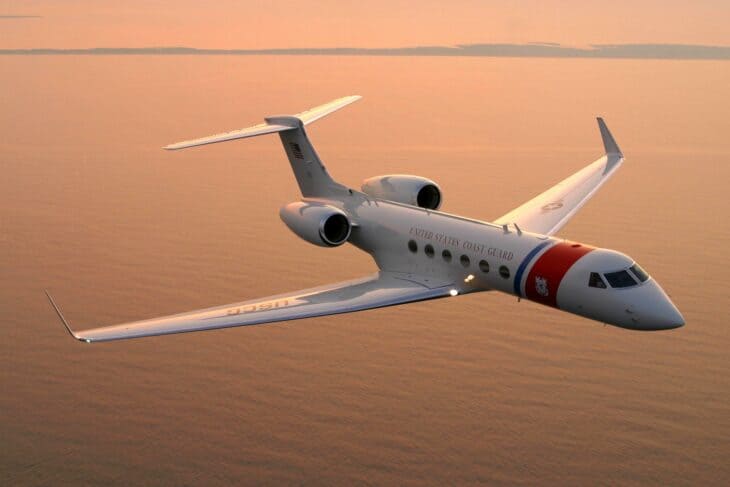

The only jets in the Coast Guard fleet are Gulfstreams used as long-range command and control aircraft, flying the Commandant, the Secretary of Homeland Security and other senior officials from Reagan National Airport. They carry secure communications so leaders can run an operation from the air.
The C-37A is a military Gulfstream V that carries 12 passengers and a crew of four at Mach 0.80. The C-37B, tail number CG-102, is a Gulfstream G550 delivered in June 2022 with a range of 5,000 nautical miles.
Both are being replaced by two Gulfstream G700s, ordered in October 2025 for about $172 million. The first arrived on Jan. 29, 2026 and the second is expected by the end of the year. The Coast Guard said its older jets had logged 30 days of unplanned maintenance and six canceled missions since January 2025.
The old jets are still flying. On Sept. 2, 2026, a C-37A carrying Homeland Security Secretary Markwayne Mullin lost an engine and landed safely at Reagan National.
7. MQ-9 Guardian and MQ-9B
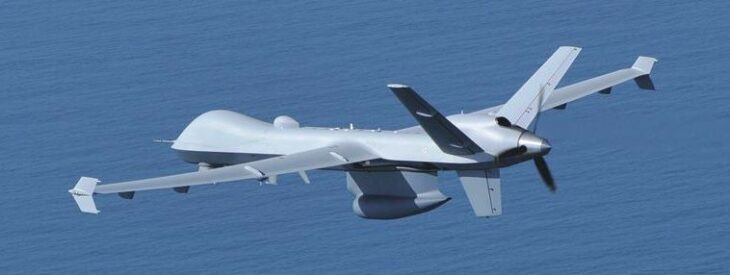
The Coast Guard’s long-range drone is the MQ-9 Guardian, a maritime version of the Predator B. Since 2008 Coast Guard crews have flown it in a joint program with US Customs and Border Protection, first over the southwest border and then over the Gulf.
It earns its keep. During four months of fiscal 2026 covering the Caribbean and Eastern Pacific, the Coast Guard credits it with helping seize about 60,700 pounds of narcotics worth $306 million.
On Sept. 25, 2026, CBP ordered four newer MQ-9B drones and their ground stations for the Coast Guard from General Atomics, a $247.8 million order. The first two are due in late 2028 and the last two in early 2029. Our Reaper vs Predator comparison explains how the MQ-9 family grew out of the original Predator.
8. ScanEagle and V-BAT cutter drones
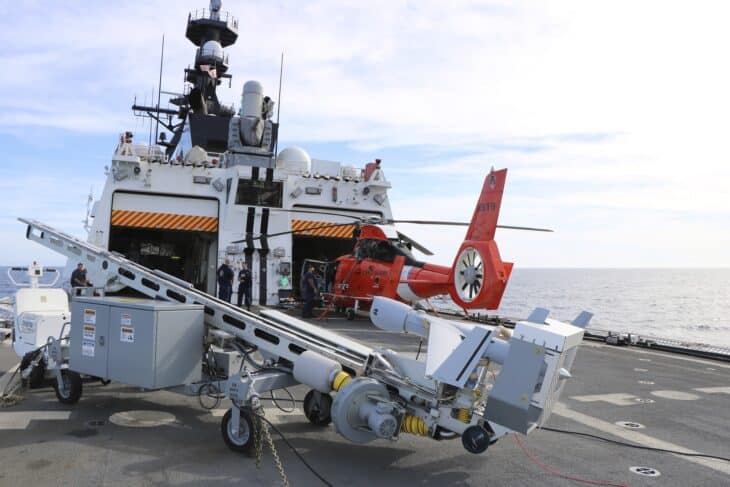

The Coast Guard’s national security cutters carry small drones of their own. They are contractor-owned and contractor-operated: the Coast Guard pays for surveillance hours rather than buying the aircraft.
Insitu’s ScanEagle came first, under a 2018 contract, and was installed on the first nine national security cutters by 2023.
In June 2024 the Coast Guard hired Shield AI to supply its V-BAT, a drone that takes off and lands vertically on a cutter’s deck, and the two contracts overlap to cover the handover. The V-BAT finished operational testing aboard the cutters Midgett and Stone in July 2025.
What comes next: an all-H-60 helicopter fleet
The biggest change in Coast Guard aviation is the end of the two-helicopter fleet. The service said in 2023 that it plans to operate 127 H-60s and no Dolphins, sourcing the extra airframes from both new production and converted Navy hulls.
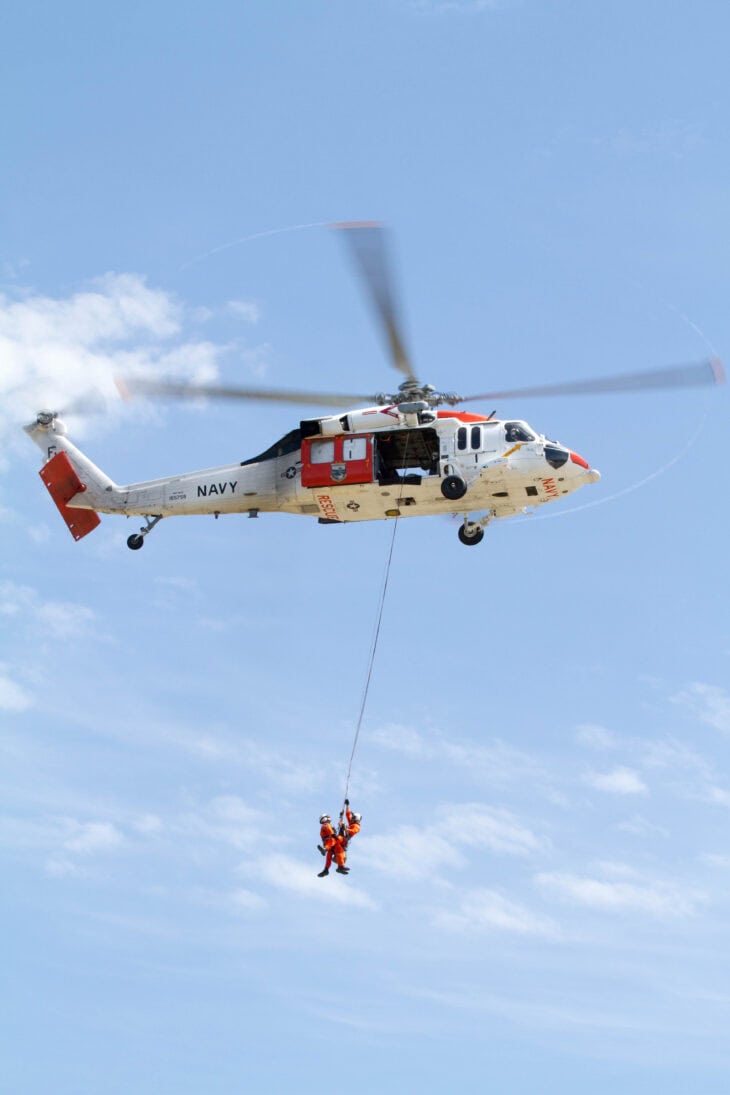
The first phase builds 36 helicopters to convert eight air stations from the MH-65, and the first conversion began in summer 2024. The last station is expected to switch in the early 2040s, although the January 2026 testimony suggests the Dolphins may go sooner.
The funding arrived in 2025. The reconciliation law passed that year gave the Coast Guard nearly $2.3 billion for new MH-60s and simulators.
In October 2025 the Navy announced plans to buy the Coast Guard an “MH-60R variant” from Sikorsky’s parent, Lockheed Martin. That points to a Coast Guard helicopter based on the Navy’s in-production MH-60R Seahawk, covered in our guide to Navy helicopters.
What is not on the list, and why
HC-130H Hercules. The Coast Guard’s Hercules history dates to a 1958 order, and the H model flew alongside the J for years. It made its final Coast Guard flight in September 2024, and crews now fly only the J.
HU-25 Guardian. This Falcon 20 business jet derivative was the only jet ever to serve widely across the Coast Guard fleet. All 41 are gone: the last was retired on Sept. 23, 2014, after 32 years of service, and the HC-144 took over its job.
Auxiliary aircraft. Volunteers in the Coast Guard Auxiliary fly their own privately owned planes on patrols and search missions. They support the Coast Guard but are not part of its fleet.
Does the Coast Guard have fighter jets?
No. Its only jets today are Gulfstream VIP transports, and its last patrol jet, the HU-25 Guardian, retired in 2014. The closest it comes to air defense is the MH-65 Dolphin, which intercepts light aircraft that stray into the restricted airspace over Washington, D.C.
The Coast Guard is a military service, but its aviation looks nothing like the Marines’ strike-focused air arm. For the contrast, see our list of every Marine Corps aircraft.
FAQ
Sources and references used for research and fact-checking.
- U.S. Coast Guard, Aircraft (fact sheet, Feb. 5, 2019)
- U.S. Coast Guard Acquisition Directorate, MH-60T Medium Range Recovery Helicopter
- U.S. Coast Guard Acquisition Directorate, MH-65 Short Range Recovery Helicopter
- U.S. Coast Guard Acquisition Directorate, HC-130J Long Range Surveillance Aircraft
- U.S. Coast Guard Acquisition Directorate, Coast Guard orders six C-130Js through Air Force contracts
- Seapower, Coast Guard takes delivery of 19th HC-130J long range surveillance aircraft
- U.S. Coast Guard Acquisition Directorate, Medium Range Surveillance Aircraft (HC-144 and C-27J)
- U.S. Coast Guard Office of Aviation Forces, Fixed-Wing and Sensors Division (CG-7113)
- Chuck Hill's CG Blog, Availability and Use of Aircraft in the Coast Guard (Congressional Budget Office)
- U.S. Coast Guard, FY 2026 Congressional Justification
- U.S. Coast Guard Acquisition Directorate, C-37B Long Range Command and Control Aircraft
- AVweb, Coast Guard Adds Gulfstream Jets
- GlobalAir.com, U.S. Coast Guard receives first of two Gulfstream G700 jets
- U.S. Coast Guard Acquisition Directorate, Coast Guard orders four long-range UAS
- U.S. Coast Guard Acquisition Directorate, Unmanned Aircraft Systems
- U.S. Coast Guard Acquisition Directorate, Coast Guard prepares for aircraft fleet expansions with awards for engines, radar
- Seapower, Coast Guard to SLEP, Expand MH-60T Helicopter Fleet as Sikorsky Delivers First New Airframe
- The War Zone, Coast Guard Will Get A New MH-60 Variant To Replace MH-65 Helicopters
- Breaking Defense, Coast Guard chief talks icebreaker plan, fate of MH-65 Dolphin
- WTKR, Coast Guard's new C-130J improves search and rescue operations after retirement of C-130H
- Defense Media Network, Coast Guard Retires Last HU-25 Aircraft
- Wikipedia, List of equipment of the United States Coast Guard
Get the Newsletter
The latest aviation news and stories sent to your inbox.
About the Author

Tim is the owner and lead editor of AeroCorner since 2019, overseeing aviation content covering aircraft, airlines, airports, and the broader aviation industry. Through years of researching, writing, editing, and publishing aviation-focused content, he has developed extensive practical knowledge of commercial aviation and air travel. Based in Asia and a frequent traveler himself, Tim also brings firsthand passenger experience to AeroCorner’s coverage. Outside of publishing, he has also explored aviation firsthand through hands-on flight training in New Zealand.