


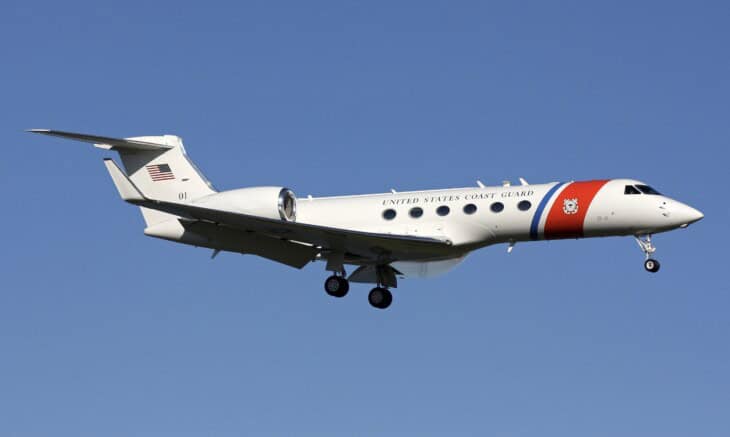
On September 2, 2026, a U.S. Coast Guard C-37A jet carrying Homeland Security Secretary Markwayne Mullin and 13 other people lost its right engine in flight and made a single-engine emergency landing at Ronald Reagan Washington National Airport. The aircraft touched down safely in the mid-afternoon and everyone aboard was unhurt.
What happened
The jet had left Lawson Army Airfield near Columbus, Georgia, about 90 minutes earlier and was inbound to the Washington area. The engine failed while it was still en route.
According to an air traffic control recording reviewed by CBS News, the pilot told the tower: “We just lost our right engine and would like to declare an emergency and immediate landing at DCA.” The crew reported 14 people on board and about 2.5 hours of fuel remaining.
The aircraft landed, was met and checked by airport fire and rescue crews on the runway, then taxied clear under its own power. Mullin wrote on X that the pilots “made the single engine landing feel routine” and told him afterward that it was the first time either had done one. The Coast Guard referred questions to the Department of Homeland Security.
Why a twin-engine jet can land on one
The C-37A is the military designation for the Gulfstream V, a long-range business jet with two Rolls-Royce turbofans. Losing one is a serious emergency, but it is not a loss-of-control event. Twin-engine transport aircraft are designed and certified to keep climbing, flying, and landing with one engine shut down.
The main problem the crew manages is asymmetric thrust, the yaw caused by having power on only one side. Pilots counter it with rudder, trim the aircraft to hold heading, and fly a published single-engine approach. Declaring an emergency gives them priority handling and clears other traffic out of the way.
Fuel and a suitable runway nearby also matter, and here the crew had both. The same basic failure grounded a United 767 leaving Geneva in August, when that crew also returned and landed without injuries.
An aging government aircraft
The Coast Guard operates only two C-37As, based at Reagan National, to move senior Coast Guard and DHS officials. News reports put the jet involved at 22 to 25 years old.
DHS has already flagged the aircraft as a problem. In materials cited by News 9, the department called the jet “outside of Gulfstream’s service life” with “significant avionics and communications obsolescence issues,” and sought roughly $50 million and later about $200 million for two Gulfstream G700 replacements. Some members of Congress questioned the priority, arguing the money should go to the Coast Guard’s aging search-and-rescue fleet first.
The broader pattern is familiar in government aviation. Military and federal operators routinely fly business-jet airframes for decades past the point corporate flight departments trade them in, which steadily raises maintenance cost and parts scarcity.
Reality check
A single-engine landing in a Gulfstream V is a trained-for emergency, not a near disaster. Crews rehearse engine failures repeatedly in the simulator and the aircraft is certified to fly and land on one engine. The open questions are the cause of the failure, which has not been released, and the age of the airframe, not the skill it took to land it. No formal investigation had been announced when this article was published.
Sources and references used for research and fact-checking.
Get the Newsletter
The latest aviation news and stories sent to your inbox.
About the Author

Tim is the owner and lead editor of AeroCorner since 2019, overseeing aviation content covering aircraft, airlines, airports, and the broader aviation industry. Through years of researching, writing, editing, and publishing aviation-focused content, he has developed extensive practical knowledge of commercial aviation and air travel. Based in Asia and a frequent traveler himself, Tim also brings firsthand passenger experience to AeroCorner’s coverage. Outside of publishing, he has also explored aviation firsthand through hands-on flight training in New Zealand.