

Table of Contents
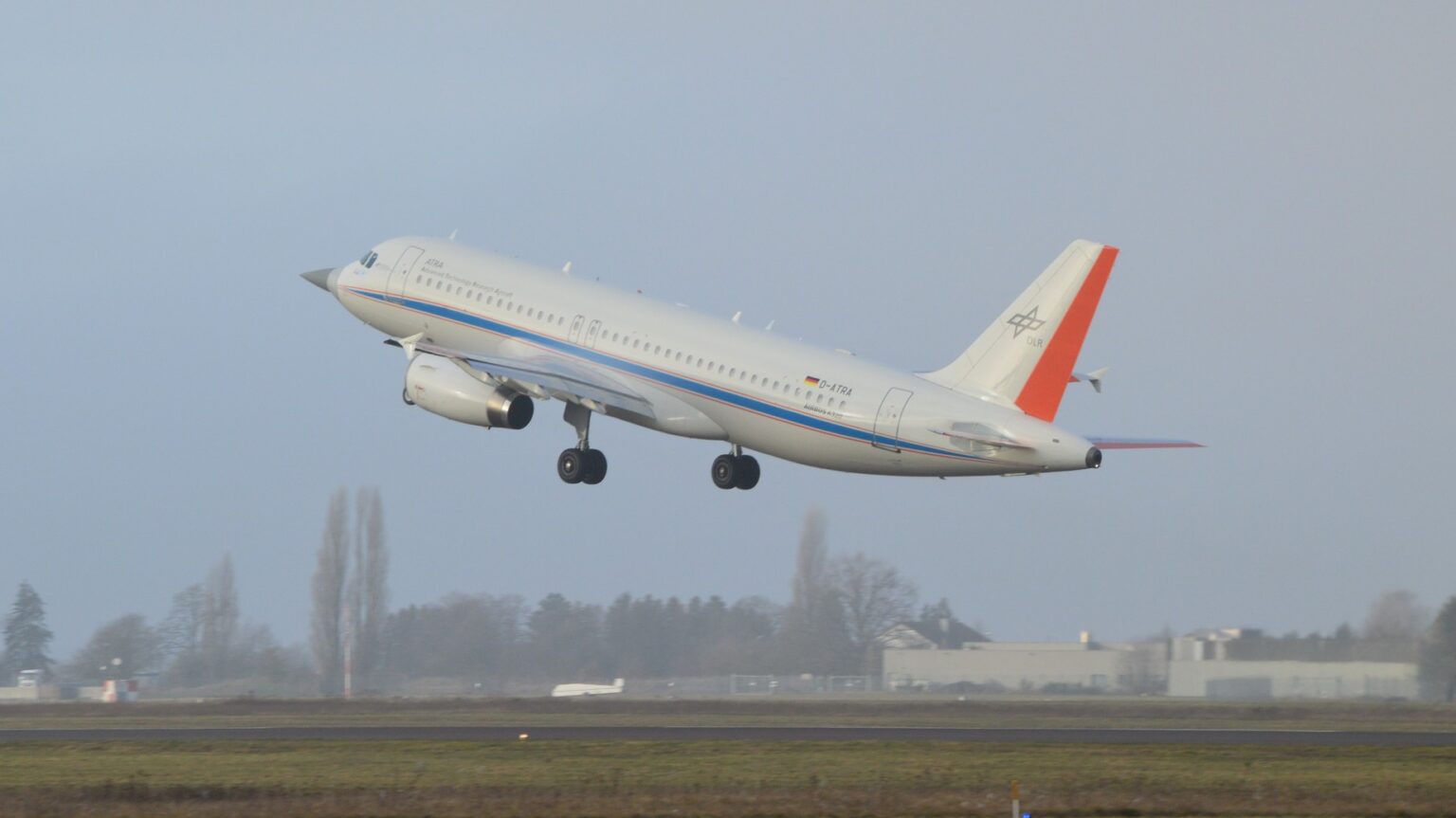
The strangest-looking airliner in Europe is an Airbus A320 with a fighter’s pointed radome on the front, and it exists so radar engineers do not have to tie up a combat jet.
On Nov. 6, 2026, Airbus said the German Aerospace Center’s A320 ATRA, fitted with a Eurofighter nose, had completed its commissioning flights with the new ECRS Mk1 radar on board. The aircraft is now operational at Airbus’s site in Manching, Germany.
Its job is to fly the radar that will go into Germany’s 38 Quadriga jets and the 20 Tranche 5 jets Germany ordered in October 2025. Installation on the Quadriga fleet is scheduled to start in 2027.
Why Airbus Tests a Fighter Radar on an Airliner
Testing a new radar on a combat jet is slow, and Airbus says an airliner is faster on both counts that matter: getting cleared to fly and staying up once it does.
Thomas Hirsch, the Airbus E-Scan radar project manager, put the case plainly in January 2025: the A320 ATRA “has a significantly shorter clearance process and can stay in the air longer than a Eurofighter.” That lets engineers test the radar in real flight without tying up a frontline Eurofighter Typhoon.
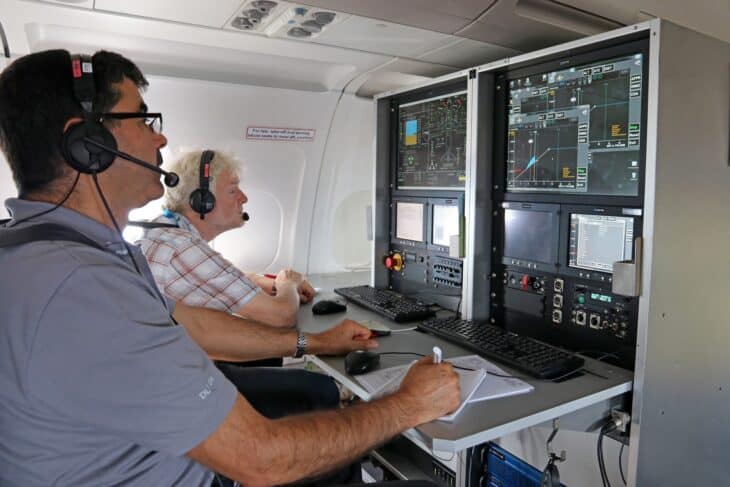
The airliner also has room the fighter lacks. Workstations in the cabin let engineers watch the radar’s performance as it happens and try out new software versions and functions in flight.

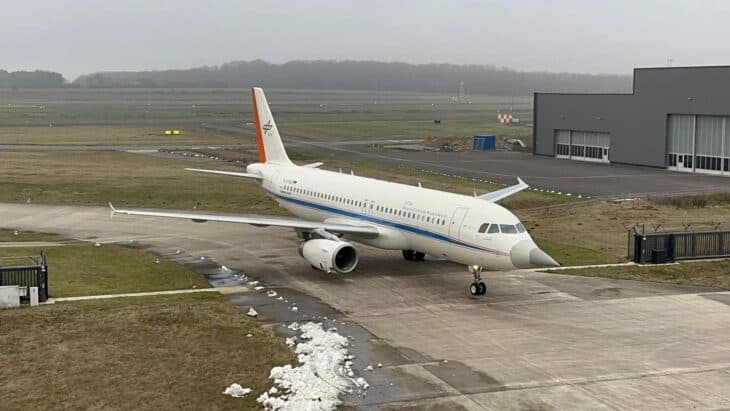
The catch was the front end. To carry the radar the way the fighter will, the Airbus A320 needed a matching front section, so the testbed had to wear a Eurofighter’s nose.
Airbus engineers in Manching designed and assembled that nose section. Teams from Airbus Defence and Space and Airbus Commercial Aircraft redesigned and reinforced the A320’s forward fuselage to carry it, following the procedures of the type-certificate holder in Toulouse.
From a 2008 Research Jet to a Radar Testbed
The aircraft, registered D-ATRA, is the largest in DLR’s research fleet. DLR has flown it since 2008 for work on aerodynamics, avionics, airframe behavior, safety concepts and engines.
Images of the new nose first surfaced in December 2024. On Jan. 21, 2025, after high-speed taxi tests, the A320 ATRA took off with it for the first time from DLR’s airfield in Braunschweig.
Inside, the conversion runs deep. Hundreds of meters of data cable were installed, and liquid and air cooling systems keep the radar at temperature, according to the Nov. 6 announcement as reported by AeroTime.
By September 2025 the jet had flown in what Airbus called its Initial Operational Capability configuration. On the first of those flights, a German Eurofighter from Tactical Air Wing 73 “Steinhoff” flew alongside, and a chase aircraft photographed the pair.
The money behind the radar is large. In February 2025, Hensoldt announced a contract extension worth about 350 million euros ($393 million) covering test systems for the A320 and further development of the Mk1 Step 1 radar.
In June 2025, Hensoldt said the first radars with an upgraded processor and antenna power supply had been built. By June 2026, Hensoldt and Indra were testing the radar against live targets of opportunity and cooperative targets ahead of the airborne trials.
The Radar Germany’s Typhoons Are Waiting For
The ECRS Mk1, short for Eurofighter Common Radar System Mark 1, is an active electronically scanned array radar developed by Hensoldt and Indra under contract to Airbus Defence and Space. It replaces the Typhoon’s Captor-M radar.
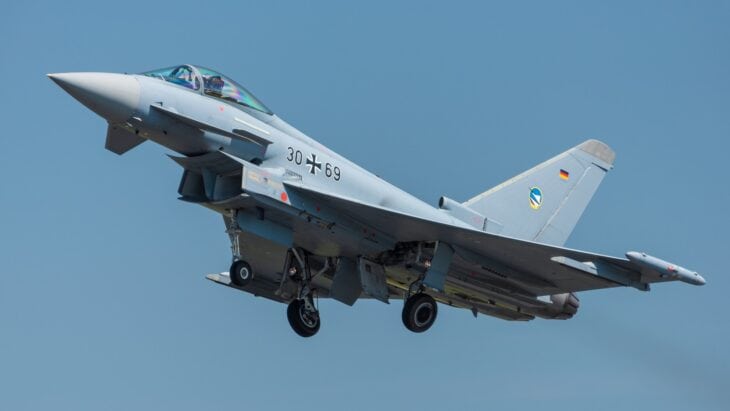

An AESA radar steers its beam electronically instead of swinging a dish. The Mk1 also sits on a repositionable mount, giving it a wider field of regard, and can run several modes at once.
Air-to-air comes first. Later software is expected to add air-to-ground and electronic warfare functions, which matters for the jets the German Air Force is buying.
Project Quadriga, announced in November 2020, buys 38 Tranche 4 jets, 30 single-seaters and eight two-seaters, to replace 38 older Tranche 1 aircraft. The 20 Tranche 5 jets, signed for in October 2025 and due between 2031 and 2034, will replace part of the Tornado ECR fleet.
Spain’s Halcón I Eurofighters get the same radar. In total, Hensoldt says about 200 ECRS Mk1 sets will be delivered to the German and Spanish air forces.
Sensors weigh heavily in how we rank the best fighter jets in the world, and the ECRS Mk1 is the sensor upgrade Germany and Spain are betting their Typhoons on.
What the A320 ATRA Does Next
Airbus says the latest flights confirmed that the aircraft and the radar work as intended in the air. The next phase is the long one: flying software versions and functions until the radar is ready for the fighters.
Installation on Germany’s Quadriga jets is scheduled to begin in 2027, with deliveries to Germany and Spain also targeted for that year. Existing Eurofighters are expected to get the radar through later retrofit programs, Airbus says.
Britain is taking the same route for its own radar. The UK’s ECRS Mk2, built by BAE Systems and Leonardo, is set to be tested on a modified Avro RJ100 regional airliner.
The fighter is not cut out entirely: a Spanish Typhoon flew an ECRS Mk1 from Getafe in December 2024. But for the long grind of software testing, Europe’s next fighter radars will log their hours with an airliner cabin full of engineers behind the nose.
Sources and references used for research and fact-checking.
- AeroTime, Airbus A320 with Eurofighter nose now flying with new fighter radar
- Airbus, A unique test aircraft: the A320 with the Eurofighter nose takes off for the first time
- The Aviationist, Airbus A320 ATRA Flies in IOC Configuration Ahead of Eurofighter's AESA Radar Testing
- Hensoldt, ECRS Mk1 adds key capabilities to Eurofighter Tranche 5
- The Aviationist, Germany's First Tranche 4 Eurofighter Makes Maiden Flight
Get the Newsletter
The latest aviation news and stories sent to your inbox.
About the Author

Tim is the owner and lead editor of AeroCorner since 2019, overseeing aviation content covering aircraft, airlines, airports, and the broader aviation industry. Through years of researching, writing, editing, and publishing aviation-focused content, he has developed extensive practical knowledge of commercial aviation and air travel. Based in Asia and a frequent traveler himself, Tim also brings firsthand passenger experience to AeroCorner’s coverage. Outside of publishing, he has also explored aviation firsthand through hands-on flight training in New Zealand.