Fighter Jets
Europe's twin-engine canard-delta fighter, flown by nine air forces.
Updated: by Tim de Vries
The latest aviation news and stories sent to your inbox.
The Eurofighter Typhoon is a twin-engine, canard-delta multirole fighter built by Airbus, BAE Systems and Leonardo for the UK, Germany, Italy and Spain. It entered service in 2003 and was exported to Austria, Saudi Arabia, Oman, Kuwait and Qatar, with Turkey also on order. By 30 June 2026, 769 had been ordered and 618 delivered.
Live Fleet Activity (EUFI)
Fetching live data…


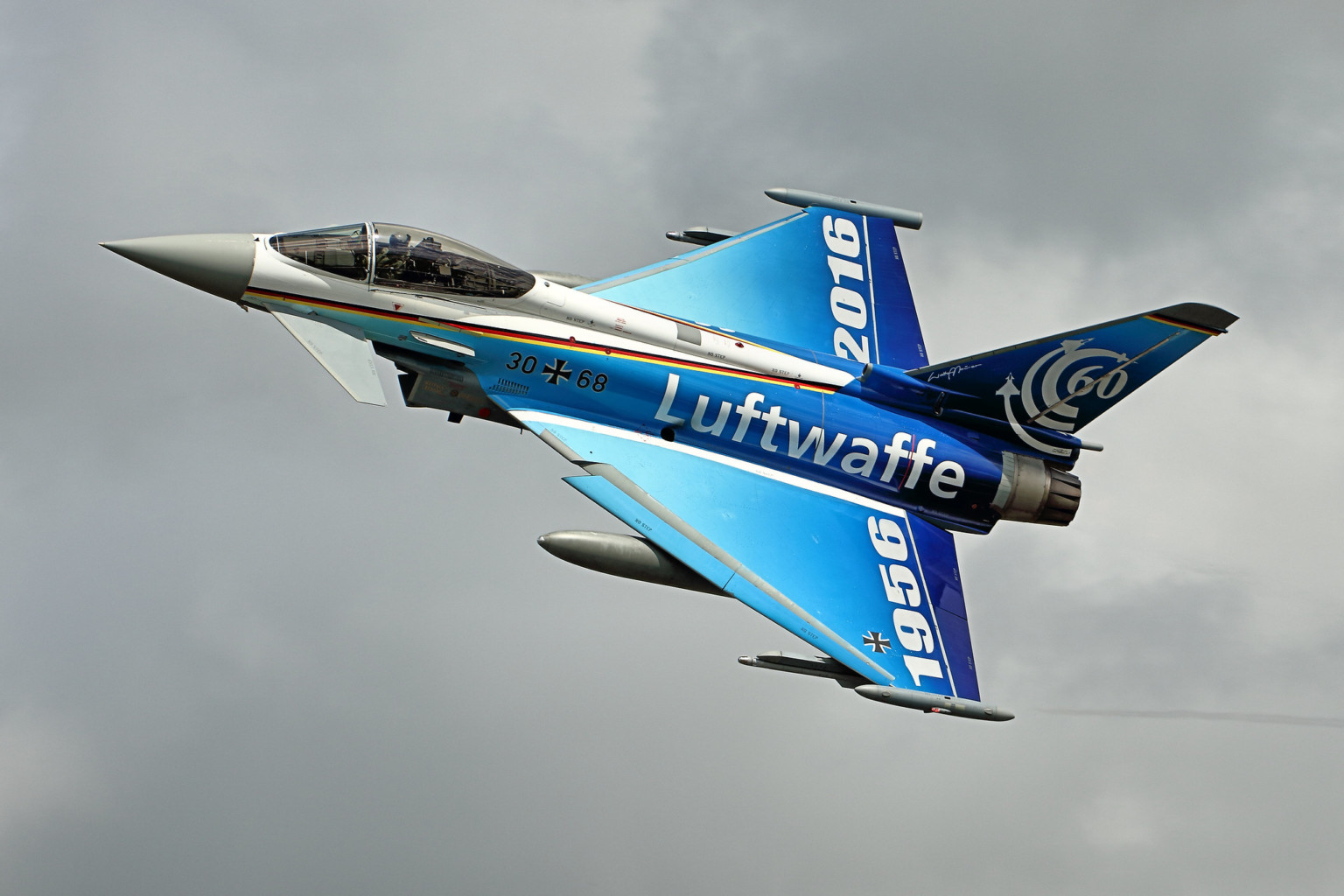

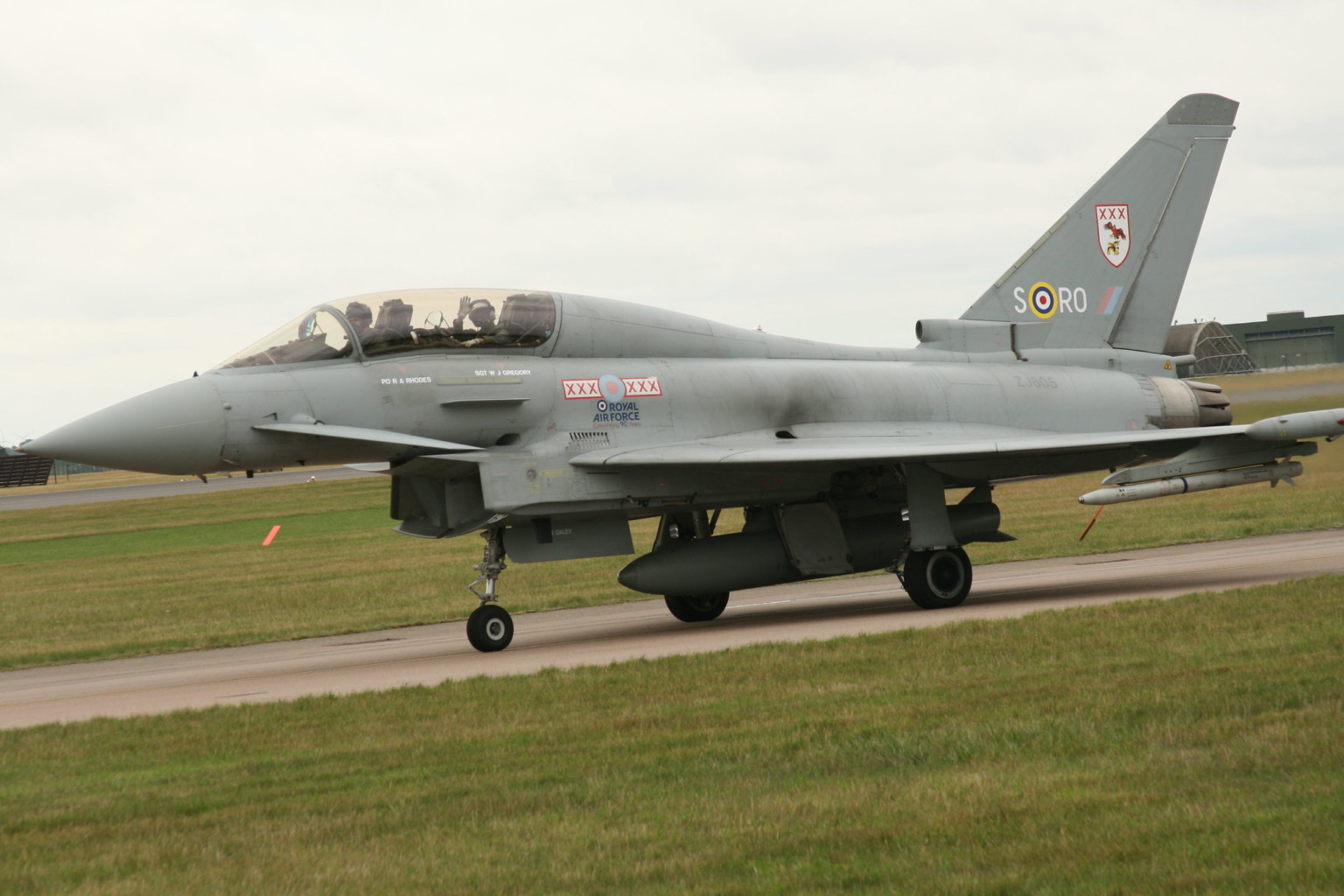
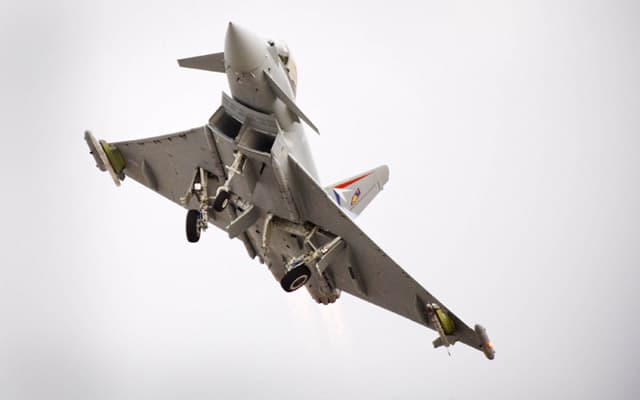
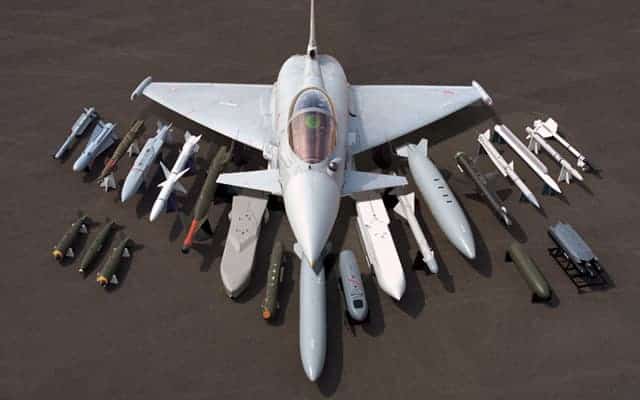
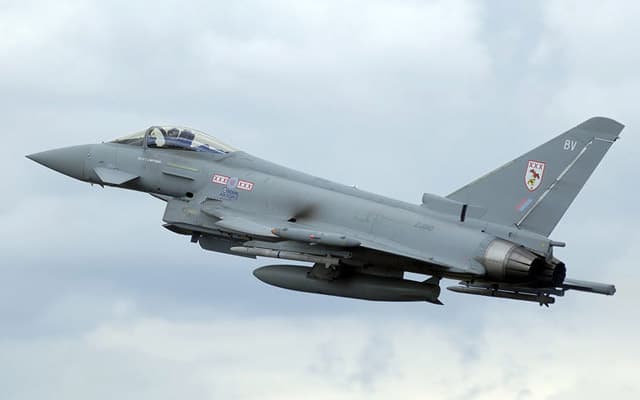

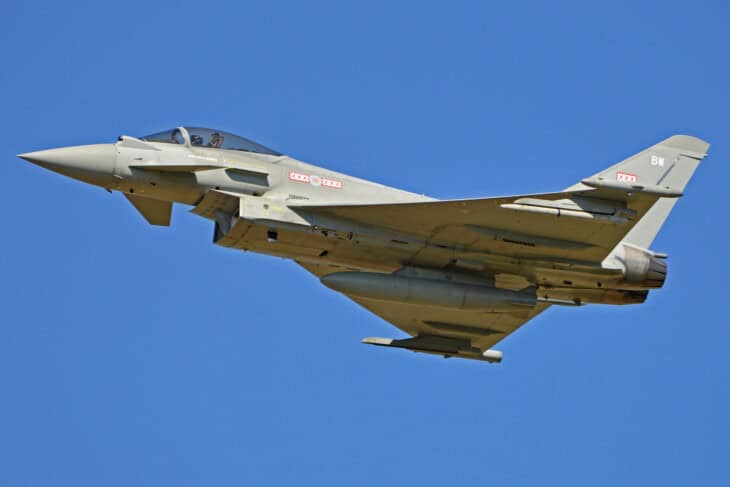
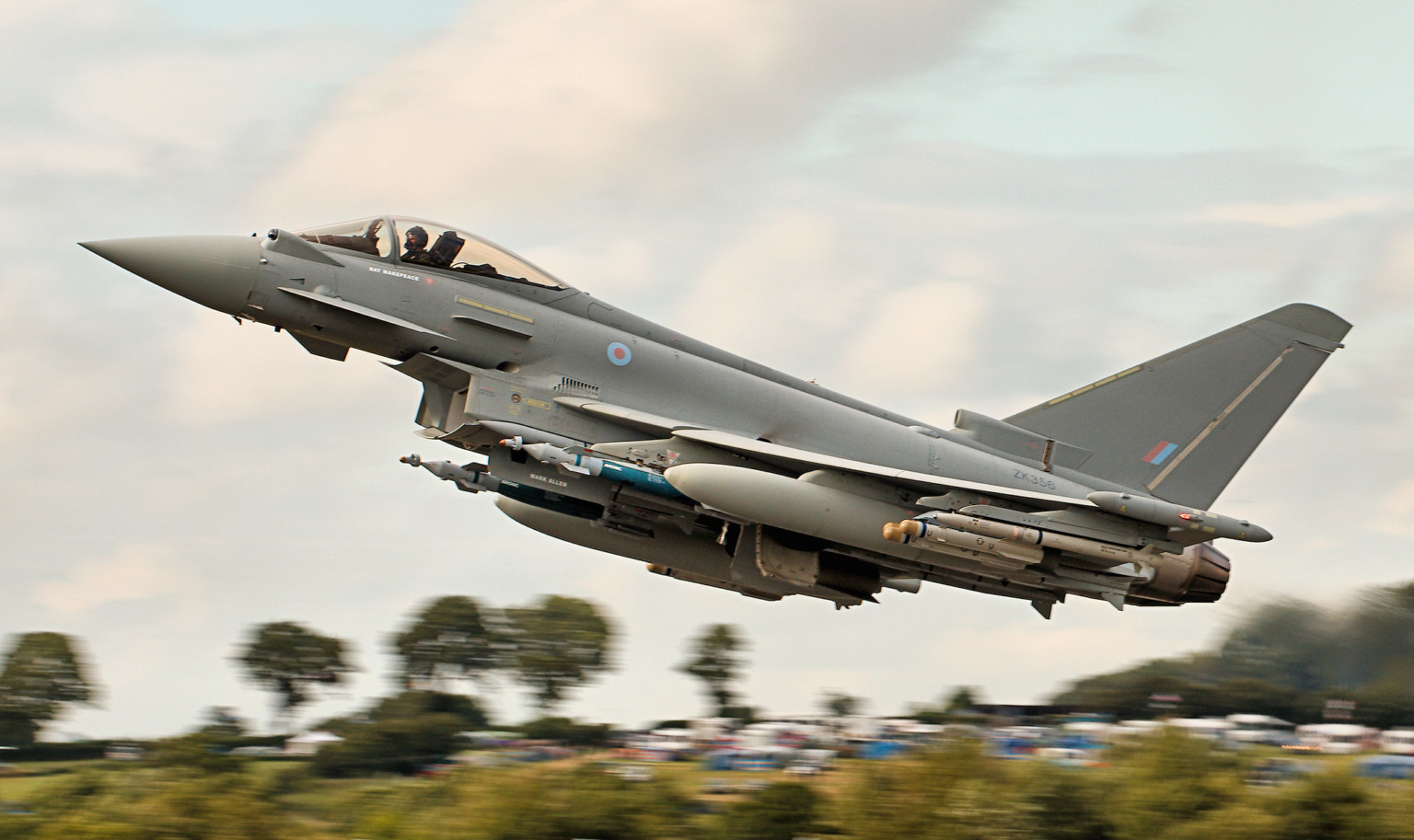
The Eurofighter Typhoon is a twin-engine, supersonic, canard-delta multirole fighter. It was designed first as an air-superiority fighter, and later production jets added precision strike.
It is built by a consortium of Airbus, BAE Systems and Leonardo, working through a joint company, Eurofighter GmbH. The NATO Eurofighter and Tornado Management Agency runs the program for its four partner nations: the UK, Germany, Italy and Spain.
The UK and export customers call it the Typhoon, while Germany, Italy and Spain use the EF-2000 name. By 30 June 2026, Airbus counted 769 Typhoons ordered and 618 delivered.
The program began in 1983 as a five-nation project between the UK, West Germany, France, Italy and Spain. France wanted a carrier-capable fighter and a leading role, and the partners could not agree.
In Turin on 2 August 1985, West Germany, the UK and Italy agreed to go ahead without France and Spain. Spain rejoined in early September 1985, and France left to build what became the Dassault Rafale.
A British technology demonstrator, the British Aerospace EAP, first flew on 6 August 1986. The first Eurofighter prototype, DA1, made its maiden flight on 27 March 1994.
The end of the Cold War cut demand and stretched the schedule. The first production contract was signed on 30 January 1998, and the Typhoon name was formally adopted at Farnborough on 2 September 1998.
The first series production jets flew in February 2003. Germany accepted its first one on 4 August 2003, the date the type formally entered service.
The Typhoon is a tailless delta with canard foreplanes and a 53-degree leading-edge sweep. It is built with relaxed stability, so a quadruplex digital fly-by-wire system keeps it under control.
That instability is where the agility comes from. The flight controls are described as “carefree”: they stop the pilot from exceeding the permitted envelope, and the design limits are +9 g and -3 g.
The Typhoon is not considered a stealth fighter. Its designers did reduce the frontal radar signature, for example with intakes that hide the face of the engines, but its weapons hang outside the airframe.
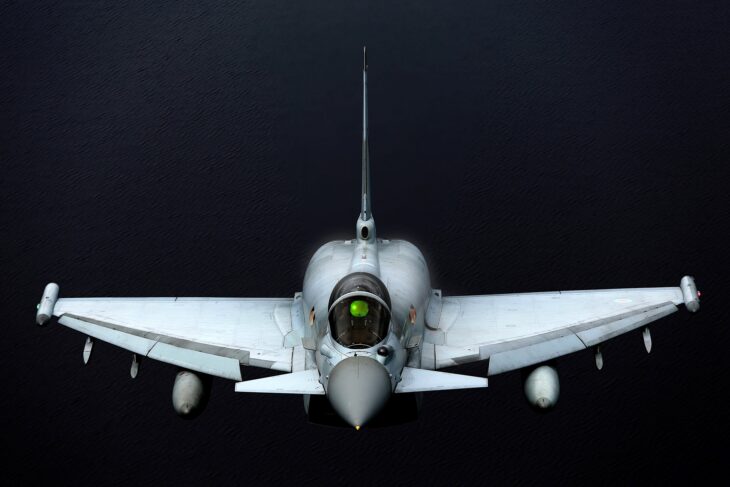
The full specification table for the aircraft is on this page. A few of its figures need explaining.
Each Eurojet EJ200 engine produces 13,500 lbf (60 kN) dry, the figure the panel shows, and 20,200 lbf (90 kN) with afterburner. In the interceptor configuration, the jet’s thrust-to-weight ratio is 1.15.
The Typhoon can also supercruise, flying supersonic without afterburner. Eurofighter says it can do Mach 1.5, Air Forces Monthly gives Mach 1.1 for the RAF’s FGR4, and a jet in Singapore’s evaluation reached Mach 1.21 on a hot day with a combat load.
The maximum speed of 1,550 mph (2,495 km/h) is Mach 2.35 at about 36,000 feet, per Austrian and German air force data. The ICAO type record lists a more conservative Mach 2.0.
The range shown is the ferry range with three drop tanks, not how far the Typhoon can fight. Its combat range is 863 miles (1,389 km) for a hi-lo-hi ground attack and 373 miles (601 km) flown low the whole way.
The ceiling shown is the 55,000 ft (16,800 m) service ceiling. The jet’s maximum flight altitude is about 65,000 ft (20,000 m).
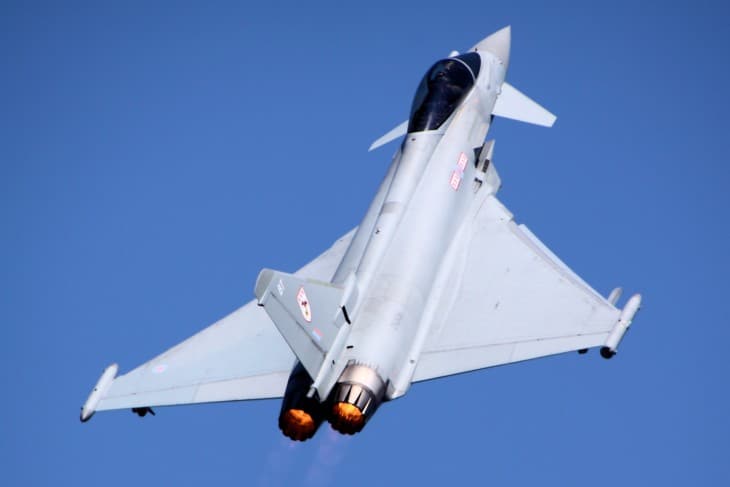
The Typhoon entered service with the Euroradar Captor-M, a mechanically scanned radar. Its successor is the Captor-E family of AESA radars, now split into three European Common Radar System versions.
The ECRS Mk0 is fitted to new jets for Kuwait and Qatar. The Mk1, from Hensoldt and Indra, is for Germany and Spain, and the Mk2, with electronic attack built in, is being developed by Leonardo for the RAF.
Britain signed a £453 million contract in January 2026 for 38 Mk2 radars, enough for 40 RAF Tranche 3 jets. A passive infrared search and track sensor, PIRATE, sits ahead of the windscreen on the left side.
The cockpit is all-glass, with three color displays, a wide-angle head-up display and Direct Voice Input. That voice system was the first used in a production military cockpit.
The Typhoon has 13 hardpoints: 8 under the wings and 5 under the fuselage. BAE Systems puts the payload at more than 19,800 lb (9,000 kg), and there is a 27 mm Mauser BK-27 cannon with 150 rounds.
For air combat it carries the MBDA Meteor, AIM-120 AMRAAM, IRIS-T, ASRAAM and AIM-9 Sidewinder. Strike weapons include Storm Shadow, Brimstone, Taurus KEPD 350, Paveway IV bombs and the Marte ER anti-ship missile.
The newest addition is a cheap counter-drone weapon. In 2026 the RAF began flying Typhoons with pods of APKWS laser-guided rockets, seven to a pod.
Typhoons are bought in tranches, which are production and funding batches. A tranche does not by itself mean a big jump in capability, and later tranches build on the one before.
Tranche 1 contracts covered 148 jets from 1998, and the last went to Germany in March 2008. Tranche 2 brought a new mission computer and the PIRATE sensor, and the RAF received its first on 21 October 2008.
Tranche 3A was signed in July 2009, and the planned Tranche 3B was cancelled. Tranche 4 brings the Captor-E radar, and Tranche 5 adds new computers and a large-area cockpit display.
Typhoons are built as single-seaters and as two-seaters, which are used mainly for training. The RAF calls its single-seaters FGR4 and its two-seaters T3, while its early Tranche 1 two-seaters were the T1 and T1A.
Spain designates the jet C.16 and Italy calls it the F-2000A. Germany is also converting 15 Typhoons into the Typhoon EK, an electronic-warfare version armed with AARGM anti-radiation missiles.
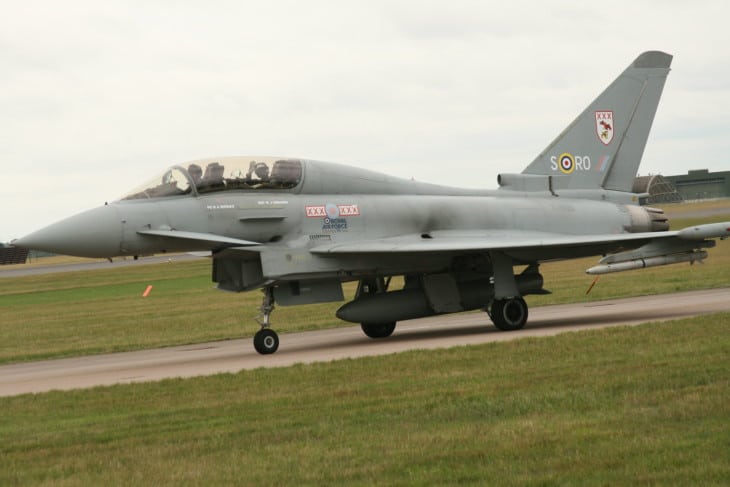
Nine air forces operate the Typhoon, and Turkey is the tenth customer. These are the totals from Airbus’s orders and deliveries summary.
| Operator | Ordered | Delivered |
|---|---|---|
| Germany | 201 | 143 |
| United Kingdom | 159 | 159 |
| Italy | 120 | 96 |
| Spain | 118 | 73 |
| Saudi Arabia | 72 | 72 |
| Kuwait | 28 | 24 |
| Qatar | 24 | 24 |
| Turkey | 20 | 0 |
| Austria | 15 | 15 |
| Oman | 12 | 12 |
| Total | 769 | 618 |
Source: Airbus, figures to 30 June 2026. Delivered is not the same as in service: Airbus listed 611 Typhoons in operation on that date.
The UK gap is the clearest example. A September 2025 written answer put the RAF fleet at 111 jets: 4 Tranche 1, 67 Tranche 2 and 40 Tranche 3, and 26 of its 30 Tranche 1 jets had been scrapped by 1 July 2025.
The open orders are new production. Germany has 38 Tranche 4 jets on order plus 20 Tranche 5, Spain has 45 across its Halcon I and II contracts, and Italy ordered 24 in December 2024.
Turkey signed for 20 new-build jets from the UK on 27 October 2025, in a deal worth up to £8 billion, with the first delivery expected in 2030.
Turkey has also negotiated for used Typhoons from Qatar and Oman, and the first ex-Qatari jet was reported for February 2026, but we could not find a confirmed handover as of October 2026.

The Typhoon’s combat debut came over Libya in 2011. RAF Typhoons flew their first combat mission on 21 March, patrolling the no-fly zone, and Italian Typhoons began combat air patrols on 29 March.
On 12 April 2011, an RAF Typhoon and a Tornado GR4 each dropped a Paveway II laser-guided bomb on Libyan government vehicles. RAF Typhoons later flew over Iraq and Syria in Operation Shader.
On 12 January 2024, four RAF Typhoons bombed Houthi sites in Yemen with Paveway IV. In April 2024, RAF Typhoons shot down Iranian drones launched at Israel, and on 1 March 2026 an RAF Typhoon from Qatar downed an Iranian drone heading for Qatari airspace.
Most Typhoon flying is less dramatic. It is the main air-defense fighter for most of its operators, and it rotates through NATO’s Baltic air policing mission.
There is no clean flyaway price, because governments publish program and system costs instead. Germany’s 2009 order for 31 Tranche 3A jets cost €2.8 billion, a system cost of about €90 million per aircraft, including training and spares.
Spain put its program cost through 2010 at €11.718 billion for 73 aircraft, about €160 million each. Britain’s National Audit Office estimated in 2011 that the UK program would cost £37 billion in total.
Turkey’s 2025 deal shows how the bundling works: up to £8 billion for 20 jets, including weapons, infrastructure and support.
The Typhoon and the Rafale came out of the same failed five-nation program, and both are twin-engine canard deltas. Our Typhoon vs Rafale comparison sets out where they differ.
The Saab Gripen is a smaller, single-engine fighter. See the Typhoon vs Gripen page for the trade-offs.
The F-35 is a stealth fighter and the Typhoon is not, while the Typhoon was designed above all for speed and agility. The Typhoon vs F-35 comparison breaks it down.
US Air Force chief General John Jumper, who flew both, compared the Typhoon and the F-22 to a NASCAR car and a Formula One car. The F-22 adds stealth, as our Typhoon vs F-22 page explains.
The Typhoon has decades of service left. The RAF plans to keep its Tranche 2 and 3 jets until 2040, and in July 2026 a UK minister said all 107 would be upgraded.
The upgrades come in separate programs: the Phase 4 Enhancement, the Long Term Evolution package, an aerodynamic modification kit contracted in 2026, and new radars. Eurofighter says production is heading toward 20 aircraft a year.
The UK and Italy plan to replace their Typhoons with the Global Combat Air Programme fighter, built with Japan. Our guide to sixth-generation fighter jets covers that program, and our list of European fighter jets shows where the Typhoon fits today.
No. It is not considered a stealth fighter, and it carries its weapons on external pylons rather than in internal bays like the F-22 and F-35. Our guide to the five generations of fighter planes explains the categories.
The first prototype flew on 27 March 1994, and the Typhoon entered service on 4 August 2003. It is still in production, with new jets on order for Germany, Spain, Italy and Turkey.
Airbus counted 618 delivered and 769 ordered by 30 June 2026, with 611 in operation on that date.
A September 2025 written answer put the RAF fleet at 111: 4 Tranche 1, 67 Tranche 2 and 40 Tranche 3. The four Tranche 1 jets are due to retire by 2027.
Its maximum speed is 1,550 mph (2,495 km/h), or Mach 2.35 at altitude, according to Austrian and German air force data. It can also supercruise, with figures from Mach 1.1 to Eurofighter’s Mach 1.5. See where that ranks in our list of the fastest fighter jets.
It is a joint European aircraft built by Airbus, BAE Systems and Leonardo for the UK, Germany, Italy and Spain. Each partner country has its own final assembly line for its own jets.
There is no single answer, because each was built for different customers and budgets. The Typhoon is a twin-engine jet built around speed and agility, the Rafale grew out of France’s demand for a carrier-capable design, and the Gripen is a smaller single-engine fighter.
They are built for different jobs. The F-35 is a stealth fighter for getting into defended airspace, while the Typhoon was designed above all as a fast, agile air-superiority fighter.
In a close-in fight the Typhoon is very agile, but the F-22 adds stealth that the Typhoon cannot match. General Jumper, who flew both, said they were designed for different levels of performance.
Sources and references used for research and fact-checking.