


Table of Contents
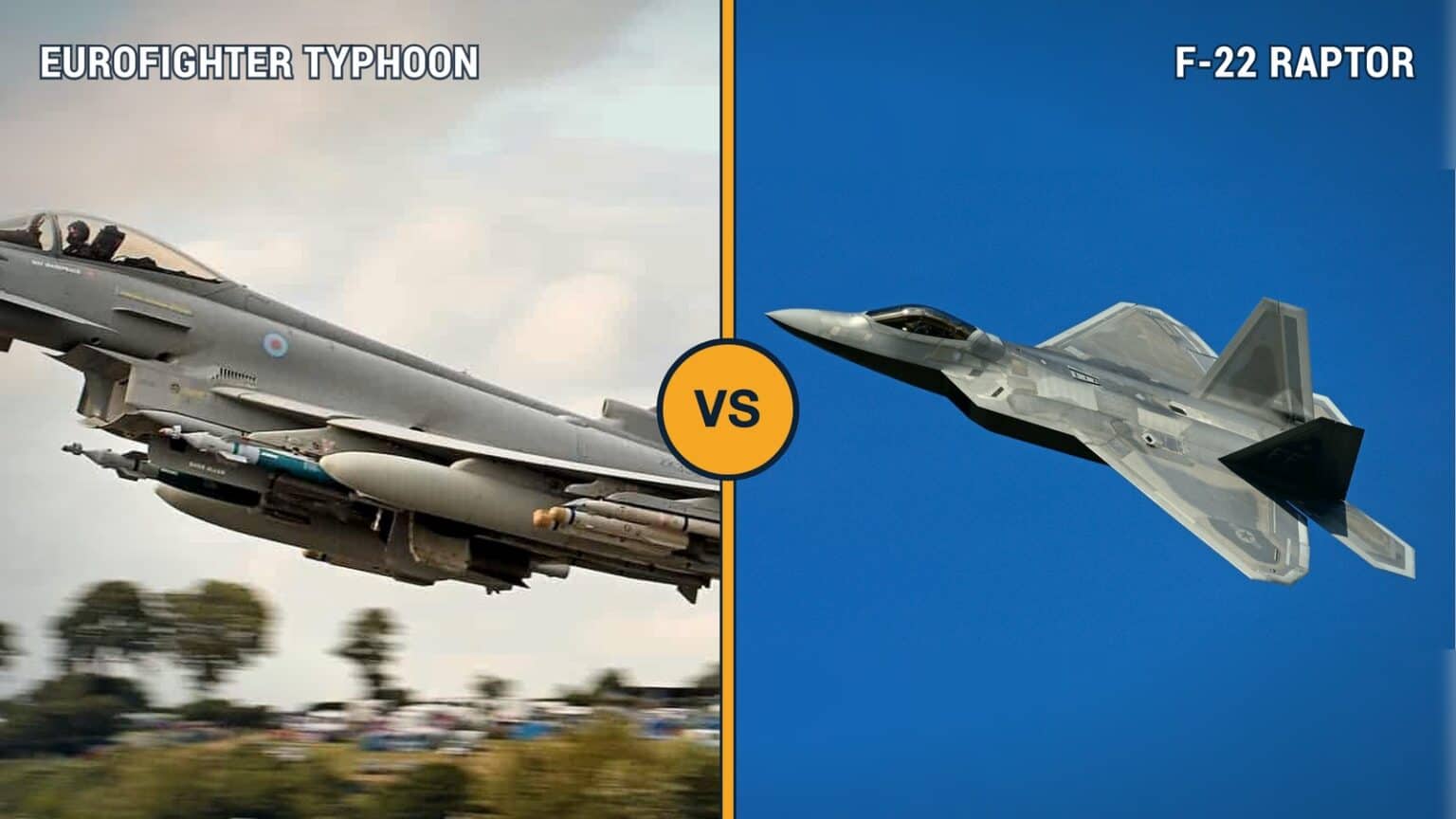
The F-22 Raptor wins a head-on fight, and the Eurofighter Typhoon wins almost everything else. The F-22 is a stealth fighter with a higher top speed, stronger supercruise and a heavier build. The Typhoon is smaller, still in production and sold to nine air forces, while the F-22 has never been exported.
The two jets were designed for different jobs. The F-22 is a pure air superiority fighter that was built to kill aircraft before they see it, and the Typhoon began as an agile air defense fighter and grew into a multirole jet.
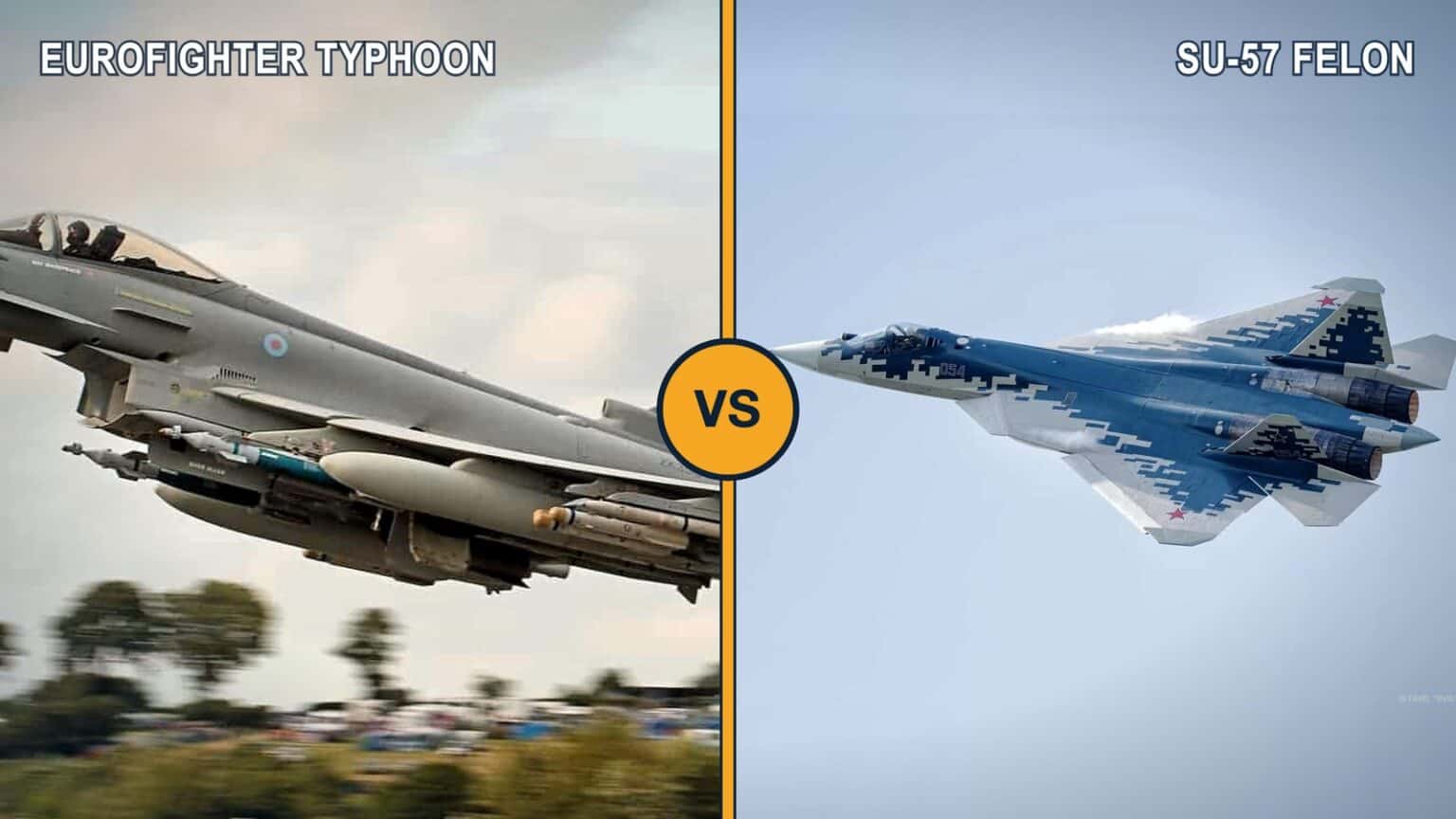
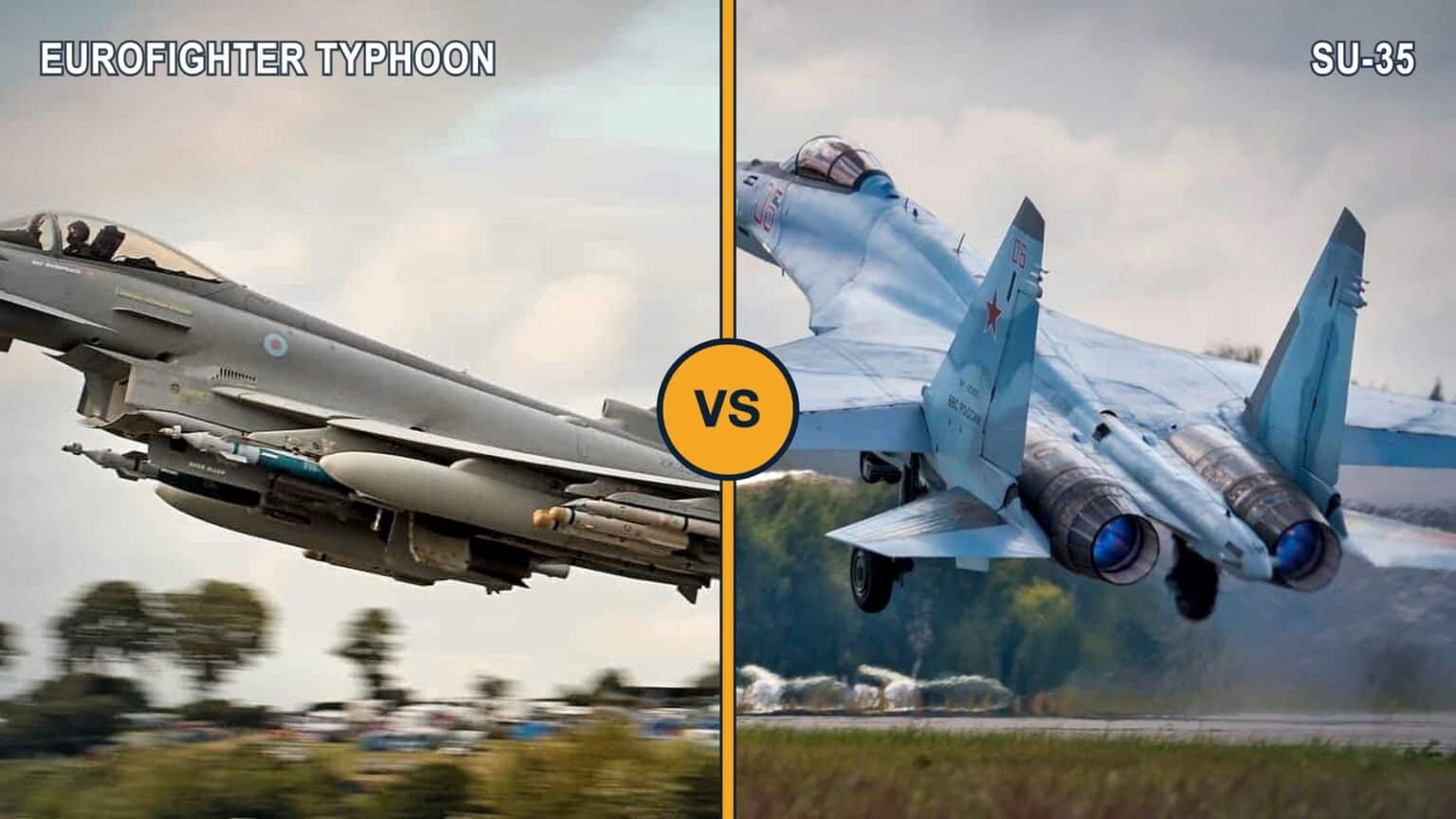
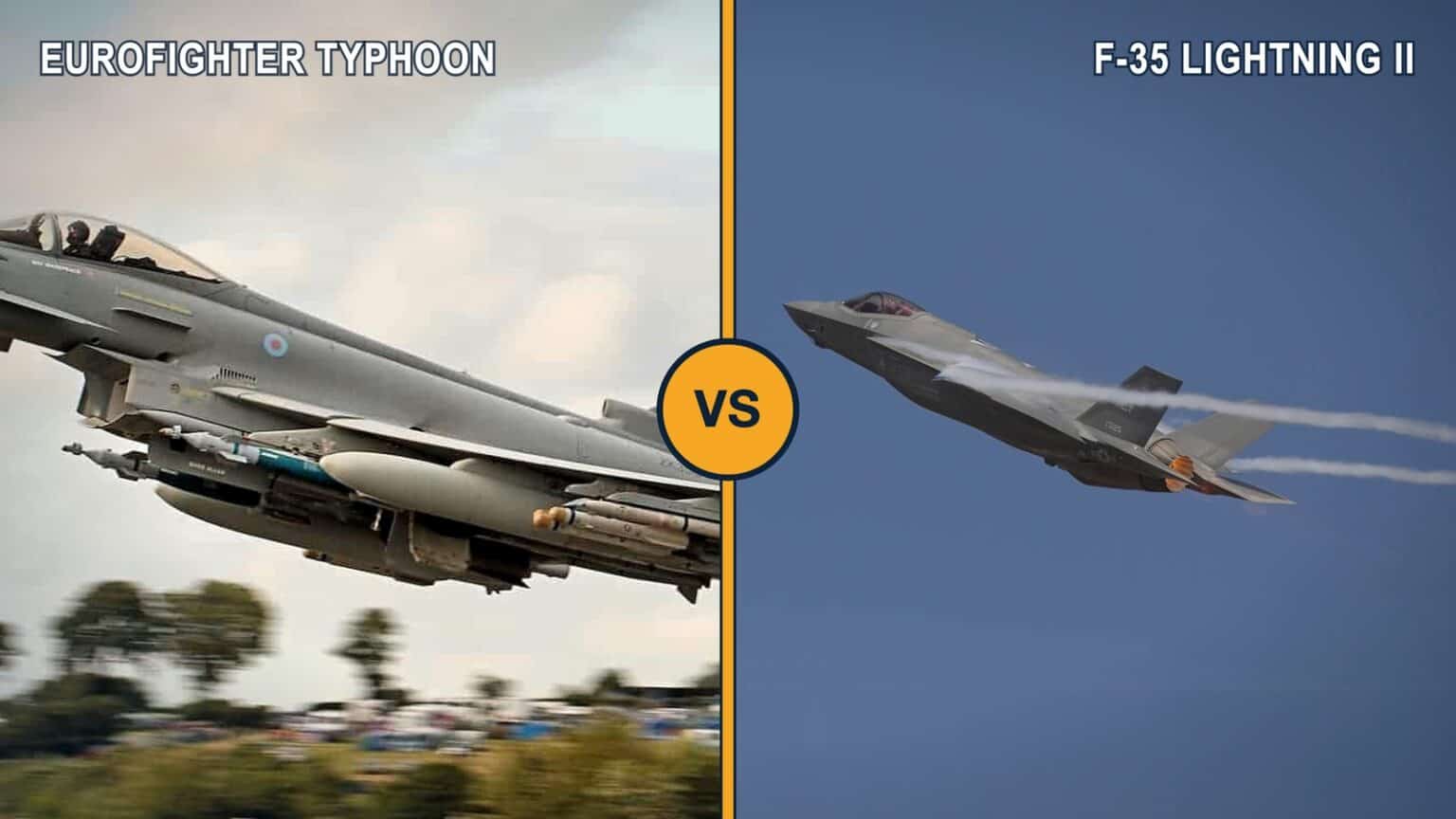
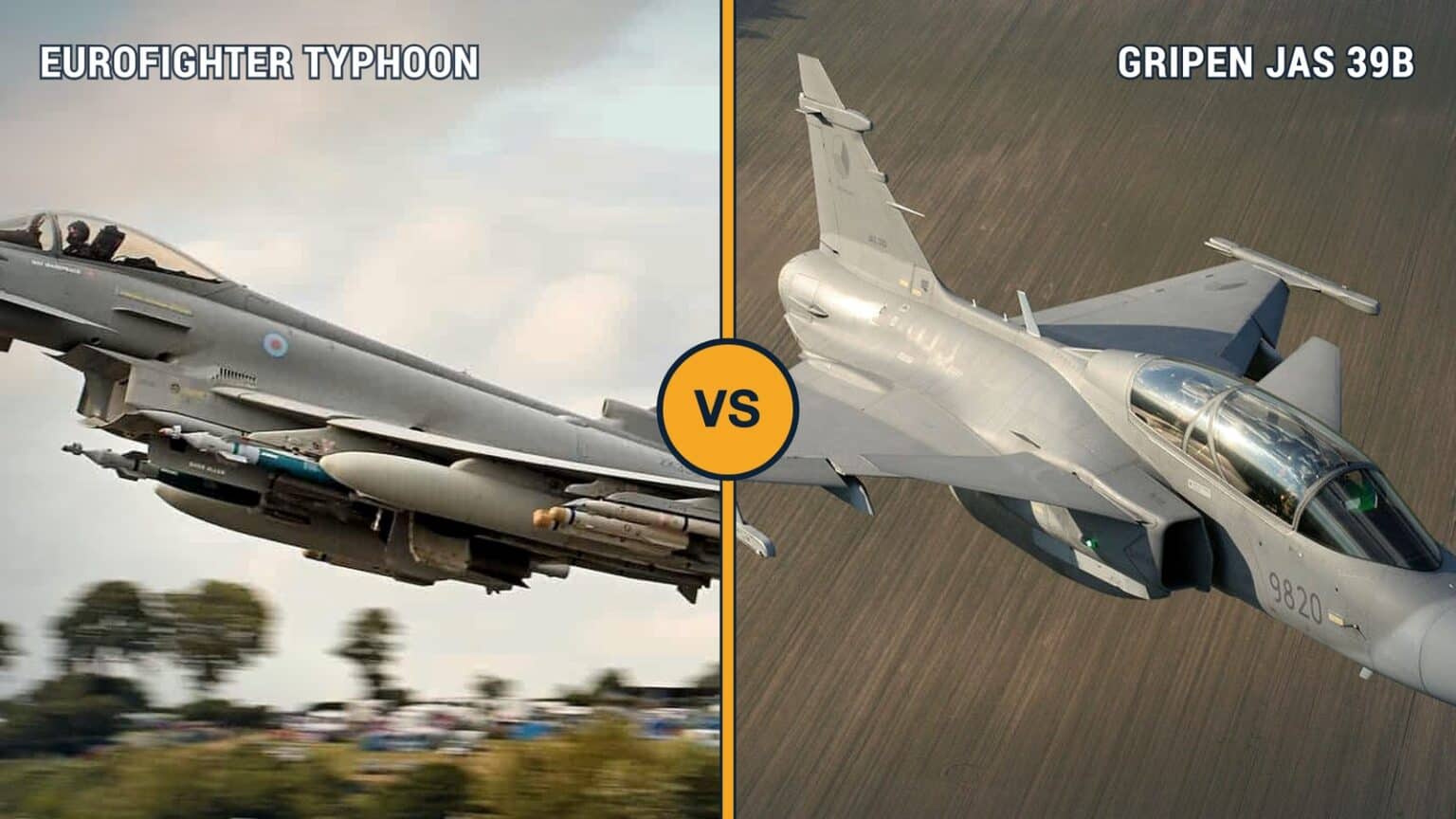
This page compares the Eurofighter Typhoon with the F-22 Raptor. The spec widget above covers dimensions, weights and performance; the table below adds radar, fleet size and crew.
| Category | Typhoon | F-22 Raptor | Edge |
|---|---|---|---|
| Radar | Euroradar Captor-M, mechanically scanned (Tranche 1) | AN/APG-77(V)1 AESA | F-22 |
| Crew | 2 (T1 two-seater) | 1 | Depends on role |
| Built | 769 on order or delivered (June 2026) | 195 built, 186 operational | Typhoon |
Thrust and speed: the F-22 is in another class
Each F-22 engine makes 35,000 lbf (156 kN) with afterburner. Each Typhoon EJ200 makes 13,500 lbf (60 kN) dry, so the two figures are not like for like, and the Typhoon makes noticeably more with afterburner lit.
The F-22 is faster, but the margin is narrow on paper. The Typhoon is listed at 1,550 mph (2,495 km/h) and the Raptor at 1,499 mph (2,413 km/h), and published Typhoon top speeds depend on who is rounding. Eurofighter and the RAF usually describe the jet as Mach 2 or better, against Mach 2.25 for the F-22.
The bigger difference is supercruise, which means flying supersonic without afterburner. The F-22 holds about Mach 1.76 on dry thrust alone. Air Forces Monthly gives the RAF multirole Typhoon a maximum supercruise of Mach 1.1, and Eurofighter claims Mach 1.5.
For the wider picture, see our ranking of the fastest fighter jets in the world.
Stealth and sensors: the F-22 wins this clearly
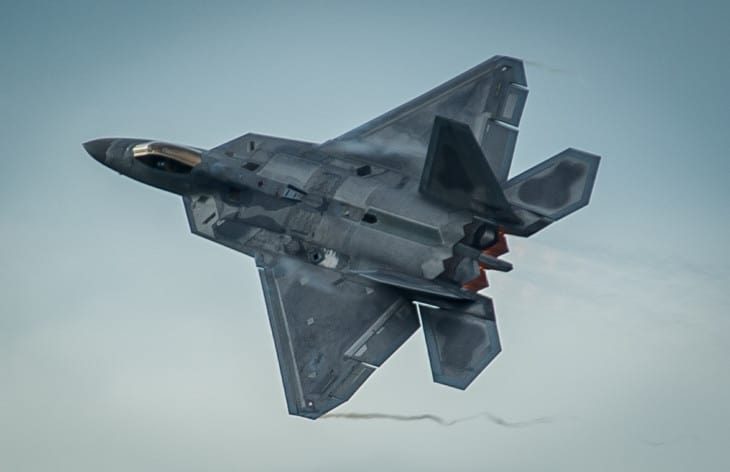
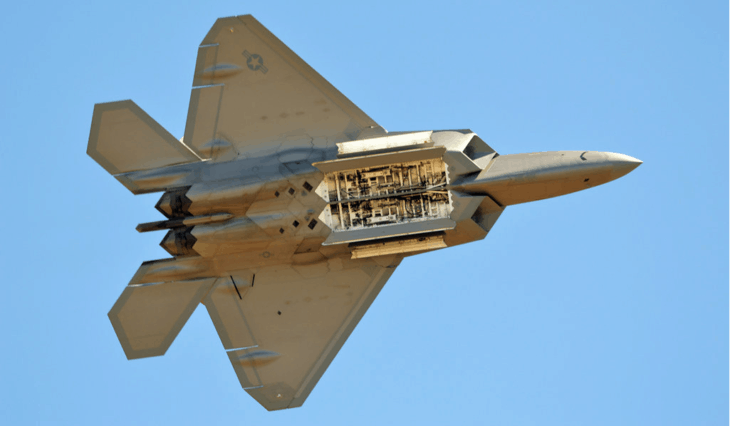
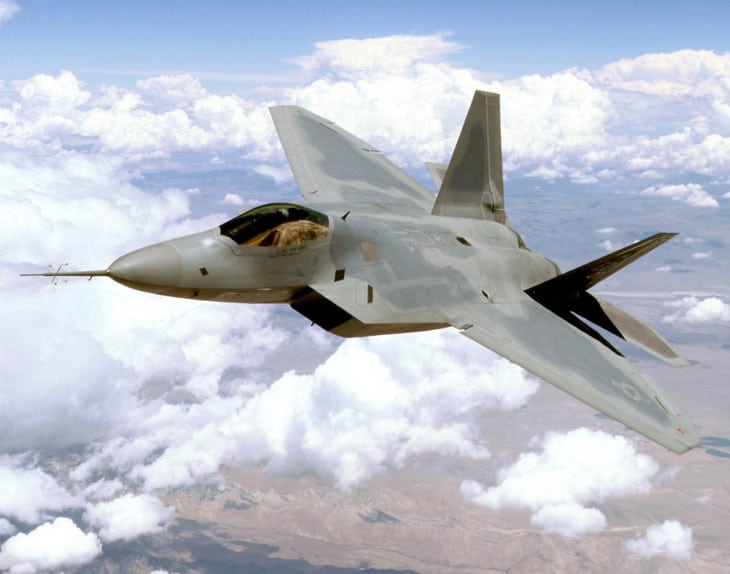
The F-22 was designed around low observability. It has an aligned planform, serpentine intake ducts and weapons carried inside internal bays.
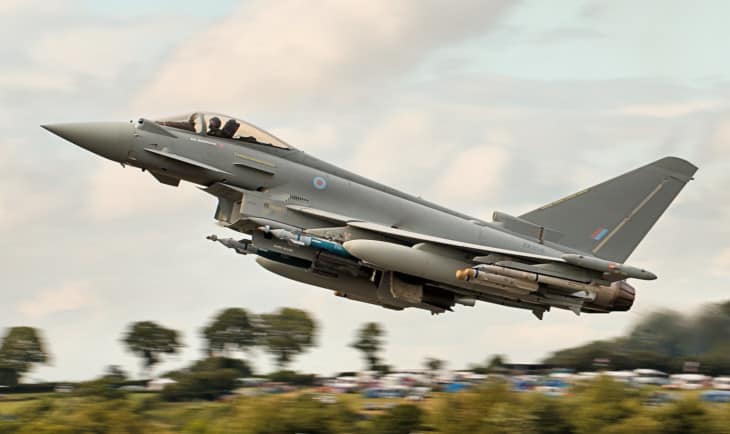
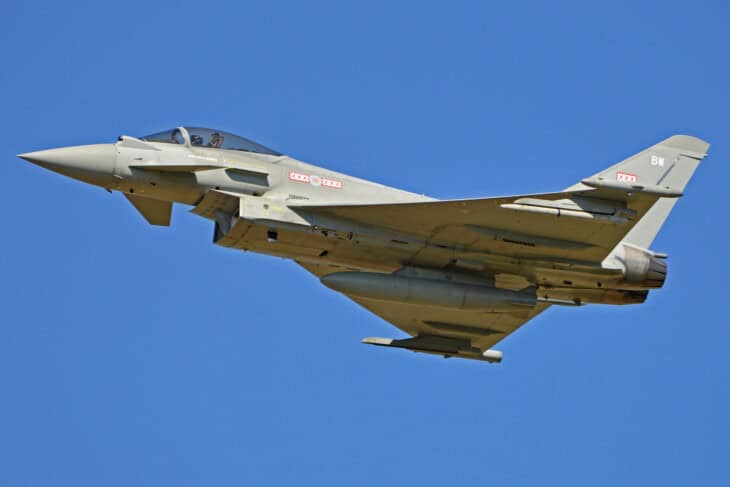
The Typhoon has no equivalent of that stealth shaping. Its Tranche 1 jets carry the Captor-M mechanically scanned radar, not the AESA radars fitted to newer aircraft.
The F-22 carries the AN/APG-77 AESA radar plus the AN/ALR-94 passive electronic warfare suite, which uses more than 30 antennas to detect emitters at long range. Both feed a single fused picture to the pilot.
In 2005, U.S. Air Force Chief of Staff General John Jumper, who had flown both jets, said the Raptor has stealth and supercruise and can penetrate virtually undetected.
Agility: the Typhoon holds its own
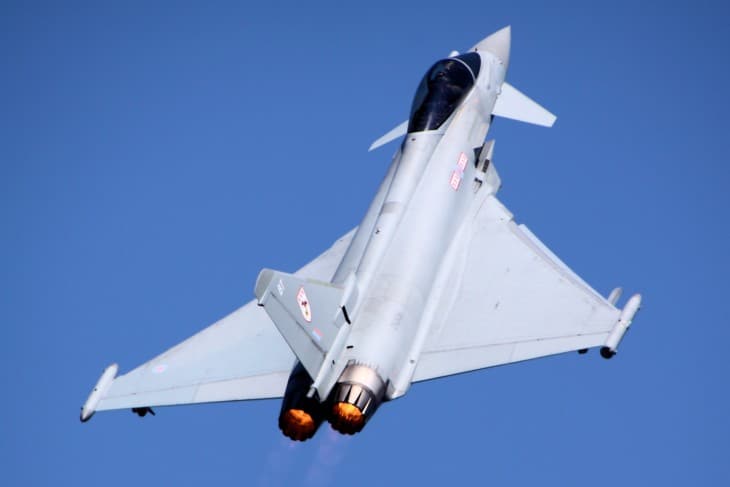
The Typhoon is a twin-engine canard delta with an airframe that is deliberately unstable. A digital fly-by-wire system makes it controllable, and that relaxed stability is why it is so agile.
Its design limit is +9 g and -3 g, and its thrust-to-weight ratio is 1.15 in the interceptor configuration. The F-22 shares the 9 g limit and adds two-dimensional thrust vectoring, with its nozzles moving 20 degrees up and down.
Jumper called the Typhoon’s close-in maneuverability very impressive, and said the F-22 performs in much the same way. He compared them to a NASCAR car and a Formula One car: different machines built for different levels of performance.
Weapons and roles: the Typhoon does more jobs
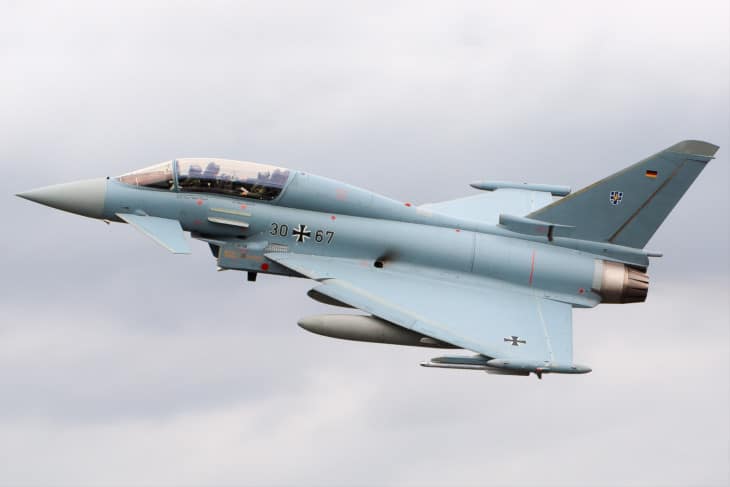
The Typhoon has 13 hardpoints and a 27 mm Mauser BK-27 cannon. Later aircraft were fitted with air-to-ground weapons such as Paveway IV, so the jet now flies strike as well as air defense.
The F-22 carries six AIM-120 AMRAAMs and two AIM-9 Sidewinders inside its bays, plus a 20 mm M61A2 cannon with 480 rounds. For strike missions it swaps to two 1,000 lb GBU-32 JDAMs or eight 250 lb GBU-39 Small Diameter Bombs.
The F-22 has four external hardpoints for fuel tanks, but anything hung under the wings ruins its radar signature. So the Typhoon carries more weapons in total, and the Raptor carries its own hidden.
Combat record: both have flown real missions
The Typhoon flew its combat debut over Libya in 2011, where RAF jets began patrolling the no-fly zone on March 21. In January 2024, four RAF Typhoons dropped Paveway IV bombs on Houthi sites in Yemen.
The F-22 first engaged in combat by conducting airstrikes in 2014 during the U.S. intervention in Syria. On February 4, 2023, an F-22 shot down a suspected Chinese spy balloon off the coast of South Carolina at an altitude of 60,000 to 65,000 feet.
The two jets have never fought each other, so any winner is a judgment based on the specs.
Production and availability: the Typhoon is the one you can buy
The Air Force wanted 750 F-22s, then 381, and ended up with 195 airframes built, including eight test jets. The last one was completed in December 2011, and 186 are operational.
Annual U.S. defense appropriations acts since fiscal 1998 have barred the sale of the F-22 to any foreign government, to protect its stealth technology. Customers buy the F-35 instead.
The Typhoon is in service with Austria, Italy, Germany, the United Kingdom, Spain, Saudi Arabia, Oman, Kuwait and Qatar, and Turkey has ordered it. Wikipedia puts the procurement total at 769 aircraft as of June 2026. Our guides to British fighter jets and the best European fighter jets show where the Typhoon fits.
The RAF is retiring its early jets. A September 2025 parliamentary answer put the RAF fleet at 111 Typhoons, of which only 4 were Tranche 1, and the remaining Tranche 1 jets have a planned out-of-service date of 2027.
So which one wins?
Pick the F-22 for winning an air superiority fight. It has stealth, stronger supercruise and an AESA radar, and the Typhoon’s Tranche 1 jets cannot match that combination.
Pick the Typhoon for everything else. It flies strike missions, it is still being built and delivered, and it is available to export customers.
FAQ
Sources and references used for research and fact-checking.
About the Author

Tim is the owner and lead editor of AeroCorner since 2019, overseeing aviation content covering aircraft, airlines, airports, and the broader aviation industry. Through years of researching, writing, editing, and publishing aviation-focused content, he has developed extensive practical knowledge of commercial aviation and air travel. Based in Asia and a frequent traveler himself, Tim also brings firsthand passenger experience to AeroCorner’s coverage. Outside of publishing, he has also explored aviation firsthand through hands-on flight training in New Zealand.