



Table of Contents
| Measure | F-22A Raptor | F-15 Eagle |
|---|---|---|
| Generation | Fifth, first flew 1997 | Fourth, first flew 1972 |
| Primary role | Air dominance | Air superiority, with strike added by the F-15E and F-15EX |
| Stealth | All-aspect low observable, weapons carried internally | None, weapons carried externally |
| Supercruise | Yes, above Mach 1.5 without afterburner | No |
| Thrust vectoring | Yes, two-dimensional nozzles | No |
| Air-to-air missiles | Eight: six AIM-120 and two AIM-9, all internal | Eight: four AIM-9 and four AIM-120, or eight AIM-120 |
| Gun | M61A2 20 mm, 480 rounds | M61A1 20 mm, 940 rounds |
| Air combat record | First air-to-air kill in 2023, a surveillance balloon | 104 kills, no air-to-air losses (tallied through 2008) |
| Cost per flight hour, FY2026 | $55,051 | $35,468 (F-15C), $17,321 (F-15EX) |
| Mission capable rate, FY2024 | 40.19 percent | 52.9 percent (F-15C), 83.13 percent (F-15EX) |
| Built | 195, line closed 2011 | 1,198 air-superiority Eagles; the F-15EX is still in production |
| Exportable | No, barred by US law since fiscal 1998 | Yes, flown by Israel, Japan and Saudi Arabia, among others |
| US fleet, September 2026 | About 184, retirement barred to September 2027 | F-15C/D shrinking to 21 by 2030; F-15EX plan raised to 267 |
How we are comparing these two jets
Most “which is better” arguments about these two talk past each other, because one side is scoring a fight and the other is scoring an air force. We rank them on four measures and name the winner of each.
Air combat and survivability go to the F-22. Cost to fly and staying power go to the F-15. Top speed, often quoted as the tiebreaker, barely matters, and we explain why below.
Where a figure is published, we use the official number. Radar cross-section is classified for both jets, so we do not repeat the invented figures that circulate online. Full specifications for the Lockheed Martin F-22 Raptor and the McDonnell Douglas F-15 Eagle sit in our aircraft database.
The measure decides the winner
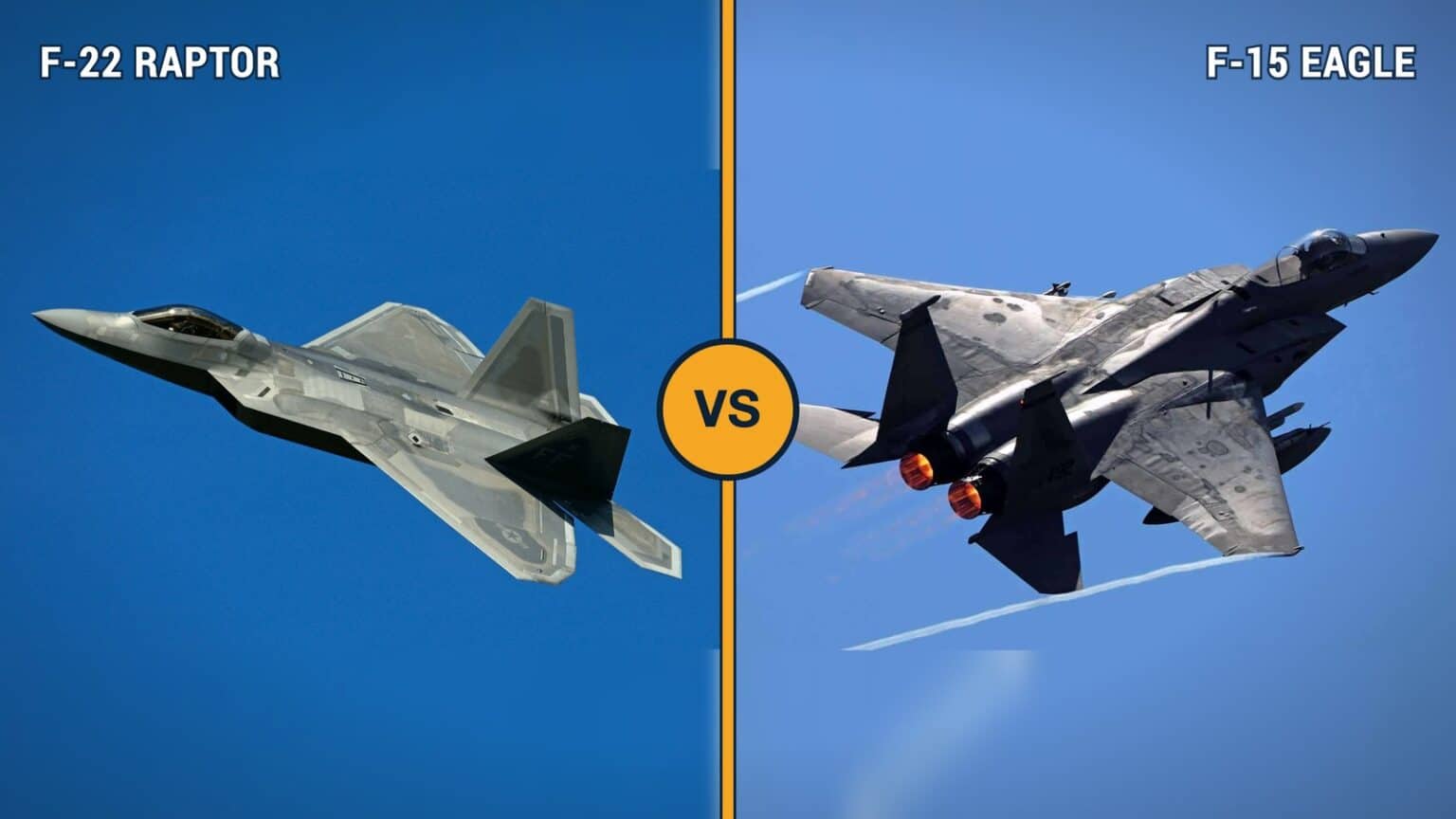
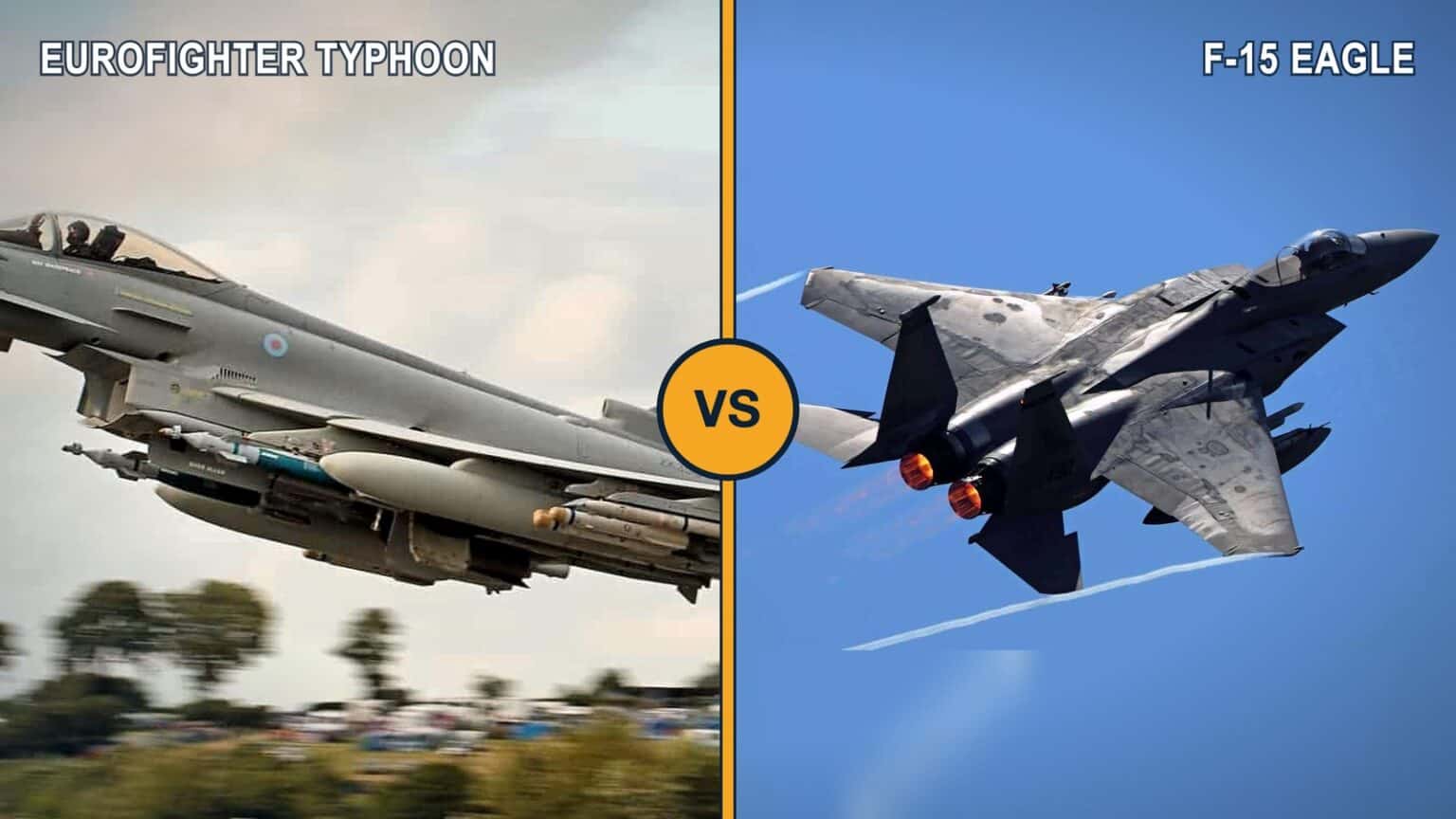
The F-22 wins the air battle: stealth, supercruise, thrust vectoring and a fused sensor picture. The F-15 wins on operating cost, readiness, exports and production. The Air Force designed the Raptor to replace the Eagle, and ended up flying both.
Where the F-22 Raptor wins
Stealth decides who shoots first
The F-15 was designed in the late 1960s with no attempt at stealth. It hangs its missiles on the outside of the airframe, and nothing about its shape was chosen to hide it from radar.
The Raptor was shaped from the start to defeat fire-control radars, and it carries every air-to-air weapon inside the fuselage. That puts it among the true stealth fighter jets, and the F-15 nowhere near them.
The gap is generational. The F-15 is a fourth-generation fighter and the F-22 a fifth-generation one, a split we explain in our guide to the five generations of fighter planes.
Mike “Dozer” Shower, a pilot who flew both jets, put the result bluntly. The F-22 against a fourth-generation fighter, he said, “is like having two football teams against each other and one of them is invisible!”
Supercruise and thrust vectoring
The F-22 can hold speeds above Mach 1.5 without afterburner, which the Air Force calls supercruise. An F-15 has to light its afterburners to go supersonic, and afterburner drains fuel quickly.
The Raptor also points its engine exhaust up and down through two-dimensional thrust vectoring nozzles. That lets it move its nose at angles where normal control surfaces stop working, something the F-15 was never built to do.
Together they let the F-22 choose when a fight starts and when it ends. It can arrive supersonic with fuel to spare, and disengage without spending its reserve to do it.
Myth check: the F-15 is faster, so it would win
On paper the F-15 is quicker, with a top speed of Mach 2.5 against the F-22’s Mach 2.25, both at high altitude. That figure is for a clean jet: with conformal fuel tanks fitted the Eagle is rated at about Mach 2.0, and air combat is rarely fought near top speed. The number that matters is the Raptor’s ability to stay above Mach 1.5 without afterburner.
A cockpit that does the work
In an F-15C, the pilot builds the tactical picture by hand. Shower described it this way: “In an F-15 you’re sensor operator, you’re working the radar.”
The F-22’s AN/APG-77 radar and passive sensors feed one fused display instead. In Shower’s words, the Raptor “does it all for you,” which leaves the pilot free to fight.
Would an F-22 beat an F-15 in a dogfight?
Almost certainly, and the Air Force has already tested the question. At Exercise Northern Edge in Alaska in 2006, F-22s ran up a 108-to-zero kill ratio against the best F-15, F-16 and F-18 adversaries the exercise could field.
The Raptors took on as many as 40 opposing aircraft in those simulated battles. They also held a 97 percent mission capable rate during the exercise, far above anything the fleet has managed in recent years.
The F-15 is no pushover up close. Its engines produce more thrust than it weighs at combat weight, its large wing turns hard, and it carries the same eight air-to-air missiles as a Raptor, just on the outside.
The problem is getting close. An F-15 pilot has to find a target their radar struggles to see, and by then the Raptor has usually already fired.
The kill ratio people search for
The 108-to-zero figure comes from simulated combat at Northern Edge 2006, not from a war. The F-22’s first real air-to-air kill came on February 4, 2023, when one shot down a Chinese surveillance balloon off South Carolina with an AIM-9X Sidewinder at 60,000 to 65,000 feet.
Where the F-15 Eagle wins
A combat record the Raptor cannot match
The F-15 has a combined air-to-air record of 104 kills and no losses, a tally counted through 2008. The air-superiority models, the A, B, C and D, have no recorded losses to enemy action.
In the 1991 Gulf War, US Air Force F-15Cs scored 34 of the service’s 37 air-to-air victories. Israeli Eagles account for a large share of the rest of the total.
The F-22 has flown combat since 2014, when it bombed targets in Syria, and in 2026 it flew combat operations against Iran from Ovda Air Base in Israel. No F-22 kill against a crewed enemy aircraft has been made public.
Far cheaper to fly
The Pentagon’s fiscal 2026 reimbursement rates, the hourly price charged to other Defense Department users, put the F-22A at $55,051 per flight hour. The old F-15C is billed at $35,468, about a third less, up sharply from $24,566 a year earlier.
The new F-15EX is the real bargain at $17,321 an hour, less than a third of the Raptor’s rate. The F-35A, at $18,600, costs slightly more than the F-15EX, a matchup we cover in our F-35 vs F-15 comparison.
More often ready to fly
In fiscal 2024 the F-22 fleet was mission capable 40.19 percent of the time, down from 52 percent a year earlier. The F-15C managed 52.9 percent and the two-seat F-15D 63.7 percent.
Part of that Eagle gain came from retiring the most worn-out jets, so read it with care. The F-15EX posted 83.13 percent, from a fleet of just eight aircraft at the time.
Exports, numbers and a live production line
McDonnell Douglas and its license partners built 1,198 air-superiority Eagles in the A, B, C, D, J and DJ versions, and Israel, Japan and Saudi Arabia all fly the type. Boeing, which now owns McDonnell Douglas, is still building new F-15s today.
Only 195 Raptors were ever built, and US law has barred any foreign sale since fiscal 1998. No ally flies one, and with the line long closed, none is likely to.
Why the Eagle outlived its replacement
The Raptor was built to take over from the F-15. The Air Force first planned 750 of them, cut that to 381, and in April 2009 Defense Secretary Robert Gates capped production at 187 operational jets.
The last F-22 was delivered in May 2012. With too few Raptors to cover the mission, the Air Force kept flying its F-15Cs long past their planned retirement.
That extension is still running. The Air Force plans to keep 42 F-15C/Ds through 2028 and its 21 healthiest “Platinum Eagles” at Fresno, California, through 2030 for homeland air defense.
The Eagle’s real successor is another Eagle. In its fiscal 2027 budget request the Air Force more than doubled its planned F-15EX Eagle II buy, from 129 to 267, to replace old F-15C/Ds and the A-10 and to start retiring the F-15E Strike Eagle.
The Raptor, meanwhile, is a fixed fleet of about 184 jets. US law bars the Air Force from retiring any before September 30, 2027, and the House version of the fiscal 2027 defense bill would stretch that to 2032.
That bill passed the House 216 to 212 on July 22, 2026, but it stalled in the Senate and had not become law as of September 2026.
The F-22’s eventual successor is Boeing’s F-47, a sixth-generation fighter picked on March 21, 2025, with a first flight expected in 2028. As recently as 2024, the Air Force’s air combat commander said there was “no official replacement to the F-22 right now.”
Both jets are caught in a wider squeeze: the US Air Force fighter fleet has dropped below the size Congress requires, which is why neither type can be retired quickly.
Jul 1972
The F-15 Eagle flies for the first time. McDonnell Douglas designed it for one job: winning the fight for the sky.
1991
F-15Cs dominate the Gulf War air battle. They score 34 of the US Air Force’s 37 air-to-air victories.
Sep 1997
The first F-22 flies. The Raptor is meant to take over the Eagle’s air-superiority role.
Dec 2005
The F-22 reaches initial operating capability. It begins replacing the F-15 in active-duty squadrons.
2006
Exercise Northern Edge. F-22s post a 108-to-zero simulated kill ratio against F-15, F-16 and F-18 adversaries.
Apr 2009
Robert Gates caps Raptor production at 187. The Air Force had once planned 750.
May 2012
The last F-22 is delivered. 195 were built in total, including test aircraft.
2014
The F-22 flies its first combat missions. Raptors strike targets in Syria.
Feb 2023
The F-22’s first air-to-air kill. An AIM-9X brings down a Chinese surveillance balloon off South Carolina.
Feb 2026
F-22s deploy to Ovda Air Base, Israel. They fly combat operations against Iran before returning home in July.
Apr 2026
The Air Force doubles its F-15EX plan. The planned buy rises from 129 to 267 jets.
Has the F-15 ever lost a dogfight?
Not to an enemy fighter, on the record. The F-15 counts 104 air-to-air kills and no air-to-air losses through 2008, and the air-superiority A to D models have no recorded losses to enemy action.
Strike Eagles have been lost in other ways. On March 2, 2026, three US F-15Es were shot down over Kuwait in an apparent friendly-fire incident during Operation Epic Fury against Iran.
All six crew ejected safely. Later reports said one or more Kuwaiti F/A-18s fired on them, and the incident was still under investigation at the time of reporting.
A month later, Iran brought one down. On April 3, 2026, an F-15E from the 494th Fighter Squadron was shot down over southwestern Iran, near Yasuj, reportedly by a shoulder-fired missile.
Both crew ejected over Iranian territory. The pilot was rescued about seven hours later and the weapon systems officer on April 5, after a large US rescue operation.
Neither loss came from an enemy fighter, so the Eagle’s air-to-air record still stands.
Can any plane beat the F-22?
No aircraft has been shown to beat it. The Raptor has never faced a peer fighter in real combat, so the honest answer rests on exercises like Northern Edge, where it lost nothing.
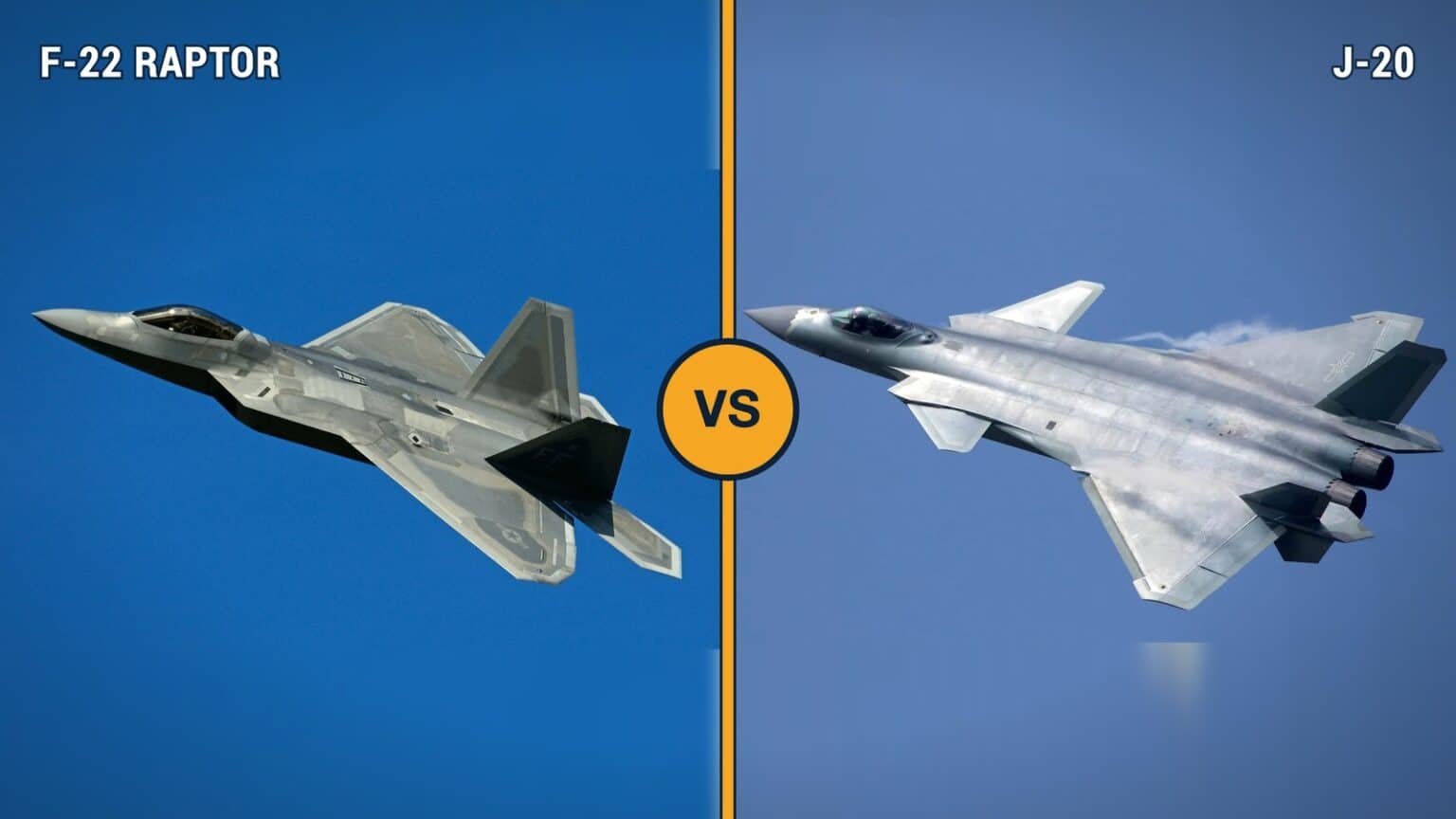
The nearest challengers are China’s Chengdu J-20 and Russia’s Su-57, both fifth-generation stealth designs. We compare the F-22 against the Chengdu J-20 and the F-22 against the Su-57 Felon separately.
The Raptor’s bigger weakness is not an opponent. It is a fleet of about 184 jets that was ready to fly 40 percent of the time in 2024, with no production line to replace any it loses.
The verdict
If one aircraft had to win a fight for control of the sky, take the F-22. It sees first, shoots first and leaves on its own terms, and nothing in the F-15’s design can change that.
If you are paying for an air force, the F-15 makes a case the Raptor cannot. It costs far less per hour, above all the new F-15EX, it is ready more often, allies fly it, and new ones are coming off the line.
The Air Force built the F-22 to retire the F-15 and got the opposite. For the Raptor against its stealthy stablemate, see our F-22 vs F-35 comparison, and for the wider field, our ranking of the best fighter jets in the world.
FAQ
Sources and references used for research and fact-checking.
- U.S. Air Force, F-22 Raptor Fact Sheet
- U.S. Air Force, F-15 Eagle Fact Sheet
- U.S. Air Force, F-35A Lightning II Conventional Takeoff and Landing Variant Fact Sheet
- Office of the Under Secretary of Defense (Comptroller), Fiscal Year 2026 DoD Fixed Wing and Helicopter Reimbursement Rates
- Office of the Under Secretary of Defense (Comptroller), Fiscal Year 2025 DoD Fixed Wing and Helicopter Reimbursement Rates
- Air & Space Forces Magazine, Air Force Mission Capability Rates Reach Lowest Levels in Years
- The Aviation Geek Club, Fighter Pilot who flew both the F-15 Eagle and F-22 Raptor explains why the F-22 versus the F-15 is like having two football teams against each other
- Wikipedia, Lockheed Martin F-22 Raptor
- Wikipedia, McDonnell Douglas F-15 Eagle
- Wikipedia, 2023 Chinese balloon incident
- Wikipedia, Boeing F-47
- The War Zone, Air Force Now Says It Has No Official F-22 Raptor Replacement
- Air & Space Forces Magazine, Air Force to Retain F-15C Four More Years for Homeland Defense
- Air & Space Forces Magazine, Air Force Doubles Planned F-15EX Fleet to 267 Fighters
- Air & Space Forces Magazine, House Panel Votes to Prohibit F-22 Retirements Through 2032
- Congressional Research Service, FY2027 NDAA: Status of Legislative Activity
- The Aviationist, Langley F-22s Return Home from Operation Epic Fury Deployment
- Air & Space Forces Magazine, F-22s Are Latest USAF Aircraft to Leave Middle East After Iran Ops
- Air & Space Forces Magazine, Three US F-15Es Shot Down by Kuwaiti Friendly Fire; Crews Safe
- Wikipedia, McDonnell Douglas F-15E Strike Eagle
- Wikipedia, 2026 United States F-15E rescue operation in Iran
About the Author

Tim is the owner and lead editor of AeroCorner since 2019, overseeing aviation content covering aircraft, airlines, airports, and the broader aviation industry. Through years of researching, writing, editing, and publishing aviation-focused content, he has developed extensive practical knowledge of commercial aviation and air travel. Based in Asia and a frequent traveler himself, Tim also brings firsthand passenger experience to AeroCorner’s coverage. Outside of publishing, he has also explored aviation firsthand through hands-on flight training in New Zealand.