



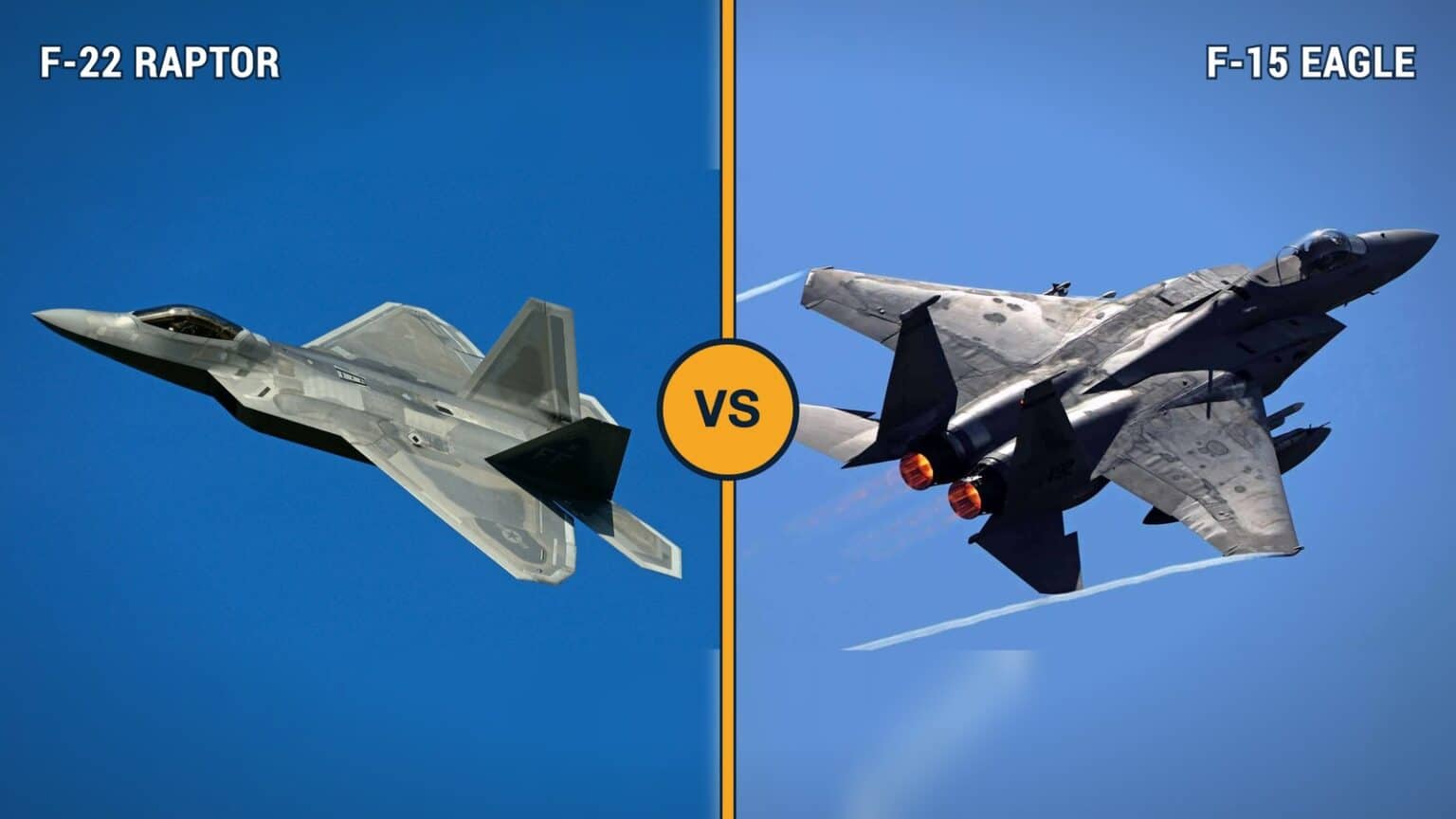
Table of Contents
| Measure | F-35A Lightning II | F-15 Eagle family |
|---|---|---|
| Generation, first flight | Fifth, December 2006 | Fourth, July 1972 (F-15EX: February 2021) |
| Built for | Multirole: strike, air combat and sensing in defended airspace | Air superiority (F-15C); strike added by the F-15E and F-15EX |
| Stealth | Low observable, weapons carried in internal bays | None, weapons carried externally |
| Sensors | AN/APG-81 radar, six-camera Distributed Aperture System, helmet display | AN/APG-82 AESA radar and EPAWSS electronic warfare suite (F-15EX) |
| Weapons | Four internal stations, six external; 18,000 lb payload | F-15EX: up to 12 air-to-air missiles; 29,500 lb payload |
| Gun | GAU-22/A 25 mm, 182 rounds | M61A1 20 mm, 500 rounds (F-15EX), 940 (F-15C) |
| Air combat record | First kill of a crewed aircraft in March 2026 (Israeli F-35I) | 104 kills, no air-to-air losses (tallied through 2008) |
| Cost per flight hour, FY2026 | $18,600 | $17,321 (F-15EX), $29,992 (F-15E), $35,468 (F-15C) |
| Unit cost | $92 million average flyaway, Lots 18 and 19 | $93.95 million program unit cost (F-15EX, 2023 report) |
| Mission capable rate, FY2024 | 51.5 percent | 52.9 percent (F-15C), 83.13 percent (F-15EX, eight jets) |
| Airframe design life | 8,000 flight hours | 20,000 flight hours (F-15EX) |
| Built | More than 1,340 by August 2026 | 1,198 air-superiority Eagles; F-15EX in production |
| US Air Force buy, FY2027 request | 38 F-35As | 24 F-15EXs, toward a planned fleet of 267 |
How we compare the F-15 and the F-35
The F-15 is not one airplane. The F-15C Eagle is the 1970s air-superiority fighter now leaving service, the two-seat F-15E Strike Eagle is its strike version, and the F-15EX Eagle II is the new-build jet the Air Force is buying today.
So the live question in 2026 is the F-15EX against the F-35A, because the Air Force is paying for both. We rank them on four measures: who sees and shoots first, speed and payload, cost and readiness, and combat record.
Where published figures differ, we name the variant they apply to. Full specifications for the Lockheed Martin F-35 Lightning II and the McDonnell Douglas F-15 Eagle sit in our aircraft database.
The measure decides the winner
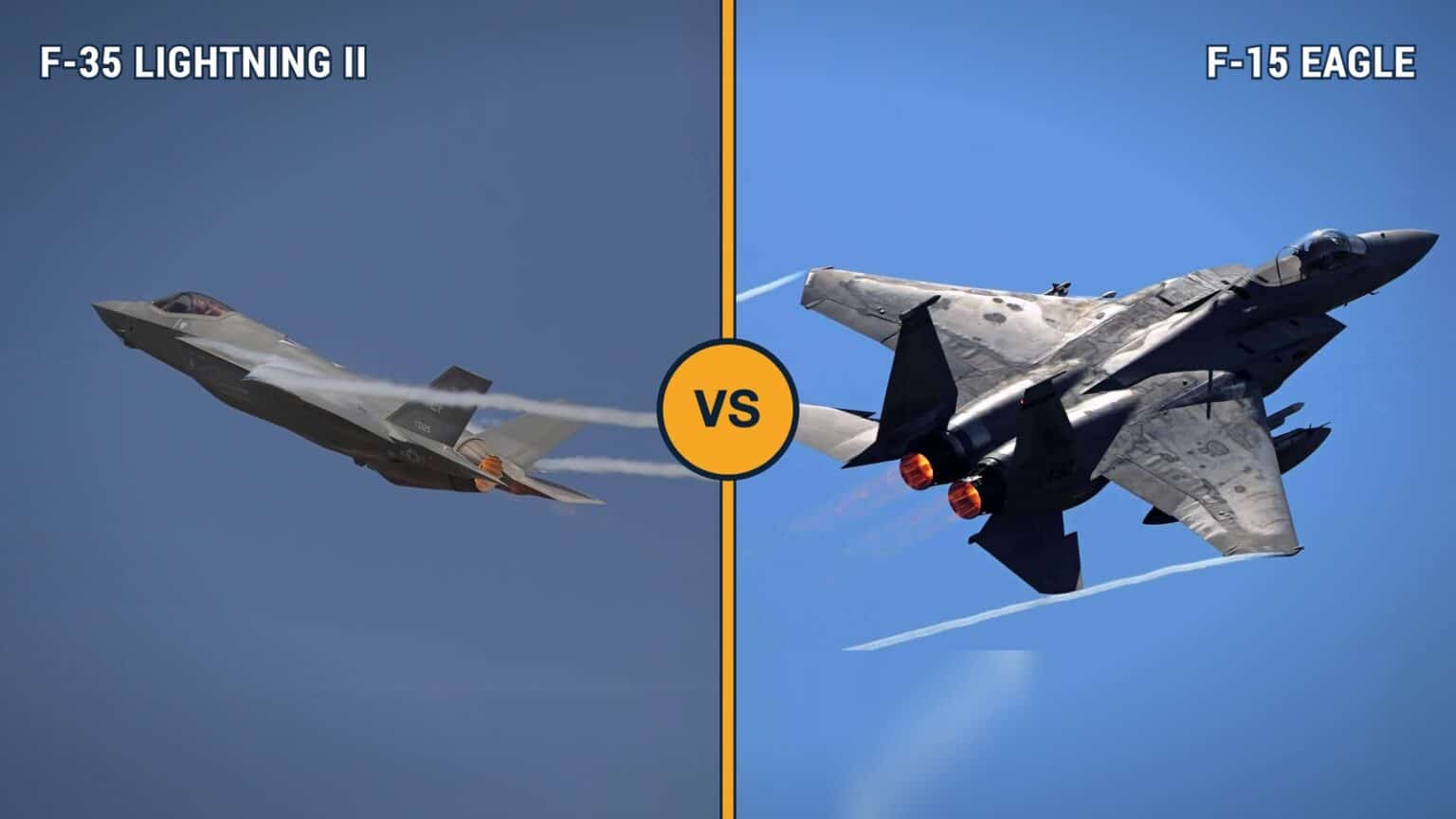
The F-35 is built to see first and shoot first without being seen. The F-15 is bigger, faster, carries far more and, in its newest form, costs less per hour to fly. Rather than choose between them, the Air Force is buying new Eagles alongside the F-35.
Where the F-35 wins
Stealth decides who shoots first
The F-15 has no stealth. It carries its missiles and bombs on the outside of the airframe, and its shape was never chosen to hide it from radar.
The F-35 carries its weapons in two internal bays, each with two weapon stations, so a combat load does not spoil its low radar signature. That puts it among the true stealth fighter jets, a full generation ahead of the Eagle.
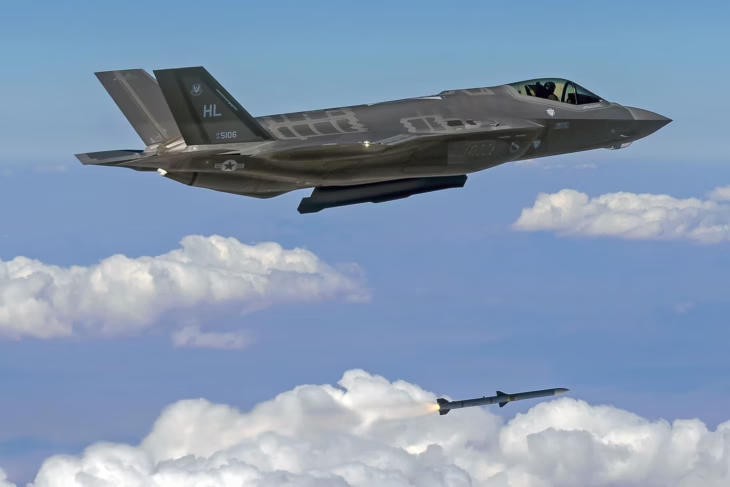
Stealth costs payload. For missions that do not need it, the F-35 can also load six external stations, but then it gives up the advantage it was built around. We explain that trade in our guide to the five generations of fighter planes.
A cockpit that builds the picture for the pilot
The F-35’s sensors were designed to work as one system. Its AN/APG-81 radar can track several targets while scanning at ranges beyond 80 nautical miles (92 miles).
Six infrared sensors in the Distributed Aperture System track targets and warn of approaching missiles all around the aircraft. The helmet display puts flight and combat information on the visor, wherever the pilot is looking.
The F-15EX answers with a modern AESA radar, the AN/APG-82, and the EPAWSS electronic warfare suite. Those are strong fourth-generation sensors, but they sit on an airframe that enemy radars can still see.
Exercise results that favor the stealth jet
At its first Red Flag exercise, held at Nellis Air Force Base, Nevada, in early 2017, the F-35A posted what the Air Force called a 20-to-1 kill ratio against the aggressors. Lt. Gen. Jerry Harris, vice commander of Air Combat Command, gave that figure in testimony.
Read it with care. F-22 Raptors flew alongside the F-35s throughout the exercise, and the rules of engagement were never published.
Where the F-15 wins
Speed: Mach 2.5 against Mach 1.6
The Eagle is the faster jet by a wide margin. The Air Force’s fact sheet lists the F-15 at 1,875 mph (3,020 km/h), a Mach 2-class jet, and Air & Space Forces Magazine gives the F-15EX a top speed of Mach 2.5.
The F-35A is listed at Mach 1.6, about 1,200 mph (1,930 km/h). The Eagle has two engines, each rated at 23,450 pounds of thrust on the C and D models, while the F-35A has one, rated at 43,000 pounds.

For how both rank across the field, see our list of the fastest fighter jets.
Myth check: the faster jet wins
Published top speeds are best-case numbers for a lightly loaded jet at high altitude, and air combat is rarely fought there. What decides most modern fights is who detects whom first, and that is the measure the F-35 was designed around. Speed helps the F-15 run, chase and reach a fight sooner; it does not help it see a stealth jet.
Payload: 29,500 pounds and 12 missiles
The F-15EX can carry 29,500 pounds (13,400 kg) of weapons. That includes up to 12 AIM-9 Sidewinder or AIM-120 AMRAAM air-to-air missiles, or up to 24 air-to-ground munitions.
The F-35A’s payload is 18,000 pounds (8,160 kg), and most of it has to hang on external stations. Kept inside for stealth, its load fits on four weapon stations, so in a stealthy fight it runs out of missiles long before an F-15EX would.
Cheaper to fly, if it is the new one
The Pentagon’s fiscal 2026 reimbursement rates, the hourly price charged to other Defense Department users, put the F-35A at $18,600 per flight hour. The F-15EX is $17,321, the cheapest of the four jets in this comparison.
The older Eagles cost far more. The F-15E Strike Eagle is billed at $29,992 an hour and the F-15C at $35,468, up from $24,566 a year earlier.
To buy, the two are close. The F-35A’s average flyaway cost rose to $92 million in production Lots 18 and 19, and a 2023 Air Force acquisition report put the F-15EX at $93.95 million, a broader program measure. We cover the rise in how the F-35A climbed back to $92 million.
More often ready, and built to last longer
In fiscal 2024 the F-35A was mission capable 51.5 percent of the time, close to the F-15C’s 52.9 percent. The F-15EX posted 83.13 percent, from a fleet of just eight aircraft at the time.
A June 2026 Government Accountability Office report found the F-35 picture has worsened since. Only 28.5 percent of F-35As could perform all their missions in 2025, against an Air Force goal of 65 percent.
The airframes age differently, too. The F-35 is designed for 8,000 flight hours, while the F-15EX airframe is rated for 20,000.
A combat record the F-35 cannot match yet
The F-15 has a combined air-to-air record of 104 kills and no losses, a tally counted through 2008. In the 1991 Gulf War, US Air Force F-15Cs scored 34 of the service’s 37 air-to-air victories.
The family is still adding to it. On March 2, 2026, Qatari F-15QAs, a close relative of the F-15EX, scored their first kills, against Iranian Su-24s.
The F-35 flew its first combat missions with Israel in 2018 and scored its first kill of a crewed aircraft in 2026. On air-to-air results alone, the Eagle is decades ahead.
F-15 vs F-35 size
The F-15 is the bigger jet in every dimension. It is 63.8 feet (19.4 m) long with a 42.8-foot (13 m) wingspan, against 51 feet (15.7 m) and 35 feet (10.7 m) for the F-35A.
It also stands taller, at 18.5 feet (5.6 m) to the F-35A’s 14 feet (4.4 m). The full side-by-side dimensions are in the database comparison at the top of this page.
Weight is closer than size suggests. The Air Force lists the F-15C/D’s maximum takeoff weight at 68,000 pounds (30,800 kg) and the F-35A’s in the 70,000-pound class, while the F-15EX goes to 81,000 pounds (36,700 kg).
The F-35A packs much of that weight as internal fuel: 18,498 pounds (8,390 kg), enough for more than 1,350 miles (2,170 km) without refueling.
F-15 vs F-35 in a dogfight
The two have met many times in training, and the Eagle does not always lose. In a 2018 interview at Kadena Air Base, Japan, F-15 pilot Capt. Brock McGehee of the 44th Fighter Squadron was asked whether an F-15 can beat an F-35 in a dogfight.
“I mean, sometimes,” he said, adding that every aircraft loses sometimes. He also called the F-35 an “extremely capable” air-to-air fighter, and said it was “kind of scary a little bit to fly around in the dark with an invisible airplane that’s around you somewhere.”
Up close, the Eagle’s strength is raw performance. It was designed to turn at up to 9 g without losing airspeed and to climb to 30,000 feet (9,100 m) in about a minute.
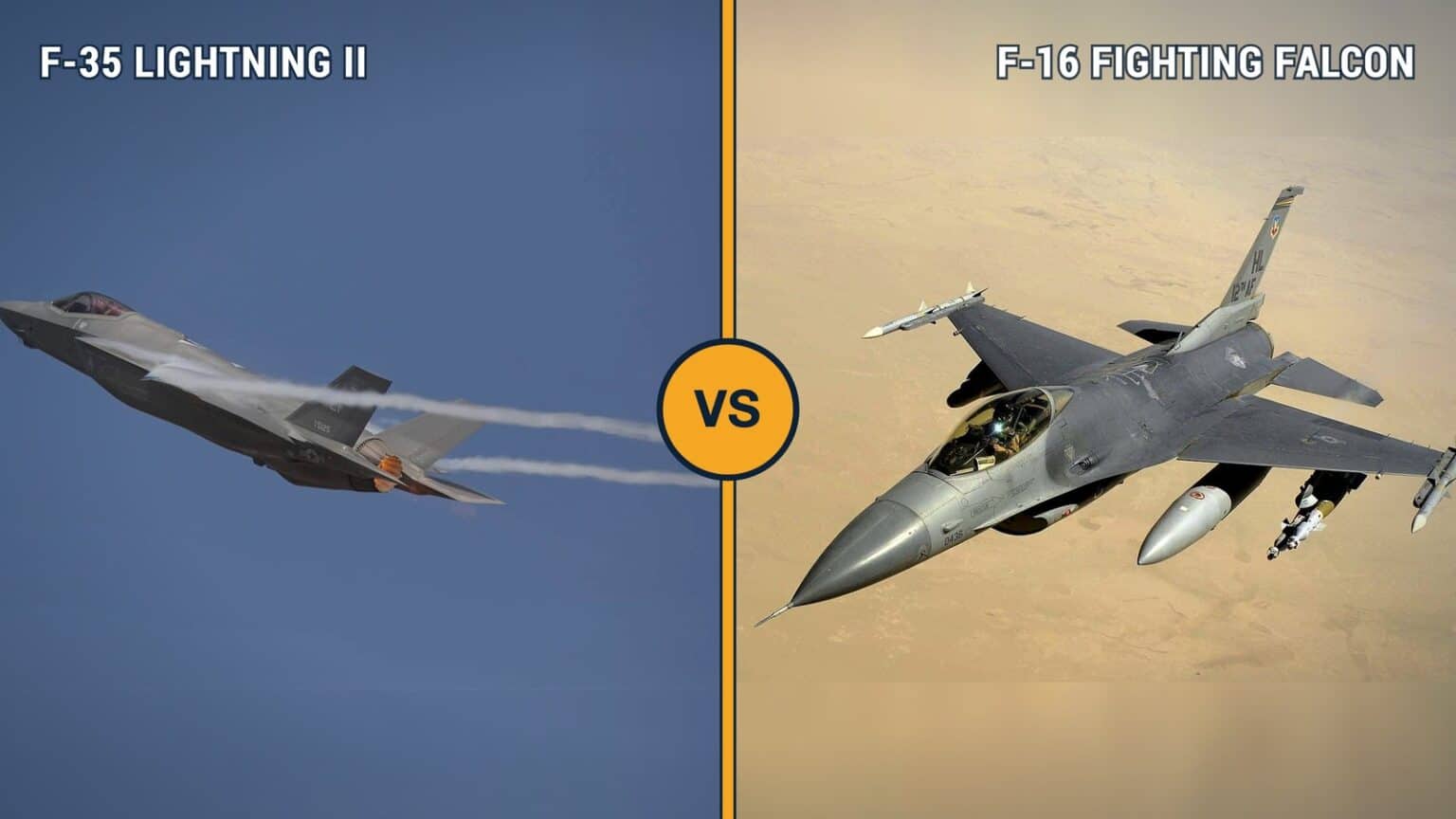
An early F-35 lost a 2015 test dogfight to an F-16, a matchup we cover in our F-35 vs F-16 comparison. The Pentagon said that jet was limited to 5.5 g and lacked its stealth coating and helmet display.
The F-35 would rather never get that close. Its design aims to shoot from beyond visual range before an F-15 pilot knows it is there, which is what the Red Flag results reflect.
The F-35's first kill of a crewed jet
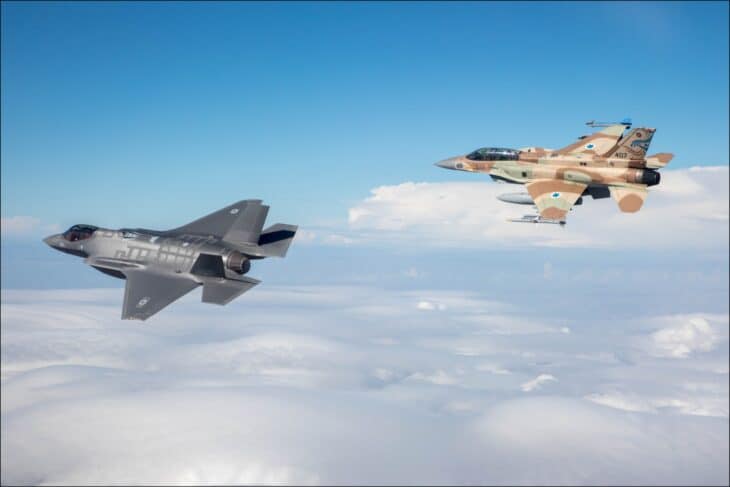
On March 4, 2026, an Israeli F-35I Adir shot down an Iranian Yak-130 jet over Tehran, the first time an F-35 had downed a crewed aircraft. An IDF spokesman said the engagement lasted a few seconds. It was also the first time since 1985 that an Israeli fighter had shot down an enemy warplane.

Why the Air Force is buying both
The F-15EX was bought to replace worn-out F-15C/Ds, and its job keeps growing. In April 2026 the Air Force more than doubled its planned F-15EX fleet, from 129 to 267, with about 25 in its inventory at the time.
The new jets are meant to replace aging F-15C/Ds, the A-10 and eventually the F-15E. The fiscal 2027 budget request buys 62 fighters: 38 F-35As and 24 F-15EXs.
The F-35A is still the bigger buy and the jet meant to go into heavily defended airspace. The F-15EX is the cheaper one to fly and keep ready, and it carries more.
Both are feeding a US Air Force fighter fleet that has dropped below the size Congress requires. More than 1,340 F-35s had been built by August 2026.
The F-35 still has loud critics. In November 2024 Elon Musk wrote that “some idiots are still building manned fighter jets like the F-35,” and called its design “broken at the requirements level.”
Jul 1972
The F-15 Eagle flies for the first time. It enters service in January 1976.
1991
F-15Cs dominate the Gulf War air battle. They score 34 of the US Air Force’s 37 air-to-air victories.
Dec 2006
The first F-35A flies. It is the conventional-runway version the Air Force flies.
Aug 2016
The F-35A enters US Air Force service. It reaches initial operating capability on August 2.
Feb 2017
Red Flag 17-1. The F-35A posts what the Air Force calls a 20-to-1 kill ratio in its first Red Flag.
2018
The F-35 flies its first combat missions. Israeli jets strike targets in Syria.
Feb 2021
The F-15EX Eagle II flies. The first one is delivered to the Air Force on March 11.
Jul 2024
The F-15EX reaches initial operating capability. It begins replacing the F-15C/D.
Mar 2026
Three F-15Es go down over Kuwait. All six crew survive an apparent friendly-fire incident on March 2.
Mar 2026
The F-35’s first kill of a crewed aircraft. An Israeli F-35I downs an Iranian Yak-130 over Tehran on March 4.
Apr 2026
An F-15E is shot down over Iran. Both crew are rescued after the April 3 loss.
Apr 2026
The Air Force doubles its F-15EX plan. The planned fleet rises from 129 to 267 jets.
Jun 2026
A GAO report finds F-35 readiness falling. Only 28.5 percent of F-35As could fly all their missions in 2025.
How many F-15s have been shot down?
None by an enemy fighter, on the public record. The air-superiority F-15A to D models have no recorded losses to enemy action.
The two-seat Strike Eagle has been shot down from the ground. Two F-15Es were lost to Iraqi ground fire in the 1991 Gulf War, and on April 3, 2026, one was brought down over Iran by what President Trump described as a shoulder-fired missile.
Both crew survived. The pilot was rescued within hours, and the weapon systems officer was recovered on April 5 after evading capture in the Zagros Mountains.

Iran first claimed the jet was an F-35. The wreckage carried the markings of an F-15E from the 494th Fighter Squadron at RAF Lakenheath, England.
Three more F-15Es were shot down over Kuwait on March 2, 2026, in an apparent friendly-fire incident involving Kuwaiti air defenses. All six crew were recovered.
Strike Eagles have been hit on the ground as well. An Iranian missile strike on a US base in Jordan on September 8, 2026 lightly damaged about eight of them, and they were judged serviceable.
Which fighter jet can beat the F-35?
None has been shown to in combat, as of September 2026. Iran has claimed F-35 kills twice this year, and neither claim has held up.
The April 3 “F-35” was the F-15E above. On July 30 the IRGC said its missiles had destroyed three F-35s at a base in Jordan, and the US military replied that “no US aircraft were destroyed or damaged in recent attempted Iranian attacks.”
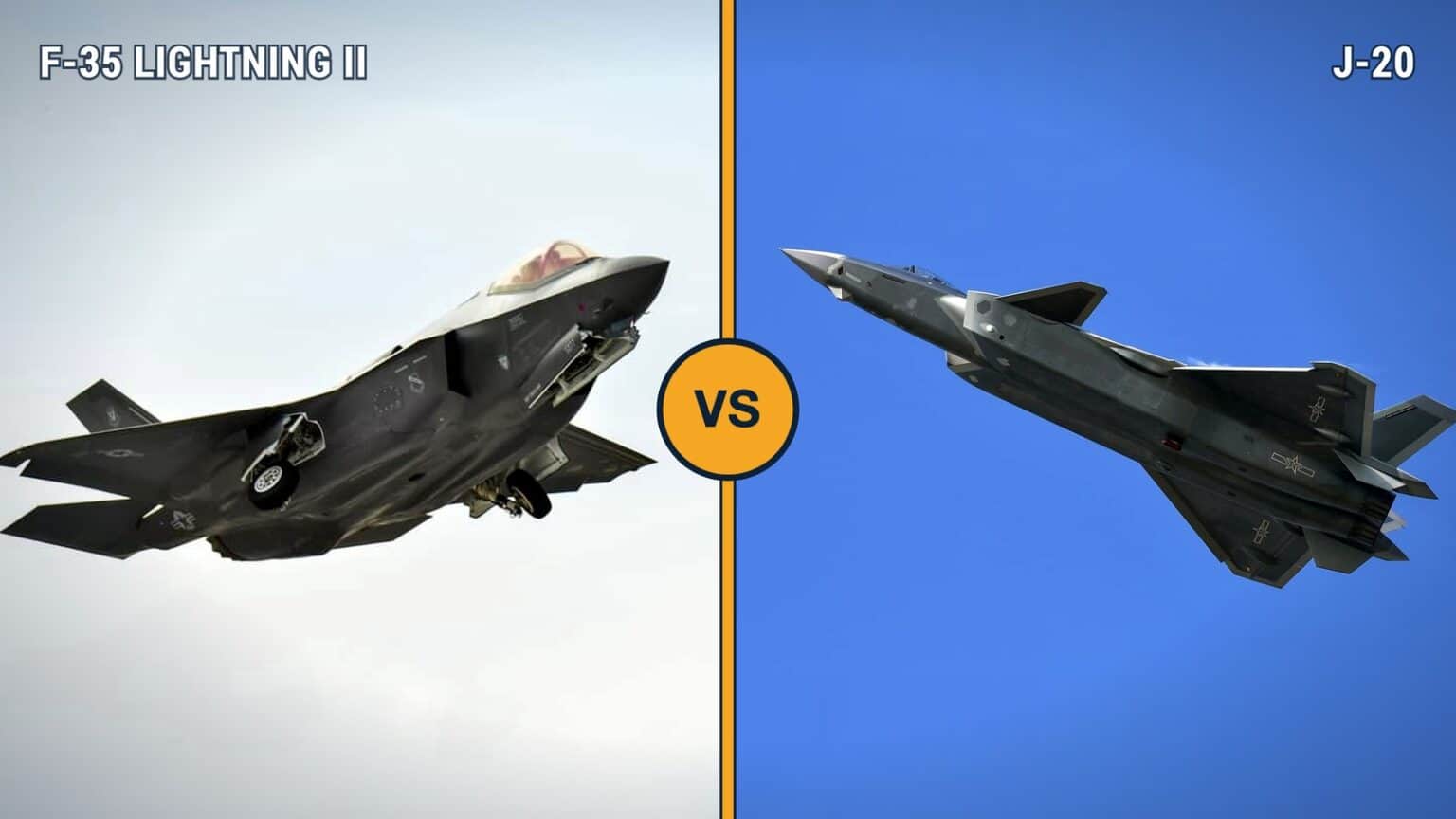
Its closest air-to-air rivals are China’s Chengdu J-20 and America’s own F-22 Raptor. We compare those pairings in our F-35 vs J-20 and F-22 vs F-35 comparisons.
The verdict
If one jet had to fight its way into defended airspace and come home, take the F-35. It sees first, shoots first and hides its weapons, and nothing on an F-15 can change that.
If you need speed, payload and a jet that is ready to fly, the F-15 makes a case the F-35 cannot. The F-15EX carries three times the stealthy F-35’s missile load, costs less per hour, and has an airframe rated to last more than twice as long.
That is why the Air Force stopped treating them as rivals. For the Eagle against the Raptor, see our F-15 vs F-22 comparison, and for the wider field, our ranking of the best fighter jets in the world.
FAQ
Sources and references used for research and fact-checking.
- U.S. Air Force, F-35A Lightning II Conventional Takeoff and Landing Variant Fact Sheet
- U.S. Air Force, F-15 Eagle Fact Sheet
- Air & Space Forces Magazine, F-15EX Eagle II
- Office of the Under Secretary of Defense (Comptroller), Fiscal Year 2026 DoD Fixed Wing and Helicopter Reimbursement Rates
- Office of the Under Secretary of Defense (Comptroller), Fiscal Year 2025 DoD Fixed Wing and Helicopter Reimbursement Rates
- Air & Space Forces Magazine, Air Force Mission Capability Rates Reach Lowest Levels in Years
- Air & Space Forces Magazine, GAO: Just Over One in Four F-35As Fully Mission Capable
- Air & Space Forces Magazine, Air Force Doubles Planned F-15EX Fleet to 267 Fighters
- Air & Space Forces Magazine, New Acquisition Report: F-15EX Unit Cost Will Be $94 Million
- Air & Space Forces Magazine, What Each F-35 Variant Really Costs Right Now
- Wikipedia, Lockheed Martin F-35 Lightning II
- Wikipedia, McDonnell Douglas F-15 Eagle
- Wikipedia, Boeing F-15EX Eagle II
- Defense News, Israeli F-35 notches first kill of a manned fighter in downing of Iranian Yak-130
- The Aviationist, Red Flag confirmed F-35 dominance with a 20:1 kill ratio, U.S. Air Force says
- The National Interest, Air Force Pilot Explains How an F-15 Can Beat an F-35 in a Mock Battle
- Wikipedia, 2026 United States F-15E rescue operation in Iran
- The Aviationist, Iranian Media Posts Debris From USAF F-15E Claimed to Have Been Downed Earlier Today
- Air & Space Forces Magazine, Three US F-15Es Shot Down by Kuwaiti Friendly Fire; Crews Safe
- Air & Space Forces Magazine, Iran Damages A-10, F-15s With Missile Attack on Air Base in Jordan
- The Jerusalem Post, US denies that IRGC destroyed three F-35s
- AVweb, Musk Chides 'Idiots' Who Back F-35 Stealth Fighter
About the Author

Tim is the owner and lead editor of AeroCorner since 2019, overseeing aviation content covering aircraft, airlines, airports, and the broader aviation industry. Through years of researching, writing, editing, and publishing aviation-focused content, he has developed extensive practical knowledge of commercial aviation and air travel. Based in Asia and a frequent traveler himself, Tim also brings firsthand passenger experience to AeroCorner’s coverage. Outside of publishing, he has also explored aviation firsthand through hands-on flight training in New Zealand.