



Table of Contents
| Category | Su-27 | F-35 | Edge |
|---|---|---|---|
| Original job | Long-range air defense and bomber escort | Stealth strike and air combat, one airframe | Different jobs |
| Stealth | None designed in | Core design feature | F-35 |
| Radar and sensors | Pulse-Doppler radar plus infrared search and track | AESA radar and fused sensor picture | F-35 |
| Speed (sea level) | Mach 1.13 | Mach 1.06 | Su-27 |
| Speed (altitude) | Mach 2.35 | Mach 1.6 | Su-27 |
| Weapons | Up to 10 external hardpoints | Four internal stations, six external | Su-27 on count, F-35 on stealth |
| Readiness | Aging fleet, parts shortages | Readiness falling, per the GAO | Neither |
| Combat record | Air-to-air kills, mostly in small wars | Mostly strikes, first claimed manned kill in 2026 | Su-27 |
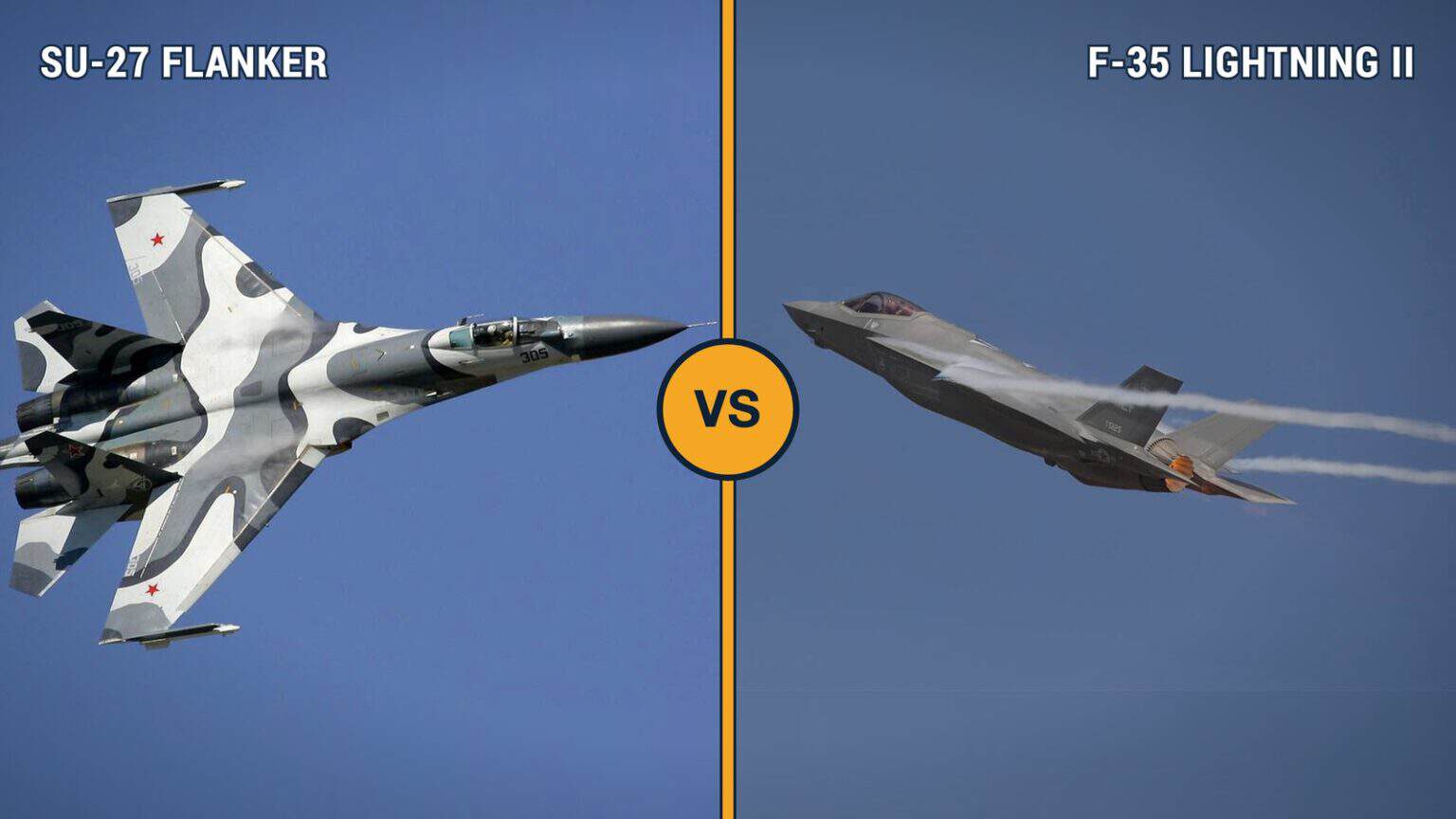
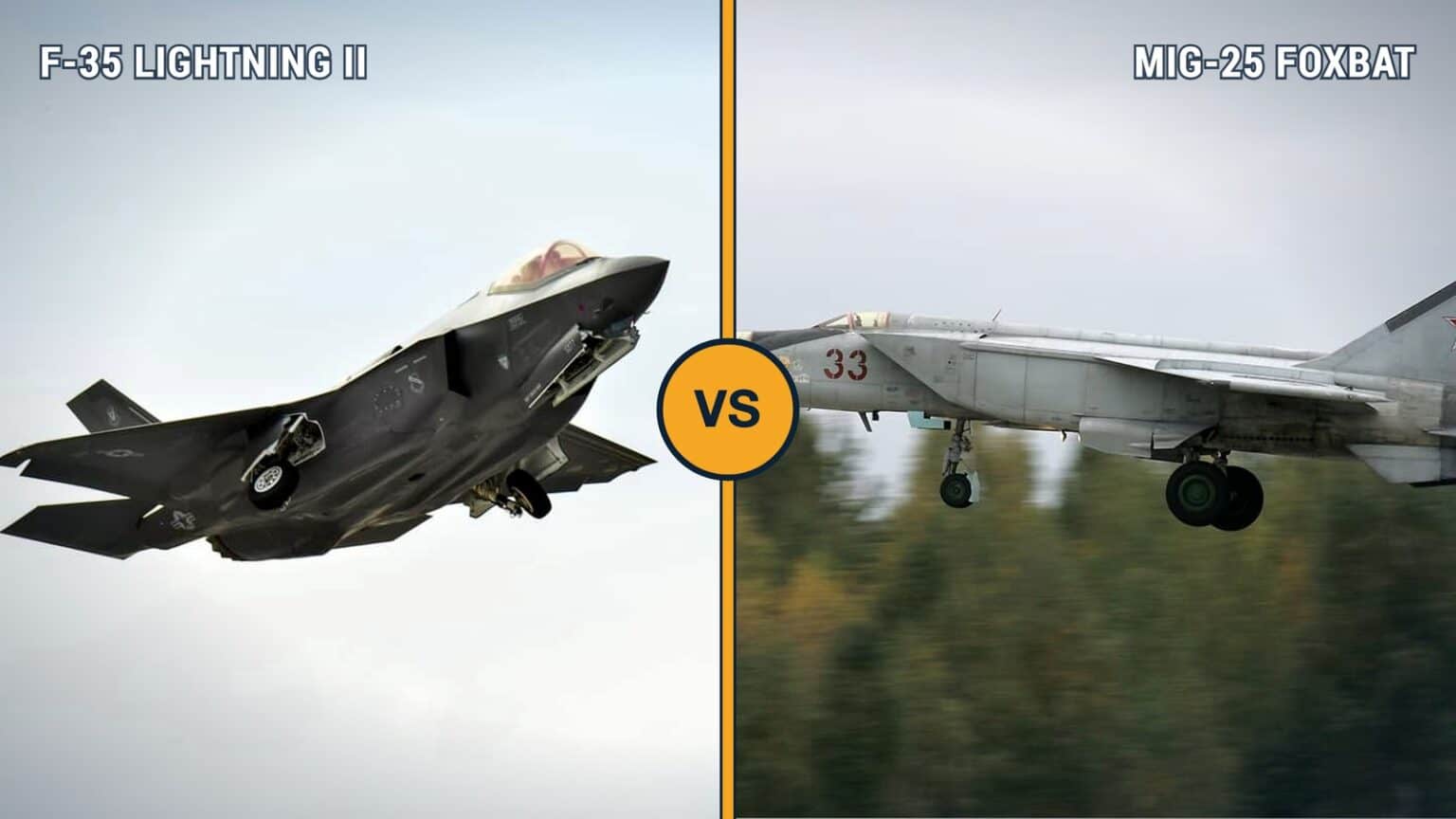
The F-35 would usually win a real fight, and it would win it by never letting the Su-27 get into a turning contest. The Flanker is faster, more agile and carries more missiles. The F-35 sees first and is far harder to see.
That is our assessment, not a test result. We found no record of the two types meeting in combat, so everything below compares what each was built to do.
Built for different wars
The Su-27 was designed in the 1970s as the Soviet answer to the F-15 Eagle. Its main jobs were long-range air defense against B-52 and B-1B bombers, protecting the Soviet coast from aircraft carriers, and escorting Soviet heavy bombers.
The T-10 prototype first flew on 20 May 1977, and the production Su-27 began entering service in 1985. It is a big twin-engine airplane because it had to patrol far from home.

The F-35 came from the Joint Strike Fighter program, which merged several fighter programs into one family. Lockheed Martin won the development contract on 26 October 2001.
The result is a single-engine multirole fighter built for strike, reconnaissance and air combat, with stealth as the organizing idea. These are very different design briefs.
Our guide to the five generations of fighter planes explains the gap. The Su-27 is a fourth-generation design, while the F-35 is fifth-generation.
Where the F-35 wins: stealth and sensors
Stealth is the F-35’s defining advantage. Its radar cross-section is reduced by airframe shaping and radar-absorbent materials, and its weapons ride inside two internal bays so nothing hangs off the wings to reflect radar.
The Su-27 was not designed around stealth. Its missiles and fuel tanks hang from external hardpoints, and nothing in its design brief asked it to hide.
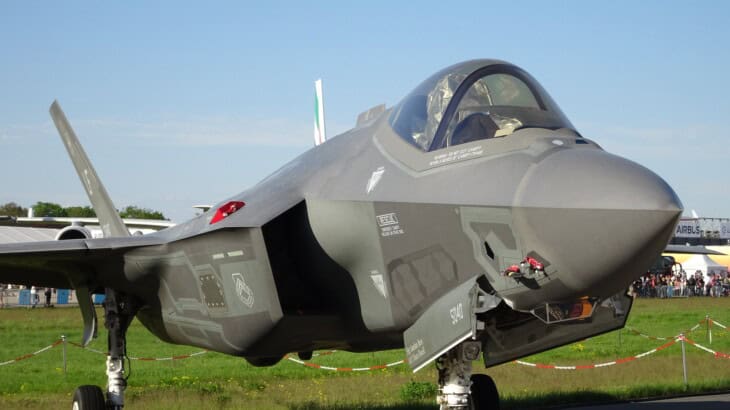
The F-35’s AN/APG-81 radar is an active electronically scanned array that tracks multiple targets while it scans, at ranges beyond 80 nautical miles. The antenna is tilted backward to protect its stealth.
The bigger point is how the data is used. The F-35’s avionics and sensor fusion are designed to merge what each sensor sees into one picture for the pilot, and to share it across a network.
The Su-27 pairs a Phazotron N001 pulse-Doppler radar, which has track-while-scan and look-down, shoot-down capability, with an OLS-27 infrared search and track set in the nose. That was a strong package in the 1980s, but it was not designed around a network.
Where the Su-27 wins: speed, agility and raw size
The Su-27 is the faster airplane on paper. Its published top speed is Mach 2.35 at altitude, against Mach 1.6 for the F-35.
The sea-level surprise
Down low, where most dogfights happen, the gap nearly closes. The Su-27 is listed at Mach 1.13 at sea level and the F-35 at Mach 1.06. The altitude speed advantage matters far less than it looks.
Agility is the Flanker’s other signature. It had the Soviet Union’s first operational fly-by-wire control system and low wing loading, so it stays controllable at very low speed and high angle of attack.
At airshows that shows up as the Cobra maneuver, a briefly sustained level flight at a 120 degree angle of attack. Both fighters are listed at +9 g.
The F-35 is no slouch here. Its large stabilators and leading-edge extensions give it good high-alpha behavior, with a trimmed angle of attack of 50 degrees. It is still a heavier single-engine design built for stealth, not for turning contests.
Thrust-to-weight tells a similar story. The Su-27 is listed at 1.07 with 56 percent internal fuel and 0.91 with full fuel. The F-35 is listed at 0.87 at gross weight and 1.07 with 50 percent internal fuel.
The Su-27’s two Saturn AL-31F engines each produce 27,560 lbf (123 kN) with afterburner. The F-35’s single Pratt & Whitney F135 produces 43,000 lbf (191 kN). The spec widget above has the full numbers for both aircraft.
Weapons: more pylons or better hiding
The Su-27 carries a 30 mm GSh-30-1 cannon with 150 rounds and up to 10 external hardpoints. Its standard air-to-air load mixes R-27 radar-guided and infrared missiles with short-range R-73s.
The baseline Su-27 could not use the longer-range R-77. That needed the Su-27SM upgrade, and China’s Su-27s could not fire it through 2012.
The F-35A carries a 25 mm GAU-22/A cannon with 180 rounds and four internal weapons stations that can hold 5,700 lb (2,585 kg) of ordnance. The same airplane has six external stations for missions where stealth does not matter.
With external stations the F-35 can carry eight AIM-120 missiles and two AIM-9s. Flown stealthy, it carries far fewer, which is the trade it makes for staying hard to detect.
Readiness: both fleets have problems

The Su-27’s production ended in 2010, so every airframe is at least 16 years old. Ukraine inherited about 66 to 70 of them in 1991, and a shortage of spare parts and inadequate servicing left roughly 34 in service by 2019.
As of 24 October 2025, Ukraine had lost 17 Su-27s and Russia 3, by Wikipedia’s count of all causes. No allied air force flies the type, so Ukraine has no donor fleet to draw from.
The F-35 has its own sustainment problem. A June 2026 GAO report found Full Mission Capable rates fell from 38 percent in fiscal year 2021 to about 25 percent in fiscal year 2025, while Mission Capable rates fell from 67 percent to 44 percent.
The GAO blamed spare parts shortages, limited depot capacity, engine sustainment and supply chain problems.
What each has actually done in combat
The Su-27 has the older and more varied record. Ethiopian Su-27s are confirmed to have shot down two Eritrean MiG-29s and damaged a third in the Eritrean-Ethiopian War, and the type has flown for both sides in Ukraine since 2022.
The F-35 has mostly flown strike and air defense missions. Israel used it in combat first, in May 2018, and the US Air Force followed in April 2019.
It has also shot down drones. The IDF said an F-35I shot down an Iranian Yak-130 trainer over Tehran on 4 March 2026, the first claimed air-to-air kill of a crewed aircraft by any F-35.
In training, an F-35A squadron scored a 15:1 kill ratio against an F-16 aggressor squadron in a high-threat scenario at its first Red Flag exercise. That is an exercise result, not a combat one.

So who wins a real Su-27 vs F-35 fight?
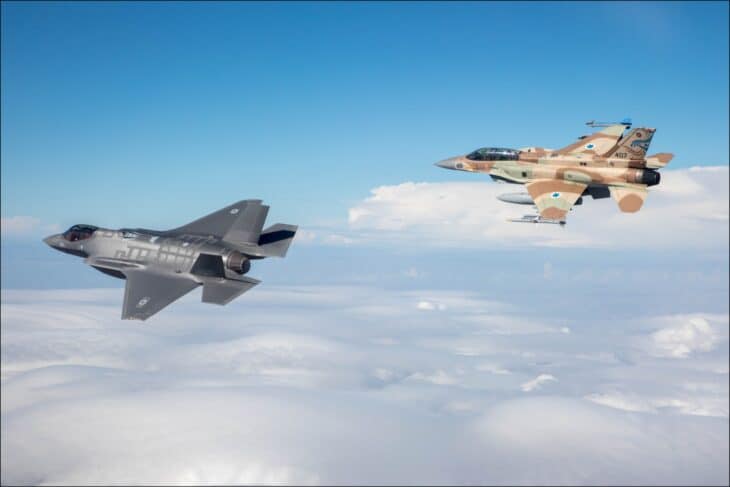
We think the F-35 wins most realistic scenarios. It can detect and shoot first, it is hard to track, and its sensors are built to share data across a network, which the Su-27 was not designed for.
The Flanker’s best chance is to force a close-range fight where its agility counts, and to launch from a distance before the F-35 reaches it. That requires the F-35 to make a mistake.
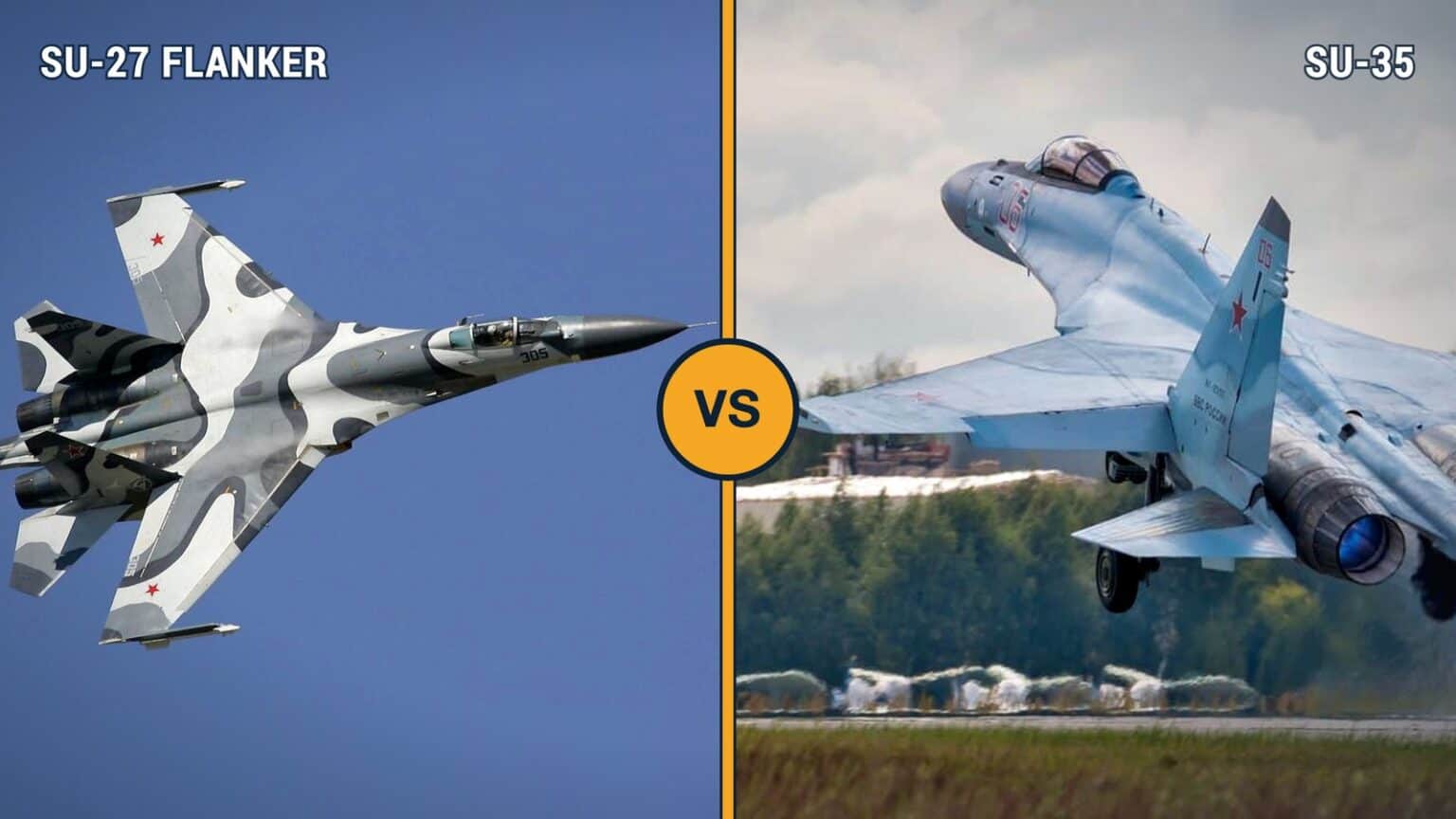
The Su-27 is also a fourth-generation design. Russia’s newer Su-35 is the most advanced version of the Su-27 family, and a fairer rival. We cover that match in Su-35 vs F-22.
For the wider field, see our rankings of the best Russian fighter jets and the best fighter jets in the world.
FAQ
Sources and references used for research and fact-checking.
About the Author

Tim is the owner and lead editor of AeroCorner since 2019, overseeing aviation content covering aircraft, airlines, airports, and the broader aviation industry. Through years of researching, writing, editing, and publishing aviation-focused content, he has developed extensive practical knowledge of commercial aviation and air travel. Based in Asia and a frequent traveler himself, Tim also brings firsthand passenger experience to AeroCorner’s coverage. Outside of publishing, he has also explored aviation firsthand through hands-on flight training in New Zealand.