



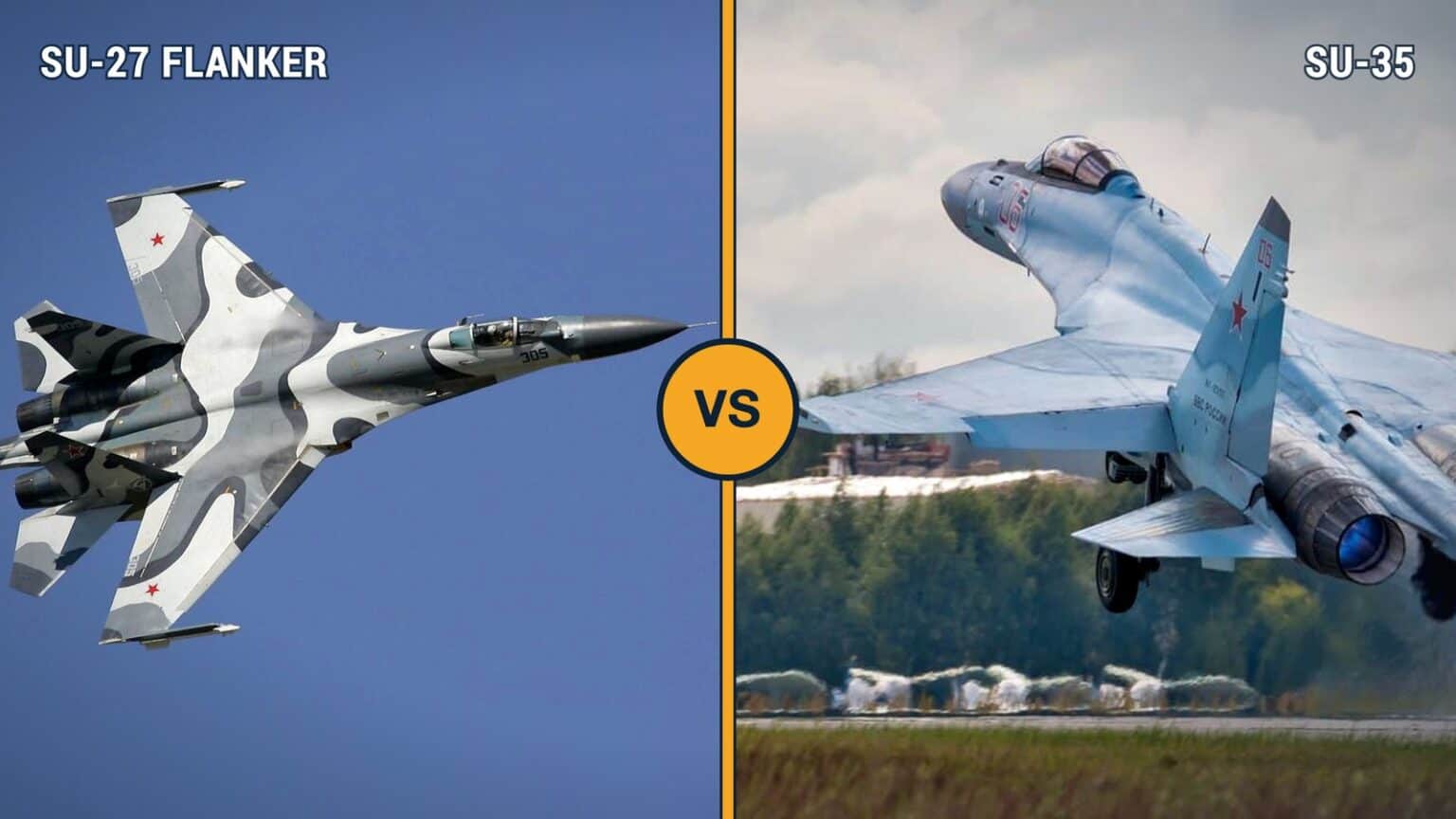
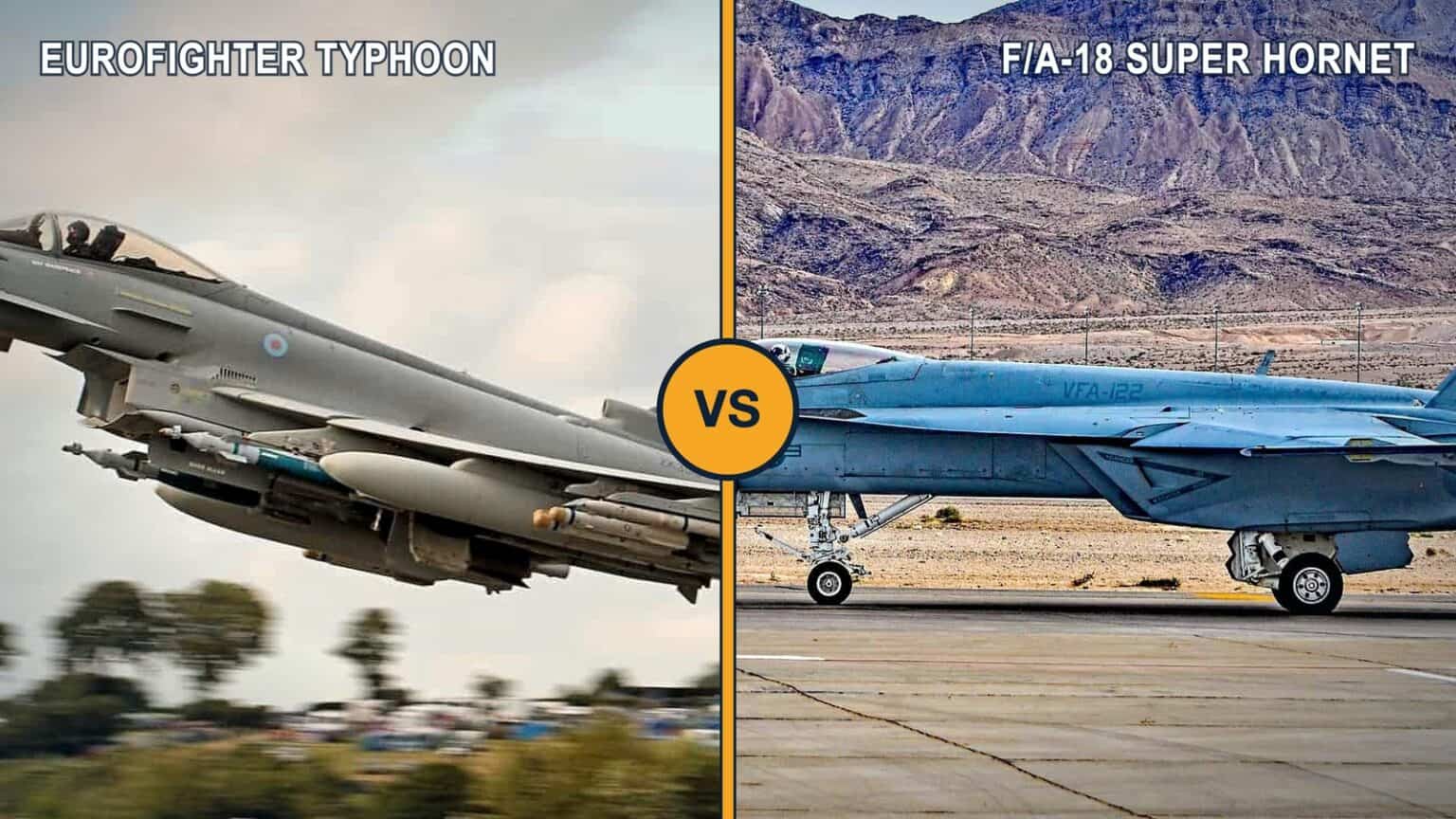
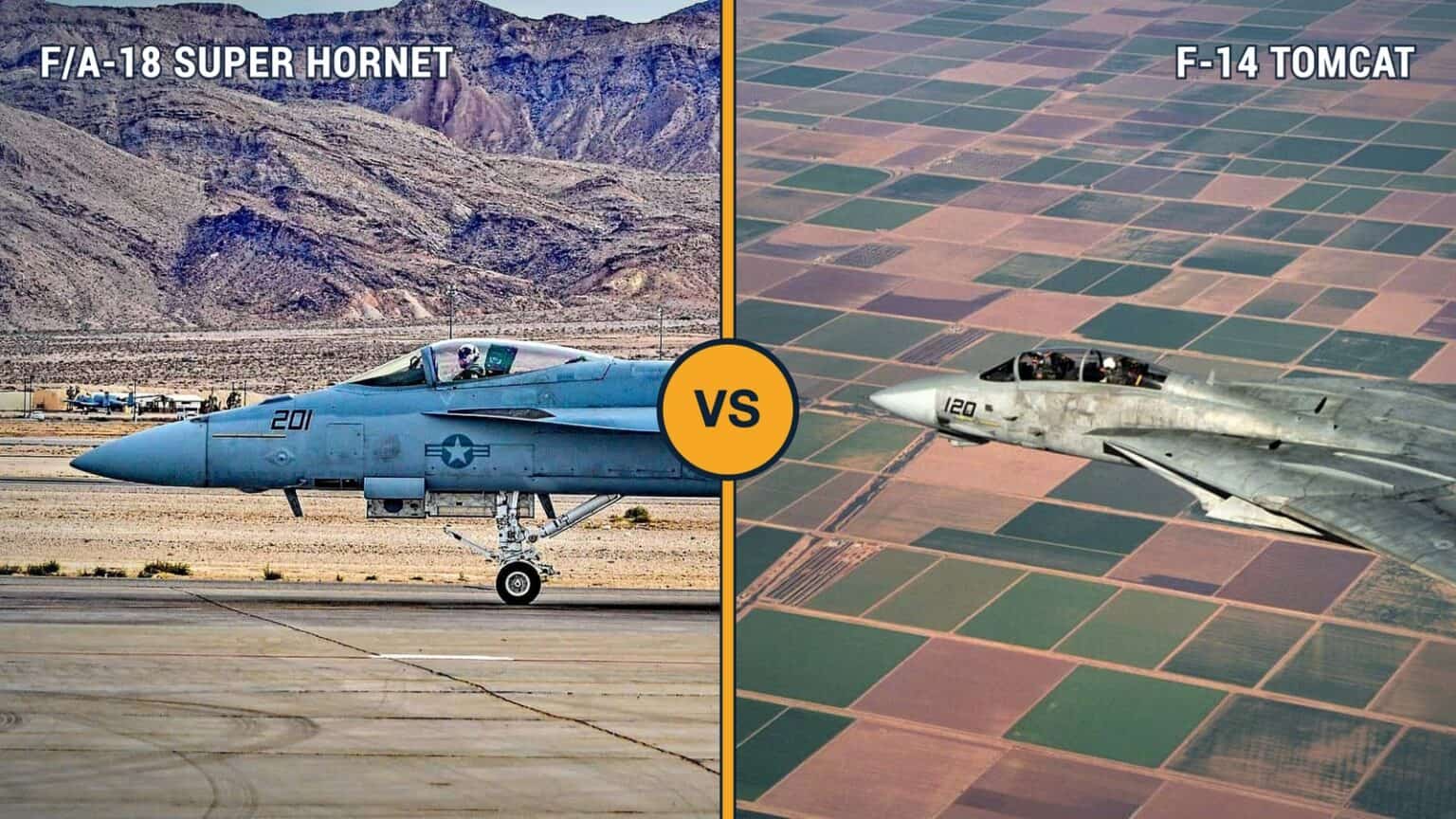
Table of Contents
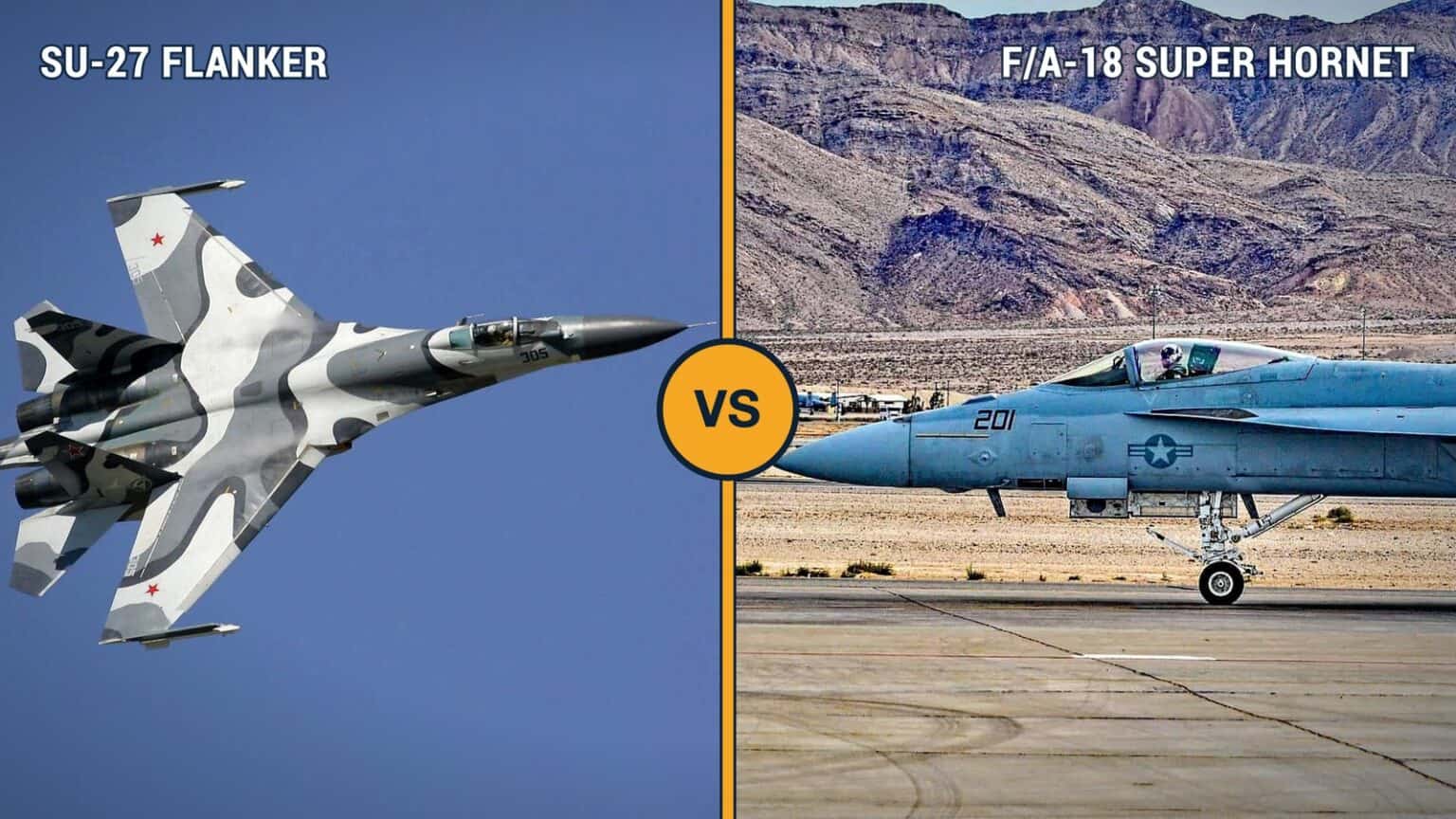
| Su-27 Flanker | F/A-18E/F Super Hornet | |
|---|---|---|
| Built for | Long-range air defense and bomber escort | Carrier strike fighter, air-to-air and air-to-ground |
| Origin | Sukhoi’s answer to the F-15; the T-10 prototype first flew 20 May 1977 | Enlarged redesign of the F/A-18 Hornet; first flew 29 November 1995 |
| Service entry | First units in 1985; officially August 1990 | US Navy fleet service in 1999 |
| Radar | Phazotron N001 pulse-Doppler | AN/APG-79 AESA on Block II and later aircraft |
| Infrared search and track | Built into the nose (OLS-27) | Optional pod (IRST21) |
| Gun | 30 mm GSh-30-1 | 20 mm M61A2 |
| Weapon stations | Up to 10 | 11 |
| Carrier version | Su-27K (Su-33), ski-jump launch | The standard aircraft |
| Operators | Russia, Ukraine, Ethiopia, Eritrea and others; China builds it as the J-11 | United States, Australia, Kuwait |
Built for different wars
The Su-27 exists because Moscow was alarmed by the F-15. Sukhoi altered its design progressively to reflect what the Soviets knew of the F-15’s specifications, and the T-10 prototype first flew on 20 May 1977.
Its first job was long-range air defense: protecting the Soviet coast from carrier aircraft and escorting heavy bombers such as the Tu-95 and Tu-160. It began entering service in 1985.
The Super Hornet started from a different brief. It is an enlarged redesign of the F/A-18 Hornet, about 20 percent larger, and it replaced the F-14 Tomcat, A-6 Intruder and S-3 Viking in the US Navy.
It first flew on 29 November 1995, 18 years after the Flanker’s prototype. That gap is why this is not a same-era fight. The Su-27’s true contemporaries were the F-15 and F-16, and the Super Hornet’s closest Russian peers are later Flankers like the Su-35.
Which one fights better up close?
The Su-27 had the Soviet Union’s first operational fly-by-wire control system. Combined with low wing loading, it stays controllable at very low speeds and high angles of attack.
Test pilot Viktor Pugachev first demonstrated the Cobra maneuver in an Su-27 in 1989. At air shows the jet has held level flight at a 120 degree angle of attack.

One myth is worth clearing up. The original Su-27 does not have thrust vectoring. That came later, on the Su-37 demonstrator and on derivatives such as the Su-30MKI and Su-35, and the Cobra is a product of the airframe and flight controls.
Thrust is where the Flanker pulls ahead. The two aircraft have nearly the same maximum takeoff weight, 67,000 lb (30,500 kg) for the Su-27 and 66,000 lb (29,900 kg) for the Super Hornet. But the Su-27’s two engines make 2 × 27,560 lbf (123 kN) against 2 × 22,000 lbf (98 kN), about a quarter more.
The Super Hornet answers with a quadruplex digital fly-by-wire system and enlarged leading-edge extensions. Its edge is not turning ability. It is what the aircraft can see and carry.
Radar, sensors and weapons
The Su-27’s Phazotron N001 is a pulse-Doppler radar with track-while-scan and look-down/shoot-down capability. The Super Hornet added the AN/APG-79 AESA radar on Block II aircraft from 2005.
An AESA can detect smaller targets, including inbound missiles, and can track air targets beyond the range of the aircraft’s own missiles. That is a generational sensor advantage.
The Flanker has one sensor the Super Hornet lacks as standard: an OLS-27 infrared search and track system built into the nose, with a range of 50 to 62 miles (80 to 100 km). The Super Hornet gets an IRST only as an optional pod on the centerline tank.

Payload favors the Navy jet by a wide margin: 17,700 lb (8,050 kg) against 9,750 lb (4,450 kg) for the Su-27. The Flanker carries up to 10 weapon stations and a 30 mm cannon, and the Super Hornet carries 11 stations and a 20 mm cannon.
The missiles differ too. A standard Su-27 fights with R-27 and R-73 missiles, while the Super Hornet carries AIM-120 and AIM-9 missiles. The Russian R-77 arrived only with the Su-27SM upgrade program that began in 2004.
Fire control, not the airframe, was the limit on some export jets. China’s Su-27s could not fire the R-77 through 2012.
At sea: ski jump or catapult
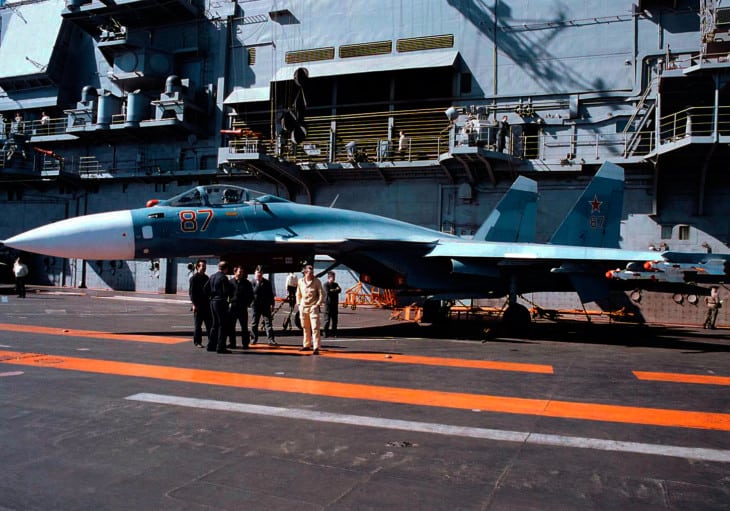
The Soviet Navy wanted a carrier Flanker, and the result was the Su-27K, also called the Su-33. It added canards, folding wings and strengthened landing gear. The first T-10K flew in August 1987.
_DD-SD-99-06153.jpg)
Soviet designers had no experience with steam catapults, so the Su-27K launches from a ski jump instead. It builds full thrust against a blast deflector and then rolls up the ramp.
The Super Hornet was a carrier aircraft from the start. Its first carrier landing came in 1997, and it entered US Navy fleet service in 1999. It is now the backbone of US carrier aviation.
What each has done in combat
The Su-27’s clearest air-to-air record comes from the Eritrean-Ethiopian War, where Ethiopian Su-27s are confirmed to have shot down two Eritrean MiG-29s in February 1999. Ethiopia claims more, but only two to four are confirmable.
In Ukraine the Flanker flew for both sides. As of 21 April 2026, Ukraine had lost 19 Su-27s in the Russian invasion.
On 18 June 2017 a US Navy F/A-18E shot down a Syrian Su-22 fighter-bomber, the Navy’s first aerial kill since the 1991 Gulf War. On 26 December 2023, Super Hornets from USS Dwight D. Eisenhower helped destroy 12 attack drones, three anti-ship missiles and two cruise missiles fired by Houthi forces in the Red Sea.

We found no record of an Su-27 and a Super Hornet meeting in combat. Most Su-27 vs F/A-18 videos online are Digital Combat Simulator matchups, which tell you about how the game models the aircraft.
If your question is really about the original F/A-18 Hornet, that is a different, older aircraft. The Super Hornet is a largely new design.
Where each stands today
Su-27 production ran from 1982 to 2010. Since 2004 Russia has upgraded its original fleet to the Su-27SM standard, with multifunction displays, a new fire-control system and a slightly improved radar.
The Super Hornet is still in production. Block III aircraft, first delivered in 2021, add a large touchscreen cockpit display and an airframe strengthened for 10,000 flight hours.
So which is better?
The short answer
Pick the Su-27 for raw thrust, speed and airframe agility. Pick the Super Hornet for radar, payload, carrier operations and a fleet that is still being upgraded. For a head-to-head air fight, missiles, sensors and pilots decide it more than the airframe.
The Flanker is the stronger pure dogfighter on paper, and it is faster. It is also a 1980s design whose original radar and missiles trail what the Super Hornet carries.
The Super Hornet wins as a complete weapon system, because it detects, carries and delivers more, and it does it from a carrier deck. Against a modern Flanker such as the Su-35, the comparison would be much closer.
For other Flanker matchups, see our Su-27 vs F-22 Raptor and Su-27 vs F-16 comparisons.
FAQ
Sources and references used for research and fact-checking.
About the Author

Tim is the owner and lead editor of AeroCorner since 2019, overseeing aviation content covering aircraft, airlines, airports, and the broader aviation industry. Through years of researching, writing, editing, and publishing aviation-focused content, he has developed extensive practical knowledge of commercial aviation and air travel. Based in Asia and a frequent traveler himself, Tim also brings firsthand passenger experience to AeroCorner’s coverage. Outside of publishing, he has also explored aviation firsthand through hands-on flight training in New Zealand.