



Table of Contents
| Measure | F-35A Lightning II | F-16 Fighting Falcon |
|---|---|---|
| Generation, first flight | Fifth; December 2006 | Fourth; YF-16 prototype flew January 1974 |
| Entered US Air Force service | August 2016 | 1978 |
| Built for | Multirole: strike, air combat and sensing in defended airspace | Lightweight multirole fighter: air combat, strike and air-defense suppression |
| Stealth | Low observable, weapons carried in two internal bays | None, weapons carried externally |
| Sensors | Distributed Aperture System, targeting system and helmet-mounted display | APG-83 AESA radar and IVEWS electronic warfare suite (US upgrade) |
| Weapons | 18,000 lb payload; two internal bays plus six external stations | Up to six air-to-air missiles on external stations |
| Gun | GAU-22/A 25 mm | M61A1 20 mm, 500 rounds |
| Air combat record | First kill of a crewed aircraft in March 2026 (Israeli F-35I) | Kills with Israel, the US, Ukraine and others; 44 Israeli kills over Lebanon in 1982 |
| Cost per flight hour, FY2026 | $18,600 | $14,818 (F-16C) |
| Built | More than 1,345 by August 2026 | 4,604 |
| US Air Force fleet | 500 F-35As (August 2025) of 1,763 planned | 704 F-16Cs and 134 F-16Ds (FY2024) |
| Future in US service | Replacing the F-16 and the A-10 | Upgraded to fly through 2040 or beyond |
How we compare the F-16 and the F-35
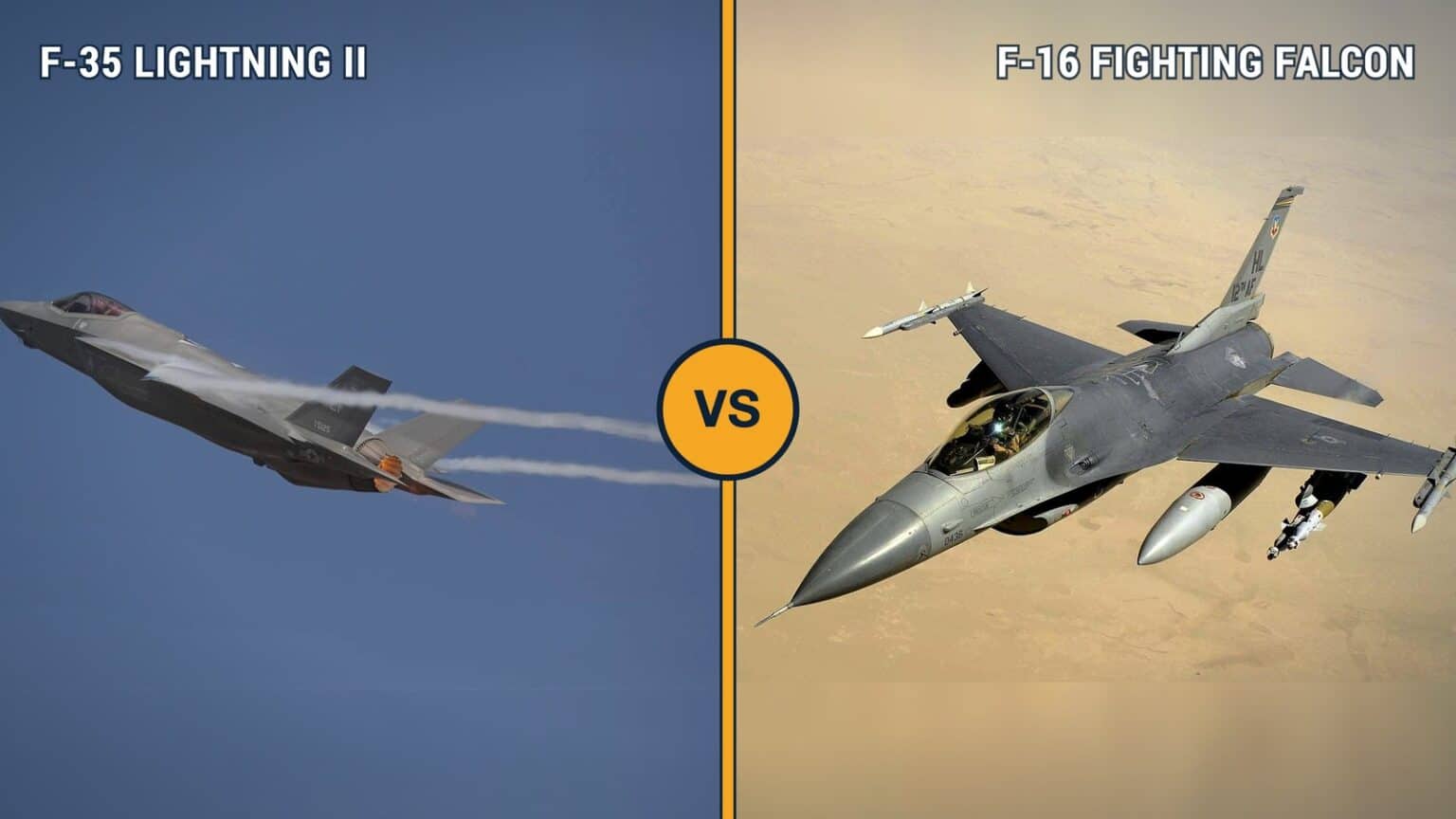
These jets are a generation apart. The F-16 is a 1970s lightweight fighter that US squadrons still fly in upgraded F-16C and F-16D form, and the F-35A is the stealthy fifth-generation jet the Air Force is buying to replace it.
We compare them on four measures: who sees and shoots first, performance and range, cost and readiness, and combat record. What separates the two generations is the subject of our guide to the five generations of fighter planes.
Full specifications for the Lockheed Martin F-35 Lightning II and the Lockheed Martin F-16 Fighting Falcon sit in our aircraft database. Both are Lockheed Martin jets today, although the F-16 was designed by General Dynamics.
The F-35 was built to replace the F-16
The Air Force’s F-35A fact sheet says the jet will replace its aging fleet of F-16s and A-10s. The Air Force also plans to keep upgrading the F-16 through 2040 or beyond, so the two will share its flight lines for years.
Where the F-35 wins
Stealth decides who shoots first
The F-16 has no stealth. It hangs its missiles, bombs and pods on external stations, and its shape was never designed to hide it from radar.
The F-35A carries its weapons in two internal bays, so a combat load does not spoil its low radar signature. That puts it among the true stealth fighter jets, built to fly into defended airspace and survive.
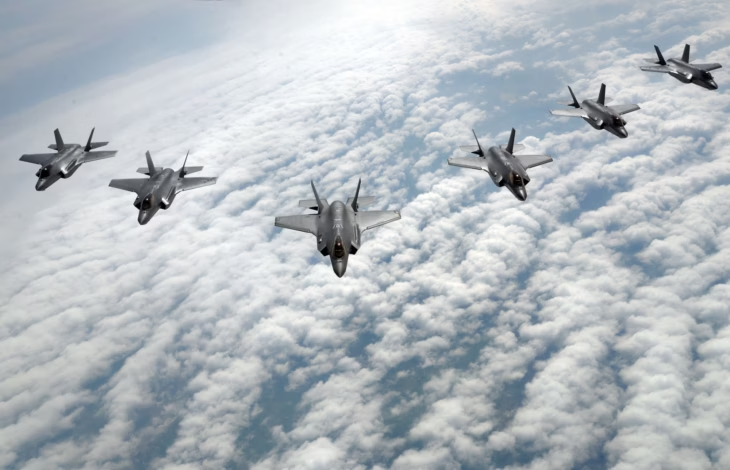
Stealth costs payload. For missions that do not need it, the F-35A can also load six external wing and fuselage stations, but then it gives up the advantage it was built around.
A cockpit that builds the picture for the pilot
The F-35’s sensors were designed to work as one system. Its Distributed Aperture System gives the pilot a sphere of awareness around the jet for missile and aircraft warning, and the helmet visor shows all the targeting information the pilot needs.
Monessa “Siren” Balzhiser flew the F-16 for 13 years in the Air Force before becoming Lockheed Martin’s chief F-35 production pilot. She told Business Insider that the F-16 had some of that information, but “it was all shown on multiple different displays or formats.”
US F-16s have closed part of the gap. Their APG-83 AESA radar and new electronic warfare suite give them self-defense capabilities that Air & Space Forces Magazine calls “on par with fifth-generation aircraft,” but the jet carrying them is still easy for radar to see.
More than twice the fuel, carried inside
The F-35A holds 18,498 pounds (8,390 kg) of fuel internally, against 7,000 pounds (3,175 kg) for the F-16. The Air Force rates the F-35A at more than 1,350 miles (2,170 km) on internal fuel alone.
An F-35 carries more fuel inside than an F-16 carries in total
Even with two external tanks, the Air Force lists a typical F-16 fuel load at 12,000 pounds (5,440 kg). An F-35A holds 18,498 pounds without any tanks at all, so it keeps its clean, stealthy shape and still has a considerably greater combat radius.
Norwegian test pilot Maj. Morten Hanche compared the two in a 2015 blog post, setting Norway’s F-16s against the F-35 simulator. As translated on f-16.net, he wrote that Norway’s F-16s had to refuel several times on Libya missions from Crete, while the F-35 would have flown the whole mission without refueling.
In a similar combat configuration, he added, the F-35 cruises 10,000 to 15,000 feet higher than the F-16 without using afterburner.
Where the F-16 wins
Speed: Mach 2 against Mach 1.6
The F-16 is the faster jet. The Air Force lists it at Mach 2 at altitude, and published specifications give Mach 2.05, about 1,353 mph (2,178 km/h), for a clean jet at 40,000 feet.
The F-35A is listed at Mach 1.6, about 1,200 mph (1,930 km/h). Air & Space Forces Magazine gives that figure with a full internal weapons load, while the F-16’s top speed is for a jet with nothing under its wings.
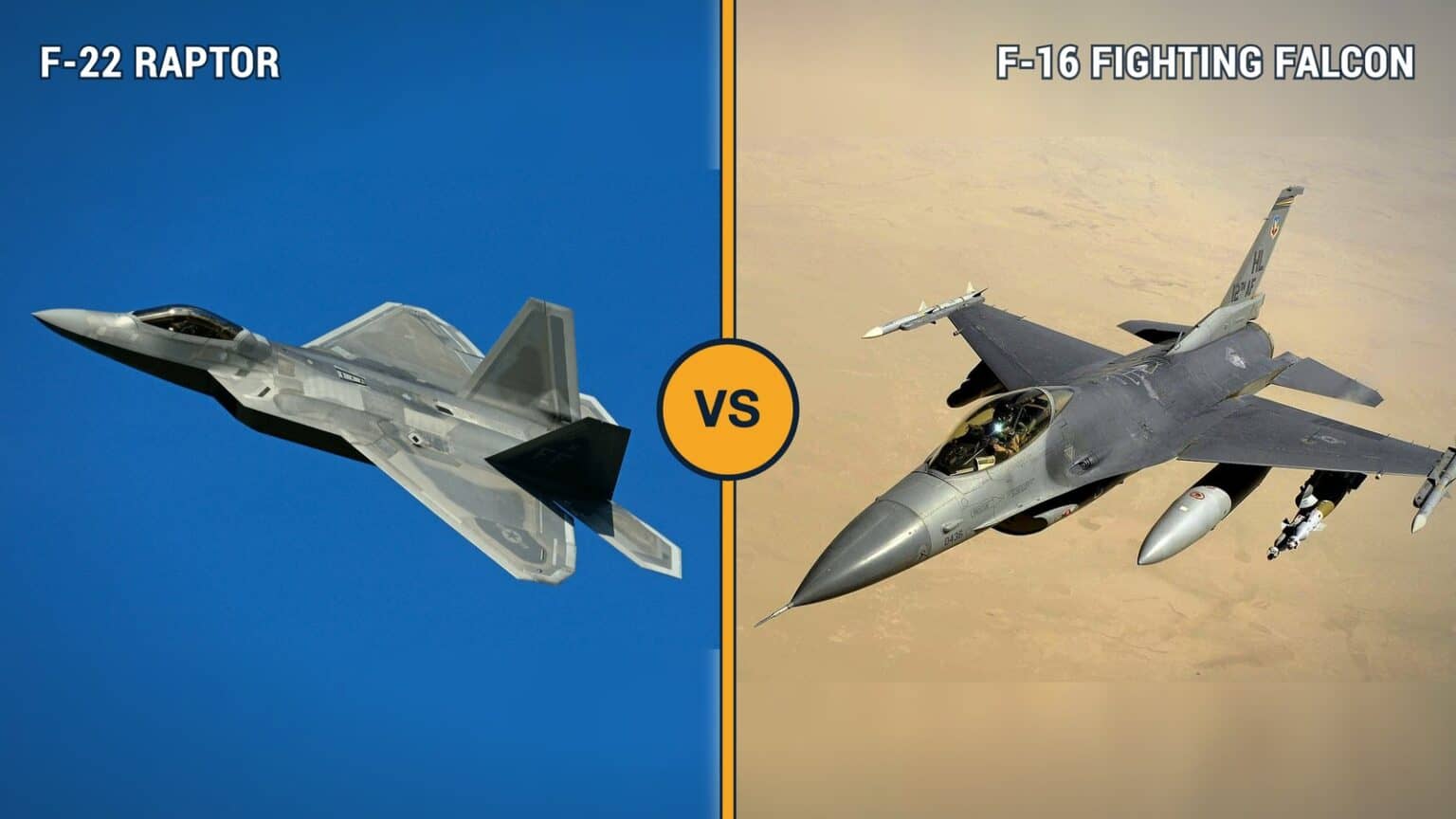
Siren put it plainly: “The advantage of the F-16 has always been in its speed and turn rate.” Both are slower than the Mach 2.25 F-22 Raptor, which we set against the Viper in our F-22 vs F-16 comparison, and you can see where all three rank in our list of the fastest fighter jets.
Cheaper to fly, by less than you might think
The Pentagon’s fiscal 2026 reimbursement rates, the hourly price charged to other Defense Department users, bill an Air Force F-16C at $14,818 per flight hour. The F-35A is $18,600, about 25 percent more, a far smaller gap than the stealth jet’s reputation suggests.
Buying one is where the difference shows. The F-35A’s average flyaway cost rose to $92 million in production Lots 18 and 19, up from $82.5 million, as we cover in how the F-35A climbed back to $92 million.
The Air Force’s own fact sheet lists the F-16C/D at $18.8 million, but in fiscal 1998 dollars, so the two figures are not directly comparable.
Readiness is the F-35’s weak spot
In fiscal 2024 the F-35A was mission capable 51.5 percent of the time, against an Air Force fleet average of 67.15 percent.
A June 2026 Government Accountability Office report found it has worsened since. Only 38.6 percent of F-35As were mission capable in 2025, and 28.5 percent could perform all their missions, against a goal of 65 percent.
Numbers and a long combat record
A total of 4,604 F-16s have been built, against more than 1,345 F-35s by August 2026. With 2,102 in active service in 2026, the F-16 is the most common fixed-wing aircraft in military service, about 15 percent of all active combat aircraft.
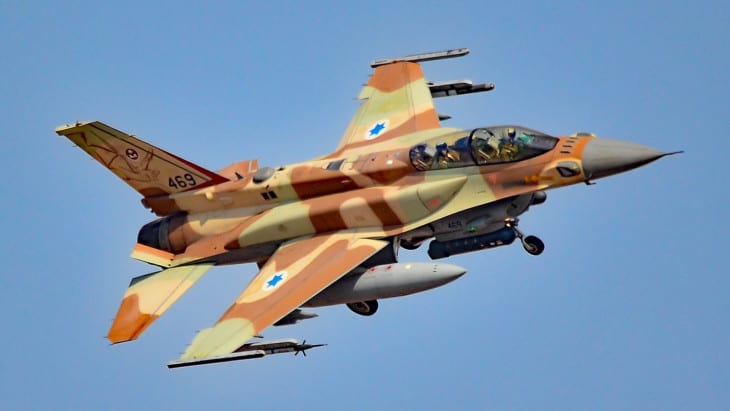
It has also been fighting for more than four decades. Israeli F-16s were credited with 44 air-to-air kills over Lebanon in 1982, with no air-to-air losses of their own.
The newest came in July 2026. Gen. Dan Caine, chairman of the Joint Chiefs of Staff, told a Senate hearing that a Ukrainian F-16 had shot down a Russian fighter; Ukraine said it downed an Su-35S on July 8.
F-16 vs F-35 in a dogfight
Up close, the F-16 has the reputation. Both jets are rated to 9 g, but at half internal fuel the F-16 produces 1.24 pounds of thrust for every pound of weight, against 1.07 for the F-35A.
A 2015 test report made that gap famous. After mock dogfights against an F-16, an F-35 test pilot wrote that “even with the limited F-16 target configuration, the F-35A remained at a distinct energy disadvantage.”
The F-35 program office answered that the test jet, AF-2, lacked the stealth coating, the mission systems software and the helmet software that lets a pilot aim a weapon without pointing the jet at the target.
The F-35, it said, is built to “engage, shoot, and kill its enemy from long distances, not necessarily in visual ‘dogfighting’ situations.”
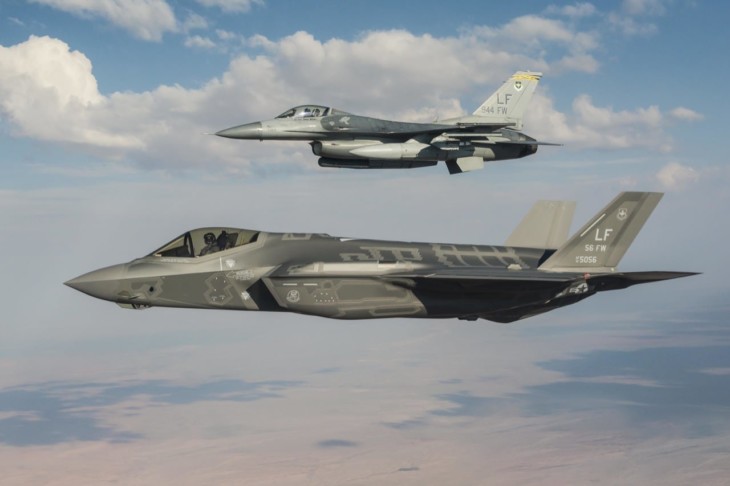
Pilots who have flown both describe a different trade. Hanche wrote in 2016 that the F-35’s ability to point its nose at high angles of attack “enables me to deliver weapons earlier than I am used to with the F-16.”
He called it an airplane that let him be “more forward and aggressive than I could ever be in an F-16,” while noting its buffeting at high g and a headrest that limits the view behind. Siren said the same high angle-of-attack ability “caught me off guard coming from the F-16.”
Myth check: an F-16 can beat an F-35
An F-16 did beat an early F-35 in a 2015 test, and in a close turning fight the F-16 still has the energy advantage. But that test jet lacked its stealth coating and helmet aiming software, and the F-35 is built to fire from long range, not to win a turning fight.
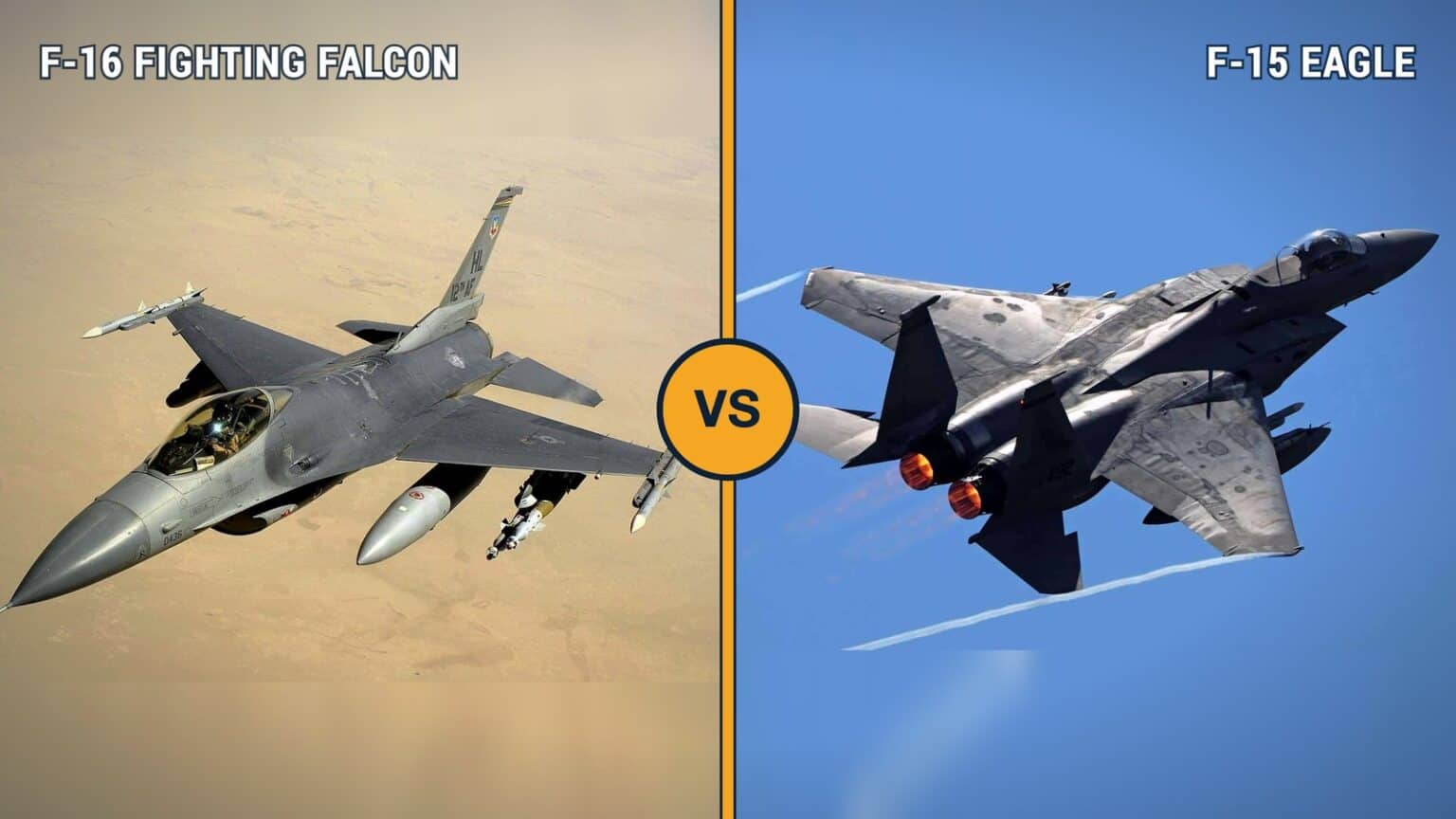
Against a heavier opponent the picture shifts again, as our F-15 vs F-35 comparison shows. The F-16’s own matchup with the Eagle is in our F-15 vs F-16 comparison.
Combat record: F-16 vs F-35
The F-35’s first kill of a crewed aircraft came on March 4, 2026, when an Israeli F-35I Adir shot down an Iranian Yak-130 over Tehran. The Israeli Air Force said the engagement was fought beyond visual range with long-range missiles, not in a dogfight.
It lasted a few seconds, Defense News reported, and it was the first time since 1985 that an Israeli fighter had shot down an enemy warplane.
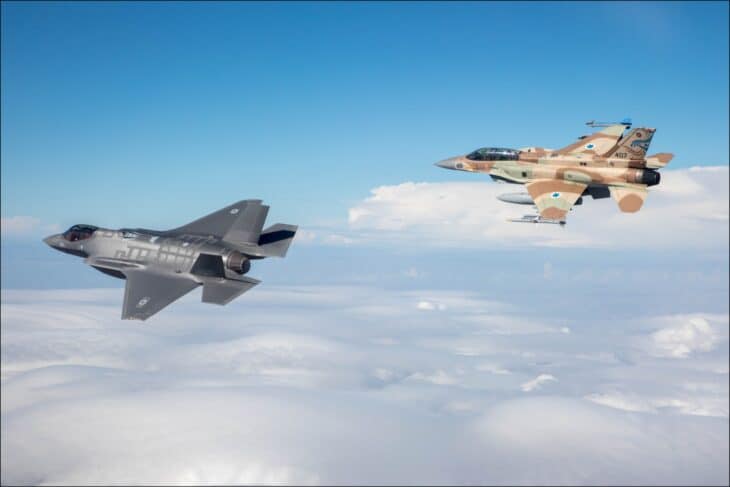

No F-35 has been confirmed shot down, as of September 2026, though one was reportedly hit. On March 19, 2026, a US F-35 made an emergency landing at a US base in the Middle East after a combat mission over Iran, reportedly struck by Iranian fire.
US Central Command said the jet landed safely, the pilot was in stable condition and the incident was under investigation. On July 30, Iran’s Revolutionary Guard claimed to have destroyed three F-35s at Al-Azraq Air Base in Jordan, and Central Command replied that “no US aircraft were destroyed or damaged.”
The F-16 has lost in air combat at least once. In October 1996 a Greek Mirage 2000 shot down a Turkish F-16D over the Aegean; Turkey’s defense minister confirmed it in 2012, while Greece denies it.
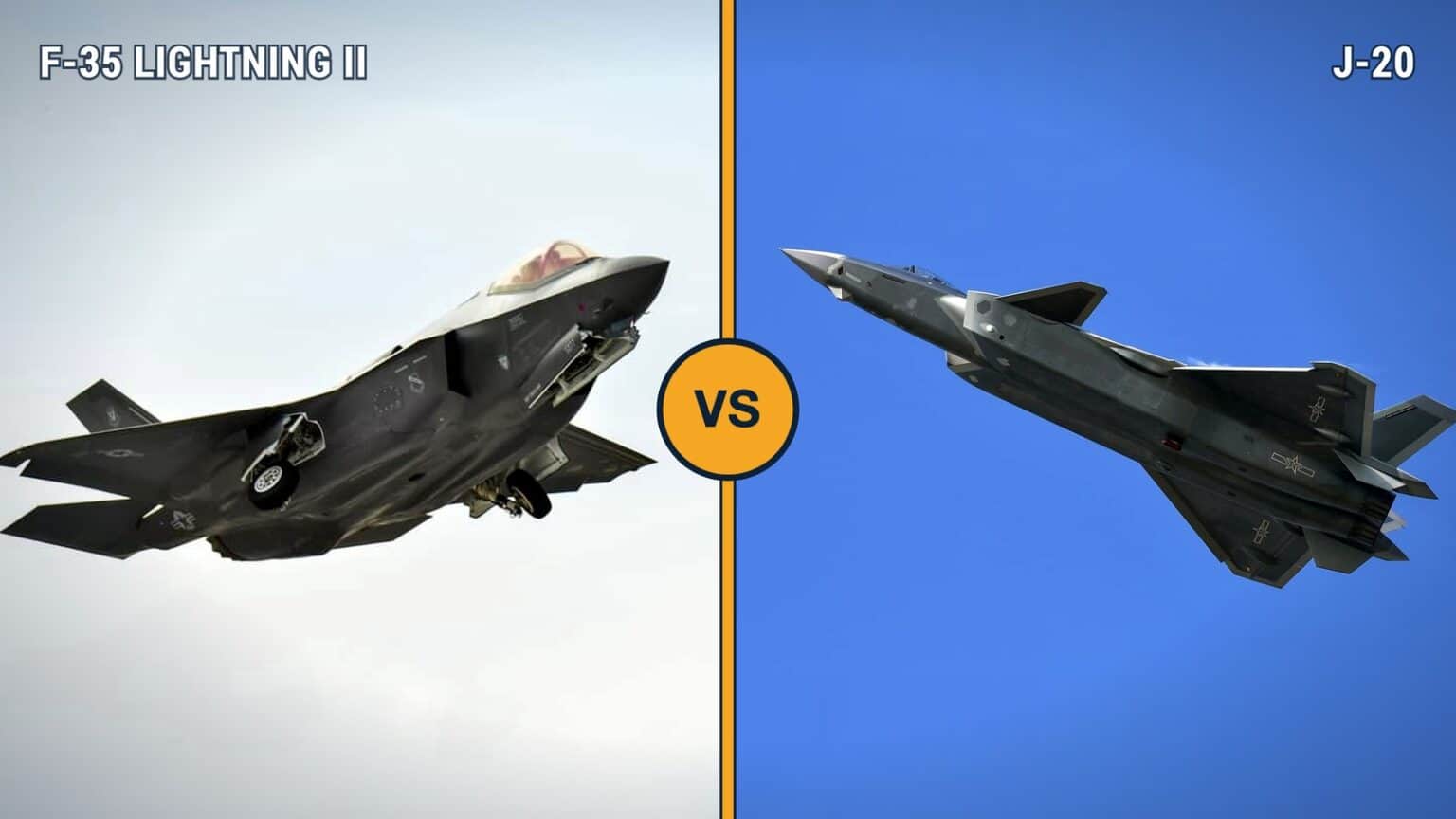
The F-35’s closest air-to-air rivals are America’s own F-22 Raptor and China’s J-20, pairings we compare in our F-22 vs F-35 and F-35 vs J-20 comparisons.
F-16 vs F-35 size
The two are closer in size than most people expect. The F-35A is 51 feet (15.7 m) long with a 35-foot (10.7 m) wingspan, against 49 feet 5 inches (15.1 m) and 32 feet 8 inches (10 m) for the F-16.
The F-16 is actually the taller jet, at 16 feet (4.9 m) to the F-35A’s 14 feet (4.4 m). The full side-by-side dimensions are in the database comparison at the top of this page.
Weight is where they part. An empty F-35A weighs about 29,300 pounds (13,300 kg), against 19,700 pounds (8,940 kg) for the F-16.
Fully loaded, the F-35A is in the 70,000-pound (31,750 kg) class, almost double the 37,500 pounds (17,000 kg) the Air Force lists as the F-16’s maximum takeoff weight.
One engine each, and not the same one
Both jets have a single engine. The F-35A uses a Pratt & Whitney F135 rated at 43,000 pounds of thrust with afterburner, while US Air Force F-16C/Ds fly with either a General Electric F110 or a Pratt & Whitney F100, rated at 27,000 pounds in the Air Force’s fact sheet.
Neither has a second engine to fall back on, a trade-off we cover in our list of single-engine fighter jets.
Is the F-35 replacing the F-16?
Yes, in the US Air Force and across much of Europe, though slowly. The Air Force had 500 F-35As in August 2025, on the way to a planned 1,763, and they are replacing both the F-16 and the A-10, a swap we cover in our F-35 vs A-10 comparison.
The F-16 is not leaving soon. The Air Force had 704 F-16Cs and 134 F-16Ds in fiscal 2024, about 40 percent of its fighter inventory, and is extending 350 airframes beyond 8,000 flight hours, with upgrades planned through 2040 or beyond.
Abroad, Norway, the Netherlands, Denmark and Belgium all chose the F-35 to replace their F-16s, and Israel and Singapore plan to do the same. Romania plans to start retiring its F-16s in 2034 and to fly only F-35s by 2040.
Other air forces still want new F-16s, which Lockheed Martin builds as the Block 70/72. In January 2024 the US approved the sale of 40 of them to Turkey.
Jan 1974
The YF-16 first flies. An unplanned hop on January 20 comes before the official first flight on February 2.
1978
The F-16 enters US Air Force service. It is the first production fighter designed to be slightly unstable on purpose, with fly-by-wire controls.
1982
Israeli F-16s dominate over Lebanon. They are credited with 44 air-to-air kills and no air-to-air losses.
Oct 1996
A Turkish F-16D is shot down. Turkey later says a Greek Mirage 2000 downed it over the Aegean, which Greece denies.
Dec 2006
The first F-35A flies. Prototype AA-1 takes off on December 15.
Jan 2015
The dogfight report. A test pilot finds an early F-35A at a distinct energy disadvantage against an F-16.
Aug 2016
The F-35A enters US Air Force service. It reaches initial operational capability on August 2.
Mar 2026
The F-35’s first kill of a crewed aircraft. An Israeli F-35I downs an Iranian Yak-130 over Tehran on March 4.
Jun 2026
A GAO report finds F-35A readiness falling. Only 28.5 percent could fly all their missions in 2025.
Jul 2026
A Ukrainian F-16 downs a Russian fighter. Gen. Dan Caine confirms it to a Senate hearing.
The verdict
For a modern air war, take the F-35. It hides from radar, carries more than twice the F-16’s internal fuel, builds the whole picture for its pilot and is designed to shoot first from long range.
The F-16 still wins on speed, numbers and price per hour, and in a close turning fight it keeps the energy advantage the 2015 test exposed. It is also far more widely flown, with 2,102 in service around the world.
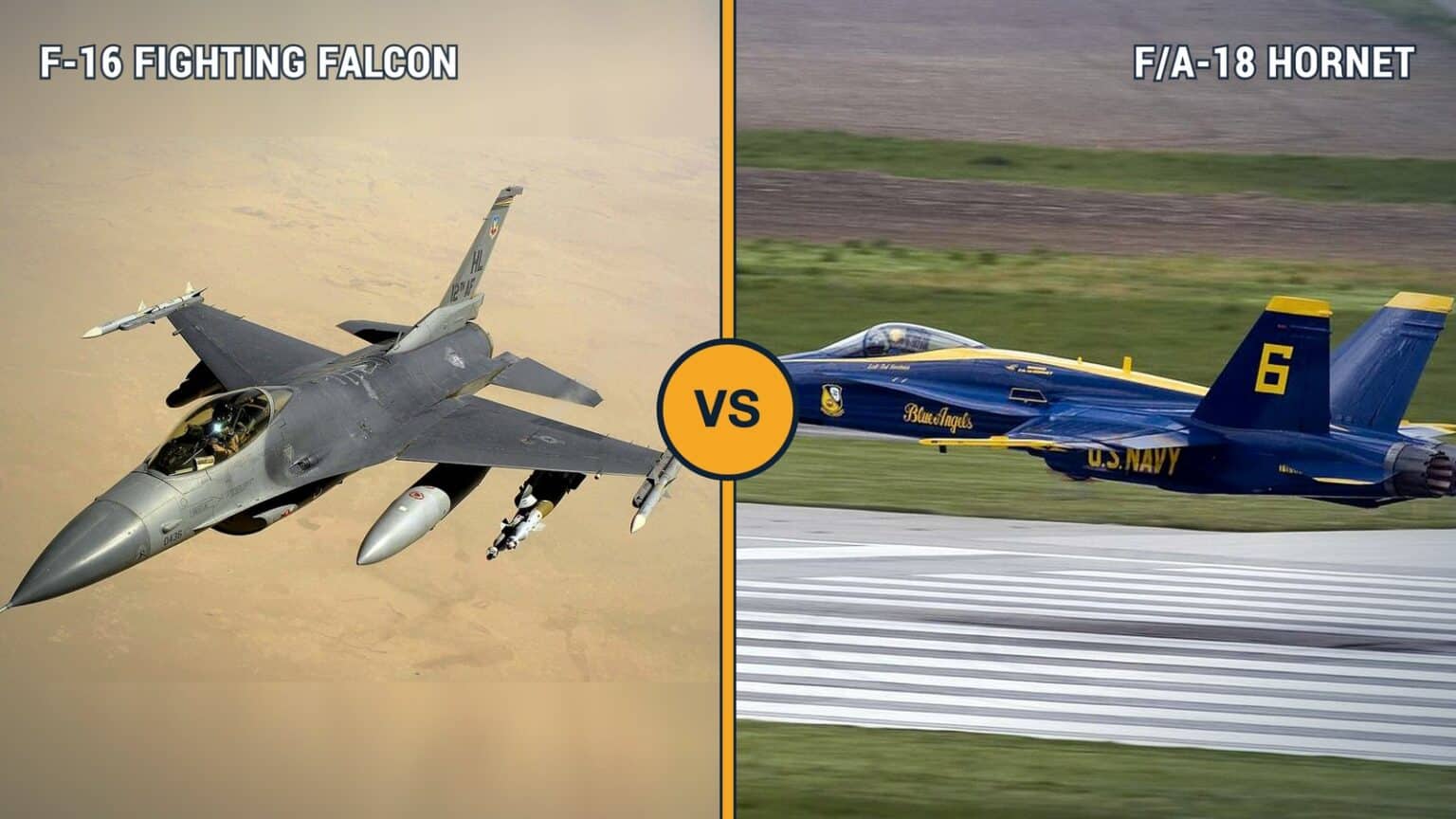
The Air Force’s answer is to replace one with the other, slowly. For the Navy’s side of the family, see our F-16 vs F-18 and F-35 vs F/A-18 comparisons, and for the wider field, our ranking of the best fighter jets in the world.
FAQ
Sources and references used for research and fact-checking.
- U.S. Air Force, F-35A Lightning II Fact Sheet
- U.S. Air Force, F-16 Fighting Falcon Fact Sheet
- Office of the Under Secretary of Defense (Comptroller), Fiscal Year 2026 DoD Fixed Wing and Helicopter Reimbursement Rates
- Air & Space Forces Magazine, F-35A Lightning II
- Air & Space Forces Magazine, F-16 Fighting Falcon
- Air & Space Forces Magazine, What Each F-35 Variant Really Costs Right Now
- Air & Space Forces Magazine, Air Force Mission Capability Rates Reach Lowest Levels in Years
- Air & Space Forces Magazine, GAO: Just Over One in Four F-35As Fully Mission Capable
- Wikipedia, Lockheed Martin F-35 Lightning II
- Wikipedia, General Dynamics F-16 Fighting Falcon
- Wikipedia, General Dynamics F-16 Fighting Falcon operational history
- Wikipedia, 1996 Turkish F-16 shootdown
- Wikipedia, Lockheed Martin F-35 Lightning II procurement
- Wikipedia, Lockheed Martin F-22 Raptor
- Military.com, Pentagon Defends F-35 After Report Says it Can't Dogfight
- Defense News, Norwegian F-35 Pilot Counters Controversial Dogfighting Report
- F-16.net, F-35 vs. F-16 performance: RNoAF pilot explains
- Business Insider, F-35 test pilot shares what it's like to jump from flying older F-16s to Lockheed Martin's newest 5th-gen stealth fighter
- Defense News, Israeli F-35 notches first kill of a manned fighter in downing of Iranian Yak-130
- The Aviationist, Ukrainian F-16 Shot Down Russian Fighter for the First Time
- The Jerusalem Post, US F-35 hit, forced to make emergency landing, IRGC takes credit
- The Jerusalem Post, US denies that IRGC destroyed three F-35s
About the Author

Tim is the owner and lead editor of AeroCorner since 2019, overseeing aviation content covering aircraft, airlines, airports, and the broader aviation industry. Through years of researching, writing, editing, and publishing aviation-focused content, he has developed extensive practical knowledge of commercial aviation and air travel. Based in Asia and a frequent traveler himself, Tim also brings firsthand passenger experience to AeroCorner’s coverage. Outside of publishing, he has also explored aviation firsthand through hands-on flight training in New Zealand.