


Table of Contents
| Measure | A-10C Thunderbolt II | F-35A Lightning II |
|---|---|---|
| Built for | Close air support of ground troops | Multirole: air combat, ground attack, electronic warfare, data collection |
| How it survives | Armor and redundancy: titanium cockpit armor, rated against hits up to 23mm | Stealth and sensors: avoid being detected and hit |
| Gun | 30mm GAU-8/A, 3,900 rounds a minute, 1,350-round magazine | 25mm GAU-22/A, 3,300 rounds a minute, about 180 rounds |
| Firing time per sortie | About 20 seconds | Just over 3 seconds |
| Weapons load | Up to 16,000 lb (7,260 kg) on 11 pylons | About 5,700 lb (2,585 kg) internal in stealth mode; 18,000 lb (8,160 kg) with external stores |
| Small Diameter Bombs per sortie | 16 | 8 |
| Pentagon hourly rate, FY2025 | $10,574 | $17,035 |
| Mission capable rate, 2024 | 67 percent | 51.5 percent |
| Production | Ended 1984 after just over 700 built | Ongoing, more than 1,355 delivered worldwide |
| 2018-2019 fly-off | Typical loadout enabled more attacks | Report indicates more sorties needed for the same targets |
| Status, September 2026 | Retiring: 54 aircraft kept to 2029, 36 to 2030 | The Air Force’s main fighter buy, 1,763 F-35As planned |
How we are comparing the A-10 and F-35
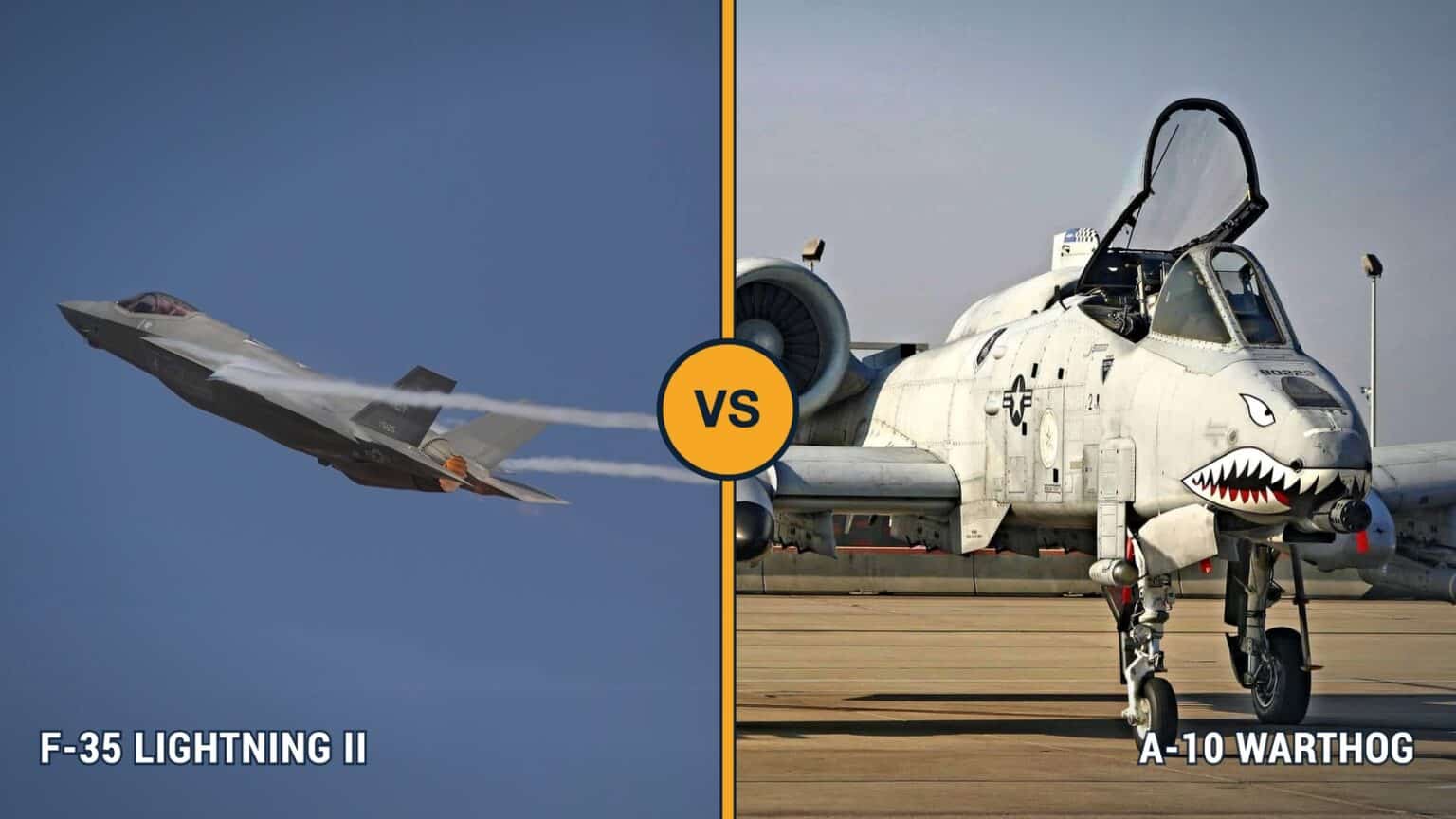
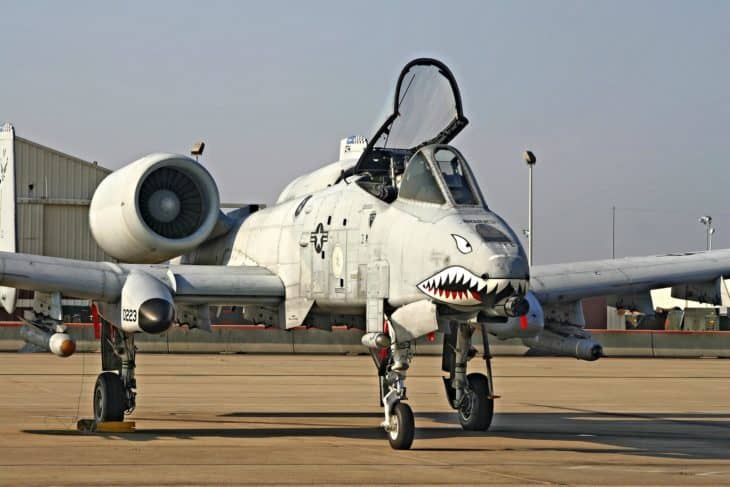
These two jets were never designed to do the same job. The A-10 Thunderbolt II was built in the 1970s for one mission: close air support, meaning attacks on enemy forces fighting near friendly troops.
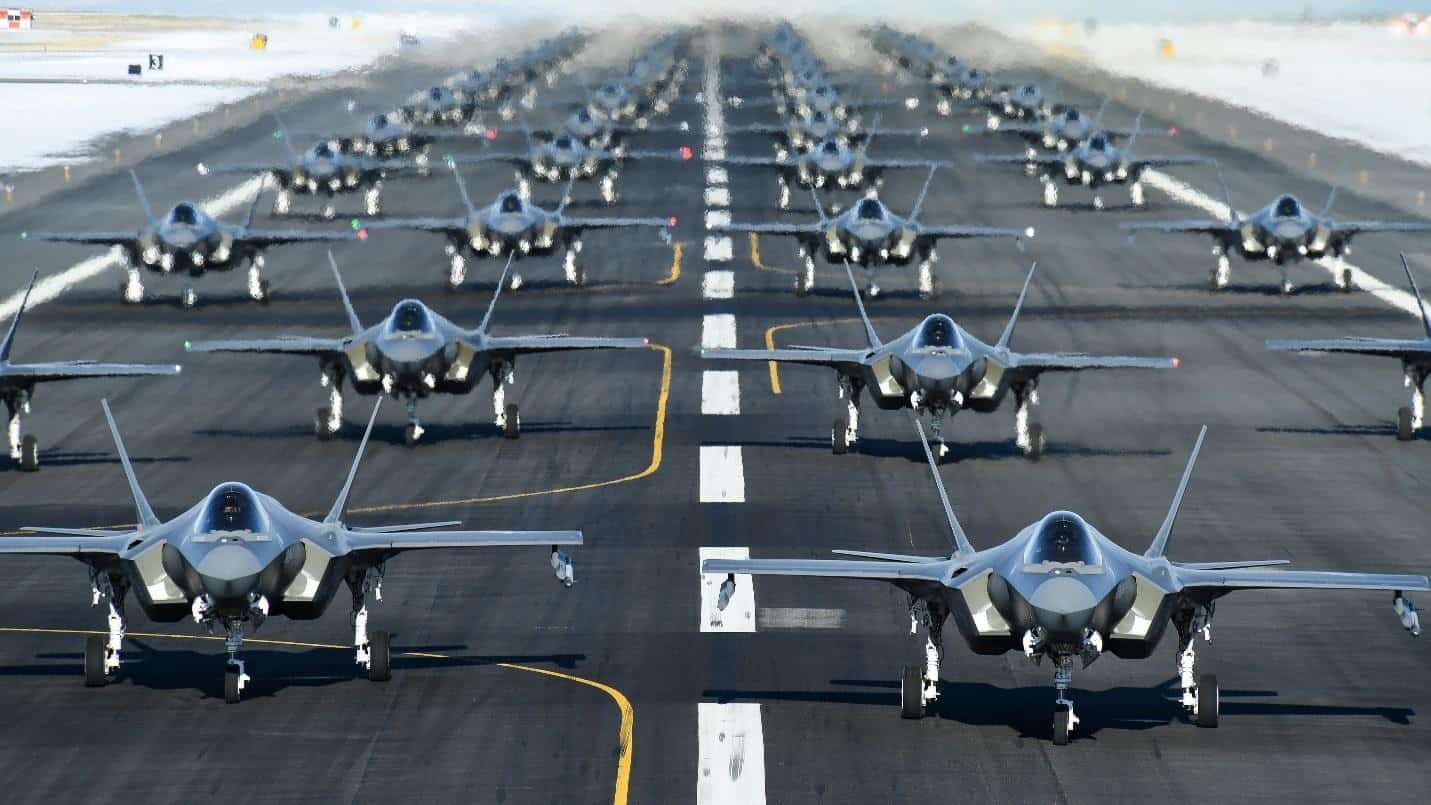
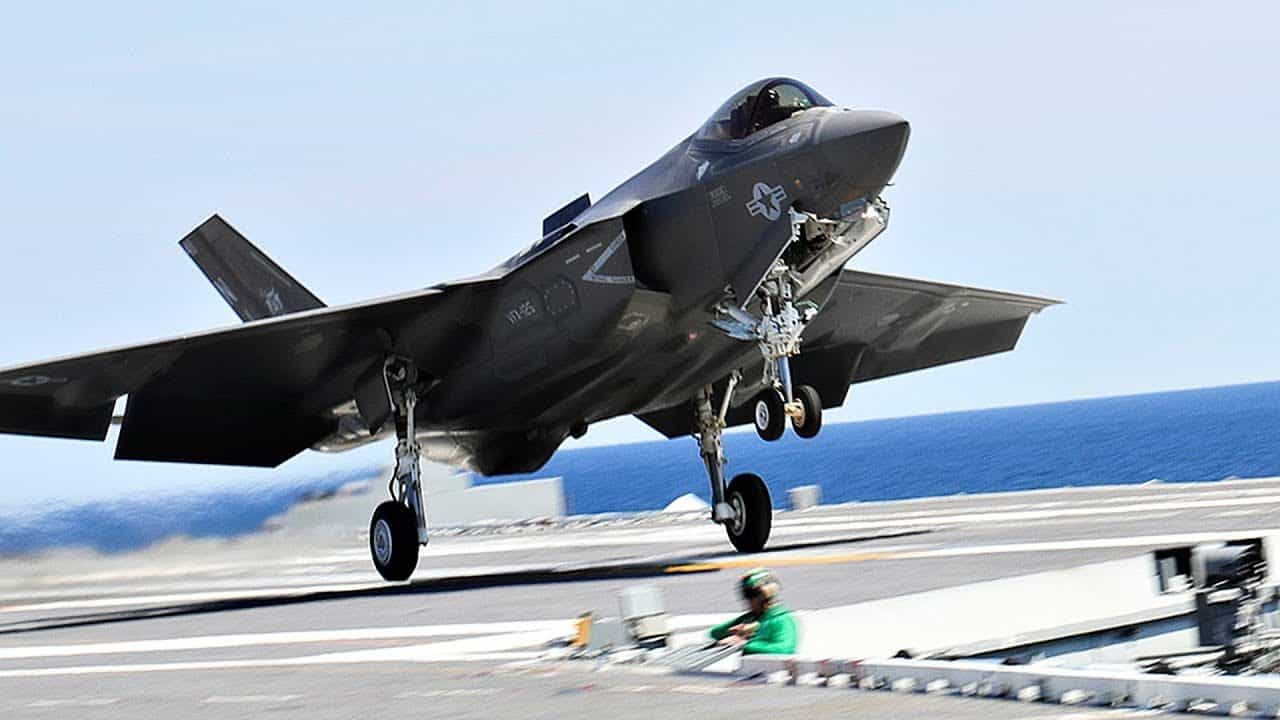
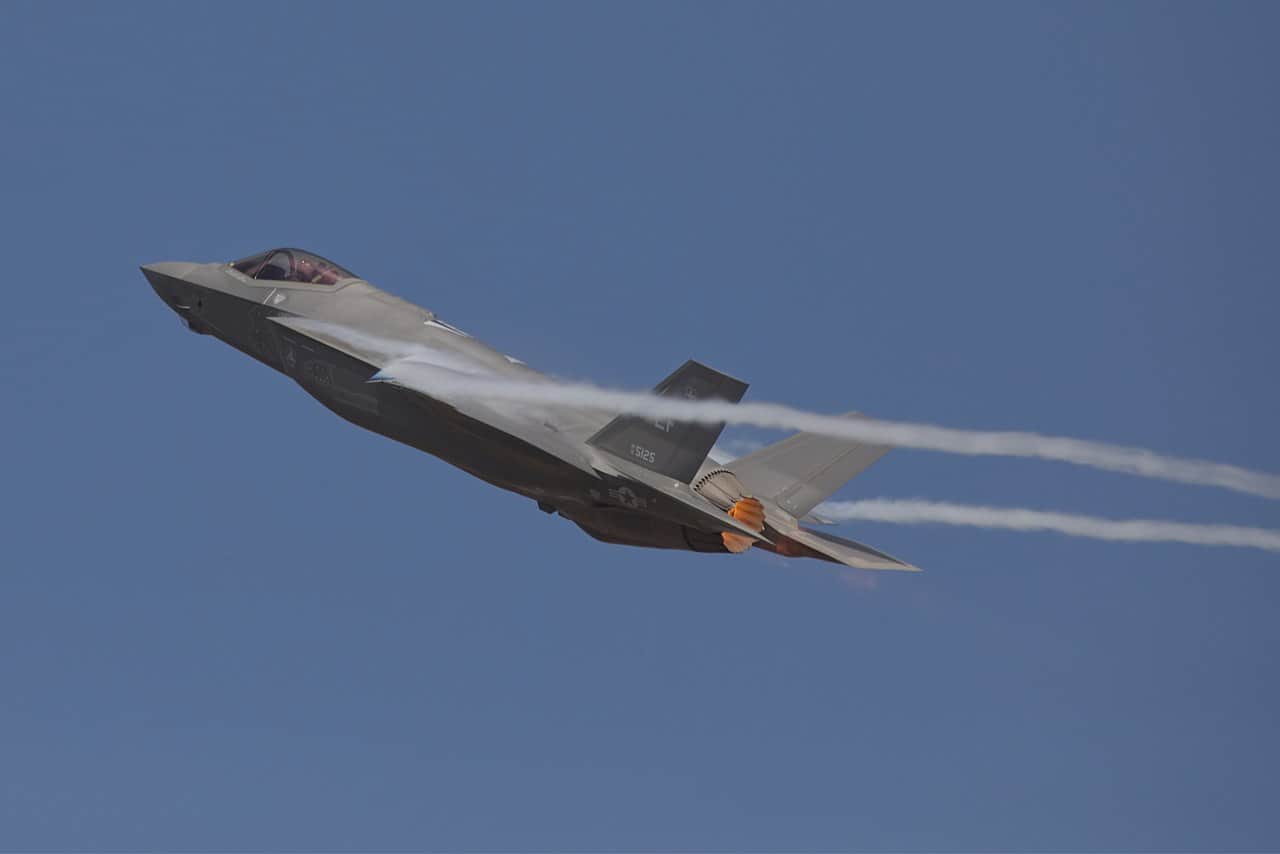
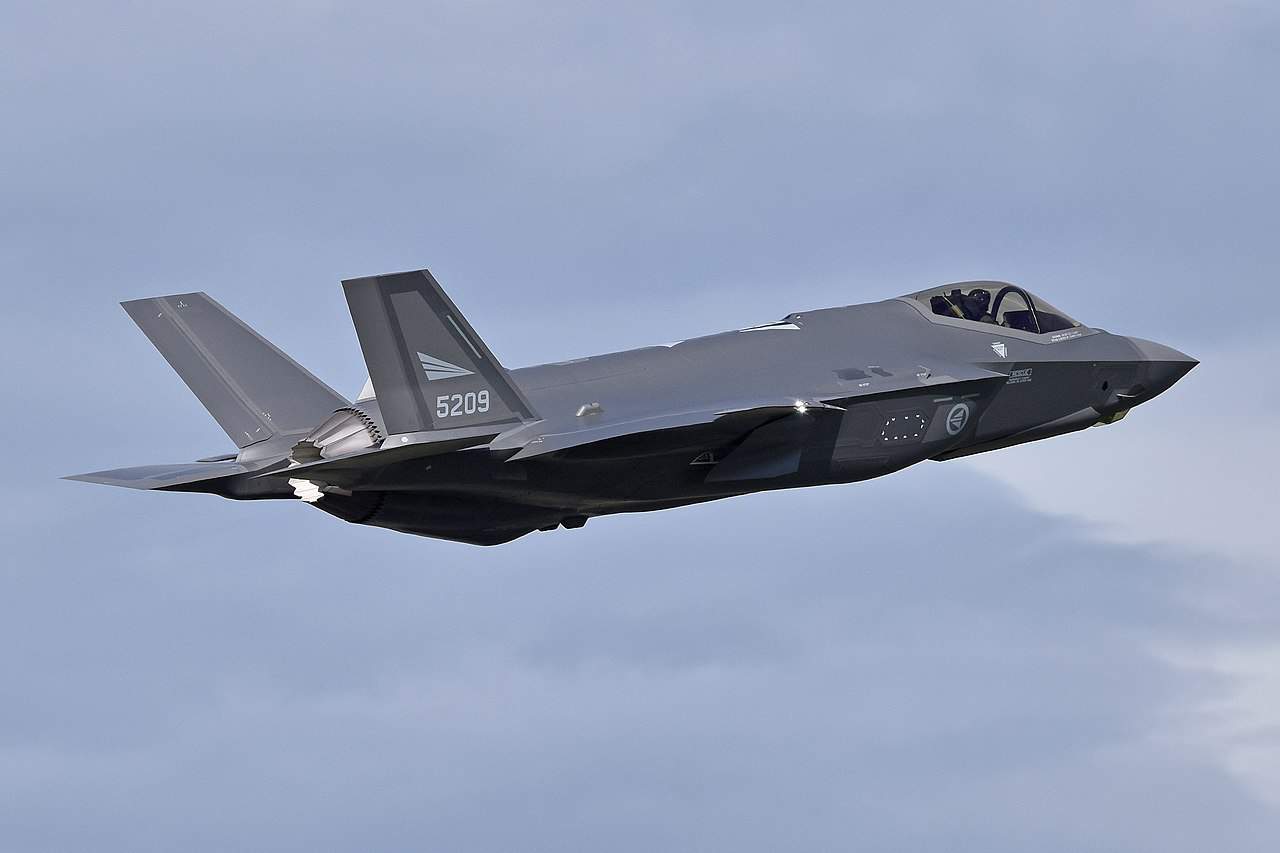
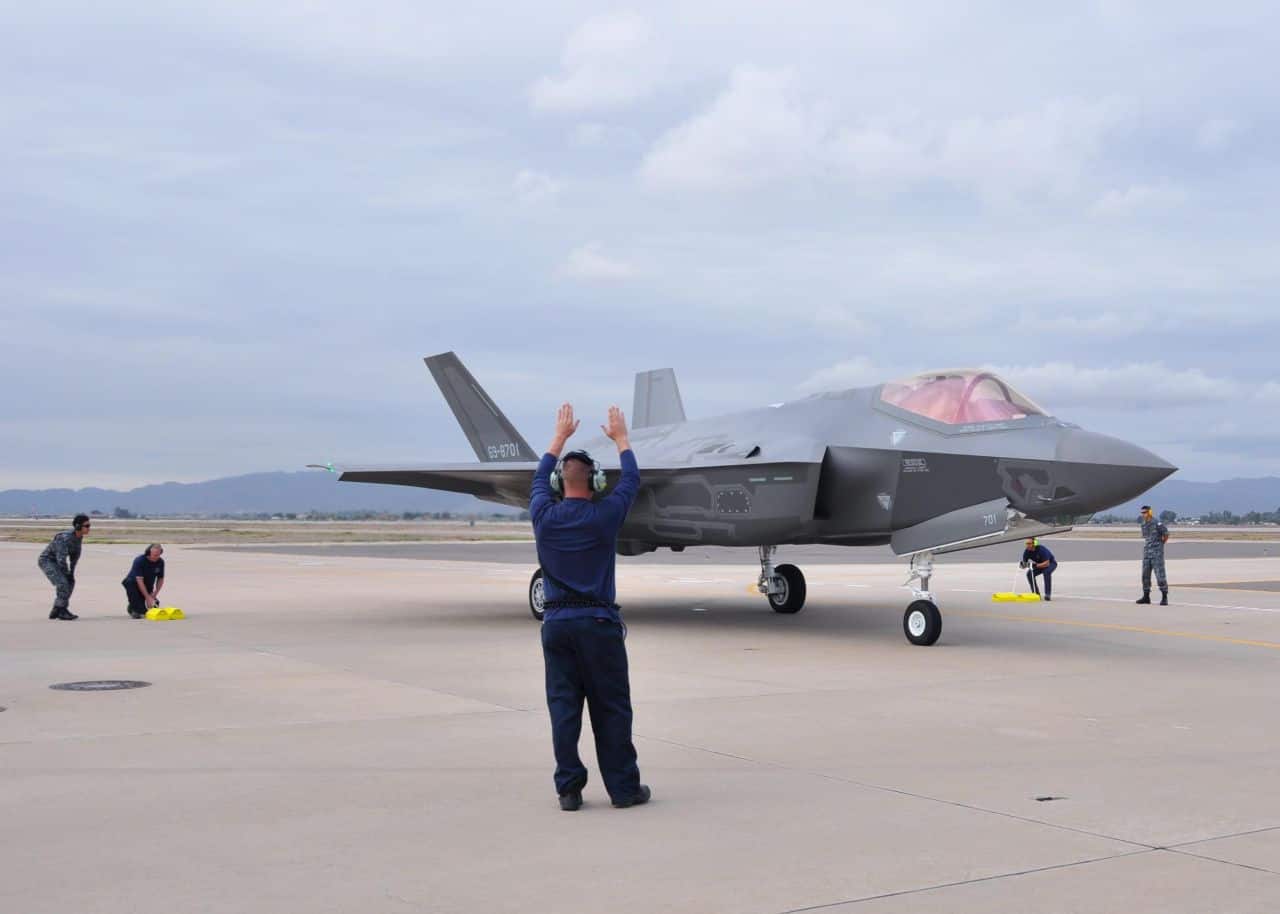
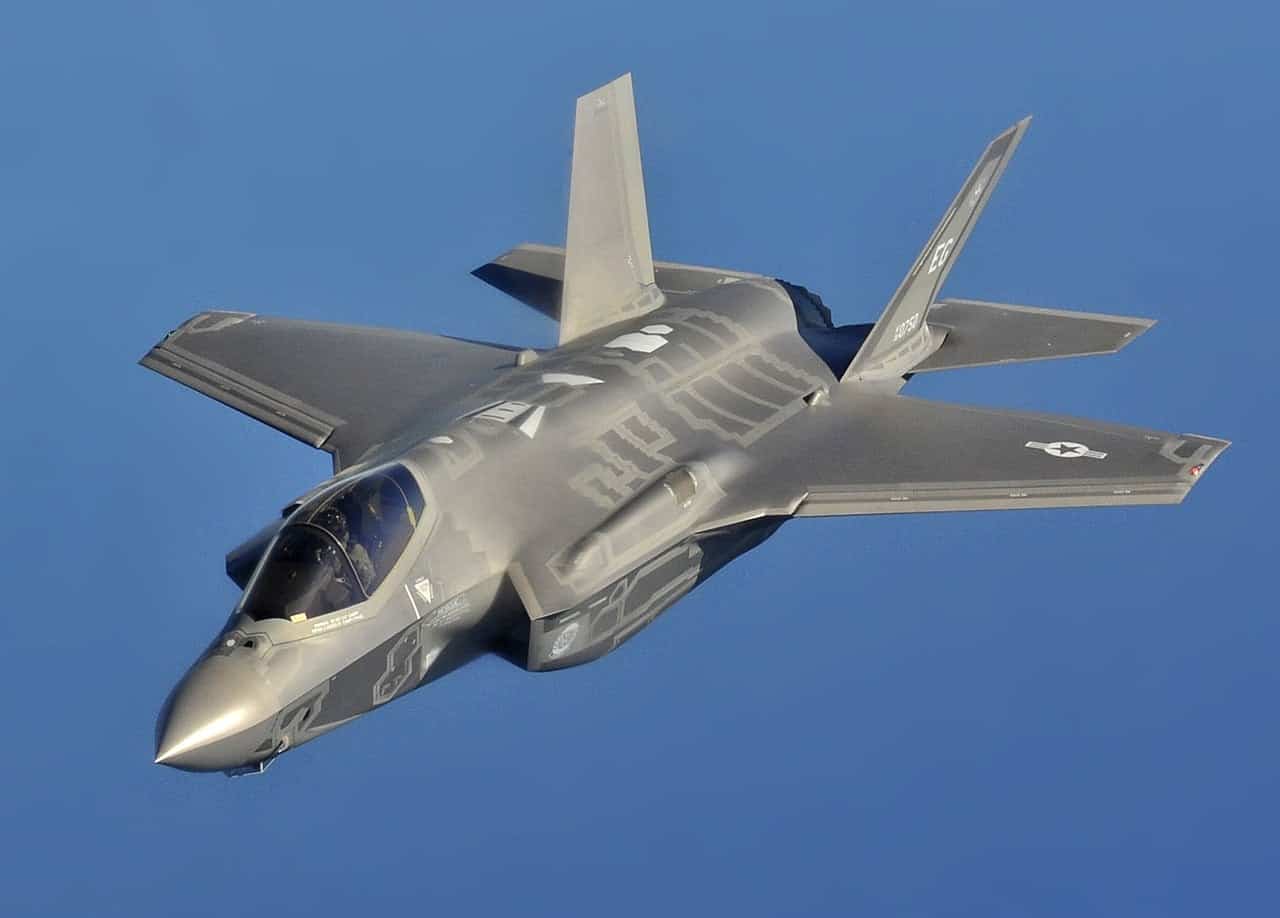
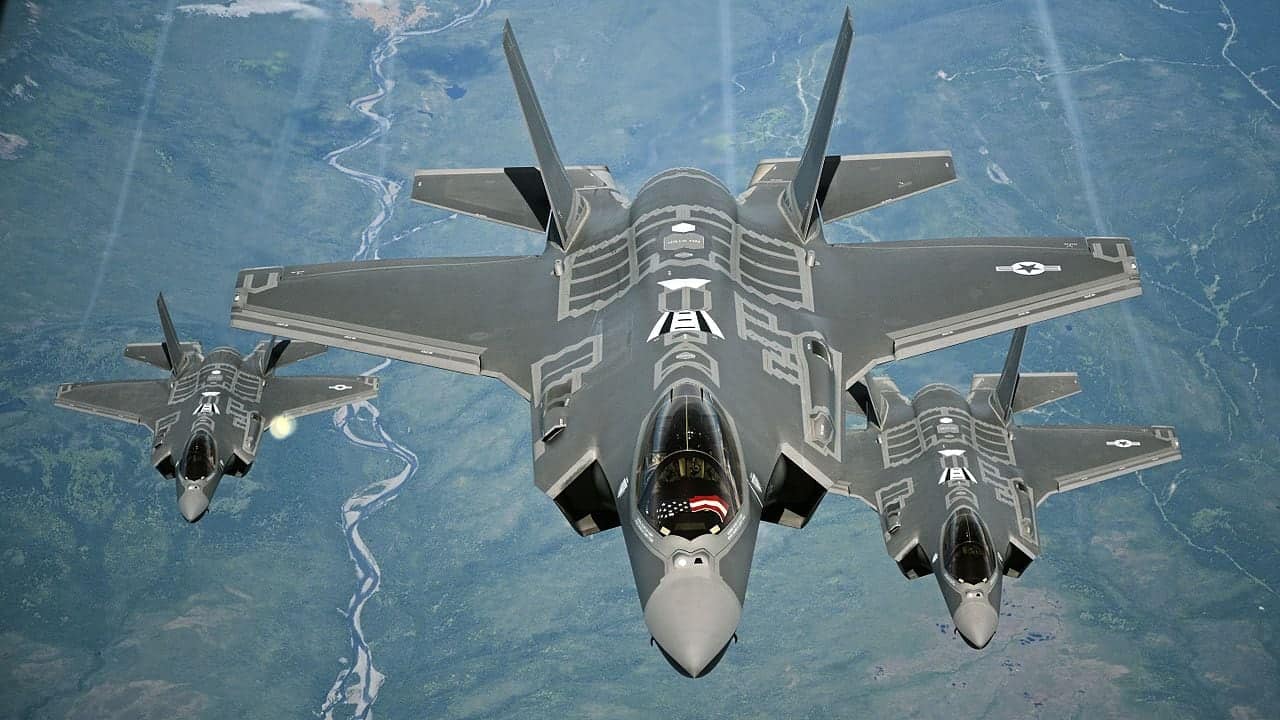
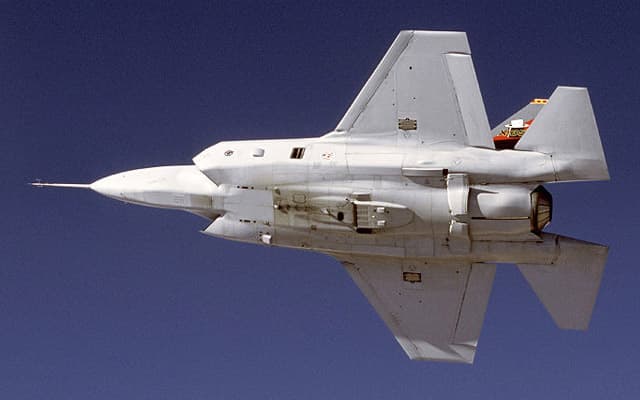
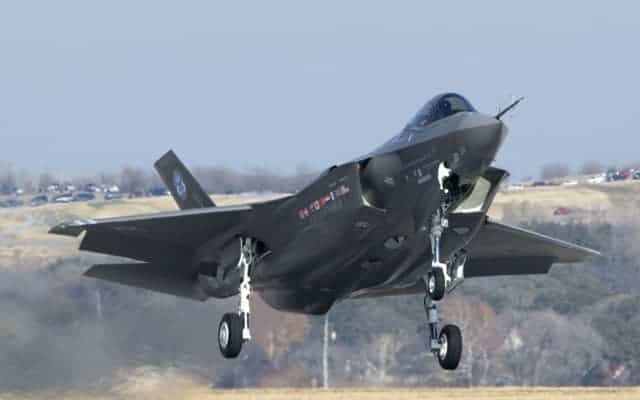
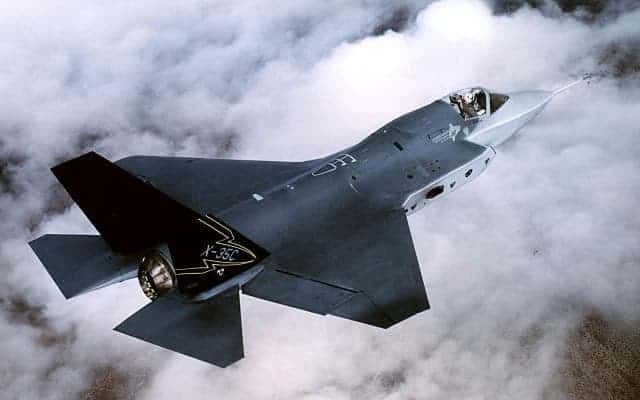
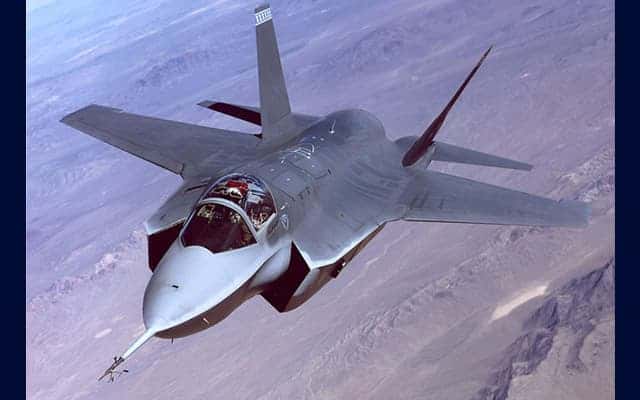
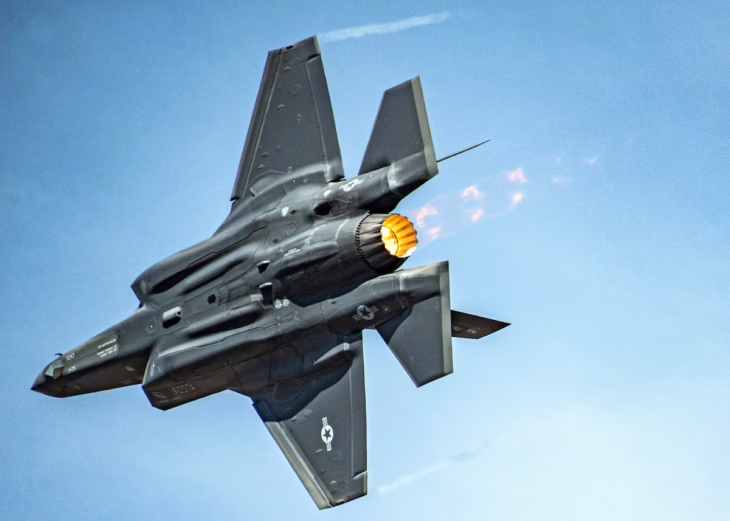
The F-35 Lightning II is a stealth multirole fighter that the Air Force declared combat-ready in August 2016. Its official job description includes replacing the A-10, which is why this comparison exists at all.
We compare them on four measures: close air support where the enemy cannot shoot back effectively, survival against modern air defenses, versatility, and cost and availability. The A-10 wins the first and the last. The F-35 wins the other two.
The measure decides the winner
In permissive airspace, the A-10 carries more, shoots longer, stays overhead longer and costs less to fly. In defended airspace it is not a contest: the F-35 can go where the A-10 would be shot down. Most arguments about these two jets are really arguments about which kind of sky the next war will be fought in.






Where the A-10 Warthog wins
The gun
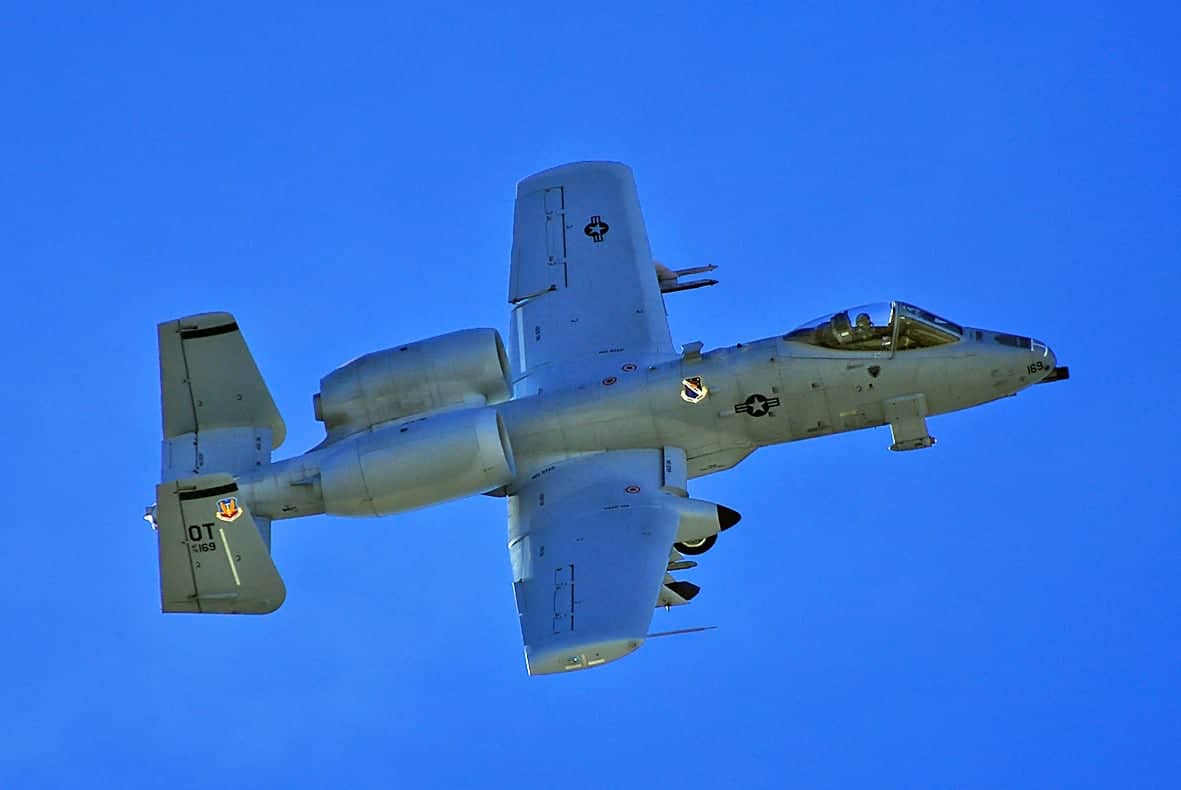
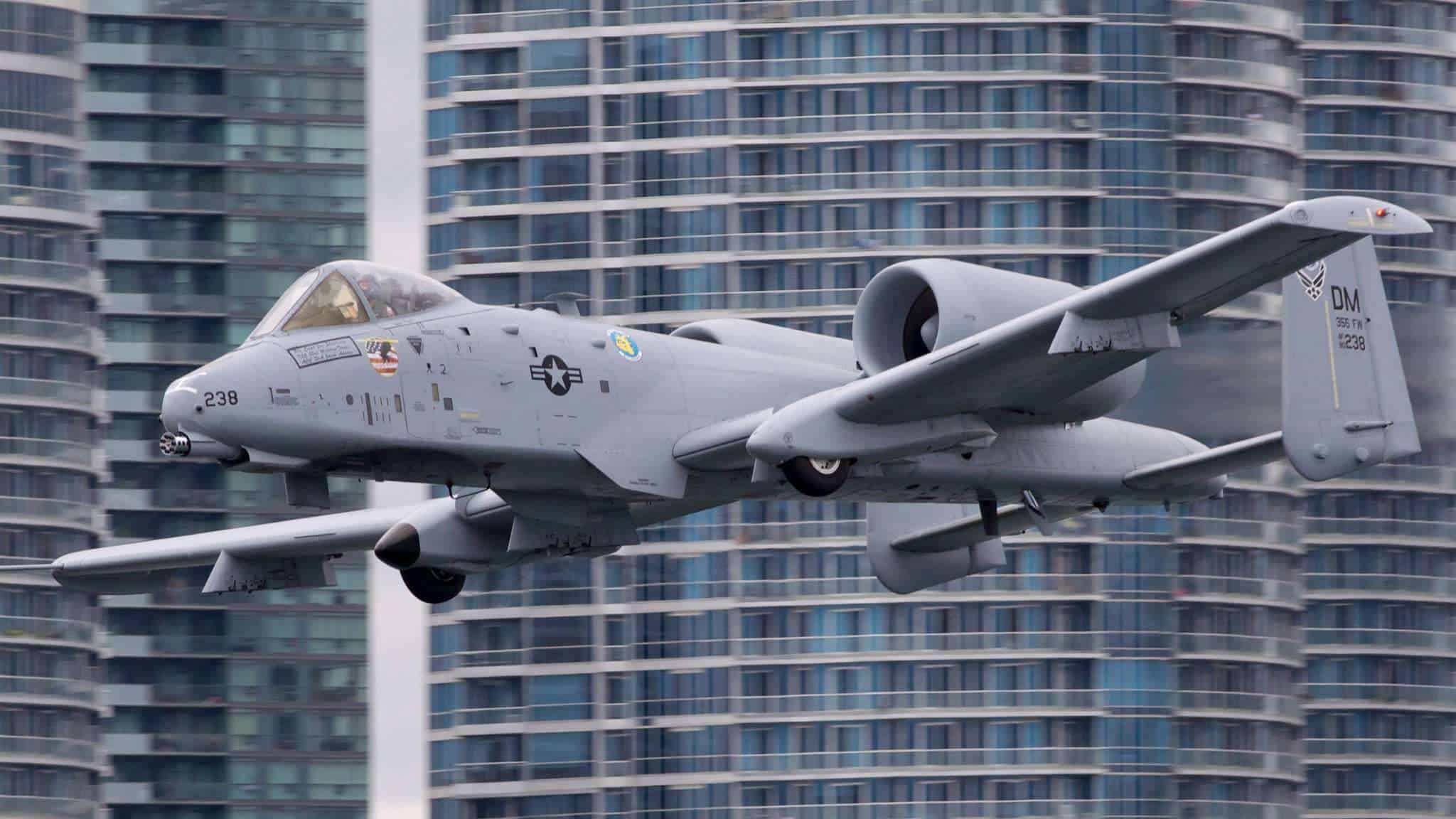
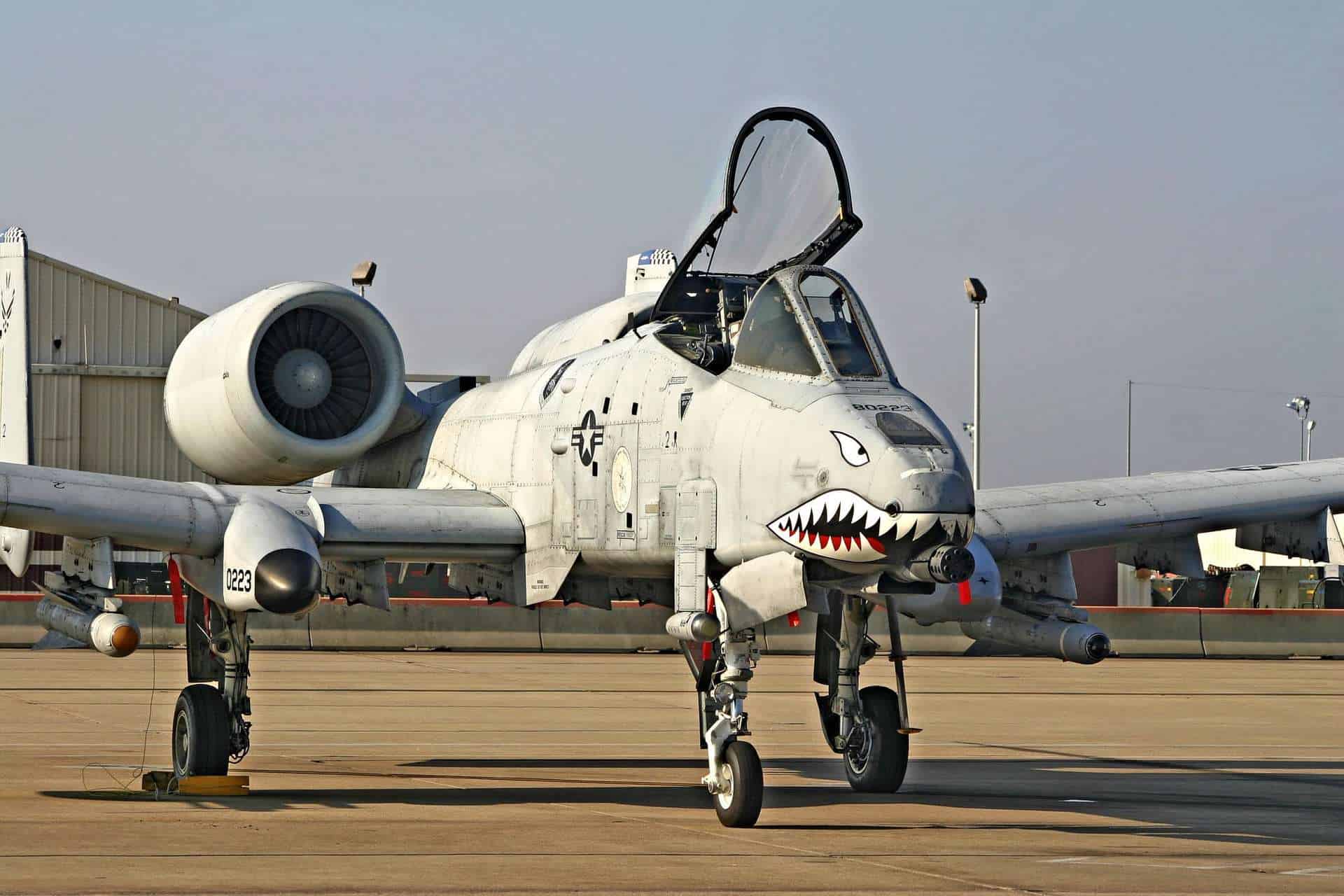
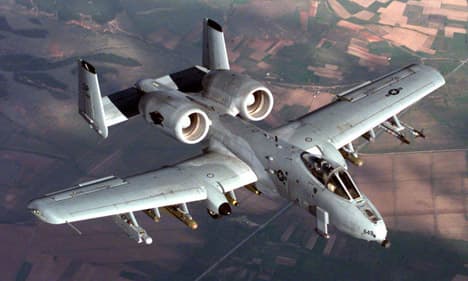
The A-10 was designed around its gun. The seven-barrel 30mm GAU-8/A fires 3,900 rounds a minute, and the US Air Force says it can defeat an array of ground targets, including tanks.
Its magazine holds 1,350 rounds, which works out to about 20 seconds of firing. The F-35A’s four-barrel 25mm GAU-22/A feeds from a magazine of about 180 rounds, just over three seconds of fire per sortie.
The F-35A’s gun also had a troubled start. Pentagon testers reported misaligned gun mounts in 2020, and the F-35 Joint Program Office only declared the gun effective in 2024.
The weapons load
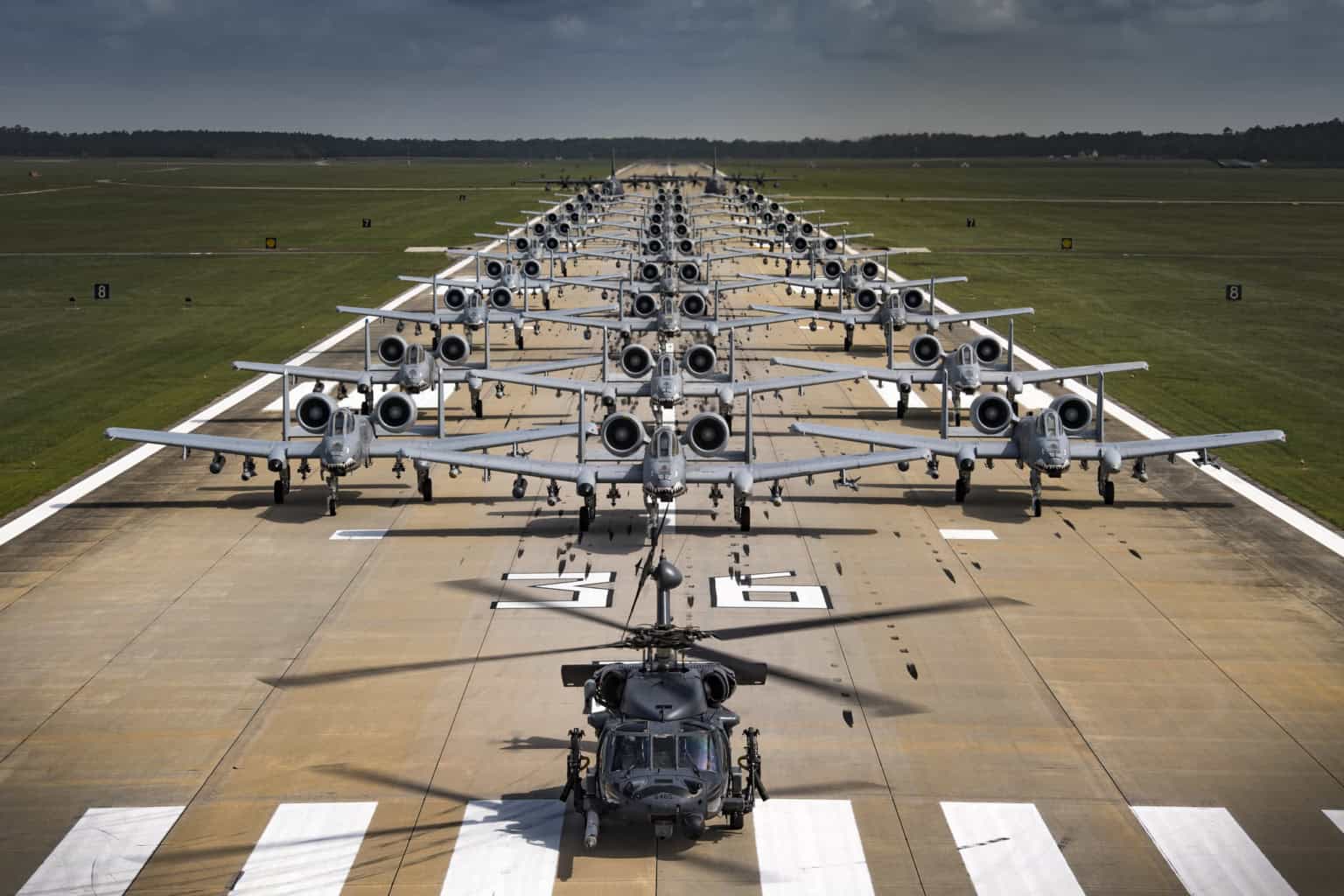
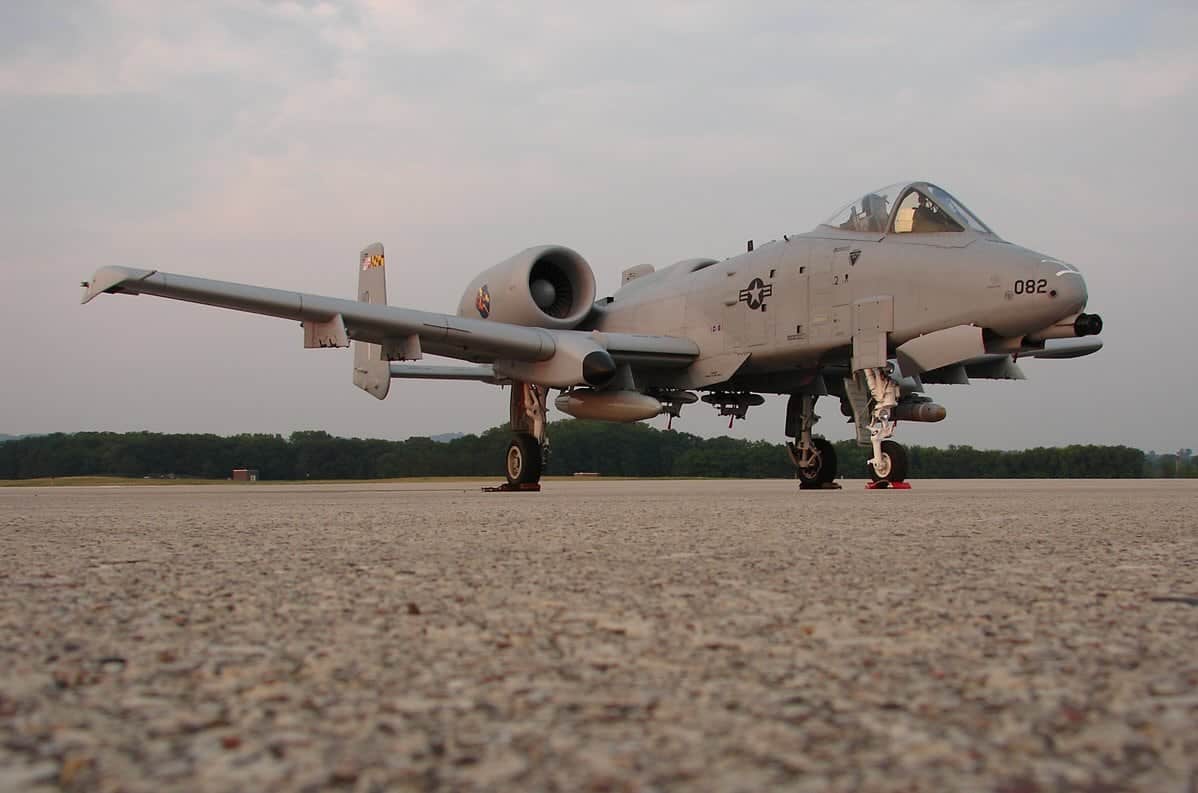
An A-10 carries up to 16,000 pounds (7,260 kg) of weapons on 11 pylons. Since a 2023 software update, it can carry 16 GBU-39 Small Diameter Bombs on a single sortie.
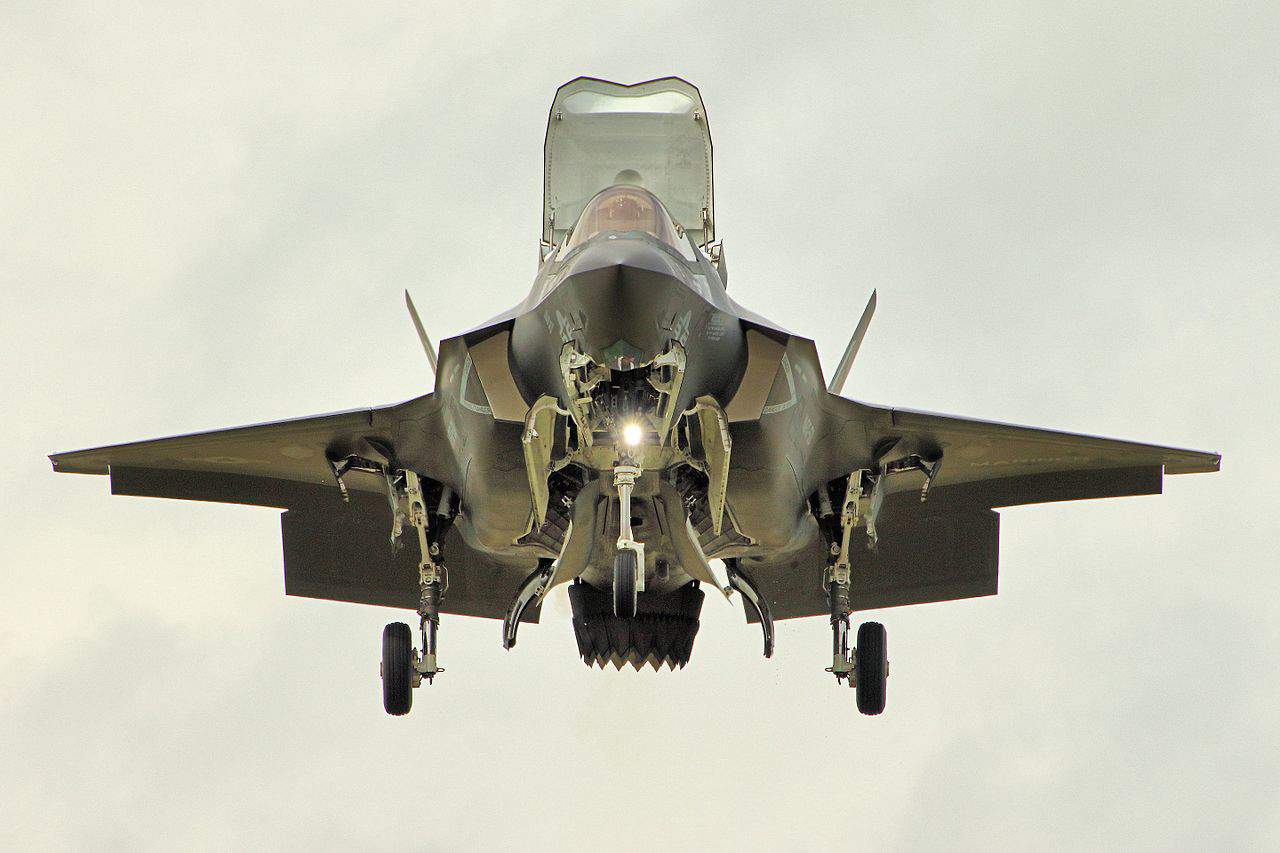
An F-35A in stealth mode keeps its weapons in internal bays that hold about 5,700 pounds (2,585 kg), for example two 2,000-pound bombs and two air-to-air missiles.
It can carry more under the wings, up to an 18,000-pound (8,160 kg) payload. But external weapons give away much of the stealth that is its main advantage.
The Pentagon’s own comparison test found that the difference mattered. Its report said the “typical loadout of the A-10C enabled more attacks than the typical loadout of the F-35A.”
Loiter, low altitude and bad weather
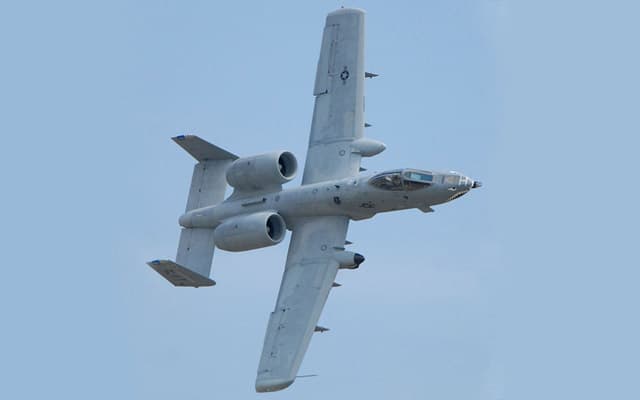
The A-10 was built to fly low and slow over a battlefield for a long time. The Air Force says it can loiter near battle areas for extended periods and operate under cloud ceilings as low as 1,000 feet (305 m) with 1.5 miles (2.4 km) of visibility.
That matters in close air support, where a pilot often has to find a target that a soldier on the radio is describing. In the comparison test, A-10 pilots typically flew closer to their targets than F-35A pilots did.
Toughness
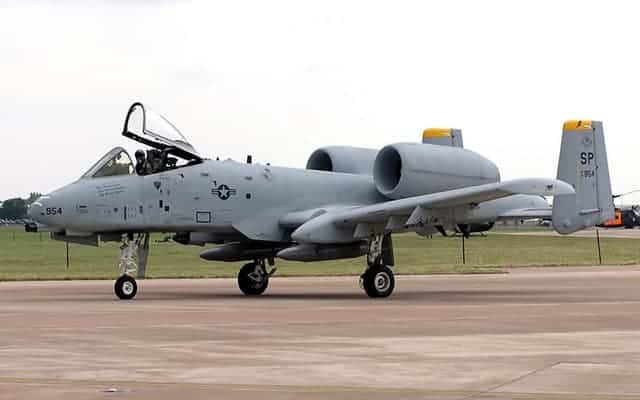
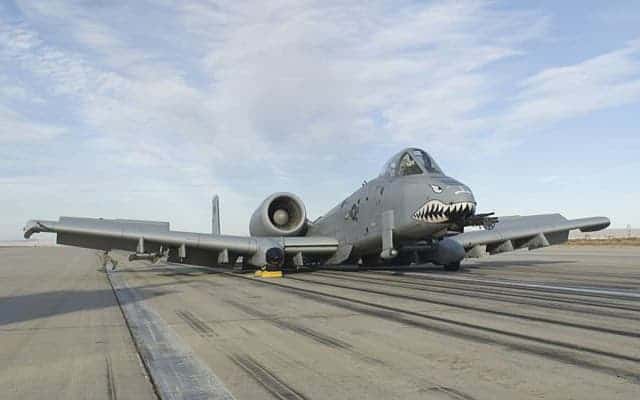
The A-10 was designed to be hit and keep flying. Titanium armor protects the pilot and parts of the flight-control system, and the Air Force says the jet can survive direct hits from armor-piercing and high-explosive rounds up to 23mm.
Its hydraulic flight controls have manual backups, so a pilot can still fly and land after losing hydraulic power. In 2003, the A-10 flown by Kim Campbell took more than 150 hits and stayed controllable on those manual controls.
The F-35 takes the opposite approach. Instead of absorbing damage, it relies on stealth and sensors to avoid being targeted in the first place.
Cost and readiness
The A-10 is cheaper to fly. The Pentagon’s fiscal 2025 reimbursable rates, the hourly rates it bills other Defense Department users, are $10,574 for the A-10C and $17,035 for the F-35A.
Those rates are not full life-cycle costs, but both come from the same table on the same basis. On that like-for-like measure, an F-35A flying hour costs about 60 percent more.
The older jet was also ready to fly more often. The A-10’s mission capable rate was 67 percent in 2024, against 51.5 percent for the F-35A.














Where the F-35 Lightning II wins
Surviving modern air defenses
This is the argument that decides the A-10’s future. The Air Force’s position is blunt: “While successful in permissive environments, the A-10 is not survivable in a highly-contested future fight.”
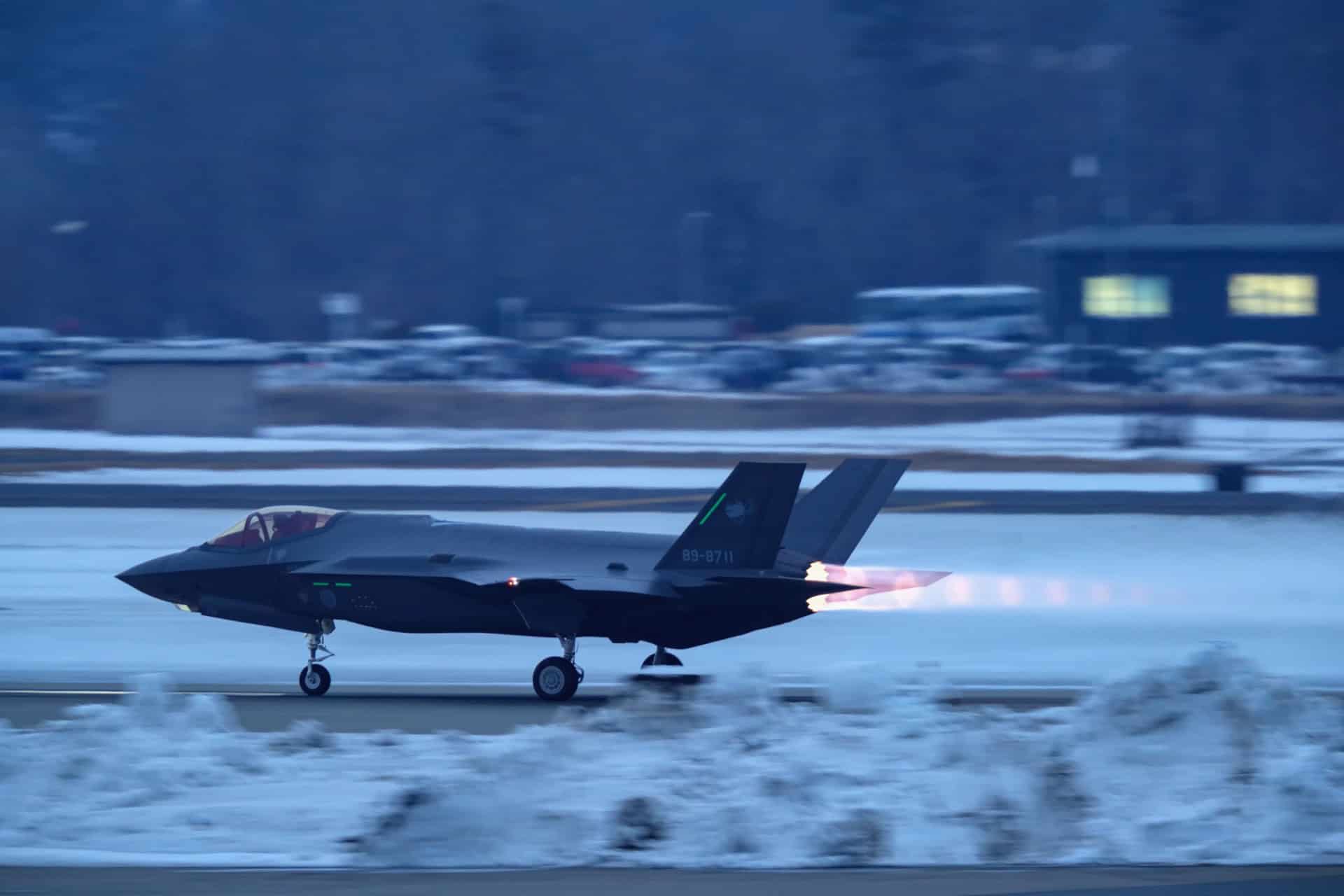
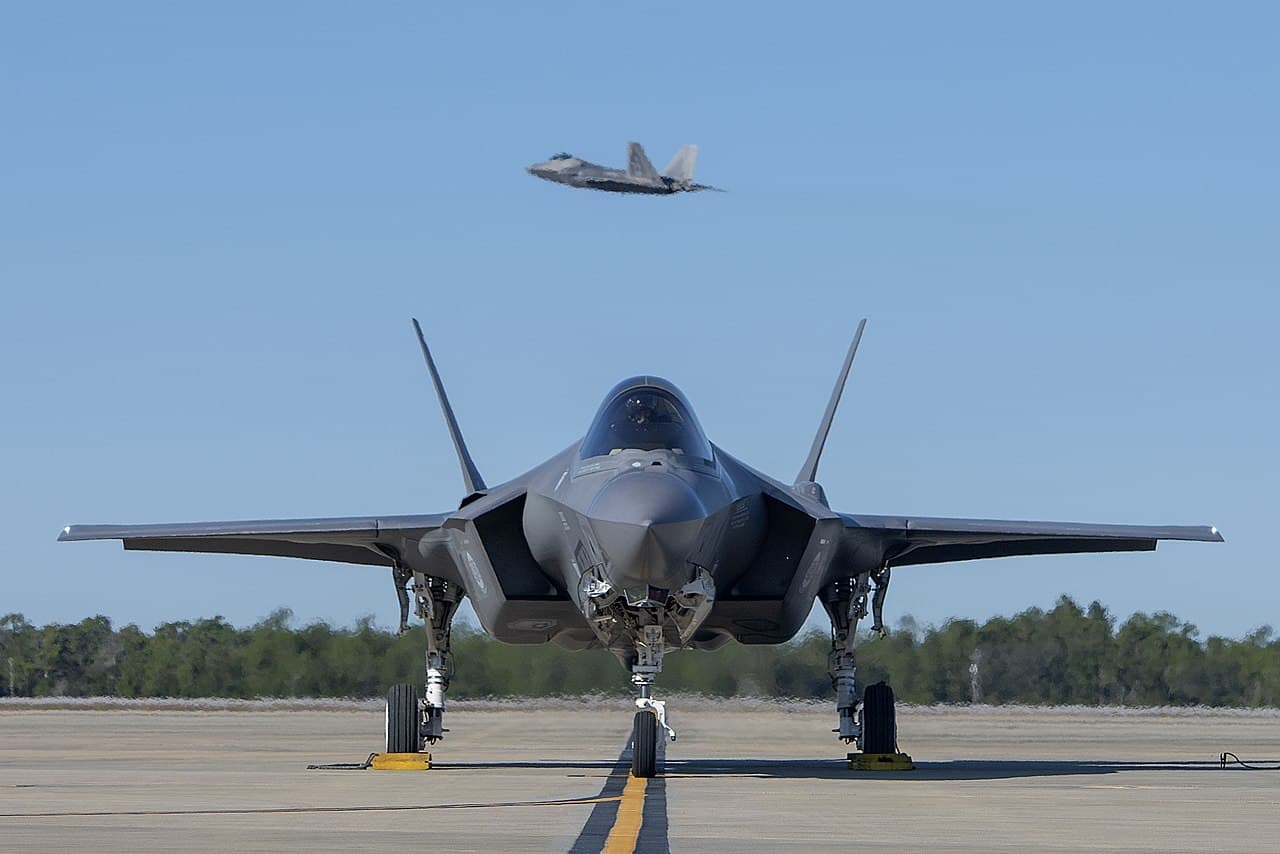
The F-35 was designed for exactly that fight, using stealth to operate against dense surface-to-air missile defenses. The Pentagon ran its comparison test only in low- and medium-threat environments, partly because the A-10 was not designed for the high-threat missions the F-35 was being tested in.
The 2026 war with Iran showed the split in practice. According to The Aviationist, A-10s were used extensively against Iran-backed militias in Iraq and Syria, while more survivable aircraft were kept for high-threat missions over Iran itself.
When A-10s supported the rescue of a downed F-15E crew on April 3, 2026, one was struck by hostile fire. Its pilot flew the damaged jet into Kuwaiti airspace and ejected safely.
Sensors and information
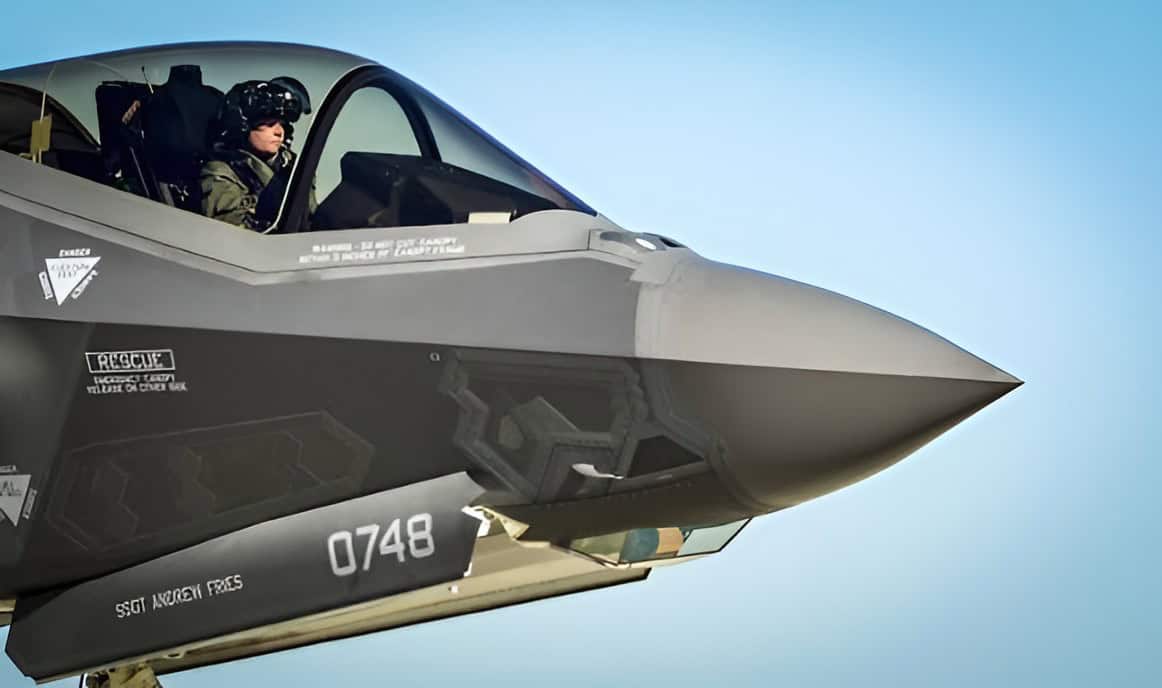
The F-35’s biggest advantage may be what it knows. Its Distributed Aperture System gives the pilot situational awareness in a sphere around the aircraft, and its internal Electro-Optical Targeting System detects and tracks ground targets at long range.
That information is fused and displayed on the pilot’s helmet visor, and data links share it with other aircraft and ground units. The A-10 has no radar and depends on external targeting data or the pilot’s own eyes to find targets.
That edge did not show up cleanly in the comparison test, though. A-10 pilots reported a “significantly lower workload” than F-35A pilots when acting as airborne forward air controllers, the pilots who find targets and direct other aircraft onto them.
Versatility and speed
The A-10 does one job. The F-35A is designed to replace both the A-10 and the F-16, and its missions include counter-air, ground attack, electronic warfare and data collection.
That breadth is why the F-35 ranks second on our list of the best fighter jets in the world. For how it fares against a pure air-superiority fighter, see our F-22 Raptor vs F-35 comparison.
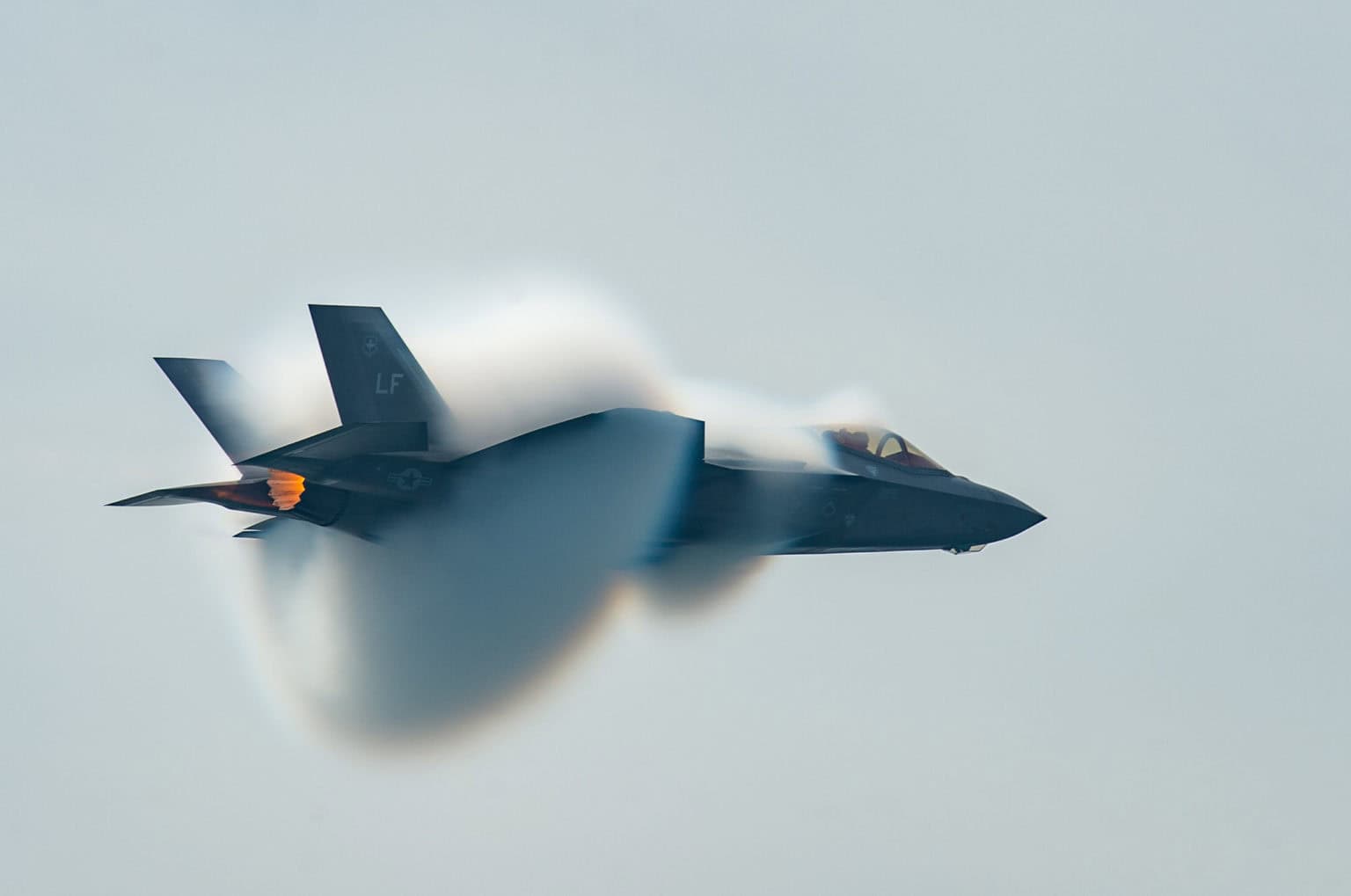
The F-35A reaches Mach 1.6, about 1,200 mph (1,930 km/h), against the A-10’s 420 mph (676 km/h). That lets it reach a distant fight far sooner, even if it cannot linger as long once it arrives.
A future
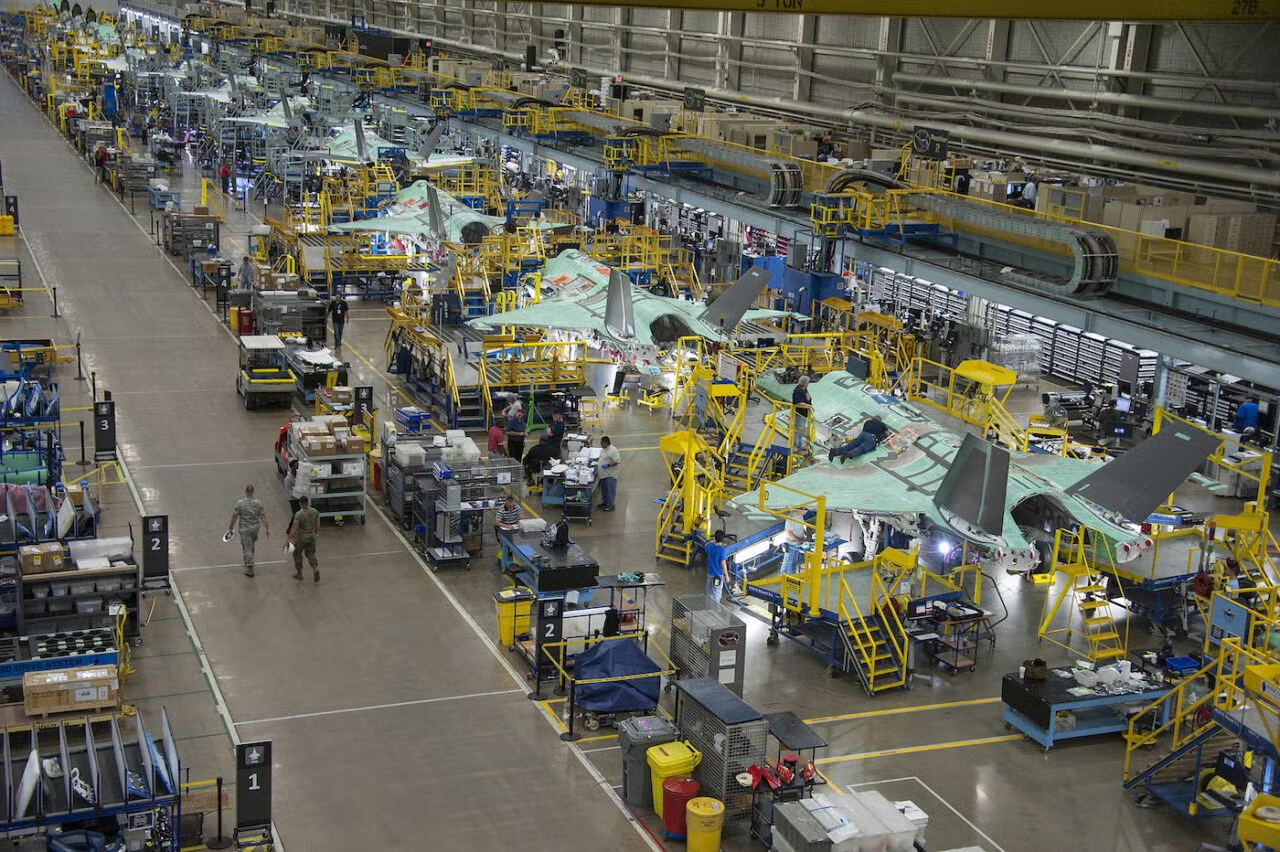
The F-35 is still in production. More than 1,355 have been delivered across a program of 20 countries, and the US Air Force plans to buy 1,763 F-35As.
The average F-35A in the newest production lots costs $92.0 million flyaway, engine and radar included. That is expensive, but it buys an aircraft whose production line still exists.
A-10 production ended in 1984 after just over 700 were built. Depot maintenance at Hill Air Force Base ended in February 2026, and the final class of new A-10 pilots graduated in April 2026.
Myth: the F-35 was never meant to replace the A-10
Air Force leaders have said so when defending the F-35 against comparisons. But the service’s own F-35A fact sheet says the jet will replace the Air Force’s aging fleet of F-16 Fighting Falcons and A-10 Thunderbolt IIs. The debate has only ever been about whether it can do the job.
What the Pentagon’s A-10 vs F-35 fly-off found
Congress ordered a head-to-head test in the fiscal 2017 National Defense Authorization Act (NDAA), over the objections of Air Force leaders. Then-Chief of Staff Gen. Mark Welsh had called the idea a “silly exercise.”
The tests ran from April 2018 to March 2019 at China Lake, California, and Yuma, Arizona. They covered close air support, airborne forward air control and combat search and rescue.
The Pentagon’s testing office did not write up the results until February 2022. The report was released, heavily redacted, only in late 2023, after the Project On Government Oversight (POGO) sued under the Freedom of Information Act.
What survived the redactions leaned toward the A-10. The report said the A-10C’s typical loadout enabled more attacks, and a cut-off sentence indicates that more F-35A sorties would be needed to attack the same number of targets.
It recommended fixing the F-35A’s gun, improving its digital communications, video data link and interoperability with older fighters, and developing better training. The F-35 program office later said the gun and interoperability had been improved.
The test had real limits. No ground troops took part, all but one event used simulated weapons, and the F-35 pilots were mostly former A-10 pilots, choices POGO argues were made to give the F-35 its best chance.
The pilots' answer: fly both
Pilots from both aircraft in the test repeatedly suggested pairing them, with A-10s doing the attacking and F-35s providing cover. The report said that combination would bring together the strengths of both jets while offsetting their limitations.
An earlier academic study reached a similar verdict. A 2019 paper by John Green and Richard Zeckhauser in the Journal of Benefit-Cost Analysis, drawing on surveys of joint terminal attack controllers, concluded that “the A-10 vastly outperforms the F-35 in providing close-air support.”
Can the F-35 really replace the A-10?
The Air Force’s answer is that close air support is a mission, not a specific aircraft. Its plan spreads the A-10’s work across multirole jets: the F-35A, the F-15E Strike Eagle and the F-16.
Critics reply that a multirole jet does not train for close air support the way a dedicated one does. POGO obtained Air Force memos showing no close air support training requirements for F-35 pilots in 2023 or 2024.
Congress leans toward the critics. The BRRRRT Act, introduced in July 2026, would count an aircraft as a true A-10 replacement only if close air support is its primary mission, and the Air Force has no direct replacement of that kind.
The honest answer is that the F-35 can fly close air support, but not the way the A-10 does. It gives up loiter time, firepower and cost in exchange for surviving where the A-10 cannot.
Where A-10 retirement stands in September 2026
The Air Force entered fiscal 2026 with 162 A-10s and asked to retire all of them that year. Congress refused, and the fiscal 2026 NDAA barred cutting the fleet below 103 aircraft through September 30, 2026.
Then the Iran war changed the math. A-10s deployed for Operation Epic Fury, flying close air support, counter-drone missions and strikes on Iranian fast attack craft in the Strait of Hormuz.
On April 20, 2026, Air Force Secretary Troy Meink extended the A-10 to 2030. The plan keeps 54 aircraft in three squadrons through 2029, then 36 in two squadrons through 2030.
Two of those squadrons fly from Moody Air Force Base in Georgia, the only active-duty A-10 base since the last Davis-Monthan flight on July 29, 2026.
The third is a Reserve unit at Whiteman Air Force Base in Missouri. Whiteman is also the only candidate base for 24 Reserve F-15Es that would replace its A-10s.
Some in Congress want more. The bipartisan BRRRRT Act would require at least 126 A-10s through fiscal 2033 and a plan to restore depot maintenance and pilot training, but as of August 2026 it was still before the House Armed Services Committee.
The 103-aircraft floor expires on September 30, 2026. The House passed its fiscal 2027 NDAA on July 22, 2026, but the Senate version stalled after a failed procedural vote on July 14, so what replaces the floor is unresolved.
The pressure on the fleet is not only political. On September 8, 2026, an Iranian missile strike on Muwaffaq Salti Air Base in Jordan left one A-10 with a severely damaged wing.
Meanwhile, the Air Force is already flying fewer fighters than the minimum Congress requires, which puts every retirement under closer scrutiny.
So which is better, the A-10 or the F-35?
For its one job, in skies an enemy cannot seriously contest, the A-10 is still the better aircraft. It carries more, shoots longer, stays longer, costs less per hour and, in 2024, was ready to fly more often.
For every other job, and for any war against an enemy with modern air defenses, the F-35 is better by a wide margin. It is also the only one of the two with a future.
That is why the Air Force keeps trying to retire the A-10, and why the A-10 keeps getting called back. The 2026 war with Iran was fought in both kinds of sky, and it needed both aircraft.
FAQ
Sources and references used for research and fact-checking.
- U.S. Air Force, A-10C Thunderbolt II fact sheet
- U.S. Air Force, F-35A Lightning II fact sheet
- Defense One, The A-10 and F-35 competed in close air support tests years ago. The report just surfaced.
- Project On Government Oversight, F-35 and A-10 Close Air Support Flyoff Report
- Harvard Kennedy School, Thunder versus Lightning: A Performance and Cost Analysis of the A-10 Warthog versus the F-35 Joint Strike Fighter
- Office of the Under Secretary of Defense (Comptroller), Fiscal Year 2025 DoD Fixed Wing and Helicopter Reimbursement Rates
- Defense News, Air Force aircraft readiness plunges to new low, alarming chief
- Air & Space Forces Magazine, Air Force Mission Capability Rates Reach Lowest Levels in Years
- Air & Space Forces Magazine, What an F-35 Costs Right Now, by Variant
- Defence Industry Europe, Lockheed Martin says F-35 global fleet surpasses 1,355 deliveries and one million flight hours
- The War Zone, F-35A's Beleaguered 25mm Cannon Is Finally Effective
- The National Interest, F-35 Beast Mode: How America's Stealth Jet Becomes a Bomb Truck
- The War Zone, A-10 Warthog To Soon Carry 16 Small Diameter Bombs In Combat
- Airforce Technology, A-10 Thunderbolt (Warthog)
- Defense News, Air Force Declares F-35A Ready for Combat
- Military Times, Air Force extends 3 A-10 squadrons, each expected to keep 18 Warthogs
- The Aviationist, U.S. Air Force Confirms A-10 Thunderbolt II Service Life Extended to 2030
- The Aviationist, A-10 Thunderbolt II Crashed Near The Strait Of Hormuz
- Army Recognition, U.S. extends A-10 Warthog attack aircraft service to 2030 after combat use in Iran
- Aerospace Global News, Unpacking NDAA 2026: Congress blocks USAF aircraft retirements
- The Aviationist, BRRRRT Act Introduced in U.S. Congress to Keep the A-10 Warthog in Service
- Stars and Stripes, A-10 Warthog takes final active-duty flight at Arizona air base
- The War Zone, Congress Throws A-10 Warthog Another Lifeline
- Breaking Defense, House passes 2027 NDAA while measure remains stalled in the Senate
- Air & Space Forces Magazine, Iran Damages US A-10, F-15s with Missile Attack on Air Base in Jordan
- Air Force Reserve Command, Gulf War Heritage: Reservist scores first enemy aircraft takedown in A-10
- The Aviation Geek Club, How USAF A-10 tank busters shot down two Iraqi helicopters during Operation Desert Storm
About the Author

Tim is the owner and lead editor of AeroCorner since 2019, overseeing aviation content covering aircraft, airlines, airports, and the broader aviation industry. Through years of researching, writing, editing, and publishing aviation-focused content, he has developed extensive practical knowledge of commercial aviation and air travel. Based in Asia and a frequent traveler himself, Tim also brings firsthand passenger experience to AeroCorner’s coverage. Outside of publishing, he has also explored aviation firsthand through hands-on flight training in New Zealand.