



Table of Contents
| Measure | F-35A Lightning II | Su-57 Felon |
|---|---|---|
| First flight | December 2006 | January 2010 (T-50 prototype) |
| Entered service | August 2016 (US Air Force) | December 2020 (announced) |
| Stealth | Designed in from every angle; open-source estimates near 0.005 sq m | Strongest from the front; Sukhoi’s patent target 0.1 to 1 sq m |
| Radar and sensors | AN/APG-81 AESA (1,676 modules), six-camera Distributed Aperture System, helmet display | N036 Byelka AESA (1,514 modules in the nose) plus side-looking cheek arrays |
| Internal missiles | Four stations; six AIM-120s with the Sidekick upgrade | Four long-range in the main bays, two short-range in the side bays |
| Gun | 25 mm GAU-22/A, 182 rounds | 30 mm GSh-30-1, 150 rounds |
| Supercruise | Not part of its published performance | Mach 1.3 by Russian figures, disputed by India in 2018 |
| Air combat record | First kill of a crewed aircraft, March 2026 (Israeli F-35I) | Standoff cruise missile strikes over Ukraine, mainly from Russian airspace |
| Unit cost | $92 million average flyaway, Lots 18 and 19 | Under $34 million implied by the 2019 order, widely doubted |
| Built | More than 1,345 by August 2026 | At least 44, including 10 test aircraft |
| Export customers | At least a dozen countries fly it | Algeria (14 ordered in 2019); India declined in August 2026 |
How we compare the F-35 and the Su-57
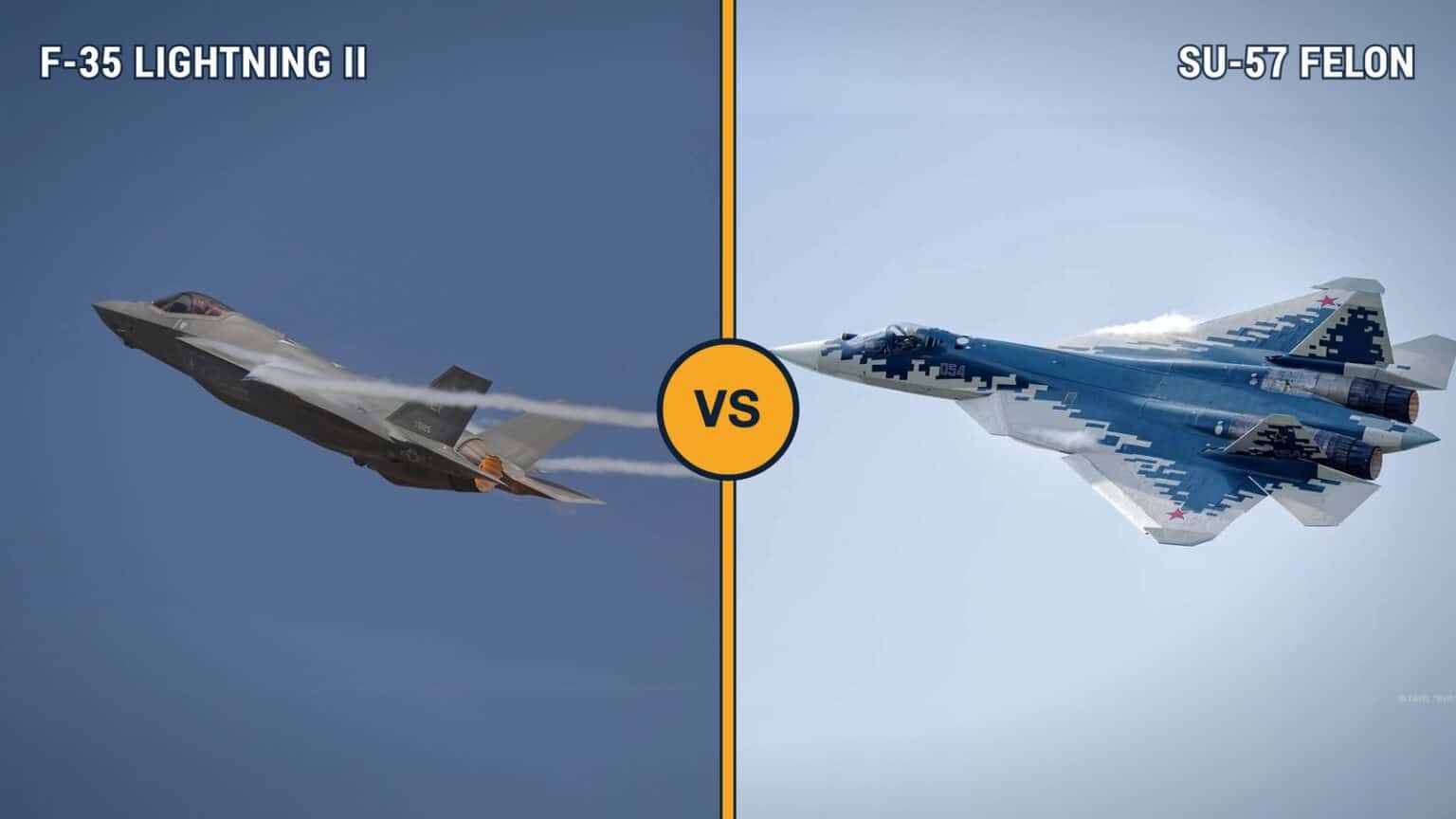
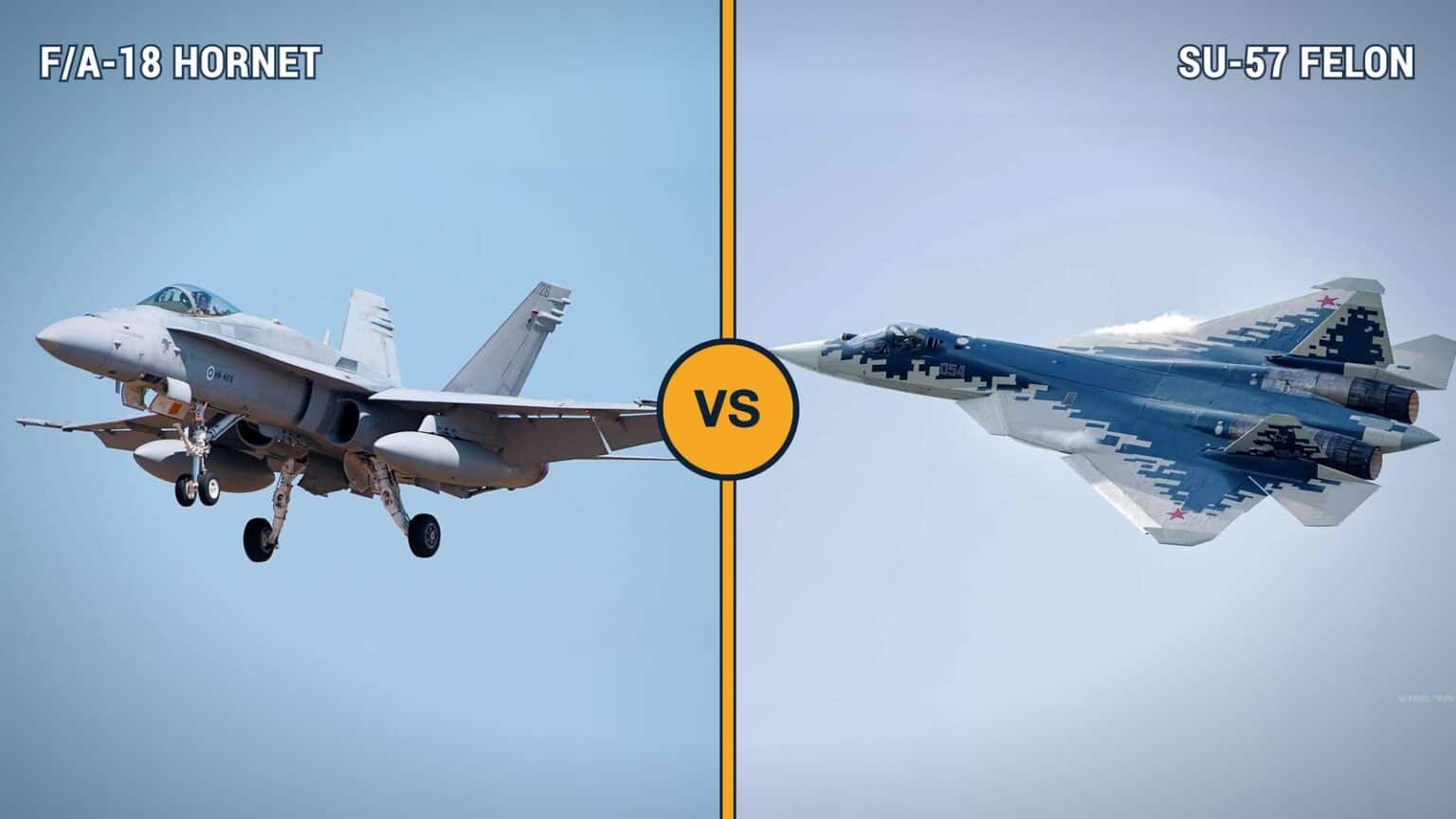
Both are stealth fighters, and both are multirole. They got there by different routes: the F-35 puts stealth and sensors first, while the Su-57 trades some stealth for speed, agility and range.
Russia classes the Su-57 as fifth generation, the same as the F-35, a label our guide to the five generations of fighter planes explains. Some Russian commentators dispute it, arguing the jet never became a true fifth-generation aircraft in engines, avionics or stealth.
We rank them on four measures: who sees and shoots first, raw performance, combat record, and whether the jet exists in useful numbers. Full specifications for the Lockheed Martin F-35 Lightning II and the Sukhoi Su-57 Felon sit in our aircraft database.
We use the F-35A, the conventional-runway version most air forces fly.
The measure decides the winner
On speed, agility and internal missile count, the Su-57 comes out ahead. On stealth, sensors, combat record and numbers, the F-35 wins, and in modern air combat those are the measures that decide who shoots first.
Where the F-35 wins
Stealth from every angle
The F-35 was shaped to be hard to see on radar from every direction. Open-source estimates put its radar cross-section, the size it appears to a radar, at around 0.005 square meters.
Sukhoi’s own patent set a more modest goal for the Su-57: an average of 0.1 to 1 square meter, against 10 to 15 for the Su-27 it descends from. Even the best of those Su-57 figures is 20 times the common F-35 estimate.
The Su-57’s stealth is also concentrated at the front. When India left the joint program in 2018, one of its complaints was stealth limited to the frontal 60-degree arc. Our guide to stealth fighter jets shows how each design handles the trade.
Sensors that build one picture
The F-35’s AN/APG-81 radar has 1,676 transmit-receive modules and can track several targets while scanning beyond 80 nautical miles (92 miles).
Six infrared cameras in the Distributed Aperture System watch all around the jet and warn of approaching missiles. A helmet-mounted display puts that picture, and the rest of the mission data, on the pilot’s visor.
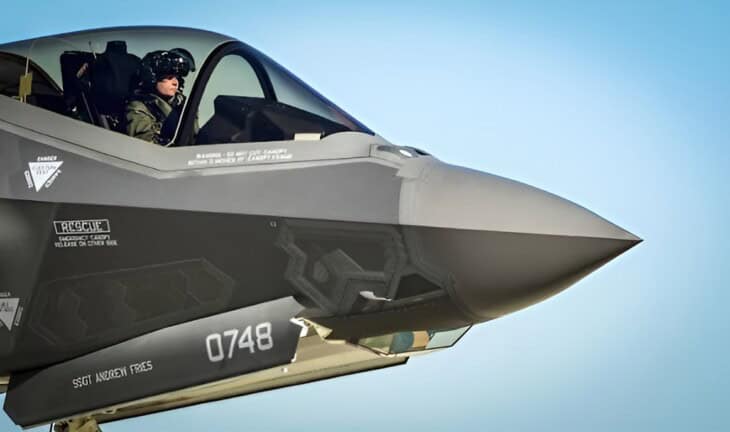
The Su-57’s N036 Byelka radar answers with 1,514 modules in the nose, plus side-looking arrays in the cheeks that widen its coverage. It is a serious radar, but it sits on a jet that enemy radars can see far more easily.
Numbers the Su-57 cannot match
More than 1,345 F-35s had been built by August 5, 2026, and at least a dozen countries fly it. Open-source counts put the Su-57 total at 44 or more airframes, 10 of them test aircraft.
Su-57 production has barely moved. Russia reported no official deliveries in 2025, and Polish analysts at Defence24 estimate four were delivered in the first eight months of 2026.
Russia’s 2019 plan called for 76 by 2028. On the American side, Lockheed Martin says it can hold F-35 production at 156 jets a year.
A whole fleet in 15 weeks
At the 156-a-year rate Lockheed Martin says it can sustain, the F-35 line turns out 44 jets in about 15 weeks. That is as many as every Su-57 Russia has built since the first prototype flew in 2010, test aircraft included.
Where the Su-57 wins
Speed: Mach 2 against Mach 1.6
The Su-57 is the faster jet. Its top speed is Mach 2, about 1,327 mph (2,135 km/h) at altitude, against Mach 1.6, about 1,200 mph (1,930 km/h), for the F-35A.
By Russian figures it can also supercruise, holding Mach 1.3 without afterburner. Staying supersonic without burning fuel at afterburner rates stretches range and gives missiles more energy at launch.
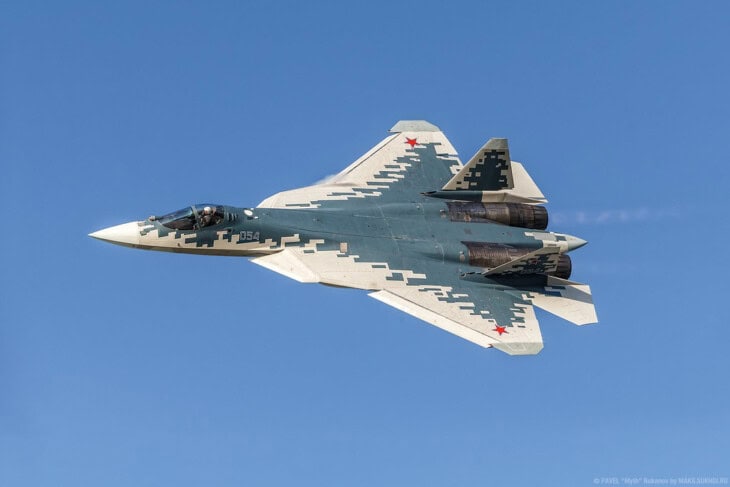
For where both sit in the wider field, see our list of the fastest fighter jets.
Two engines and a 9 g airframe
The Su-57 has two Saturn AL-41F1 engines, each rated at 31,970 pounds of thrust in afterburner, close to 64,000 pounds in total. The F-35A has one Pratt & Whitney F135, rated at 43,000 pounds.
Its thrust-vectoring nozzles swivel to help point the nose, and its life-support system lets pilots pull 9 g for up to 30 seconds at a time. In a close turning fight, that is the better airframe.
More missiles inside, and a bigger gun
In stealth configuration the Su-57 carries four long-range missiles in its two main bays and two short-range missiles in side bays, six in all.
The F-35 has two internal bays with two stations each, and the Sidekick upgrade lets it carry six AIM-120s inside. It also has six external stations, but loading them gives up its stealth.
The Su-57 has the heavier gun as well: a 30 mm GSh-30-1 with 150 rounds, against the F-35A’s 25 mm GAU-22/A with 182.
A lower price, on paper
When Russia announced its order for 76 Su-57s in 2019, the reported value was more than $2.6 billion. That works out to under $34 million a jet.
The F-35A’s average flyaway cost rose from $82.5 million to $92 million in production Lots 18 and 19. We cover the rise in how the F-35A climbed back to $92 million.
Myth check: the $34 million stealth fighter
The 2019 price was a figure the Kremlin announced, not an audited cost. The War Zone noted at the time that it was lower than the estimated unit cost of the Su-30MKK Flankers Russia sold to China nearly two decades earlier. Treat it as a negotiated state price, not what a Su-57 actually costs to build.
Combat record: proven against held back
The F-35 flew its first combat missions with Israel in 2018. On March 4, 2026, an Israeli F-35I shot down an Iranian Yak-130 over Tehran, the first time an F-35 had downed a crewed aircraft.
It was also the first time since 1985 that an Israeli fighter had shot down an enemy warplane.
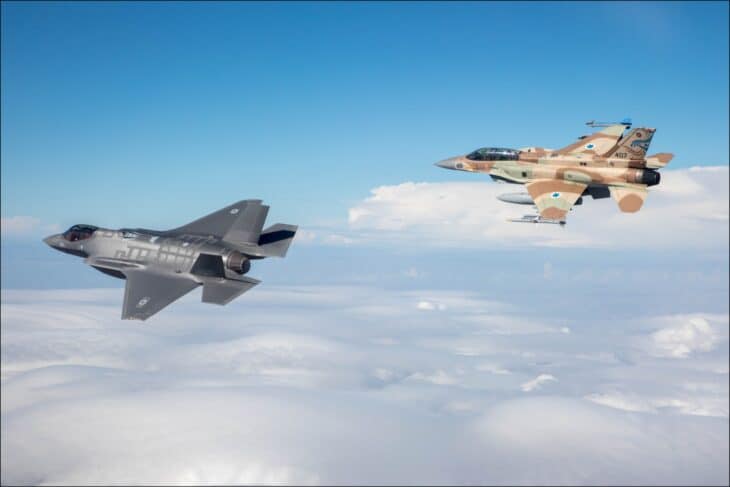

The F-35 has taken hits, too. On March 19, 2026, a US F-35 on a combat mission over Iran was struck and made an emergency landing at a US base in the Middle East, and Central Command said the pilot was in stable condition.
The Su-57’s war has looked very different. Its reported missions over Ukraine have been cruise missile launches from standoff range, and like other Russian jets it has stayed mainly inside Russian airspace.
In May 2026 it returned to action with at least ten cruise missile launches over Kursk Oblast and Crimea. Even some Russian commentators question the jet’s small role: military analyst Maksim Kalashnikov asked, “If the Su-57 is a better aviation complex than the notorious F-35, then where is it in Ukraine?”
Su-57 vs F-35 in a dogfight
The two have never been reported fighting each other, so any dogfight verdict is an argument, not a result. Up close, the Su-57 has the edge on paper: more thrust, vectoring nozzles and a 9 g airframe.
The F-35 is built so the fight never gets that close. Its aim is to detect the enemy and shoot from beyond visual range first, and its stealth makes it a harder target for the Su-57’s long-range missiles.

The best public evidence for the F-35 comes from training. At Red Flag 17-1 in early 2017, Lt. Gen. Jerry Harris of Air Combat Command said F-35As posted a 20-to-1 kill ratio against the aggressors.
Read it with care. F-22 Raptors flew alongside the F-35s, and the rules of engagement were never published.
Su-57 vs F-35 size
The Su-57 is much the bigger jet. It is about 66 feet (20.1 m) long with a 46-foot (14.1 m) wingspan, against 51 feet (15.7 m) and 35 feet (10.7 m) for the F-35A.
It is heavier too, with a maximum takeoff weight of about 77,000 pounds (35,000 kg) against the F-35A’s 70,000-pound class. The full side-by-side dimensions are in the database comparison at the top of this page.
That size carries fuel. Russian figures give the Su-57 about 2,175 miles (3,500 km) of subsonic range, while the Air Force lists the F-35A at more than 1,350 miles (2,170 km) on internal fuel.
Why did India reject the Su-57?
India was once Russia’s partner on the jet. The two countries worked on an Indian derivative, the Fifth Generation Fighter Aircraft, until New Delhi withdrew in 2018.
India’s concerns included stealth limited to the frontal 60-degree arc, a lack of supercruise, cost and access to the technology. The supercruise complaint cuts against Russia’s own Mach 1.3 claim.
Russia tried again in 2026. At the St. Petersburg International Economic Forum on June 5, Vladimir Putin offered India the Su-57 with joint production and technology transfer.
In August 2026 India turned the offer down, according to comments attributed to Defense Secretary Rajesh Kumar Singh. It is upgrading its roughly 260 Su-30MKIs and backing its own AMCA stealth fighter instead.
How many Su-57s has Russia lost?
On the public record, none has been shot down in the air. The reported losses and damage have come on the ground and in accidents, and Russia confirms almost none of it.
In June 2024 Ukraine claimed a drone strike on Akhtubinsk air base in southern Russia had hit two Su-57s. At least one was damaged by shrapnel.
On April 25, 2026, Ukrainian drones struck Shagol airfield in the Chelyabinsk region, about 1,050 miles (1,700 km) from Ukraine’s border. Ukraine’s General Staff said several Su-57s and a Su-34 were hit, and satellite imagery showed the apparent destruction of one Su-57.
On July 23, 2026, an unarmed jet crashed on a training flight in the Moscow region and the pilot ejected safely. The Defense Ministry did not name the type; an anonymous source quoted by Kommersant said it was a Su-57.
Defence24’s analysts count at least one Su-57 destroyed in the first eight months of 2026. For a fleet of a few dozen, each loss weighs far more than it would against 1,345 F-35s.
What is the US equivalent of the Su-57?
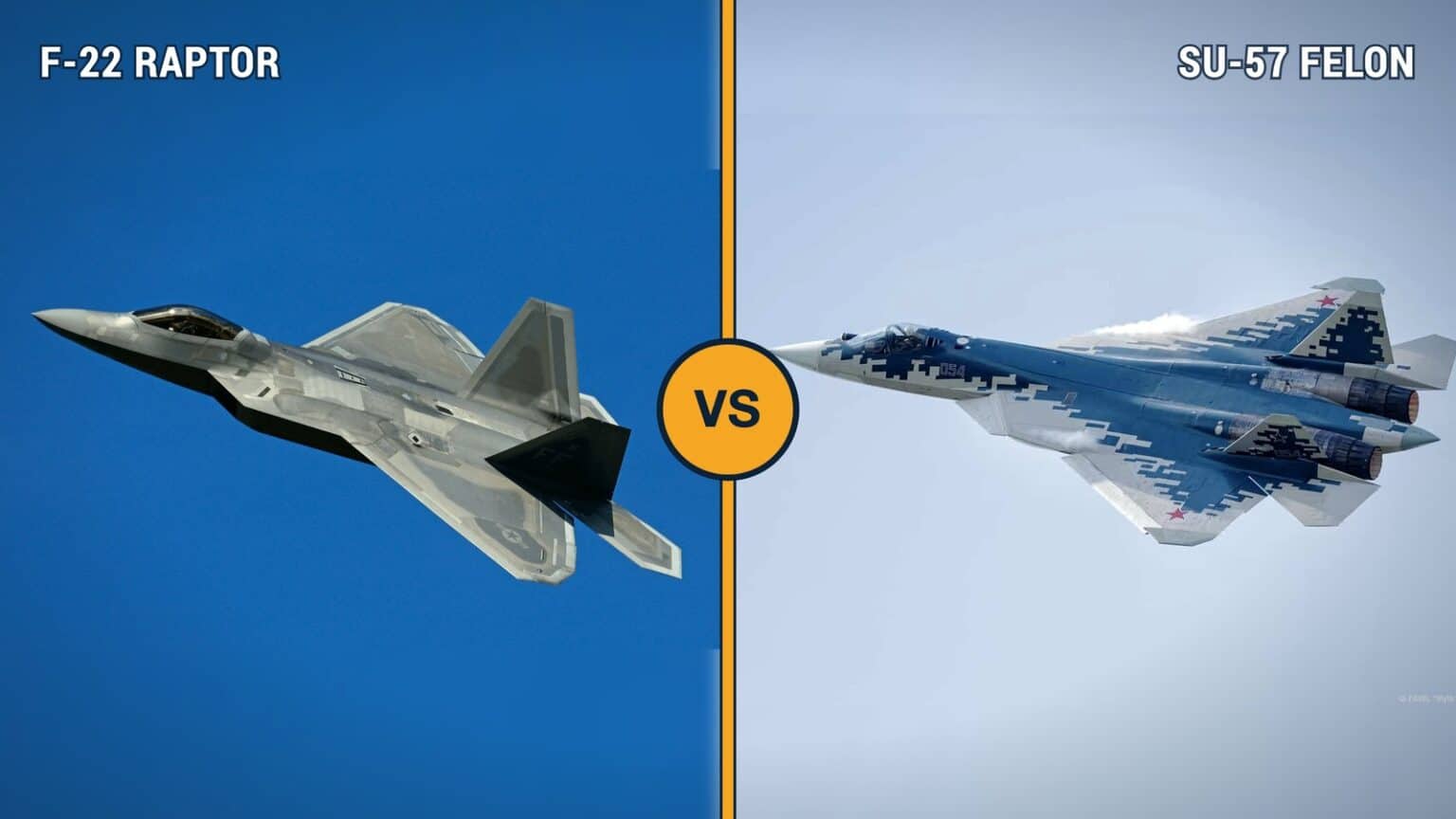
The closest American counterpart is the F-22 Raptor, not the F-35. Like the Su-57, the F-22 is a twin-engine fighter built for speed, agility and supercruise, while the F-35 is a single-engine multirole jet.
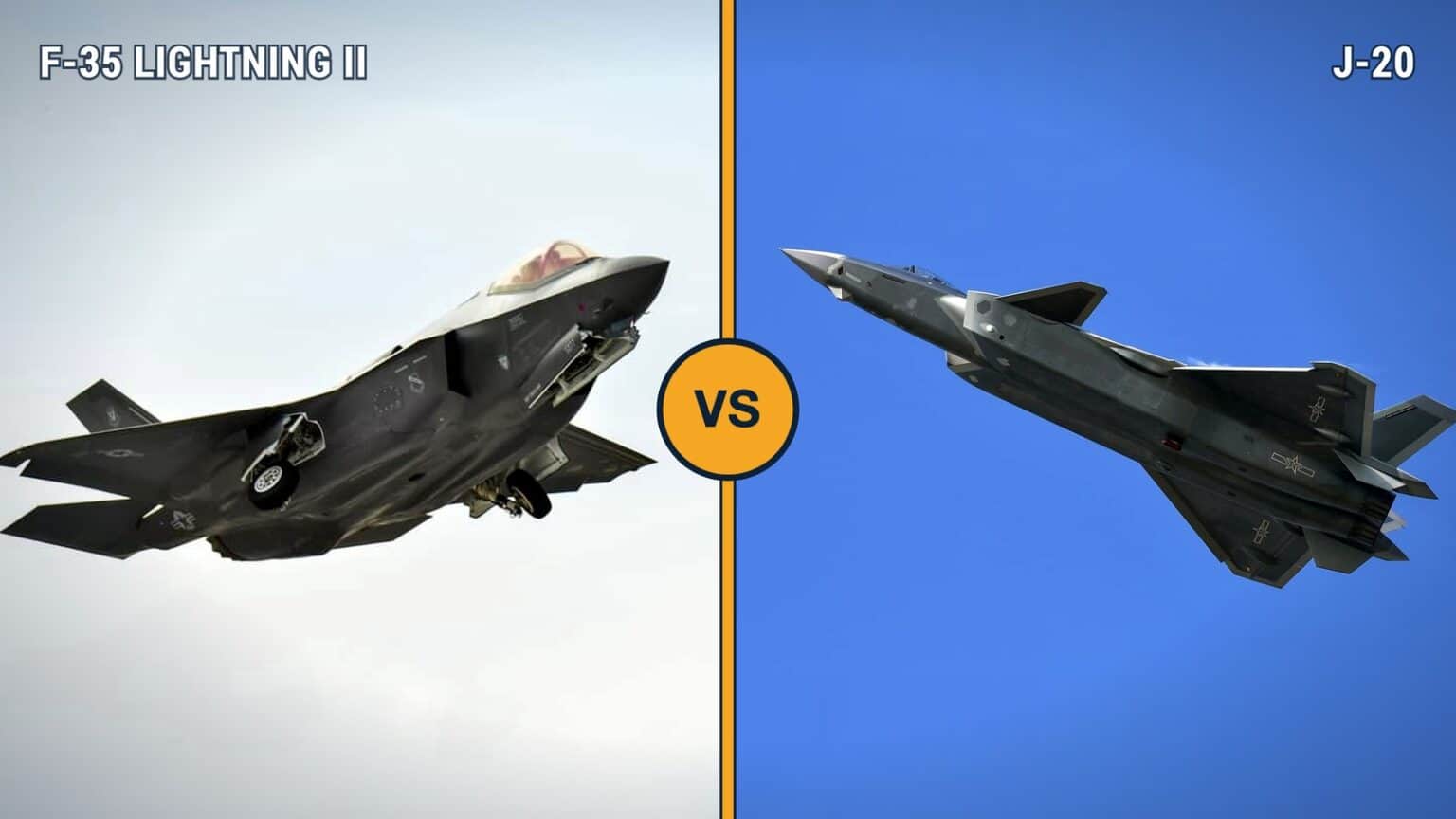
We compare that pairing directly in our F-22 vs Su-57 comparison, and the two American jets in our F-22 vs F-35 comparison. China’s stealth fighter meets the F-35 in our F-35 vs J-20 comparison.
Dec 2006
The first F-35A flies. It is the conventional-runway version most air forces fly.
Jan 2010
The T-50 prototype flies. The first flight of the jet that became the Su-57 takes place on January 29.
Aug 2016
The F-35A enters US Air Force service. It reaches initial operating capability on August 2.
2018
India leaves the joint program. It cites stealth, supercruise, cost and technology access. The same year, Israeli F-35s fly the type’s first combat missions.
2019
Russia orders 76 Su-57s. In December, Algeria signs for 14 and becomes the first export customer.
Dec 2020
The Su-57 enters service. Russia’s Defense Ministry announces it on December 25.
Jun 2024
Ukraine strikes Akhtubinsk. At least one Su-57 is damaged by shrapnel.
Mar 2026
The F-35’s first kill of a crewed aircraft. An Israeli F-35I downs an Iranian Yak-130 over Tehran on March 4.
Apr 2026
Drones hit Su-57s at Shagol. Satellite imagery shows the apparent destruction of one jet.
May 2026
A two-seat Su-57 flies. Its first flight is on May 19.
Aug 2026
India declines the Su-57E. More than 1,345 F-35s have been built by now.
The verdict
If one of these jets had to fight its way into defended airspace and come home, take the F-35. It is harder to see, its sensors work as one system, and it has now shot down a crewed aircraft in combat.
The Su-57 is not a paper tiger. It is faster, carries more missiles inside, and in a close turning fight it has the better airframe.
But a fighter only counts if it exists and flies where the war is, and 1,345 against about 44 settles that. For the wider field, see our ranking of the best fighter jets in the world and our guide to the best Russian fighter jets.
FAQ
Sources and references used for research and fact-checking.
- U.S. Air Force, F-35A Lightning II Conventional Takeoff and Landing Variant Fact Sheet
- Wikipedia, Lockheed Martin F-35 Lightning II
- Wikipedia, AN/APG-81
- Air & Space Forces Magazine, What Each F-35 Variant Really Costs Right Now
- Defense News, Israeli F-35 notches first kill of a manned fighter in downing of Iranian Yak-130
- The Jerusalem Post, US F-35 hit, forced to make emergency landing, IRGC takes credit
- The Jerusalem Post, US denies that IRGC destroyed three F-35s
- The Aviationist, Red Flag confirmed F-35 dominance with a 20:1 kill ratio, U.S. Air Force says
- Wikipedia, Sukhoi Su-57
- Army Recognition, Su-57 Felon
- The War Zone, Russia Now Claims It Will Buy 76 Su-57 Advanced Fighter Jets By 2028
- Zona Militar, UAC ended 2025 without official deliveries of new Su-57 stealth fighters to the Russian Aerospace Forces
- Defense Express, Russia Delivered Only 14 Combat Aircraft in 8 Months of 2026 While Losing 10
- Militarnyi, Russia Announces First Export Deliveries of Su-57 Fighter Jets
- Ukrinform, General Staff confirms destruction of Su-57 and Su-34 aircraft in strikes on Shagol airfield
- Military Watch Magazine, Russia's New Su-57 Stealth Fighters Destroyed in Ukrainian Strike 1700 Kilometres Behind Frontlines
- The Moscow Times, Warplane Crashes During Training Flight in Moscow Region
- Military Watch Magazine, Russian Analysts Claim the Su-57 Stealth Fighter Can't Match the F-35
- Defense News, Putin offers Su-57 to India as New Delhi faces stealth fighter gap
- Kyiv Post, India Rejects Russia's Su-57E Fighter Jet Offer, Bets on Domestically Produced AMCA, 260 Su-MKIs
About the Author

Tim is the owner and lead editor of AeroCorner since 2019, overseeing aviation content covering aircraft, airlines, airports, and the broader aviation industry. Through years of researching, writing, editing, and publishing aviation-focused content, he has developed extensive practical knowledge of commercial aviation and air travel. Based in Asia and a frequent traveler himself, Tim also brings firsthand passenger experience to AeroCorner’s coverage. Outside of publishing, he has also explored aviation firsthand through hands-on flight training in New Zealand.