

Table of Contents
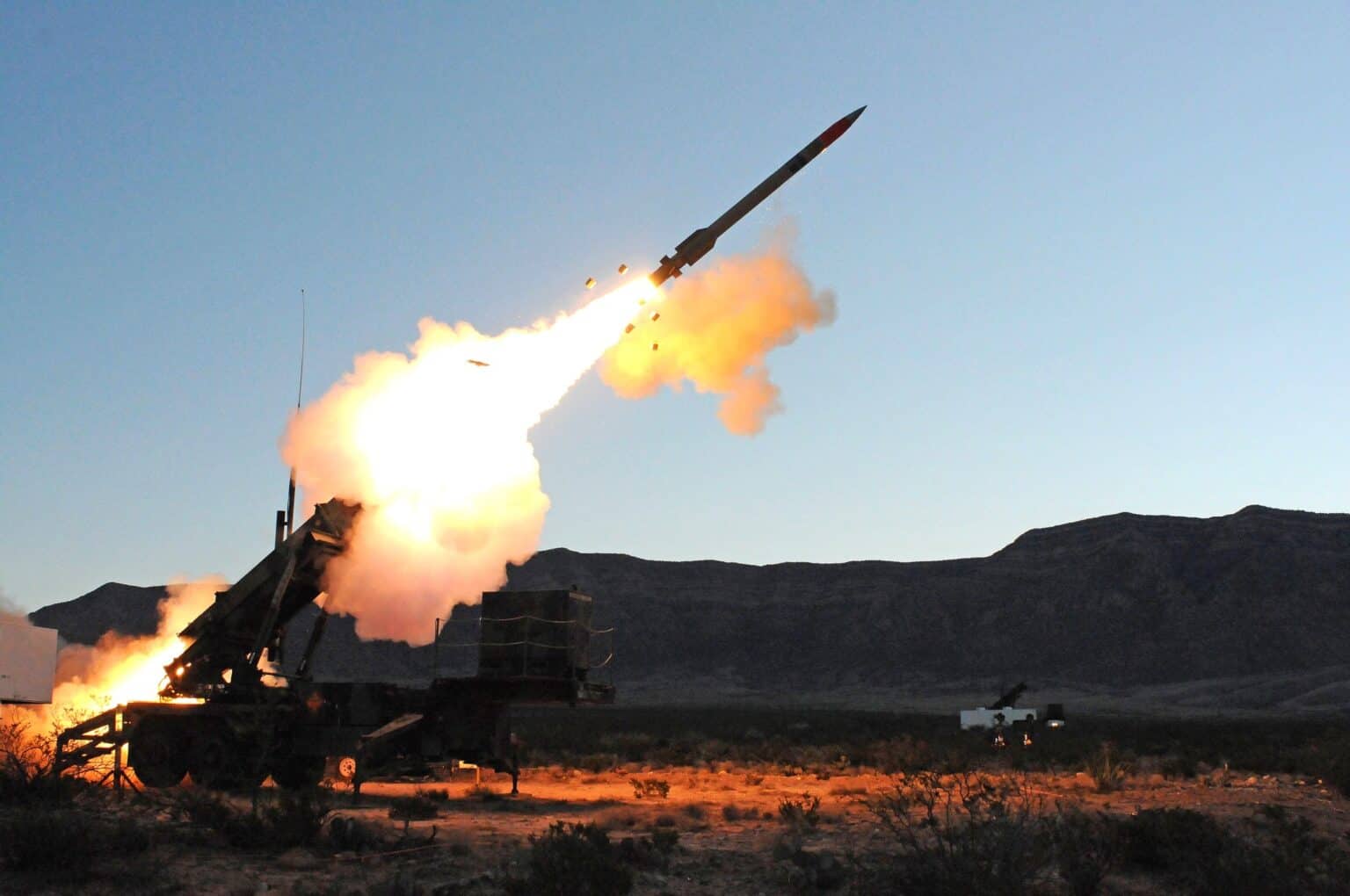
The best air defense system in the world is the American Patriot. It is not the longest-ranged system on this list, but no other air defense system has been fired in combat as often, in as many wars, against as many kinds of target.
That is the measure used here: proven performance in real combat first, then the hardest threat a system can stop, then how widely it is fielded. Brochure range comes last, because the last four years of war in Ukraine and the Middle East have shown how little a spec sheet predicts.
Rankings are as of October 2026, after the February to April 2026 war with Iran drained American and Israeli interceptor stocks and put most of these systems through their hardest test yet.
| Rank | System | Country | Max interceptor range | Proven in combat against |
|---|---|---|---|---|
| 1 | Patriot (PAC-3 MSE) | US | About 75 miles (120 km), estimate | Ballistic missiles, Kinzhal |
| 2 | THAAD | US | 93 to 124 miles (150 to 200 km) | Ballistic missiles |
| 3 | Arrow 3 / Arrow 2 | Israel | About 1,490 miles (2,400 km), estimate | Ballistic missiles, outside the atmosphere |
| 4 | Aegis BMD (SM-3, SM-6) | US | About 1,553 miles (2,500 km) for SM-3 IIA, estimate | Ballistic missiles, at sea |
| 5 | Iron Dome | Israel | 43 miles (70 km) | Rockets |
| 6 | NASAMS | Norway / US | 25 to 37 miles (40 to 60 km) | Cruise missiles, drones |
| 7 | IRIS-T SLM | Germany | 25 miles (40 km) | Cruise missiles (maker’s figures) |
| 8 | David’s Sling | Israel | 186 miles (300 km) | Rockets (mixed record) |
| 9 | SAMP/T | France / Italy | 93+ miles (150+ km) | Aircraft (mixed) |
| 10 | S-400 Triumf | Russia | 236 miles (380 km) | Aircraft (claimed) |
| 11 | HQ-9B | China | 155+ miles (250+ km) | Not proven |
| 12 | S-500 Prometey | Russia | 373 miles (600 km), Russian claim | Not proven |
Why range is not the ranking
An air defense system’s headline range is almost always its reach against a large aircraft. Against a ballistic missile diving at several times the speed of sound, the same interceptor may reach a fraction of that distance. So this list ranks first on what each system has actually shot down, then on the hardest threat it can handle, and only then on reach.
1. Patriot (US)
.jpg)
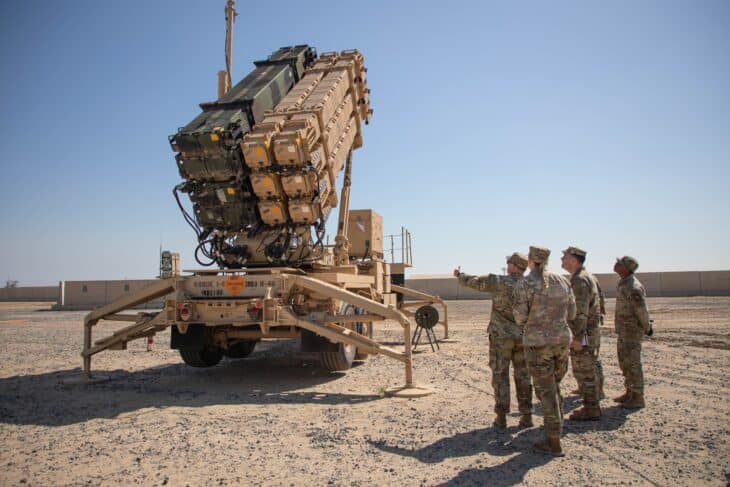
Patriot reached initial operational capability in 1984 and first fought in the 1991 Gulf War. RTX says it is now the foundation of air defense for 19 countries, including Germany, Japan, Poland, Saudi Arabia and Ukraine.
Raytheon builds the radar and ground equipment, and Lockheed Martin builds the PAC-3 MSE interceptor, which kills by hitting its target directly, the change explained in our guide to how the Patriot missile system works. Lockheed has built more than 2,500 of them, and in April 2026 the missile was integrated into the Navy’s Aegis system aboard destroyers.
Its record is unmatched in breadth. On May 4, 2023, a newly delivered Patriot battery shot down a Russian Kh-47 Kinzhal, which Russia markets as hypersonic, over Kyiv, as Ukraine’s war turned its air force and air defenses into a test range for Western hardware.
On June 23, 2025, Iran fired 14 missiles at Al Udeid Air Base in Qatar, and two US Patriot batteries fought alongside Qatari crews. General Dan Caine called it “the largest single Patriot engagement in U.S. military history.”
The weakness is cost and supply. A PAC-3 MSE costs about $5.3 million in the Army’s 2027 budget, and the 2026 Iran war burned through somewhere between half (CNN) and about 65% (CSIS) of the US inventory, depending on whose count you trust.
Patriot's worst day
During the 1991 Gulf War, a timing error in a Patriot battery’s software at Dhahran, Saudi Arabia, threw off its tracking of an incoming Iraqi Scud. The missile got through and killed 28 soldiers.
2. THAAD (US)
![[null Courtesy]](https://commons.wikimedia.org/wiki/File:Flight_Test_THAAD-23_(FTT-23)_(5711542).jpg)
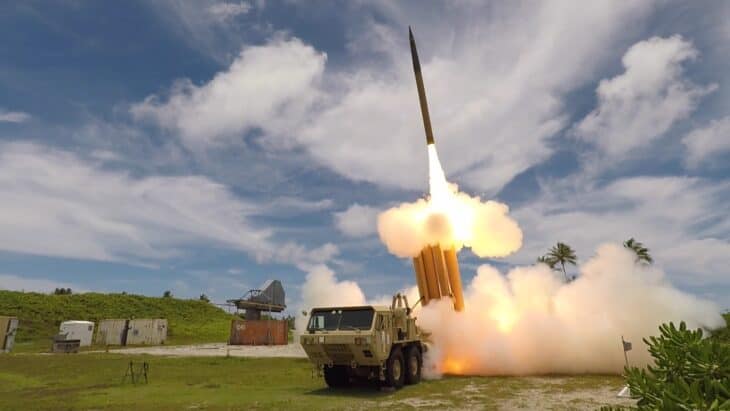
THAAD, the Terminal High Altitude Area Defense system, is built by Lockheed Martin to hit ballistic missiles in the last phase of their flight, both inside and just outside the atmosphere. The first battery was activated at Fort Bliss, Texas, in May 2008, and the US Army now has eight.
A battery has six launchers, 48 interceptors and an AN/TPY-2 radar, and its engagement range is 93 to 124 miles (150 to 200 km), according to the Congressional Research Service. It is built to stop missiles with ranges up to 1,860 miles (3,000 km), and some beyond.
Its first combat kill came for the United Arab Emirates in January 2022, against a Houthi attack. The US Army’s own first combat intercept followed in December 2024, against a Houthi missile fired at Israel.
Then came heavy use. CRS estimates 92 interceptors were fired in the June 2025 Israel-Iran war, and by August 2026 CNN reported nearly 80% of the pre-war stock had been used, while CSIS put the drawdown at 38% against a larger baseline.
The $500 million weak point
A THAAD interceptor costs about $12.7 million, but the AN/TPY-2 radar that guides it costs just under half a billion dollars. In the first days of the 2026 war, an Iranian strike destroyed one at Muwaffaq Salti Air Base in Jordan.
That Jordan strike also hit the aircraft parked at the base, a story told in our look at why the A-10s in Jordan had no hardened shelters.
3. Arrow 3 and Arrow 2 (Israel)
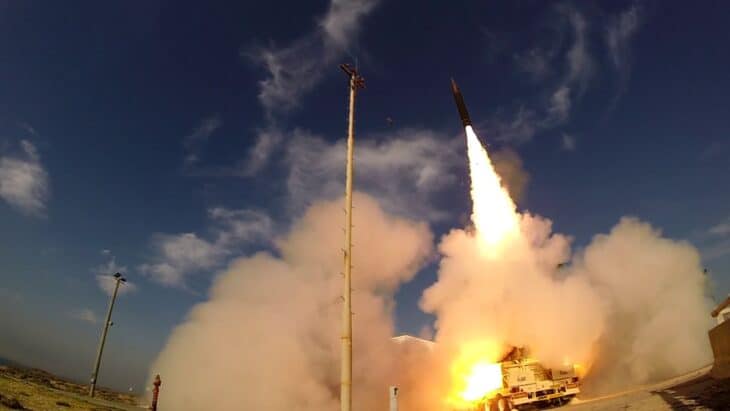

Arrow is Israel’s top layer, built by Israel Aerospace Industries and co-developed with the US Missile Defense Agency, with about half its components made in the United States. Arrow 2 deployed in 2000; Arrow 3 entered service in January 2017.
Arrow 3 is a two-stage, hit-to-kill interceptor that destroys ballistic missiles in space, above 62 miles (100 km). CSIS estimates its flyout range at up to about 1,490 miles (2,400 km); IAI publishes no figure.
Its first operational intercept came in November 2023, against a Houthi ballistic missile fired toward Eilat. By late March 2026, the IDF said Iran had fired more than 400 ballistic missiles in the new war and that Israel’s layered defenses, Arrow at the top, had intercepted about 92% of them.
Germany bought Arrow 3 in 2023 for $3.5 billion, Israel’s largest defense export, and switched it on at Holzdorf air base on December 3, 2025. The German Air Force is its first European operator, and bought it with Russian intermediate-range missiles such as the Oreshnik in mind.
The catch is stock. RUSI estimated in March 2026 that about 81% of Israel’s pre-war Arrow inventory had been used, and on April 9, 2026, Defense Minister Israel Katz ordered a large-scale acceleration of Arrow production.
4. Aegis BMD with SM-3 and SM-6 (US)
_launches_a_standard_missile_(SM)_3_Blk_IA.jpg)
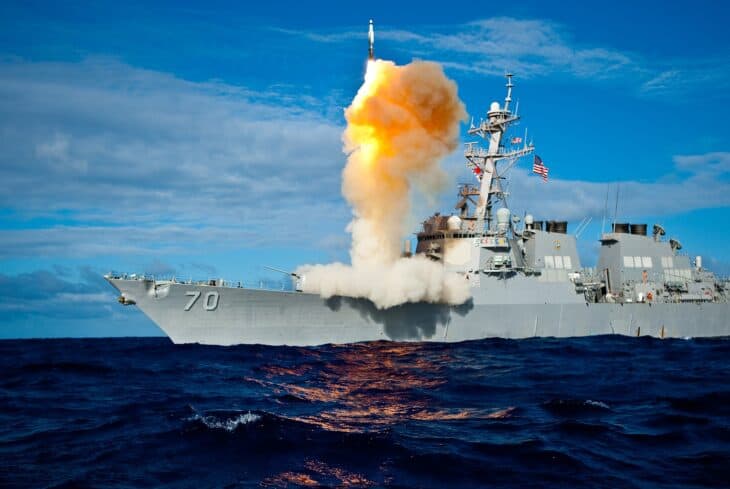
Aegis is the one system on this list built around warships. US Navy destroyers and cruisers, plus ships of Japan and South Korea, carry it, and Aegis Ashore sites in Romania and Poland put it on land.
It fires two very different interceptors. The SM-3 kills ballistic missiles in space, with CSIS estimating the Block IIA’s range at about 1,553 miles (2,500 km); the SM-6 reaches about 230 miles (370 km) inside the atmosphere and can hit aircraft, cruise missiles and ballistic missiles in their final dive.
The SM-6’s first known combat shot came on January 31, 2024, when USS Carney downed a Houthi anti-ship ballistic missile. On April 13 and 14, 2024, USS Arleigh Burke and USS Carney fired the SM-3 in combat for the first time, against Iranian ballistic missiles aimed at Israel.
In the 2026 war, CENTCOM says SM-3 Block IIA and IB missiles intercepted multiple ballistic missiles from ships in the Gulf, the Arabian Sea and the Red Sea. The price is steep: about $30.9 million per SM-3 Block IIA in the 2027 budget request, and supply is tight enough that Boeing signed a seven-year deal to build more SM-3 hardware.
It has shot down a satellite
On February 21, 2008, the cruiser USS Lake Erie fired an SM-3 at a failing US spy satellite, USA-193, and destroyed it about 153 miles (247 km) up. Japan later co-developed the SM-3 Block IIA, building its nosecone and upper-stage motors.
5. Iron Dome (Israel)
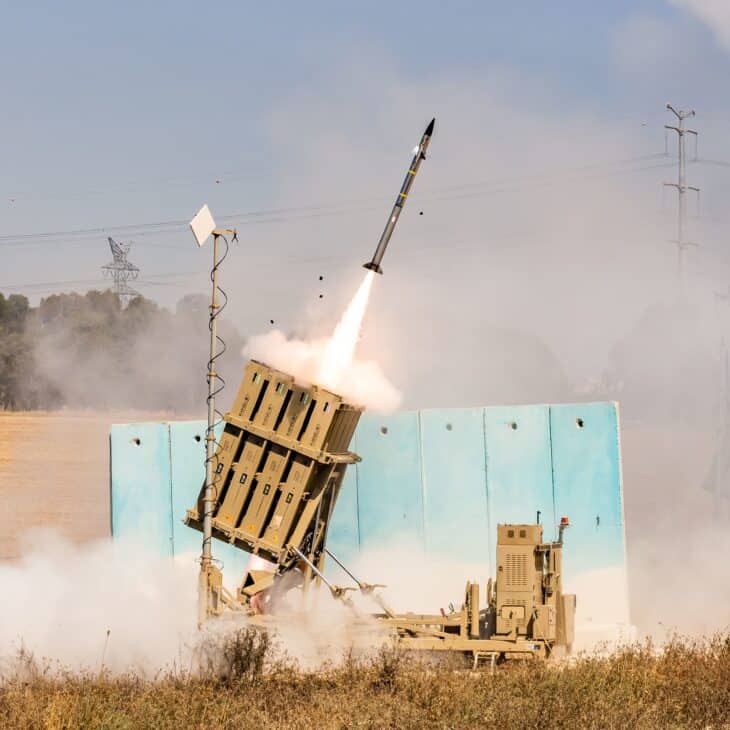

Iron Dome, built by Rafael, is probably the best-known air defense system in the world. It made its first interception in April 2011, and Rafael now claims more than 10,000 interceptions with a success rate above 90%.
That rate counts only the rockets it chose to engage. Its software predicts where each rocket will land and ignores those headed for open ground, the trick at the heart of how Iron Dome actually works.
It ranks fifth, not first, because its job is narrow. Its reach is 43 miles (70 km), and it was built for rockets, artillery and mortars, not ballistic missiles from Iran.
The cheap shot is its strength. CSIS puts recent estimates of a Tamir interceptor at $40,000 to $50,000, a fraction of any missile above it on this list.
6. NASAMS (Norway and US)
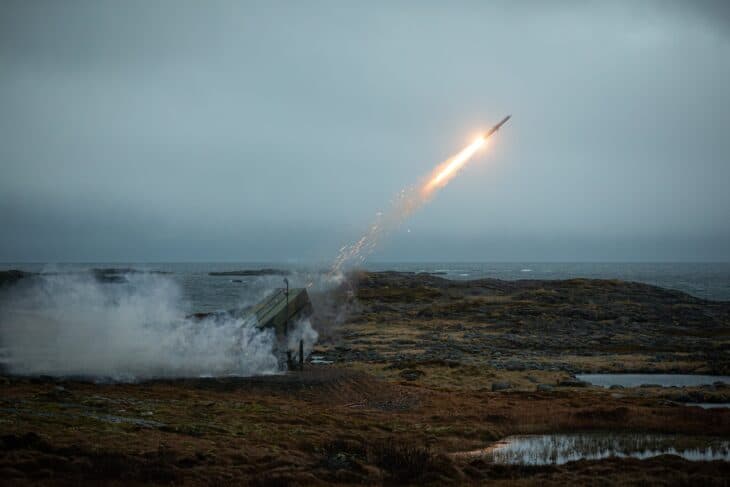

NASAMS, built by Kongsberg with Raytheon, fires the AIM-120 AMRAAM, the same radar-guided missile carried by fighter jets, from a truck-mounted launcher. Kongsberg says 13 countries operate it, and it was the first system to launch the AMRAAM from the ground.
Range is short, about 25 miles (40 km) with the standard AMRAAM and about 37 miles (60 km) with the extended-range version, by open-source estimates. It is built for aircraft, cruise missiles and drones, not ballistic missiles.
Within that job, its Ukrainian record is outstanding. By February 2025, a Norwegian colonel told Aftenposten that NASAMS had intercepted about 900 aerial threats in Ukraine at a 94% hit rate, about 40% of them drones including some 360 Iranian-designed Shaheds.
It guards Washington
Kongsberg says NASAMS has protected the airspace over Washington, DC, around the clock since 2005.
7. IRIS-T SLM (Germany)
.jpg)
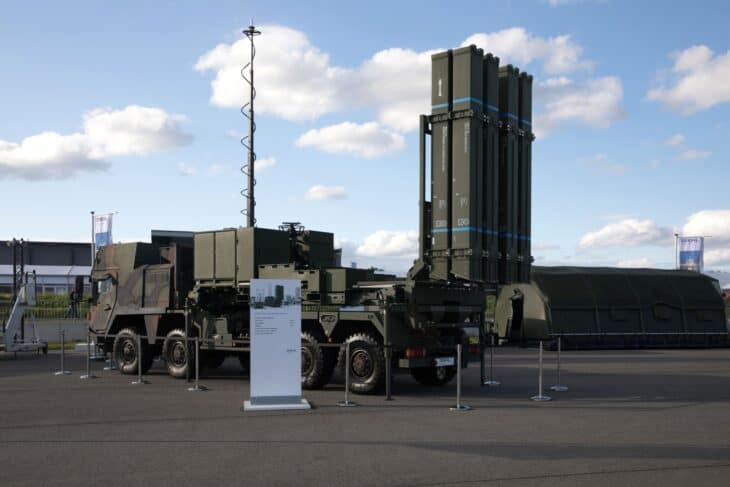
Diehl Defence’s IRIS-T SLM fires an infrared-guided, thrust-vectoring missile out to 25 miles (40 km) and up to 12.4 miles (20 km). It targets aircraft, helicopters, cruise missiles and drones.
Ukraine made it famous. By September 2023, Diehl said IRIS-T SLM had engaged more than 110 targets there, mostly Kalibr-type cruise missiles, with “nearly 100 percent effectiveness,” and Diehl’s CEO repeated a “close to 100%” hit rate in June 2024.
Those are the manufacturer’s numbers, not an independent audit, which is why it sits below NASAMS. Germany commissioned its own first system in September 2024, and Estonia received its first fire unit in June 2026.
8. David’s Sling (Israel)
.jpg)
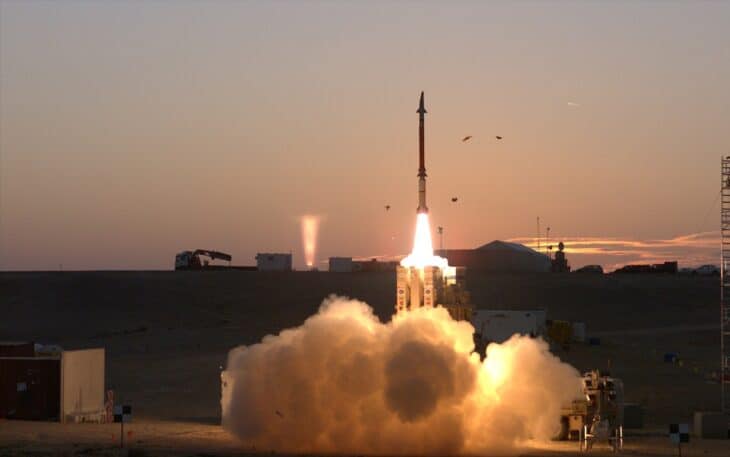
David’s Sling is Israel’s middle layer, built by Rafael with Raytheon, which makes its Stunner interceptor and launcher. Inducted in 2017, it engages targets 25 to 186 miles (40 to 300 km) away, up to 9.3 miles (15 km) high, with a hit-to-kill missile that carries no warhead.
Its record is mixed. Its combat debut in July 2018, against two Syrian Tochka missiles, ended with both interceptors self-destructing, and its first successful operational intercept did not come until May 10, 2023.
On March 21, 2026, Iranian ballistic missiles struck Dimona and Arad, and the IDF confirmed David’s Sling had malfunctioned. The Israeli outlet Calcalist reported it had been given those engagements to save Arrow interceptors. Finland, its first export customer, signed for it in November 2023.
9. SAMP/T (France and Italy)
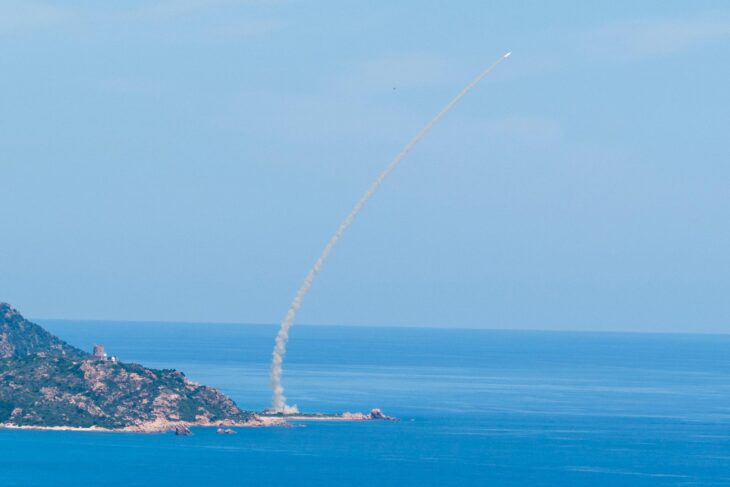

SAMP/T is Europe’s answer to Patriot, built by Eurosam (MBDA and Thales) and in service with France and Italy since 2011. Its Aster 30 missile flies at Mach 4.5 and reaches beyond 93 miles (150 km), according to Eurosam.
Ukraine has used it since June 2023, and in March 2025 its air force said SAMP/T had shot down a Russian Sukhoi jet. The same month, the Wall Street Journal reported software problems that limited it against Russian missiles, and in March 2026 President Zelensky made stopping ballistic missiles the condition for treating it as an alternative to Patriot.
Its ranking should rise. The new SAMP/T NG, delivered from 2026, adds the hit-to-kill Aster B1NT, designed against maneuvering ballistic missiles, and both France and Denmark have chosen it.
10. S-400 Triumf (Russia)
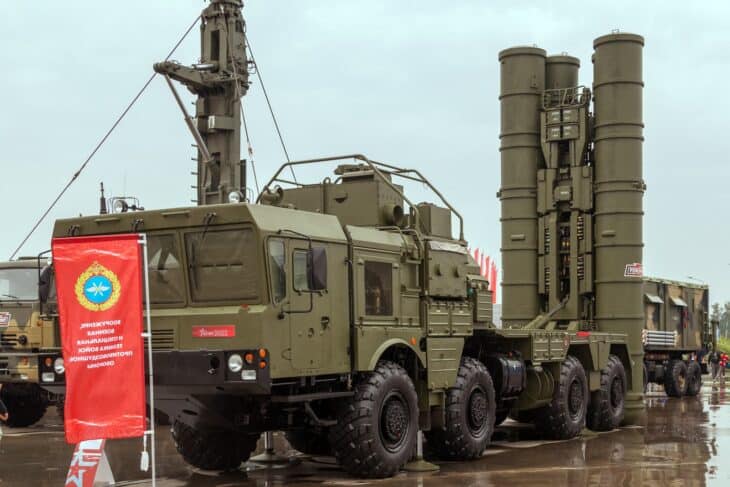

The S-400 Triumf has been operational since 2007 and looks formidable on paper. Its 40N6 missile, accepted into service in 2018, reaches about 236 miles (380 km) against aircraft by CSIS’s figure, and up to about 115,000 feet (35 km).
Its exports carry political weight. India paid about $5.43 billion for five units, and Turkey’s $2.5 billion purchase got it removed from the F-35 stealth fighter program in 2019 and, in December 2020, made it the first NATO ally sanctioned under the US CAATSA law.
Its combat record is where it falls. The Oryx open-source project has visually confirmed 34 S-400 launchers destroyed or damaged in Ukraine, including four at Dzhankoi in Crimea that satellite images showed destroyed in April 2024.
India tells a different story. In August 2025, Indian Air Force chief Air Chief Marshal A.P. Singh said an S-400 shot down a Pakistani aircraft about 186 miles (300 km) away during Operation Sindoor, “the largest ever recorded surface-to-air kill.” Pakistan denies losing any aircraft, and the claim has not been independently confirmed.
Long reach, short reach
The S-400’s headline 380 km reach applies to aircraft. Against ballistic missiles, CSIS gives its 40N6 missile an envelope of just 15 km, about 9 miles.
11. HQ-9B (China)
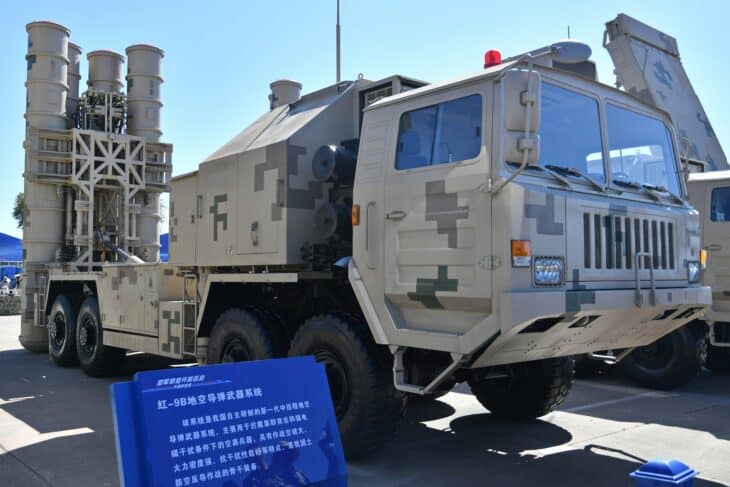

China’s HQ-9 entered service in 1997, and the improved HQ-9B followed in 2014 with a range of more than 155 miles (250 km) and an altitude of up to 31 miles (50 km), according to Army Technology. Its export version is sold as the FD-2000.
Its record is murky. Pakistan commissioned its export HQ-9/P in October 2021, and during the May 2025 conflict India said only that “an Air Defence system at Lahore has been neutralised,” without naming it; the HQ-9 identification comes from Indian media.
China itself seems to hedge. It builds the HQ-9, yet it bought six S-400 battalions from Russia in 2015.
12. S-500 Prometey (Russia)
On paper, the S-500 is the most ambitious system on this list. Its maker, Almaz-Antey, claims a 373-mile (600 km) engagement range and the ability to intercept spacecraft, and serial production was announced in 2022.
The first unit entered service in September 2021, but there is no confirmed combat intercept. The main combat news so far is a loss: on August 7, 2025, Ukrainian military intelligence hit a 98L6 Yenisei radar in Crimea, which open-source analysts identified as an S-500 component.
That is why it sits last: until it is shown to work, it cannot outrank systems that have. For how Russia’s air defenses fit into its wider strength, see our comparison of NATO and Russian air power.
Near Misses
KM-SAM (South Korea). The UAE bought the Cheongung II for $3.5 billion in 2022, and South Korean media reported a success rate above 90% against Iranian ballistic missiles in 2026. Until that figure is confirmed independently, it waits outside the list.
Pantsir-S1 (Russia). A short-range gun and missile system built to kill drones, it has been embarrassed by them: Turkish TB2 drones destroyed at least three in Libya in 2020, and Oryx counts 51 lost in Ukraine.
Akash and MRSAM (India). India’s government credited Akash with a strong performance in Operation Sindoor, and the jointly developed Indian-Israeli MRSAM reaches 43 miles (70 km). Neither yet has a record to rank.
Iron Beam (Israel). Rafael’s laser was delivered as a combat-ready system on December 28, 2025, and Israel’s defense minister called it the first high-power laser interceptor to reach operational maturity. It struggles in heavy cloud, so for now it supplements Iron Dome rather than replacing it.
Below all of these sit shoulder-fired missiles, the cheapest air defense of all, and still lethal: one brought down the jet in the F-15E rescue over Iran.
Which Country Has the Best Air Defense?
Israel has the most complete and most battle-tested network: Iron Dome, David’s Sling, Arrow 2 and Arrow 3 stacked in four layers, with the Iron Beam laser now joining them.
The United States has the deepest reach. Patriot, THAAD and Aegis defend American bases and allies on several continents, which is also why the 2026 war drained US stocks fastest.
Air defense is only half of the picture. The other half is the aircraft trying to get through it, and our ranking of the best fighter jets in the world covers the jets these systems are built to stop.
The myth: the longest range wins
The S-400 and S-500 top almost every range table, which is why they top so many online rankings. But range is measured against big, slow aircraft. The systems that have actually stopped ballistic missiles in combat, Patriot, THAAD, Arrow and the SM-3, are the ones that matter when the missiles are real.
FAQ
Sources and references used for research and fact-checking.
- Lockheed Martin, PAC-3 Advanced Air Defense Missile
- Army Technology, Patriot Missile Long-Range Air-Defence System
- Wikipedia, MIM-104 Patriot
- Army Recognition, Patriot GEM-T: combat proven, built through European partnerships
- PBS NewsHour / AP, Ukraine says it downed Russian hypersonic missile with U.S. Patriot defense system
- The War Zone, Largest Patriot salvo in U.S. military history launched defending Al Udeid Air Base
- The War Zone, Patriot PAC-3 missiles to arm Navy Arleigh Burke-class destroyers
- Defense News, Iran war depleted US Patriot missile stockpiles, creating readiness challenges
- CNN, US key missile interceptor stocks low after Iran war
- Congressional Research Service, THAAD (IF12645)
- Lockheed Martin, THAAD
- Army Recognition, First combat operational use of THAAD air defense missile system in UAE
- The War Zone, U.S. Army's first combat use of THAAD missile defense system just occurred in Israel
- CNN, Satellite images show Iranian strikes on US radar bases
- CSIS Missile Threat, Arrow 3
- CSIS Missile Threat, Arrow 2
- Israel Aerospace Industries, Arrow 3
- Defense News, Israel announces first Arrow 3 operational intercept
- Al-Monitor / AFP, Germany deploys Arrow air defence to counter Russian missile threat
- Asharq Al-Awsat, Iran has fired 400 missiles at Israel, 92% intercepted since start of war
- EurAsian Times, 92% interception rate but stocks depleting fast: Israel could exhaust Arrow interceptors
- Breaking Defense, Israel to ramp up production of Arrow interceptors
- CSIS Missile Threat, SM-3
- Wikipedia, RIM-161 Standard Missile 3
- CSIS Missile Threat, SM-6
- The War Zone, Navy's SM-6 missile used in combat
- The Maritime Executive, U.S. Navy played key role in protecting Israel from Iranian missiles
- Naval News, U.S. Navy seeks over 600 surface-to-air missiles in budget request
- CENTCOM Citadel, Navy ships armed with SM-3 interceptors successfully protect Gulf waters
- Rafael Advanced Defense Systems, Iron Dome
- CSIS Missile Threat, Iron Dome
- Kongsberg, NASAMS Air Defence System
- Wikipedia, NASAMS
- Defence Industry Europe, NASAMS air defence system proves highly effective in Ukraine, Norwegian official confirms
- Diehl Defence, Ground Based Air Defence brochure
- Defence Industry Europe, IRIS-T SLM intercepted more than 110 targets in Ukraine
- ESUT, ILA 2024: close to 100% hit rate for IRIS-T SLM
- Army Technology, German air defence turns corner with IRIS-T SLM commissioning
- Estonian Defence Forces, Medium-range air defence missile systems IRIS-T SLM arrive in the Estonian Air Force
- CSIS Missile Threat, David's Sling
- The Defense Post, Israel's David's Sling air defense system
- Globes, Finland signs NIS 1.3b David's Sling deal
- Ahram Online / AFP, Israel's David's Sling system failed to intercept
- Eurosam, Aster missiles family
- Eurosam, SAMP/T NG ground systems
- Eurosam, SAMP/T NG selection by Denmark
- Eurosam, Eurosam
- CSIS Missile Threat, Surface-to-air missile systems
- Euromaidan Press, Ukraine confirms first Russian jet downed by Italian-French SAMP/T system
- QuiFinanza, SAMP/T in Ukraine
- LIGA.net, Ukraine will consider SAMP/T as an alternative to Patriot if it downs ballistic missiles
- CSIS Missile Threat, S-400 Triumf
- CSIS Missile Threat, Russian army accepts 40N6 missile for S-400
- The Tribune, Russia will complete delivery of S-400 missile systems to India in 2026
- Al Jazeera, Russia to deliver S-400 missiles to Turkey in 2019
- PBS NewsHour, U.S. kicking NATO ally Turkey out of fighter program
- Paul, Weiss, United States imposes sanctions on Turkey under CAATSA Section 231
- Oryx, Attack on Europe: documenting equipment losses
- Militarnyi, Satellite images of destroyed S-400 SAM elements in Crimea have appeared
- Deccan Herald, India shot down six Pakistani aircraft during Op Sindoor, says IAF chief
- Anadolu Agency, Pakistan rejects India's claim it shot down 6 fighter jets during May hostilities
- Army Technology, Hong Qi 9 (HQ-9) air defence missile system
- Gulf News, Pakistan Army inducts new air defence system
- All India Radio, India targets radars in Pakistan at many places, air defence system in Lahore neutralised
- CSIS Missile Threat, S-500 Prometheus
- The Defense Post, Russia mass-producing S-500
- Militarnyi, Damaged radar in Crimea confirmed as S-500 air defense system component
- Asian Military Review, South Korea supports UAE air defences
- CSIS Missile Threat, Pantsir-S1
- Asia Times, Russian Pantsir systems neutralized in Libya
- Press Information Bureau, Government of India, Operation Sindoor backgrounder
- Ajai Shukla, DRDO flight tests army version of Indo-Israeli MRSAM
- The Times of Israel, Defense ministry hands IDF first combat-ready Iron Beam laser interception system
Get the Newsletter
The latest aviation news and stories sent to your inbox.
About the Author

Tim is the owner and lead editor of AeroCorner since 2019, overseeing aviation content covering aircraft, airlines, airports, and the broader aviation industry. Through years of researching, writing, editing, and publishing aviation-focused content, he has developed extensive practical knowledge of commercial aviation and air travel. Based in Asia and a frequent traveler himself, Tim also brings firsthand passenger experience to AeroCorner’s coverage. Outside of publishing, he has also explored aviation firsthand through hands-on flight training in New Zealand.