

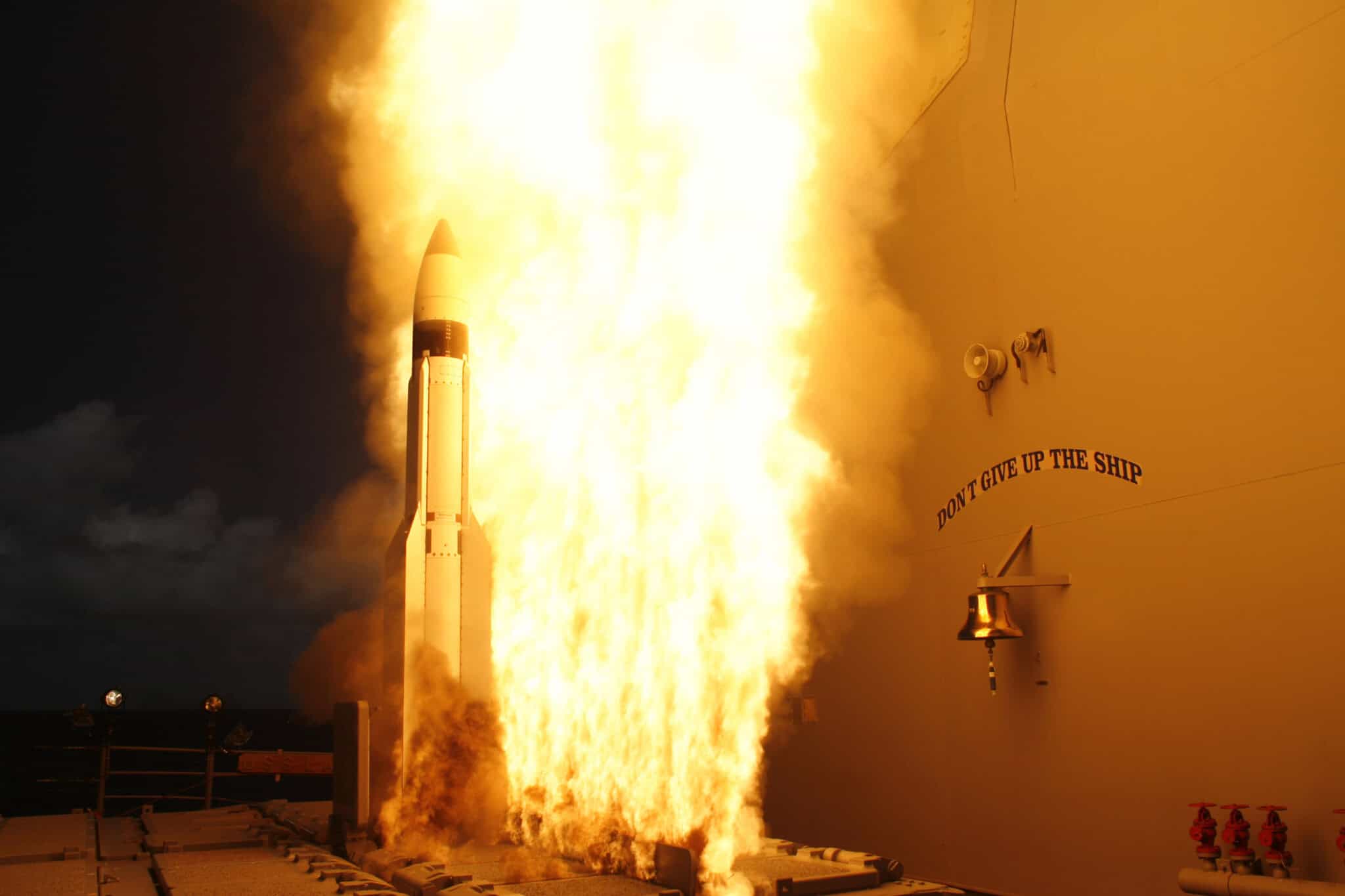
On August 14, 2026, Boeing signed seven-year framework agreements with the U.S. Department of War and Raytheon to increase production of hardware for the SM-3 missile interceptor. The deal covers avionics and ejector assemblies for two SM-3 variants, Block IB and Block IIA.
What Boeing actually builds
Raytheon, an RTX business, is the SM-3’s prime contractor and final assembler. Boeing supplies the avionics that guide the interceptor and the ejector assemblies that separate its stages in flight, components made by its defense division rather than the commercial airplane side of the company.
What the SM-3 does
SM-3 is a ship-launched interceptor fired from Navy Aegis destroyers and cruisers. It is designed to destroy short, medium, and intermediate-range ballistic missiles outside the atmosphere, before they reach their target.
Why the Pentagon wants more of them now
SM-3s are not just a stockpiled deterrent. Navy destroyers used them in combat starting in April 2024, intercepting Iranian ballistic missiles fired at Israel, and interceptors have kept firing as the broader Iran conflict has continued into 2026.
Defense News reported, citing an outside stockpile analysis, that the Navy held roughly 414 SM-3s as of December 2025 and that recent wartime use may have consumed somewhere between 130 and 250 of them, expenditure that would normally take years to replace at prior production rates.
An estimate, not an official count
The Pentagon does not publish SM-3 inventory or wartime consumption figures. The 414-missile stockpile estimate and the 130-to-250 consumption range come from outside analysts cited in press reporting, not from the Department of War.
A demand signal, not a firm order
A framework agreement is not a production contract with a fixed price or quantity. It is closer to a commitment to scale up manufacturing while the two sides negotiate the multi-year procurement deal that will actually fund it.
“This gives us a clear demand signal to build and deliver SM-3 interceptors at the levels needed to counter threats,” Boeing Precision Engagement Systems vice president Bob Ciesla said in the company’s announcement. Michael Duffey, the Department of War’s under secretary for acquisition and sustainment, said the agreements were meant to ensure troops “get the munitions they need to win,” according to Defense News.
The push is not limited to this one agreement. Earlier in August, Raytheon separately won a $745 million contract to build complete, fully assembled SM-3 Block IIA interceptors for the United States and Japan, on top of the component ramp-up Boeing is now part of.
Why an airplane maker builds missile parts
Boeing’s involvement is less unusual than it sounds. Its defense, space, and security division already builds the MQ-28 Ghost Bat combat drone and a range of munitions and satellite systems, entirely separate from the commercial jet programs most readers associate with the name.
Multi-company framework deals like this one have become a common tool across the defense-industrial base this year, echoing a similar multinational framework arrangement struck for the GCAP fighter engine program in July.
Sources and references used for research and fact-checking.
Get the Newsletter
The latest aviation news and stories sent to your inbox.
About the Author

Tim is the owner and lead editor of AeroCorner since 2019, overseeing aviation content covering aircraft, airlines, airports, and the broader aviation industry. Through years of researching, writing, editing, and publishing aviation-focused content, he has developed extensive practical knowledge of commercial aviation and air travel. Based in Asia and a frequent traveler himself, Tim also brings firsthand passenger experience to AeroCorner’s coverage. Outside of publishing, he has also explored aviation firsthand through hands-on flight training in New Zealand.