

Table of Contents
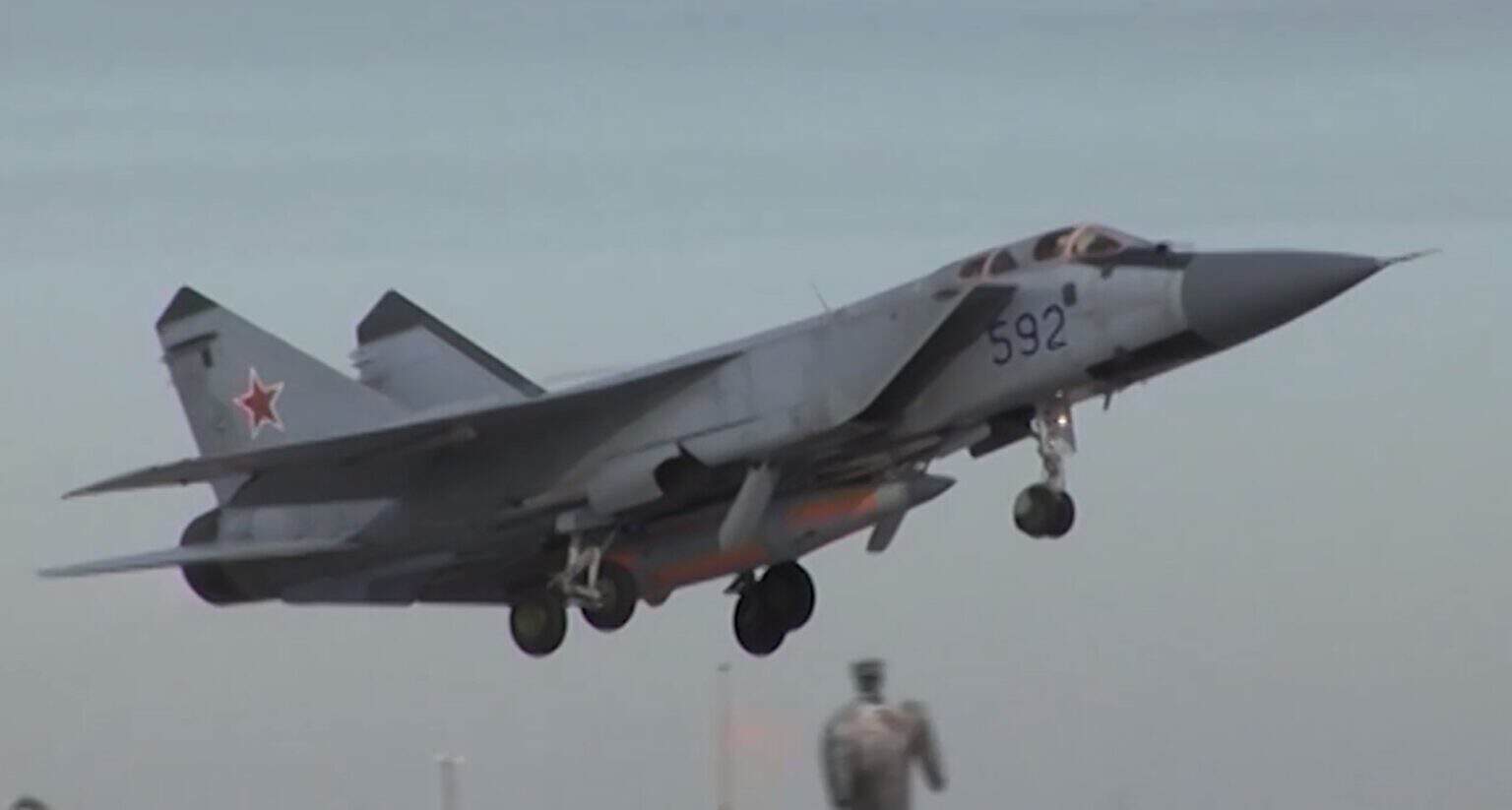
Russia’s Kh-47M2 Kinzhal is the most proven hypersonic missile in the world: it has been fired in combat since March 2022, and a Patriot proved in 2023 that it can be shot down. Russia and China field the most types, while the United States, as of November 2026, still has not formally declared its first one fielded.
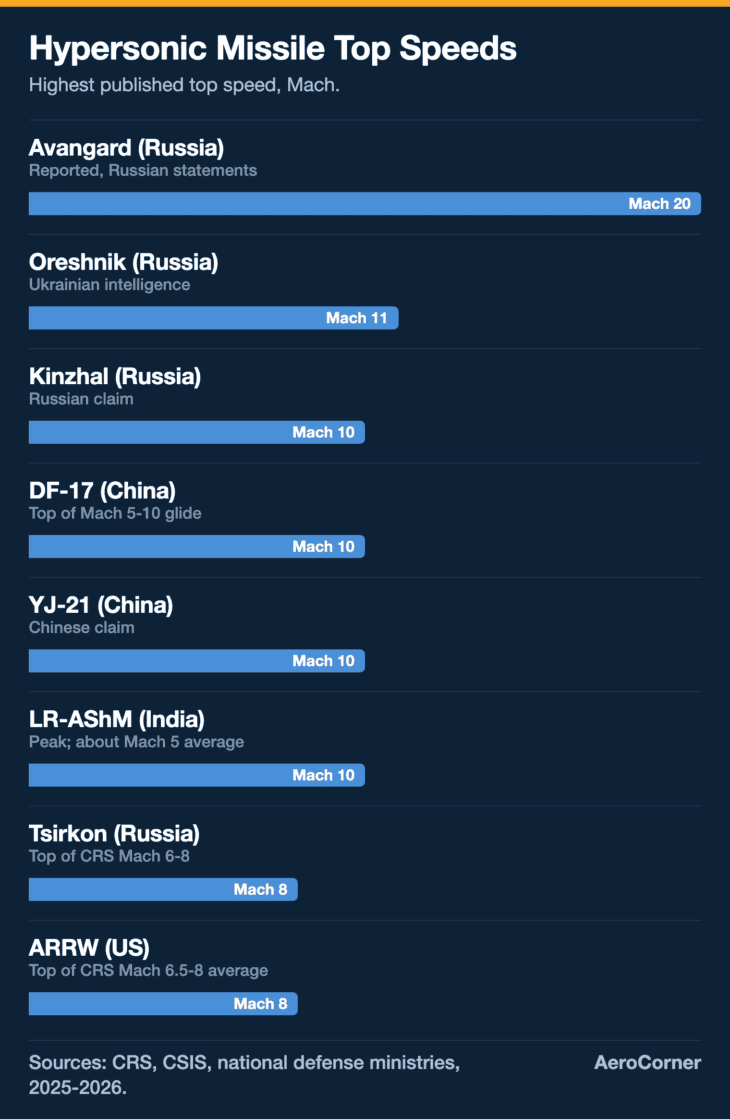
A hypersonic missile is a maneuvering weapon that flies at Mach 5 or faster, roughly 3,800 mph (6,100 km/h) at sea level. This list ranks the 12 that have flown, from combat use to fielding to testing, because a top speed nobody has measured is a poor way to rank anything.
| Rank | Missile | Country | Type | Top speed (published) | Range (published) | Status, Nov 2026 |
|---|---|---|---|---|---|---|
| 1 | Kh-47M2 Kinzhal | Russia | Air-launched ballistic | Mach 10 (Russian claim) | Up to 1,200 miles (1,930 km) | Combat use since 2022 |
| 2 | 3M22 Tsirkon (Zircon) | Russia | Scramjet cruise missile | Mach 6 to 8 | About 625 miles (1,000 km) | Deployed 2023, combat use since 2024 |
| 3 | DF-17 | China | Ballistic missile + glide vehicle | Mach 5 to 10 (glide) | 1,000 to 1,500 miles (1,600 to 2,400 km) | Fielded |
| 4 | Avangard | Russia | Glide vehicle on an ICBM | Mach 20 (reported) | More than 3,700 miles (6,000 km) | On combat duty since 2019 (Russian claim) |
| 5 | Oreshnik | Russia | Intermediate-range ballistic | Mach 11 (Ukrainian intelligence) | Not published | Used three times, 2024 to 2026 |
| 6 | YJ-21 | China | Anti-ship ballistic | Mach 10 (Chinese claim) | 750 to 930 miles (1,200 to 1,500 km), estimated | Test-fired from a Type 055 destroyer |
| 7 | DF-27 | China | Conventional ICBM-class, possible glide payload | Not published | 3,100 to 5,000 miles (5,000 to 8,000 km) | Deployed (Pentagon, 2025) |
| 8 | Dark Eagle (LRHW) / Conventional Prompt Strike | United States | Ballistic missile + glide body | Mach 5+ | Over 1,725 miles (2,775 km) | Battery equipped, not yet fully fielded |
| 9 | AGM-183A ARRW | United States | Air-launched boost-glide | Mach 6.5 to 8 (average) | About 1,000 miles (1,600 km) | Production contract, Sept 2026 |
| 10 | LR-AShM | India | Anti-ship glide missile | Mach 10 peak, about Mach 5 average | Over 930 miles (1,500 km) | Tested Nov 2024, paraded Jan 2026 |
| 11 | Hwasong-16B | North Korea | Solid-fuel IRBM, claimed hypersonic | Not verified | First test: 370 to 621 miles (600 to 1,000 km) | Tested since April 2024 |
| 12 | Fattah-1 | Iran | Medium-range ballistic, claimed hypersonic | 9,600 mph (15,500 km/h) claimed | 870 miles (1,400 km) claimed | Combat use Oct 2024, hypersonic flight doubted |
How this ranking works
We rank by proof, not by claimed speed. A missile used in combat beats one that is only fielded, and a fielded missile beats one that has only been tested. Within each tier, a weapon whose hypersonic flight is confirmed by outside analysts ranks above one where only its builder says so. Speeds and ranges come from the Congressional Research Service, CSIS Missile Threat and official statements, as of November 2026.
What makes a missile hypersonic?
Speed alone does not do it. The Congressional Research Service defines hypersonic weapons as maneuvering weapons that fly at Mach 5 or faster, and the maneuvering part is what matters.
There are two kinds. A hypersonic glide vehicle rides a rocket to high altitude, separates and glides to its target, steering as it goes. A hypersonic cruise missile uses an air-breathing scramjet engine to stay fast inside the atmosphere the whole way.
Both fly lower than a ballistic missile and can change course, which makes them hard to track and hard to predict. Our guide to the types of missiles explains how they differ from ballistic and ordinary cruise missiles.
Isn't every ballistic missile hypersonic?
In raw speed, yes, and that is the catch. CSIS notes that nearly all ballistic missiles reach hypersonic speeds at some point in flight, which is why it calls Russia’s hypersonic label for the Kinzhal somewhat misleading. A true hypersonic weapon holds that speed inside the atmosphere while maneuvering. Several missiles on this list, including Oreshnik and Fattah, are marketed as hypersonic mainly because they are fast ballistic missiles.
1. Kh-47M2 Kinzhal (Russia)
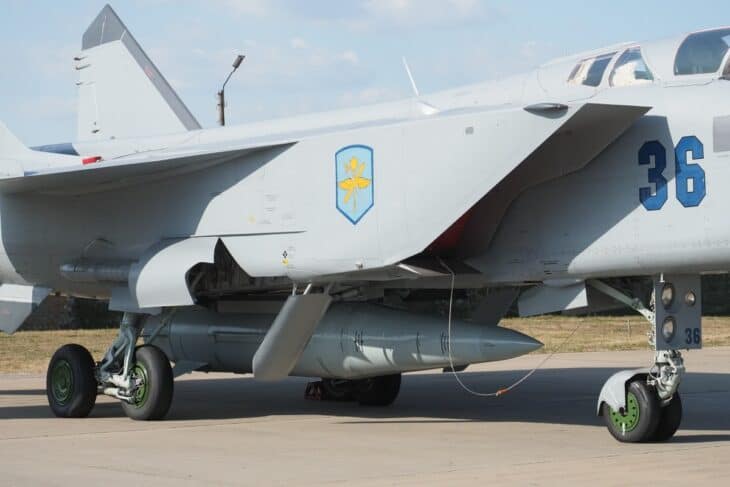

The Kinzhal (“dagger”) is an air-launched ballistic missile carried by the MiG-31K. Russian media claim a top speed of Mach 10 and a range of up to 1,200 miles (1,930 km) from the MiG-31, figures CRS notes have not been publicly verified by US intelligence.
It ranks first because it has the longest combat record of any weapon on this list. CSIS lists it in service from 2017, and Russia’s Defense Ministry claimed its first combat use on March 19, 2022, against a munitions depot near Deliatyn in western Ukraine.
That record cuts both ways. Ukraine shot one down with a Patriot over the Kyiv region during an overnight attack on May 4, 2023, and the Pentagon confirmed it was a Kinzhal on May 10.
The "unstoppable" missile that was stopped
Russia marketed the Kinzhal as impossible to intercept. On May 4, 2023, a little over a year after its first combat use, a Patriot battery brought one down in the Kyiv region, and the Pentagon confirmed the kill on May 10.
The Kinzhal is not a glide vehicle or a scramjet. It is a fast, maneuvering ballistic missile, which helps explain why a Patriot missile system could catch it.
2. 3M22 Tsirkon, or Zircon (Russia)
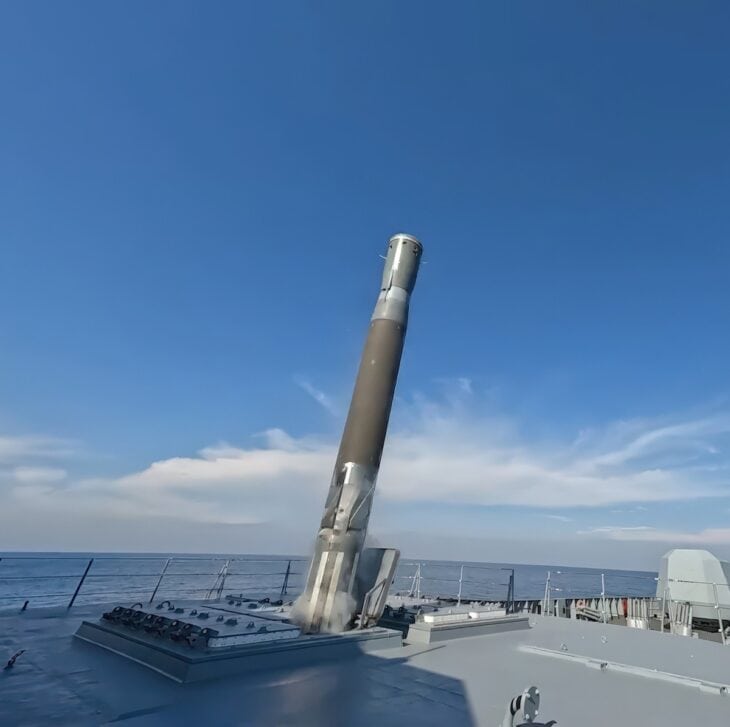

Tsirkon is the only scramjet-powered hypersonic cruise missile on this list with a combat record. CRS puts its speed at Mach 6 to 8 and, citing Russian sources, its range at about 625 miles (1,000 km).
Russia deployed it on the Project 22350 frigate Admiral Gorshkov and first fired it into Ukraine in February 2024, according to CRS. It ranks below the Kinzhal only because its combat record is shorter.
As a scramjet missile, it is what most people picture when they hear “hypersonic”: an engine breathing air at five or more times the speed of sound for the whole flight.
3. DF-17 (China)
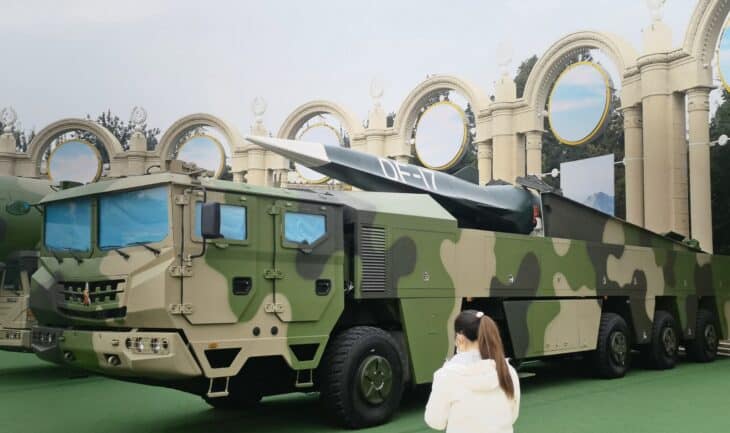

The DF-17 pairs a medium-range ballistic missile with the DF-ZF hypersonic glide vehicle. CSIS lists a glide speed of Mach 5 to 10, and US intelligence analysts quoted by CRS assess its range at about 1,000 to 1,500 miles (1,600 to 2,400 km).
China first tested it on January 9, 2014, and paraded it in Beijing on October 1, 2019. CRS says US intelligence assesses it is now fielded.
It ranks above Avangard because it is built for regional, non-nuclear strikes on bases and ships, and US intelligence, not just Beijing, says it is in service. The Pentagon’s 2025 China report judged that China has “the world’s leading hypersonic missile arsenal.”
4. Avangard (Russia)
Avangard has the highest claimed speed of any weapon on this list. It is a glide vehicle carried by the SS-19 Stiletto ICBM, reportedly reaching Mach 20, with a range of more than 3,700 miles (6,000 km) according to CSIS.
Russia’s Defense Ministry announced the first Avangard regiment operational on December 27, 2019. It has never been used, there are no public images of the vehicle, and CSIS still lists its status as “in development.”
It is a strategic weapon that can carry a nuclear warhead, so it sits outside the battlefield contest that decides most of this list. Its Mach 20 figure tops the chart, but it is the least tested number on it.
5. Oreshnik (Russia)
Oreshnik is an intermediate-range ballistic missile that the Pentagon says is based on Russia’s RS-26 Rubezh ICBM. Ukraine’s military intelligence measured a peak speed of Mach 11, and Putin has claimed Mach 10.
Russia has used it three times: on Dnipro on November 21, 2024, on the Lviv region on January 9, 2026, and on Bila Tserkva near Kyiv in May 2026. Belarus said it was placed on combat duty there on December 30, 2025.
It ranks fifth despite that combat record because its hypersonic label is weak. The War Zone calls Russia’s hypersonic claims for it questionable and found no evidence of a true glide vehicle.
6. YJ-21 (China)
The YJ-21 is a ship-launched anti-ship ballistic missile, first shown publicly in April 2022 when a Type 055 destroyer fired one from its vertical launch cells. Official Chinese publications claim it reaches Mach 10.
Analysts at Quwa estimate its range at 750 to 930 miles (1,200 to 1,500 km), though little about it is public. It is China’s answer to US carrier groups, and it is why the Pacific now has hypersonic threats at sea as well as on land.
China showed more at its September 3, 2025 parade. Defense One reports that the scramjet-powered YJ-19 is claimed to fly faster than Mach 10 out to about 895 miles (1,440 km), figures that have not been independently verified.
7. DF-27 (China)
The DF-27 is a conventional missile with ICBM-class reach: the Pentagon’s 2025 China report gives an estimated range of 3,100 to 5,000 miles (5,000 to 8,000 km). That puts Hawaii and Alaska in range of a non-nuclear strike.
The 2025 report was the first to explicitly confirm it is deployed. The hypersonic part is less certain: the 2024 report said only that it “may have” a glide vehicle payload option.
8. Dark Eagle / Conventional Prompt Strike (United States)
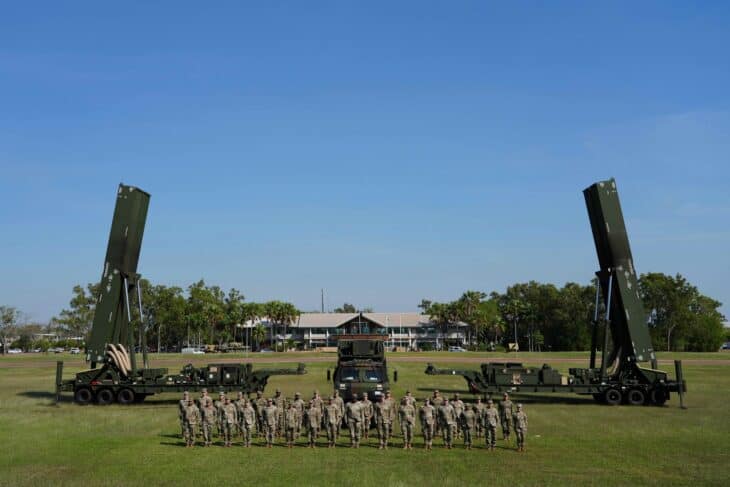

Dark Eagle is the Army’s Long-Range Hypersonic Weapon (LRHW): a booster carrying the Common Hypersonic Glide Body, intended to fly over 1,725 miles (2,775 km), according to CRS. The Navy’s Conventional Prompt Strike uses the same missile for the Zumwalt-class destroyers.
The Army and Navy fired it from Cape Canaveral on March 26, 2026, and the Army has a unit for it: Bravo Battery, 1st Battalion, 17th Field Artillery, at Joint Base Lewis-McChord. Two of its launchers went to Australia for Talisman Sabre in July 2025, though no missile was fired.
It is still not fully fielded. In October 2026 the Army said it must finish training, sustainment and readiness work first, more than three years after the original 2023 target.
It is also expensive. Stars and Stripes reports the Army plans to buy 48 missiles for over $10 billion, and the Navy’s average is about $67 million a missile, with at-sea testing from USS Zumwalt slipped to 2027.
9. AGM-183A ARRW (United States)
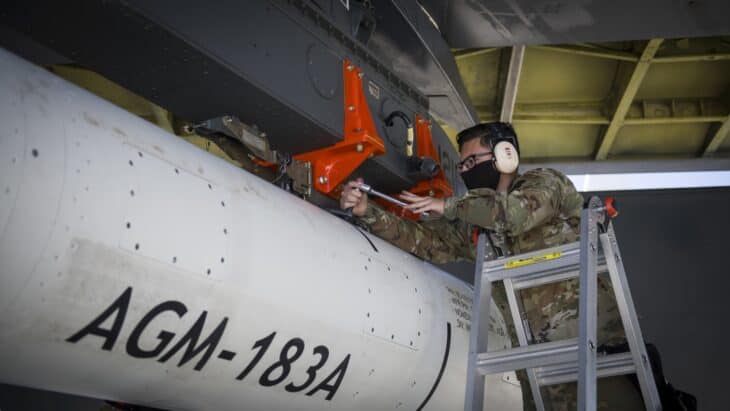

The Air-launched Rapid Response Weapon is a boost-glide missile carried by the B-52 Stratofortress. CRS gives it an average speed of Mach 6.5 to 8 over about 1,000 miles (1,600 km).
Its history is the US hypersonic program in miniature. The first three launch tests from April 2021 failed, the first success came in May 2022, and in March 2023 the Air Force said it would end the program without buying any.
It came back. Lockheed Martin won a $694 million production contract on September 29, 2026, announced on October 26, which makes ARRW the Air Force’s first hypersonic weapon to go into production.
10. LR-AShM (India)
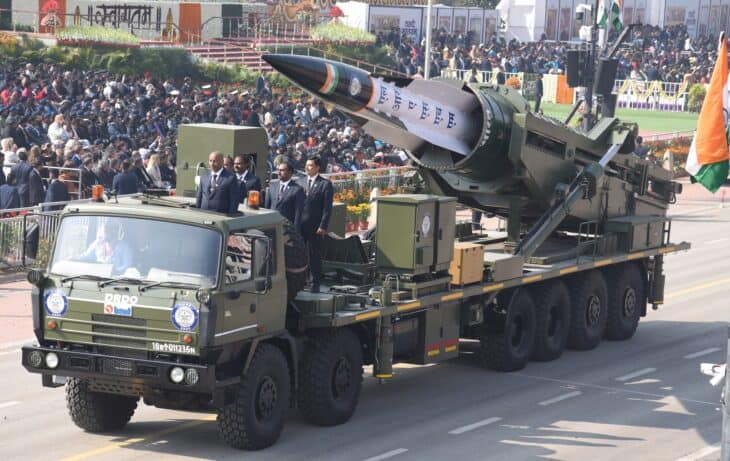

India’s Long-Range Anti-Ship Missile is a glide weapon that India’s military says peaks at Mach 10 and averages around Mach 5 as it skips through the atmosphere. India’s Defense Ministry gives its range as more than 930 miles (1,500 km).
Its first publicly announced flight test came in November 2024 off Odisha, and it rolled down Kartavya Path at the Republic Day parade on January 26, 2026. Its service status is still unconfirmed.
11. Hwasong-16B (North Korea)
North Korea calls the Hwasong-16B a solid-fuel hypersonic intermediate-range missile. On its first flight, on April 2, 2024, North Korean state media said it flew about 621 miles (1,000 km); South Korea’s military tracked it for about 370 miles (600 km).
That gap is typical of North Korea’s program: Pyongyang publishes the figures, and its neighbors measure something more modest.
12. Fattah-1 (Iran)
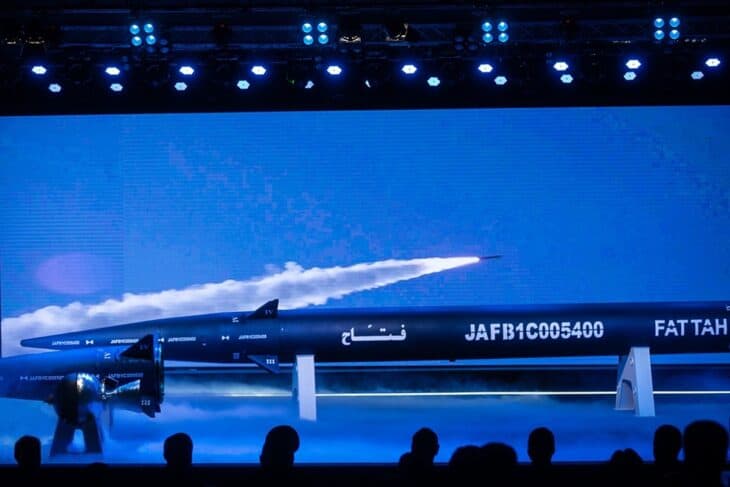

Iran unveiled the Fattah on June 6, 2023, claiming a range of 870 miles (1,400 km) and a speed of about 9,600 mph (15,500 km/h). The claims came without evidence, and Western experts say Iran sometimes exaggerates its weapons.
Its first known combat use was Iran’s attack on Israel on October 1, 2024. Experts quoted by The New Arab doubt it can fly at hypersonic speed inside the atmosphere, and most of the Iranian missiles fired that night were intercepted.
So does Iran have hypersonic missiles? It has fast medium-range ballistic missiles it calls hypersonic. The experts who have assessed it doubt that claim.
The hypersonic missiles coming next
HACM (United States). The Hypersonic Attack Cruise Missile is a scramjet weapon from Raytheon and Northrop Grumman, planned first for the F-15E Strike Eagle. The Royal Australian Air Force released a flight test unit over an Australian range, announced on October 5, 2026; no speed or range has been published.
Blackbeard (United States). Castelion’s low-cost air-launched hypersonic strike weapon won a Navy production order worth up to $200 million in September 2026, after an order for 50 early operational weapons in June.
South Korea and Pakistan. South Korea’s Agency for Defense Development flew the country’s first hypersonic glide vehicle on October 8, 2026, with no figures released. Pakistan announced a test of its Fatah-2 extended-range “hypersonic ballistic missile” on October 13, 2026, also with no numbers.
Japan. Japan began fielding its Hyper Velocity Gliding Projectile at Camp Fuji from March 31, 2026, but Defense News describes the current version as supersonic. A hypersonic version is planned later with US support.
Can hypersonic missiles be stopped?
Some already have been. A Patriot downed a Kinzhal in 2023, and most of the Fattahs Iran fired in 2024 were intercepted, because both behave like fast ballistic missiles in their final dive.
True glide vehicles and scramjet cruise missiles are harder. CRS notes they challenge detection and defense through their speed, maneuverability and low flight path, and the dedicated US Glide Phase Interceptor is planned for FY2032 at the earliest. Our ranking of the best air defense systems covers what can shoot down what today.
For crewed aircraft that have crossed Mach 5, from the X-15 onward, see our list of the fastest hypersonic aircraft.
FAQ
Sources and references used for research and fact-checking.
- Congressional Research Service, Hypersonic Weapons: Background and Issues for Congress (R45811, updated Aug. 27, 2025)
- CSIS Missile Threat, Kinzhal
- CSIS Missile Threat, Avangard
- CSIS Missile Threat, DF-17
- The Aviationist, Ukraine Shot Down Russian Kinzhal Hypersonic Missile With Patriot
- Al Jazeera, What do we know about Russia's new ballistic missile Oreshnik?
- The War Zone, Russia's Claims Oreshnik Ballistic Missile Now On Combat Duty In Belarus
- Novaya Gazeta Europe, Russia carries out massive attack on Kyiv region, including Oreshnik missile strike
- Quwa, YJ-21 Hypersonic Anti-Ship Ballistic Missile
- Defense One, China's New Missiles at the Parade: Showpieces or Showstoppers?
- Andrew S. Erickson, China's DF-27 Conventional ICBM/ASBM
- Stars and Stripes, Army hypersonic weapons battery at JBLM
- Stars and Stripes, Navy and Army hypersonic missile delays to 2027
- U.S. Army, Army and Navy Continue Tests of Hypersonic Missile
- Interesting Engineering, US Army's first hypersonic missile remains delayed
- Air & Space Forces Magazine, Air Force Launches ARRW, Its First Hypersonic Weapon, Into Production
- The War Zone, First Release Of USAF's New HACM Hypersonic Cruise Missile Has Happened Over A Test Range In Australia
- Naval News, Castelion secures U.S. Navy production order for Blackbeard hypersonic weapon
- The War Zone, India's new hypersonic anti-ship missile shown off during military parade
- Al Jazeera, North Korea says Kim Jong Un oversaw test of new hypersonic weapon
- RFE/RL, Iran unveils what it says is its first hypersonic missile
- The New Arab, What missiles did Iran use in its attack on Israel?
- NK News, South Korea tests hypersonic missile for first time
- Dawn, Pakistan tests Fatah-2 extended range missile
- Defense News, Japan sprinkles fresh missiles across its islands
Get the Newsletter
The latest aviation news and stories sent to your inbox.
About the Author

Tim is the owner and lead editor of AeroCorner since 2019, overseeing aviation content covering aircraft, airlines, airports, and the broader aviation industry. Through years of researching, writing, editing, and publishing aviation-focused content, he has developed extensive practical knowledge of commercial aviation and air travel. Based in Asia and a frequent traveler himself, Tim also brings firsthand passenger experience to AeroCorner’s coverage. Outside of publishing, he has also explored aviation firsthand through hands-on flight training in New Zealand.