

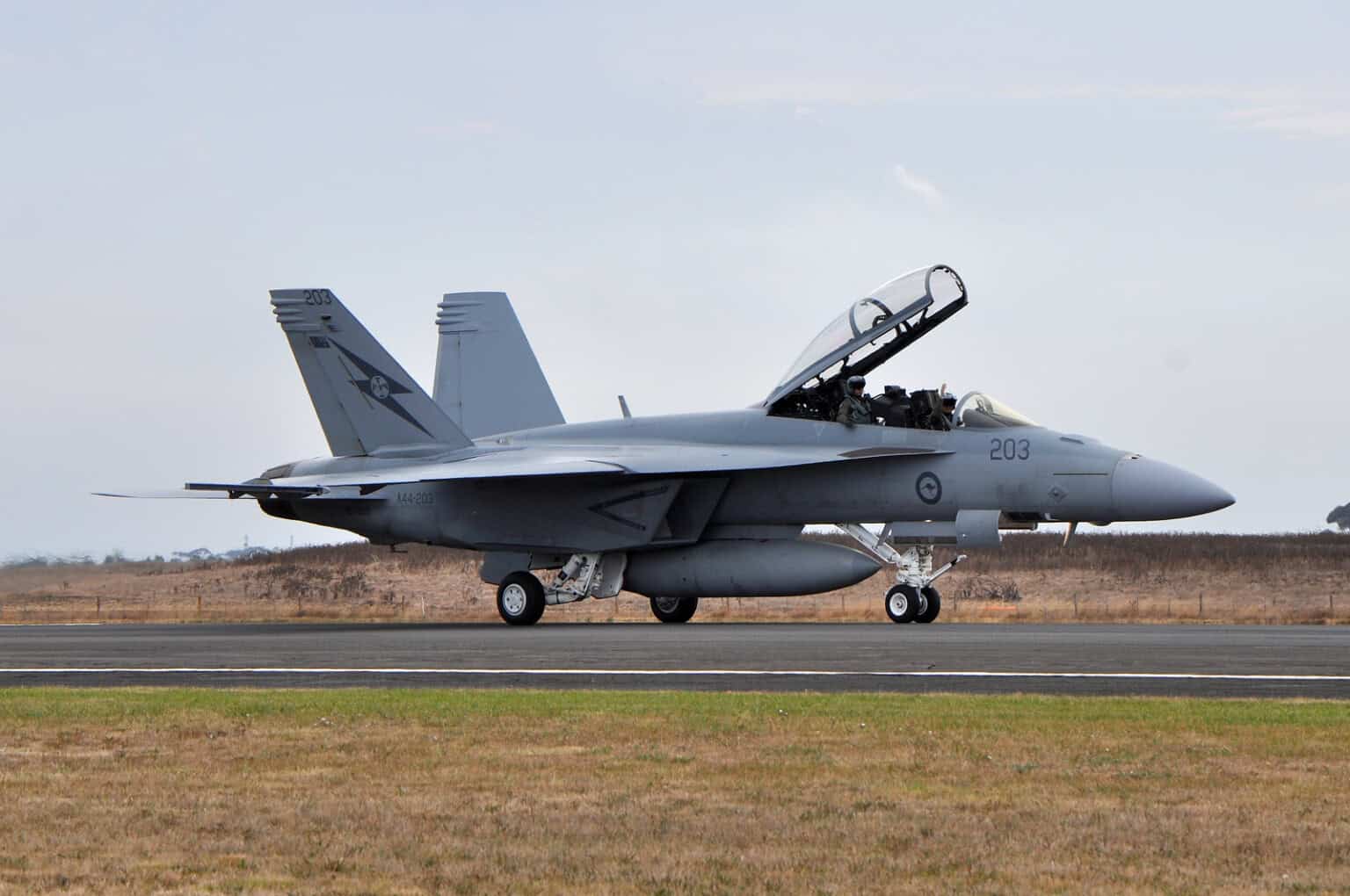
The Royal Australian Air Force declared initial operational capability on September 11, 2026, for two long-range Lockheed Martin missiles on its F/A-18F Super Hornets. The weapons are the AGM-158C Long Range Anti-Ship Missile (LRASM) and the AGM-158B Joint Air-to-Surface Standoff Missile, Extended Range (JASSM-ER).
Australia’s Department of Defence describes LRASM as a semi-autonomous anti-ship missile for high-value, well-defended maritime targets at ranges beyond 230 miles (370 km). JASSM-ER is its land-attack counterpart, a cruise missile that can hit targets up to about 560 miles (900 km) from the launch aircraft.
What Defence Announced
Initial operational capability is the formal point at which a service judges a new system ready for operational use, with full capability following later. Chief of Air Force Air Marshal Stephen Chappell said the RAAF had shown it can conduct long-range maritime and land strike from the Super Hornet against highly defended targets.
“By acquiring a suite of long-range maritime and land strike missiles Air Force will increase the lethality of our air combat aircraft and avoid increasingly sophisticated air defences,” Chappell said.
Operational testing covered weapons preparation, loading, targeting and live engagement. Super Hornets fired two LRASM at the Point Mugu Sea Range off California in February 2025, followed by two JASSM-ER at the Woomera Test Range in South Australia in November 2025.
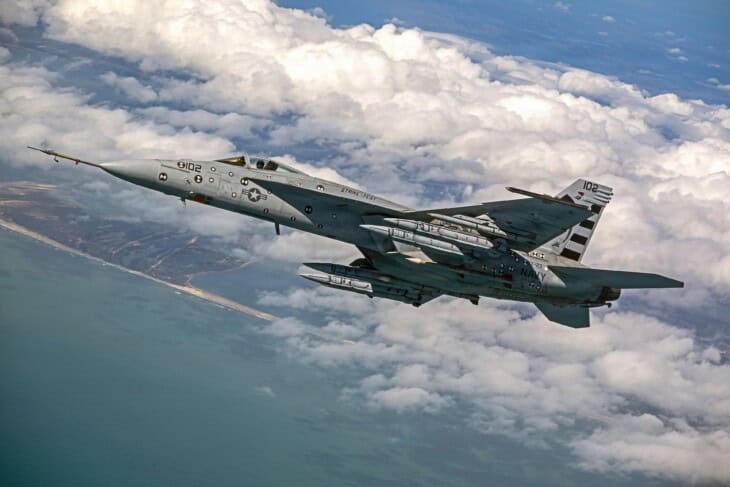
The anti-ship missile is not limited to the fighter. During the RIMPAC 2026 exercise, a P-8A Poseidon maritime patrol aircraft fired an LRASM that hit its target, which Defence counts as part of the same operational testing.
All 24 of the RAAF’s F/A-18Fs fly with No. 1 Squadron at RAAF Base Amberley. They work alongside the service’s F-35A Lightning IIs and EA-18G Growlers, according to the Air Force.
Why Range Is the Point
The Super Hornet’s existing anti-ship weapon is the AGM-84 Harpoon. When Australia chose LRASM in 2020, Defence said the air-launched Harpoon had entered service in the early 1980s with a range of about 77 miles (124 km).
LRASM roughly triples that reach. In practice, a Super Hornet crew can now launch against a defended ship from about three times the distance the Harpoon allowed.
That is the logic of a stand-off missile. Lockheed Martin says JASSM is designed to destroy well-defended targets from significant standoff range, “keeping aircrews well out of danger from hostile air defense systems.”
The two weapons are closely related. LRASM is based on the JASSM-ER, The Aviationist noted when it covered Australia’s LRASM live fire in 2025, so a single fighter can now carry a matched pair: one missile for ships and one for targets on land.
The same push for reach is showing up in air-to-air weapons. The US Navy’s new AIM-424 Malice missile, built for the F-35C and Super Hornet, is designed to hit enemy aircraft from more than 250 nautical miles.
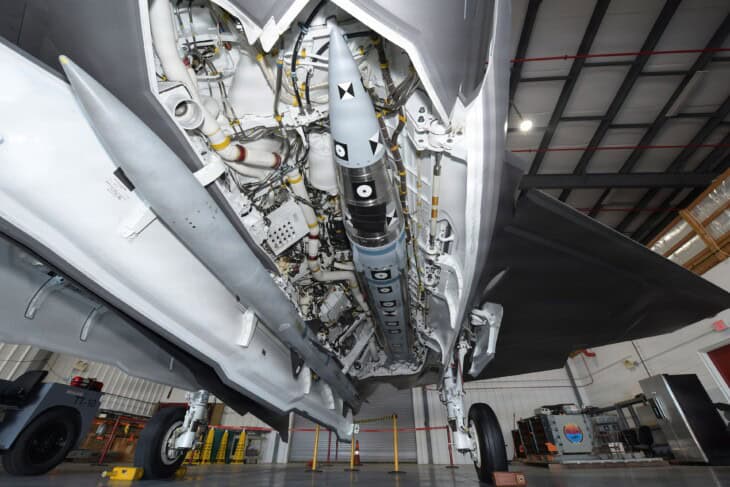
Defence frames the goal as deterrence through denial. Chappell said the new weapons let the Air Force hold “potential adversary forces and infrastructure at risk from a greater distance.”
Six Years From Decision to Service
Australia announced in July 2020 that it would buy LRASM from the US Navy at an estimated cost of around A$800 million, with training due to start in 2021. By March 2025, the government put the total allocated for the missile at A$895.5 million.
The Super Hornet will not be the only Australian aircraft to carry it. Deputy Prime Minister Richard Marles said in 2025 that LRASM “will be seen across the Super Hornet, Poseidon and F-35 fleets.”
Sources and references used for research and fact-checking.
- Australian Department of Defence, Air Force modernises air-launched strike
- Royal Australian Air Force, F/A-18F Super Hornet
- Australian Minister for Defence, Long-range strike capabilities to maintain regional security
- Australian Minister for Defence, Mission success for Long Range Anti-Ship Missile testing
- Lockheed Martin, JASSM
Get the Newsletter
The latest aviation news and stories sent to your inbox.
About the Author

Tim is the owner and lead editor of AeroCorner since 2019, overseeing aviation content covering aircraft, airlines, airports, and the broader aviation industry. Through years of researching, writing, editing, and publishing aviation-focused content, he has developed extensive practical knowledge of commercial aviation and air travel. Based in Asia and a frequent traveler himself, Tim also brings firsthand passenger experience to AeroCorner’s coverage. Outside of publishing, he has also explored aviation firsthand through hands-on flight training in New Zealand.