

Table of Contents
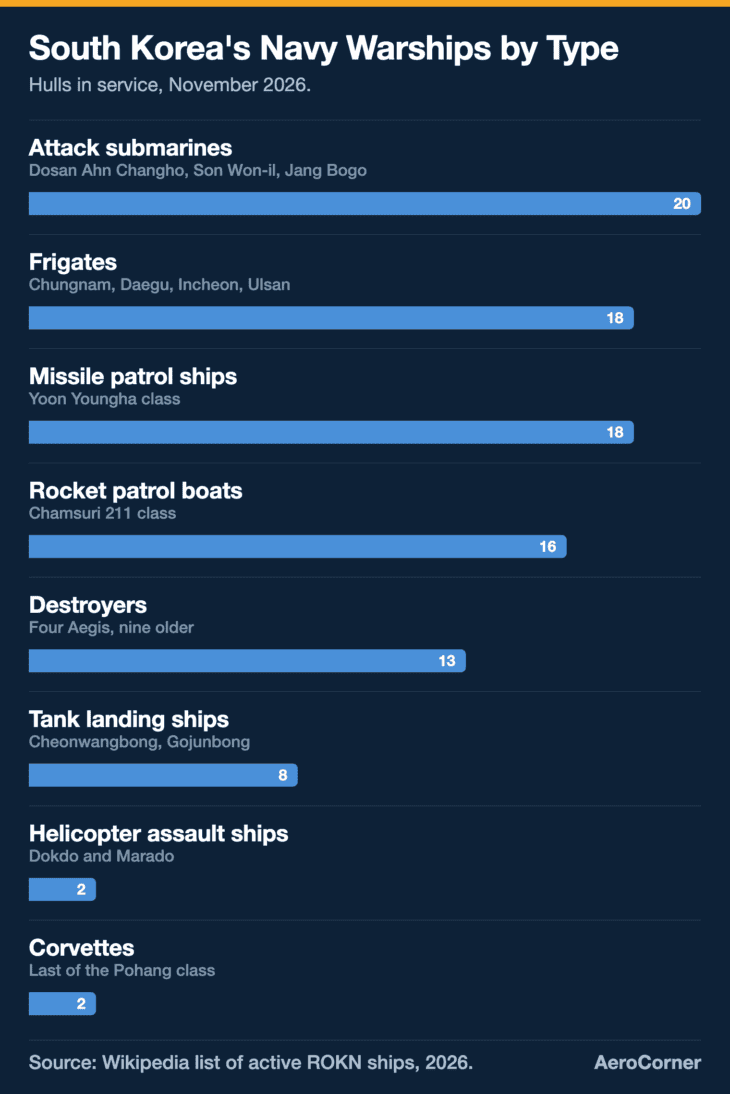
The South Korean Navy, officially the Republic of Korea Navy (ROKN), is built around four Aegis destroyers and three Dosan Ahn Changho-class submarines that carry ballistic missiles in vertical launch tubes. Two more Aegis ships are in the water and due by the end of 2027, which will bring the fleet to six.
Around them sail nine other destroyers, 18 frigates, 17 more attack submarines, two helicopter assault ships and 34 fast missile and rocket boats built for the tense waters off North Korea. GlobalFirepower’s 2026 index counts 215 naval assets and ranks South Korea’s armed forces fifth in the world.
This guide ranks every major class South Korea sails by fighting value as of November 2026, with hull counts, the ships that joined or left in the past year and the aircraft that fly with the fleet.
| Rank | Class | Type | Hulls in service | Status, November 2026 |
|---|---|---|---|---|
| 1 | Jeongjo the Great (KDX-III Batch II) | Aegis destroyer | 1 | Two more launched, due late 2026 and December 2027 |
| 2 | Sejong the Great (KDX-III Batch I) | Aegis destroyer | 3 | Active |
| 3 | Dosan Ahn Changho (KSS-III) | Attack submarine with ballistic missiles | 3 | Jang Yeong-sil launched, due 2027 |
| 4 | Dokdo | Helicopter assault ship | 2 | Active |
| 5 | Chungnam (FFX Batch III) | Frigate | 2 | Gyeongbuk joined June 2026 |
| 6 | Chungmugong Yi Sun-sin (KDX-II) | Destroyer | 6 | Upgrade program running to 2033 |
| 7 | Son Won-il (Type 214) | Attack submarine | 9 | Active |
| 8 | Daegu (FFX Batch II) | Frigate | 8 | Active |
| 9 | Incheon (FFX Batch I) | Frigate | 6 | Active |
| 10 | Gwanggaeto the Great (KDX-I) | Destroyer | 3 | Active |
| 11 | Jang Bogo (Type 209) | Attack submarine | 8 | Lead boat retired December 2025 |
| 12 | Cheonwangbong and Gojunbong | Tank landing ship | 8 | Active |
| 13 | Yoon Youngha and Chamsuri 211 | Missile and rocket patrol boats | 34 | Active |
| 14 | Ulsan and Pohang | Older frigates and corvettes | 4 | Being retired |
How this ranking works
Classes are ranked by fighting value in November 2026: how modern each one is, what it carries, and how much it changes what the fleet can do. One Aegis destroyer ranks above a dozen patrol boats. Hull counts come from open-source lists checked against 2025 and 2026 commissioning and retirement reports. Mine warfare ships, survey ships, support ships, hovercraft and landing craft are left out of the ranking.
1. Jeongjo the Great Class: The Missile Defense Destroyers
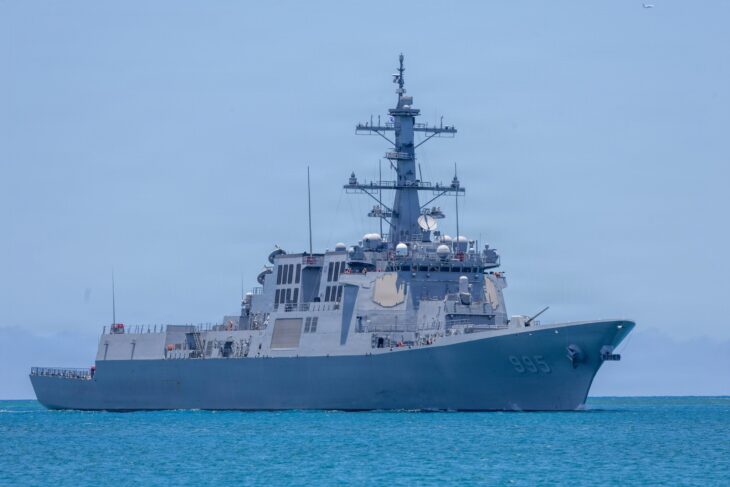

Jeongjo the Great is the newest and most capable warship in South Korea’s fleet. HD Hyundai Heavy Industries delivered it in November 2024, as the first of three KDX-III Batch II destroyers.
Each ship in the batch is 558 feet (170 m) long, displaces 8,200 tons standard and about 12,000 tons fully loaded, and reaches 30 knots. The Batch II design adds SM-3 interceptors for ballistic missile defense and SM-6 missiles, which the Batch I ships do not carry.
It carries 88 vertical launch cells, fewer than the older Sejong the Great class. The trade is quality: some of those cells hold Hyunmoo land-attack weapons, so the ship can both shield Seoul from North Korean missiles and strike back.
Its sister Dasan Jeong Yak-yong was launched on September 17, 2025, and is due for delivery in late 2026. The third ship, Daeho Kim Jong-seo, was launched at Ulsan on September 30, 2026, with President Lee Jae Myung present, and is due in December 2027.
Six Aegis ships by 2027
When Daeho Kim Jong-seo is delivered in December 2027, South Korea will operate six Aegis destroyers. Three of each batch, they will carry 648 vertical launch cells between them.
2. Sejong the Great Class: 128 Missile Cells
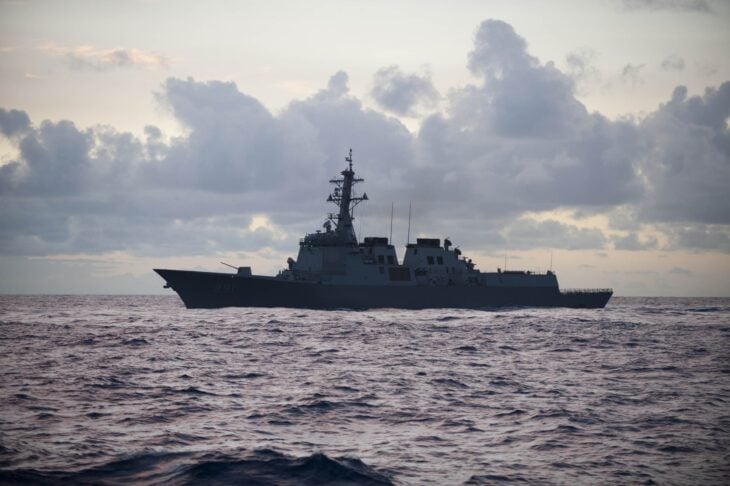

The three Sejong the Great-class destroyers were commissioned between 2008 and 2012: Sejong the Great, Yulgok Yi I and Seoae Ryu Seong-ryong. Each is 545 feet (166 m) long and displaces 7,650 tons standard and 10,000 tons fully loaded.
They are among the most heavily armed surface warships in the world, with 128 vertical launch cells. That is more than the 96 on a US Navy Arleigh Burke and the 112 on China’s Type 055, and only Russia’s Kirov-class battlecruisers carry more missiles.
An AN/SPY-1D radar guides SM-2 air defense missiles, and the cells also hold Haeseong anti-ship missiles and Hyunmoo III land-attack cruise missiles. They rank second only because they lack the newer ships’ ballistic missile interceptors. For how they compare with American ships, see our ranking of US Navy destroyers.
3. Dosan Ahn Changho Class: Submarines With Ballistic Missiles
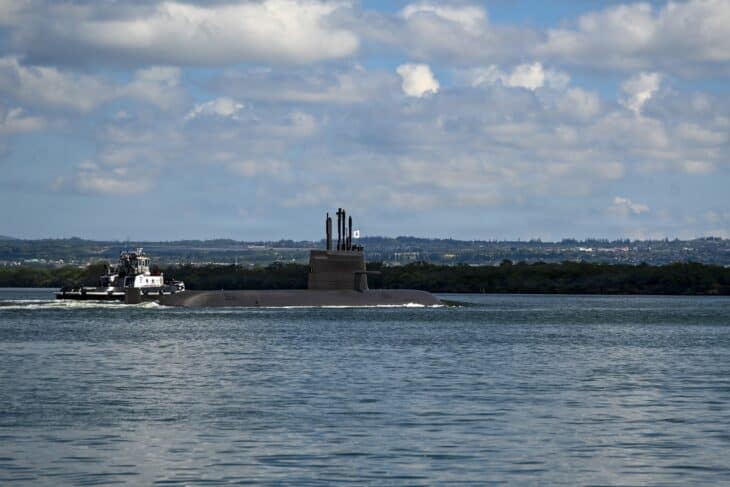

The KSS-III Dosan Ahn Changho class is the most dangerous boat South Korea owns. Each is 274 feet (83.5 m) long and displaces 3,750 tons submerged, about twice the size of a Son Won-il-class boat.
Behind the sail sit six vertical launch cells for the Hyunmoo 4-4 submarine-launched ballistic missile, estimated to reach about 310 miles (500 km). Hydrogen fuel cells give it air-independent propulsion for more than 20 days submerged without surfacing.
Three are in service: Dosan Ahn Changho from August 2021, Ahn Mu from April 2023 and Shin Chae-ho from April 2024. Hanwha Ocean launched the first Batch II boat, Jang Yeong-sil, on October 22, 2025: it is 293 feet (89.3 m) long, carries 10 launch cells and adds lithium-ion batteries, with delivery due in 2027.
Nine boats are planned in three batches. For the biggest boats afloat anywhere, see our list of the largest submarines in the world.
4. Dokdo Class: The Biggest Ships in the Fleet
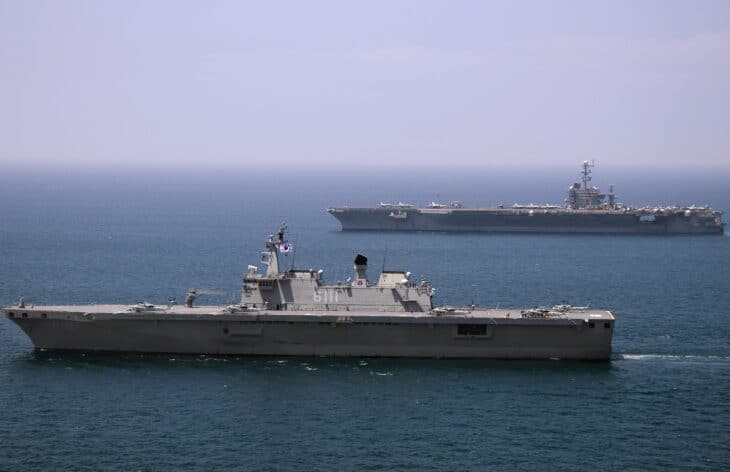

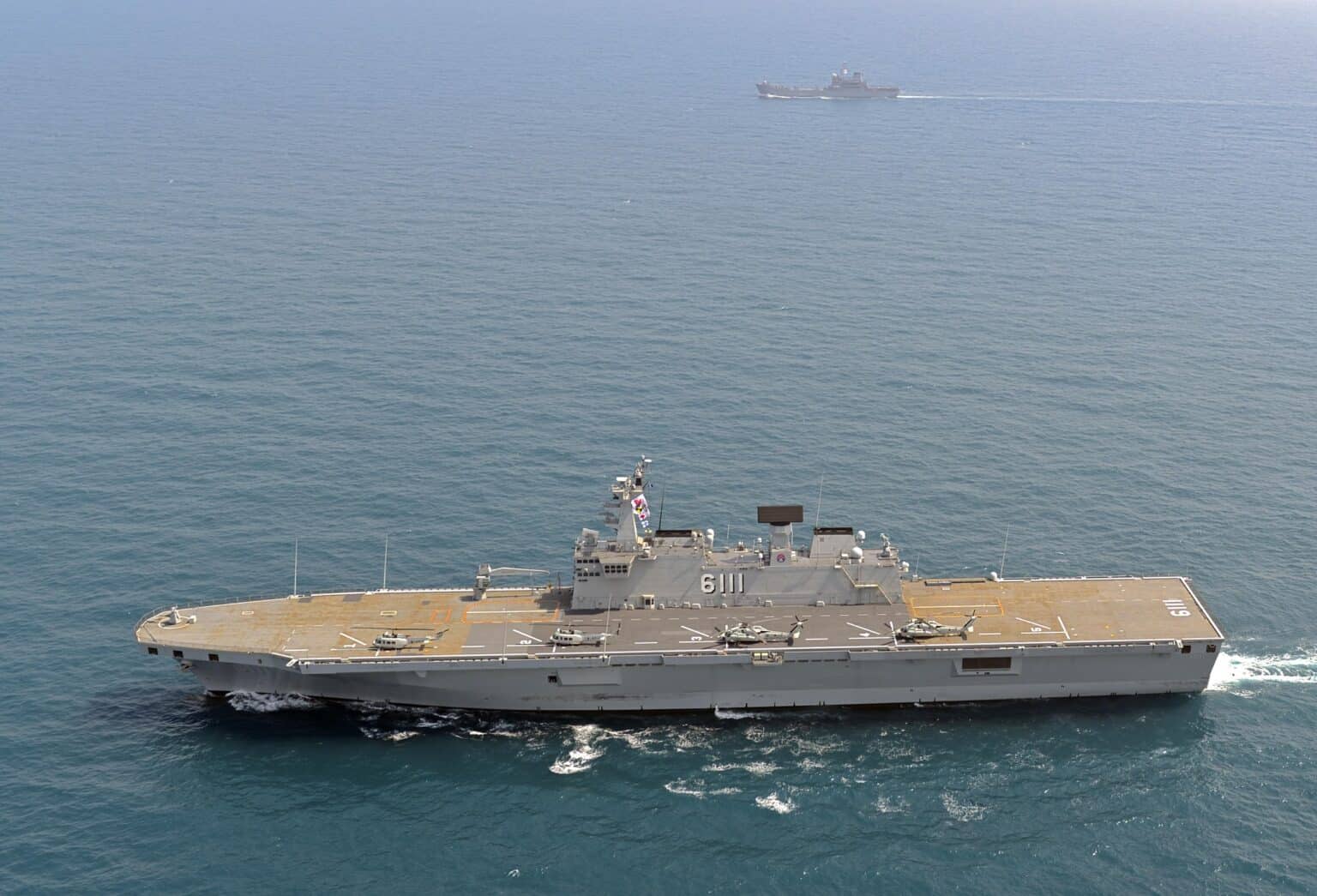
Dokdo and Marado are the largest warships in South Korea’s fleet. Each is 653 feet (199 m) long, with a full-length flight deck, and sources put the full-load displacement between 18,000 and 19,500 tons.
They carry 720 marines, two hovercraft landing craft and up to 15 helicopters, at a top speed of 23 knots. Dokdo was commissioned on July 3, 2007, and Marado on June 28, 2021.
They look like small aircraft carriers, and South Korean officials have discussed flying F-35B jets from them since 2017. No plan to do so has been announced, so they remain helicopter ships.
5. Chungnam Class: The Newest Frigates
The Chungnam class, the third batch of South Korea’s FFX frigate program, is the most heavily armed frigate the navy has. Each is 423 feet (129 m) long and displaces about 4,300 tons fully loaded.
A 16-cell launcher holds Haegung air defense missiles, four to a cell, and Haeryong land-attack missiles, alongside a 5-inch gun and Blue Shark torpedoes. That makes these frigates useful against aircraft, ships, submarines and shore targets alike.
Chungnam was commissioned on December 24, 2024, and Gyeongbuk joined at Jinhae on June 24, 2026. Jeonnam, launched in November 2025, is due in December 2026, and Jeju was launched in April 2026, out of six ships planned.
6. Chungmugong Yi Sun-sin Class: The Workhorse Destroyers
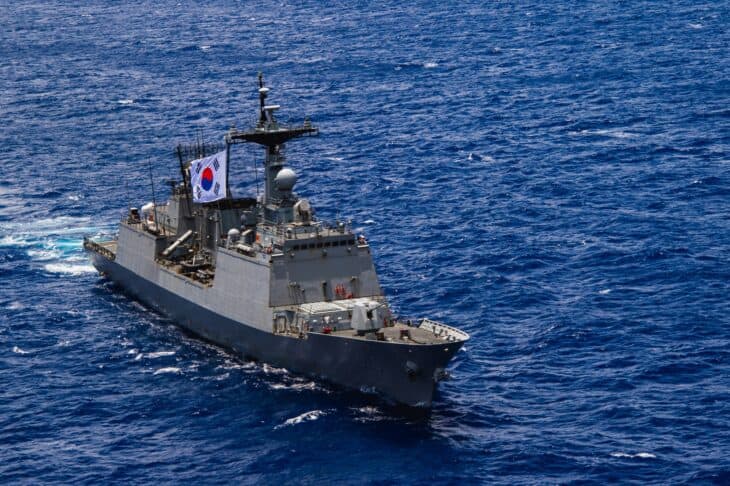

The six KDX-II destroyers of the Chungmugong Yi Sun-sin class entered service between 2003 and 2008. Each is 492 feet (150 m) long, displaces 5,500 tons standard and 6,520 tons fully loaded, and carries a crew of about 300.
They carry 32 Mk 41 cells for SM-2 missiles and 24 Korean cells for Red Shark anti-submarine rockets and Hyunmoo III cruise missiles, plus anti-ship missiles and two helicopters. These are the ships South Korea sends on long deployments, including rotations with the Cheonghae Unit, its anti-piracy task force.
An upgrade program with a budget of 470 billion won will replace their sonars, radar and combat system by December 2033. Six new KDDX destroyers are meant to follow them: Hanwha Ocean signed the contract for the first on July 31, 2026, with delivery due in 2032.
7. Son Won-il Class: The Fuel Cell Submarines
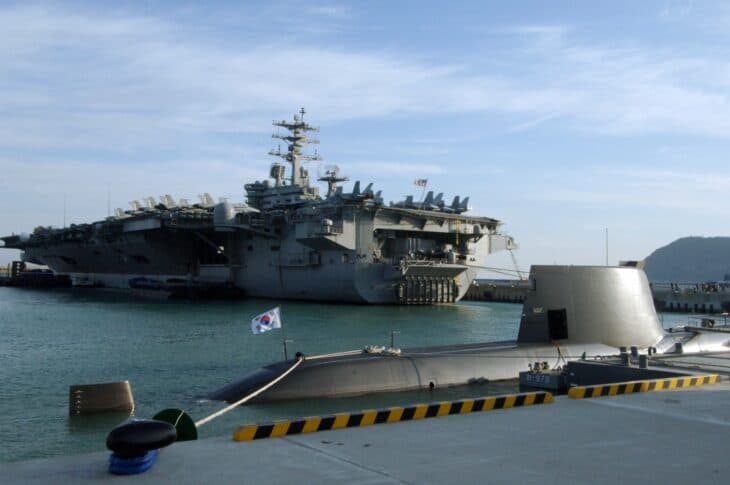

The nine Son Won-il-class boats are South Korean-built versions of Germany’s Type 214, commissioned between December 2007 and 2020. Each is 213 feet (65 m) long and displaces about 1,860 tons submerged, with a crew of 27.
Siemens hydrogen fuel cells let them run silently underwater for long periods without a snorkel, a design Germany also sold to Greece, Portugal and Turkey. They make up the bulk of South Korea’s modern submarine force.
8. Daegu Class: The Quiet Frigates
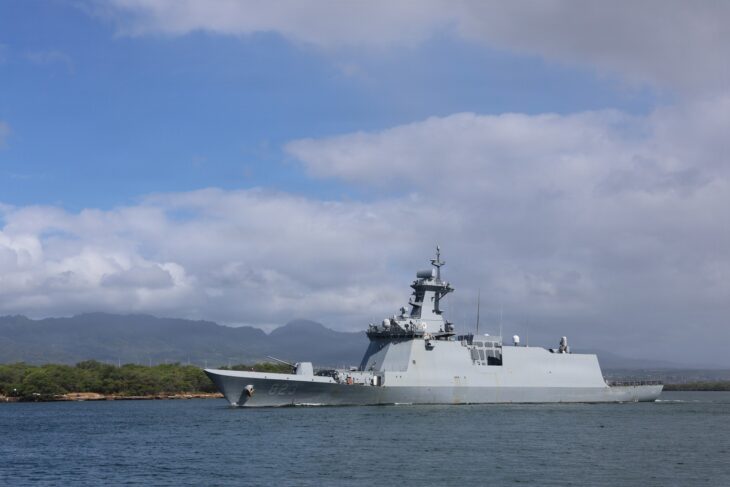

Eight Daegu-class frigates were commissioned between March 2018 and October 2023. Each is 400 feet (122 m) long, displaces 3,600 tons fully loaded and carries a crew of 140.
They were the first South Korean warships to run on electric motors at low speed, which keeps them quiet when hunting submarines, with a gas turbine for sprints. A 16-cell launcher carries air defense, land-attack and anti-submarine missiles, and the hangar takes one Super Lynx or AW159 Wildcat helicopter.
9. Incheon Class: The First FFX Frigates
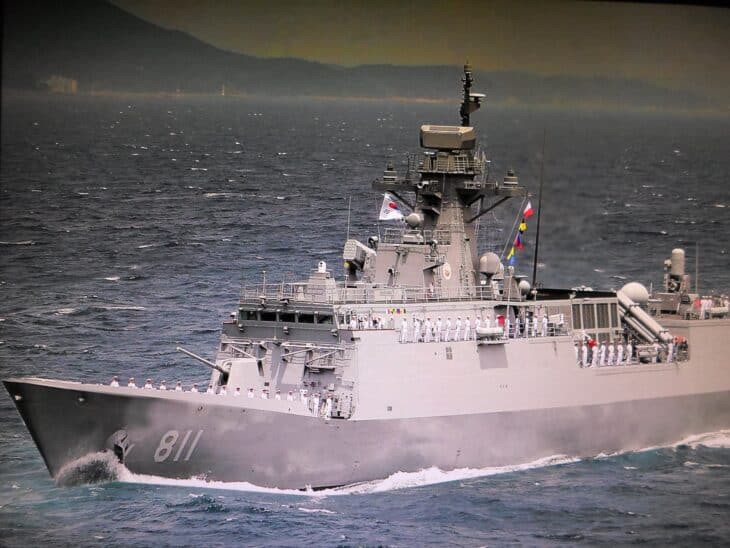

The six Incheon-class frigates, commissioned from January 2013 to November 2016, began the program that replaced South Korea’s Cold War escorts. Each is 374 feet (114 m) long and displaces 3,300 tons fully loaded.
They carry a 5-inch gun, a Phalanx and a RAM launcher for close defense, and anti-ship missiles, with land-attack missiles retrofitted from 2016. The design was also the basis for the two Jose Rizal-class frigates built for the Philippines.
For the fleet facing them across the Northern Limit Line, see our guide to North Korea’s navy in 2026.
10. Gwanggaeto the Great Class: The First Korean Destroyers
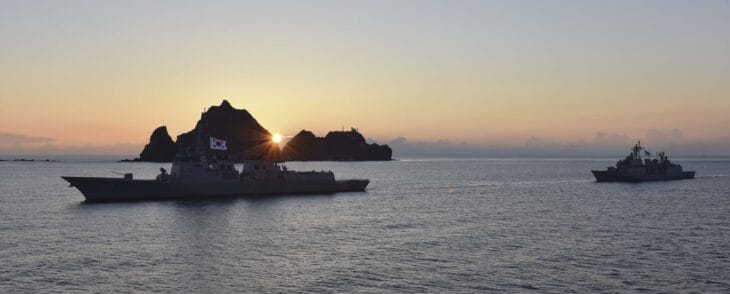

The three KDX-I destroyers were commissioned between 1998 and 2000, the first destroyers South Korea designed and built for itself. Each is 445 feet (135.5 m) long and displaces about 3,900 tons fully loaded.
Twelve were planned, but the navy moved on to bigger designs after three. They carry 16 Sea Sparrow air defense missiles, eight Harpoons and two Super Lynx helicopters, and all three finished a mid-life upgrade in 2020 and 2021.
11. Jang Bogo Class: The First Submarines
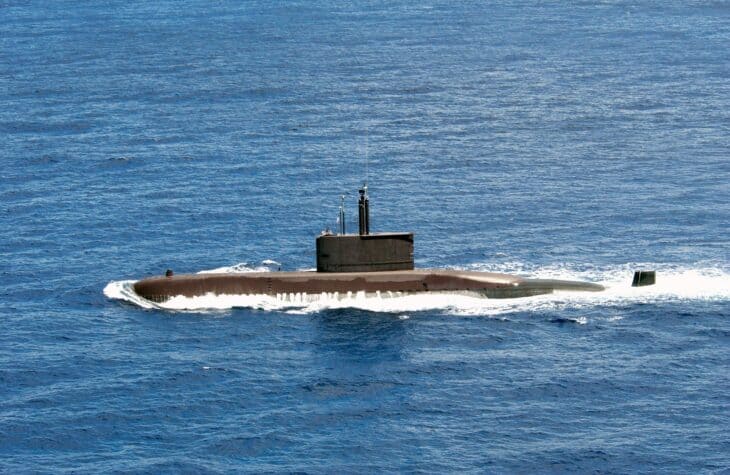

South Korea’s submarine force began with nine German Type 209 boats of the Jang Bogo class, about 1,200 tons and 184 feet (56 m) long, commissioned between 1993 and 2001. The lead boat was launched in Germany in 1991.
The lead boat, Jang Bogo, was retired on December 31, 2025, after 34 years in service, leaving eight. It was the country’s first submarine.
A free submarine for Poland
In November 2025 the Korea Times reported, citing military sources, that Seoul planned to give the retired Jang Bogo to Poland free of charge. Hanwha Ocean is bidding for Poland’s Orka project for up to four new submarines. The defense ministry would only say the boat would be used for defense exports and cooperation.
12. Cheonwangbong and Gojunbong Classes: The Landing Ships
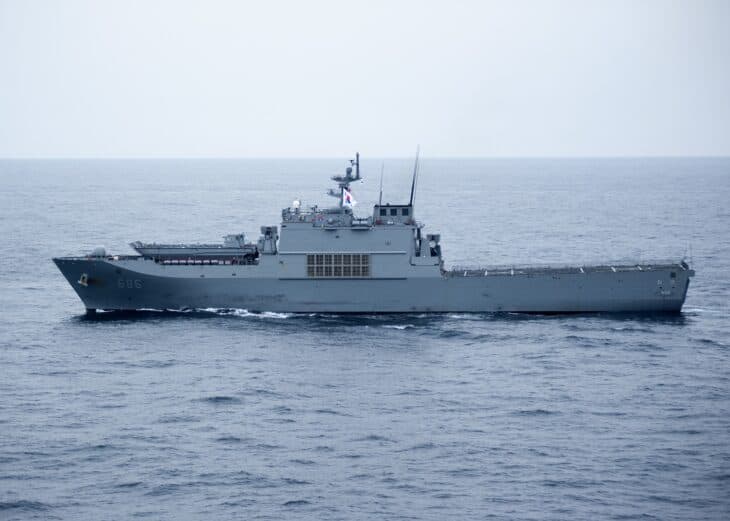

Eight tank landing ships carry the Republic of Korea Marine Corps ashore. The four newer Cheonwangbong-class ships joined between 2014 and 2018, and the four older Gojunbong-class ships between 1993 and 1999.
Together with the two Dokdo-class ships, they can put a marine landing force ashore. The Marine Corps told lawmakers in October 2026 that it plans a Marine Operations Command by 2028, for more independence from the army and navy.
13. Yoon Youngha and Chamsuri 211 Classes: The Northern Limit Line Boats
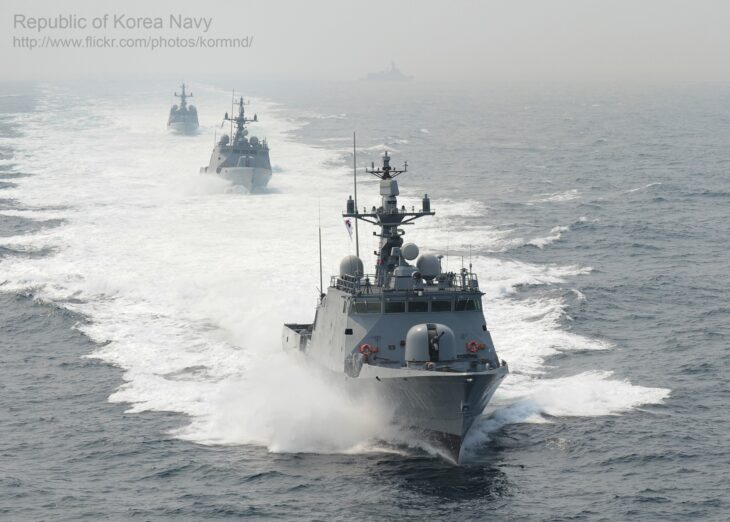

South Korea’s front line at sea is a force of fast patrol boats watching the Northern Limit Line, the disputed sea border with North Korea. The program began after a South Korean patrol boat was sunk in a clash with North Korean patrol boats on June 29, 2002, the Second Battle of Yeonpyeong.
The 18 Yoon Youngha-class missile boats are 207 feet (63 m) long, displace 570 tons, reach 44 knots and carry four Haeseong anti-ship missiles. The first six are named after the sailors of patrol boat PKM 357 who died in that 2002 battle.
The 16 smaller Chamsuri 211-class boats are 144 feet (44 m) long, displace 200 tons and reach 40 knots. Each carries a 76 mm gun and a 12-tube launcher for guided 130 mm rockets, built for close fights with North Korean fast boats.
14. Ulsan and Pohang Classes: On the Way Out
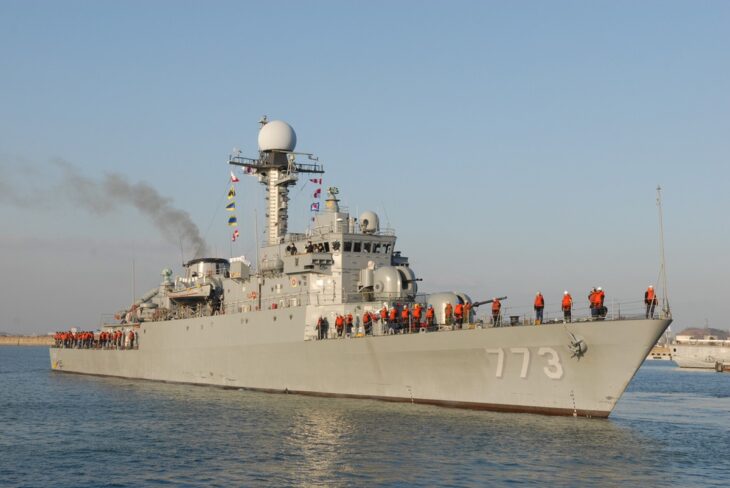

Two Ulsan-class frigates from 1992, Busan and Cheongju, and two Pohang-class corvettes, Sinseong and Gongju, are what remains of the Cold War escort fleet. The newer FFX frigates are replacing them.
Twenty-four Pohang-class corvettes were built, and eight have been given to other navies. Gwangmyeong left service on December 31, 2025, after 36 years.
The best-known Pohang-class ship is Cheonan, torpedoed by a North Korean submarine on March 26, 2010. The ship sank early the next morning, and 46 sailors were killed.
The Aircraft of the South Korean Navy
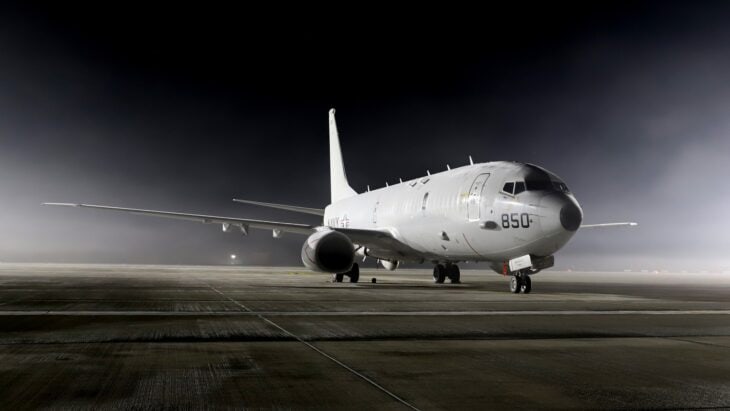

Naval Air Command at Pohang flies the navy’s patrol planes and helicopters. The most important are six Boeing P-8A Poseidons, which arrived in June 2024 and were in operational use by July 2025.
They are replacing 15 P-3 Orions, eight P-3Cs and seven P-3CKs. An eighth P-3CK crashed near Pohang on a training flight on May 29, 2025, killing all four crew.
For hunting submarines from ships, South Korea ordered 12 MH-60R Seahawks in December 2020, and the first two entered operational service at Jinhae on April 1, 2026. On May 18, 2026, the US approved a possible $3 billion sale of 24 more, which would take the fleet to 36.
Eight AW159 Wildcats and about two dozen older Lynx and Super Lynx helicopters fly from the destroyers and frigates. The air force flies the fighters, covered in our guide to South Korea’s air force in 2026.
What Comes Next: Nuclear Submarines and a Drone Carrier
South Korea has asked for nuclear-powered submarines for more than three decades, and in October 2025 President Donald Trump approved sharing US naval nuclear propulsion technology. On May 26, 2026, the defense ministry announced the Jangbogo-N program, aiming to launch the first boat in the mid-2030s and put it in service in the late 2030s.
The boats would use low-enriched uranium from the United States under international safeguards, and the plan restates South Korea’s pledge not to build nuclear weapons. The size and number have not been officially set, though AJU Press reported in October 2026 that three boats of about 8,000 tons were under consideration.
The navy also wants a ship of more than 30,000 tons and about 886 feet (270 m) long by the early 2040s, carrying more than 20 drones and more than 20 manned aircraft. The Joint Chiefs of Staff were expected to decide on it by the end of 2026.
Does South Korea have an aircraft carrier?
No. The two Dokdo-class ships have flat decks but fly only helicopters. A 30,000-ton light carrier for F-35B jets, the CVX, was authorized in February 2021, but the navy’s current plan is a larger ship for drones and manned aircraft by the early 2040s.
For how those ships stack up worldwide, see our ranking of the best aircraft carriers in the world, and our guide to Japan’s navy in 2026 for the flat-tops next door.
FAQ
Sources and references used for research and fact-checking.
- Wikipedia, List of active Republic of Korea Navy ships
- Wikipedia, Republic of Korea Navy
- GlobalFirepower, South Korea Military Strength 2026
- Wikipedia, Sejong the Great-class destroyer
- Naval Technology, HD HHI launches next-generation Aegis destroyer Dasan Jeong Yak-yong
- Korea JoongAng Daily, HD Hyundai launches Korea's third next-generation Aegis destroyer
- Wikipedia, Dosan Ahn Changho-class submarine
- Wikipedia, Dokdo-class amphibious assault ship
- Wikipedia, Chungnam-class frigate
- Asia Economy, We Safeguard the Seas: Navy Commissions Latest 3,600-Ton Frigate Gyeongbukham
- Wikipedia, Chungmugong Yi Sun-sin-class destroyer
- Asian Military Review, Hanwha Ocean to build the ROKN's first KDDX destroyer
- Wikipedia, Type 214 submarine
- Wikipedia, Daegu-class frigate
- Wikipedia, Incheon-class frigate
- Wikipedia, Gwanggaeto the Great-class destroyer
- Wikipedia, Chang Bogo-class submarine
- The Korea Times, Korea to transfer retiring submarine to Poland amid acquisition project bid
- Asia Economy, Decommissioning Ceremony for Korea's First Submarine Jangbogo
- Wikipedia, Gumdoksuri-class patrol vessel
- Wikipedia, Pohang-class corvette
- The Korea Times, Navy's 1,000-ton corvette to retire after 36 years in service
- The Aviationist, South Korea's P-8 Poseidons Are Now Operational
- Army Recognition, US approves $3 billion deal to triple South Korea's MH-60R Seahawk naval helicopter fleet
- Breaking Defense, South Korea outlines nuclear-powered submarine plan
- AJU Press, South Korea's Navy plans nuclear-powered submarines, drone carrier
Get the Newsletter
The latest aviation news and stories sent to your inbox.
About the Author

Tim is the owner and lead editor of AeroCorner since 2019, overseeing aviation content covering aircraft, airlines, airports, and the broader aviation industry. Through years of researching, writing, editing, and publishing aviation-focused content, he has developed extensive practical knowledge of commercial aviation and air travel. Based in Asia and a frequent traveler himself, Tim also brings firsthand passenger experience to AeroCorner’s coverage. Outside of publishing, he has also explored aviation firsthand through hands-on flight training in New Zealand.