

Table of Contents
The most important submarines in the US Navy are the 14 Ohio-class ballistic missile boats. Together they carry about half of America’s active strategic nuclear warheads, and at sea they are the leg of the nuclear triad hardest for an enemy to find.
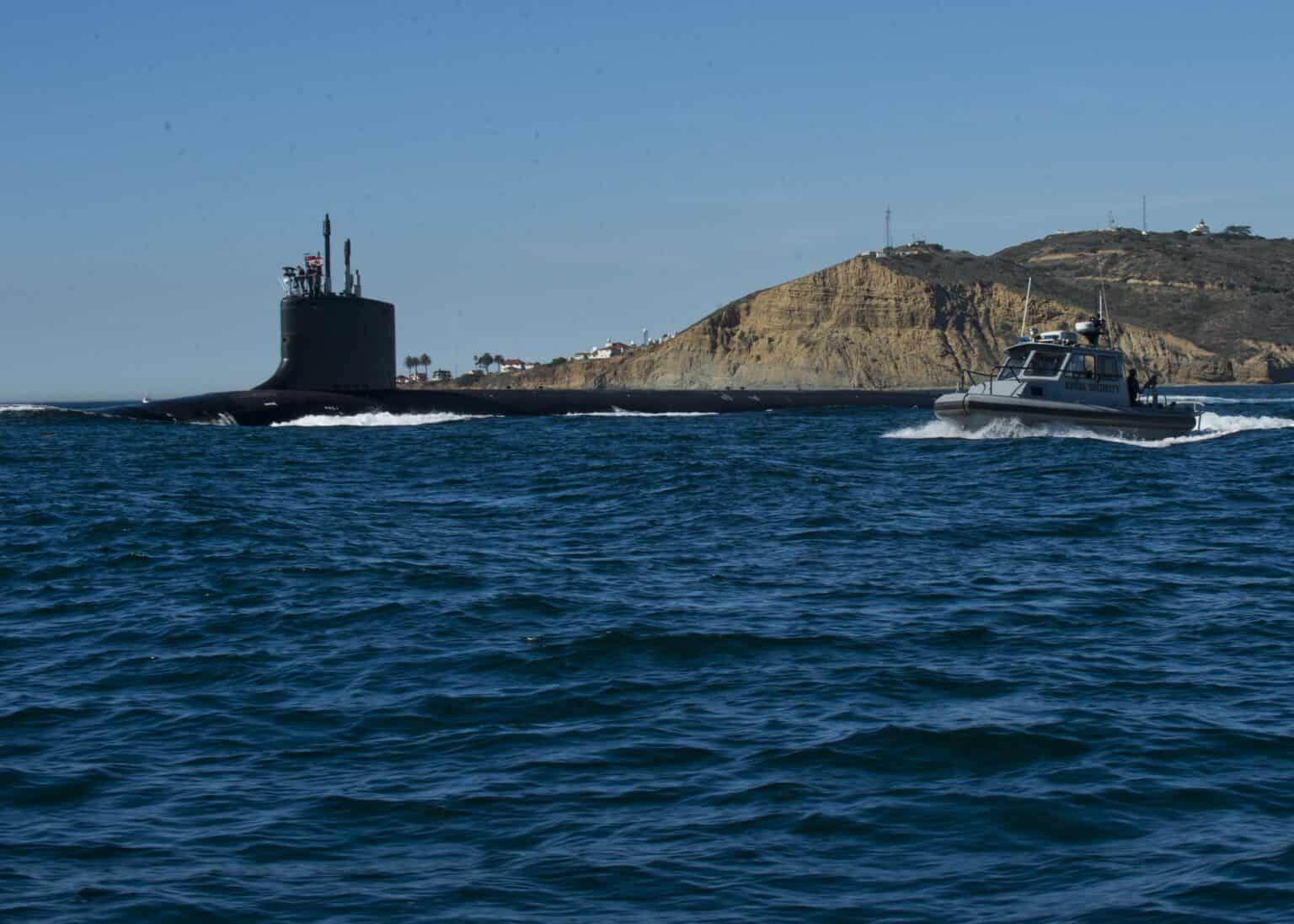
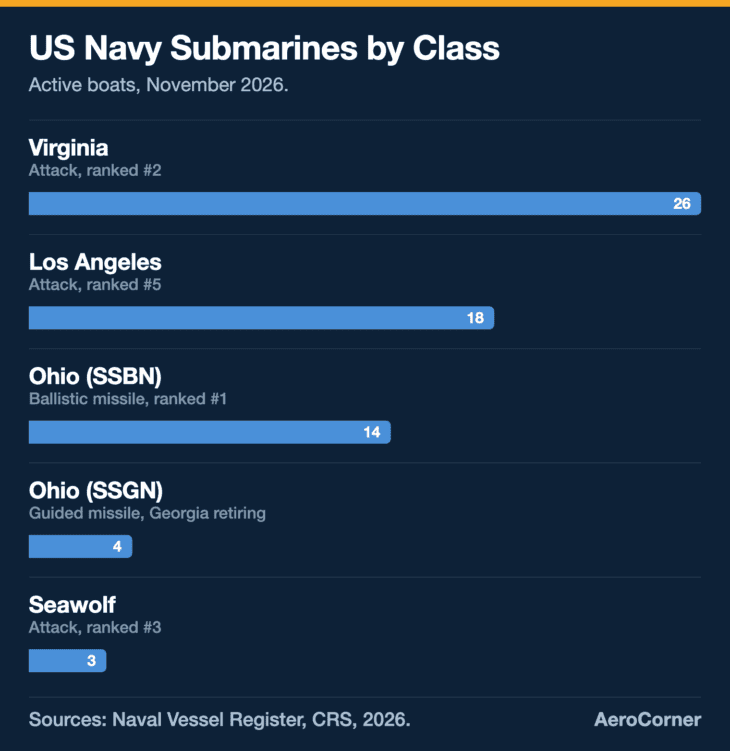
Every US Navy combat submarine is nuclear-powered, and by our count 65 are active in November 2026: 47 attack submarines, 14 ballistic missile submarines and four guided missile submarines, one of which has already made its final patrol. The Virginia class is the largest group, with 26 boats.
This list ranks every class the Navy sails by fighting value as of November 2026. It then covers the two programs that will reshape the fleet: the Columbia class and the missile-heavy Virginia Block V.
| Rank | Class | Type | Active, Nov. 2026 | Length |
|---|---|---|---|---|
| 1 | Ohio (SSBN) | Ballistic missile submarine | 14 | 560 ft (171 m) |
| 2 | Virginia | Attack submarine | 26 | 377 ft (115 m) |
| 3 | Seawolf | Attack submarine | 3 | 353 ft (108 m) |
| 4 | Ohio (SSGN) | Guided missile submarine | 4, Georgia retiring | 560 ft (171 m) |
| 5 | Los Angeles | Attack submarine | 18 | 362 ft (110 m) |
| Next | Columbia | Ballistic missile submarine | 0, 12 planned | 560 ft (171 m) |
How this ranking works
Each class is ranked by the fighting value it adds in November 2026: the mission it performs, how hard it would be to replace, and how many the Navy has. Counts are active boats in commission. Los Angeles boats that are formally in commission but already inactive and being retired are left out. USS Georgia is counted because it remains on the active roster until its planned inactivation in 2027, though it finished its last deployment in July 2026. USS Boise is not counted: the Navy announced its inactivation in April 2026 after it had sat idle for about a decade. The Columbia class is covered after the ranking because no boat has been delivered yet.
1. Ohio Class (SSBN): 14 Boats That Carry the Deterrent
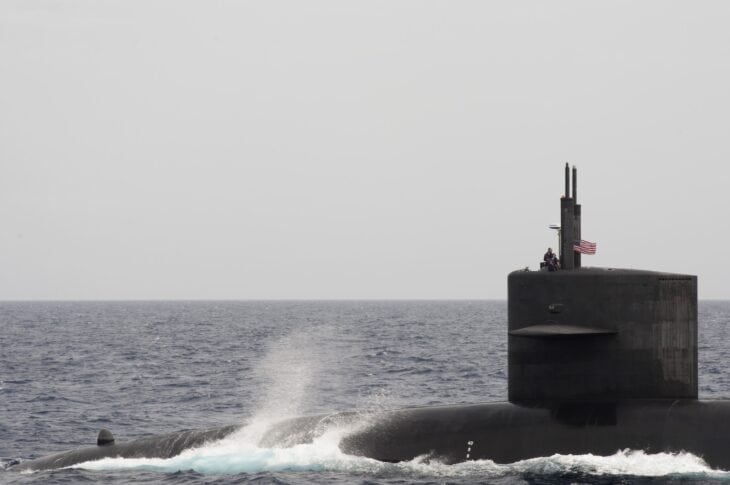

The 14 Ohio-class ballistic missile submarines are the sea-based leg of the US nuclear triad, alongside Air Force bombers and land-based missiles. Each is 560 feet (171 m) long, displaces about 18,750 tons submerged and carries up to 20 Trident II D5 missiles.
The boats were built with 24 missile tubes, but four on each were deactivated in 2017 to comply with the New START treaty. They are based at Naval Base Kitsap in Washington and Naval Submarine Base Kings Bay in Georgia.
Each submarine has two full crews, Blue and Gold, so the boat can go back to sea soon after one crew comes home. A deterrent patrol lasts around 70 days, and the longest on record is a 140-day patrol by USS Pennsylvania in 2014.
They rank first because no other ship guarantees that a nuclear attack on the United States could be answered. The age is the problem: the first boat, USS Henry M. Jackson, reaches the end of its 42-year service life in 2027, and the rest retire at about one a year until 2040.
Half the warheads, a fraction of the platforms
The 14 Ohio-class SSBNs together carry about half of America’s active strategic nuclear warheads. That is why the Navy has called their replacement, the Columbia class, its top program priority since 2013.
2. Virginia Class: The 26-Boat Backbone of the Attack Fleet
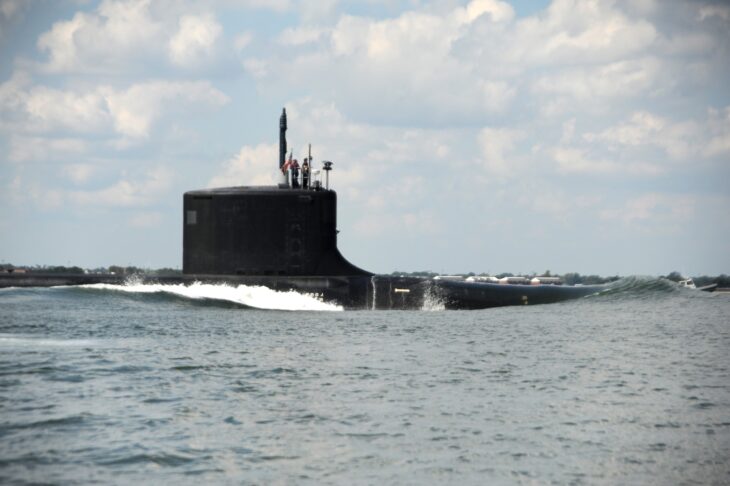

The Virginia class is the Navy’s current attack submarine, built to hunt submarines and ships and to fire Tomahawk cruise missiles at targets on land. The baseline boat is 377 feet (115 m) long and displaces about 7,800 tons submerged, according to the Congressional Research Service.
USS Virginia was commissioned in October 2004, and 26 boats are now in service, from SSN-774 to SSN-799. The two newest are USS Massachusetts, commissioned on March 28, 2026, and USS Idaho, commissioned on April 25, 2026, both based in Groton, Connecticut.
The Navy has bought 41 Virginias through fiscal 2025, at about $5.0 billion each when two are bought a year. The bottleneck is building them: the shipyards have delivered about 1.1 to 1.2 boats a year since 2022, against a goal of 2.0 a year by about 2028.
The Virginia ranks second because it is the only attack submarine still in production, and every gap in the fleet waits on it. It also has a new customer: under the AUKUS agreement, the US plans to sell Australia three to five Virginias, the first in fiscal 2032. How it compares in size with foreign boats is in our ranking of the largest submarines in the world.
3. Seawolf Class: Three Cold War Hunters
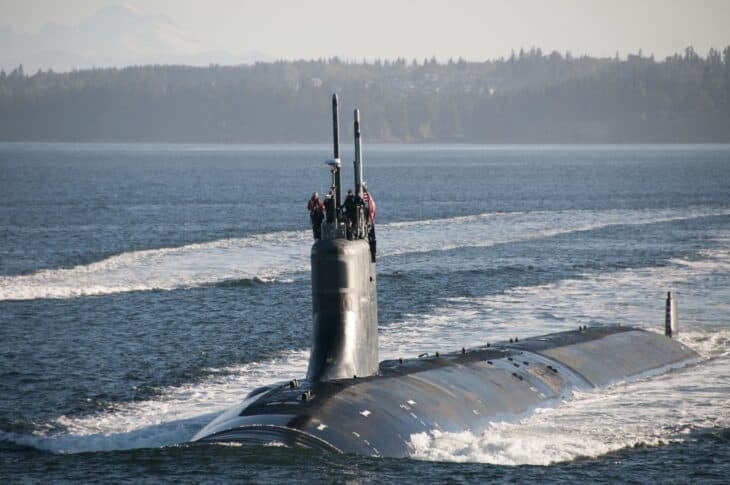

Design work on the Seawolf class began in 1983, during the Cold War, and it is larger, faster and quieter than the Los Angeles class it was meant to replace. It has eight torpedo tubes, twice as many as earlier boats, and can carry up to 50 weapons, including Tomahawks, Harpoons and Mk 48 torpedoes.
The Navy once planned 29 of them. The end of the Cold War and the cost, projected at $33.6 billion for 12 boats, stopped construction at three: Seawolf, Connecticut and Jimmy Carter, commissioned between 1997 and 2005.
USS Jimmy Carter is about 100 feet longer than its sisters because of an extra hull section called the multi-mission platform, which can launch and recover underwater drones and Navy SEALs. The Seawolfs rank third, above the converted Ohios, because they are pure submarine hunters in a fleet that needs more of them, not fewer.
4. Ohio Class (SSGN): Up to 154 Tomahawks Each
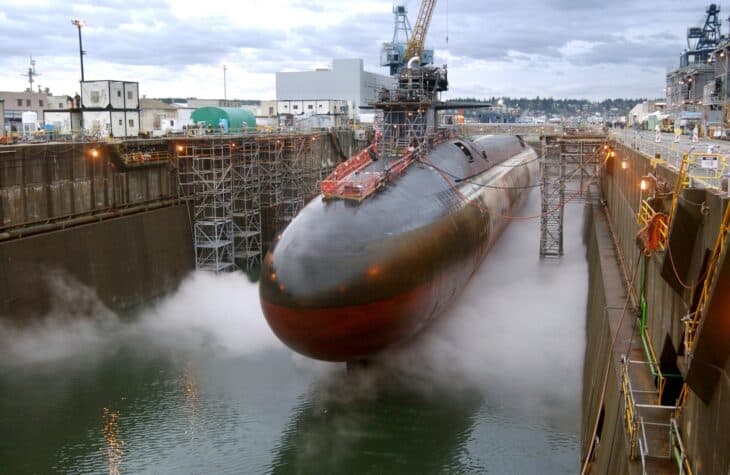

In 1994 the Navy decided it needed only 14 of its 18 Ohio-class missile boats for nuclear deterrence, so the four oldest, Ohio, Michigan, Florida and Georgia, were converted to guided missile submarines. Twenty-two of the 24 missile tubes were refitted to hold seven Tomahawk cruise missiles each.
That gives each boat room for up to 154 Tomahawks, though they typically sail with around 100, according to The War Zone. The other two tubes became lockout chambers for divers, and a converted Ohio can host up to 66 special operations troops.
They are leaving. USS Georgia returned to Kings Bay for the last time on July 27, 2026, and is expected to be formally inactivated at Norfolk Naval Shipyard in July 2027. Ohio, Florida and Michigan are scheduled to follow in fiscal 2027, 2028 and 2029.
5. Los Angeles Class: 18 Left of 62
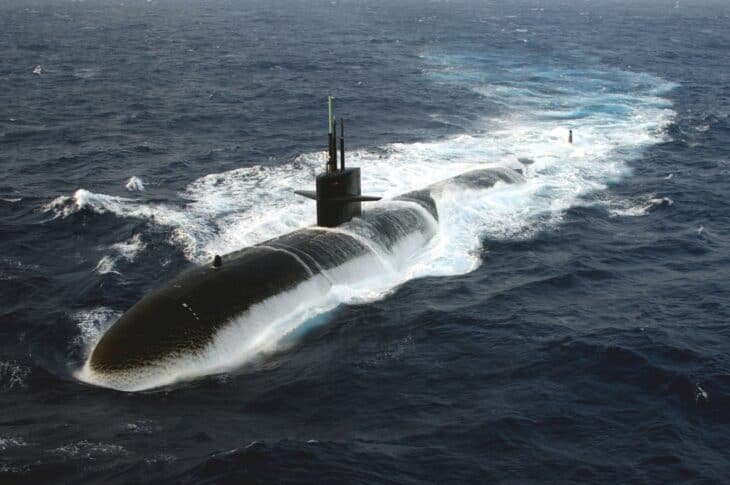

The Navy built 62 Los Angeles-class boats, commissioned between 1976 and 1996. Each is 362 feet (110 m) long and displaces about 6,900 tons, and the later boats added 12 vertical launch tubes for Tomahawks.
Eighteen were still active and in commission in August 2026, according to the Naval Vessel Register as reported by Stars and Stripes. USS Alexandria held its inactivation ceremony on June 29, 2026, and USS San Juan, the first of the improved Los Angeles boats, was decommissioned on August 6, 2026, after 38 years.
They rank last because they are the oldest attack boats in the fleet and are being retired faster than Virginias arrive. They still matter: without them, the Navy’s attack submarine count would fall by more than a third overnight.
The submarine that cost $800 million and never sailed again
USS Boise lost its dive certification in 2017 and sat idle for about a decade. By April 2026 it had cost almost $800 million, according to Navy Secretary John Phelan, with only 22% of the overhaul done, and the Navy announced it would be inactivated instead. Finishing the work could have added about $1.9 billion to the boat’s lifetime cost.
Coming Next: The Columbia Class
Twelve Columbia-class submarines will replace the 14 Ohio SSBNs. Each is 560 feet (171 m) long, displaces about 20,800 tons submerged and has 16 missile tubes, four fewer usable tubes than an Ohio.
Twelve boats can do the work of 14 because each Columbia gets a reactor core that lasts the life of the ship. An Ohio needs a midlife refueling overhaul of about four years, while a Columbia’s midlife overhaul takes about two, so fewer boats sit in the yard at any one time.
The lead boat, USS District of Columbia, is late. The Navy’s fiscal 2026 budget estimated delivery 17 months behind schedule, and the Navy puts its own cost for the boat at $16.1 billion, against $18.1 billion estimated by the Congressional Budget Office.
Coming Next: Virginia Block V, the New SSGN
The Navy’s answer to losing the Ohio SSGNs is a longer Virginia. The Block V boats add the Virginia Payload Module, an 84-foot hull section with four large tubes that carry 28 more Tomahawks, bringing the boat to 461 feet (141 m) and about 10,200 tons submerged.
On August 3, 2026, the Navy announced that the 19 planned Block V and VI Virginias with the module will be reclassified from SSN to SSGN. The first, SSGN 803, is estimated to deliver in fiscal 2029, with the rest following through fiscal 2038.
Even so, no Virginia matches the volume of an Ohio SSGN. Four converted Ohios can carry up to 616 Tomahawks between them, while each Virginia Payload Module adds 28.
Why the Attack Fleet Keeps Shrinking
The Navy’s goal is 66 attack submarines. The Congressional Research Service counted 49 at the start of fiscal 2026 and projected a low point of about 47 in fiscal 2030, before numbers climb back toward 66 in the 2050s.
With Alexandria and San Juan gone, the count in commission is already 47 in late 2026. The cause is simple arithmetic: Los Angeles boats are retiring at the end of their lives, and the yards are delivering Virginias at roughly half the rate the plan needs.
Submarines are only part of how the Navy hunts other submarines. The aircraft that do the same job from above, led by the P-8 Poseidon, are covered in our guide to the maritime patrol aircraft hunting submarines today.
What about diesel submarines?
The US Navy has none. Every combat submarine it operates is nuclear-powered, which is why it has far fewer boats than navies such as China’s, which the Pentagon credits with dozens of diesel and air-independent attack submarines. A nuclear boat can stay submerged for months and cross an ocean at high speed, which a diesel boat cannot.
How the US fleet as a whole stacks up against its rivals is in our ranking of the largest navies in the world, and the Chinese side of the comparison is in our guide to China’s navy, ship by ship.
FAQ
Sources and references used for research and fact-checking.
- Congressional Research Service, Navy Virginia-Class Submarine Program and AUKUS Submarine (Pillar 1) Project: Background and Issues for Congress (RL32418, January 26, 2026)
- Congressional Research Service, Navy Columbia (SSBN-826) Class Ballistic Missile Submarine Program: Background and Issues for Congress (R41129, December 4, 2025)
- Stars and Stripes, Navy decommissions submarine USS San Juan
- Semafor, Navy takes nuclear-powered sub offline after $800 million cost run-up
- The War Zone, Prized Ohio class guided missile submarine USS Georgia heading into retirement
- Military Times, Sailors reminisce, say final goodbye to USS Georgia before retirement
- Naval News, U.S. Navy to Reclassify Virginia Payload Module-equipped SSNs to SSGNs
- Military Times, Navy releases list of ships it plans to inactivate this year
- Wikipedia, Ohio-class submarine
- Wikipedia, Seawolf-class submarine
- Wikipedia, Los Angeles-class submarine
- Wikipedia, Virginia-class submarine
- Wikipedia, Columbia-class submarine
- Wikipedia, List of current ships of the United States Navy
- AeroCorner, China's Navy in 2026: The World's Largest Fleet, Ship by Ship
Get the Newsletter
The latest aviation news and stories sent to your inbox.
About the Author

Tim is the owner and lead editor of AeroCorner since 2019, overseeing aviation content covering aircraft, airlines, airports, and the broader aviation industry. Through years of researching, writing, editing, and publishing aviation-focused content, he has developed extensive practical knowledge of commercial aviation and air travel. Based in Asia and a frequent traveler himself, Tim also brings firsthand passenger experience to AeroCorner’s coverage. Outside of publishing, he has also explored aviation firsthand through hands-on flight training in New Zealand.