

Table of Contents
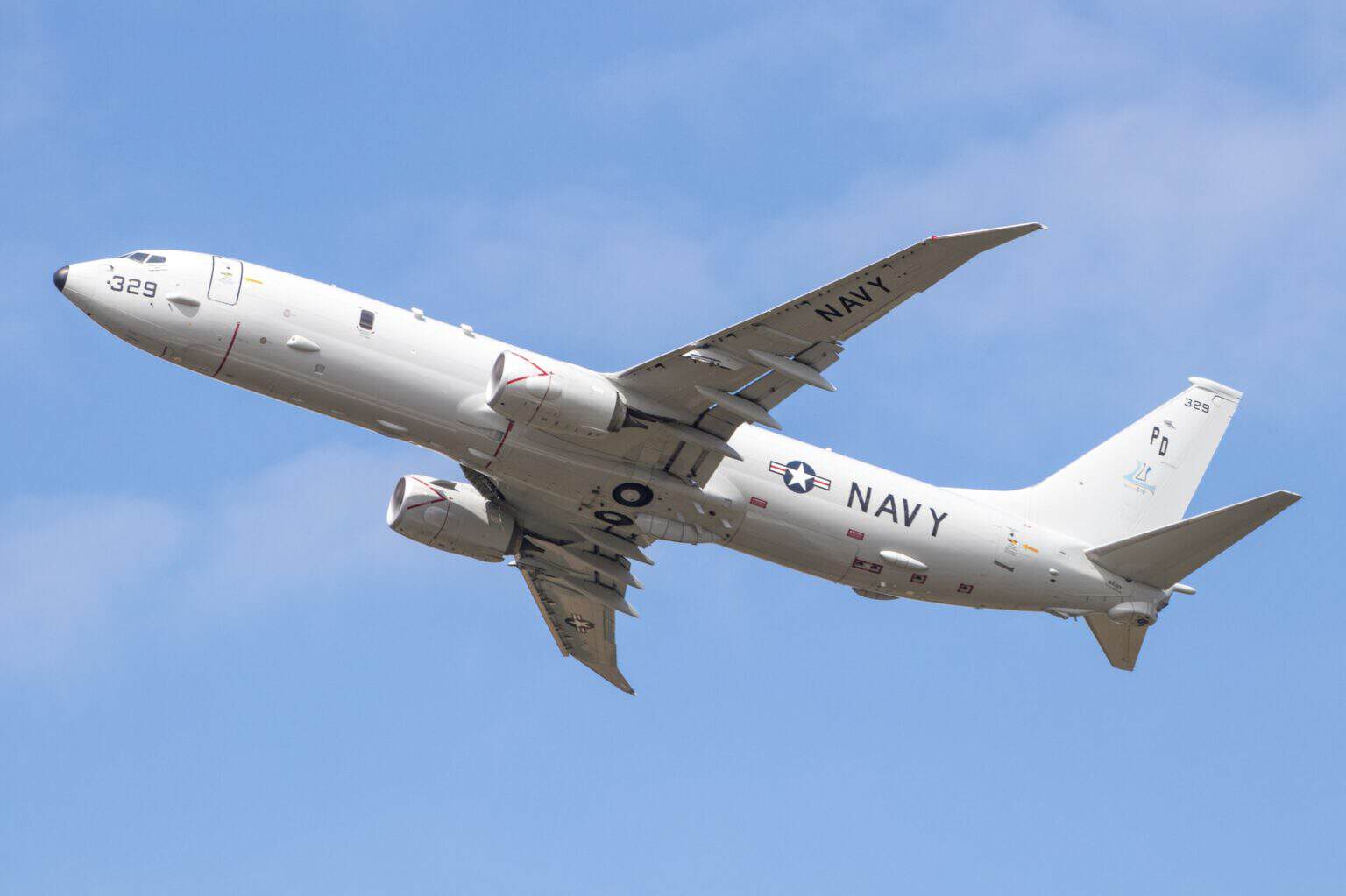
The best maritime patrol aircraft flying in 2026 is the Boeing P-8 Poseidon. It pairs a jet airliner’s speed with 129 sonobuoys and torpedoes, and Boeing has delivered 178 of them to eight countries.
Below it sit eight more aircraft that are still hunting submarines today, from Japan’s four-jet Kawasaki P-1 to Russia’s propeller-driven Tu-142, whose design first flew in 1968. Several of the oldest designs are still among the most important.
This list ranks each type by how well it can find and attack a submarine as of November 2026: its sensors, its weapons, how far and how long it can patrol, and how many are actually flying.
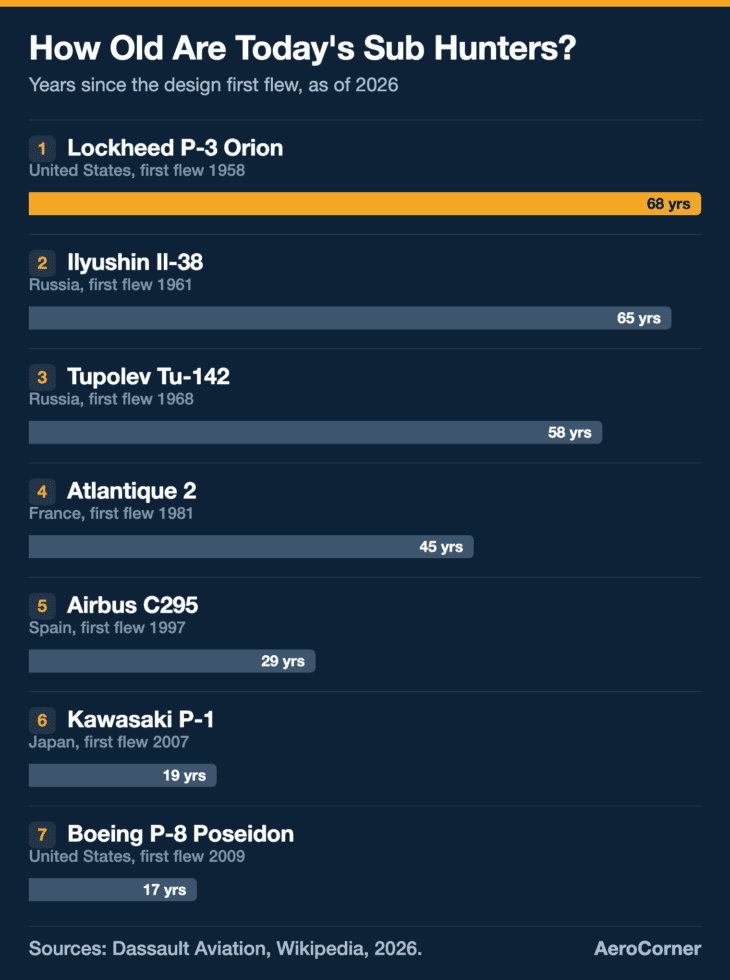
| Rank | Aircraft | Country | Design first flew | Max speed | Status, 2026 |
|---|---|---|---|---|---|
| 1 | Boeing P-8 Poseidon | United States | 2009 | 564 mph | 178 delivered, 8 operators |
| 2 | Kawasaki P-1 | Japan | 2007 | 619 mph | About 3 dozen, Japan only |
| 3 | Dassault Atlantique 2 (Standard 6) | France | 1981 | 403 mph | 18 upgraded, French Navy |
| 4 | Lockheed P-3 Orion / CP-140 Aurora | United States | 1958 | 473 mph | 757 built, still flown by several navies |
| 5 | Tupolev Tu-142 | Russia | 1968 | 575 mph | Up to 29 listed, Russian Navy |
| 6 | Shaanxi KQ-200 (and Y-9FQ) | China | Not published | 370 mph | 30+ (IISS estimate) |
| 7 | Ilyushin Il-38 / Il-38N | Russia | 1961 | 401 mph | Limited service |
| 8 | Airbus C295 MPA / ASW | Spain (Airbus) | 1997 | 298 mph | Several navies |
| 9 | ATR 72 ASW (Meltem III) | France / Italy, flown by Turkey | n/a | Not published | 6 ordered by Turkey |
How this ranking works
Maritime patrol aircraft are land-based planes that search the sea for submarines and ships. We ranked types that can do the whole job: find a submarine with sonobuoys, radar or a magnetic anomaly detector (MAD), then attack it with torpedoes. Sensors and weapons count most, then range and endurance, then how many are flying in 2026. Unarmed surveillance types, such as Italy’s P-72A and the MQ-4C Triton drone, are covered below but not ranked, and aircraft that are still on the drawing board are left out.
1. Boeing P-8 Poseidon
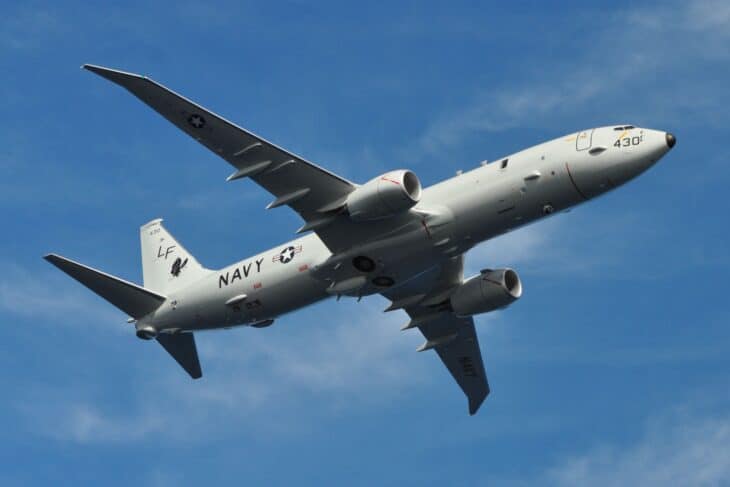

The P-8 is a militarized Boeing 737 that first flew on April 25, 2009, and entered US Navy service in November 2013. It tops the list because nothing else combines its speed, sensor load, weapons and worldwide numbers.
Boeing lists a top speed of 490 knots, or 564 mph (907 km/h), and a ceiling of 41,000 feet. On an anti-submarine mission it can fly 1,200 nautical miles out and still spend more than four hours on station.
It carries 129 A-size sonobuoys and has 11 weapon stations, five in an internal bay and six under the wings. Its weapons include Mk 54 torpedoes and Harpoon anti-ship missiles, with a flight crew of two and a mission crew of seven.
Boeing had delivered 178 P-8s by July 2026, with more than 730,000 combined flight hours. Its eight operators are the US Navy, the United Kingdom, Australia, India, Norway, New Zealand, South Korea and Germany, and Canada and Singapore have aircraft on order.
The US Navy had 136 delivered and three more on order as of October 2025. Its fiscal 2027 budget asks for 12 more for just over $4.2 billion, and the Navy calls that the last planned production year.
The sub hunter with no magnetic detector
Most US Navy P-8As carry no magnetic anomaly detector, the tail sensor that older sub hunters used to sense a submarine’s steel hull. The Navy deleted it to save weight and leans on sonobuoys instead. India asked for one, so the P-8I has it.
The P-8’s weak point is not the aircraft but the cost of the fleet around it. Canada says its program of up to 16 P-8As will cost more than $5 billion to buy, plus more than $10 billion to support until 2055.
2. Kawasaki P-1
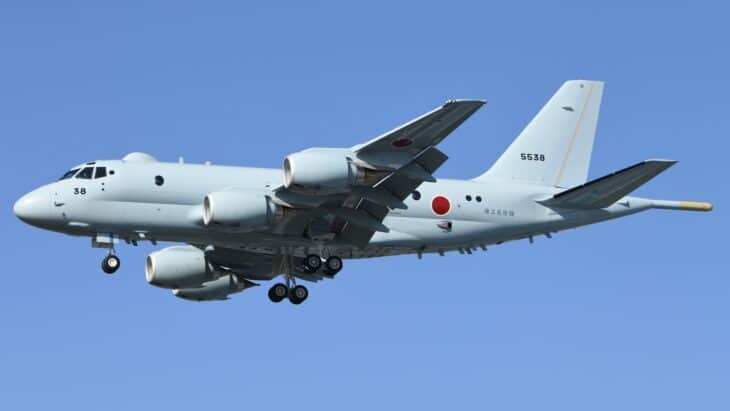

The Kawasaki P-1 was designed for the job from the start rather than adapted from an airliner. It first flew on September 28, 2007, and Japan’s navy took its first two operational aircraft in March 2013.
Four IHI F7-10 turbofans give it a top speed of 619 mph (996 km/h), the fastest on this list, and a range of 5,000 miles (8,000 km). It carries a Toshiba HPS-106 AESA radar, a tail-mounted MAD, eight underwing hardpoints and a bomb bay rated at 19,800 pounds (9,000 kg).
It was also the first operational aircraft in the world with fly-by-optics controls, which send flight commands over fiber-optic cable instead of wires. On paper, it is the P-8’s equal or better.
So why second? Japan is its only operator, with about three dozen in service, and in July 2025 inspectors downgraded the fleet’s status to “poor” over engine problems, avionics faults and a lack of spare parts. Italy confirmed export talks in 2025, but no foreign order has been signed.
3. Dassault Atlantique 2 (Standard 6)
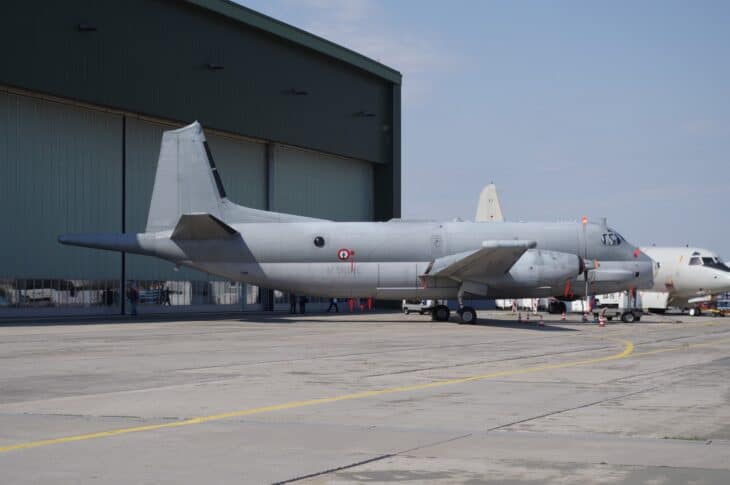

France’s Atlantique 2 first flew on May 8, 1981, and the first production aircraft reached the French Navy in October 1989. Only 28 were ordered, and France is the only operator.
It ranks this high because it was just rebuilt. The 18th and last aircraft upgraded to Standard 6 was handed over on February 17, 2026, and all 18 are based at Lann-Bihoué in Brittany.
The upgrade added a Thales Searchmaster active-array radar, which Thales says detects ships up to 200 nautical miles away, and a new acoustic system for the latest sonobuoys. It keeps its tail MAD, a crew of 12 and an internal bay for MU90 torpedoes or AM39 Exocet anti-ship missiles.
Twin Rolls-Royce Tyne turboprops make it slow, at 403 mph (648 km/h), but they also let it stay up for as long as 18 hours. It has even worked as a bomber, dropping GBU-12 laser-guided bombs over Mali in 2013 and Iraq in 2015.
France plans to replace it by 2035 under the PATMAR FUTUR program, with Airbus’s A321 MPA as the proposed aircraft. A firm order is expected by the end of 2026.
4. Lockheed P-3 Orion and CP-140 Aurora
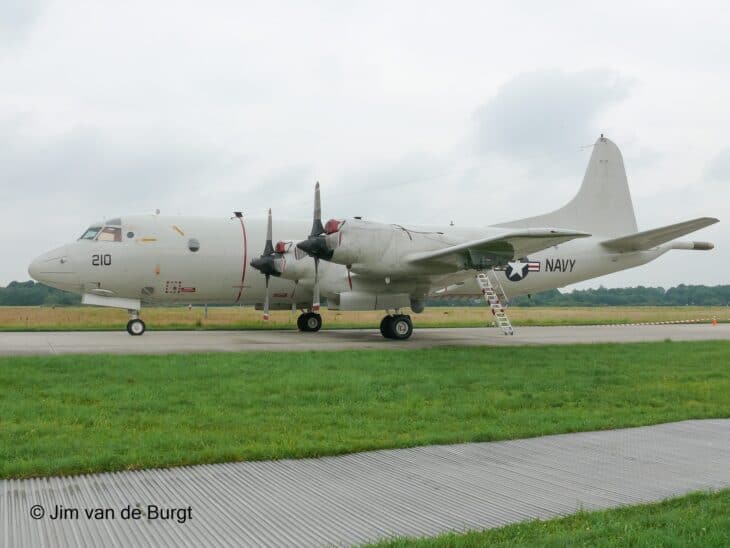

The P-3 Orion is the reason the P-8 exists. Its aerodynamic prototype flew on August 19, 1958, it joined the US Navy in August 1962, and Lockheed and Kawasaki built 757 between them.
The four-turboprop Orion reaches 473 mph (761 km/h), carries a crew of 11 in US Navy service and has its MAD in a long tail boom. In 1972, a New Zealand crew kept one aloft for 21.5 hours, the type’s record.
It ranks fourth because so many still fly. Canada’s 14 CP-140M Auroras, Taiwan’s 12 P-3Cs, South Korea’s P-3C and P-3CK fleet, Portugal, Brazil and Japan all keep Orions in the patrol role.
The US Navy itself has almost finished with them. In 2025 a NAVAIR spokesperson said its VX-30 test squadron flew four P-3s, and only a handful remain anywhere in the Navy.
The Orion's Gulf War tally
In the 1991 Gulf War, P-3Cs targeted 55 of the 108 Iraqi vessels destroyed. A plane built to chase Soviet submarines ended up as one of the war’s most effective ship killers.
5. Tupolev Tu-142
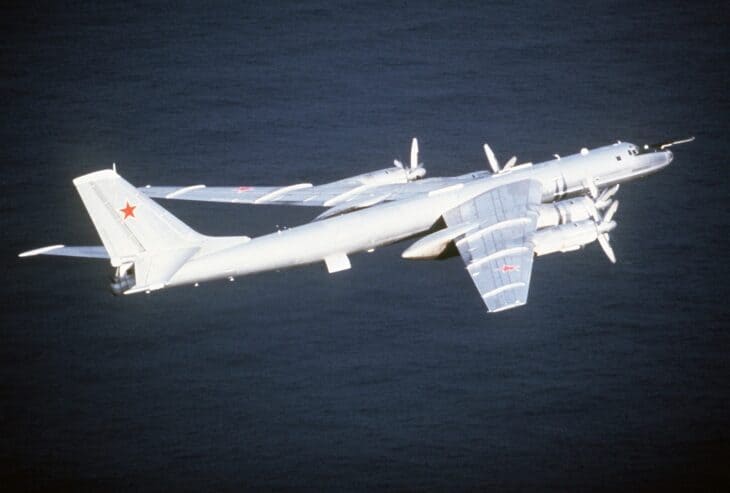

The Tu-142 is the anti-submarine version of the Tu-95 “Bear” bomber, with four contra-rotating turboprops. It first flew in 1968, reached initial operating capability in December 1972, and 100 were built.
Its range is the headline: the Tu-142M3 has a combat range of 4,000 miles (6,500 km) and a top speed of 575 mph (925 km/h), the second-fastest here. The Tu-142MK hunts with a MAD in a rear-facing fairing on top of the fin, plus RGB-series sonobuoys, and carries a crew of 11 to 13.
It has a real track record. On October 10, 1977, Tu-142s found a US submarine in the Philippine Sea, and one trailed it for 4 hours and 5 minutes.
Wikipedia lists 29 Tu-142M3, MR and MK aircraft in Russian Naval Aviation, but the MR is a radio relay aircraft for submerged missile submarines, not a hunter. On May 30, 2026, Ukraine said it destroyed two Tu-142s at Taganrog. The Aviationist reported that they were undergoing repair and may not have been flyable, and Russia has not confirmed the loss.
India flew eight Tu-142MK-E from March 1988 to March 2017, and its sub-hunting fleet is now built around the P-8I.
6. Shaanxi KQ-200 (and the new Y-9FQ)
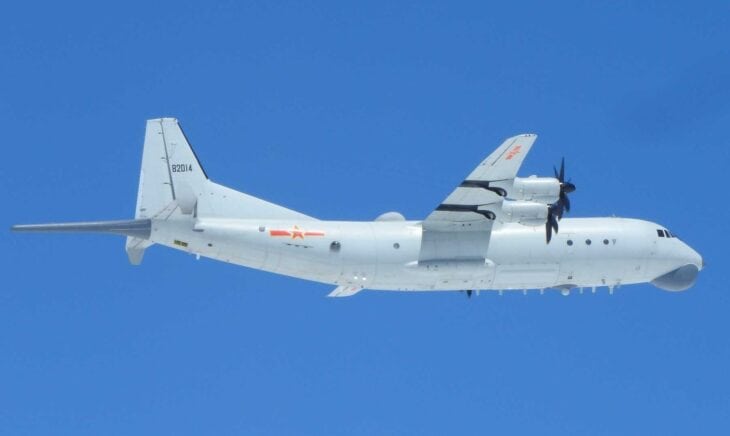
China’s KQ-200 is a four-turboprop sub hunter from the Y-8 transport family. The IISS Military Balance 2026 puts the fleet at more than 30, and China has never published a figure of its own.
It is slow, at 370 mph (600 km/h), and stays up for more than eight hours with a ferry range of 3,100 miles (5,000 km). What it carries is serious: up to 100 sonobuoys, 10 Yu-7 lightweight torpedoes and a long MAD boom in the tail, worked by a crew of about 13.
Its successor is already flying. The Y-9FQ appeared at Beijing’s Victory Day parade on September 3, 2025, and Japanese fighters intercepted one for the first time over the East China Sea on March 28, 2026, alongside an older KQ-200.
In July 2026, a commentator quoted by state-run Global Times said the Y-9FQ had entered operational training and could drop up to 100 sonobuoys per mission. No speed, range or fleet figures have been published.
7. Ilyushin Il-38 and Il-38N
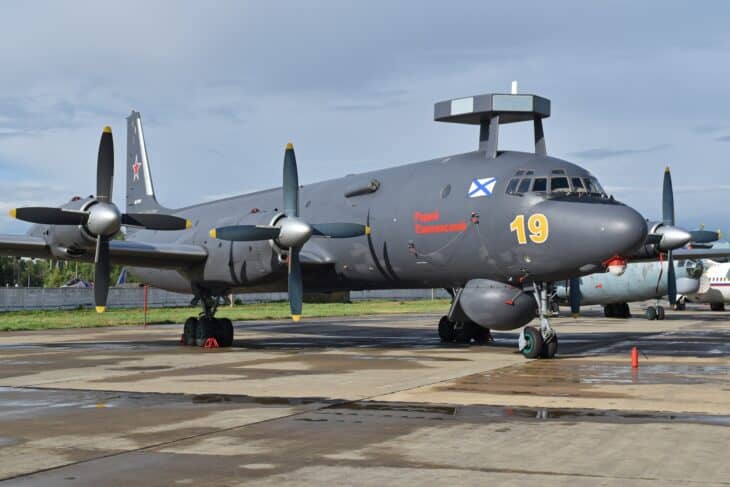

The Il-38 is the Il-18 airliner turned sub hunter. Its prototype flew on September 28, 1961, and production ran from 1967 to 1972, with Western sources counting 58 built and one Soviet source saying the navy received 35.
It reaches 401 mph (645 km/h), can stay up for 13 hours and has a ferry range of 4,700 miles (7,500 km). A MAD sits in its tail, and a crew of seven or eight works the radar and sonobuoys.
Russia’s Il-38N upgrade adds the Novella mission system, and a 2017 report said the navy would get 30 upgraded aircraft. In December 2025, a Ukrainian drone seriously damaged an Il-38N at the Yeysk air base.
India retired its last Il-38s on October 31, 2023.
8. Airbus C295 MPA and ASW
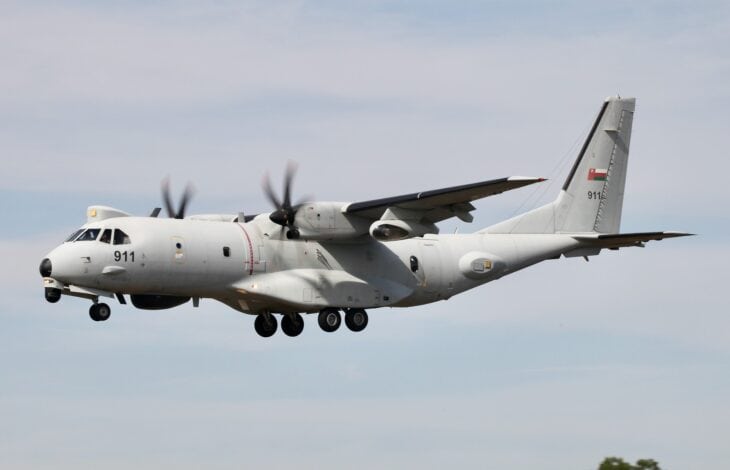

The C295 is a twin-turboprop transport that first flew on November 28, 1997. Its patrol and anti-submarine versions give smaller navies a sub hunter on a regional-transport budget.
The patrol version flies at up to 298 mph (480 km/h), stays up for more than 11 hours and has a maximum range of 3,500 miles (5,630 km). It carries a MAD and up to six underwing hardpoints for torpedoes, anti-ship missiles, mines and depth charges.
Navies flying it include Chile, Portugal, Mexico and Indonesia. It ranks eighth because it covers less sea, more slowly, than the four-engine types above it.
9. ATR 72 ASW (Turkey’s Meltem III)
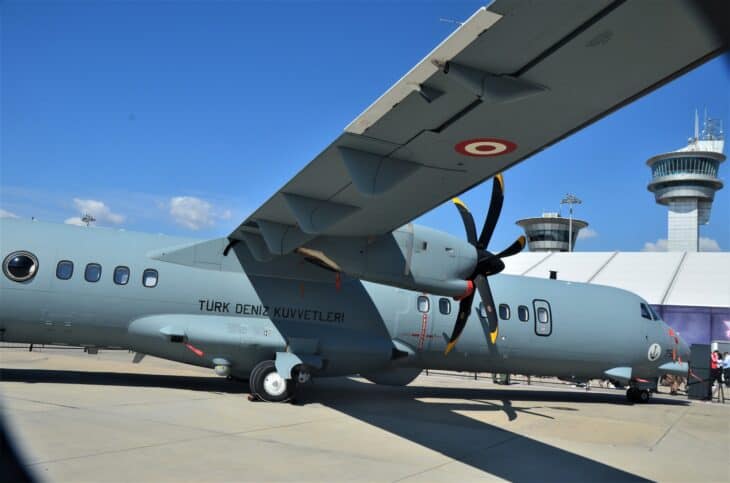

The ATR 72-600 regional airliner is the smallest sub hunter here. Leonardo’s ATR 72MP patrol version usually flies missions of more than eight hours with two pilots, two sensor operators and two observers.
The ATR 72ASW adds a system to store and drop sonobuoys and a weapons system with two torpedoes. Turkey ordered six in 2012, fitted with a Thales Ocean Master 400 radar and a CAE magnetic anomaly detector, and four had been delivered by December 2021.
Italy flies the same airframe as the P-72A, but it is not certified for anti-submarine work. Italy’s navy leaves that job to ships and helicopters while it decides on a replacement, with the Kawasaki P-1 the most concrete option.
The Drone That Flies With Them: MQ-4C Triton
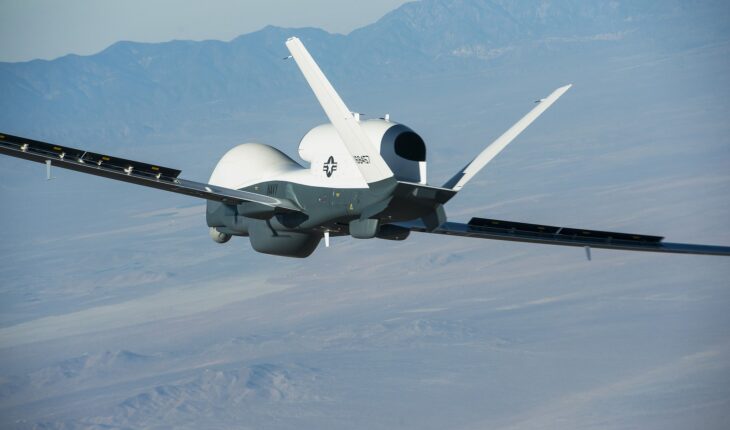

The MQ-4C Triton is not on the ranked list because it carries no weapons. It is the high-altitude scout that finds ships for the P-8, and it first flew on May 22, 2013.
Northrop Grumman says it can stay up for more than 24 hours, fly above 50,000 feet and cover 7,400 nautical miles. The US Navy cut its planned buy to 27 aircraft in 2023, and one crashed over the Persian Gulf region on April 9, 2026.
Australia has three in service, and in July 2026 Denmark, Finland, Germany and Norway announced plans to buy up to five. For the wider family of watchers, see our list of the most important spy planes ever flown.
Maritime Patrol Aircraft in WW2
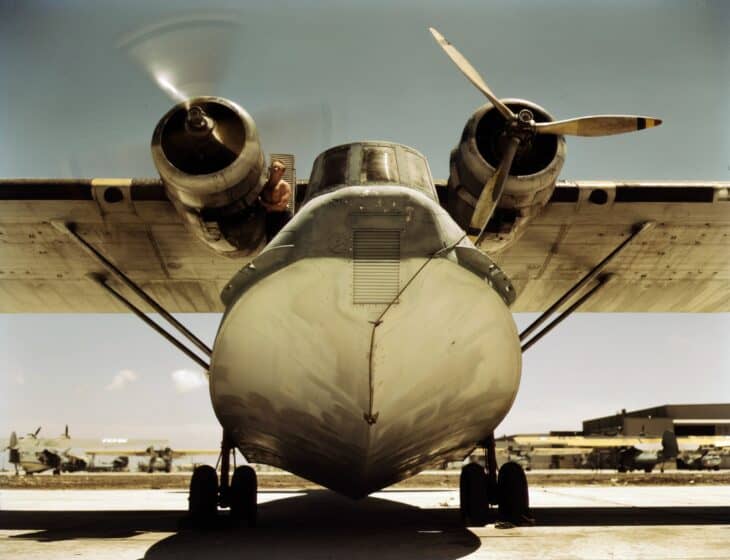

The job was invented in World War II, mostly by flying boats. The PBY Catalina first flew on March 21, 1935, and more than 3,300 were built.
On May 26, 1941, an RAF Coastal Command Catalina found the German battleship Bismarck. The bigger fight was against U-boats in the Mid-Atlantic gap, where land-based planes could not reach the convoys.
In February 1943, only 18 Very Long Range Liberators patrolled the North Atlantic. The gap finally closed in May 1943, when Canadian VLR Liberators began flying from Newfoundland.
What about the S-3 Viking and the Nimrod?
The S-3 Viking was a carrier-based sub hunter, not a land-based patrol plane, and its anti-submarine role ended in the late 1990s; the Navy retired its last S-3s on January 11, 2016. Britain’s Nimrod MRA4 never entered service: it was cancelled on October 19, 2010, after running 789 million pounds over budget and more than nine years late. Britain then bought nine P-8s, delivered between October 2019 and January 2022.
Britain’s Nimrod MRA4 is the warning for every program on this list. A Public Accounts Committee report in 2012 concluded that cancelling it had wasted 3.4 billion pounds, and the first replacement P-8 was not delivered until October 2019.
For the boats these aircraft are built to find, see our ranking of the largest submarines in the world, and for the carrier side of naval aviation, our guide to types of Navy planes.
FAQ
Sources and references used for research and fact-checking.
- Boeing, P-8 Poseidon
- Boeing, Boeing spotlights Poseidon demand and partnerships at Farnborough
- Breaking Defense, Navy looks to resume purchasing P-8A aircraft
- Wikipedia, Boeing P-8 Poseidon
- Government of Canada, Canadian Multi-Mission Aircraft project
- Wikipedia, Kawasaki P-1
- Naval News, Final Atlantique 2 Standard 6 delivered
- Dassault Aviation, Atlantique 2
- Wikipedia, Dassault Atlantique 2
- Wikipedia, Lockheed P-3 Orion
- The War Zone, First P-8 Poseidon ever built starts new career supporting Pacific missile tests
- Wikipedia, Tupolev Tu-142
- The Aviationist, Ukrainian drones reportedly hit Tu-142MR at Taganrog
- Wikipedia, Shaanxi KQ-200
- The Aviationist, China's Y-9FQ intercepted for the first time over the East China Sea
- The Defense Post, China's upgraded Y-9 anti-submarine aircraft
- Wikipedia, Ilyushin Il-38
- Naval Technology, C295 maritime patrol aircraft
- Leonardo, The ATR 72MP, guardian of the seas
- Naval News, Turkey's Meltem III ATR 72-600 ASW deliveries
- ItaMilRadar, Italy's 2026 is the new 2016: ten years of the P-72A
- Northrop Grumman, Triton
- Wikipedia, Northrop Grumman MQ-4C Triton
- Wikipedia, Consolidated PBY Catalina
- Wikipedia, Mid-Atlantic gap
- Wikipedia, Martin P5M Marlin
- Wikipedia, Lockheed S-3 Viking
- Wikipedia, BAE Systems Nimrod MRA4
Get the Newsletter
The latest aviation news and stories sent to your inbox.
About the Author

Tim is the owner and lead editor of AeroCorner since 2019, overseeing aviation content covering aircraft, airlines, airports, and the broader aviation industry. Through years of researching, writing, editing, and publishing aviation-focused content, he has developed extensive practical knowledge of commercial aviation and air travel. Based in Asia and a frequent traveler himself, Tim also brings firsthand passenger experience to AeroCorner’s coverage. Outside of publishing, he has also explored aviation firsthand through hands-on flight training in New Zealand.