

Table of Contents
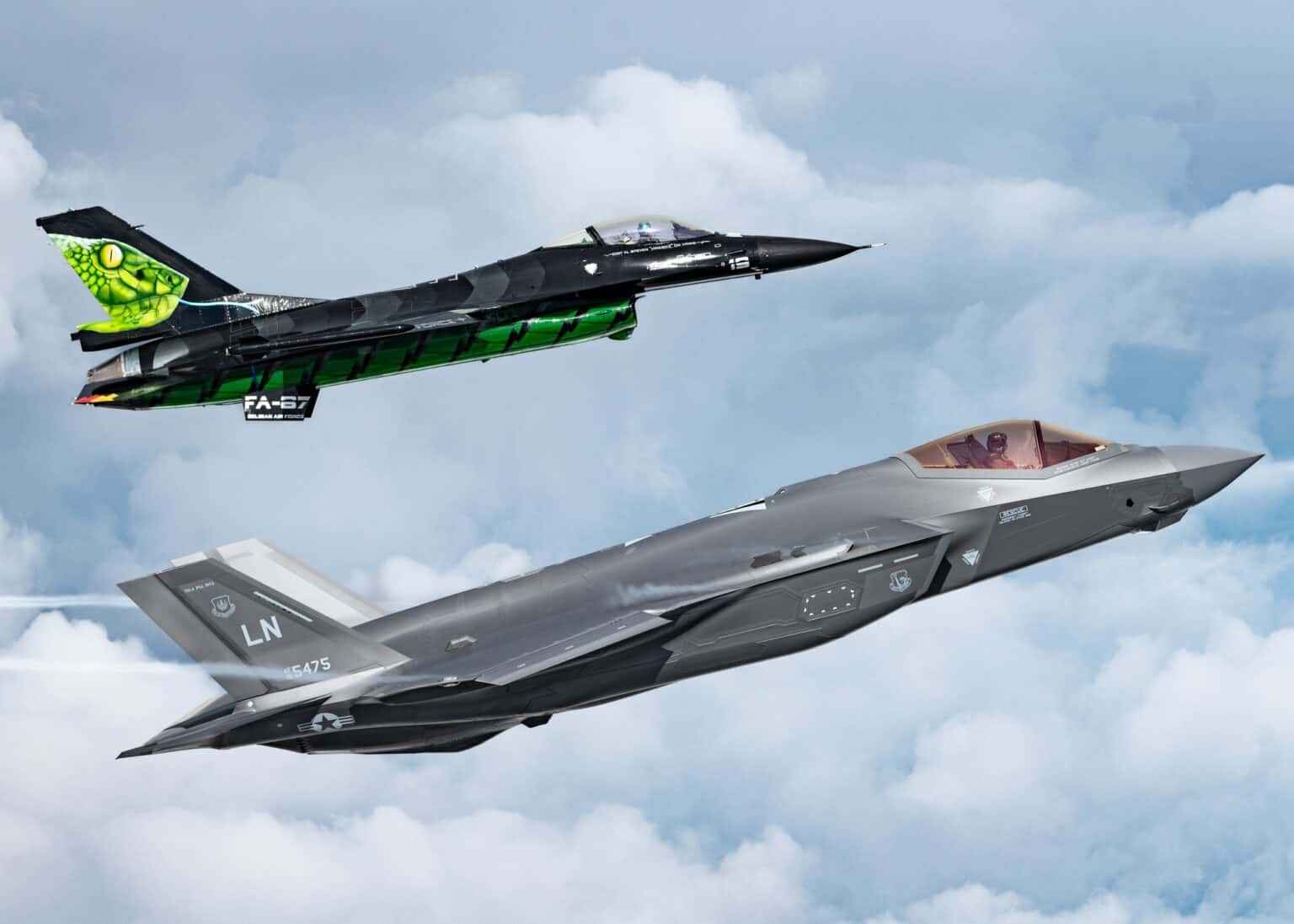
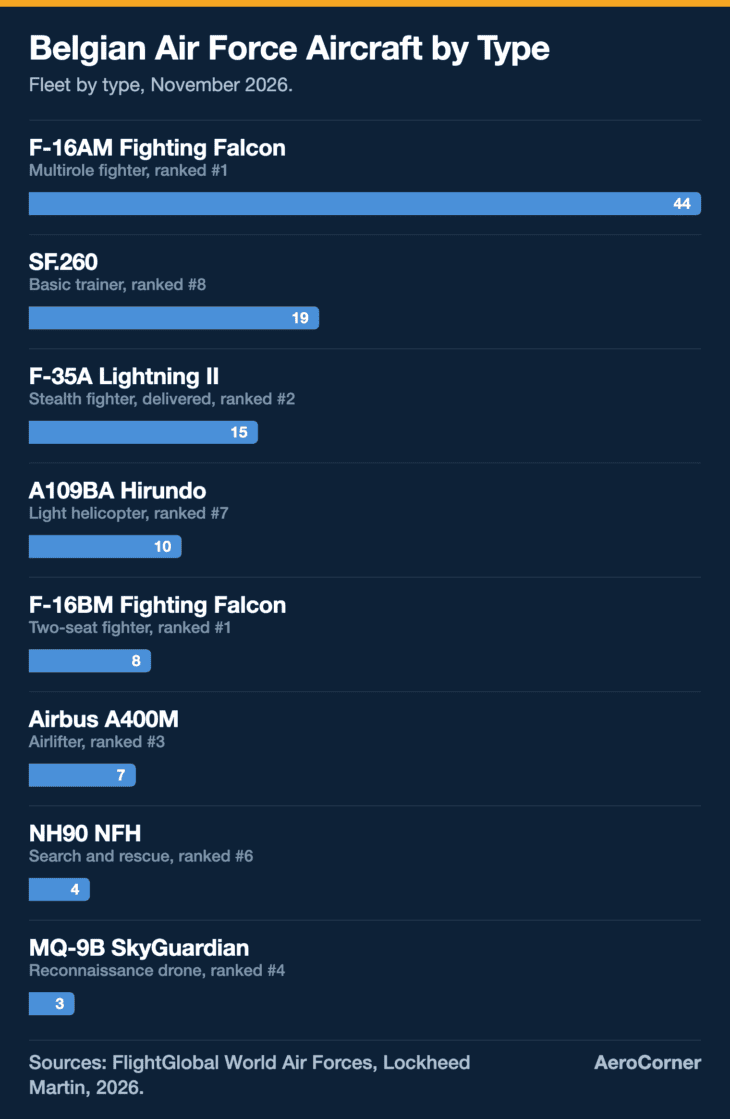
The Belgian Air Force still fights with the F-16. FlightGlobal’s World Air Forces 2026 directory counts 44 single-seat F-16AMs and 8 two-seat F-16BMs, the survivors of 160 jets Belgium bought from 1977 onward.
Their replacement has started to land. The first three F-35As reached Florennes on October 13, 2025, and by late September 2026 Belgium had seven in the country and eight more training at Luke Air Force Base in Arizona, out of 34 ordered.
This guide ranks every type the Belgian Air Force flies by its weight in Belgian air defense as of November 2026. It also covers who guards the Benelux skies, where the jets are based and why the F-16s are headed for Ukraine.
| Rank | Aircraft | Role | Fleet | Status |
|---|---|---|---|---|
| 1 | F-16AM/BM Fighting Falcon | Multirole fighter, two-seat trainer | 44 AM, 8 BM | In service; leaving for Ukraine as F-35s arrive |
| 2 | F-35A Lightning II | Stealth multirole fighter | 15 delivered (7 in Belgium, 8 at Luke AFB) | 34 ordered; 11 more planned |
| 3 | Airbus A400M Atlas | Airlift, air-to-air refueling | 7 | In service at Melsbroek |
| 4 | MQ-9B SkyGuardian | Reconnaissance drone | 3 of 4 delivered | In service at Florennes |
| 5 | Airbus A330 MRTT | Tanker, transport | Shared NATO fleet | Flying hours bought in a pooled fleet |
| 6 | NH90 NFH | Search and rescue | 4 | In service at Koksijde |
| 7 | H145M and A109BA | Light utility helicopter | 10 A109; 15 H145M ordered | H145M deliveries since June 2026 |
| 8 | SF.260 and PC-7 MKX | Basic trainer | 19 SF.260; 18 PC-7 MKX ordered | PC-7 training from 2028 |
| 9 | Falcon 7X and Cessna 408 SkyCourier | Government and special forces transport | 2 Falcon 7X (leased); 5 SkyCourier ordered | SkyCourier deliveries from 2027 |
How this ranking works
Aircraft are ranked by their weight in Belgian air defense in November 2026: fighters first, then the transport, tanker and drone fleets that keep them flying, then helicopters, trainers and government jets. Active counts come from FlightGlobal’s World Air Forces 2026 directory. F-35 deliveries, orders and dates come from Lockheed Martin, Airbus and Belgian Defence announcements reported by the aviation press. Ground-based air defense is left out.
1. F-16AM/BM Fighting Falcon: 47 Years in Belgian Service
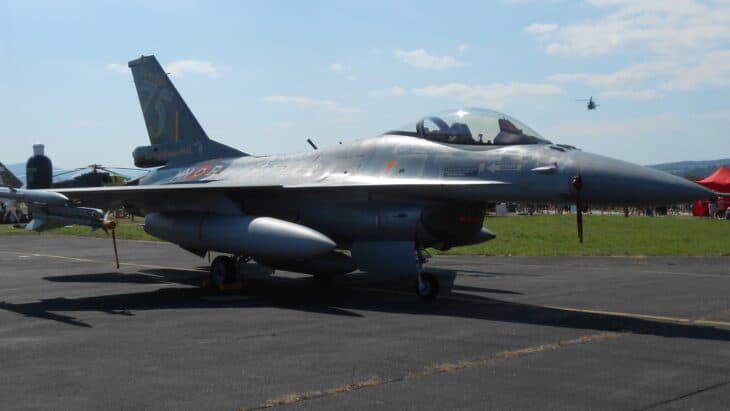

Every Belgian quick-reaction launch in 2026 is still most likely to be an F-16. FlightGlobal counts 44 F-16AMs and 8 two-seat F-16BMs, flown by the 10th Tactical Wing at Kleine-Brogel and the 350th Squadron at Florennes.
Belgium was one of the four European countries that chose the F-16 together in 1975, and it signed for 116 jets on May 5, 1977. The fleet entered service in 1979 and eventually totaled 160 airframes, of which only 105 received the mid-life upgrade to the AM/BM standard.
The jets have a long combat record. Twelve Belgian F-16s flew 679 combat sorties over Kosovo in 1999, and six deployed against ISIS between October 2014 and July 2015 under Operation Desert Falcon.
NATO's first F-16 squadron
Belgium’s 349th Squadron was the first operational F-16 squadron in NATO. Nearly five decades later, its home base of Kleine-Brogel is still flying the type while it waits for its first F-35As in 2027.
2. F-35A Lightning II: The Fleet Arriving Now
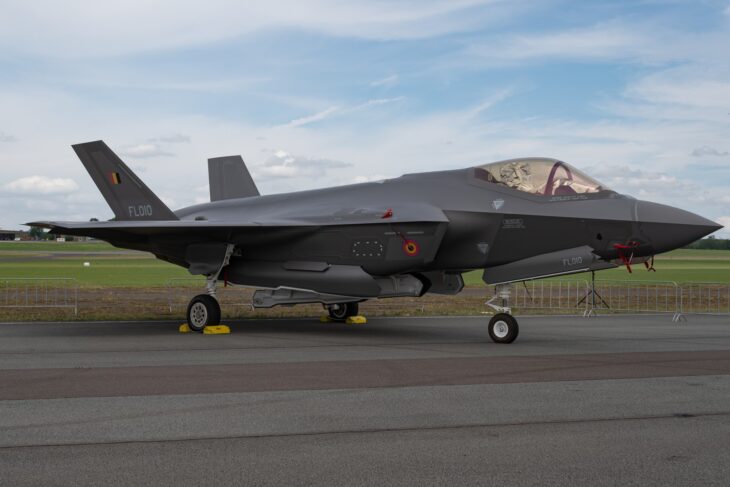

Belgium chose the F-35A on October 25, 2018, ordering 34 to replace its F-16s. The decision over the Eurofighter Typhoon came down to price.
The first three landed at Florennes on October 13, 2025, flown in from Fort Worth by way of the Azores, and a fourth followed on October 24. Three more arrived in September 2026, giving Belgium seven at home and eight at Luke Air Force Base, where Belgian pilots and maintainers train.
Florennes’ 1st Squadron flies the type first. Kleine-Brogel is due its first F-35As in 2027, and the fleet is meant to reach full operational capability by 2030.
The order is growing. In July 2025 the government approved 11 more F-35As, which would take the fleet to 45, and Defense Minister Theo Francken said in February 2026 that he hoped to sign the contract this year, with final assembly at Cameri in Italy so the jets are “as European as possible.”
How the two fighters compare head to head is covered in our F-35 vs F-16 comparison.
Hasn't Belgium already sent its F-16s to Ukraine?
Not yet. Belgium pledged 30 F-16s to Ukraine in May 2024, to be delivered by 2028, but reports through October 2026 confirmed none had arrived, because each F-16 can only leave once an F-35A replaces it. Prime Minister Bart De Wever said on October 15, 2026, that Belgium would send 10 by the end of the year, without saying how many would fly and how many would be used for spare parts.
3. Airbus A400M Atlas: The Heavy Lifter
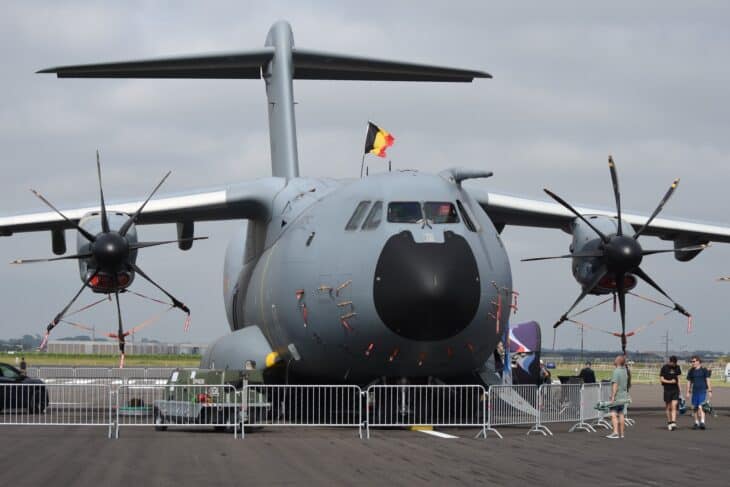
Belgium’s airlift rests on seven Airbus A400Ms, flown by the 20th Squadron of the 15th Air Transport Wing at Melsbroek, next to Brussels Airport. They have been in Belgian service since 2020.
An eighth A400M at Melsbroek belongs to Luxembourg. Two of the Belgian aircraft can also refuel other aircraft in flight.
4. MQ-9B SkyGuardian: Belgium’s First Big Drones
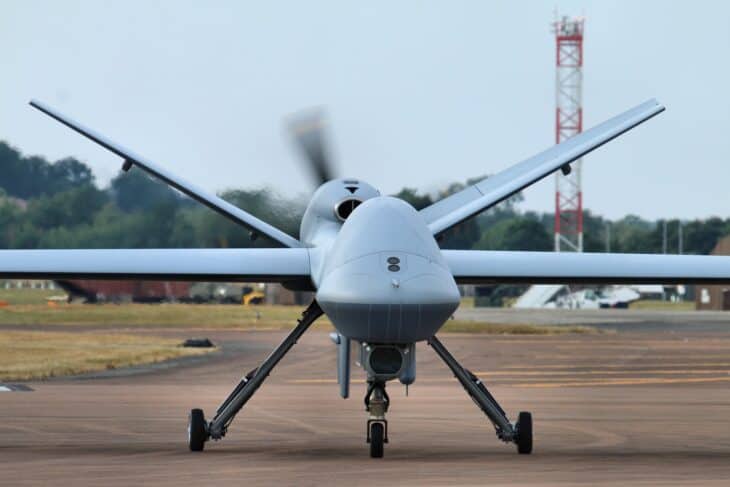
Belgium ordered four MQ-9B SkyGuardian drones, the long-endurance successor to the Reaper. The first arrived at Florennes on August 18, 2025, and the second and third followed in February 2026.
They fly reconnaissance with the 80th UAV Squadron. Parliament has approved arming them, and Belgium has ordered Hellfire missiles for the fleet. The family tree behind them is explained in our Reaper vs Predator guide.
5. Airbus A330 MRTT: The Tanker Belgium Shares
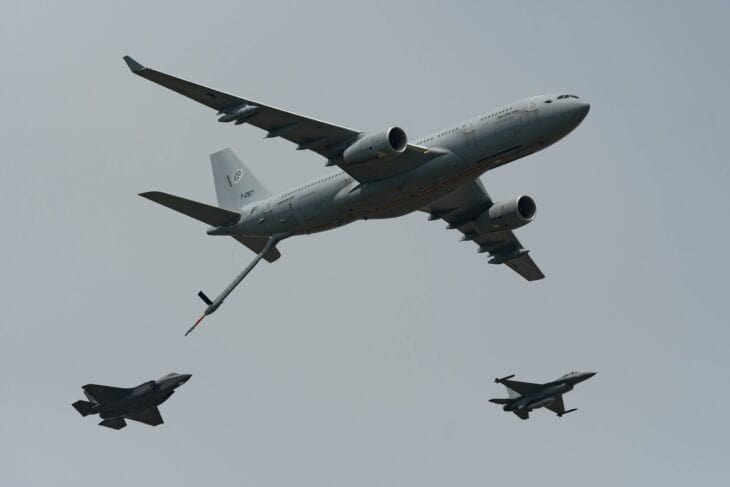
Belgium does not own a tanker outright. Since 2018 it has bought flying hours in NATO’s Multinational MRTT Fleet, a pool of Airbus A330 MRTT tankers based at Eindhoven in the Netherlands.
The pool had 10 aircraft with 2 more on order as of 2026. Belgium funded a second airframe in 2023, which was due during 2026.
6. NH90 NFH: Search and Rescue Over the North Sea
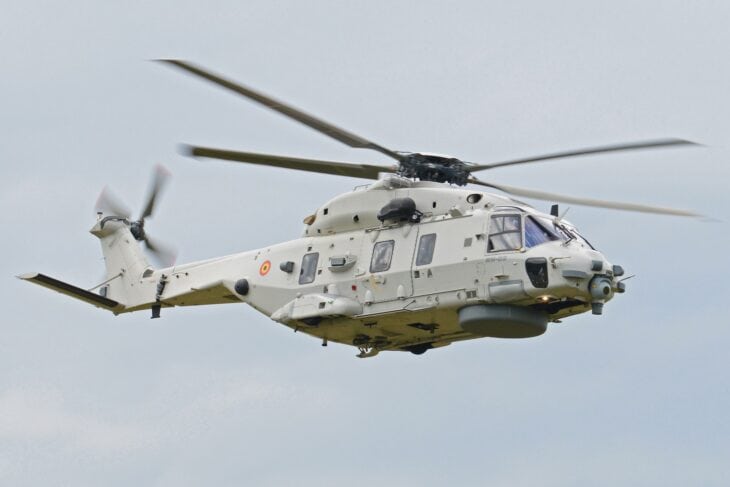

Four NH90 NFH helicopters fly search and rescue from Koksijde on the Belgian coast with the 40th Squadron. They were delivered between August 2013 and August 2015 and are operated on behalf of the Belgian Navy.
A mid-life update is planned to give them an anti-submarine role. The army’s NH90 TTH transport helicopters fared worse: they were judged too expensive and too few in 2020 and retired in September 2025.
7. H145M and A109BA: The Light Helicopter Swap
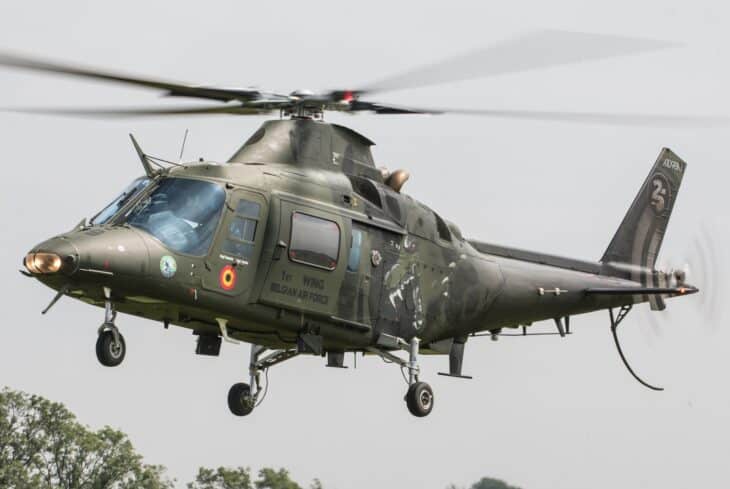

Belgium bought 46 Agusta A109BA Hirundo helicopters in 1988, and FlightGlobal counts 10 still in service. They are being replaced by the Airbus H145M.
Belgian Defence ordered 15 H145Ms in June 2024, and the first was officially handed over at Beauvechain on June 23, 2026. Deliveries continue at one or two a month until mid-2027, and five more are being bought for the Federal Police.
8. SF.260 and PC-7 MKX: Where Belgian Pilots Start
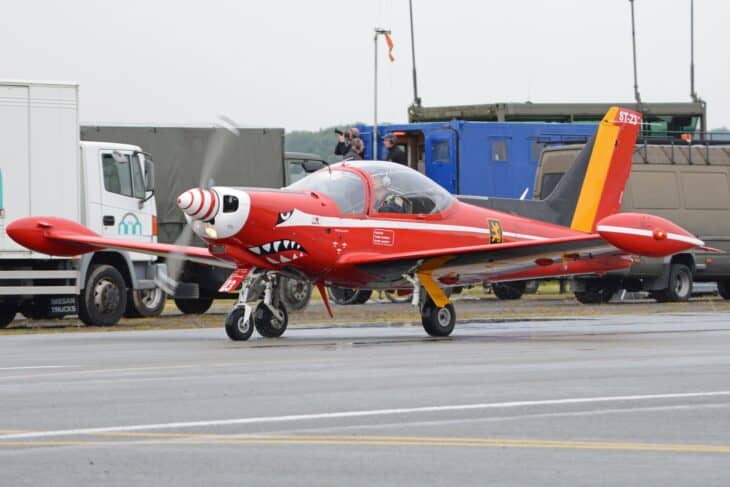

Belgian military pilots still take their first lessons in the SIAI-Marchetti SF.260, a piston trainer the Air Force has flown since 1969. FlightGlobal counts 19 at Beauvechain.
In November 2025 the government approved 18 Pilatus PC-7 MKX turboprops to replace them, the first trainer renewal in 55 years. The last SF.260s retire in 2027 and PC-7 training starts in 2028.
Advanced training already happens abroad. Belgium retired its Alpha Jets in December 2019 and moved advanced jet training to Cazaux in France, with future training planned in the US.
9. Falcon 7X and SkyCourier: Ministers and Special Forces
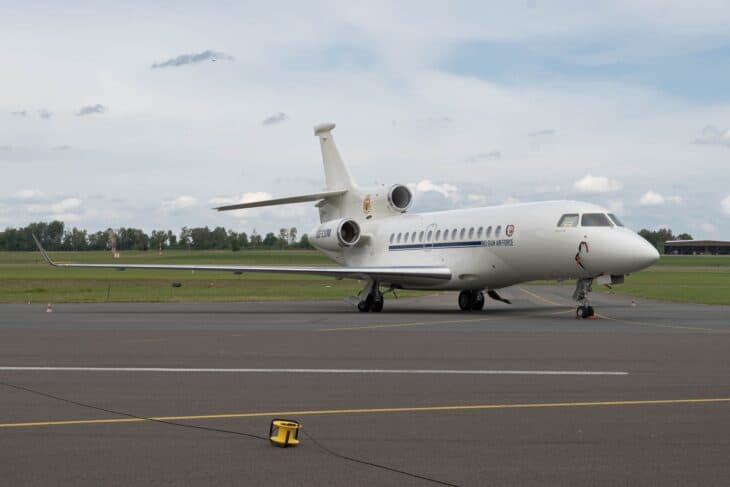

The 21st Squadron at Melsbroek flies two leased Dassault Falcon 7X business jets for VIP transport. Both were operational from October 1, 2020.
Five Cessna 408 SkyCouriers were approved on December 23, 2025, for €322.3 million to support special forces, with deliveries from 2027. The 23rd Squadron “Devil” was reactivated at Beauvechain in July 2026 to fly them.
Who Guards Belgian Airspace
Belgium does not police its skies alone. Under an agreement signed with the Netherlands on March 4, 2015, the two air forces take turns keeping two armed fighters on quick reaction alert for Belgium, the Netherlands and Luxembourg.
The deal lets either country’s minister order the other’s jets to use force over their own territory. Luxembourg does not allow lethal force over its airspace.
Kleine-Brogel also has a mission Belgium has never officially acknowledged. A NATO Parliamentary Assembly draft report leaked in July 2019 listed the base as a storage site for US nuclear weapons, and Belgium neither confirms nor denies it.
Where the Belgian Air Force Is Based
Fighters fly from two bases: Kleine-Brogel in Limburg, home of the 10th Tactical Wing, and Florennes in Namur province, home of the 2nd Tactical Wing and the drone squadron. Transport aircraft fly from Melsbroek.
Helicopters and basic training sit at Beauvechain, and search and rescue at Koksijde. Headquarters is in Evere, Brussels, and the Air Force has about 5,700 personnel.
A Short History of the Belgian Air Force
Belgian military aviation dates to 1909, when it began as a branch of the army. It became an independent force on October 15, 1946.
Its Cold War fleet included 100 F-104G Starfighters and the Mirage 5, which was phased out after 18 deployed to Turkey during the 1991 Gulf War. From 2002 the service was called the Air Component of a unified Belgian Defence, and it took back the name Belgian Air Force in 2024.
Major General Bruno Beeckmans has commanded it since May 29, 2026, succeeding Geert De Decker. A former transport pilot, he is the first chief without a fighter career.
With about 60 fighters, Belgium sits far down the list of the largest air forces in the world. How its F-35 fleet stacks up is a question for our ranking of the best air forces in the world. Its larger neighbors are covered in our guides to the French Air Force and the German Air Force.
FAQ
Sources and references used for research and fact-checking.
- Wikipedia, List of equipment of the Belgian Air Force
- Wikipedia, Belgian Air Force
- Migflug, Belgian Air Force
- Lockheed Martin, Lockheed Martin and Belgium Celebrate Arrival of First Belgian F-35 Aircraft
- Scramble, First Belgian F-35s arrived at Florennes AB
- Aviation A2Z, Belgium takes delivery of three more F-35 fighter jets
- The Aviationist, Belgian F-35 Fleet Will Reach 45 Jets, Expanding Existing Order by 11
- Breaking Defense, Belgium wants additional F-35 jets to be 'as European as possible,' says defense minister
- UNITED24 Media, Belgium Confirms Delivery of 10 F-16 Fighter Jets to Ukraine by End of 2026
- Babel, In two years Belgium has not delivered any of the 30 promised F-16 fighters to Ukraine
- AIN, Belgium receives first Airbus H145M
- Janes, Belgian Air Force takes delivery of first Airbus H145M rotorcraft
- Militär Aktuell, Belgian Air Force procures 18 Pilatus PC-7 MKX trainers
- The Brussels Times, Major General Geert De Decker takes command of Belgium's air force
Get the Newsletter
The latest aviation news and stories sent to your inbox.
About the Author

Tim is the owner and lead editor of AeroCorner since 2019, overseeing aviation content covering aircraft, airlines, airports, and the broader aviation industry. Through years of researching, writing, editing, and publishing aviation-focused content, he has developed extensive practical knowledge of commercial aviation and air travel. Based in Asia and a frequent traveler himself, Tim also brings firsthand passenger experience to AeroCorner’s coverage. Outside of publishing, he has also explored aviation firsthand through hands-on flight training in New Zealand.