Cargo Airplanes
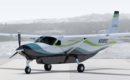
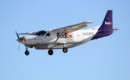
Cessna Super Cargomaster
ICAO: C208
The twin-turboprop utility aircraft built for cargo and regional passenger service.
The latest aviation news and stories sent to your inbox.
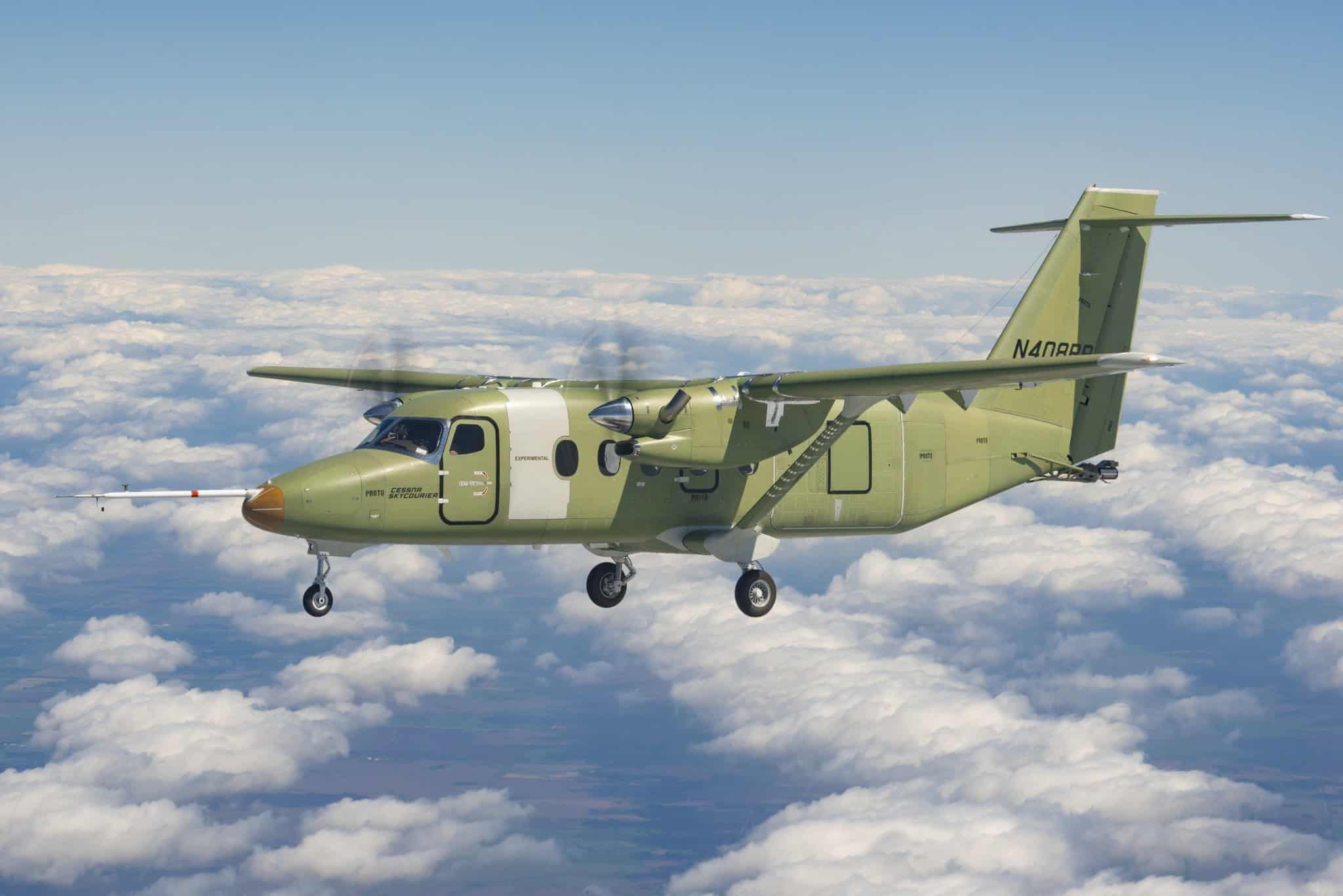
The Cessna 408 SkyCourier is a high-wing twin-turboprop developed for cargo and commuter markets. Introduced in the early 2020s, it was designed with a focus on freight efficiency. The aircraft serves both cargo and passenger operators.
Live Fleet Activity (C408)
Fetching live data…


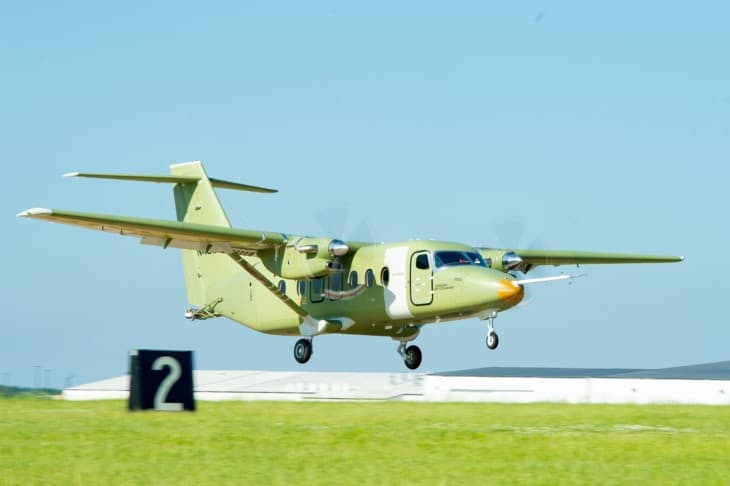
The SkyCourier first flew in 2020 and entered service in 2022. It was developed as a clean-sheet design with a large cargo door and flat floor optimized for freight operations. The aircraft features a fixed landing gear and high-wing configuration.
Powered by two Pratt & Whitney Canada PT6A turboprop engines producing approximately 1,100 shaft horsepower each, the SkyCourier cruises at around 200 knots (370 km/h). Maximum takeoff weight exceeds 19,000 pounds (8,618 kg). The passenger version seats up to 19 occupants.
The SkyCourier targets cargo operators and regional airlines. Its design emphasizes low operating costs and ease of maintenance. The aircraft expands Cessna’s presence in the utility turboprop segment.
Sources and references used for research and fact-checking.