

Table of Contents
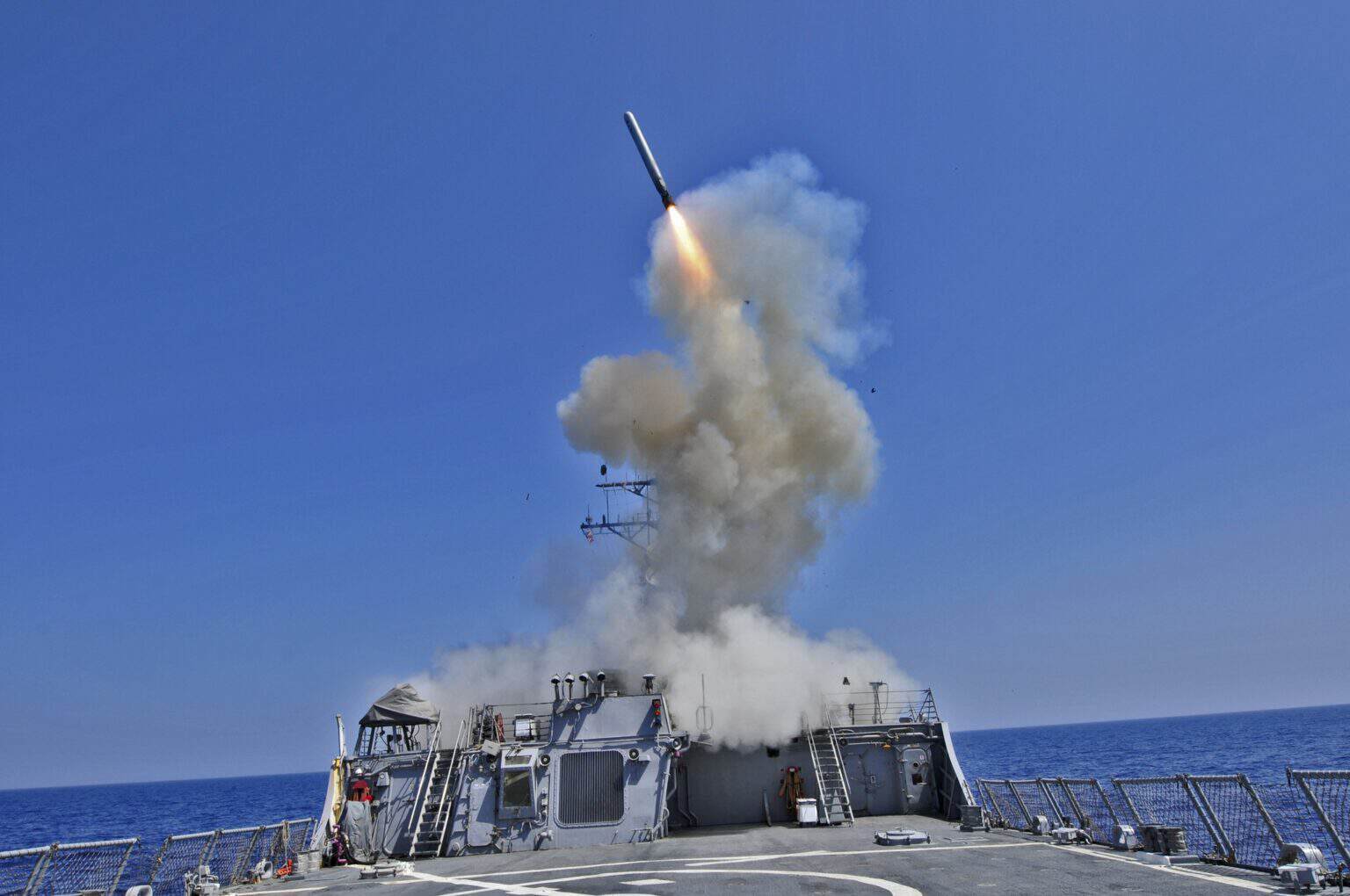
The US Navy’s Tomahawk is the most combat-proven cruise missile in the world. It has been fired in almost every American campaign since the 1991 Gulf War, and US ships and submarines launched more than 1,000 of them in the first weeks of the 2026 Iran war, according to CSIS.
A cruise missile is a guided, jet-powered weapon that flies like a small unmanned aircraft, usually low and below the speed of sound, to hit a target hundreds or thousands of miles away. This list ranks the 12 that matter most as of November 2026 by what they have actually done in war, not by the ranges their builders advertise.
| Rank | Missile | Country | Launched from | Max published range | Combat record |
|---|---|---|---|---|---|
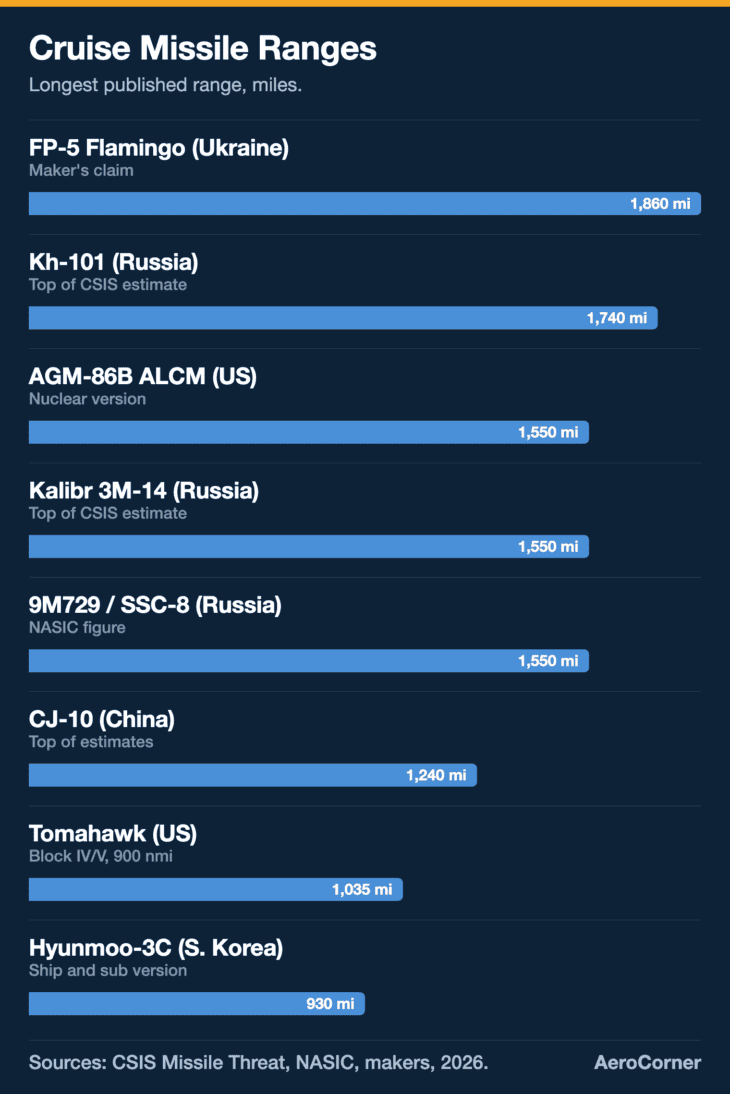
| 1 | Tomahawk | United States | Ships, submarines | 900 nmi (about 1,035 miles, 1,667 km), Block IV/V | Every major US campaign since 1991; 1,000+ fired in the 2026 Iran war |
| 2 | 3M-14 Kalibr | Russia | Ships, submarines | 930 to 1,550 miles (1,500 to 2,500 km) | Syria from 2015; Ukraine since 2022 |
| 3 | Kh-101 | Russia | Bombers | 1,550 to 1,740 miles (2,500 to 2,800 km) | Syria from 2015; Ukraine since 2022 |
| 4 | JASSM / JASSM-ER | United States | Aircraft | About 620 miles (1,000 km), ER | Syria 2018; about 1,100 ER fired in the 2026 Iran war |
| 5 | Storm Shadow / SCALP-EG | UK, France | Aircraft | 155 to 250 miles (250 to 400 km) | Iraq 2003, Libya 2011, Ukraine since 2023 |
| 6 | AGM-86 ALCM | United States | B-52H bomber | 1,550 miles (2,500 km), AGM-86B | 494 conventional versions fired, 1991 to 2003 |
| 7 | BrahMos | India, Russia | Land, ships, aircraft | 185 to 310 miles (300 to 500 km) | Reported use against Pakistan, May 2025 |
| 8 | R-360 Neptune | Ukraine | Ground | 175 miles (280 km); Long Neptune up to 620 miles (1,000 km) | Cruiser Moskva, April 2022 (Ukrainian claim) |
| 9 | 9M729 (SSC-8) | Russia | Ground | 1,550 miles (2,500 km) | 23 launches at Ukraine, Aug to Oct 2025 (Ukrainian figure) |
| 10 | FP-5 Flamingo | Ukraine | Ground | 1,860 miles (3,000 km), maker’s claim | In use since 2025; five shot down on July 4, 2026 |
| 11 | CJ-10 | China | Ground, aircraft, ships | 930 to 1,240 miles (1,500 to 2,000 km) | Never fired in combat |
| 12 | Hyunmoo-3 | South Korea | Ground, ships, submarines | 930 miles (1,500 km), Hyunmoo-3C | Never fired in combat |
How this ranking works
We rank by proof. A missile used in several wars over many years beats one used in a single conflict, and a missile used in combat beats one that has only been tested. Range comes second, because most published ranges are estimates or a builder’s claim. Hypersonic cruise missiles such as Russia’s Tsirkon are left to their own list. Specs come from CSIS Missile Threat, the Pentagon’s intelligence center NASIC and the manufacturers, as of November 2026.
What is a cruise missile?
A cruise missile has wings and an air-breathing jet engine, and it stays in powered, level flight for most of its trip. A ballistic missile is the opposite: a rocket burns for a few minutes, then the warhead falls along an arc. Our guide to the types of missiles sets the two side by side.
Most cruise missiles are slow by missile standards. A Tomahawk cruises at about 570 mph (920 km/h), close to an airliner, but it flies only 100 to 165 feet (30 to 50 m) above the ground, under most radar coverage.
That low path is the whole trick. It is also why the counter to a cruise missile is an airborne radar or a dense air defense system that can look down, not a faster missile.
1. Tomahawk (United States)
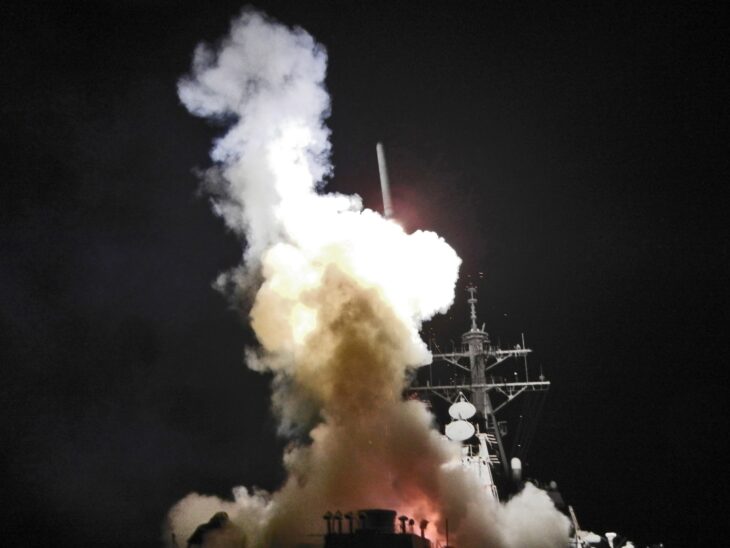

The Tomahawk is a subsonic, turbofan-powered missile fired from US Navy destroyers, cruisers and submarines. CSIS lists it in service since 1983, and the current Block IV and V versions reach 900 nautical miles, about 1,035 miles (1,667 km).
Its combat record has no equal. The Navy fired 288 in the 1991 Gulf War, more than 800 in the 2003 invasion of Iraq and 66 at Syria in April 2018. Submarines fired 30 more at Iranian nuclear sites in June 2025.
Then came Operation Epic Fury. CSIS counted more than 850 Tomahawks fired in the first four weeks of the war with Iran that began on February 28, 2026, the most in any single campaign, and cited a Wall Street Journal tally of more than 1,000 by the April ceasefire.
A $3.6 million shot, and not enough of them
CSIS puts the cost of one Tomahawk at $3.6 million, from Navy budget documents, and estimated the stockpile before the Iran war in the low 3,000s. The Navy was due to receive just 110 new ones in fiscal 2026. In August 2026 the Pentagon signed a $22.9 billion, seven-year deal with Raytheon to build more than 1,000 a year.
The United Kingdom fires Tomahawks from its submarines, and Australia fired its first from the destroyer HMAS Brisbane in December 2024. Japan has a reported 400 on order, which CSIS says may be delayed by the Iran war.
2. 3M-14 Kalibr (Russia)
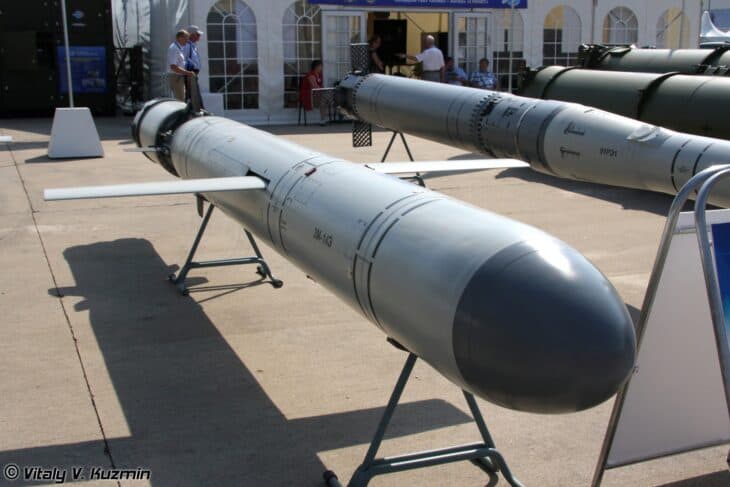

The Kalibr is Russia’s answer to the Tomahawk: a ship- and submarine-launched land-attack missile that CSIS credits with an estimated 930 to 1,550 miles (1,500 to 2,500 km) of range. It turned small ships into long-range strike platforms.
Its debut was a message. In October 2015, a frigate and three small corvettes in the Caspian Sea fired 26 Kalibrs at targets in Syria, and the missiles flew roughly 1,120 miles (1,800 km) to get there, according to CSIS.
Since February 2022 it has been one of Russia’s main weapons against Ukraine, fired at command posts, air bases, ports and power plants. On July 14, 2022, three Kalibrs hit the center of Vinnytsia and killed at least 20 people.
It ranks below the Tomahawk because it has one long war behind it, not three decades of them.
3. Kh-101 (Russia)
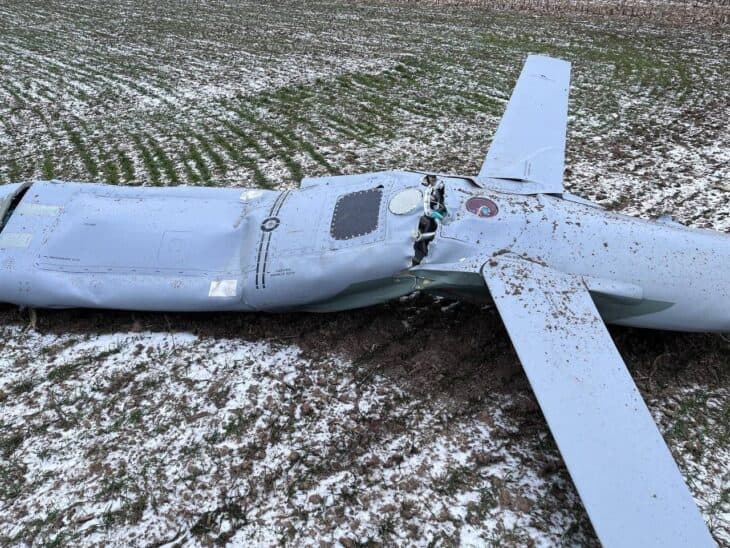

The Kh-101 is a stealthy air-launched missile carried by the Tu-95 and Tu-160 bombers. CSIS gives it 1,550 to 1,740 miles (2,500 to 2,800 km) of range, the longest of any missile here except Flamingo’s unproven claim, and a cruising speed of Mach 0.58.
It hugs the terrain at about 100 to 200 feet (30 to 60 m) and uses radar-absorbing materials to stay hidden. Russia first fired it in combat at Islamic State targets in Syria in November 2015.
It has been used extensively in Ukraine, though early US defense assessments described a high failure rate. On July 30, 2026, two missiles believed to be Kh-101s headed for the Polish border during a strike on western Ukraine.
4. JASSM and JASSM-ER (United States)
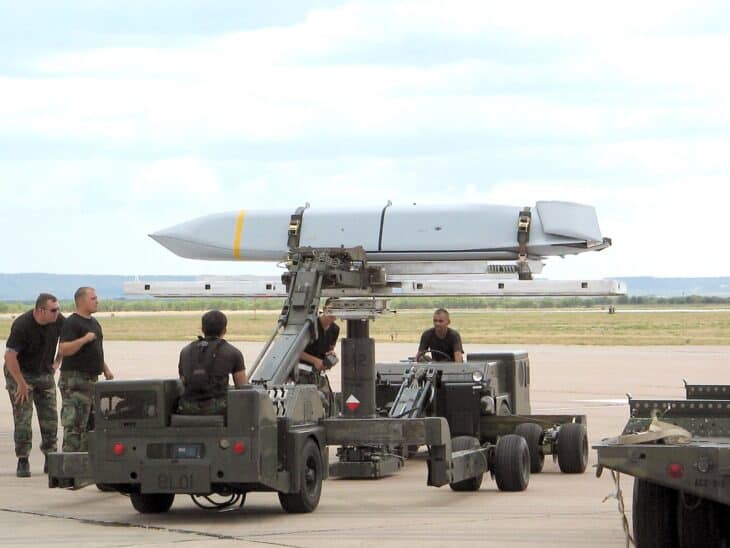

The Joint Air-to-Surface Standoff Missile is a stealthy, air-launched weapon with a 1,000-pound warhead. The baseline version reaches about 230 miles (370 km) and the extended-range JASSM-ER about 620 miles (1,000 km), according to CSIS.
It came late to combat, first fired at Syrian chemical weapons sites in 2018. The Iran war changed that: CSIS cited a New York Times count of around 1,100 JASSM-ERs used, many launched by B-52s flying from Royal Air Force bases.
At $2.6 million a shot, per CSIS, it is cheaper than a Tomahawk. An even longer-range JASSM-XR, rated at about 1,120 miles (1,800 km), had not been delivered as of April 2026.
5. Storm Shadow / SCALP-EG (United Kingdom and France)
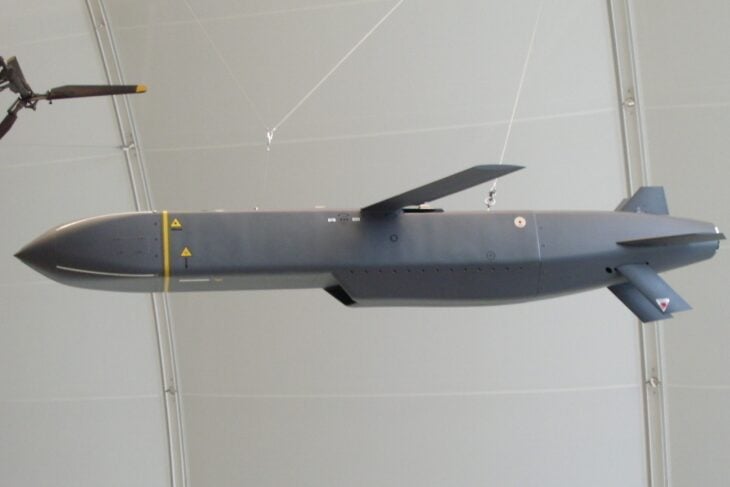

Storm Shadow (British) and SCALP-EG (French) are the same Anglo-French missile with different software. CSIS gives it a range of 155 to 250 miles (250 to 400 km), a 400 kg (880 lb) warhead and an infrared seeker that matches the target to a stored image.
It was first fired in Iraq in 2003, then over Libya in 2011 and Syria. Its fame came in Ukraine from 2023, where it hit the Black Sea Fleet headquarters in Sevastopol in September 2023 and the landing ship Novocherkassk at Feodosia that December.
Range is its limit. It ranks above longer-reaching missiles because it has hit hardened, defended targets in four separate conflicts.
6. AGM-86 ALCM (United States)
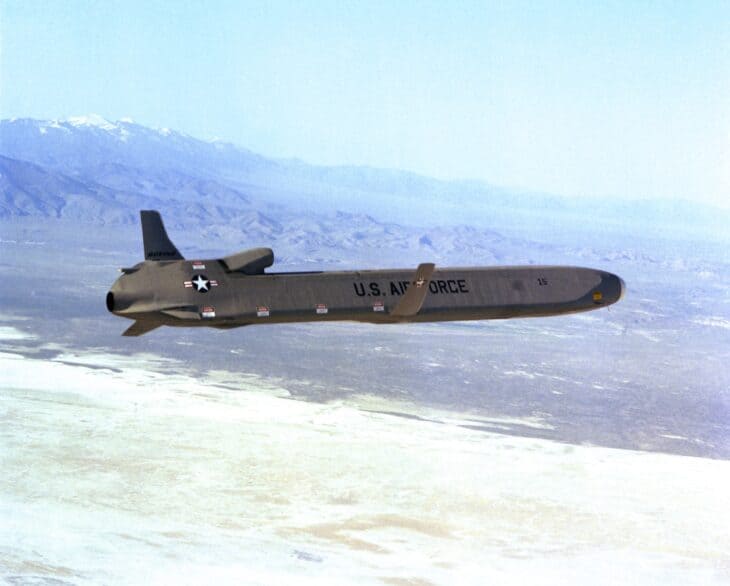

The AGM-86 is the B-52’s air-launched cruise missile. The nuclear AGM-86B, in service since 1982, carries a 200-kiloton warhead about 1,550 miles (2,500 km), and CSIS counts roughly 500 still in the arsenal.
Its conventional versions did the fighting. Their existence became public only after the 1991 Gulf War, and CSIS counts 35 fired there, 16 against Iraq in 1996, 90 in 1998, 200 over Serbia and Kosovo in 1999 and 153 in Iraq in 2003.
Those conventional missiles left service in 2019. The nuclear version is due to be replaced by the AGM-181 Long Range Standoff weapon, still in development.
7. BrahMos (India and Russia)
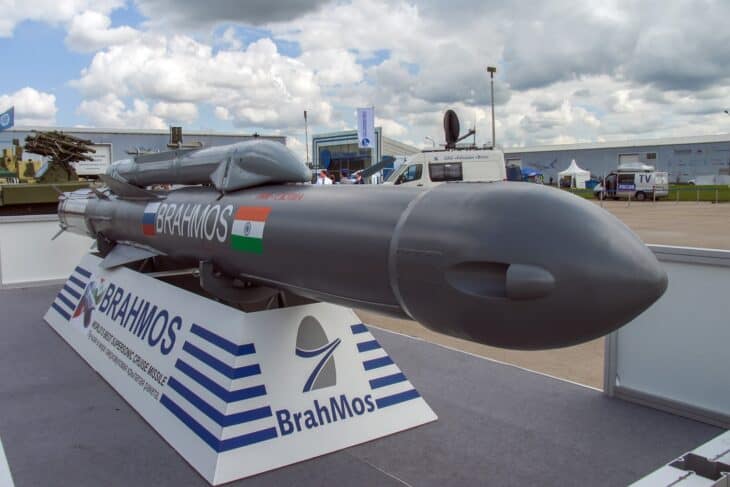

BrahMos is the best-known supersonic cruise missile in service. Built by an Indian-Russian joint venture from the Russian Oniks design, it flies at Mach 2.0 to 2.8 on a ramjet and reaches 185 to 310 miles (300 to 500 km), according to CSIS.
It launches from trucks, warships, submarines and Su-30MKI fighters. India reportedly fired BrahMos at targets inside Pakistan during Operation Sindoor on May 7, 2025, and at Pakistani air bases on May 10.
Its strangest flight came first. On March 9, 2022, a BrahMos fired by accident crashed near Mian Channu in Pakistan, causing no casualties.
8. R-360 Neptune (Ukraine)
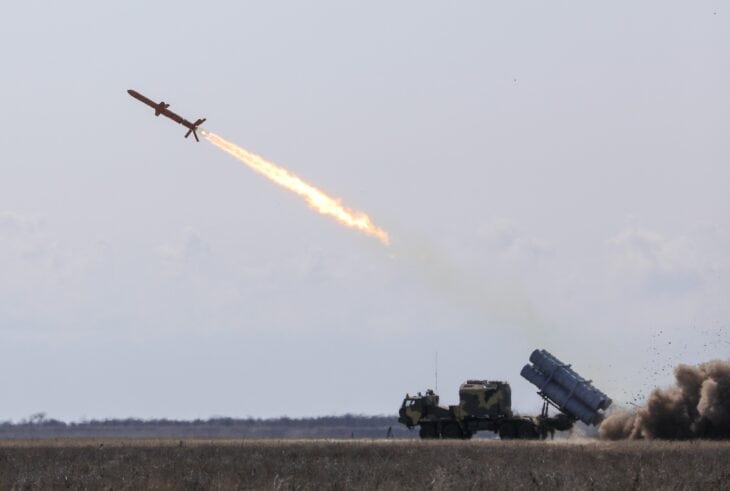

Neptune began as a coastal anti-ship missile based on the Soviet Kh-35, with a range of more than 175 miles (280 km). It entered Ukrainian service in March 2021, less than a year before the full-scale invasion.
On April 13, 2022, Ukraine said two Neptunes hit the Russian cruiser Moskva, flagship of the Black Sea Fleet. It sank the next day. Ukraine has since built a land-attack version and a Long Neptune with a range of up to 620 miles (1,000 km).
9. 9M729, or SSC-8 (Russia)
The 9M729 is the missile that ended a treaty. The 1987 INF Treaty banned ground-launched missiles with ranges between 310 and 3,420 miles (500 and 5,500 km), and NASIC published a maximum range of 1,550 miles (2,500 km) for this road-mobile one.
The United States accused Russia of testing it beyond the limit, and left the treaty in 2019. In October 2025, Ukraine said Russia had fired it in combat for the first time, 23 times since August, at targets more than 745 miles (1,200 km) away.
10. FP-5 Flamingo (Ukraine)
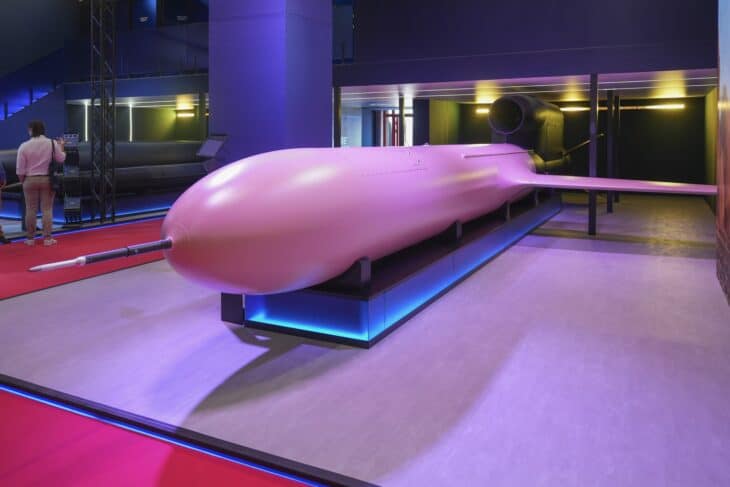

Flamingo is the newest missile here and the one with the boldest claims. Its maker, the Ukrainian start-up Fire Point, says it flies 1,860 miles (3,000 km) and carries a 2,535-pound (1,150 kg) warhead, about 2.5 times a Tomahawk’s.
It was revealed in August 2025 and is built for mass production, not stealth: satellite navigation instead of terrain-matching, an engine bolted on top. Fire Point’s chief executive put the unit cost at $600,000.
Simple has a price. On July 4, 2026, the Russian Air Force, using an A-50U radar plane, was reported to have shot down five Flamingos.
11. CJ-10 (China)
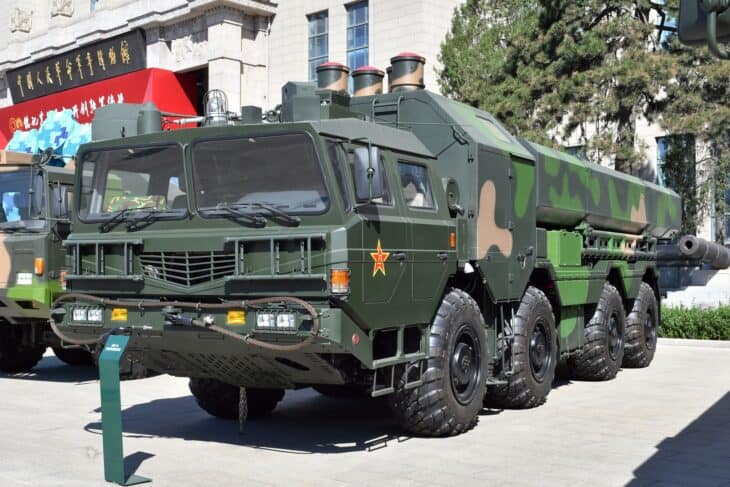

The CJ-10 is China’s main land-attack cruise missile, launched from road-mobile trucks, aircraft and ships. US military writing has credited it with a range of more than 930 miles (1,500 km), and some estimates run to 1,240 miles (2,000 km).
It belongs to the Hong Niao family, which CSIS says China began developing in the late 1970s with the goal of a nuclear-capable missile. It has never been fired in a war, which is the only reason it is not higher.
12. Hyunmoo-3 (South Korea)
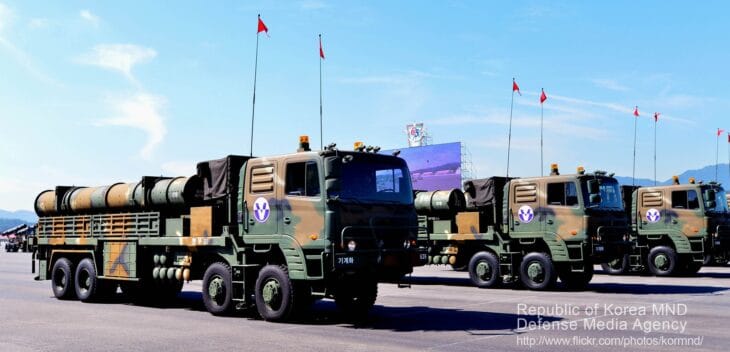

South Korea built the Hyunmoo-3 because US-Korean agreements limited its ballistic missiles. The family grew from 310 miles (500 km) in 2006 to 930 miles (1,500 km) for the ship- and submarine-launched Hyunmoo-3C, in service since 2012, according to CSIS.
That reach covers all of North Korea from almost anywhere in the South. Like the CJ-10, it has never been used in combat.
The ones that just missed
Iran’s Soumar, which most analysts see as a copy of the Soviet-era Kh-55, was claimed to reach 1,860 miles (3,000 km). CSIS doubts it, and the later Hoveyzeh was announced at a more modest 840 miles (1,350 km).
Israel’s Rafael unveiled the Super Ice on November 11, 2026, a missile with a 1,000-pound warhead that can launch from air, land or sea. Rafael gave no range and did not say whether it is operational.
Where is the Tsirkon?
Russia’s Tsirkon is technically a cruise missile, with an air-breathing engine. But it flies at hypersonic speed, which puts it in a different class with different defenses, so it ranks in our list of hypersonic missiles instead.
Our hypersonic missiles ranking covers Tsirkon, Kinzhal and the other weapons that fly at Mach 5 or faster.
FAQ
Sources and references used for research and fact-checking.
- CSIS, The 850 Tomahawks Launched in Operation Epic Fury Is the Most Fired in a Single Campaign
- CSIS, Last Rounds? Status of Key Munitions at the Iran War Ceasefire
- CSIS Missile Threat, Tomahawk
- CSIS Missile Threat, 3M-14 Kalibr (SS-N-30A)
- CSIS Missile Threat, Kh-101 / Kh-102
- CSIS Missile Threat, JASSM
- CSIS Missile Threat, SCALP EG / Storm Shadow / APACHE AP
- CSIS Missile Threat, AGM-86 Air-Launched Cruise Missile (ALCM)
- CSIS Missile Threat, BrahMos
- CSIS Missile Threat, SSC-8 (Novator 9M729)
- CSIS Missile Threat, Hong Niao Series (HN-1/-2/-3)
- CSIS Missile Threat, Hyunmoo-3
- CSIS Missile Threat, Soumar
- Wikipedia, Tomahawk (missile)
- Wikipedia, Kalibr (missile family)
- Wikipedia, Kh-101
- Wikipedia, Storm Shadow
- Wikipedia, BrahMos
- Wikipedia, R-360 Neptune
- Wikipedia, Novator 9M729
- Wikipedia, FP-5 Flamingo
- Wikipedia, CJ-10 (missile)
- Wikipedia, Sinking of the Moskva
- Wikipedia, Cruise missile
- Wikipedia, AGM-181 LRSO
- Breaking Defense, Israel's Rafael unveils new, larger cruise missile dubbed Super Ice
Get the Newsletter
The latest aviation news and stories sent to your inbox.
About the Author

Tim is the owner and lead editor of AeroCorner since 2019, overseeing aviation content covering aircraft, airlines, airports, and the broader aviation industry. Through years of researching, writing, editing, and publishing aviation-focused content, he has developed extensive practical knowledge of commercial aviation and air travel. Based in Asia and a frequent traveler himself, Tim also brings firsthand passenger experience to AeroCorner’s coverage. Outside of publishing, he has also explored aviation firsthand through hands-on flight training in New Zealand.