

Table of Contents
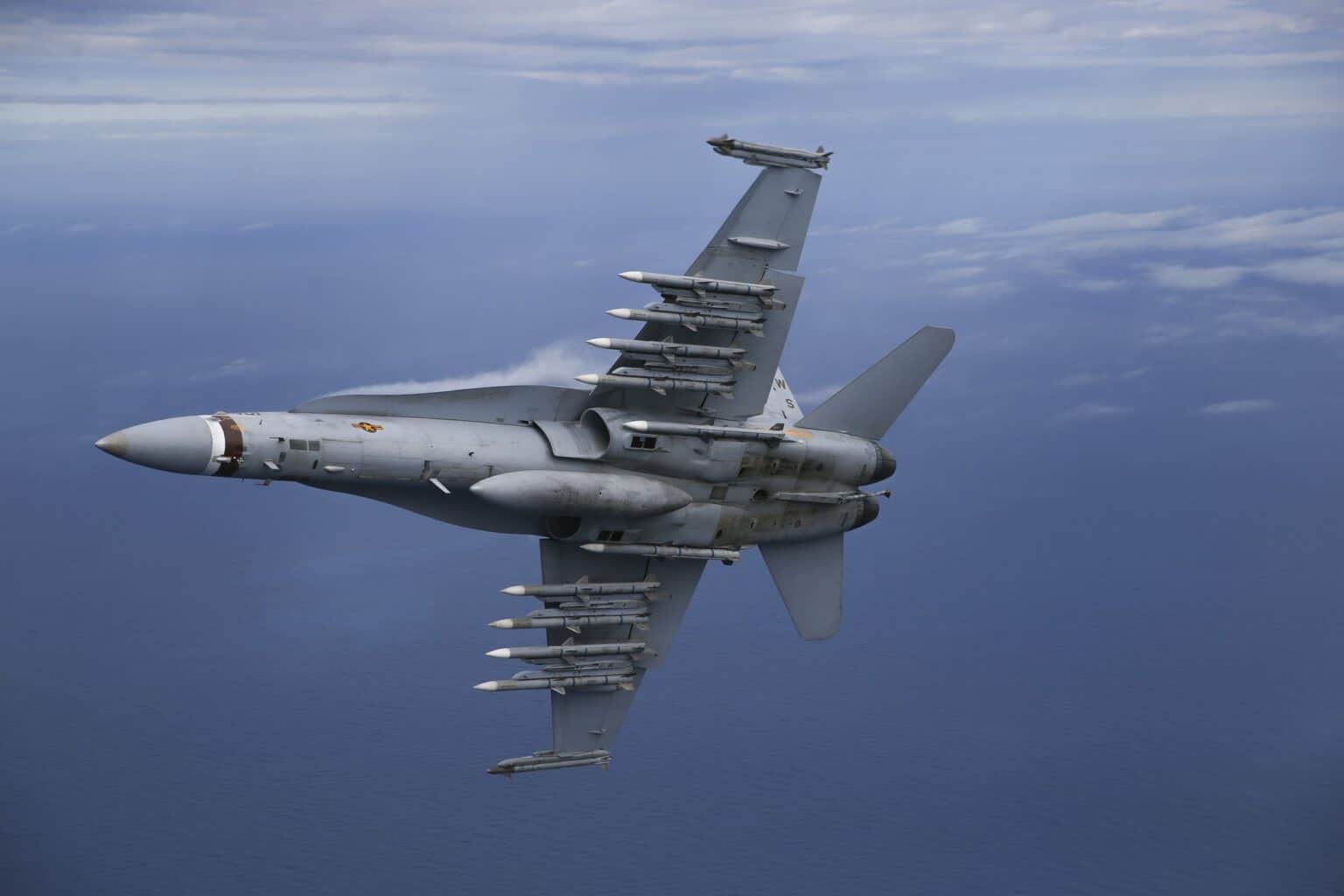
The AIM-9 Sidewinder is the most combat-proven air-to-air missile ever built. It scored the first air-to-air missile kill in history in 1958, has an estimated 270 aircraft kills since, and the newest AIM-9X version was still knocking down drones in 2026.
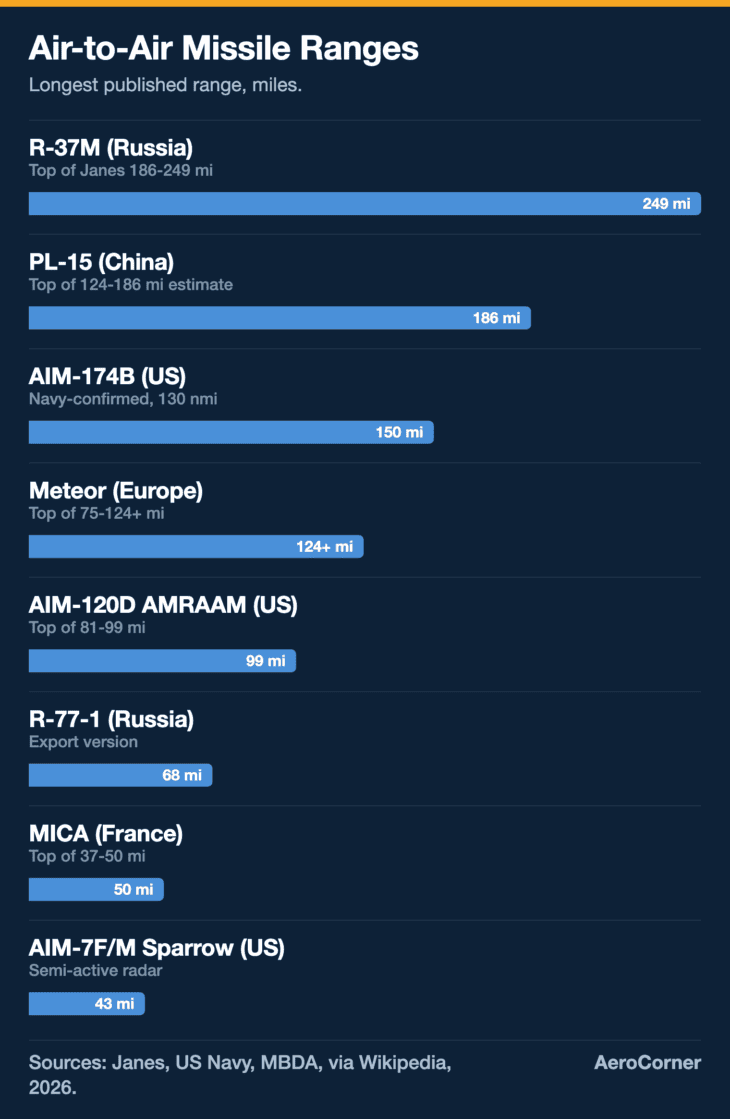
An air-to-air missile (AAM) is a guided weapon one aircraft fires at another. This list ranks the 12 that matter most as of November 2026 by what they have actually done in combat, not by the ranges their makers advertise, because the longest-range missiles on paper are mostly the least proven.
| Rank | Missile | Country | Guidance | Longest published range | Combat record |
|---|---|---|---|---|---|
| 1 | AIM-9 Sidewinder | United States | Infrared | About 22 miles (35 km), estimate | First missile kill, 1958; about 270 kills |
| 2 | AIM-120 AMRAAM | United States | Active radar | 81 to 99 miles (130 to 160 km), AIM-120D | 16 kills from 1992 to 2020 |
| 3 | AIM-7 Sparrow | United States | Semi-active radar | 43 miles (70 km), AIM-7F/M | Vietnam; 24 to 26 kills in the 1991 Gulf War |
| 4 | Python family | Israel | Infrared | 12+ miles (20+ km), Python-5 | 106 kills for the Shafrir-2; 35 or more for the Python-3 |
| 5 | R-73 | Russia | Infrared | 19 miles (30 km) | Cuba 1996, Eritrea-Ethiopia, Ukraine |
| 6 | R-37M | Russia | Active radar | 186 to 249 miles (300 to 400 km), Janes | Fired at Ukrainian jets since 2022 |
| 7 | PL-15 | China | Active radar | 124 to 186 miles (200 to 300 km), estimate | First combat use, May 7, 2025 (Pakistan) |
| 8 | R-77 / R-77-1 | Russia | Active radar | 68 miles (110 km), export R-77-1 | Used against Ukrainian jets since 2022 |
| 9 | ASRAAM | United Kingdom | Imaging infrared | 15+ miles (25+ km) | Drones over Syria (2021) and Jordan (2026) |
| 10 | Meteor | Europe | Active radar, ramjet | 75 to 124+ miles (120 to 200+ km) | No combat launch made public |
| 11 | AIM-174B Gunslinger | United States | Active and semi-active radar | 150 miles (240 km), Navy-confirmed | No combat launch made public |
| 12 | MICA | France | Radar or infrared | 37 to 50 miles (60 to 80 km) | No combat launch made public |
How this ranking works
We rank by proof. A missile with kills across several wars beats one with a single campaign, and a missile used in combat beats one that has only been tested. Range comes second, because most published ranges are estimates, export figures or a maker’s claim. Only missiles in service in November 2026 are ranked; the retired AIM-54 Phoenix and the unfinished AIM-260 JATM are covered further down.
How air-to-air missiles find their target
Air-to-air missiles split into two families. Short-range “dogfight” missiles such as the Sidewinder home on an aircraft’s heat, while beyond-visual-range (BVR) missiles such as the AMRAAM use radar to hit targets pilots never see.
The big shift was the active radar seeker. An older semi-active missile like the Sparrow needs the launching fighter to keep its radar on the target until impact, but an AMRAAM carries its own radar and turns it on for the final approach, so the pilot can fire and turn away. Our guide to the types of missiles sets air-to-air weapons beside the other seven kinds.
1. AIM-9 Sidewinder (United States)
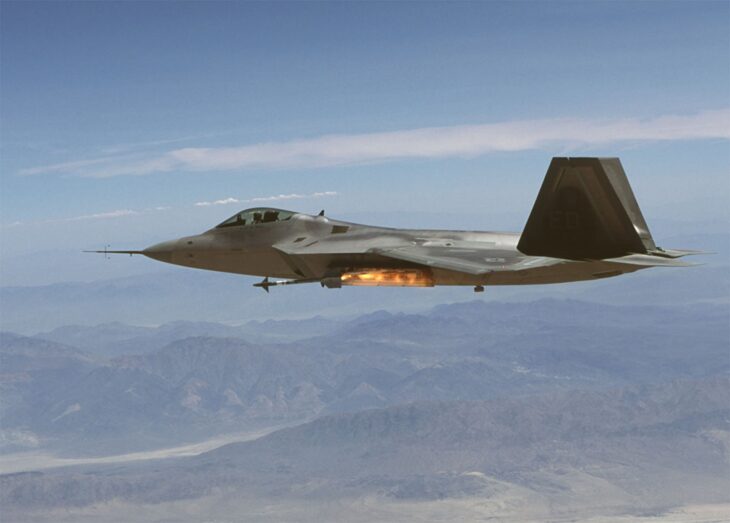

The Sidewinder is a short-range, heat-seeking missile that entered US Navy service in 1956 and is still in production. More than 110,000 have been built for the US and 27 other nations, and it is credited with an estimated 270 aircraft kills, the largest tally on this list.
Its record runs through almost every air war since. In the 1982 Falklands War, Royal Navy Sea Harriers fired 24 AIM-9Ls and destroyed 19 Argentine aircraft, and in February 2023 an F-22 Raptor used one AIM-9X to bring down a suspected Chinese spy balloon at 60,000 to 65,000 feet.
The Sidewinder ranks first on the strength of that record, not on reach. Published estimates top out around 22 miles (35 km), less than a quarter of an AMRAAM’s.
The first missile kill in history
On September 24, 1958, Taiwanese F-86 Sabres fired AIM-9B Sidewinders that the US Navy had secretly supplied and shot down Communist Chinese MiGs over the Taiwan Strait. It was the first successful use of air-to-air missiles in combat.
2. AIM-120 AMRAAM (United States)
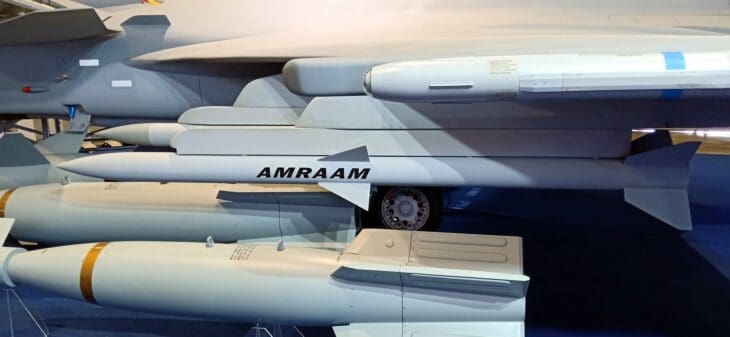

The AMRAAM is the West’s standard beyond-visual-range missile, an active radar weapon that flies at about Mach 4. More than 14,000 had been built by 2008, and the latest AIM-120D, operational since 2015, reaches 81 to 99 miles (130 to 160 km).
It scored its first kill on December 27, 1992, when a USAF F-16D shot down an Iraqi MiG-25, and it has 16 air-to-air kills over Iraq, Bosnia, Kosovo, India and Syria. Six Serbian MiG-29s fell to AMRAAMs in 1999, and Pakistan’s air force used AMRAAMs to down an Indian MiG-21 in February 2019.
Its longest recorded kill is shorter than people assume: about 28 miles (45 km), a Syrian L-39 shot down by Turkish F-16s in March 2020. In June 2017, a US Navy Super Hornet needed an AMRAAM to finish a Syrian Su-22 after its AIM-9X failed.
3. AIM-7 Sparrow (United States)
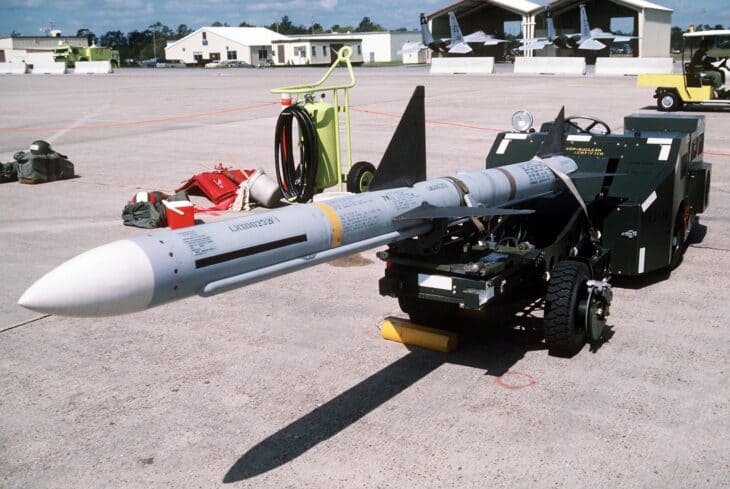

The Sparrow was the West’s main beyond-visual-range missile from the late 1950s until the 1990s. It uses semi-active radar homing, riding the reflection of the launching fighter’s radar, and the AIM-7F and M reach about 43 miles (70 km).
Its record is a story of redemption. In Vietnam, reliability problems and restrictive rules of engagement made it a disappointment, but in the 1991 Gulf War the AIM-7M hit with 30 of 44 shots for 24 to 26 kills, 19 of them beyond visual range.
It is being phased out of fighters in favor of the AMRAAM. Since 2023, though, Ukraine has fired donated Sparrows from Soviet-era Buk ground launchers against Russian missiles, aircraft and drones.
4. Python family (Israel)
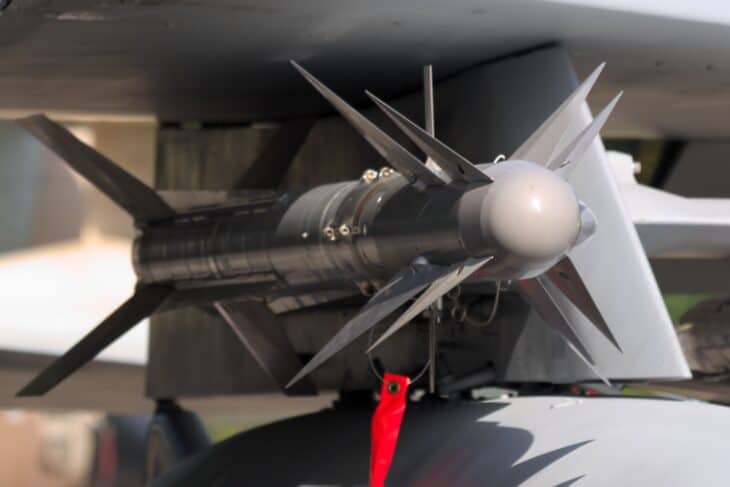

Rafael’s heat-seeking family began with the Shafrir, and its record is the best outside the United States. The Shafrir-2 is credited with 89 kills in the 1973 Yom Kippur War and 106 over its career, and the Python-3 scored 35 kills in the 1982 Lebanon War (other sources say 50).
Today’s Python-5 has an imaging seeker and can lock on after launch, at targets up to 100 degrees off the fighter’s nose. Its published range is more than 12 miles (20 km), and in May 2021 an Israeli F-16 used one to shoot down a Hamas drone.
5. R-73 (Russia)
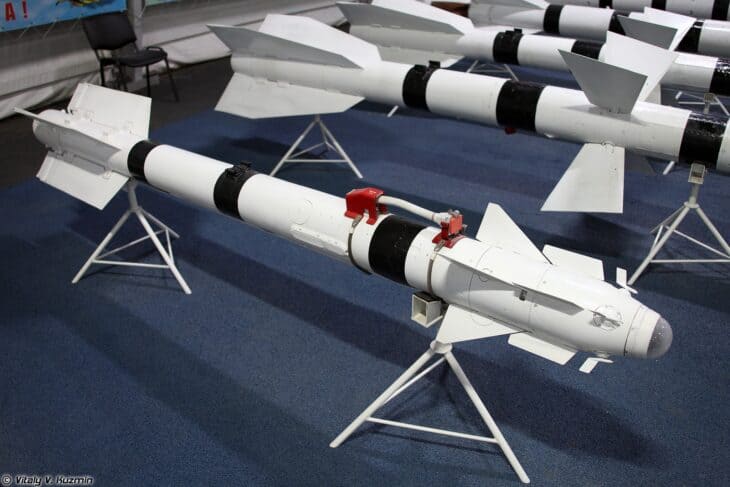

The R-73, NATO name AA-11 Archer, is the Soviet answer to the Sidewinder, in service since 1984. It can be aimed with a helmet sight at targets 40 degrees off the missile’s centerline, and the export R-73E reaches about 19 miles (30 km).
It has a long, grim record. A Cuban MiG-29 used R-73s to shoot down two Brothers to the Rescue Cessnas in 1996, and Ethiopian Su-27s and Eritrean MiG-29s fired them at each other from 1998 to 2000.
India says a MiG-21 shot down a Pakistani F-16 with an R-73 in February 2019, which Pakistan denies. In Ukraine, a Russian Su-35 used one to down a Mi-14 helicopter in May 2022, and Ukraine has bolted R-73s onto trucks and naval drones as improvised air defense.
6. R-37M (Russia)
On paper, the R-37M is the longest-ranged air-to-air missile in service, built to kill tankers and radar planes from far beyond their escorts’ reach. Janes puts its range at 186 to 249 miles (300 to 400 km), it flies at Mach 6 or more, and it arms the Su-35 and MiG-31.
It has been Russia’s main weapon against the Ukrainian Air Force since October 2022. Britain’s RUSI think tank reported Russia firing up to six a day that month, from MiG-31s cruising high and fast out of reach of Ukrainian fighters.
Ukrainian pilots say it scores few actual kills. Its real effect is forcing them to abandon a mission and dive away, which is why it ranks below missiles with long kill lists despite its reach.
A 186-mile kill in 1994
In a 1994 trial, an early R-37 hit its target at a range of 162 nautical miles, about 186 miles (300 km). The program then stalled for lack of money and only restarted in late 2006, with the MiG-31 upgrade.
7. PL-15 (China)
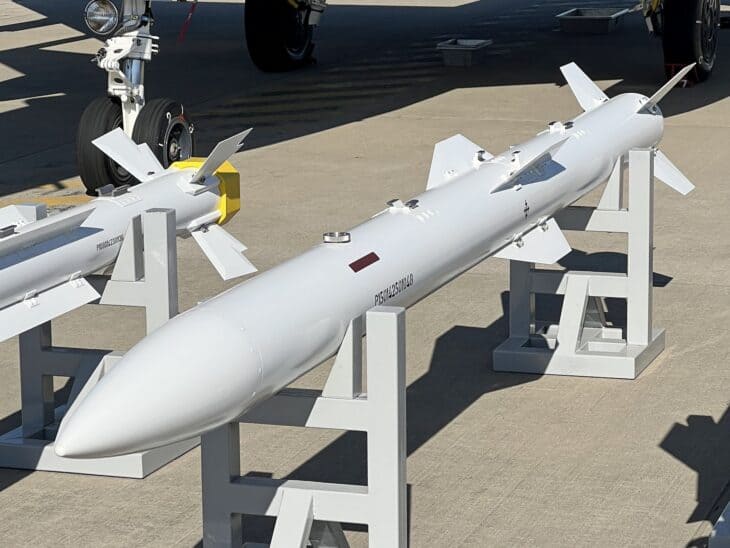

The PL-15 is China’s main beyond-visual-range missile, in service since 2016. A dual-pulse rocket motor fires a second burn near the target, it reaches Mach 5 or more, and published estimates put its range at 124 to 186 miles (200 to 300 km), with the export PL-15E at about 90 miles (145 km).
Its combat debut came on May 7, 2025, when Pakistani J-10C fighters fired PL-15Es during the India-Pakistan strikes. Pakistan says it shot down several Indian aircraft, and India confirmed on May 13 that the missile had been used after debris landed on its territory.
A Reuters investigation found Indian intelligence had underestimated the missile’s range. Pakistani officials claim the shot that downed a Rafale was fired from about 124 miles (200 km) away, which would make it one of the longest-range air-to-air kills on record; that distance is their claim, not a verified figure.
That one day is why the PL-15 now drives Western missile programs. The US started the AIM-260 JATM in 2017 specifically to answer it, and our ranking of the Pakistan Air Force covers the jets that fired it.
8. R-77 and R-77-1 (Russia)
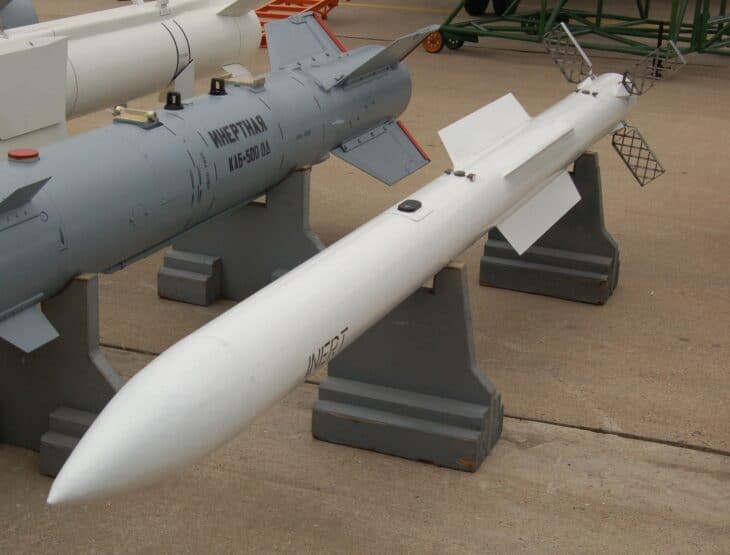

The R-77 is Russia’s AMRAAM equivalent, an active radar missile flying at about Mach 4. Its development dragged on through the Soviet collapse, the improved R-77-1 only entered Russian service in 2015, and its export version reaches about 68 miles (110 km).
Since 2022, Su-35s and Su-30SMs have fired R-77-1s at Ukrainian jets, outranging every missile Ukraine had. In July 2025, The War Zone reported wreckage suggesting the longer-range R-77M had made its combat debut.
9. ASRAAM (United Kingdom)
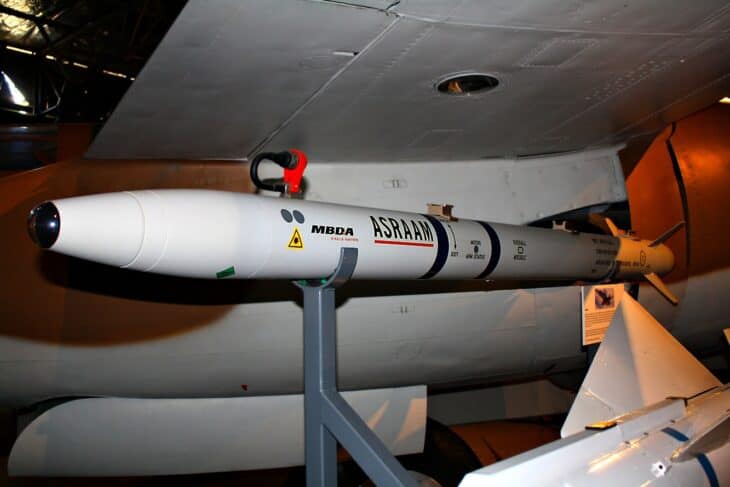
The ASRAAM is Britain’s heat-seeking dogfight missile, in service since 1998 on the Typhoon and F-35. It flies at Mach 3 or more, reaches more than 15 miles (25 km), and its newest Block 6 version swapped in a British-built seeker.
On December 14, 2021, an RAF Typhoon used one to shoot down a hostile drone over southern Syria, the first time the British military had shot down an enemy aircraft since the Falklands. In March 2026, early in the Iran war, an RAF F-35B from No. 617 Squadron downed two Iranian drones over Jordan with two ASRAAMs.
10. Meteor (Europe)
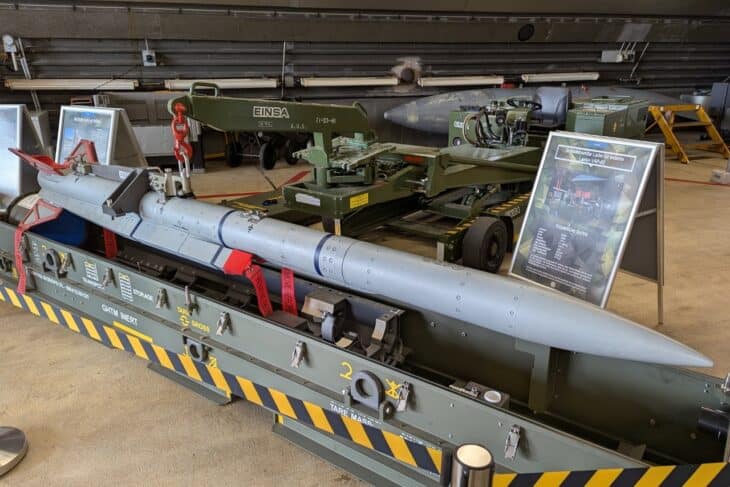

The Meteor is a ramjet-powered missile built by MBDA for six European nations and in service since 2016. Its ducted rocket keeps thrusting all the way to the target, which MBDA says gives it the largest no-escape zone of any air-to-air missile, the distance at which a target cannot outrun it.
Published estimates put its range at 75 to more than 124 miles (120 to 200+ km), at about Mach 4. It arms the Typhoon, the Rafale and the Gripen, and is being integrated on the F-35A and F-35B and Korea’s KF-21.
On paper it may be the best beyond-visual-range missile in the world. No combat launch has been made public, though, so it ranks here, below every missile with a confirmed kill.
11. AIM-174B Gunslinger (United States)
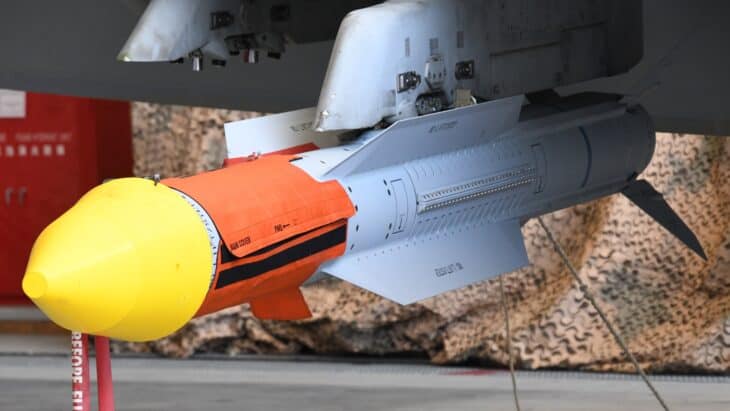

The Gunslinger is an air-launched version of the Navy’s SM-6 ship-launched missile, and it is huge for an air-to-air weapon. The Navy has confirmed a range of 130 nautical miles, about 150 miles (240 km), at Mach 3.5, and most observers believe it goes farther.
Only the F/A-18E/F Super Hornet carries it so far, and it had deployed on four Nimitz-class carriers by November 2026. It gives the Navy reach against bombers and radar planes that the AMRAAM lacks, but it has no public combat record yet.
12. MICA (France)
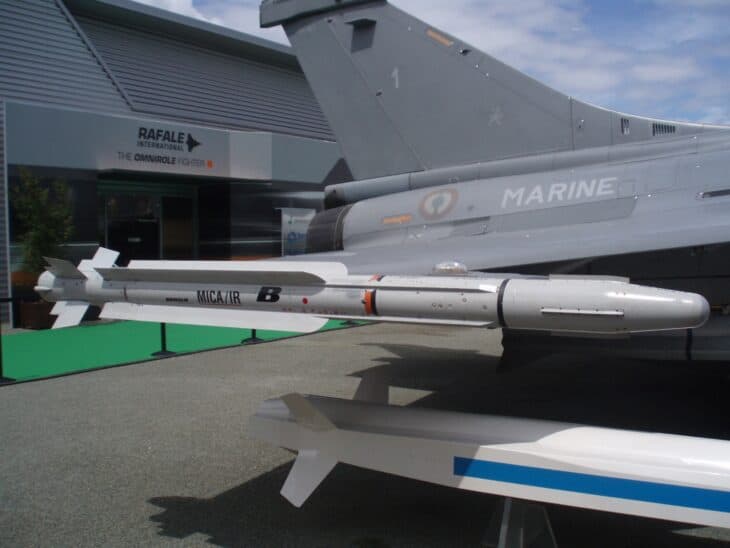

The MICA is France’s all-in-one missile, in service since 1996, sold with either a radar seeker (MICA EM) or a heat seeker (MICA IR) on the same airframe. It flies at Mach 4 and reaches 37 to 50 miles (60 to 80 km) when air-launched.
It arms the Rafale and Mirage 2000, and Egypt bought the new MICA NG in 2025. France said in October 2024 that the Mirage 2000s it was sending to Ukraine could carry it, but no combat kill with a MICA has been made public.
Near misses and what comes next
Germany’s IRIS-T, in service since December 2005, is a thrust-vectoring dogfight missile with more than 5,000 built by December 2023. India’s Astra Mk1 reaches about 68 miles (110 km) and entered service in 2019, with a longer-range Mk2 in trials.
The missile that will reshuffle this list is the AIM-260 JATM, the AMRAAM’s replacement. A US official said in October 2025 it was not yet operational, and in May 2026 an F/A-18F of the Navy test squadron VX-31 was photographed carrying what is believed to be a live AIM-260A.
What about the AIM-54 Phoenix?
The F-14’s Phoenix would rank third by kills: it is credited with 62 air-to-air kills, all by Iran in the 1980-1988 Iran-Iraq War. In US Navy service it had only two confirmed combat launches and no confirmed kill, and it retired in 2004. Iran retired its own in 2012, so it is left off a list of missiles in service.
The Phoenix is also why the F-14 Tomcat mattered: it was the only fighter able to carry the 1,000-pound (500 kg) missile. It reached about 114 miles (184 km) in its AIM-54C form, a range the AMRAAM matched only with the D model.
Why the longest range does not make the best missile
A published maximum range is measured in ideal conditions: a fast launch at high altitude against a target flying straight at the missile. Against a fighter that turns away, the distance at which a hit is likely shrinks sharply, which is why the AMRAAM’s longest kill is 28 miles (45 km) despite a range several times that.
That is the point of the Meteor’s ramjet and the PL-15’s second motor pulse. Both are designed to arrive with energy left for the final turn, which matters more than raw reach.
The missile still needs a target it can see first, which is why long-range missiles go with the radars and stealth of the best fighter jets in the world. The other half of the duel is fought from the ground by air defense systems, several of which now fire the same AMRAAM, Sidewinder and IRIS-T rounds.
FAQ
Sources and references used for research and fact-checking.
- Wikipedia, AIM-9 Sidewinder
- Wikipedia, AIM-120 AMRAAM
- Wikipedia, AIM-7 Sparrow
- Wikipedia, Python (missile)
- Wikipedia, R-73 (missile)
- Wikipedia, R-37 (missile)
- Wikipedia, PL-15
- Wikipedia, R-77
- Wikipedia, ASRAAM
- Wikipedia, Meteor (missile)
- MBDA, Meteor datasheet (2023)
- Wikipedia, AIM-174B Gunslinger
- Wikipedia, MICA (missile)
- Wikipedia, IRIS-T
- Wikipedia, Astra (missile)
- Wikipedia, AIM-260 JATM
- Wikipedia, AIM-54 Phoenix
- Wikipedia, Air-to-air missile
- Janes, Iran conflict 2026: Israeli F-35 claims type's first combat kill against manned aircraft
Get the Newsletter
The latest aviation news and stories sent to your inbox.
About the Author

Tim is the owner and lead editor of AeroCorner since 2019, overseeing aviation content covering aircraft, airlines, airports, and the broader aviation industry. Through years of researching, writing, editing, and publishing aviation-focused content, he has developed extensive practical knowledge of commercial aviation and air travel. Based in Asia and a frequent traveler himself, Tim also brings firsthand passenger experience to AeroCorner’s coverage. Outside of publishing, he has also explored aviation firsthand through hands-on flight training in New Zealand.