

Table of Contents
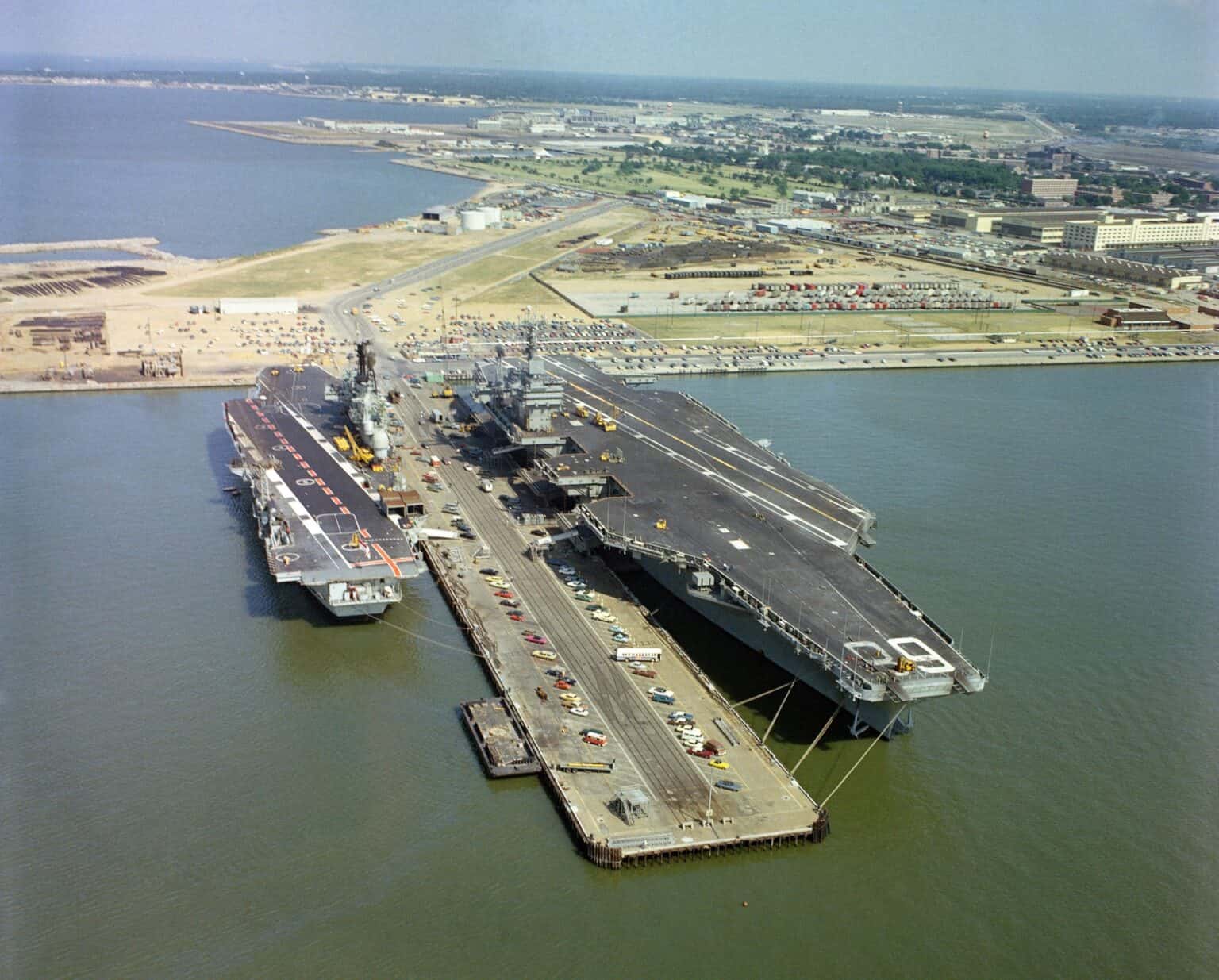
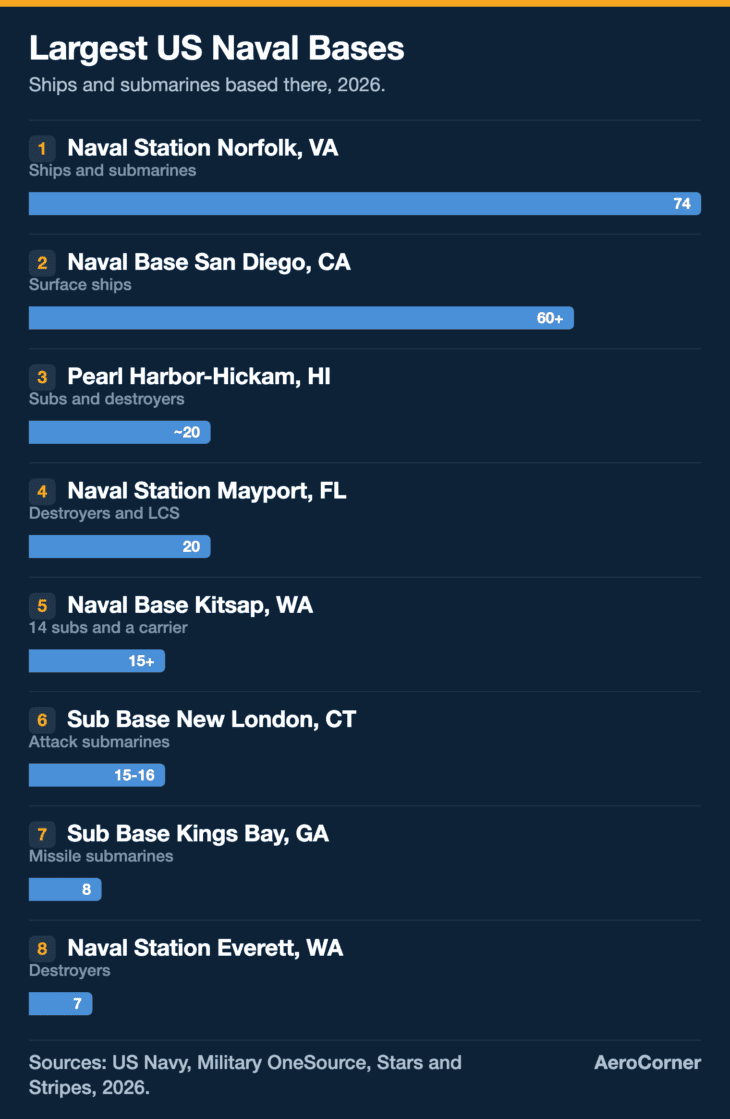
The largest naval base in the United States is Naval Station Norfolk in Virginia. In September 2026 it was home to 42 Navy warships, 16 submarines and 16 Military Sealift Command vessels, 74 hulls in all, plus 23 aviation commands.
Naval Base San Diego is a clear second with more than 60 ships. After those two the numbers fall off a cliff: no other US base supports more than about 20 ships and submarines.
This list ranks the 10 biggest US Navy bases by the fleet based there, as of November 2026. It then ranks them again by land and by people, because those measures crown different winners, and one of them belongs to a base with no ships at all.
| Rank | Base | State | Fleet based there | What it is known for |
|---|---|---|---|---|
| 1 | Naval Station Norfolk | Virginia | 74 ships and submarines | Navy’s largest concentration of forces |
| 2 | Naval Base San Diego | California | 60+ ships | Largest West Coast naval installation |
| 3 | Joint Base Pearl Harbor-Hickam | Hawaii | About 20 ships and submarines | Two submarine squadrons |
| 4 | Naval Station Mayport | Florida | 20 ships | Third-largest fleet concentration |
| 5 | Naval Base Kitsap | Washington | 15+ (14 submarines and a carrier) | Pacific ballistic-missile submarines |
| 6 | Naval Submarine Base New London | Connecticut | 15 to 16 submarines | The Navy’s first submarine base |
| 7 | Naval Submarine Base Kings Bay | Georgia | 8 submarines | Atlantic ballistic-missile submarines |
| 8 | Naval Station Everett | Washington | 7 destroyers | Newest base on the list |
| 9 | Naval Base Guam | Guam (US territory) | Attack submarines and 2 tenders | Forward-deployed submarines |
| 10 | NAS North Island (Naval Base Coronado) | California | 3 aircraft carriers | Birthplace of Naval Aviation |
How this ranking works
A naval base exists to support ships, so bases are ranked by the ships and submarines based there, using the newest published count for each. Where sources give a range or a minimum, we show it rather than invent a precise number. Weapons test ranges and air stations with no ships are left out of the main list and ranked separately by land area below. Guam is included because it is US territory, and overseas bases such as Yokosuka in Japan are not.
1. Naval Station Norfolk, Virginia
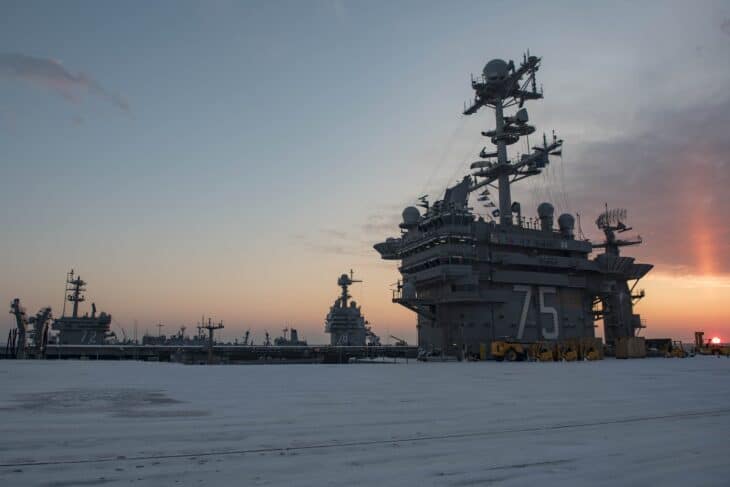
The Navy calls Norfolk “the largest naval complex in the world” and the home of its largest concentration of naval forces. Stars and Stripes counted 42 warships, 16 submarines, 16 Military Sealift Command vessels and 23 aviation commands there in September 2026.
The base runs along about 4 miles (6.4 km) of waterfront with 14 piers and 11 miles (18 km) of pier and wharf space. Its Chambers Field airfield hosts 134 aircraft in 11 hangars.
Norfolk is also a carrier home port. USS Nimitz sailed around South America from Bremerton to join it as a training carrier before deactivation in 2027, one of the 11 US Navy aircraft carriers.
It started as a World's Fair
Naval Station Norfolk sits on the site of the 1907 Jamestown Exposition. The Navy bought 474 acres there in 1917, and the base was called Naval Operating Base, or NOB, Norfolk until it was renamed Naval Station Norfolk on January 1, 1953.
2. Naval Base San Diego, California
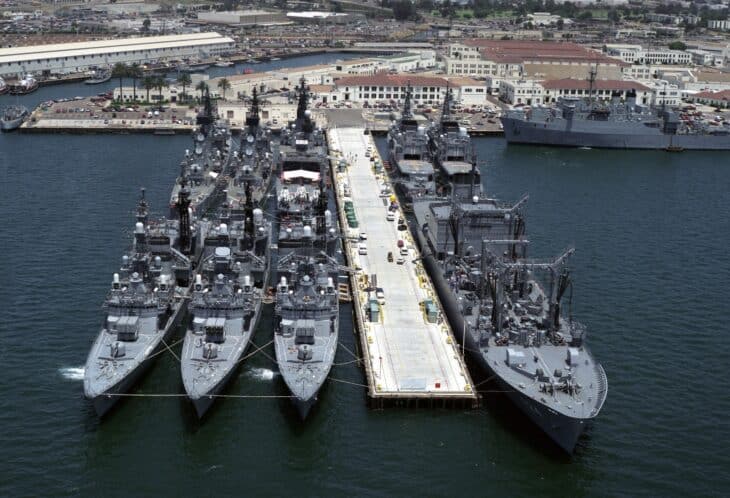

Naval Base San Diego supports more than 60 combatant and auxiliary surface ships, the Navy said in January 2026. It is the largest naval installation in the Pacific and the principal home port of the Pacific Fleet.
The base logged more than 1,300 ship movements in 2025 and hosts 58 afloat tenants and 251 ashore commands. It covers 1,600 acres of land and 326 acres of water along 13 piers.
Why second and not first? San Diego’s fleet is almost all surface ships. Norfolk adds a submarine force and a carrier air arm on the same base, which is why the gap between them is wider than the ship count alone suggests.
3. Joint Base Pearl Harbor-Hickam, Hawaii
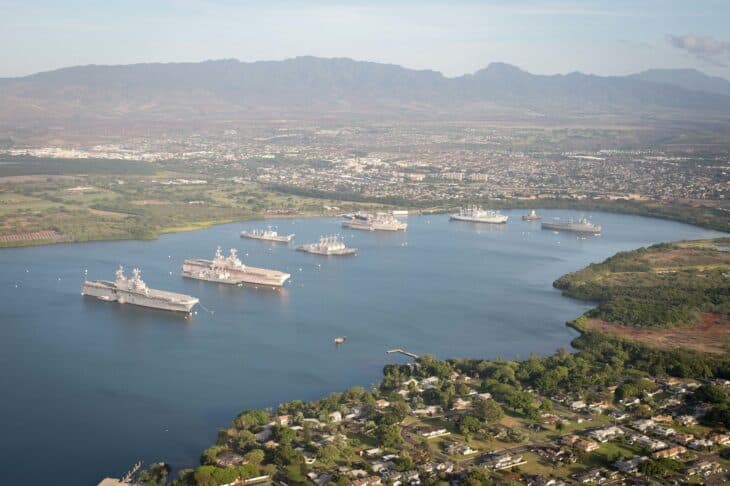
Pearl Harbor is the Pacific submarine hub. It hosts two submarine squadrons with roughly a dozen fast-attack boats, plus about nine surface ships, most of them destroyers.
That fleet is still growing. USS Jefferson City arrived from Guam on July 9, 2026, becoming the seventh fast-attack submarine in Submarine Squadron 7.
The Navy merged Pearl Harbor with the Air Force’s Hickam Field in 2010. Today it carries 12,606 active-duty sailors and more than 160 commands, and its dry docks can take the largest ships in the fleet.
4. Naval Station Mayport, Florida
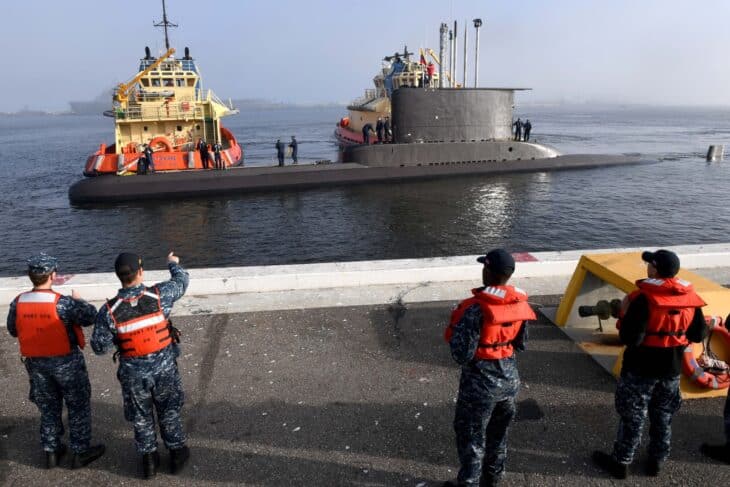

Mayport supports 20 naval ships and three helicopter squadrons. Military OneSource calls it the third-largest fleet concentration area in the United States.
Its fleet is destroyers and littoral combat ships. Its basin, though, can hold 34 ships, a reminder that Mayport was built for aircraft carriers and homeported them until USS John F. Kennedy left in 2007.
More than 11,000 people work on the station every day. For the warship types based here and elsewhere, see our guide to every type of Navy ship.
5. Naval Base Kitsap, Washington
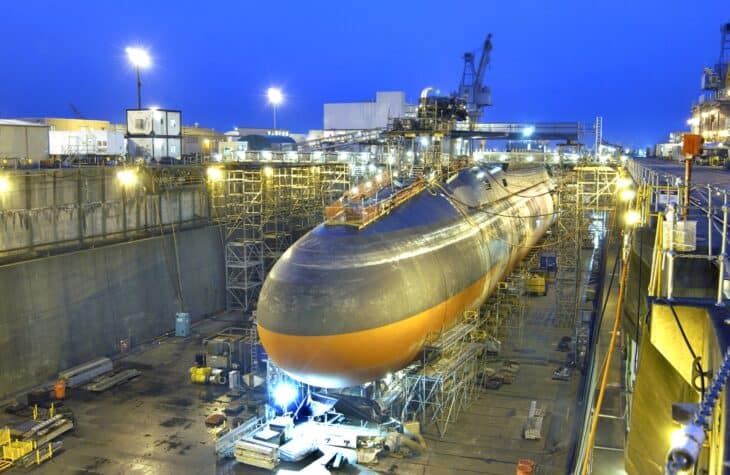

Kitsap was formed in 2004 by merging Naval Station Bremerton with Submarine Base Bangor across Puget Sound. Bangor alone is home to eight Ohio-class ballistic-missile submarines, two guided-missile submarines and four attack submarines.
Bremerton adds the carrier USS Ronald Reagan and Puget Sound Naval Shipyard, with the only West Coast dry dock that can take a Nimitz-class carrier. The Navy’s top officer said in June 2026 that USS Abraham Lincoln would likely move its home port here from San Diego.
On people rather than hulls, Kitsap is near the top. It counts 15,293 active-duty personnel and 21,612 civilians and contractors across 12,000 acres.
Two bases hold every missile submarine
The Navy’s Ohio-class ballistic-missile submarines are split between just two bases: Bangor in Washington for the Pacific and Kings Bay in Georgia for the Atlantic. Bangor holds eight of them and Kings Bay six.
6. Naval Submarine Base New London, Connecticut
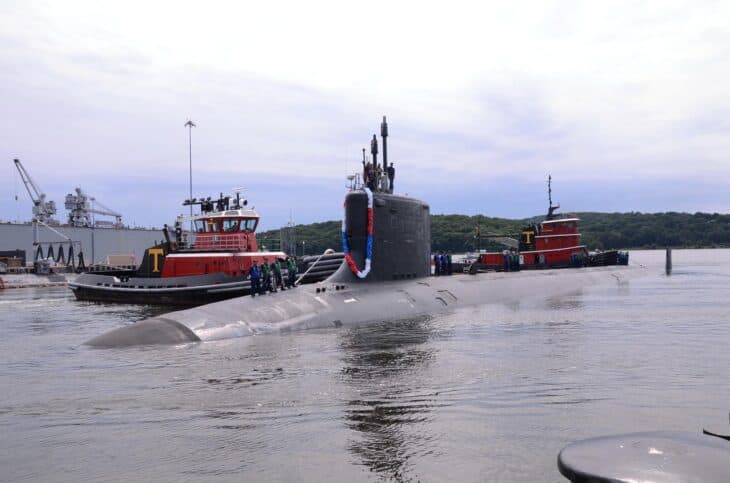

New London, in Groton, is the East Coast home of the fast-attack submarine force, with roughly 15 to 16 attack submarines at 11 submarine piers on the Thames River.
It was designated the Navy’s first submarine base in 1915 and calls itself the “Submarine Capital of the World.” It was also home to USS Nautilus, the world’s first operational nuclear-powered submarine.
The base is compact at about 687 acres, with around 6,500 active-duty personnel. On hulls it is a near tie with Kitsap, which ranks higher for its carrier, its missile submarines and its shipyard.
7. Naval Submarine Base Kings Bay, Georgia
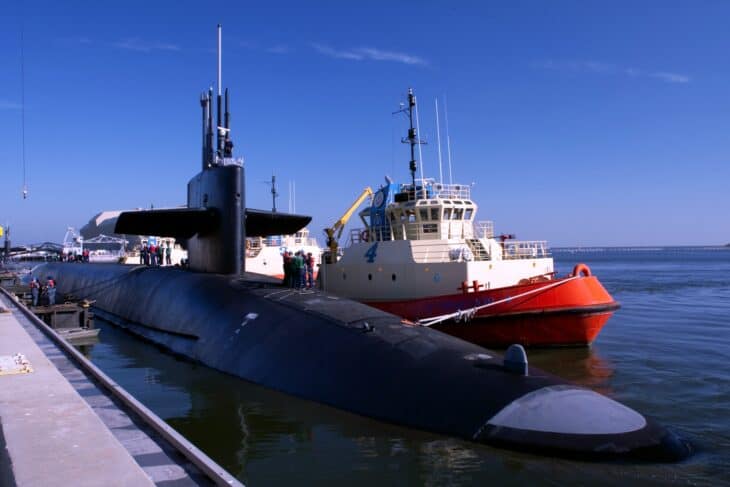

Kings Bay is home to six Ohio-class Trident ballistic-missile submarines and two guided-missile submarines, USS Florida and USS Georgia. It is the Atlantic half of the sea-based nuclear deterrent.
Eight boats sounds small, but the base covers 16,000 acres, 4,000 of them protected wetlands. Its Trident Refit Facility has what the Navy calls the largest covered dry dock in the Northern Hemisphere.
It is also where the next generation arrives first. The future USS District of Columbia, lead boat of the Columbia class that will replace the Ohios, is listed with Kings Bay’s Submarine Squadron 16 while it completes pre-commissioning.
8. Naval Station Everett, Washington
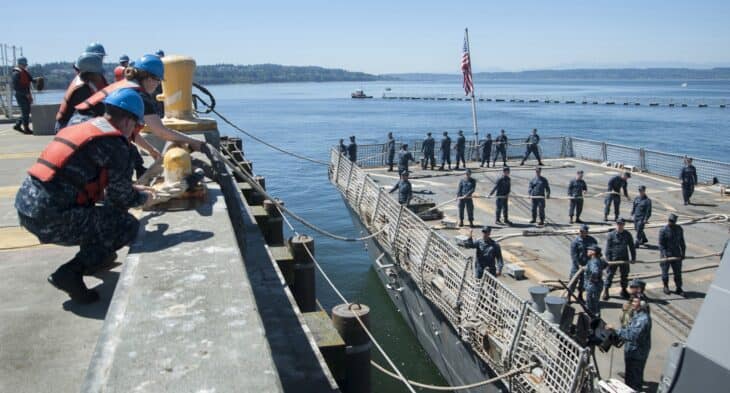

Everett, north of Seattle, is home to seven guided-missile destroyers. It opened in 1994, which makes it the newest base on this list.
It has a carrier pier and homeported USS Abraham Lincoln from 1997 to 2011, then USS Nimitz until 2015. About 6,500 sailors and civilians work for the commands there.
9. Naval Base Guam
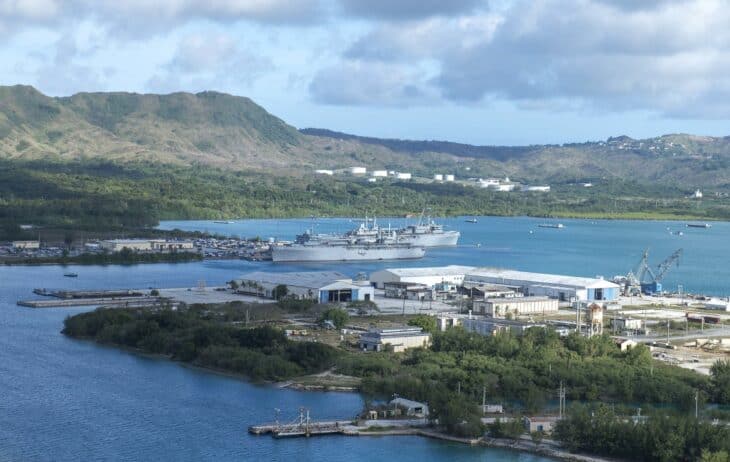
Guam is a US territory, not a state, but it is American soil and a forward Navy home port in the western Pacific. It hosts a squadron of forward-deployed fast-attack submarines and two submarine tenders, USS Frank Cable and USS Emory S. Land.
In November 2024 USS Minnesota became the first Virginia-class submarine forward-deployed there. The count moves often: Jefferson City left Guam for Pearl Harbor in July 2026.
10. Naval Air Station North Island (Naval Base Coronado), California
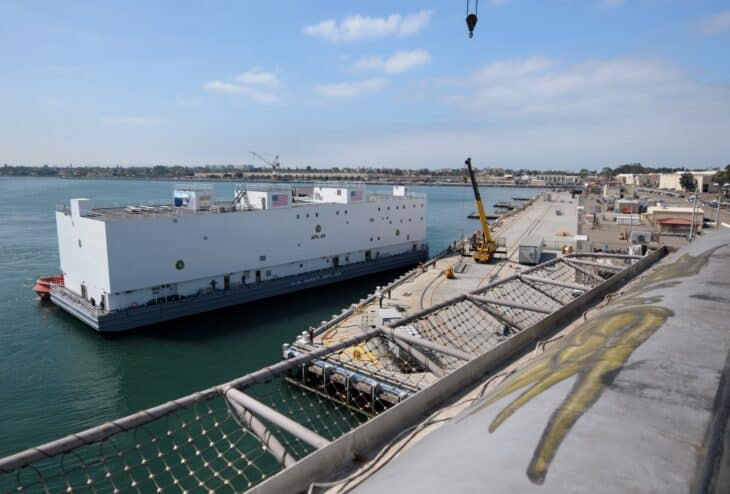

North Island, across the bay from downtown San Diego, is home port to three aircraft carriers: USS Abraham Lincoln, USS Carl Vinson and USS Theodore Roosevelt. It also hosts 23 aviation squadrons.
Three hulls puts it last by fleet count, but each carrier embarks a whole air wing, the core of a carrier strike group. A House Armed Services Committee resolution recognized North Island as the “Birthplace of Naval Aviation” in 1963.
It is the anchor of Naval Base Coronado, eight installations covering more than 57,000 acres with over 36,000 military and civilian personnel. Counted that way, it is the largest command in the Navy’s Southwest Region.
Isn't China Lake the largest Navy base?
By land, yes. Naval Air Weapons Station China Lake in California covers about 1.1 million acres, the Navy’s largest single landholding and 38 percent of everything it owns worldwide. But it is a weapons test range in the Mojave Desert with no ships at all, so it answers a different question. When people ask for the largest naval base, they almost always mean Norfolk.
Largest by land area
Rank by acres and the fleet bases mostly drop out. Ships need waterfront, not land, so the biggest Navy landholdings are test ranges and training areas.
| Installation | State | Land area | Main role |
|---|---|---|---|
| NAWS China Lake | California | About 1.1 million acres | Weapons test and evaluation |
| Naval Base Coronado | California | 57,000+ acres | Carriers, aviation, special warfare training |
| Naval Submarine Base Kings Bay | Georgia | 16,000 acres | Ballistic-missile submarines |
| Naval Base Kitsap | Washington | 12,000 acres | Submarines, carrier, shipyard |
| Naval Base San Diego | California | 1,600 acres (plus 326 of water) | Pacific surface fleet |
China Lake also controls more than 20,000 square miles of airspace. It is where the AIM-9 Sidewinder missile was developed. The Air Force’s biggest bases follow the same pattern, as our list of the largest Air Force bases in the US shows.
Largest by number of people
Headcount is the hardest measure to compare, because every base counts differently: some publish active duty only, some add civilians, contractors or families. Read these as orders of magnitude.
Naval Base Coronado reports over 36,000 military and civilian personnel. Naval Base San Diego reports over 24,000 military and more than 10,000 civilians, and Kitsap reports 15,293 active duty plus 21,612 civilians and contractors.
Norfolk does not publish a single base headcount, but the Hampton Roads region around it counts more than 120,000 active-duty, reserve and civilian personnel. For every service combined, see the largest military bases in the US.
Other Navy bases people ask about
NAS Jacksonville, Florida is an air station, not a port. It is home to the Navy’s P-8A patrol squadrons, including VP-30, the P-8 Poseidon fleet replacement squadron and the Navy’s largest aviation squadron.
Joint Expeditionary Base Little Creek-Fort Story, Virginia covers about 2,120 acres near Norfolk and counts 14,170 military personnel. It is the East Coast home of the Navy’s expeditionary forces.
Naval Base Point Loma, California is San Diego’s submarine base, home of Submarine Squadron 11. Overseas bases such as Fleet Activities Yokosuka in Japan are covered in our ranking of the largest naval bases in the world.
FAQ
Sources and references used for research and fact-checking.
- Stars and Stripes, Norfolk Navy security operations
- Military OneSource, Naval Station Norfolk in-depth overview
- Wikipedia, Naval Station Norfolk
- The War Zone, Where are the aircraft carriers, September 23, 2026
- DVIDS, Naval Base San Diego earns 2025 top shore award
- Wikipedia, Naval Base San Diego
- Military OneSource, Joint Base Pearl Harbor-Hickam in-depth overview
- Wikipedia, Joint Base Pearl Harbor-Hickam
- DVIDS, USS Jefferson City arrives at new homeport in Pearl Harbor
- Military OneSource, Naval Station Mayport in-depth overview
- Wikipedia, Naval Station Mayport
- Stars and Stripes, Navy nuclear missile submarine base upgrade
- Wikipedia, Naval Base Kitsap
- Military OneSource, Naval Base Kitsap in-depth overview
- Military OneSource, Naval Submarine Base New London in-depth overview
- Military OneSource, Naval Submarine Base Kings Bay in-depth overview
- Wikipedia, Naval Submarine Base Kings Bay
- Wikipedia, Naval Station Everett
- Military OneSource, Naval Station Everett in-depth overview
- Wikipedia, Naval Base Guam
- Wikipedia, Naval Air Station North Island
- Military OneSource, Naval Base Coronado in-depth overview
- Military OneSource, NAWS China Lake in-depth overview
- Wikipedia, Naval Air Station Jacksonville
- Military OneSource, Joint Expeditionary Base Little Creek-Fort Story in-depth overview
- Military OneSource, Naval Base Point Loma in-depth overview
Get the Newsletter
The latest aviation news and stories sent to your inbox.
About the Author

Tim is the owner and lead editor of AeroCorner since 2019, overseeing aviation content covering aircraft, airlines, airports, and the broader aviation industry. Through years of researching, writing, editing, and publishing aviation-focused content, he has developed extensive practical knowledge of commercial aviation and air travel. Based in Asia and a frequent traveler himself, Tim also brings firsthand passenger experience to AeroCorner’s coverage. Outside of publishing, he has also explored aviation firsthand through hands-on flight training in New Zealand.