

Table of Contents
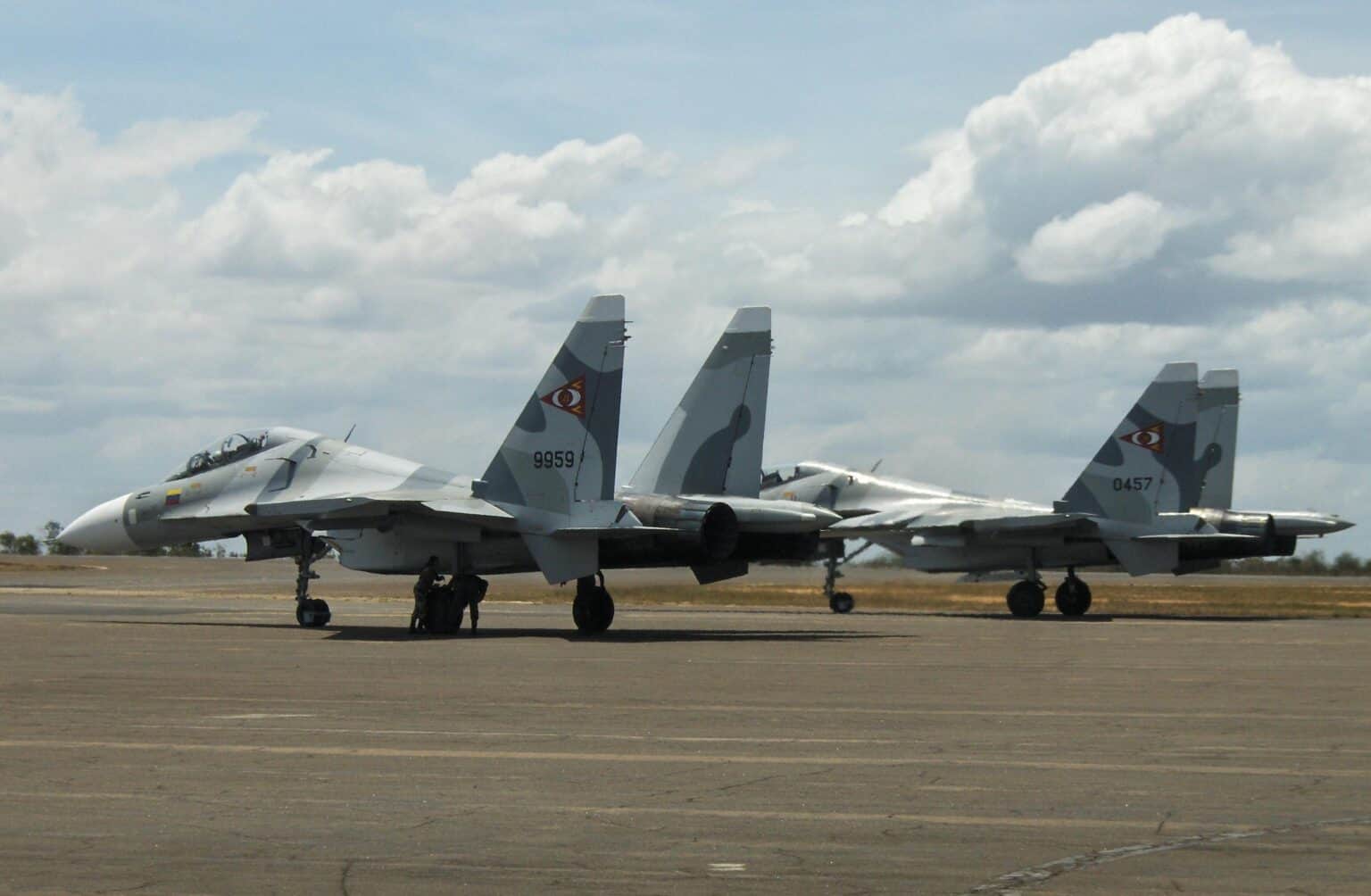
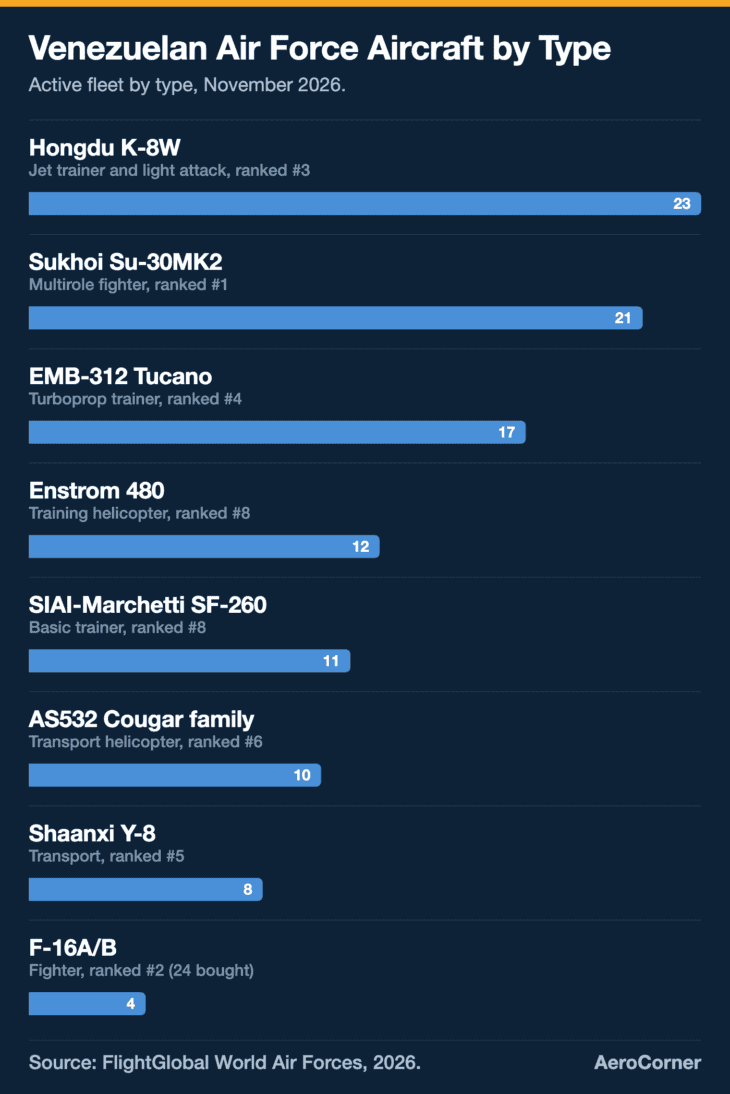
Venezuela’s air force is built around 21 Russian Sukhoi Su-30MK2 fighters, the most powerful jets in its inventory. The second fighter, the American F-16, is down to a handful: FlightGlobal counts three F-16As and one F-16B in use out of 24 bought in the 1980s.
Its official name is the Aviación Militar Bolivariana, or AMB, though most people still call it the Venezuelan Air Force. FlightGlobal’s 2026 directory counts 145 aircraft in day-to-day use, and most of them are trainers.
This guide ranks every aircraft type it flies by its weight in Venezuelan air power as of November 2026. Then it covers the night of January 3, 2026, when US forces struck around Caracas and captured Nicolás Maduro, and what that night showed about how strong the force really is.
| Rank | Aircraft | Role | In use | Status |
|---|---|---|---|---|
| 1 | Sukhoi Su-30MK2 | Multirole fighter | 21 | 24 delivered from 2006; about 12 thought airworthy |
| 2 | F-16A/B Fighting Falcon | Fighter | 4 (3 F-16A, 1 F-16B) | 24 bought; a second F-16B flew again in April 2026 |
| 3 | Hongdu K-8W Karakorum | Jet trainer and light attack | 23 | First delivered in 2010 |
| 4 | Embraer EMB-312 Tucano | Turboprop trainer and light attack | 17 | In service since the 1980s |
| 5 | Shaanxi Y-8, C-130H and Boeing 707 | Airlift and tanker | 8, 4 and 1 | In service |
| 6 | AS532 Cougar and Mi-17 | Transport helicopters | 10 and 6 | In service |
| 7 | King Air, Dornier 228 and light transports | Liaison, VIP and special mission | 14 | In service |
| 8 | SF-260, DA42 and Enstrom helicopters | Basic pilot training | 11, 6 and 14 | 4 more Enstrom 480s ordered |
| 9 | Arpía and other drones | Surveillance and strike drones | Not disclosed | Built with Iranian help |
How this ranking works
Aircraft are ranked by their weight in Venezuelan air power in November 2026: fighters first, then the armed trainers, then airlift, helicopters, light transports, basic trainers and drones. Counts come from FlightGlobal’s World Air Forces 2026 directory, which lists only aircraft in day-to-day use. It also lists six old F-5A fighters, but no recent reporting shows them flying, so they are not ranked. Army and Navy aircraft fly in separate air arms and are covered below.
1. Sukhoi Su-30MK2: The Backbone of the Force
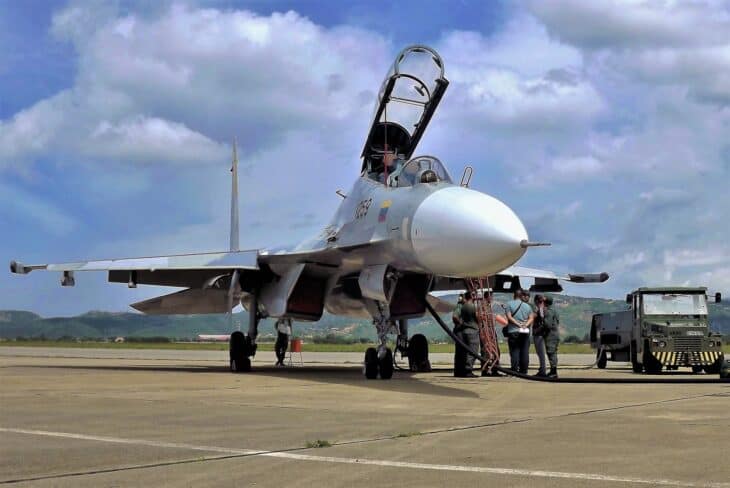

The Sukhoi Su-30MK2 is the most capable aircraft Venezuela owns. Russia signed a contract for 24 in July 2006, Airforce Technology puts the deal at about $1 billion, and the first two arrived in November 2006.
It is a big two-seat, twin-engine fighter, with a top speed of about 1,300 mph (2,100 km/h) and a range of about 1,860 miles (3,000 km) without refueling. Venezuela bought it with Kh-31 missiles, which come in anti-ship and anti-radar versions.
FlightGlobal counts 21 in use. The jets fly with combat groups at Barcelona, in the east, and The Military Balance 2025 lists four Sukhoi squadrons.
Fewer can actually fly. Andrei Serbin Pont, an analyst at the CRIES think tank, told Breaking Defense in January 2026 that about 12 Sukhois were airworthy, an estimate based on open-source intelligence.
At least two have crashed. On September 17, 2015, a Su-30 scrambled after a suspected drug flight went down in Apure state near the Colombian border, killing both pilots. On July 2, 2023, another crashed in Miranda state while practicing for the Independence Day parade; both crew ejected, but one died.
The only Su-30s in Latin America
Venezuela is the only Latin American air force flying the Su-30. Chávez turned to Moscow after Washington blocked weapons sales and support to Caracas, so the most advanced fighter in Venezuela is Russian, while the oldest is American.
2. F-16A/B Fighting Falcon: South America’s First F-16s, Mostly Grounded
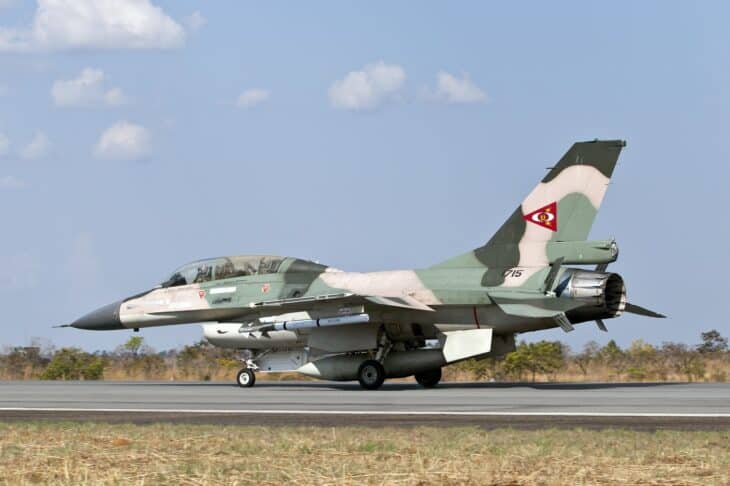

Venezuela was the first Latin American country cleared to buy the F-16, F-16.net notes. It signed for 24 under the Peace Delta program in May 1982: 18 single-seat F-16As and six two-seat F-16Bs, all Block 15s, the first arriving in September 1983.
Then the parts stopped. US approval for an upgrade came in 1997, but relations collapsed under Hugo Chávez, and Washington has blocked weapons sales and support to Caracas ever since, The War Zone reports.
FlightGlobal counted three F-16As and one F-16B in use. Venezuela added Israeli Python 4 missiles to its original AIM-9 Sidewinders years ago, and in September 2025 a pair of its F-16s flew near the US destroyer USS Jason Dunham in the Caribbean.
On April 15, 2026, a second F-16B flew again with Fighter Group 16, the “Dragones,” at El Libertador Air Base in Palo Negro, Aragua state. The AMB’s commander, Maj. Gen. Royman Hernández, said it was back in the air “after 15 years and 10 months.” Private estimates cited by Meganoticias put the most Venezuela can keep flying at five.
The day Venezuelan F-16s shot down Venezuelan aircraft
In the November 1992 coup attempt against President Carlos Andrés Pérez, rebel officers took to the air against the government. F-16 pilots loyal to the government scored at least three aerial kills against them, The War Zone reports.
Our guide to the Turkish Air Force shows what a fully supported F-16 fleet looks like by comparison.
3. Hongdu K-8W Karakorum: The Biggest Jet Fleet
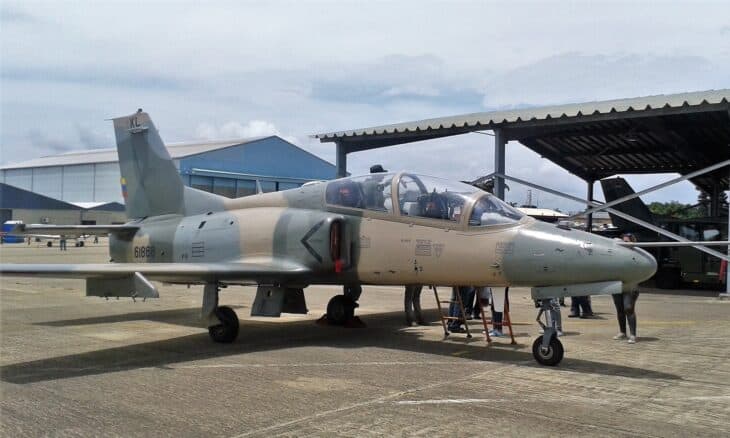

Venezuela’s largest jet fleet is Chinese. FlightGlobal counts 23 Hongdu K-8W Karakorums, more than its Su-30s.
The first six of an order for 18 arrived in March 2010. Chávez said at the time that “we require the ability to defend” Venezuela, and the order replaced aging trainers built largely on US technology.
The K-8 is a two-seat jet trainer that can also carry guns and light bombs, and it can climb to 40,000 feet. The Military Balance 2025 lists two K-8 squadrons.
4. Embraer EMB-312 Tucano: The 1980s Turboprop
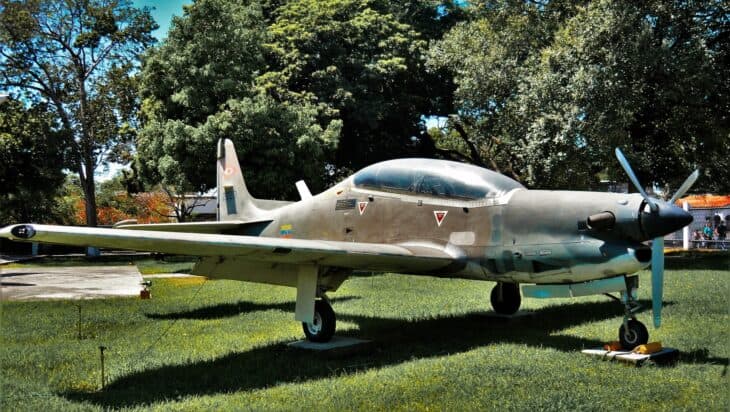

The Brazilian-built EMB-312 Tucano has flown with Venezuela since the 1980s. FlightGlobal counts 17, listed as trainers, and The Military Balance 2025 lists one Tucano squadron.
It is the older, lighter ancestor of the Embraer Super Tucano that Brazil and Colombia use to hunt drug planes. Venezuela never bought the newer model.
5. Shaanxi Y-8, C-130H and the Boeing 707 Tanker
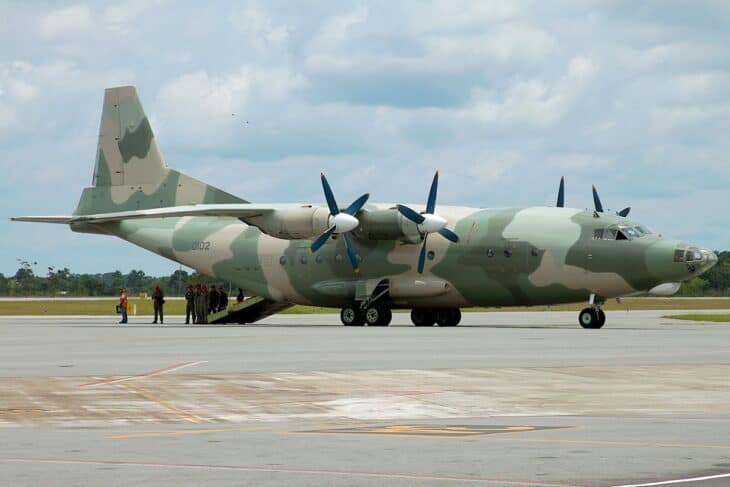

The AMB’s main airlifter is also Chinese. FlightGlobal counts eight Shaanxi Y-8s, a four-turboprop transport developed from the Soviet An-12.
Four C-130H Hercules remain from the years when Venezuela bought American. A single Boeing 707 serves as the force’s only aerial tanker.
6. AS532 Cougar and Mi-17: The Helicopters
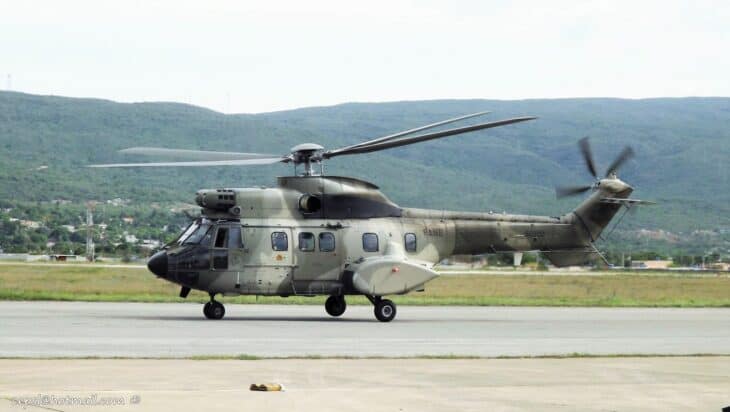

The air force’s own helicopters are few. FlightGlobal counts 10 from the AS532 Cougar and Super Puma family and six Russian Mi-17s.
Most of Venezuela’s military helicopters, including its attack helicopters, belong to the Army instead. See the callout below.
7. King Air, Dornier 228 and the Light Transports
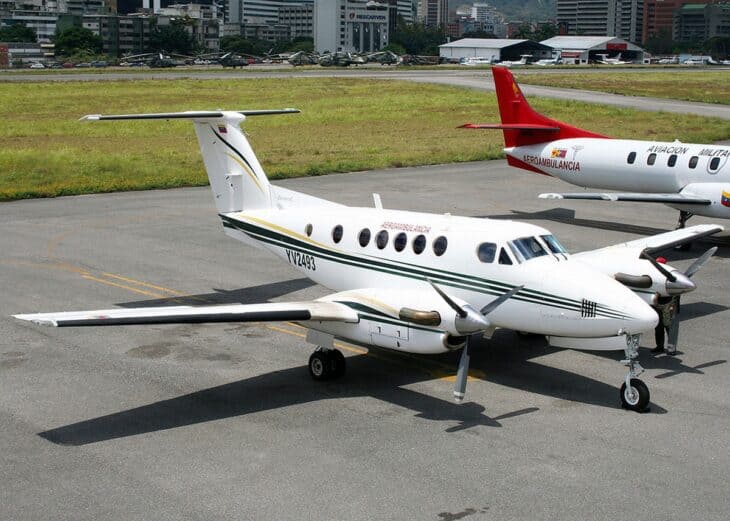

Fourteen smaller aircraft move people and run special missions. FlightGlobal lists five King Air 200s and 350s, three Dornier 228s, two Cessna 208 Caravans, one Short 360, one Citation and two Merlin IV or Metro turboprops, one of them fitted for reconnaissance.
8. SF-260, DA42 and Enstrom: Where Pilots Start
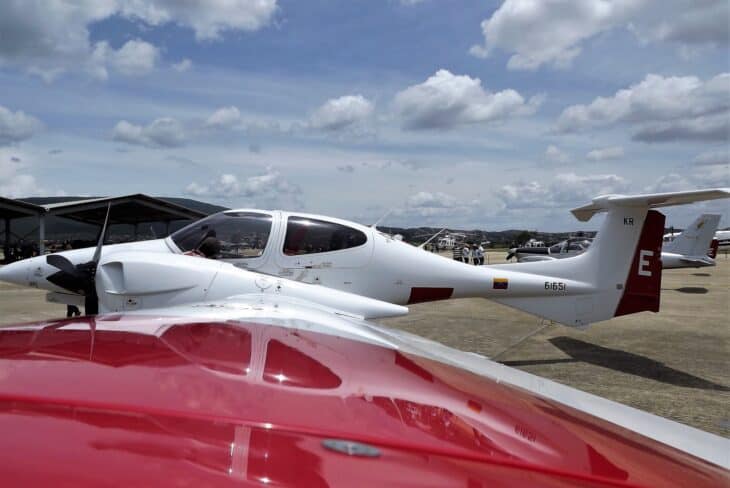

Venezuela trains military pilots at Maracay, where its first military aviation school opened in December 1920. Students start on 11 Italian SF-260 piston trainers and six Diamond DA42 twins.
Helicopter pilots train on 12 Enstrom 480 turbine helicopters and two Enstrom 280s, with Air Training Group 19 at Mariscal Sucre Air Base. FlightGlobal lists four more 480s on order.
9. Arpía and the Iranian-Designed Drones
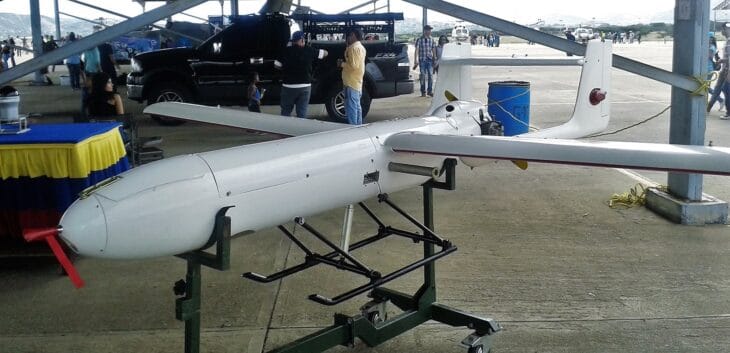

Venezuela’s drones came from Iran. The Arpía, described as the first drone built in Venezuela, is based on Iran’s Mohajer-2, and later designs, the ANSU-100 and ANSU-200, were developed with Iranian help.
The AMB does not publish how many it flies, and FlightGlobal does not count drones. Our ranking of the best military drones in the world shows how far these sit from the top of the market.
January 3, 2026: Where Was the Venezuelan Air Force?
In the early hours of January 3, 2026, the United States launched Operation Absolute Resolve. Joint Chiefs Chairman Gen. Dan Caine said more than 150 aircraft flew from over 20 locations, and US special forces captured Maduro in Caracas and flew him to New York to face charges.
The strikes hit the AMB’s headquarters at Generalissimo Francisco de Miranda Air Base, known as La Carlota, in the middle of Caracas, and El Libertador Air Base, home of the F-16s. Russian-supplied Buk-M2E air defense systems were destroyed at La Carlota and Higuerote, and Venezuelan crews parked aircraft across the La Carlota runway to block it.
US officials reported some ground fire but no air resistance. Serbin Pont told Breaking Defense that Caracas “realized that any scramble would be quickly neutralized,” and retired Colombian Air Force Col. Iván González said the jets “did not receive early warning notifications or real-time intelligence.”
Did the US destroy Venezuela's Su-30s?
No one has shown that it did. Claims that seven Su-30s were destroyed spread online, but Caracas has confirmed no aircraft lost or damaged, and no fleet count has been published since. Unverified videos from January 3 appear to show F-16s and Sukhois flying over Aragua and Puerto Ordaz, and the targets that were confirmed hit were air defenses, radars and communications sites.
Our ranking of the best air defense systems in the world covers the Buk family that failed to stop the raid.
The Air Force After Maduro
Delcy Rodríguez, Maduro’s vice president, took over as interim president. On March 18, 2026, she named Gen. Gustavo González López defense minister, replacing Vladimir Padrino López.
Relations with Washington thawed fast. The two countries agreed in early March to restore diplomatic ties, and the US formally reopened its embassy in Caracas on March 30, 2026, after seven years closed.
González López led the ceremony for the F-16B that flew again on April 15. It changed little: one jet in a fleet of 24 bought, as Meganoticias noted, does not shift the balance of power in the region.
What about the Army and Navy aircraft?
They are not in the air force count. Venezuela’s Army runs its own aviation, with 10 Mi-35 attack helicopters, 16 Mi-17s, nine Bell 412s and 11 An-28/M28 light transports in FlightGlobal’s 2026 directory. The Navy flies C212 patrol planes and Bell and Mi-17 helicopters, 27 aircraft in all.
From Maracay to the Bolivarian Air Force: A Short History
Venezuela’s military aviation dates from 1920. A decree of April 17, 1920 created the Military Aviation School, which opened at Maracay on December 10 that year.
It became an independent service, the Fuerza Aérea Venezolana, on June 22, 1946. Under Chávez it was renamed the Aviación Militar Venezolana and then the Aviación Militar Bolivariana, in 2007 or 2008; sources disagree on the year.
For decades it was one of the best-equipped air forces in Latin America, flying Mirages, F-16s and the OV-10 Bronco. Sanctions and an economic collapse have hollowed it out since.
How Strong Is Venezuela’s Air Force?
On paper, it is the only Latin American air force with Su-30s, and it has 21 of them. In practice, Serbin Pont estimates about 12 Sukhois can fly, and up to six single-seat fighters, with limits on the weapons they can carry.
The pilots are the other problem. Serbin Pont pointed to purges of suspected coup plotters, desertions and little flight training, and Col. González called the force “worse than in the year 2000.”
Its neighbors have moved the other way. Brazil’s air force is flying new Gripens, and even the Mexican Air Force, with three F-5s, is shopping for 12 new fighters. Our rankings of the largest air forces in the world and the best air forces in the world show the gap between size and strength.
FAQ
Sources and references used for research and fact-checking.
- FlightGlobal, World Air Forces 2026 directory
- Breaking Defense, While the US military grabbed Maduro, where was Venezuela's air force?
- The War Zone, The Unlikely Saga Of Venezuela's F-16s
- Meganoticias, Este país de Sudamérica resucita un caza F-16B luego de 15 años fuera de servicio
- The Aviationist, U.S. Launches Military Operations in Venezuela, Maduro 'Captured'
- Caracas Chronicles, The 12 Targets the US Hit in Venezuela
- Airforce Technology, Sukhoi Su-30MK2 Multirole Fighter
- Migflug, Bolivarian Military Aviation of Venezuela
- Wikipedia, List of equipment of Bolivarian Military Aviation
- DefenceTalk (AFP), Chinese warplanes arrive in Venezuela
- In-Venezuela, Venezuelan Su-30 crashes near Colombian border
- Taipei Times (AFP), Venezuelan pilot killed in fighter jet crash
- PBS NewsHour (AP), US reopens embassy in Venezuela months after military operation to remove Maduro
- F-16.net, Venezuela - Fuerza Aérea Venezolana
- Wikipedia, Gustavo González López
Get the Newsletter
The latest aviation news and stories sent to your inbox.
About the Author

Tim is the owner and lead editor of AeroCorner since 2019, overseeing aviation content covering aircraft, airlines, airports, and the broader aviation industry. Through years of researching, writing, editing, and publishing aviation-focused content, he has developed extensive practical knowledge of commercial aviation and air travel. Based in Asia and a frequent traveler himself, Tim also brings firsthand passenger experience to AeroCorner’s coverage. Outside of publishing, he has also explored aviation firsthand through hands-on flight training in New Zealand.