

Table of Contents
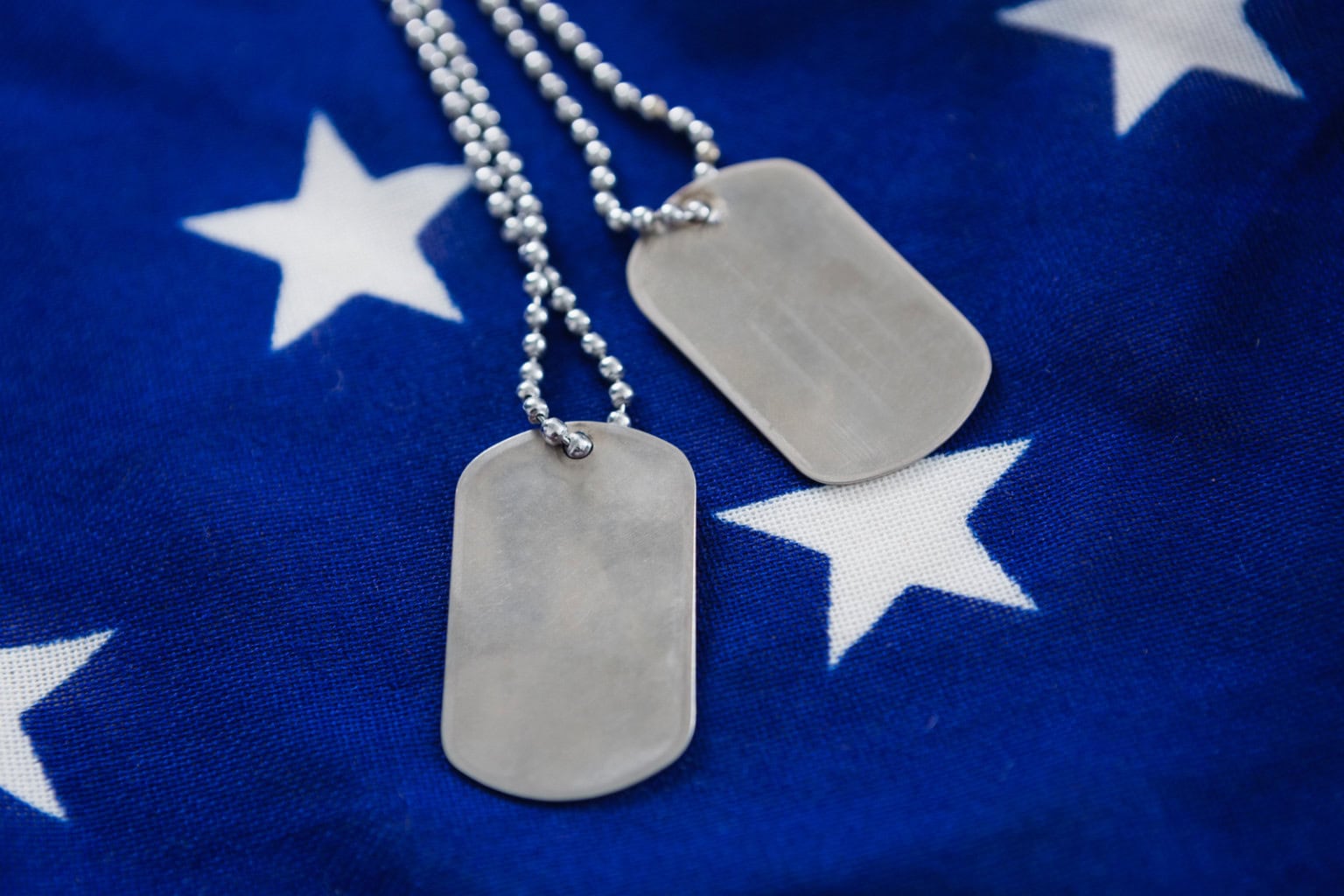
Yes, civilians can wear dog tags. The federal Stolen Valor Act most people have in mind covers medals and combat badges, not identification tags.
Whether it is respectful is a different question, and it turns on what the tags say and why you wear them. A parent’s tags worn in memory are one thing. A stamped replica that implies you served is another.
| What you wear | Legal? | How it usually reads |
|---|---|---|
| A relative’s real tags, worn in memory | Yes | A tribute |
| Fashion tags with your own name or a message | Yes | Jewelry |
| Replica military tags with a made-up rank, unit or service number | Yes | Often seen as posing as a veteran |
| Any prop used while claiming a medal to get money or a benefit | The medal claim can be a federal crime | Stolen valor |
Is It Illegal for a Civilian to Wear Dog Tags?
Not under the stolen valor law. That statute, 18 U.S.C. 704, deals with military decorations, medals and service badges, plus their ribbons and imitations. Identification tags are not in it.
Its fraud clause, subsection (b), makes it a crime to fraudulently claim to have received one of a short list of awards with intent to obtain money, property or another tangible benefit. The list runs from the Medal of Honor to the Purple Heart, the Silver Star and the combat badges.
So a pair of dog tags on its own is not stolen valor. What the statute targets is the lie about a specific award, told to get something of value.
The common claim, corrected
Wearing dog tags is often described as stolen valor. Under federal law it is not. The Stolen Valor Act covers fraudulently claiming specific medals and combat badges for a tangible benefit, and identification tags are not on its list.
The same split runs through the other civilian questions about military gear. Our guides cover wearing military uniforms as a civilian, American flag patches and whether civilians can salute.
Is It Disrespectful for Civilians to Wear Dog Tags?
It can be, and context decides it. Issued tags have been worn under the uniform since the Army’s first order in 1906, so a civilian wearing military-style tags over a shirt can read as someone signaling service they never did.
Three cases tend to sort themselves out:
- A loved one’s tags. Wearing a parent’s, grandparent’s or spouse’s real tags reads as a tribute, not a claim.
- Personalized fashion tags. Your own name, a date or a message on a tag-shaped pendant is jewelry, and it does not pretend to be anything else.
- Replica service tags. Tags stamped to look issued, with a rank, a branch or a fake identification number, are the ones most likely to offend.
If you wear a relative’s tags, the simple courtesy is to say whose they are when someone asks. Wearing them under your shirt, the way they were issued, also avoids the question.

Do Soldiers Still Have to Wear Dog Tags?
Yes, and more often than the old line about combat suggests. The Army’s uniform regulation, AR 670-1 (2021 edition), says soldiers will wear identification tags at all times while on duty in uniform unless their commander directs otherwise.
The same paragraph says the tags go around the neck, except where safety considerations apply. The requirement covers duty in uniform, so tags worn openly with civilian clothes tend to stand out.
The Marine Corps History Division describes the tags as part of the uniform, kept in the owner’s possession when not worn and inspected regularly. Marines have been issued them since 1916.
What Information Is on a Military Dog Tag?
The exact layout varies by branch and has changed over time. The Marine Corps History Division’s reference page, written in 2007, gives the Marine layout line by line.
| Line | Marine Corps tag (History Division, 2007) |
|---|---|
| 1 | Last name |
| 2 | First and middle initials, blood type |
| 3 | Social Security number |
| 4 | USMC, gas mask size |
| 5 | Religious preference |
The Army dropped the Social Security number in 2015. A new version of Department of the Army Pamphlet 600-8-14, published Nov. 30, 2015, replaced it with the soldier’s 10-digit, randomly generated Defense Department identification number.
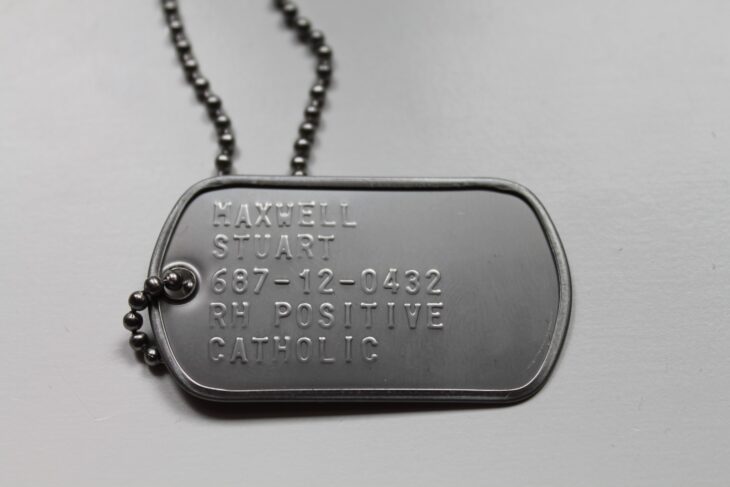

The reason was identity theft. An Army Human Resources Command official put it plainly: a lost pair of tags gave a finder the soldier’s name, blood type, religion and Social Security number.
World War II tags carried name, rank, service number, blood type and, if desired, religion. Some also carried a “T” for a tetanus shot, a marking that was gone by the 1950s.
Why Do Soldiers Get Two Dog Tags?
One tag stays with the body and the other goes to the people recording the death and burial. The Army added the second disc in July 1916, hung from the first by a short string or chain.
The Marine Corps History Division describes how the pair is split. The tag on the neck is buried with the Marine, and the duplicate goes to the person in charge of the burial, who reports the cause and date of death.
The rule has not always held. In 1959 the procedure changed to keep both tags with a service member who died, and by the Vietnam War it had gone back to taking one tag and leaving the other.
When Did Soldiers Start Wearing Dog Tags?
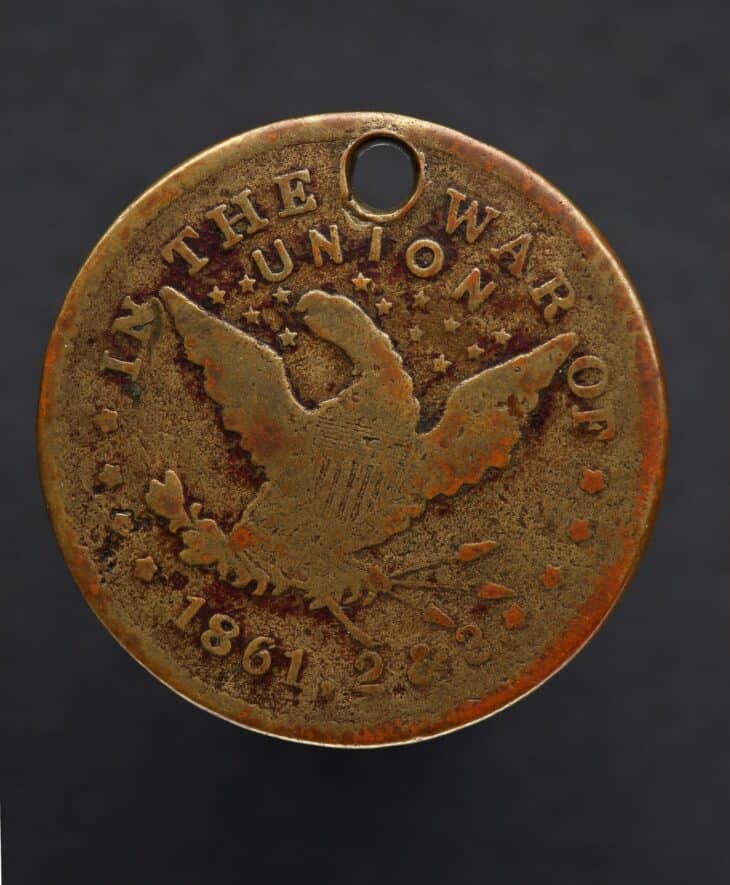
Officially in December 1906, when an Army general order required aluminum, disc-shaped tags. The idea is older: Civil War soldiers, afraid of unmarked graves, stenciled their clothing or bought engraved disks from sutlers.
Their fear was justified. By the end of the Civil War, more than 40% of the Union Army’s dead were unidentified, according to the Defense Department.
1862
The War Department says no. A New Yorker named John Kennedy offers to make thousands of engraved disks for soldiers and is turned down.
1899
The first official request. Army Chaplain Charles C. Pierce, who ran the Army Morgue and Office of Identification in the Philippines, recommends circular ID disks for every soldier.
Dec. 1906
The Army makes them mandatory. A general order requires half-dollar-size aluminum tags stamped with name, rank, company and regiment or corps, worn under the uniform.
July 1916
A second tag. The order is changed to add a second disc, one for the body and one for burial records.
Oct. 1916
The Marines follow. Marine Corps Order Number 32 issues tags to all officers and enlisted Marines.
May 1917
The Navy joins. Navy tags of the era carry an etched print of the sailor’s right index finger.
World War II
The modern shape. Tags become an official part of the uniform: a rounded rectangle of nickel-copper alloy.
1969
Social Security numbers. The Army begins replacing service numbers with Social Security numbers.
2015
DoD ID numbers. The Army starts replacing Social Security numbers with each soldier’s Defense Department ID number.
The name came later. According to the Army Historical Foundation, as cited by the Defense Department, newspaper owner William Randolph Hearst used “dog tags” in 1936 to attack nameplates the new Social Security Administration was considering.
Why Did Old Dog Tags Have a Notch?
Because of the machine that stamped them. Tags of the World War II era carried a notch at one end, and the Defense Department’s history says historians tie it to the type of stamping machine in use.
Those machines were replaced by the 1970s, so tags issued today are smooth on both sides.
The notch myth
A popular story says the notch was for wedging a tag between a fallen soldier’s teeth. The Defense Department’s history gives a plainer reason: it came from the stamping machine, and it disappeared when the machines changed.
Where Can You Buy or Replace Dog Tags?
Military-style tags, blank or engraved, are sold by online retailers and by vendors on or near bases, including the exchanges. Anyone can order a set with their own text.
Official replacements are a different matter. Current service members get replacements free through their ID card office, but there is no provision for former service members, so veterans and families use commercial engravers.
If you are recreating a relative’s tags, leave the Social Security number off. That is the same identity-theft risk the Army removed from its own tags in 2015.
FAQ
Sources and references used for research and fact-checking.
- Cornell Law School LII, 18 U.S. Code 704: Military medals or decorations
- U.S. Department of Defense, Dog Tag History: How the Tradition and Nickname Started
- U.S. Army, Dog tags get first update in 40 years
- Marine Corps University History Division, Marine Corps Identification Tags
- AR670.com, AR 670-1, paragraph 3-11: Identification tags and security identification badges
- Veteran.com, How to Get Replacement Dog Tags
Get the Newsletter
The latest aviation news and stories sent to your inbox.
About the Author

Tim is the owner and lead editor of AeroCorner since 2019, overseeing aviation content covering aircraft, airlines, airports, and the broader aviation industry. Through years of researching, writing, editing, and publishing aviation-focused content, he has developed extensive practical knowledge of commercial aviation and air travel. Based in Asia and a frequent traveler himself, Tim also brings firsthand passenger experience to AeroCorner’s coverage. Outside of publishing, he has also explored aviation firsthand through hands-on flight training in New Zealand.