Fighter Jets
The Chengdu J-10 Vigorous Dragon is China's first home-designed third-generation fighter, a single-engine delta-canard jet that flew in 1998 and was exported to Pakistan, where it made its combat debut in May 2025.
Updated: by Tim de Vries

The latest aviation news and stories sent to your inbox.
The Chengdu J-10, also called the Vigorous Dragon or Menglong, is a single-engine, delta-wing, canard multirole fighter built by the Chengdu Aircraft Corporation. It first flew on March 23, 1998, entered service in 2004, and has since grown into the J-10C, a 4.5-generation fighter with an AESA radar. The People’s Liberation Army Air Force flies it, along with the air forces of Pakistan and Uzbekistan.
Live Fleet Activity (J10)
Fetching live data…


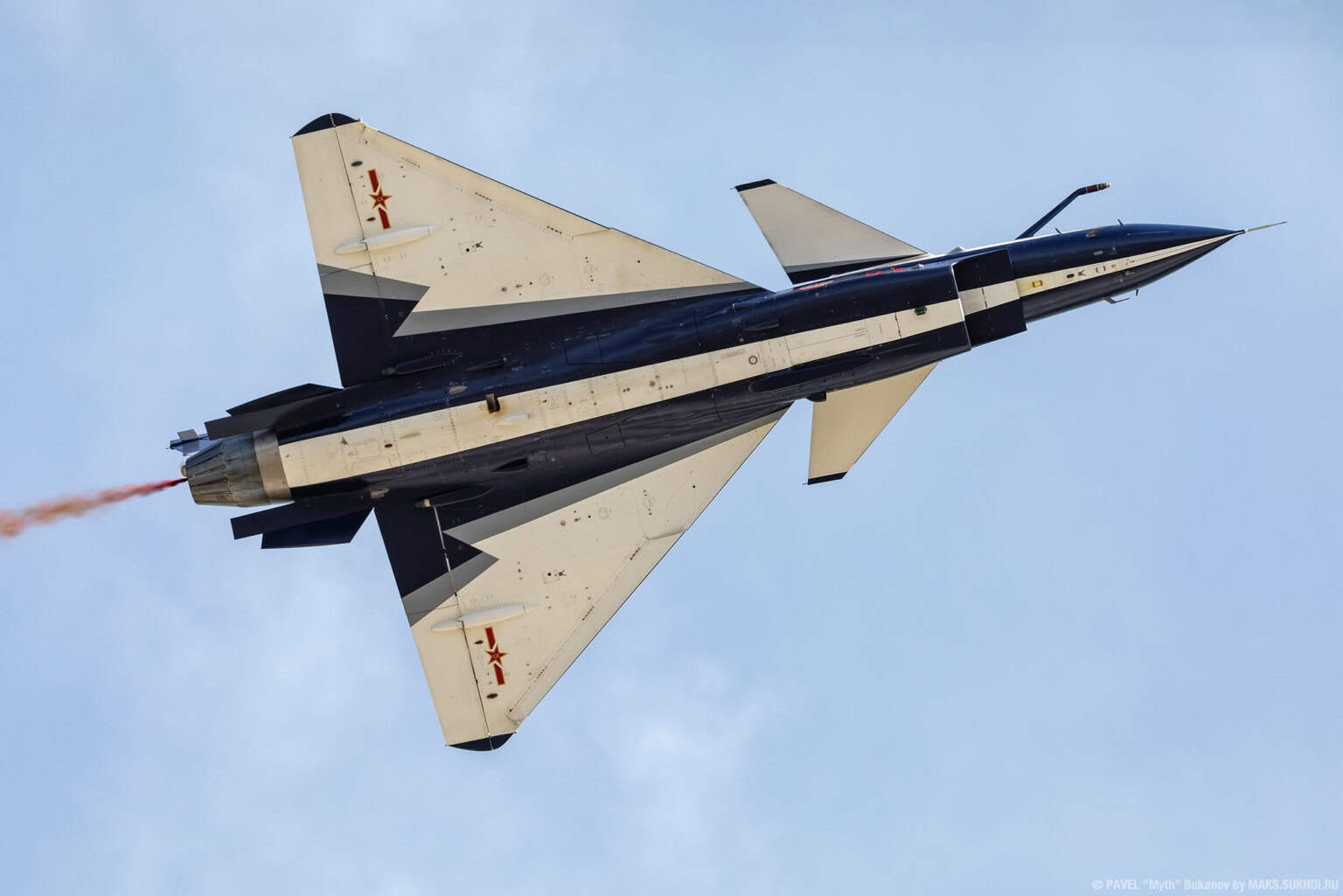

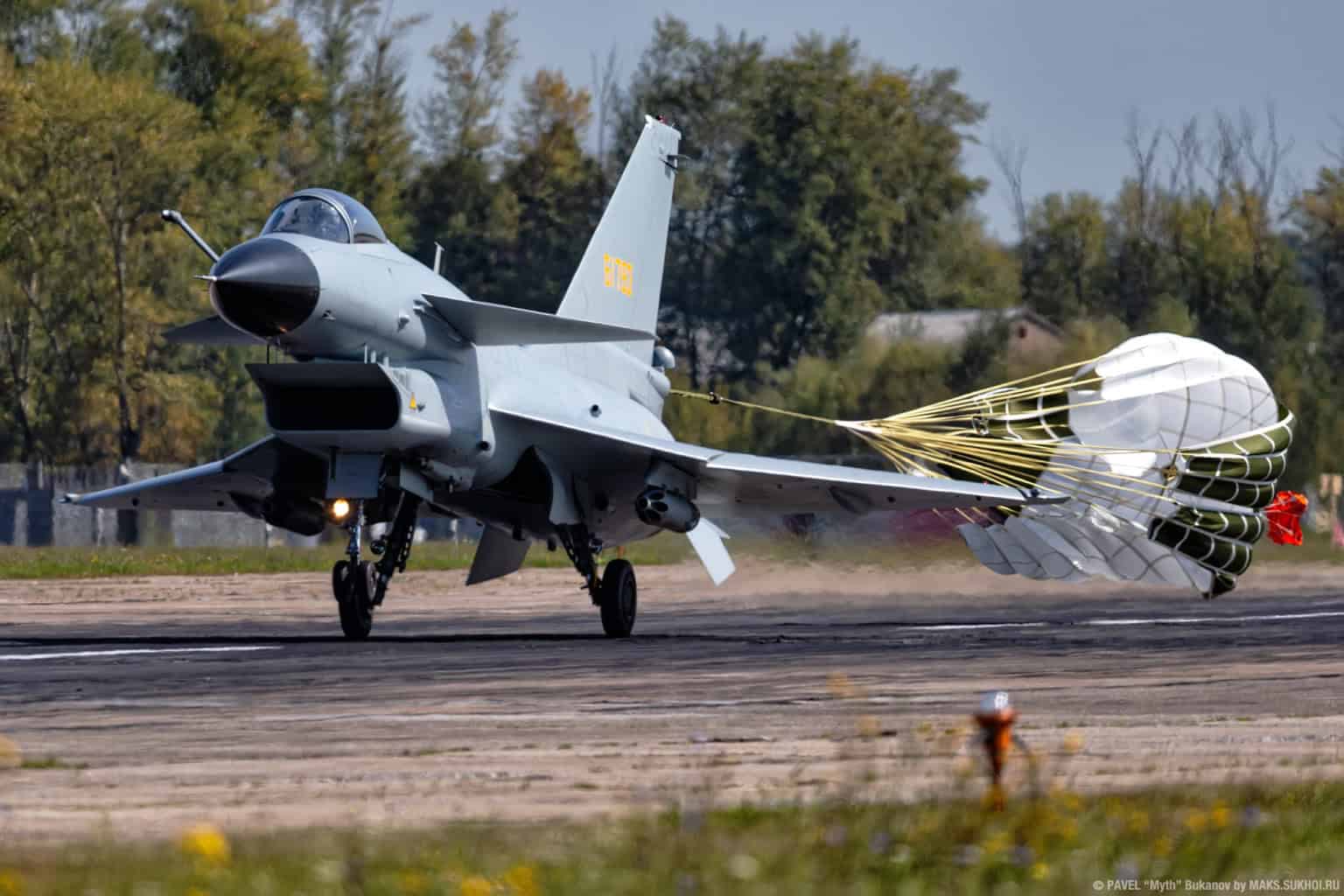


The Chengdu J-10 is a medium-weight, single-engine multirole fighter with a delta wing and canard foreplanes. Chinese state media call it the Vigorous Dragon (Menglong), and NATO’s reporting name is Firebird.
The Chengdu Aircraft Corporation builds it for the People’s Liberation Army Air Force (PLAAF). Pakistan and Uzbekistan also fly it. The full specification table for the aircraft is on this page.
It was the first Chinese aircraft program to use modern development and acquisition processes, including a design competition.
In 1981, PLAAF commander Zhang Tingfa proposed a third-generation fighter, and the Central Military Commission accepted the idea that year. Three design institutes competed, and the Chengdu Aircraft Design Institute’s proposal won in February 1984. Song Wencong became chief designer.
The program was code-named “No. 10 Project” and approved in 1986. Interest faded in the years that followed, and the Gulf War brought it back with proper funding.
The work was hard. Chengdu says about 60% of the aircraft needed new technology and parts, against the usual 30% for a new aircraft. It was also the first Chinese aircraft to lean heavily on computer-aided design for its structure.
The first aircraft was assembled in June 1997. Test pilot Lei Qiang made the first flight on March 23, 1998. Training units received the type from 2003, and it entered service in 2004. The Chinese government unveiled it publicly in January 2007.
The J-10 looks a lot like Israel’s cancelled IAI Lavi, and that has fed a long argument. In 2006, engineers at Russia’s SibNIA institute said they thought the J-10 was “more or less a version” of the Lavi. Janes made a similar claim in 2008.
Chengdu and chief designer Song Wencong reject that. They trace the double-canard layout to Chengdu’s own cancelled J-9 of the 1960s and 1970s. Israel’s defense minister also denied a 1988 press report of a joint fighter.
The J-10A entered production with the Russian Salyut AL-31FN, which gave about 27,600 lbf (123 kN) of maximum static thrust. The intended engine was always the Chinese Shenyang WS-10, chosen back in 1983. It suffered development problems, so the Russian engine filled in.
Chinese state media showed a J-10C with the WS-10B in 2021, and WS-10B-powered aircraft were in service by November 2021. A thrust-vectoring J-10B demonstrator has also flown, and it can perform a Cobra maneuver.

The J-10A is the original single-seat version, sold for export as the F-10A or FC-20. The J-10S is the tandem-seat trainer, and naval versions exist as the J-10AH and J-10SH. The J-10AY and J-10CY are aerobatic versions for the August 1st team.
The J-10B added a lighter, stealthier diverterless inlet, a longer nose radome, an infrared search-and-track sensor and a new countermeasures pod on the fin. Its first flight came no later than December 2008.
The J-10C is the version that matters most today. It flew first in December 2013, entered serial production in 2015 and reached combat service in April 2018. It has an indigenous AESA radar, the WS-10B engine, and the PL-10 and PL-15 missiles. Justin Bronk calls it a 4.5-generation fighter.
The J-10CE is the export version of the J-10C. The J-10D is a possible electronic warfare variant with a raised spine and a one-piece canopy, but it is not confirmed.
The internal gun is a twin-barrel GSh-23 under the port side of the intake. The aircraft has 11 hardpoints that carry up to about 12,300 lb (5,600 kg) of missiles, bombs, fuel tanks and pods.
Air-to-air weapons include the PL-8 and PL-12, plus the PL-10 and PL-15 on the J-10C. Ground-attack options include laser-guided and satellite-guided bombs, the KD-88 land-attack missile and the YJ-91 anti-radiation missile.
The cockpit has three liquid crystal displays and a Chinese-developed holographic head-up display. Early aircraft used the Type 1473 pulse-Doppler radar, and the J-10C carries the KLJ-7A AESA radar.
Wikipedia lists a top speed of Mach 1.8, and the panel shows it in knots. The two are different ways to say the same thing, and the knots figure depends on the altitude used for the conversion.
Three range figures get quoted for the J-10: about 1,150 miles (1,850 km) range, 770 miles (1,240 km) combat range, and 1,830 miles (2,950 km) ferry range. Ferry range assumes drop tanks and no weapons, so it is not what a combat jet flies on a mission.
Published dimensions and weights for the J-10 vary between sources and between variants. Treat any single figure as approximate, because the J-10A, J-10B and J-10C are not identical airframes.
China is the main operator. Wikipedia’s 2023 count lists 236 J-10A, 55 J-10B, 220 J-10C and 77 J-10S in PLAAF service.
Pakistan announced the purchase of 25 J-10CE fighters in December 2021, with an option for 11 more. The first six landed at PAF Base Minhas on March 4, 2022, and joined No. 15 Squadron on March 11, 2022. Wikipedia counts 20 in service as of May 2025.
Uzbekistan confirmed an order for J-10CE fighters in July 2025 and received its first two that month. At least six were in service by August 2026.
Several other countries are reported as possible buyers, including Algeria, Bangladesh, Indonesia, Serbia and Venezuela. Most of these are reports or negotiations, not confirmed deliveries. Indonesia’s order of 42 aircraft, for example, has no official confirmation.

The first use of the J-10 in combat came during the May 2025 India-Pakistan conflict. Pakistani J-10CE fighters flew against the Indian Air Force, and Pakistan claimed five Indian aircraft shot down, including three Dassault Rafales.
These are claims, and Chinese personnel were reported at Pakistani bases providing technical support. The PL-15E long-range missile may have been the weapon used. Chengdu Aircraft Corporation’s stock price rose on the reports.
The type has a small accident record in the public sources. In November 2016, two J-10s from the August 1st aerobatic team collided in Hebei. The pilot of one, Captain Yu Xu, the first woman certified to fly the J-10, was killed.

Chengdu is in China. It is the capital of Sichuan province in the southwest, and it is the home of the Chengdu Aircraft Corporation that builds the J-10.
Pakistan announced a purchase of 25 J-10CE fighters in December 2021, with an option for 11 more. Wikipedia lists 20 in service as of May 2025, plus 16 on order. Official numbers are not published, so treat these as estimates.
Not the J-10. The J-10C is described as a 4.5-generation fighter, a step below the fifth-generation, stealth-shaped J-20. The J-10 is a multirole fighter, and Wikipedia’s 2023 count puts more than 500 of them in PLAAF service.
There is no verified head-to-head record, so any “better” claim is opinion. The J-10C has a newer AESA radar and the PL-15 missile, while the F-16 has a far longer operational history. Pakistan flies both, but the May 2025 combat claims are claims, not a controlled test.
No. It is a delta-wing, canard design described as a 4.5-generation fighter, not a fifth-generation stealth fighter. Experts have cited the J-10C’s reduced radar signature as an advantage, but that is not the same as stealth.
The Chinese name Menglong translates as “Vigorous Dragon.” The designation J-10 is Jiān-Shí, meaning “Fighter 10,” and NATO’s reporting name is Firebird.
Sources and references used for research and fact-checking.