

Table of Contents
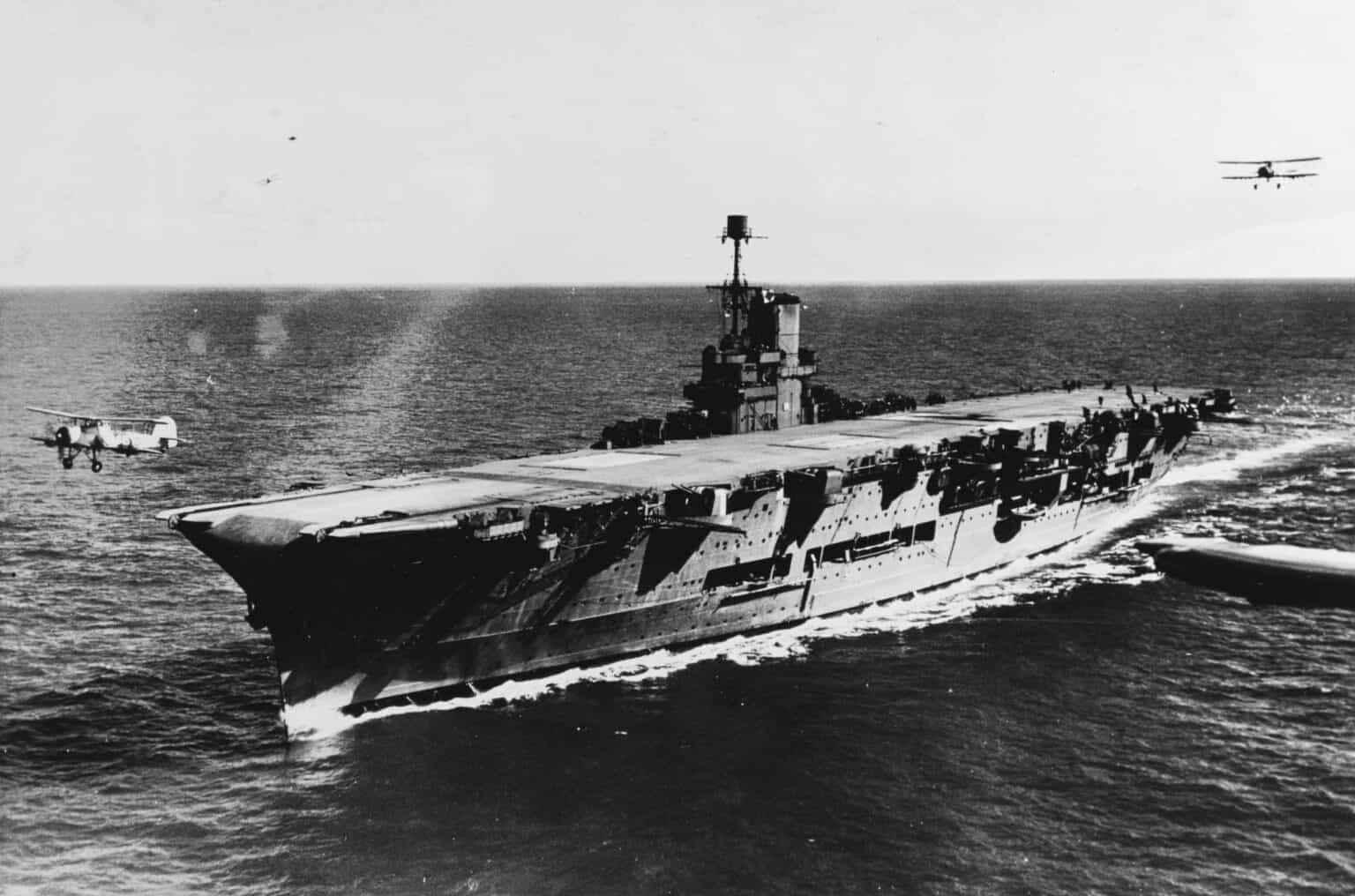
On September 26, 1939, a German Junkers Ju 88 dropped a 2,200-pound (1,000 kg) bomb on the aircraft carrier HMS Ark Royal in the North Sea. She heeled into a hard turn, and the bomb exploded in the water 100 feet (30 m) off her bow.
The German crews never saw whether she was hit. A later reconnaissance flight found the British battleships but not the carrier, and Berlin announced that Ark Royal had been sunk.
She had not been, and Winston Churchill invited the US naval attaché to come and look at her. That was the start of a legend, and of a name the Royal Navy has given to five different ships. Here is which is which, and what became of each.
What Happened to HMS Ark Royal?
The famous one, the Second World War carrier with pennant number 91, was torpedoed by the German submarine U-81 near Gibraltar on November 13, 1941. She capsized and sank early the next morning, and only one of her crew was killed.
The two Cold War carriers that followed were both scrapped. Ark Royal (R09) was broken up in Scotland between 1980 and 1983, and Ark Royal (R07) was towed to a Turkish scrapyard in 2013. No Royal Navy ship has carried the name since March 2011.
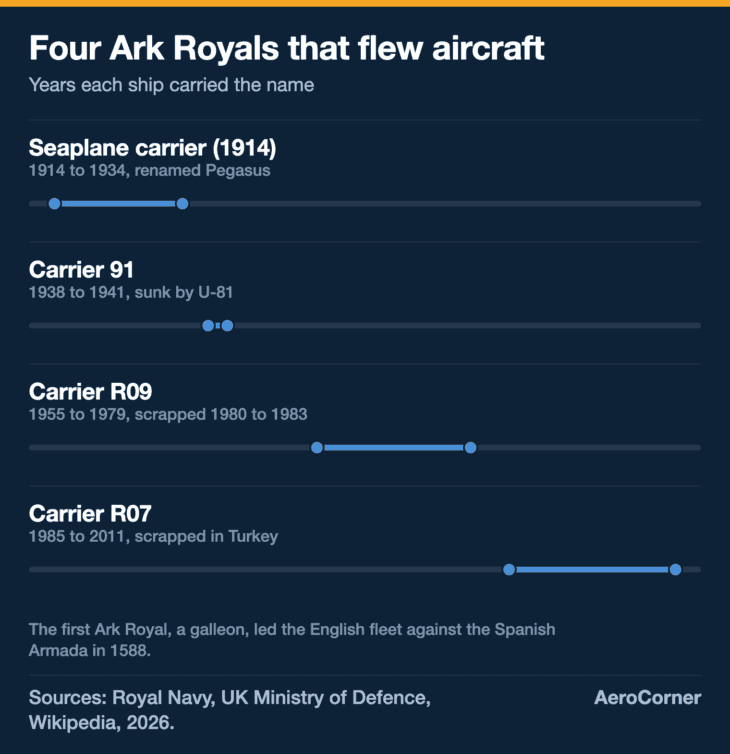
The five Ark Royals at a glance
1587: galleon, English flagship against the Spanish Armada. 1914: seaplane carrier, renamed Pegasus in 1934. 91: WWII carrier, sunk by U-81 in November 1941. R09: Cold War carrier that flew Phantoms and Buccaneers, decommissioned 1979. R07: Invincible-class Harrier carrier, decommissioned 2011 and scrapped in Turkey.
| Ship | Type | Carried the name | Fate |
|---|---|---|---|
| Ark Royal (1587) | Galleon, Armada flagship | 1587 to 1603 | Renamed Anne Royal; sank in the Medway in 1636 |
| Ark Royal (1914) | Seaplane carrier | 1914 to 1934 | Renamed Pegasus; scrapped 1950 |
| Ark Royal (91) | Aircraft carrier | 1938 to 1941 | Torpedoed by U-81, sank November 14, 1941 |
| Ark Royal (R09) | Audacious-class aircraft carrier | 1955 to 1979 | Scrapped at Cairnryan, Scotland, 1980 to 1983 |
| Ark Royal (R07) | Invincible-class light carrier | 1985 to 2011 | Sold for recycling 2012, towed to Turkey 2013 |
The Name Started With a Debt and the Spanish Armada
The first Ark Royal was built for Sir Walter Raleigh as the Ark Raleigh. In January 1587 Queen Elizabeth I bought her for £5,000, paid not in cash but by knocking the sum off what Raleigh owed the Crown.
Renamed Ark Royal, she was the flagship of Lord Howard of Effingham against the Spanish Armada in 1588. Her end was less glorious: in 1636, anchored in shallow water in the River Medway, she struck her own anchor and sank.
The second Ark Royal is where aviation enters the story. Bought in 1914 as a freighter barely begun on the slipway, she was redesigned around seaplanes and is credited as the first ship designed and built as a seaplane carrier.
Her aircraft flew reconnaissance over Gallipoli in 1915. In 1934 she was renamed Pegasus, which freed the name for a new carrier ordered that year.
Why Is HMS Ark Royal So Famous?
The carrier commissioned in December 1938 was a new kind of ship for Britain. Her hangars and flight deck were built as part of the hull rather than added on top, she had two hangar decks, and her flight deck ran 800 feet (240 m).
Her war started within two weeks. On September 14, 1939, the submarine U-39 fired two torpedoes at her; lookouts saw the tracks, she turned toward them, and they exploded astern. Her escorting destroyers then forced U-39 to the surface, the first U-boat lost in the war.
Twelve days later her Blackburn Skua fighters shot down a Dornier Do 18 flying boat, the kill Britain publicized as its first air victory of the war. It was not quite: an RAF Fairey Battle crew had scored one earlier.
Then came the Ju 88 and the false German claim. The Royal Navy’s own history says Nazi propaganda proclaimed her sunk again and again, so that by the time the Germans did sink her, Ark Royal had reached “almost mythical status.”
Her name worked even when she was out of range. In December 1939, with the German raider Admiral Graf Spee sheltering in Montevideo, the British leaked an order for Ark Royal’s fuel in Buenos Aires. She was still 36 hours away, but the leak helped persuade Graf Spee’s captain to scuttle his ship.
She fought off Norway in 1940, then joined Force H at Gibraltar. From there she covered the convoys and flew Hawker Hurricane fighters toward Malta, the besieged island that kept the Mediterranean contested.
Did Ark Royal Sink the Bismarck?
Not on her own, but without her the Bismarck would probably have escaped. In May 1941 the German battleship sank HMS Hood, shook off her pursuers and headed for the French coast, where Luftwaffe cover and a dry dock waited.
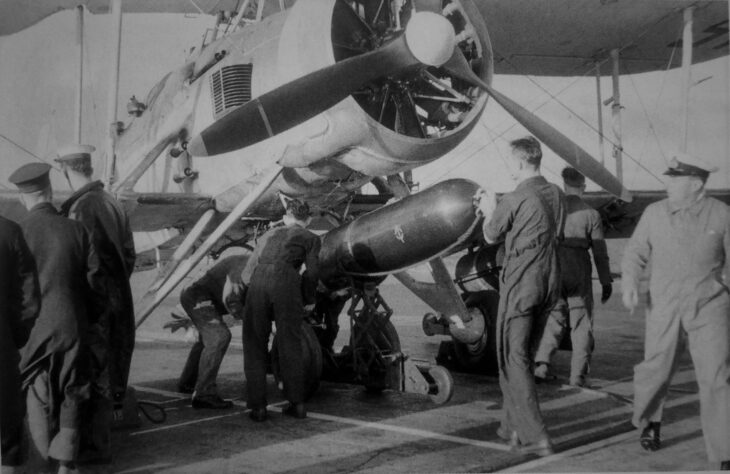
On May 26 the British battleships were too far behind to catch her. Ark Royal’s job was to slow her down, with Fairey Swordfish biplane torpedo bombers.
The first strike went badly. Fifteen Swordfish attacked the British cruiser HMS Sheffield by mistake, and only faulty magnetic detonators and her own evasive turns saved her. One pilot signaled an apology: “Sorry for the kipper.”
Re-armed with contact-fused torpedoes, the Swordfish launched again at 7:15 p.m. and hit Bismarck three times. One torpedo struck her steering compartment and jammed her rudder in a 15-degree turn to port.
_in_1941._(48831444676).jpg)
Crippled, not sunk
Ark Royal is often credited with sinking the Bismarck. Her Swordfish did something more decisive: they wrecked the battleship’s steering, so she could no longer run for France. The Home Fleet’s battleships and destroyers caught her overnight, and Bismarck sank at 10:39 a.m. on May 27 after a morning under heavy attack.
How HMS Ark Royal Sank With Only One Man Killed
On November 13, 1941, Ark Royal was heading back to Gibraltar after another aircraft delivery to Malta. At 3:41 p.m. a single torpedo from U-81, commanded by Friedrich Guggenberger, struck her amidships, directly below the island.
It tore a hole 130 feet long and 30 feet deep (40 m by 9 m) in her hull. The blast threw loaded torpedo bombers into the air and killed Able Seaman Edward Mitchell, 44, the only man to die, out of a complement the Royal Navy puts at 1,749.
Within 20 minutes she was listing 18 degrees. Remembering that the carriers Courageous and Glorious had gone down fast with heavy loss of life, Captain Loben Maund ordered most of the crew off, and proper damage control did not start until 49 minutes after the hit.
.jpg)
Then she seemed to stabilize. Damage control parties went back aboard, relit a boiler and got the pumps running, and a tug from Gibraltar took her in tow.
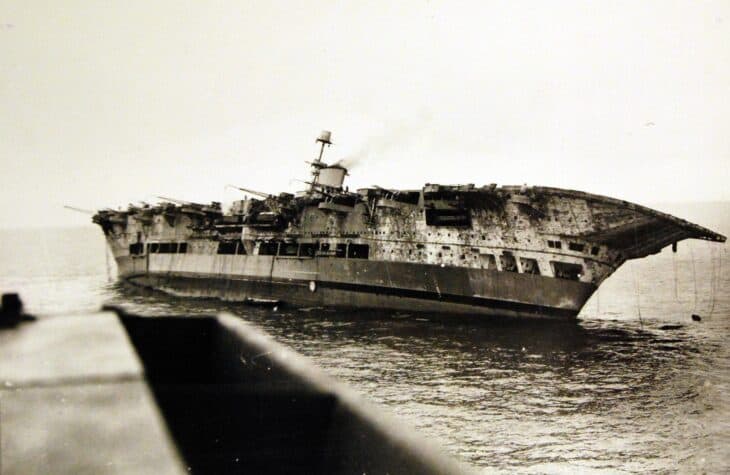
The water kept spreading through an undivided boiler room compartment that ran the width of the ship. The list reached 27 degrees, the ship was abandoned for good, and at 6:19 a.m. on November 14 she rolled over and sank, more than 14 hours after the torpedo hit.
Maund was court-martialed in 1942 and found guilty of negligence. The Bucknill Committee looked further and blamed the design: no backup generators and poorly divided boiler spaces, both fixed in the Illustrious- and Implacable-class carriers then being built.
The bell the survivors bought
Back in Gibraltar, the crew voted to spend the ship’s canteen fund, rescued from her safe before she sank, on a silver bell costing £598. It sailed in the next two Ark Royals and now hangs in the Fleet Air Arm Museum at RNAS Yeovilton.
Has the Wreck of HMS Ark Royal Been Found?
Yes, in late 2002, after 61 years. The Board of Inquiry had placed her 22 nautical miles east of Europa Point, Gibraltar’s southern tip, and that position stood for six decades.
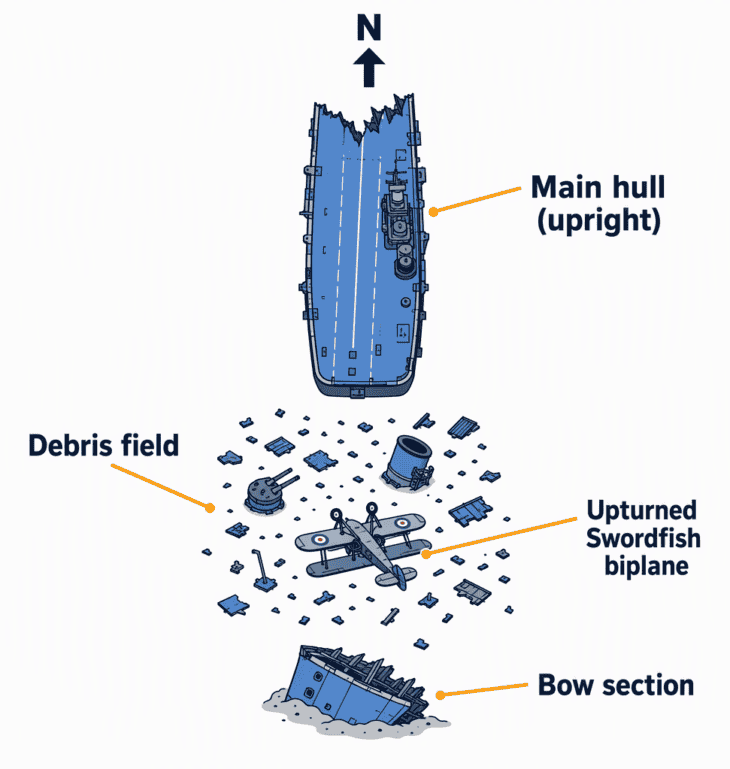
For a BBC documentary, the Louisiana survey company C & C Technologies sent its HUGIN 3000 robot submarine to investigate a sonar target. It was Ark Royal, in about 3,500 feet (1,066 m) of water, roughly 30 nautical miles east of Europa Point.
The sonar showed a 600-foot (183 m) main hull section sitting upright, with the bow torn away and lying in a debris field to the south. Among the wreckage was what looks like an upside-down Swordfish.
In 2021 the destroyer HMS Dragon stopped over the wreck, and her commanding officer cast a wreath into the sea in memory of Able Seaman Mitchell.
The Cold War Ark Royal Flew Phantoms and Starred on TV
The fourth Ark Royal was ordered in 1942 under another name, Irresistible, and renamed to honor the carrier just lost. She was laid down at Cammell Laird in Birkenhead in 1943, the same yard that built her predecessor, but was not commissioned until February 1955.
The delay made her modern. She was the first carrier completed with an angled flight deck and steam catapults built in, rather than added later, so jets could land and launch at the same time.
A refit from 1967 to 1970, costing about £30 million, prepared her for heavier jets. By 1970 her air group included 12 McDonnell Douglas Phantom FG.1s and 14 Blackburn Buccaneer strike jets, and she was the only ship outside the US Navy to operate the Phantom at sea.
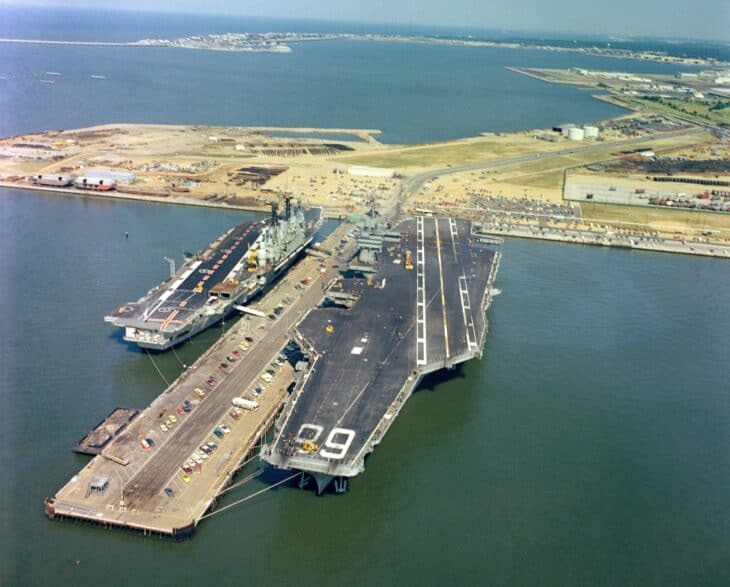

She never fought a war. In November 1970 she collided with a Soviet destroyer shadowing her in the Mediterranean, and in 1976 the BBC filmed her for Sailor, an early fly-on-the-wall series whose theme, Rod Stewart’s “Sailing,” stuck to her and her successor.
She was decommissioned on February 14, 1979, and with her went the Royal Navy’s last catapult carrier. Plans to keep her as a museum failed, and she was broken up at Cairnryan in Scotland between 1980 and 1983.
Is There an HMS Ark Royal Today?
No. The fifth and last Ark Royal, R07, was meant to be called Indomitable, like her sisters Invincible and Illustrious. Public anger at the scrapping of the old Ark Royal changed the Navy’s mind, and the Queen Mother launched her at Swan Hunter on the River Tyne in 1981.
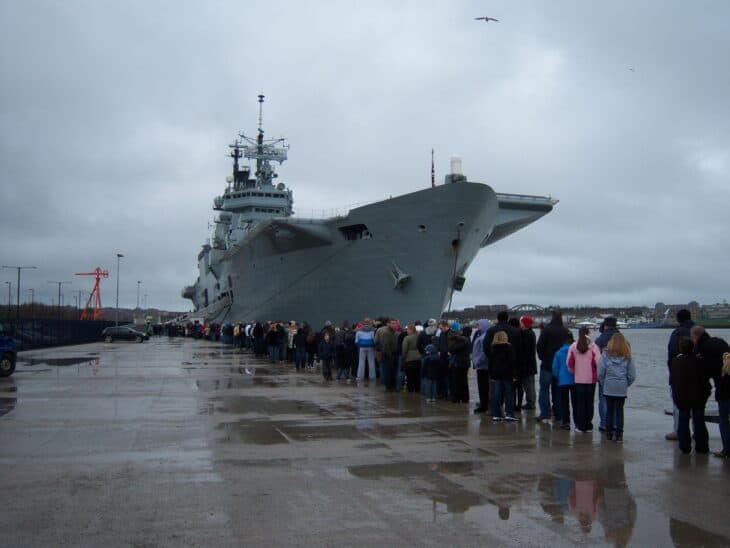
Commissioned on November 1, 1985, she was a smaller ship built around Harrier jump jets and helicopters. She served off Bosnia in 1993, went to the 2003 invasion of Iraq with helicopters only, and spent years as the fleet flagship.
_pic_20.jpg)
The 2010 Strategic Defence and Security Review ended her five years early. On November 24, 2010, she launched four Harrier GR9s for the last time, and she was formally decommissioned at Portsmouth on March 11, 2011.
Ideas to keep her as a museum, a hotel or a helipad in London all came to nothing. In September 2012 the Ministry of Defence announced a £2.9 million deal for Leyal Ship Recycling to scrap her, and she left Portsmouth under tow on May 20, 2013.
A campaign to pass the name to one of the two new carriers failed. They became HMS Queen Elizabeth and HMS Prince of Wales, now two of the best aircraft carriers in the world, and as of October 2026 the Navy has not announced a sixth Ark Royal.
So the Ark Royal people mean is almost always pennant 91, the carrier Germany sank on paper in 1939 and by torpedo two years later. After she went down, Malta still needed fighters, and in 1942 the British borrowed the American USS Wasp to ferry them.
Her bell is in Somerset, an anchor from R09 sits outside the same museum, and the wreck lies in two pieces off Gibraltar. The name has come back four times since 1587.
Sources and references used for research and fact-checking.
- Royal Navy, Dragon salutes the Mighty Ark as destroyer remembers legendary WW2 carrier
- Hydro International, Discovering H.M.S. Ark Royal
- UK Ministry of Defence, MOD sets out future of Invincible class carriers (news release 120/2012)
- Navy Lookout, Running on empty: how the Royal Navy nearly kept HMS Ark Royal into the 1980s
- Wikipedia, HMS Ark Royal (91)
- Wikipedia, HMS Ark Royal (R09)
- Wikipedia, HMS Ark Royal (R07)
- Wikipedia, HMS Ark Royal (1914)
- Wikipedia, English ship Ark Royal (1587)
- Wikipedia, USS Wasp (CV-7)
- Wikipedia, HMS Ark Royal (ship index)
Get the Newsletter
The latest aviation news and stories sent to your inbox.
About the Author

Tim is the owner and lead editor of AeroCorner since 2019, overseeing aviation content covering aircraft, airlines, airports, and the broader aviation industry. Through years of researching, writing, editing, and publishing aviation-focused content, he has developed extensive practical knowledge of commercial aviation and air travel. Based in Asia and a frequent traveler himself, Tim also brings firsthand passenger experience to AeroCorner’s coverage. Outside of publishing, he has also explored aviation firsthand through hands-on flight training in New Zealand.