

Table of Contents
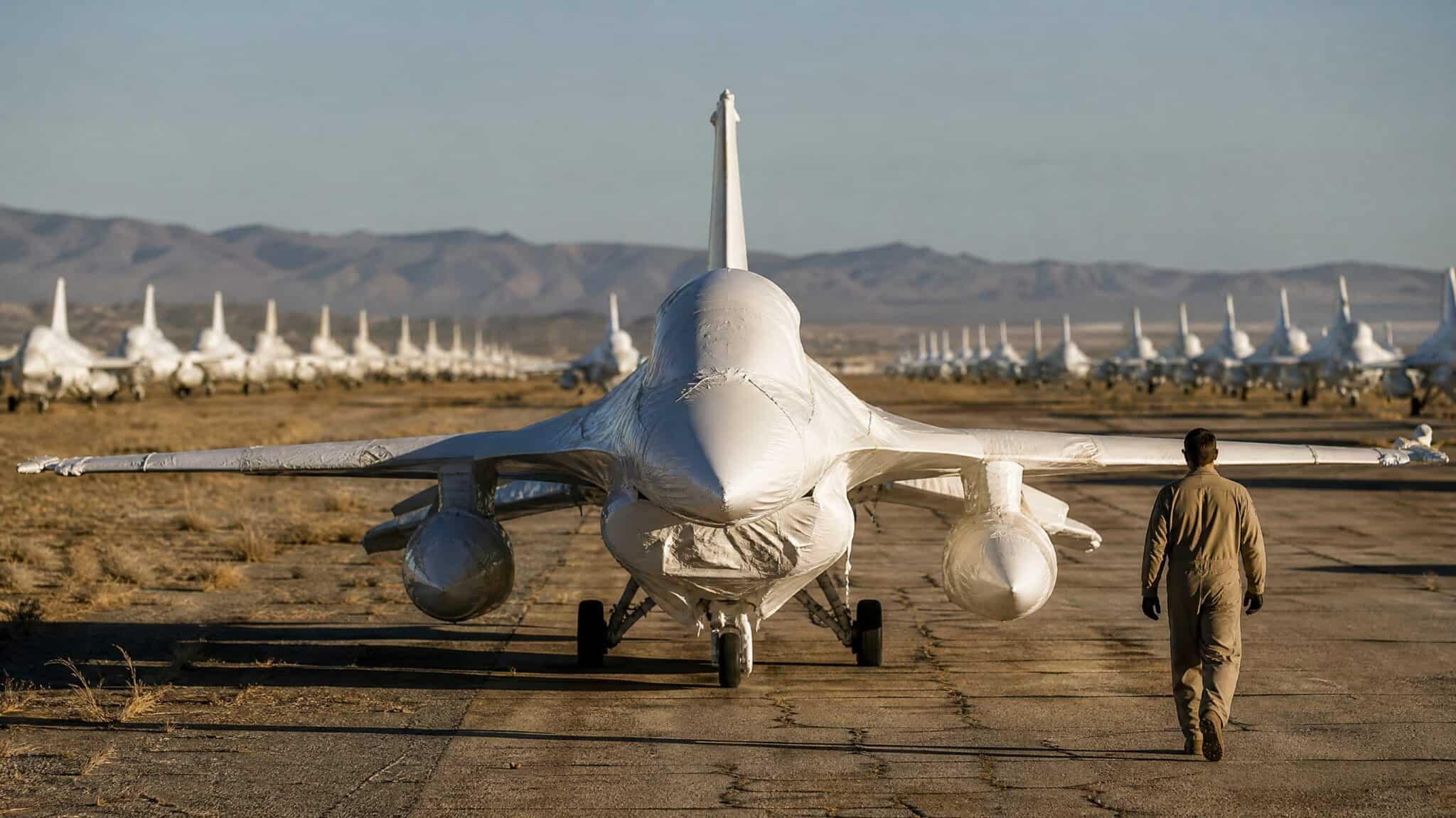
American fighter retirements have crawled for a quarter century. The pace is about to triple, and the fleet is already smaller than federal law allows.
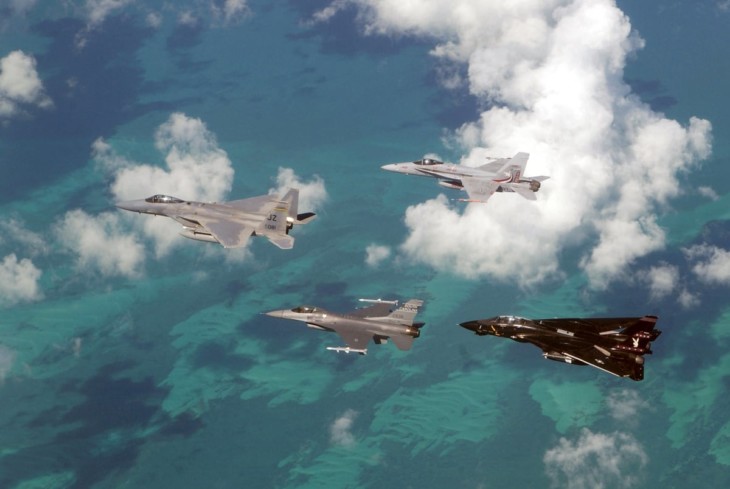
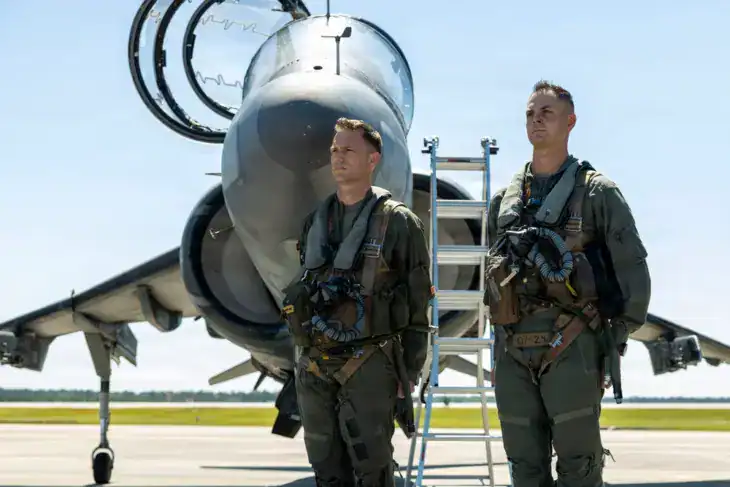
Since January 1, 2000, the United States has withdrawn exactly three fighter and attack jet types from frontline service. The F-14 Tomcat went in September 2006, the F-117 Nighthawk in April 2008, and the AV-8B Harrier II on June 3, 2026.
Three types in twenty-six years. Between now and 2030 the Pentagon plans to retire three more: the A-10 Thunderbolt II, the F-15C/D Eagle, and the Marine Corps’ legacy F/A-18 Hornet.
The Air Force is already flying 1,098 fighters, which is 47 below the minimum Congress wrote into Title 10 of the US Code.
Why the List Is So Short
The short list is not an accident. A fighter type leaves service when something else is ready to take its work, and for most of this century the replacements arrived late, in smaller numbers than promised, or both.
F-22 production stopped at 187 aircraft, far short of the several hundred the Air Force originally planned to buy. The F-35 took years longer to reach the squadrons than its schedule called for.
So instead of retiring types, the US upgraded them. The F-15 and F-16 fleets absorbed work the Raptor was supposed to inherit, and both are still doing it.
The F-117 is the exception, and it shows what an actual replacement looks like. The Air Force retired the Nighthawk fleet in phases between March 2007 and April 2008 specifically to redirect about $1.07 billion into buying more F-22 Raptors.
Congress has since made the reverse move repeatedly. It blocked 124 planned aircraft retirements in the latest defense bill and has separately barred the Air Force from retiring F-22s and F-15E Strike Eagles at all.


Lawmakers have effectively told the service to keep airplanes it says it no longer wants, which is the other half of why so few types have actually gone away.
712 Tomcats, 64 Nighthawks, 337 Harriers
The three retired types account for a little over 1,100 airframes built across five decades of production.
Grumman built 712 F-14 Tomcats between 1969 and 1991. The type entered fleet service in 1974 and flew for 32 years before the farewell ceremony at Naval Air Station Oceana on September 22, 2006.
Lockheed built 64 F-117s, five development aircraft and 59 production Nighthawks. Roughly 337 AV-8Bs were produced for the Marine Corps, which flew them from January 1985 until the sundown ceremony at MCAS Cherry Point in June 2026.
| Type | US service | Left or leaves service | Status |
|---|---|---|---|
| F-14 Tomcat | 1974 to 2006 | September 22, 2006 | Retired |
| F-117 Nighthawk | 1983 to 2008 | April 2008 | Retired, some airframes still fly |
| AV-8B Harrier II | 1985 to 2026 | June 3, 2026 | Retired |
| A-10 Thunderbolt II | 1977 to present | About 2029 | Retiring, floor of 103 set for FY2026 |
| F-15C/D Eagle | 1979 to present | 2030 | Retiring, last 21 run to 2030 |
| F/A-18C/D Hornet (USMC) | 1983 to present | August 2030 | Retiring in three phases |
That measurement choice is why the F-4 Phantom II is not on the list. Its last US airframes flew until December 21, 2016, but by then they were QF-4 target drones, and the Phantom had left frontline American squadrons back in 1996.
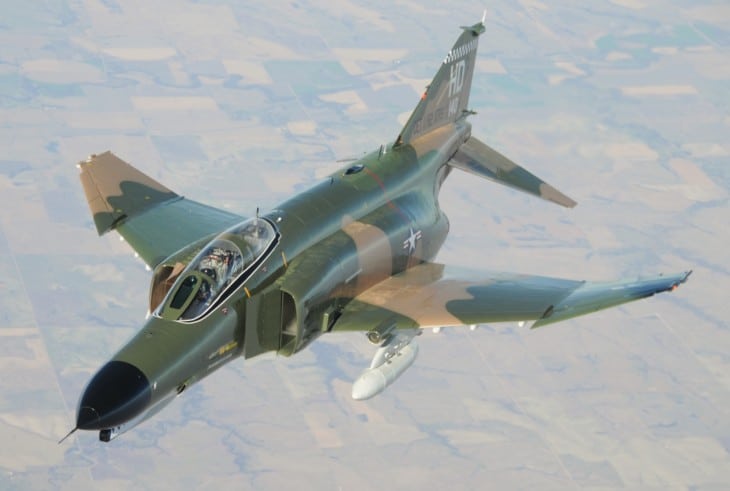

It is still in the air elsewhere. Three air forces were still flying the F-4 in 2026, and Iran operates more of them than anyone.
The F-117 was retired in 2008. Dozens are still flying.
The Air Force never scrapped the fleet. About 48 Nighthawks remained flyable as of 2022, used for aggressor training, cruise missile tracking and research work, and the service is demilitarizing only two or three airframes a year. On that schedule the program runs to 2034, twenty-six years after the type was officially retired.
The Gap the Tomcat Left Took 20 Years to Close
A retirement does not just remove an airframe. Sometimes it removes a capability nothing else in the inventory has, and the F-14 is the clearest case on the list.
The Tomcat was built around the AIM-54 Phoenix, a long-range air-to-air missile designed to kill Soviet bombers before they reached the carrier group. The AIM-54C version reached out to 99.4 nautical miles.
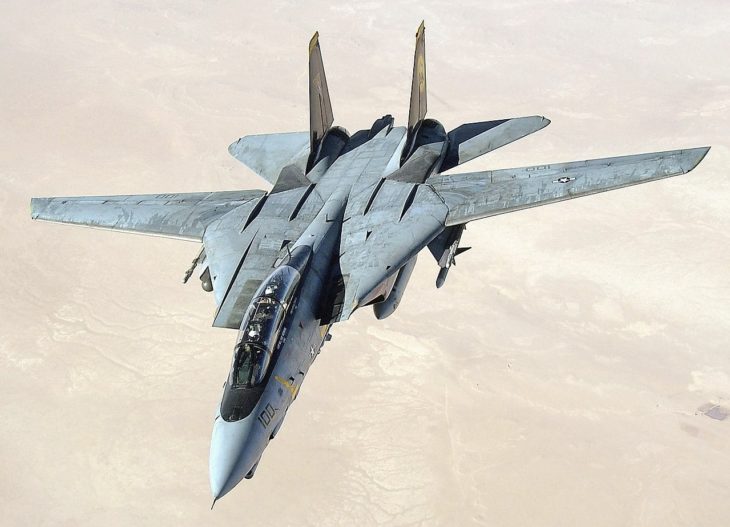
The Navy retired the Phoenix on September 30, 2004, two years before it retired the jet that carried it. The replacement was the AIM-120 AMRAAM on the F/A-18E/F Super Hornet, a shorter-ranged weapon.
For the next twenty years the US Navy had no dedicated long-range air-to-air missile at all. Other air arms fielded them in that window, including the European Meteor, the Russian R-37M and the Chinese PL-15.
The gap closed in July 2024. Photographs from the RIMPAC exercise showed a VFA-192 Super Hornet carrying two AIM-174Bs, an air-launched version of the SM-6, and the Navy confirmed the weapon was operationally deployed.
The Navy has stated a range of about 150 miles (130 nautical miles), which makes it the longest-ranged air-to-air missile the service has ever fielded. It is also the first dedicated long-range air-to-air missile the US military has fielded since the Phoenix went away.
Twenty years is a long time to be missing a shot that your likeliest opponents in a fighter matchup can take.
Three More Types Go by 2030
The A-10 Thunderbolt II has survived more retirement attempts than any other jet in the fleet. Fairchild Republic built 716 of them and the type entered service in October 1977.
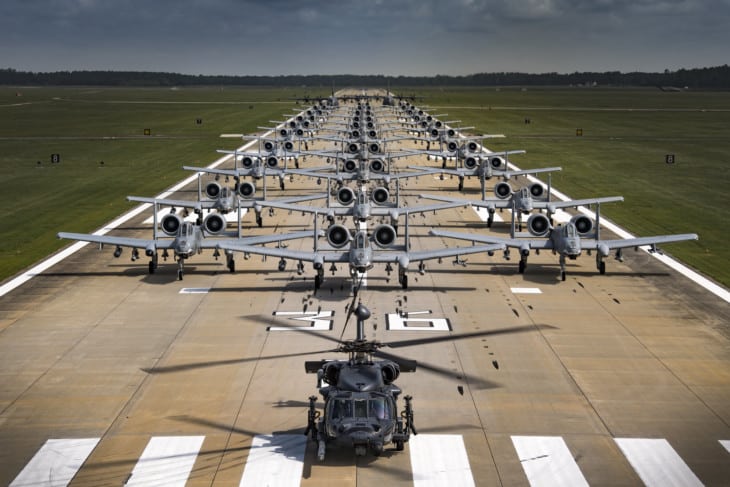
The Air Force asked to divest the whole fleet by the end of 2026. Congress instead set a floor of no fewer than 103 aircraft for fiscal 2026, which pushed full retirement out to roughly 2029, and the F-15E is the named successor at the last big A-10 base.
The F-15C/D is going out on a slower schedule than the one first announced. The Air Force plans to hold 42 combat-coded Eagles through 2028 and the final 21 through 2030.
The Marine Corps is retiring its legacy Hornets in three phases: Beaufort by August 1, 2028, Miramar by August 1, 2029, and Fort Worth by August 1, 2030.
All of this lands on a fleet that is already short. The Air Force reported 1,098 fighters to Congress in May 2026, against a statutory minimum of 1,145.
The average Air Force fighter is now about 27.4 years old, up from 17.2 years in 1994. The share ready to fly on a given day fell from roughly 72.9 percent in 1995 to 53.9 percent in 2024.
The first three retirements were spread across twenty years, and the Navy still needed two decades to rebuild one capability it gave up along the way. The next three are scheduled to arrive inside four.
Sources and references used for research and fact-checking.
- Wikipedia, Grumman F-14 Tomcat
- Wikipedia, Lockheed F-117 Nighthawk
- Wikipedia, McDonnell Douglas AV-8B Harrier II
- The Aviationist, End of an Era: U.S. Marine Corps Celebrates AV-8B Harrier II Sundown
- Wikipedia, AIM-54 Phoenix
- Wikipedia, AIM-174B Gunslinger
- Naval News, U.S. Navy Confirms SM-6 Air Launched Configuration is 'Operationally Deployed'
- Wikipedia, Fairchild Republic A-10 Thunderbolt II
- Defense One, A-10s escape retirement once again amid continued use in Iran war
- Air & Space Forces Magazine, Air Force to Retain F-15C/D Eagles for Homeland Defense
- Stars and Stripes, Marines to phase out F/A-18 Hornet, maintenance jobs tied to the plane by 2030
- Holloman Air Force Base, Final flight farewells Phantom
Get the Newsletter
The latest aviation news and stories sent to your inbox.
About the Author

Tim is the owner and lead editor of AeroCorner since 2019, overseeing aviation content covering aircraft, airlines, airports, and the broader aviation industry. Through years of researching, writing, editing, and publishing aviation-focused content, he has developed extensive practical knowledge of commercial aviation and air travel. Based in Asia and a frequent traveler himself, Tim also brings firsthand passenger experience to AeroCorner’s coverage. Outside of publishing, he has also explored aviation firsthand through hands-on flight training in New Zealand.