

Table of Contents
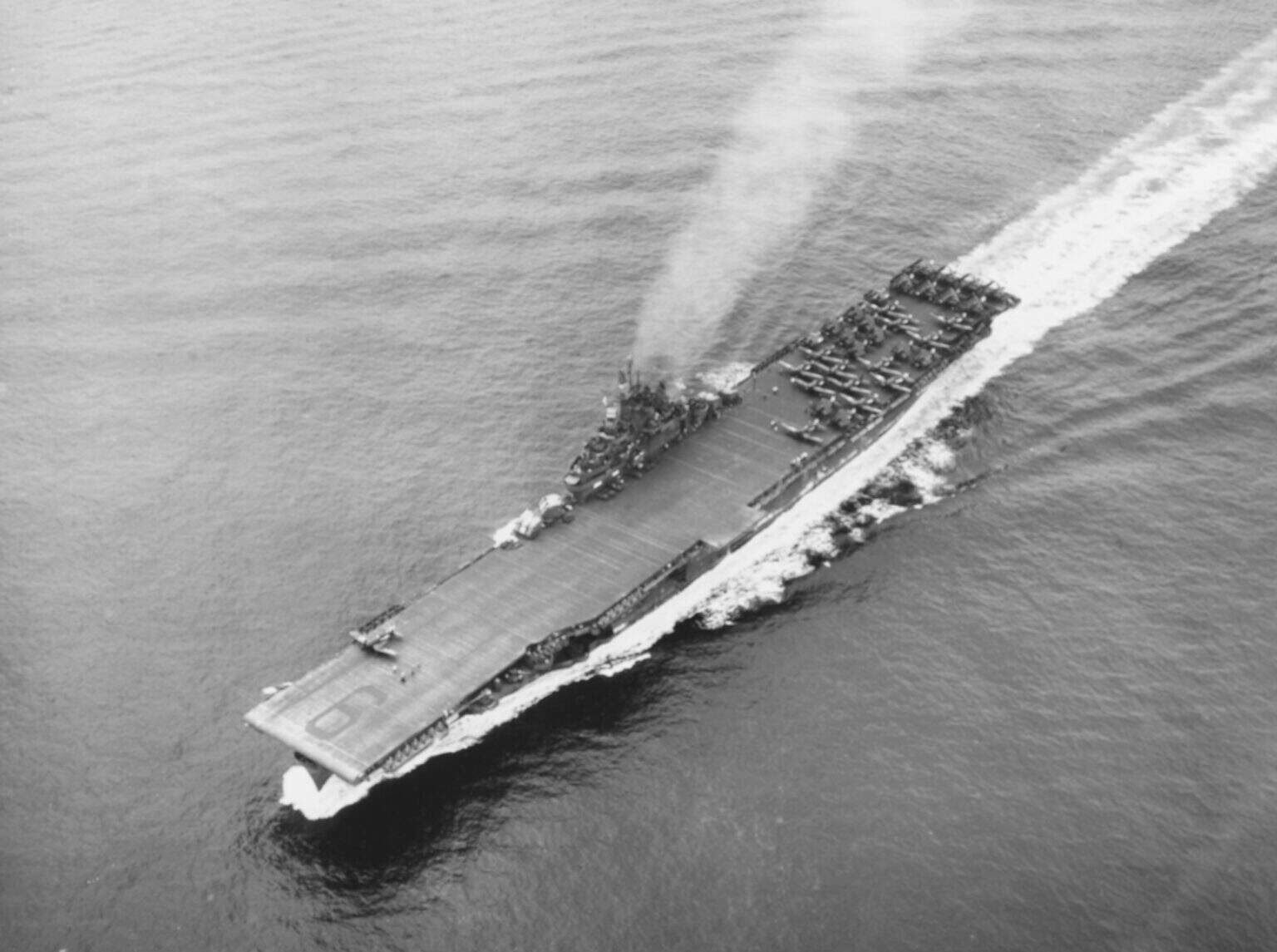
The best aircraft carrier of World War II was the US Navy’s Essex class. Fourteen of them fought in the war, they carried about 90 aircraft each, and not one was sunk, even after air attacks left two of them burning wrecks.
This list ranks 11 carrier classes and single ships from the US, Japanese and British navies by what they did in combat and how well they were designed to do it. Size is not the measure: the largest carrier of the war ranks last.
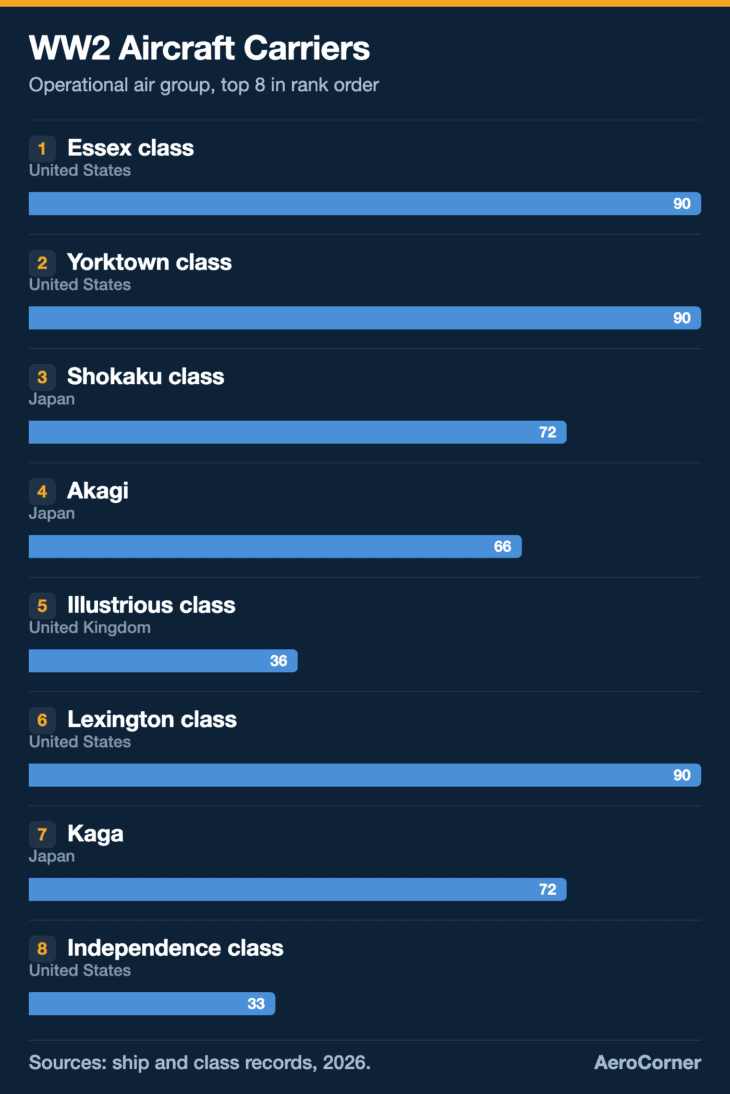
Specs are as built or as fought, from the ships’ class records. Air groups count operational aircraft and leave out stored spares, because the navies counted them differently.
| Rank | Carrier (navy) | Ships | Lost in WW2 | Air group | Top speed |
|---|---|---|---|---|---|
| 1 | Essex class (US) | 24 (14 in combat) | 0 | 90 | 33 knots |
| 2 | Yorktown class, incl. Enterprise (US) | 3 | 2 | 90 | 32.5 knots |
| 3 | Shokaku class (Japan) | 2 | 2 | 72 | 34.5 knots |
| 4 | Akagi (Japan) | 1 | 1 | 66 | 31.5 knots |
| 5 | Illustrious class (UK) | 4 | 0 | 36 | 30.5 knots |
| 6 | Lexington class (US) | 2 | 1 | 90 | 34.5 knots |
| 7 | Kaga (Japan) | 1 | 1 | 72 | 28 knots |
| 8 | Independence class (US) | 9 | 1 | 33 | 31.5 knots |
| 9 | Casablanca class (US) | 50 | 5 | 27 | 19 knots |
| 10 | Taiho (Japan) | 1 | 1 | 65 | 33.3 knots |
| 11 | Shinano (Japan) | 1 | 1 | 47 | 28 knots |
How this ranking works
Each entry is judged on four things: what it achieved in battle, how well it survived damage, how many were built when it mattered, and how much it shaped carrier design. Classes are ranked as classes, so USS Enterprise sits inside the Yorktown class. Ships that never saw combat, like Germany’s Graf Zeppelin, and ships commissioned after the fighting ended, like USS Midway, are covered at the end.
1. Essex Class (United States)
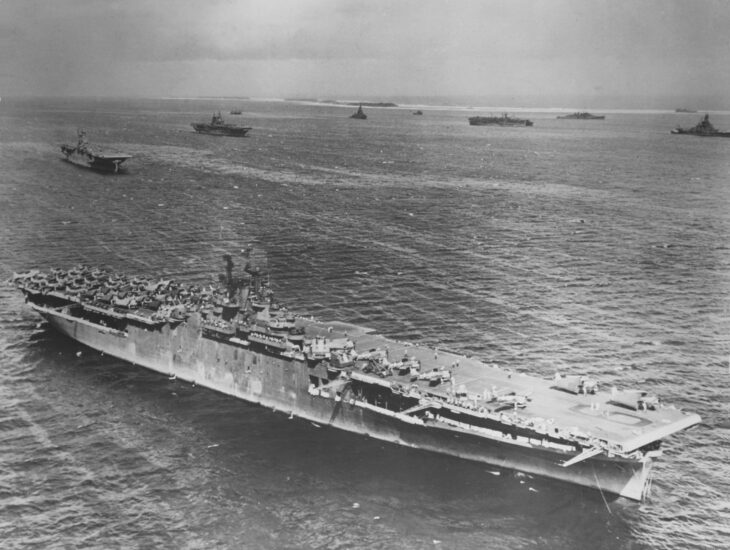

The Essex class wins because it combined a large air group, good protection and production numbers no other navy could match. Thirty-two were ordered, 24 were completed between 1942 and 1950, and 14 saw combat in World War II.
Each ship displaced about 27,100 long tons as built, ran 872 feet (266 m) long in the short-bow version and made 33 knots. The design air group was 90 aircraft: 36 fighters, 36 dive bombers and 18 torpedo bombers, the “Sunday Punch”.
By 1945 most Essex carriers flew about 72 fighters, mainly the Grumman F6F Hellcat and the F4U Corsair, because both could carry bombs and the fleet needed defending from kamikazes. USS Bennington reported 103 aircraft aboard in June 1945, 51 in the hangar and 52 on deck.
What sets the class apart from Shokaku and Taiho is that none was sunk. USS Franklin and USS Bunker Hill were wrecked by fire in 1945, yet both made it home and were repaired.
Four survive as museum ships: Yorktown, Hornet, Lexington and Intrepid. The USS Yorktown in Charleston is an Essex-class ship, not the Yorktown sunk at Midway.
2. Yorktown Class (United States), Led by USS Enterprise
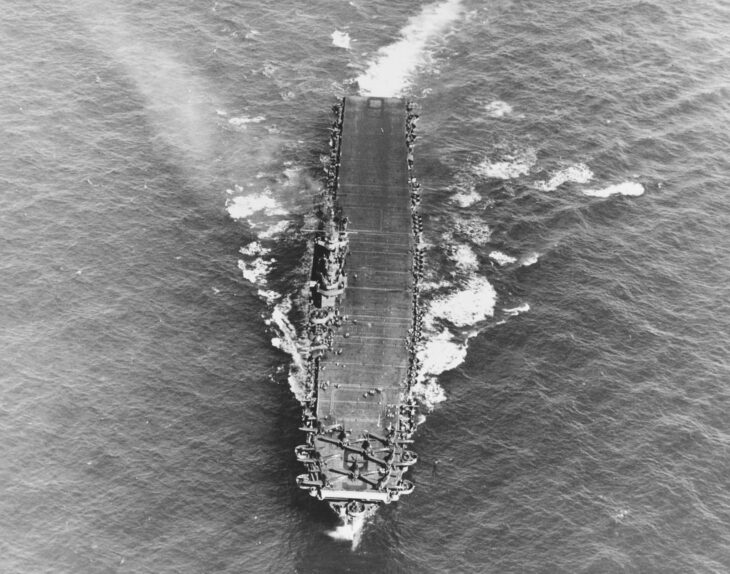

The three Yorktown-class carriers, Yorktown, Enterprise and Hornet, carried the American war through 1942 almost alone. Two of them were sunk that year, and the third became the most decorated US ship of the war.
Each displaced 19,800 long tons standard, ran 824 feet 9 inches (251 m) overall, made 32.5 knots and carried about 90 aircraft. The Essex design was an enlarged Yorktown, which is the best judgment any navy could pass on a ship.
Hornet launched the Doolittle Raid on Tokyo in April 1942. At Midway that June, Enterprise’s SBD Dauntless dive bombers sank Kaga and crippled Akagi, and Yorktown was sunk on June 7. Hornet was lost after the Battle of the Santa Cruz Islands in October 1942.
USS Enterprise fought at Midway, the Eastern Solomons, Santa Cruz, the Philippine Sea and Leyte Gulf and earned 20 battle stars, the most of any US warship in the war. She was scrapped between 1958 and 1960 despite a public campaign to save her.
The Grey Ghost
Japan announced three times during the war that Enterprise had been sunk. She survived all three, which is where her nickname, the Grey Ghost, came from. By the war’s end her planes and guns were credited with 911 enemy aircraft downed and 71 ships sunk.
3. Shokaku Class (Japan)
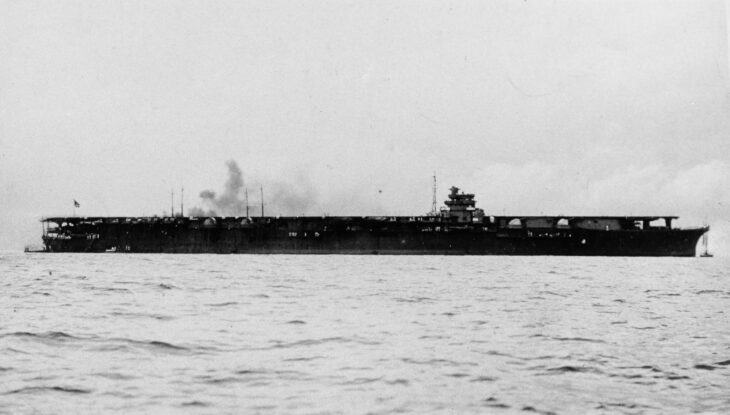

Shokaku and Zuikaku were completed in 1941, just before Pearl Harbor, and are often called the best carriers in the world at the time they were built. They were fast at 34.5 knots and carried 72 aircraft plus 12 spares.
On December 7, 1941, the class air group was 18 Mitsubishi A6M Zero fighters, 27 Aichi D3A dive bombers and 27 Nakajima B5N torpedo bombers.
The sisters fought in every major Pacific carrier battle except Midway: Pearl Harbor, the Indian Ocean raid, the Coral Sea, the Eastern Solomons, Santa Cruz and the Philippine Sea. Their aircraft sank two of the four US fleet carriers lost in the war.
They rank below the Yorktowns because both were lost and neither was replaced in numbers. Shokaku was torpedoed by the submarine USS Cavalla on June 19, 1944, and Zuikaku, the last survivor of the six Pearl Harbor carriers, was sacrificed as a decoy off Cape Engano on October 25, 1944.
4. Akagi (Japan)
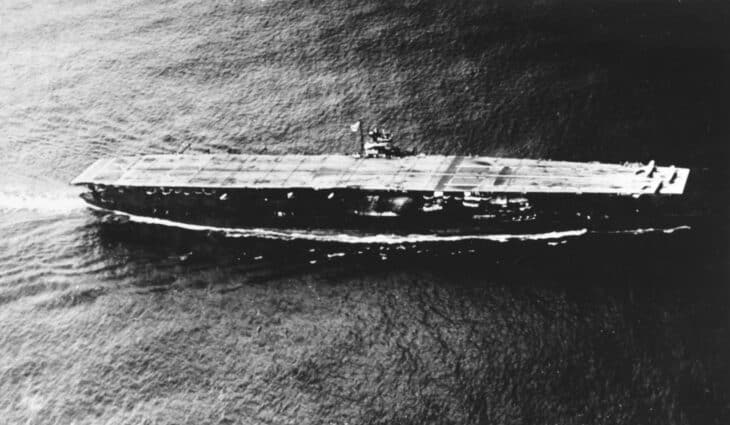

Akagi was the flagship of the Kido Butai, the carrier striking force that grouped Japan’s carriers together and let Japan reach its strategic goals from December 1941 to mid-1942. Her place on this list is about what that doctrine achieved.
Laid down in 1920 as a battlecruiser and converted under the Washington Naval Treaty, she was commissioned on March 25, 1927. As rebuilt she displaced 36,500 long tons standard, made 31.5 knots and carried 66 aircraft plus 25 in reserve.
Her aircraft struck Pearl Harbor, bombed Darwin, Australia, and helped sink a British heavy cruiser in the Indian Ocean. At Midway a single dive bomber from Enterprise wrecked her, and Japanese destroyers scuttled her on June 5, 1942. Her wreck was found in 2019.
5. Illustrious Class (United Kingdom)
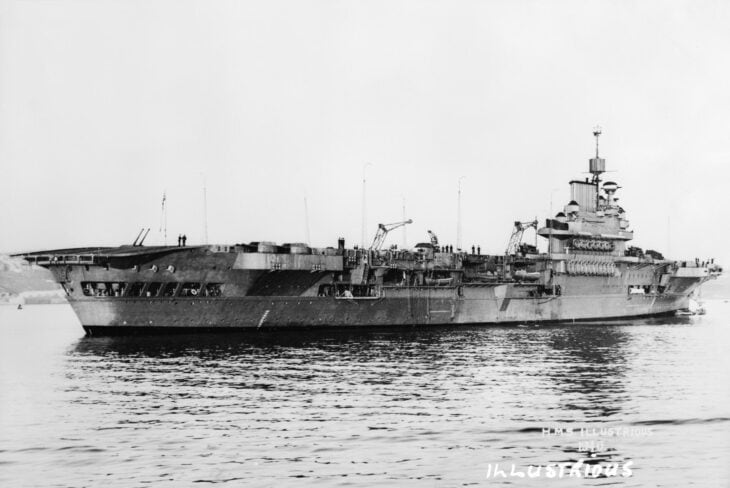

The four British carriers of the Illustrious class (Illustrious, Formidable, Victorious and the modified Indomitable) made a different bet. They carried an armored flight deck, which cost them aircraft: 36 as built, and up to 57 later.
They were limited by treaty to 23,000 tons, ran 740 feet (226 m) overall and made 30.5 knots. All four survived the war, and three of them fought with the British Pacific Fleet in 1945.
Illustrious earned the ranking on one night. On November 11 to 12, 1940, 21 Fairey Swordfish biplanes from her deck attacked the Italian fleet at anchor in Taranto, sinking one battleship and badly damaging two others.
Two months later German and Italian dive bombers hit her multiple times during Operation Excess. She survived and was repaired in the United States, and Victorious went on to join the hunt for the battleship Bismarck.
6. Lexington Class (United States)
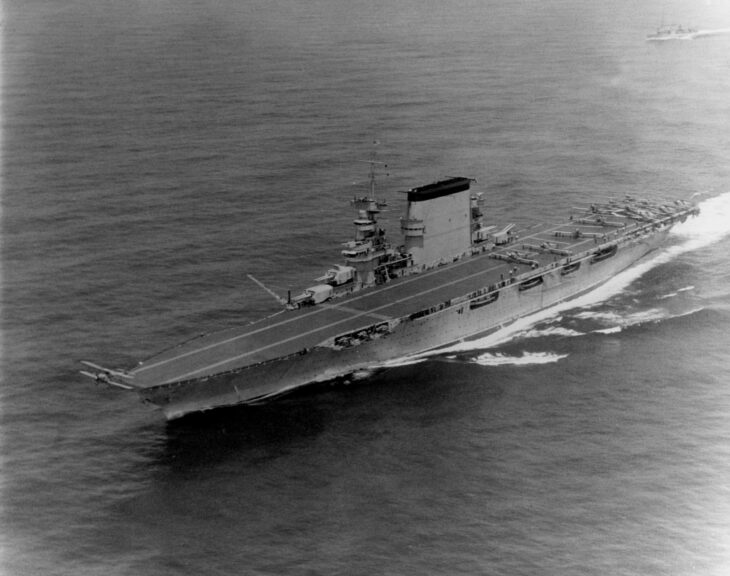

Lexington and Saratoga were battlecruisers converted to carriers under the 1922 Washington Naval Treaty, and they taught the US Navy how to fight with carriers. At 36,000 long tons standard and 888 feet (271 m) long, they were the largest US carriers until the Midway class arrived in 1945.
Lexington was sunk at the Battle of the Coral Sea in May 1942, the first carrier battle in history. Saratoga was torpedoed twice, sank the Japanese light carrier Ryujo at the Eastern Solomons and was badly damaged by kamikazes off Iwo Jima in 1945.
They rank below the British ships because by 1944 they were the old guard, and Saratoga spent the end of that year as a training carrier. She was sunk on purpose in the 1946 atomic bomb tests at Bikini.
7. Kaga (Japan)
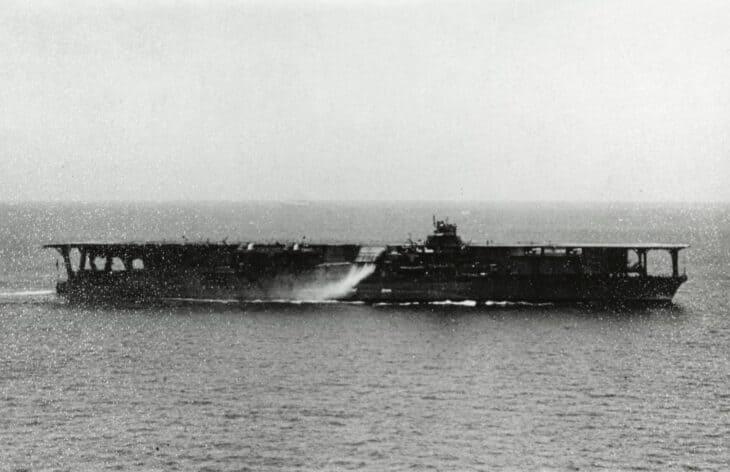

Kaga was Akagi’s partner in the First Air Fleet and the heavier of the two, at 38,200 long tons standard after her 1930s modernization. She was laid down as a battleship in 1920 and converted under the same treaty.
She carried 72 aircraft with 18 more in storage, but she was slow for a fleet carrier at 28 knots. That is the main reason she ranks below Akagi despite fighting the same battles, from Pearl Harbor to Midway.
Dive bombers from Enterprise sank her on June 4, 1942. Japan lost all four fleet carriers it sent to Midway that day and the next: Akagi, Kaga, Soryu and Hiryu.
8. Independence Class (United States)
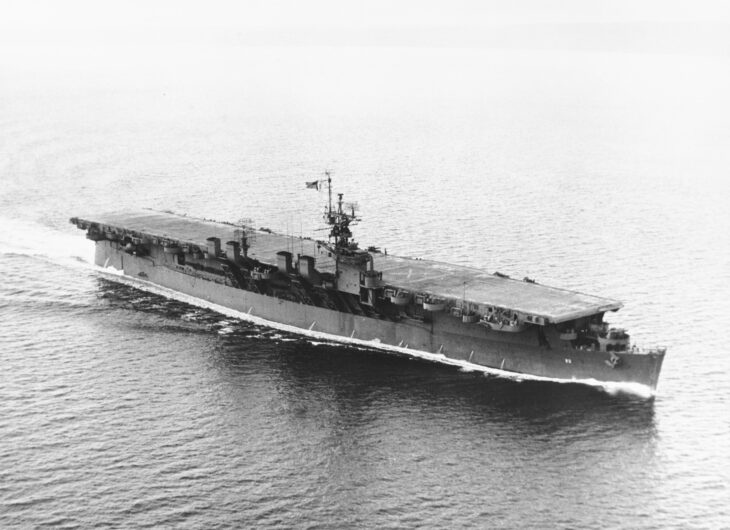

The nine Independence-class light carriers were built on hulls ordered as Cleveland-class light cruisers, the result of President Franklin D. Roosevelt’s interest in naval air power. They were small, at 11,000 tons standard and 622 feet 6 inches (190 m) long, but fast enough at 31.5 knots to sail with the Essex carriers.
In October 1944 a typical air group was 24 Hellcats and 9 Avengers. That is a third of an Essex, but it put nine extra flight decks into the fast carrier task forces in 1943, when the Essex ships were still arriving.
Only one was lost: USS Princeton, destroyed after a Japanese air attack on October 24, 1944, during the Battle of Leyte Gulf.
9. Casablanca Class (United States)
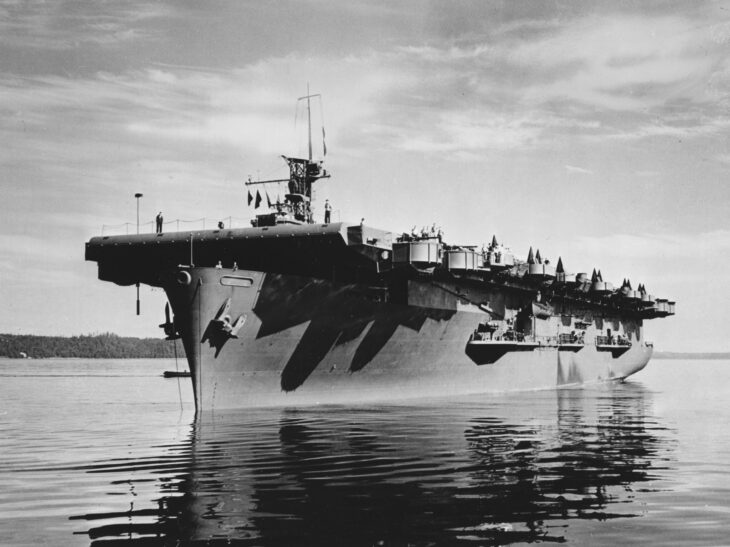

The Casablanca class is the most numerous class of aircraft carrier ever built. Fifty escort carriers were laid down, launched and commissioned in under two years, between November 3, 1942, and July 8, 1944.
Crews called them “Kaiser Jeeps”. They displaced 8,188 long tons standard, made 19 knots and carried 27 aircraft, and they ferried aircraft and flew close air support over the island landings.
Their finest hour came off Samar on October 25, 1944, when six of them, with destroyers and destroyer escorts, took on the Japanese main battle fleet. Gambier Bay was sunk by gunfire there and St. Lo by a kamikaze, two of the five the class lost.
10. Taiho (Japan)
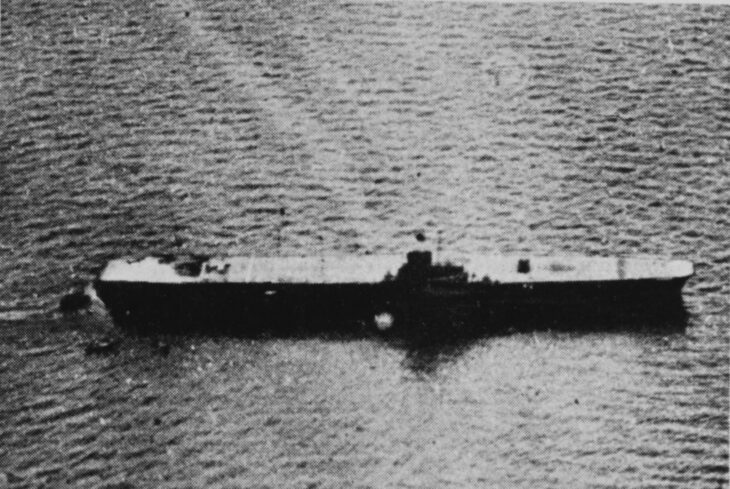
Taiho was Japan’s attempt at a carrier that could take hits and keep fighting. She was the first Japanese carrier with an armored flight deck, displaced 29,770 long tons standard, made 33.3 knots and flew 65 aircraft in combat.
She was commissioned on March 7, 1944, and lost 104 days later. On June 19, 1944, in the Battle of the Philippine Sea, one torpedo from the submarine USS Albacore led to explosions that sank her, the result of design flaws and poor damage control.
On paper she belongs higher. In practice she was sunk in her first battle, which is why she sits near the bottom.
11. Shinano (Japan)
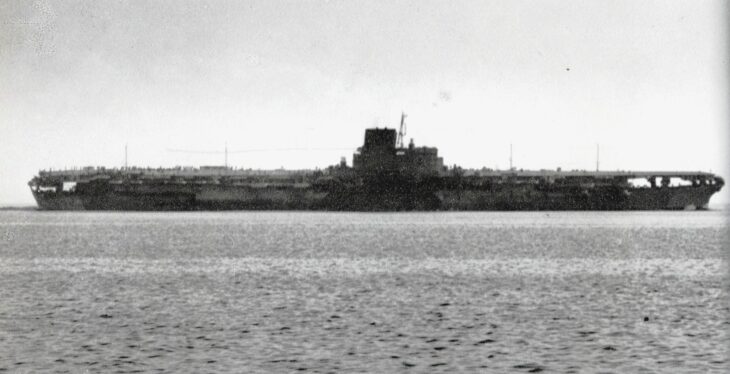

Shinano was the largest aircraft carrier built up to that time: 64,800 long tons standard and 872 feet 2 inches (266 m) long. She was laid down in May 1940 as the third Yamato-class battleship and converted after Midway into a carrier meant to support other carriers, with an air group of 47.
She never saw combat. On November 29, 1944, ten days after commissioning, four torpedoes from the submarine USS Archerfish sank her on her way to Kure to finish fitting out. 1,435 people were lost, including her captain.
Sunk on her first voyage
Shinano remains the largest ship ever sunk by a submarine. When she went down she was carrying 50 Ohka rocket-powered kamikaze flying bombs, not an air group.
What About Midway and Graf Zeppelin?
Two ships come up in every argument about WW2 carriers and neither belongs in the ranking. They answer the two most common objections to this list.
What about USS Midway or Germany's carrier?
USS Midway was commissioned in September 1945, after the fighting had ended, so she never fought in World War II. Germany’s Graf Zeppelin was launched in 1938 and was 85% complete when the war started, but she was never finished. Her crew scuttled her in March 1945, and the Soviets sank her in weapons tests in 1947.
The other objection is size. Shinano was the biggest carrier of the war and achieved nothing, while the smaller Essex and Yorktown ships won it, which is why this list ranks results and not tonnage.
For the carriers that replaced these ships, see our ranking of the best aircraft carriers in the world today.
FAQ
Sources and references used for research and fact-checking.
- Wikipedia, Essex-class aircraft carrier
- Wikipedia, Yorktown-class aircraft carrier
- Wikipedia, USS Enterprise (CV-6)
- Wikipedia, Shokaku-class aircraft carrier
- Wikipedia, Japanese aircraft carrier Zuikaku
- Wikipedia, Japanese aircraft carrier Akagi
- Wikipedia, Japanese aircraft carrier Kaga
- Wikipedia, Battle of Midway
- Wikipedia, Illustrious-class aircraft carrier
- Wikipedia, HMS Illustrious (87)
- Wikipedia, Battle of Taranto
- Wikipedia, Lexington-class aircraft carrier
- Wikipedia, Independence-class aircraft carrier
- Wikipedia, Casablanca-class escort carrier
- Wikipedia, Japanese aircraft carrier Taiho
- Wikipedia, Japanese aircraft carrier Shinano
- Wikipedia, Midway-class aircraft carrier
- Wikipedia, German aircraft carrier Graf Zeppelin
Get the Newsletter
The latest aviation news and stories sent to your inbox.
About the Author

Tim is the owner and lead editor of AeroCorner since 2019, overseeing aviation content covering aircraft, airlines, airports, and the broader aviation industry. Through years of researching, writing, editing, and publishing aviation-focused content, he has developed extensive practical knowledge of commercial aviation and air travel. Based in Asia and a frequent traveler himself, Tim also brings firsthand passenger experience to AeroCorner’s coverage. Outside of publishing, he has also explored aviation firsthand through hands-on flight training in New Zealand.